Sunday School for Atheists

National Review, March 25, 2002

his-dark-materials-covers-829675.jpg

The His Dark Materials trilogy, by Philip Pullman was, some said, the moment that literature for the young finally came of age. On January 22, Philip Pullman, a children's writer (although he objects to that label), was awarded Britain's prestigious Whitbread prize for the final installment of his best-selling His Dark Materials trilogy. In the opinion of the judges, The Amber Spyglass was Britain's book of the year. It was an unprecedented honor for a work aimed at younger readers, but Pullman is a man who must be getting used to praise, and not just in Britain. His writing has been described as "very grand indeed" in the New York Times, while reviews in the Washington Post have included adoring references to the "moral complexity" and "extravagant . . . wonders" to be found in Pullman's work.

There can, indeed, be little doubt that the first book in the trilogy. The Golden Compass, is a masterpiece, a sparkling addition to the canon of great children's fiction that leaves poor Harry Potter helplessly stranded in the comparative banality of his Platform 9-3/4. Within the time it takes to read his first few, skillfully drawn pages, Pullman takes us into a beguiling parallel universe. His spikily endearing heroine, 11-year-old Lyra, lives in an England that is a curious blend of the Edwardian and the modern. It is a place where the boundaries between what we would think of as the natural and the supernatural are blurred, no more distinct than the fraying edges of the alternate realities that Pullman describes so well. In Lyra's world every person has a daemon: a companion in animal form, part soul, part familiar spirit. There are witches in Lapland, and the most feared warriors in the North are a rampaging race of armor-clad bears, ursine Klingons who have fallen into decadence under the rule of a corrupt and vicious usurper.

In constructing this captivating, fascinating fantasy, Pullman has pillaged the past and looted from legend. He is a magpie of myth, an author whose work borrows from saga, folklore, and some delightfully obscure parts of the historical record, and, oh yes, he can write.

Lyra raised her eyes and had to wipe them with the inside of her wrist, for she was so cold that tears were blurring them. When she could see clearly, she gasped at the sight of the sky, The Aurora had faded to a pallid trembling glimmer, but the stars were as bright as diamonds, and across the great dark diamond-scattered vault, hundreds upon hundreds of tiny black shapes were flying out of the east and south toward the north. "Are they birds?" she said. "They are witches," said the bear.

That literature of this, well, literacy is being written for the young (Pullman's target audience begins at around 11, Lyra's age) is wonderful. And finding a large market for it in this grunting, ineloquent era is little short of a miracle. More than a million copies of Pullman's books have been sold in the U.S., and the same again in his native Britain.

Their author, however, would be a little uneasy to hear the use of that word "miracle." For he is, alas, a man with a message, and by the end of the trilogy the message has drowned out the magic. Narrative thrust is abandoned in favor of a hectoring, pontificating preachiness-—which has itself probably played no small part in the rise of Pullmania among the chattering classes on both sides of the Atlantic.

Pullman, you see, is a man with an apse to grind. He hates the Church, and he hates it with a passion. This is an unusual fixation for someone from the scepter'd isle; most of the English are rather relaxed about religion, tending to lack strong views about the matter one way or the other. Our predominant faith is a benign, "play nice" agnosticism, vaguely rooted in the Anglican tradition. Metaphysical debate is as foreign to us English people as a sunny day in November.

Philip Pullman is made of more strident stuff. He wants, he once told the Washington Post, "to undermine the basis of Christian belief." This is an immodest ambition even for a winner of the Whitbread prize, and the rationale behind it seems crude, no more sophisticated than that of the high-school heretic, and gratingly simplistic from such a clever writer. The history of the Christian Church is, Pullman intones, a "record of terrible infamy and cruelty and persecution and tyranny." True, to an extent; but the full story is a little more complex than that. It is no surprise to discover that C. S. Lewis is a particular bogeyman: Pullman claims to hate the Narnia hooks "with deep and bitter passion." Among other offenses, Lewis apparently celebrated "racism [and] misogyny"—a choice of thought crimes that reveals the supposedly skeptical Mr. Pullman as a loyal follower of a very orthodox form of political correctness (the inquisitorial piety of our own time). PC's dismal spoor can be found throughout his books, a spot of class hatred here, a little global warming there.

And, above all, there is his omnipresent attitudinizing vis-a-vis religion. It's not so much the role of a wicked Church that is the problem (malevolent clergymen with twisted creeds are nothing new in fiction), but the tiresome little lectures that come with it. So, for example, in The Subtle Knife a speech attacking the sinister Church of Lyra's world becomes an attack on all churches everywhere: "Every church is the same: control, destroy, obliterate every good feeling." There is plenty more of the same, crude, nagging, and bombastic, its form objectionable, whatever one might think of the content. In writing his tales of Narnia, C. S. Lewis may also have been a man on a mission, but at least he had enough respect for his readers to prefer allegory and parable to assertion and propaganda. It is worth remembering that, compared with Pullman, Lewis was writing for a much younger audience, children of an age at which it is quite possible to read and reread the Narnia adventures and miss most or even all of the Christian references; aged eight or nine, I did. Nevertheless, Lewis was content to leave his message oblique; Pullman never allows his readers such freedom.

Despite these concerns, the second book. The Subtle Knife, remains imaginative and alluring if less startlingly original than its predecessor, and still able to survive increasing amounts of its author's pedestrian philosophizing. By the end of The Subtle Knife, however, it is becoming painfully apparent that Pullman's overall theme (basically, a variation on Paradise Lost) is unlikely ever to soar; a devastating weakness in a work that, like many epics, is structured as a quest. The Amber Spyglass, the allegedly grand finale of the series, is intended to bring resolution, but it is difficult to care. The object of Lyra's quest remains (at best) obscure and (at worst) highly pretentious, an unholy grail that simply does not engage the imagination.

When I asked 11-year-old Holly, the daughter of some friends, what she thought of these books, she said that they were "well-written." The story itself didn't quite catch her attention.

Dust is to blame; The Amber Spyglass is a book in which, despite some sporadically spectacular passages, any real sense of excitement is, quite literally, ground into Dust. Scattered over page after wearying page, this endlessly discussed "Dust" is the substance that represents consciousness in Pullman's universe, but it runs the risk of inducing unconsciousness in his youthful and, doubtless, exhausted readership.

And there is, unfortunately, no escaping it. For there is Dust to be found in every nook and cranny of this wordy, wordy, wordy culmination of Pullman's three-volume morality play, which is, at its core, nothing less than an assault on the notion of Original Sin. In the end, the assault takes very literal form: After a battle that rather uneasily combines elements of Star Wars with the Book of Revelation, God (or, at least, an entity who is clearly meant to the the Christian God) is overthrown, the underworld is liberated, and a "Republic of Heaven" is proclaimed.

The true nature of this apparently marvelous republic is never made clear. It may be the materialist heaven on earth, but there are also hints that it could be the New Age's goblin-infested alternative, that empty-headed, shallowly superstitious zone where everything, and nothing, is sacred. It makes for a somewhat frustrating conclusion to this very frustrating trilogy, a flawed, fascinating creation of great promise that is eventually brought down by its tendency to go too far—much like naughty old Adam himself, as Philip Pullman would never say.

Diana, Again

National Review Online, October 6, 2001

Diana.jpg

There is, let's admit it, something grimly satisfying about having a prejudice confirmed. So, if you are one of those people who believe that there is absolutely nothing more to say about Charles and Di, Christopher Andersen's new work, Diana's Boys, is the book for you. Once again weary readers are presented with the same shop-soiled menagerie (mean queen, pained prince, plain Camilla, horrible Hewitt, foolish Fergie, loveable Tiggy, playboy Dodi), the same exhausted anecdotes (hysteria at Highgrove, bulimia in the palace, Charles' confession of adultery, Diana's TV interview, the rudeness at Harry's birth), and, above all, that same doomed, fascinating heroine, bewitching and manipulative, a Sybil in Chanel, with her bewildering, ever-shifting personality leading all those around her to ruin and to despair.

We know how her story will end, of course. We are told again about those last tragic hours in Paris, that speedy departure from the Ritz and the disaster in a tunnel, hours that will be particularly familiar to fans of Mr. Andersen, in that he had already discussed them at some length in an earlier bestseller, The Day Diana Died. Now, Mr. Andersen, the author of two books about Katharine Hepburn, three volumes about the Kennedys, and two works about Princess Diana, is clearly a man who is not too worried about reworking a profitable subject. It is best, however, if such a return to the mother lode can be justified by the claim that something fresh is being discovered. The kindly Ms. Hepburn has, most obligingly for her biographers, been very long-lived, leaving plenty of room for the two, doubtless distinct, efforts by Mr. Andersen, Young Kate and The Remarkable Love Story of Katharine Hepburn and Spencer Tracy. The Kennedys enjoyed far less staying power than the formidable actress, but, in their case Mr. Andersen could, presumably, reduce the risk of repeating himself by moving across, then down, the former First Family tree. He followed Jack and Jackie with Jackie after Jack, and then, in a confirmation of his mortuary franchise, he gave us The Day John Died.

In Diana's case, however, going back to the celebrity seam was not so straightforward. The inconveniently dead princess lacked Ms. Hepburn's powers of survival. A "Young Diana" was all there ever was, and all there ever would be. There were no long decades, just a few short years filled with incident, almost all of which Mr. Andersen had already chronicled. The Kennedy alternative, harvesting the family tree, was also tricky in the case of the gloomy royals. Compared with JFK the poor princess lacked a sellable surviving spouse. Who, other than Camilla, who would go for Charles after Diana?

That only left the sons, William and Harry, in Diana's words, her "one splendid achievement", and so they appear to be. But as camouflage for an opportunistic retelling of the Spencer story, her offspring prove hopelessly inadequate. This is hardly their fault. They may, in the words of Mr. Andersen's publisher be "the world's two most celebrated royals" (eat your heart out, Elizabeth), but they simply have not done enough to carry a biography. This would be true of almost any teenager. Diana's children are no exception, as a quick glance at this book's index reveals.

Entries under "William, Prince" include "backside pinching of… e-mail romances of…formality disliked by… Harry dangled from window by." Take away the story of their parents, and the Windsor princelings' lives are the stuff of trivia. While that is not a bad level for Mr. Andersen's writing style ("Finally, the Princess of Wales leaned forward to see what the boys' found so riveting: steamy photos of the buxom Barbi twins, Playboy centerfold models Shane and Sia") he is astute enough to know that, when it comes to book sales, his best hopes still lie with Diana. So, much of what we get is a tired rehash of a failed marriage and a tragic death, with, on occasion, the only variety coming, quite literally, from the pagination.

On page 43 of Diana's Boys, for instance, we can read that "William's mother indulged in an orgy of self-mutilation. At various times, Diana slashed her wrist with a razor, stabbed herself in the chest with a pocketknife, cut herself with the jagged edge of a lemon peeler, and hurled herself against a glass display case, shattering it." This is a drama that may be familiar to admirers of page 49 of The Day Diana Died where readers are told that "in an orgy of self-mutilation, at various times Diana slashed her wrist with a razor, stabbed herself in the chest with a pocketknife, cut herself with the jagged edge of a lemon peeler, and hurled herself against a glass display case, shattering it."

The only difference between these two accounts lies in the description of its protagonist. In Diana's Boys the lemon-peeler-wielding princess is also, in keeping with the theme of a book allegedly focused on her sons, described as "William's mother," rather than just the "Diana" used in the earlier text.

To be fair, there are some revelations (at least to this Brit) in the more recent book. I was, for example, unaware of the fact that, in an unorthodox variant of the curt handshake generally preferred by the English upper classes, one socialite allegedly prefers to greet Prince William by putting her hand down the front of his trousers. For the most part, however, even those parts of Diana's Boys that relate specifically to the children cover fairly familiar ground, if in ever more excruciating detail. In The Day Diana Died, Mr. Andersen tells us that William once "tried to flush his father's shoe down the toilet", while in Diana's Boys, we learn that they were "four-hundred-dollar" shoes.

More excruciating for William, should he ever look at this book, will be the speculation about his love life, speculation helpfully illustrated by an inspired selection of photographs that manages to include seductive pictures of no fewer than three cuties whose names (Tara Palmer-Tomkinson, Emma Parker Bowles, Davina Duckworth-Chad) seem more substantial than the outfits that they are wearing. For the time being, however, both the young princes seem remarkably well balanced given what they have been through, but it is difficult to read Mr. Andersen's book without wondering whether Diana's boys are destined to share some of the bleaker aspects of their parents' fate.

For, while the source of many of Charles and Diana's problems lay in their own personalities (well summarized in Sally Bedell Smith's Diana in Search of Herself, psychobabble-heavy, but nevertheless the best single account of the whole miserable saga) other factors were also very much to blame. In particular, the royal couple had to contend with the challenge of living in a country that no longer knew what it wanted from its monarchy. Like their predecessors, the prince and princess were public figures, but the public had changed. To their cost, Charles and Diana were to discover that the old deference was dead, taking with it the stuffily comfortable etiquette that once cocooned the inhabitants of Buckingham Palace. It had been replaced by a relentlessly intrusive tabloid-driven agenda that mixed class resentment and prurience with the curiously old-fashioned notion that the Royal Family should set some sort of example, although no one seemed to be able to agree on what that example should be.

It is worth remembering that when, in the bawling, mawkish week that followed Diana's death, the formerly vilified princess was being sanctified for allegedly being able to show her true feelings, the Queen was at the same time coming under attack in the press ("Show us you care") for failing to fake hers. What Fleet Street wanted from Her Majesty ("Speak to us Ma'am — Your people are suffering") was a blubbering expression of regret for a former daughter-in-law she clearly no longer really cared for.

Poor William ("the heir") and, to a lesser extent, Harry ("the spare") face a lifetime of trying to satisfy the conflicting, unclear, and capricious demands of such scrutiny, of which Mr. Andersen's book is an early, and relatively harmless, example.

No wonder William is said to doubt whether he wants to be king.

David Horowitz: Hating Whitey and Other Progressive Causes.

National Review, May 22, 2000

david-horowitz.jpg

WAS there a David Horowitz in Bosnia, a Cassandra warning of the cataclysm to come? For most ethnic conflicts are fairly predictable, and it's not too difficult to identify who is going to start them. The underlying message of this collection of essays is that race relations in this country too are being deliberately poisoned, with potentially disastrous results. The culprits are a grubby group of demagogues and ideological hucksters, given their opportunity by the development of identity politics. It is worth reading what Horowitz has to say. After all, he was once a prominent '60s radical, a "progressive" pur et dur. Now, thankfully, he's a conservative (of sorts), but he still writes like an old-fashioned left-wing polemicist. His prose is splendidly savage and invigoratingly rude. David Horowitz has a message to deliver, and if he offends someone in the process, that's just too bad.

This is an angry book, and with good reason. The "progressive causes" related by the author are full of bullying, career destruction, race baiting, rape, and murder. We may giggle about political correctness, but it is, as Horowitz explains, no less than "the stuff that totalitarian dreams are made of." As a former Leninist, he understands how the Left plays the game and the tactics it uses.

The most worrying of these is the manipulation of ethnic antagonism. Today's diversity politics have often been reduced to little more than the "expression of racial paranoia." The consequences could be terrifying. For as Horowitz warns, "by projecting their fear and aggression onto those around them, paranoids create enemies too."

Sure sounds like Bosnia to me.

It's Witchcraft

J. K. Rowling: Harry Potter and The Sorcerer's Stone

J. K. Rowling: Harry Potter And The Chamber of Secrets

J.K. Rowling : Harry Potter And The Prisoner of Azkaban

National Review, October 11, 1999

HarryPotter.jpeg

IT’S enough to make you choke on your fava beans. In bookstore new-fiction aisles, this was meant to be the summer of Hannibal Lecter: aesthete. Renaissance scholar, and serial killer. Instead he has had to share the limelight with Harry Potter, the schoolboy hero of a series of British children's books. The second of these, The Chamber of Secrets, was released in the U.S. at about the same time as Thomas Harris's Hannibal. On September 19, more than three months later, it was Number Three on the New York Times bestseller list, five places ahead of the unfortunate Dr. Lecter. The same week, the first Harry Potter (The Sorcerer’s Stone), which has been on the list for the better part of a year, came in at Number Two. That's pretty good for works of very English fantasy, and astonishing for books aimed at children. To add to the cannibal's misery, the most recent Harry Potter, The Prisoner of Azkaban, has now arrived in America, released early by its U.S. publishers as a result of the large number of copies of the British edition that were making their way across the Atlantic. Probably by broomstick. For the Harry Potter books are about witches and wizards. In the finest tradition of children's stories, Harry is an 11-year- old orphan being brought up under appalling conditions by grotesque relatives. But, as always in these tales, our hero discovers that be has another, greater destiny. To find his future Arthur pulled a sword out of a stone. Young Potter just receives letters, hundreds of them, delivered by owls. Harry Potter, it turns out, is a wizard, and he is required to attend Hogwarts School of Witchcraft and Wizardry.

Not least because he has an enemy, Voldemort (the splendidly chosen names are one of the strengths of these books), a great wizard who has gone over, as George Lucas would recognize, to the dark side. Voldemort was responsible for the deaths of Harry's parents and wants to finish off the son. It Harry is to survive, he will need all the training he can get in the magical arts. The books (there will eventually be one for each of the seven years Harry is due to spend at Hogwarts) detail his adventures at the school and the intensifying struggle with the forces of the wicked Voldemort.

So far, so good, but this is unexceptional stuff, not enough to explain why so many people are wild about Harry. Part of the answer, of course, lies in skillful marketing, not only of the novels but their author. And why not? Hers is a story almost as magical as Harry's.

J. K. Rowling was a divorced single mother on welfare at the time she wrote The Sorcerer's Stone, mainly, it is said, in an Edinbugh cafe (her apartment was too cold). A Kinko's Cinderella, she couldn't even afford to photocopy her manuscript. She typed it out twice on, naturally, a battered old typewriter. In interviews she comes across as a pleasant sort, the only worrying note coming when she describes her books as "moral."

Moral? In the sanctimonious world of contemporary children's literature, that's a frightening word, all too often a synonym for "politically correct." Rowling does her best to oblige. Minority characters are carefully included in a saga that is otherwise inescapably Anglo-Saxon. Unusually for an English boarding school, Hogwarts is coeducational. Its principal sport, the enjoyably savage Quidditch (a sort of aerial hockey), can be played by both sexes. Harry's boarding house includes girls on its team; Their unpleasant opponents at Slytherin House do not.

It's no surprise, therefore, when Rowling reveals leftish social prejudices all too typical of the British intelligentsia. Harry's main rival at the school, nasty Draco Malfoy is—two strikes—both rich and aristocratic. Meanwhile, the dysfunctional Dursleys, Harry's ghastly family, are a caricature of the vicious bourgeoisie that would have delighted Vyshinsky. They are contrasted with the poor-but-happy Weasleys, a wizard household that befriends Harry. Old man Dursley is a brutish capitalist, director of a company that makes drills. The Bob Cratchit-like Mr. Weasley, on the other hand, is a good government type, a noble, underpaid bureaucrat at the Ministry of Magic.

But by the standards of our irritating era this is mild. Neither Harry nor any of his circle appears to have two mommies, inner-city malaise is confined to the sinister folk in Knockturn Alley, and no one hugs a Whomping Willow tree (if would hit back). The Potter phenomenon is, in fact, reassuring. The lad's no pinko. There is plenty here for the more traditionally minded, and tradition sells, it would seem. Part of the appeal of these books is that they offer fantasy, but within a reassuring structure. There are rules.

Hogwarts School is strict, and its exams are tough. Strip away the contemporary trimmings, and the reader is left with a rather old-fashioned English boarding-school tale, even down to the feasts. Harry "had never seen so many things be liked to eat on one table: roast beef, roast chicken, pork chops and lamb chops, sausages, bacon steak, boiled potatoes, roast potatoes, fries, Yorkshire pudding, peas, carrots, gravy, ketchup, and for some strange reason, peppermint humbugs." This is not a school for our tofu times.

Nor is it for wimps. There are plenty of challenges for Harry, almost none of which can be resolved by "counseling." Undaunted, he tries to do the Right Thing. This is a boy who sticks by his friends, and they stick by him. There is evil and betrayal, but by the final page, the bad guys are generally in disarray. Children still like a happy ending and a hero to cheer for. And who better than Harry? He is no comic-book savage. Laudably enough, he wants to avenge his parents, but he doesn't want to lose his humanity (if that's the word for a wizard) in so doing.

And Rowling does not lose sight of her principal objective, which is to tell a good story well. The writing is vivid and of high quality—it has to be to hold a child's attention for over 300 pages (books in R. L. Stine's bestselling Goosebumps series are around 150 pages each). The lesson of Harry Potter is that well-crafted, intelligent stories can indeed flourish in the marketplace—if the gatekeepers of our contemporary culture give them a chance. Tellingly, a British publisher that rejected The Sorcerer's Stone did so because it was "too literary."

If this is another way of saying that the author doesn't patronize her readers, it is true. Unlike many writers of children's books, she doesn't talk down to her audience. She is not, however, writing for their parents. Harry's adult fans (so many in the U.K. that the British publisher produced an edition with a more "grown- up" cover to allow them to read it in public) need to get a grip. Comparisons between Harry Potter and the immortals of children's literature should also be treated with care. The greatest of the classics retain their appeal over the years. They are more than a craze. With the much-hyped Harry it is still too early to say, although the signs are good that Hogwarts will stand the test of time. But what's the hurry? We don't yet know how the saga will end. Voldemort still lives.

Contact

Christopher Buckley: Little Green Men

National Review, April 18, 1999

Little_Green_Men.jpg

SPACE aliens are a nasty, bug-eyed lot, always plotting to subjugate the galaxy and firing off death rays. Not much use to us humans, you might think. But you would be wrong. As a plot device, the extraterrestrial can he most useful, a light shone on the peculiarities of this planet. And so, in his latest, and very funny, novel, Christopher Buckley employs a motley and distinctly home-grown bunch of ETs to take a look at a close encounter between two different worlds, both of which happen to be located here on Earth. His hero, John Banion, is a king of the first of these worlds, Beltway Washington: a prince of pundits, a griller of presidents, his Sunday-morning show in D.C.must-see. And the Washington Buckley portrays with his customary collection of one-liners and insightful zingers is a venal, absurd place. He reproduces its portentous language with perfect pitch (an intern program—no, not that one— called "Excellence in Futurity") and its pretentious inhabitants with perfect bitch.

The city described here is salon Washington, the home of power politics at its most trivial, inhabited by a Renaissance Weekend of grotesques, including a widowed hostess who married a fortune and became an ambassador in Europe, and a "suave, immense, baritone-voiced" African-American, the president's "first friend." What of the president himself? He's an "ozone-hugger" who speaks in a "slow, overly patient tone of voice that suggested he wasn't sure English was your first language."

Which may be wise, for as John Banion is soon to discover, it's a different world out beyond the elite enclaves. In The Bonfire of the Vanities, Sherman McCoy arrived there by means of a wrong turn after the Triborough Bridge. For Christopher Buckley's soon-to-fall Master of the Universe, there's no wrong turn—in effect, somebody else grabs the wheel. The luckless pundit is abducted by things, subjected to unpleasant procedures, and then abandoned on a golf course, with a pain down below "that reminded him of how he'd felt after the colonoscopy, a feeling of stretching ..."

It gets worse. A second abduction convinces Banion that the alien threat is real. He has to become the "Paul Revere of the Milky Way" and warn the world. The problem is that his world, the Washington world, doesn't want to know. He quickly becomes an embarrassment, an intergalactic Pierre Salinger. With wicked relish, Buckley shows us how Banion loses wife, contacts, and contracts. Cruel man that he is, the author even makes his Job-like hero go through the ordeal of an AA-style "intervention" by friends.

The inhabitants of another world altogether. Planet Ufology, however, prick up their (wish-they-could-be-pointed) ears when they hear Banion's message. The newsman is just what the saucer crowd has been waiting for. He's famous, possibly even sane, a plausible spokesman far closer to the mainstream than most in the UFO world, a world that Buckley bas obviously researched with care. Its celebrities (with changed names: flying writs are more dangerous than flying saucers) are on parade. And so are its stories, speculations, and just plain hoaxes: Roswell, Area 51, Grays, Nordics, cattle mutilations, even that Richard Nixon/Jackie Gleason business (long story, but, as usual in these matters, it involves alien corpses). And Banion? Well, he's no Sherman McCoy. He refuses to remain fallen but instead picks himself up and becomes a master of this new universe.

Yet even as he is lionized by the crowd at a (marvelously described) UFO conference, our protagonist can't help noting that "there was something lacking in these people's lives." The ultimate insider exchanges his Washington post for plebeian life in the USA today but . . . well, as Egalitarian of the Year he simply does not cut it. Nor does the author, who cheerfully resumes the political incorrectness displayed so enjoyably in his last novel. Thank You for Smoking. Potential offendees include Canada, dwarves, the space program, Eleanor Roosevelt, PBS, electric chairs, Cuban detainees, Indiana housewives, and Sammy Davis Jr.'s missing eye.

As we discover, the UFO nation is not a small one. In fact, you are living in it. Its credulous hordes are large enough to overwhelm John Banion's old Washington kingdom, and the rewards it offers, both financially and in terms of sheer adulation, are far greater. Like one of those Roman generals sent off to deal with the barbarians in the latter days of the empire, Banion is able to return to torment the capital at the head of a vast army of co-opted provincials, in his case a three-million strong "Millennium Man" march.

Then what happens? What can be disclosed without spoiling the plot (the author reveals this detail early on) is the book's underlying premise that the whole UFO business, including Banion's abduction, was a fraud from the very beginning, engineered by Majestic, the most secret of all government departments. Its purpose? Initially, to worry Stalin, but later to keep the U.S. taxpayer sufficiently "alarmed about the possibility of invasion from outer space ... to vote yea for big weapons and space programs."

It's possible (think of the health-care "crisis" or global warming), but X-philes who read this book will find the idea a little far fetched, even for a satire. Conspiratorially, they will talk about the documents that purport to show that Majestic really did exist. Patiently, they will explain that the aim of this real Majestic was not to fabricate UFO evidence, but to conceal it. Darkly, they will tell you that, if these documents are genuine, Buckley's tale can only help to mislead a country that has already been misinformed for far too long.

And why would the author do this? For a clue, check out the career of his hero, the television pundit be puts in the firing line. That's also his father's job. Yes, his father, that same "W. F. Buckley" who was mentioned twice in Jim Marrs's Alien Agenda, last year's expose of the UFO cover-up. Could Buckley the Son be part of the conspiracy?

I don't know, but next time you are in the Buckley neighborhood, watch out for those black helicopters.

Ghost Story

Mark Fuhrman: Murder in Greenwich

National Review, September 14, 1998

Fuhrman.jpg

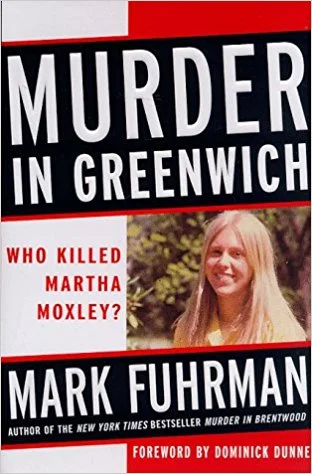
SUMMER reading is supposed to be light. But those who prefer a bit of darkness to give them some shade from the heat of the sun may wish to consider this fascinating book by Mark Fuhrman, whose theme may put them in mind of Shakespeare. Yes, Shakespeare, Yes, that Mark Fuhrman. "Murder," wrote the Bard, "moves like a ghost." For a ghost always leaves trails of ectoplasm behind it, and so in its way does murder. Its victims haunt us, and it has long been believed that their restless spirits wander the earth calling for revenge. And that is the real subject of this book. Murder in Greenwich is about the revenge that the Moxleys of Greenwich, Conn., have yet to enjoy for the savage murder of their daughter, Martha. It is about the continuing revenge of Dominick Dunne (who inspired this book) on the criminal-justice system that freed the killer of his own daughter after the shortest of sentences. And it is about Mark Fuhrman's dreams of revenge for a career destroyed by O. J. Simpson's vicious carnival.

The Moxleys moved to Greenwich in 1974, when Martha was 14. Blonde and vivacious, she settled easily into a life of country-club fun, high-school success, and Ice Storm-style high jinks. Within little more than a year she was dead, her skull shattered by that most Greenwich of weapons, a six-iron.

But an unusual six-iron, a "Toney Penna" in fact. A rare brand, but one favored by Martha's neighbors the Skakels. The Skakels were rich, well connected (Ethel Skakel had married Bobby Kennedy), and wild. And theirs was a wildness which could have, some said, a dangerous edge.

Martha was with two of the Skakels, Tommy, 17, and Michael, 15, the night she died. Tommy is the last person known to have seen her alive. The murder itself took place not far from the Skakel property, a property that was never systematically searched by a police force that was curiously diffident in interrogating its inhabitants. Well, they were royalty, sort of. The boys (who have denied any involvement in the killing) were RFK's nephews, after all. Were the police, perhaps, just a little too deferential?

Dominick Dunne thought so. His 1993 best-seller, A Season in Purgatory, is a fictionalized version of the Moxley case. The golf club is turned into a baseball bat and the murderer becomes young Constant Bradley, scion of a family that is part Skakel, part Kennedy, and all Borgia. The hero bears some resemblance both to Kenneth Littleton, the Skakels' tutor, and to Mr. Dunne himself. He is a writer who "like[s] to cover trials. [He is] specifically interested in people who get away with things. People who go free."

Which is where Mark Fuhrman comes in. Dominick Dunne had grown to admire him in the aftermath of the Simpson fiasco. Meanwhile, Mr. Fuhrman himself was "looking for an unsolved murder to write about." So Mr. Dunne passed the baton, handing his files to Mark Fuhrman. As he explains, "Say what you want, the guy is a great detective."

Or at least a good prosecutor. Murder in Greenwich is just one side of a case that has yet to come to trial. We never hear from the defense. Nevertheless, Mr. Fuhrman runs briskly through the facts. Not quite a literary classic, Murder in Greenwich is still a compelling read, a real-life Agatha Christie novel. Drawing on his years of police experience, the author reviews the evidence, the alibis (he is unconvinced by Michael Skakel’s), and the rival suspects, to come to his conclusion. The only '"N word" he uses is "nephew."

At the same time, however, the reader is left in no doubt that Murder in Greenwich is another chapter in the O.J. wars, "the Simpson case all over again." And, so far as Mark Fuhrman is concerned, that means that, once more, the rich have got away with it. The author reveals enough class hatred in this book to launch a Gephardt presidential campaign, reinforced, doubtless, by the somewhat cool welcome he received in Greenwich.

Which should have come as no surprise. The O.J. trial turned Mr. Fuhrman into a pariah, but, in the phrase of America's prim totalitarians, he still doesn't quite get it. A Valjean who thinks that he is a Javert, he seems to believe that a case like this will give him back his respectability. He is wrong. It may be sweet revenge, but it will never restore him to what he was and what he wants to be again: "'Mark Fuhrman, Detective."

Nor, one suspects, will another trial, another conviction., and another sentence bring peace to Dominick Dunne. He is a crusader now, raging against the cruelty of his daughter's fate and its unjust consequences. He picks at his psychic wounds, unable to let scar tissue form. He prefers to return to the scenes of other crimes to ensure that they, at least, have an appropriate ending. Obsessive, certainly, morbid, perhaps, but who are we to judge a parent's grief?

Martha's mother, Dorthy, can. And she has welcomed the publication of Murder in Greenwich. "That's my life, these days," she has recently been quoted as saying. "The hope that someday we'll know who did this." She may get her wish. A Connecticut judge has now been appointed as a one-man grand jury to investigate the Moxley case. In early August that judge heard testimony from Kenneth Littleton, the Skakels' tutor. Once seen as a possible suspect in the murder, Mr. Littleton testified in exchange for immunity, which suggests that the field of suspects is narrowing still further.

And if, after all these years, there is a trial and a guilty verdict? Maybe, finally, Mrs. Moxley can put Martha's spirit to rest.

For our ancestors were right. The murdered do live on as ghosts, but they are phantoms that haunt our minds, not our homes. For a killing brings grief, but also uncertainty. A "foul, strange, and unnatural" ending, it leaves our world askew. The restless souls belong to the survivors, not the departed. A trial and a verdict can restore the illusion that things are as they should be. If Murder in Greenwich can hasten this process for Mrs. Moxley, Mark Fuhrman will have written a very good book indeed.

The Plot Sickens

Daniel Pipes: Conspiracy

National Review, December 31, 1997

Conspiracy.jpg

Poor, sad Princess Diana. Within hours of the tragedy in Paris, her death was being honored in the way most characteristic of our time: a conspiracy theory relayed over the Internet. She was murdered, you see, by British intelligence. The mother of a future King of England could not be allowed to marry an Egyptian. Ridiculous, of course, although Muammar Qaddafi seemed to think that there was something to it. Which would not surprise Daniel Pipes. His fascinating, though all too brief, new book traces the development of conspiracy theories from the time of the Crusades to the Roswell era. Naturally the Libyan leader makes an appearance. But, to be fair, he is no more deranged than many in the dismal crowd that Mr. Pipes summons for our inspection. For, as he explains cheerily, "this book is the opposite of a study in intellectual history. [It deals] not with the cultural elite but its rearguard, not with the finest mental creation but its dregs . . . So debased is the discourse ahead that even the Russian secret police and Hitler play important intellectual roles." Well, that's encouraging. With depressing effectiveness, the author shows how we have allowed ourselves to be seduced again and again by variants of the same couple of stories. And if there is a conspiracy there must be conspirators. Freemasons, perhaps, or maybe the Trilateral Commission.

And don't forget the Jews. The conspiracy theorists never have, something that Daniel Pipes dates back to the Crusades. Jews became a convenient local proxy for the Muslim enemy.

In a cruel paradox, as the pogroms intensified so did the idea that the Jews were planning a terrible vengeance. That fear in turn provoked further repression, and the cycle that was never really to end had begun. It is a plausible view, but, as the author concedes, it has a problem. Why pick on the Jews when "Muslims constituted a so much more substantial presence and threat"? Mr. Pipes never says, preferring merely to point to a pattern whereby "alleged conspirators are rarely those whom logic might point to."

For this is not a book that dwells on the psychological causes of conspiricism. This is a pity. It is a central question, and the answer is probably not too difficult to find. Take an obsessive personality, pour in a trauma or two, and garnish with a little paranoia. Add war, revolution, economic depression, or plague. When we are confronted with such vast, often incomprehensible cataclysms, a conspiracy theory can be a comfort. It provides an answer to people's questions and an object for their anger. It can also be fun. Winston Smith enjoyed his Hates.

Mr. Pipes touches on this, but he spends far more time describing the symptoms of the disease. He does this well. And it is a disease. At least from the point where an interest in conspiracy theories tips over into "a way of seeing life itself. This is conspiracism. . . It begins with belief in an occasional conspiracy theory . . . and ends with a view of history that dwells largely or exclusively on plots to gain world power or even destroy the human race."

Compulsively autodidactic, conspiracists live in a dark universe illuminated only by a vast and self-referential literature (two thousand books on the Kennedy assassination alone since 1963). Bolstered by obscure factoids and outright forgeries, its authors peddle theories of astonishing complexity. The right answer is never obvious and the obvious is never right. Readers are pushed further and further into irrationality. Which is not surprising. As the core belief of conspiracism is that all appearances are intended to deceive, reality itself becomes an illusion, a dangerous trick rather than a wake-up call.

In the West, at least, Pipes feels that conspiracism is in retreat, discredited by the twin failures of Communist Russia and Nazi Germany. "Hitler and Stalin had established the hideous price of conspiracy theories running rampant."

Let's hope so. But there is something a little Fukuyama-annish about such a view. We live, after all, in an age of rapid and highly unpredictable change. Even in this relatively benign era conspiracy theories continue to flourish. Most are not serious, just couch-potato mythologizing: but they can act, Mr. Pipes concedes, as a pathway to more dangerous fantasies--Timothy McVeigh is, apparently, a believer in UFOs. Above all, they chip away at the shared assumptions of truth that must underpin society.

In the case of American blacks this may have already happened. Mr. Pipes list some of the conspiracies that circulate within this community, but without appearing unduly concerned. He may be too relaxed. From the idea that AIDS was developed as a genocidal tool (as a supplement, doubtless, to the crack distributed in the ghetto by the CIA) to kente-clad anti-Semitism, there is plenty to suggest that a dangerous conspiracism has already taken root in an important part of American society. Its success may suggest that conspiracism remains more of a threat than Mr. Pipes would have us believe.

Perhaps he is trying to trick us.

Lost in Space

Jim Marrs: Alien Agenda

National Review, July 28,1997

Red Planet Diner, Sedona, Arizona, 1997  © Andrew Stuttaford

Red Planet Diner, Sedona, Arizona, 1997  © Andrew Stuttaford

So now we know. The controversy is over. UFOs are real, and never mind the latest Air Force denial, hopefully entitled The Roswell Report: Case Closed. Armed with the credibility that comes from a previous book that was "a major source for Oliver Stone's film JFK." Jim Marrs's "monumental undertaking" is, in the opinion of his publishers, "no less than the last word on the subject." Even for those members of the "smug . . . intelligentsia" who persist in their disbelief, this could make for an interesting read. For, as Mr. Marrs makes clear, UFOs are now part of our culture. That is why HarperCollins publishes this book, and why NR reviews it. Aliens infest our airwaves and our bookstores. "Documentary" footage of the autopsy performed on one unlucky extraterrestrial has been shown on prime time. UFOs have been the subject of congressional hearings, and a President (well, Jimmy Carter) has reported a sighting. According to Gallup, more than 40 per cent of American college graduates believe that our planet has been visited by UFOs. Not always successfully. July sees the fiftieth-anniversary celebrations of the saucer "crash" at Roswell, New Mexico.

So a cogent presentation of current beliefs about UFOs, even if from a partisan viewpoint, would be welcome. Alien Agenda doesn't fit that particular bill, though it begins well enough. There is interesting speculation about the real nature of the moon ("The greatest UFO"), followed by a brisk discussion of the von Daniken "God was an astronaut" school of ufology. But then we enter hyperspace.

As so often happens, the first sign of trouble comes with the "black-clad" SS. Can the 1947 UFO wave be explained by Nazi work on saucer technology? Mr. Marrs never really says. He merely leaves open the possibility, a possibility that he buttresses with anecdote and hearsay. True, he concedes that the idea of a secret Nazi base in Antarctica "stretches belief to the breaking point." But this is a pseudo-skepticism, typical of the somewhat unconvincing "objectivity" that permeates this book in the hope, doubtless, of giving it some faint plausibility. It is a clever approach, not too dissimilar from that used in other, less savory, areas of revisionist history, A defender of Stalin, for example, might "concede" that there were "excesses," while denying the existence of a deliberately murderous Gulag. In Alien Agenda Mr. Marrs may reveal his doubts about the Third Reich's Antarctic extension, but "there can be no question that the business and financial network created by Bormann wields a certain amount of power even today."

Note too the way that statement is carefully qualified. Writing that the Bormann crowd enjoys only a "certain" amount of power makes the assertion more difficult to challenge. The author manages to sound even-handed while at the same time leaving the impression of a still effective Nazi network. This is typical of a book where the author often will affect a studied neutrality over a particular UFO incident while leaving no doubt as to the general conclusion his reader should be drawing.

To be fair, Mr. Marrs never conceals his agenda. Moreover, his choice of evidence seems selective, to say the least. Inconvenient facts tend to be treated cursorily, if at all. His language is just as revealing. The waspishly pedantic Philip Klass, whose skeptical writings are the best in the field, is little more than a "debunker." By contrast Linda Moulton Howe, the best-known proponent of the theory that aliens are experimenting on Western cattle, is an "expert."

Well, Mr. Marrs does not appear to be one. There have been sightings that are genuinely difficult to explain, but the details are lost as the author hurtles on in search of ever wilder stories. Even Jacques Vallée,  one of the more prominent ufologists and no skeptic, will on occasion concede that a given UFO case runs into a "wall of absurdity," To Mr. Marrs, this seems to be no problem. He just jumps right over it into the arms of people like "Billy" Meier (or rather, arm—Billy has only the one), the Swiss handyman allegedly in touch with a civilization from the Pleiades. The other side of the wall is a place where our science (too puny, too materialistic) is deemed not to apply and the idea of objective truth is a mirage. It sounds, in fact, a bit like the United States.

Which is why this book has found a mainstream publisher. In a saner time. Alien Agenda would have been a crudely mimeographed pamphlet, pushed into your hand by a disheveled gentleman on a street corner. In the America of 1997 it will probably be a hit. And there is a sting in this campfire tale. The UFO myth mingles with and reinforces the other folk beliefs that increasingly shape a country where reason has gone quiet. Stories of alien abduction can easily shade into a belief in ritual child abuse. "Memories" can be recovered, families shattered, and innocents jailed.

This, taken to an extreme, can even lead to a Timothy McVeigh. In a way, this is not surprising. Saucer buffs have long reflected America's healthy distrust of government. When ufologist Stanton Friedman describes Roswell as a "cosmic Watergate," he can strike a chord with reasonable people, which Mr. Marrs then amplifies, Governrrient becomes a monstrously untrustworthy, threatening presence. "If they lied about one thing [in the context of Roswell], it stands to reason they would lie about another." Really?

But Mr. Marrs is not so much a militiaman in the making as a potential leader of ufology's Buchananite wing. There is dark talk of the ruling elite. The alien agenda itself seems, by the way, to be something New Agely spiritual, but Jim Marrs is much more interested in the conspiracy down here. There is a cover-up, naturally. "They" don't want us to know what is going on. Even the "notorious" Trilateral Commission rates a mention. Silly stuff, yes. But of itself, not dangerous, just another drop in an ocean of nonsense. Why the cover-up? Oh, the usual. Monopoly of alien technology, that sort of thing. Buy the book if you still care. But here's a clue. WFB is mentioned not once, but twice.

Now are you scared?

Off Center

James Gardner: The Age of Extremism

National review,  June 30, 1997

Age of Extremism.jpg

"It will not," writes James Gardner, "be obvious to everyone why O. J. Simpson's name should appear at the head of a chapter that touches upon Darwinism, the Holocaust, and French post-structuralist philosopy." Quite. But, as The Age of Extremism makes clear, we live in an age of doubt. If nothing can be proved absolutely, then nothing can be absolutely true. But this is a flawed skepticism, one that paves the way for extremism. For, as Mr. Gardner explains, its corollary is a willingness to believe anything—" as long as it is at variance with received opinion or unadorned common sense." The Holocaust never happened, O.J. is innocent, and the world was put together in seven days. The French post-structuralist? Oh, he believes the Gulf War never really took place. To be sure, there's nothing new about nonsense, but now the extremes seem omnipresent and no one is arguing back. This thought-provoking book gives us the Kooks' Tour. It is a sharply written and often amusing guide. Klansmen, we learn, are old hood, Shriners from Hell lacking that "manic, Nietzschean edge to which the neo-Nazis and certain militia groups aspire." Perhaps these should look to the Church of Satan, "whose quest for self-actualization suggests vaguely right-wing, yuppie leanings."

But it is when he turns to his specialty, the arts, that Mr. Gardner, NR's art critic, hits his stride. By the time he has finished, our "extremist culture" is eviscerated, dismantled as effectively as the corpse in a Joel-Peter Witkin photograph. What's left is not pretty; it is little more, the author concludes, than a childish attempt to "gross out" the audience. "Performance artist" Mike Kelley probably achieves this when he defecates onto stuffed animals, but so what? As a gesture in the tradition of the rebel artist it's pretty lame, an angry shoving at an open door. For we live in a society where the Center (a term that Mr. Gardner uses to mean the broad consensus) accepts these gestures. Mr. Witkin's photographs were at the Guggenheim, Reservoir Dogs (torture, burnings to death) wows the film critics, and American Psycho (torture again, cannibalism, Grey Poupon) is in a bookstore near you. In Mr. Gardner's view, this artistic "rebellion against the Center has become one of the fixtures of the Center, and thus, in the final analysis, it is really no rebellion at all."

So we can all relax, then? The United States, Mr. Gardner feels, is becoming more cohesive, not less, as society assimilates those it once marginalized. The remaining outsiders, driven as much by their psyches as by any political or social concerns, are forced to ever greater shrillness just to he heard. But it will not matter. In tones worthy of Star Trek's all-consuming Borg, Mr. Gardner concludes that the Center will probably absorb what it wants from its opponents and move on reinvigorated. "Through its encounter with these extreme voices, the Center will arrive at a stronger and more confident sense of its identity than it had before."

That is unusual optimism from a contributor to NR. Just what is it that the Center is absorbing? Are there any side-effects? With the exception of the arts, Mr. Gardner never really says. Partly this is a function of his definition of extremists as, roughly speaking, those whose sole raison d'etre is a rejection of the Center. This is too narrow. So far as politics is concerned, it leads him to focus on an irrelevant and truly lunatic fringe. The extremists who really matter largely escape his gaze, simply because they have chosen, to some extent at least, to work within the system. They are relentlessly balkanizing America by race and by sex, dopily "spiritual" and nastily closed-minded. But don't look for them in some East Village squat. Try elsewhere: the universities, the media, the White House.

These people are now setting the Center's agenda, and therefore, they cannot really, by James Gardner's definition, be extremists. But, to the extent that they have internalized the attitudes of the Sixties, that is just what they are. Citing the rows over political correctness, Mr. Gardner concedes that the Center has been going through some rough patches, but he sees this as unsurprising in a time of change. He is too sanguine. In refashioning the Center, the new establishment is wrecking it, alienating it from its past, its traditions, and its identity. Elsewhere, the author writes of "that sense of malaise and lingering sadness" that permeates our society. Well, this is why.

And it is going to get worse. A culture fixated on the twin goals of half understood diversity and bogus assimilation is unlikely to succeed, particularly when what core values its elite has are the shifting prejudices and inchoate leftism of thirty years ago. Lacking any degree of real intellectual certainty, it has proved hopelessly incapable of dealing with the extremes. For the Center, therefore, the notion of "inclusion" becomes little more than the formula for an orderly surrender.

Mr. Gardner seems to find this bearable, part of the price we must pay as society progresses towards "a wealth of diversity within a context of a common interest and a common culture." And pigs might fly. Yes, the extremes are ever noisier, but these are bellows of triumph, not cries of despair. Society is moving on, but toward a malevolent shambles truly worthy of Mr. Gardner's descriptive talents.

Gaga Gurus

Adrian Wooldridge & John Micklethwait: The Witch Doctors: Making Sense of the Management Gurus

National Review, April 7, 1997

Drucker-portrait-bkt_1014.jpg

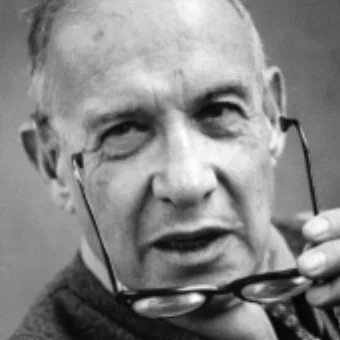
Witch doctors! It's an engaging title, promising bile, sarcasm, and maybe, just perhaps, a sneer or two. After all, this is a book about management gurus, those experts whose ever-changing theories fill bookstores and empty factories. Well paid and annoying, they scream out for a little abuse. In this book, they don't get it. As the authors note, somewhat smugly (they do write for The Economist), "it would have been much easier (and often far more pleasurable) to have trashed the industry." But they reject the hatchet in favor of a "scalpel job." In many respects they succeed. Often drily funny. The Witch Doctors is a succinct guide. If something can be said in a couple of pages, that's all the authors use, an approach that could put Tom Peters in the poorhouse. There are longueurs, but this is a management book that the reader will actually be able to finish. It even has a hero, the "ever-prescient" Peter Drucker.

Born, like so many other terrifying polymaths, in Habsburg Austria, Drucker was one of the first to take management theory beyond the mechanical approach developed by time and motion men such as Frederick Taylor or GM's Alfred Sloan. He also realized that he could make a living out of this. He became, in short, an early "knowledge worker," a Druckerism, typical in both its ugliness and its accuracy, which describes what he saw as a rising class of employees, valued more for brains than for brawn.

Like many Druckerisms it is also rather obvious. Drucker took some genuine insights, added a little nonsense and a bit of hype, and transformed his profession. Shamans to the suits, the management theorists (and their consultant spawn) are now everywhere. Messrs. Micklethwait and Wooldridge summarize the wares on offer. Much is bogus. Yet American managers currently spend $15 billion a year on outside, well, management.

Are they mad? No, say the authors. In a competitive world, a manager has to be seen to be doing something, anything, to keep ahead. Management theory feeds on this fear. Consult dull books with punchy titles, bring in McKinsey, go whitewater rafting with the guys from marketing: it will all help create an image of dynamism. As The Witch Doctors shows, this is all based on the illusion that there is a magic bullet, a permanent solution to problems of management. There is not, of course. For the management industry this is just fine. "The beauty of the system is that none of the formulas work—or at least they do not work as completely as the anguished or greedy buyers hope. The result is enormous profits for the gurus but confusion for their clients." As the authors write about "re-engineering," management theory "is less than it was originally cracked up to be. But that does not mean it is useless."

It is also less important than this book would have us believe. True, the how of today's restructurings may have been thought up by a Bain or McKinsey, but to call management theorists "the unacknowledged legislators of mankind" goes too far. As the authors themselves partly concede, the whys lie elsewhere, in capitalism's relentless process of creative destruction. The consultants may prefer to mask this, to cloak their function with talk of "empowerment," but for the most part this is just chatter. Gradgrinds in Guccis, they are really selling systems intended to motivate employees to be highly productive, but very cheap. Messrs. Micklethwait and Wooldridge probably grasp this, but at times even they can be taken in: "Teams . . . can be vital for innovation. . . Firms lay on special facilities to encourage them. Sun Microsystems offers laundry and dry-cleaning services. . . to members of teams who work round the clock." How generous.

To the NR reader, checking stock prices with quiet satisfaction, this hypocrisy may sound splendid, reassuring even, but it comes with a cost. The happytalk is starting to sink in, something that this book does not really consider. All those sharing, mushy, left-wing sorts of words are beginning to have their effect. The modern corporation is, after all, a soft target. Ownership is diffused, parceled out in tiny units across mutual funds and pension plans. These may have their own agendas, like the state pension funds happy to divest from a Texaco or a Philip Morris, pleased to make a political point with their retirees' savings. Meanwhile, management wants its bien-pensant approval too. Action is affirmative, daughters are taken to work, and everyone recycles. Before too long, people feel free to ask what a company for.

It's a stupid question. One of the answers, what this book calls "that stakeholder thing," is even worse. It takes a village, goes this argument, to run a corporation. A duty is owed to all "stakeholders": employees, consumers, the "community," and, oh yes, even shareholders. The authors are too clear-eyed to agree. German stakeholder capitalism is creaky, and the best way to deal with some of the problems in the Anglo-Saxon model "is to give more power to shareholders, not less."

And then the authors quote Gordon Gekko (Olivet Stone's, not NR's) in eloquent support. This is a bit like inviting David Duke to speak in favor of CCRI. Are the authors ashamed of their own conclusions? Perhaps. They are at pains, after all, to distance themselves from that rough Milton Friedman. He does know what a company is for. One thing only: to make money legally. This, we are grandly told, "looks ever less defensible."

This is not quite political correctness, but more a lofty Bill Bradleyism. It pops up throughout the book and reaches its irritating nadir in a discussion of management "diversity."

This, naturally, is a Good Thing. "America's WASP elite," whatever that may be, is singled out for the usual abuse. It is dominated by men, you see, and it simply lacks the multicultural "experience" essential (did the author ask the Japanese about this?) to mastermind the conquest of world markets. These "middle-aged, blue-suited, white shirted men" are clearly doomed to repeat the failures of their WASP predecessors. Failures, presumably, like the British Empire, the Industrial Revolution, Coca-Cola, and Ford.

Ludicrous of course, but just tough it out. Unlike most books on management. The Witch Doctors is enlightening. And worth finishing.