Basic Instinct

American Outlook, September 1, 2002

Joseph Epstein: Snobbery - The American Version

Trading Places.jpg

The Englishman said to me, “oh you are writing for an American magazine.” The eyebrow arched, the lip curled, the cliché was confirmed over a smugly sipped cup of tea. English snobbery, again. To the rest of the world, it is our defining vice (full disclosure: I’m also from the scepter’d isle), something as English as military defeat is French. Fair enough: mine is a country obsessed by class. Only in England could a humorous essay (published in the 1950s by one of the Mitfords, naturally) on the distinctions between the language (“U”) of the upper classes and that spoken by everyone else (“Non-U”) become a national obsession. Lavatory was “U,” toilet was (and, some would say, still is) a social catastrophe. Of course, such refinement should be no surprise in a nation with a sense of class so acute that, only a few years ago, it was usually possible to tell a man’s social origins by his socks (ideally dark blue or black, calf-length, and never, ever patterned).

But if snobbery is our vice, it isn’t ours alone. England’s trick was to market its snobbery as the best in the world, and then to put it to work. In this, if nothing else, Britain succeeded brilliantly. In his Ornamentalism: How the British Saw Their Empire, historian David Cannadine makes the case that the British colonizers often co-opted the “native” social hierarchy (medals all ’round!) into their own in order to assist in the preservation of colonial rule. As any reader of Rudyard Kipling’s Kim will know, class did not always trump race, but as a prop (in both senses) of the glittering imperial structure, it certainly played its part. Even today snobbery remains a useful weapon in London’s diplomatic arsenal, most notably in the awarding of knighthoods to the occasional friendly foreigners. Step forward, “Sir” Norman Schwarzkopf.

Snobbery, then, is not confined to those damp islands off the northwestern coast of Europe. In his entertaining new book, Snobbery: The American Version, author and Northwestern University lecturer Joseph Epstein gives credit where credit is due (“the English are more practiced in snobbery than any other people”), but chooses not to linger too long in Albion. The main focus of his book is snootiness on the western side of the pond, “its perplexities and its perils, its complications and not least its comedy.” On a more serious note (this is, after all, a book by an American academic), he aims to examine “whether snobbery is a constituent part of human nature or instead an aberration brought about by any particular social conditions.” He succeeds admirably in the analysis of the first part of his objective, stumbles over the second, and has problems too with a third, no less important question: what exactly is a snob?

That last difficulty puts Epstein in good company. In his 1848 collection, The Book of Snobs, Thackeray complains that although “the word snob has taken a place in our honest English vocabulary,” it can’t be defined. “We can’t say what it is, any more than we can define wit or humor or humbug; but we know what it is.” Epstein has a similar problem. His notion of the “essence of snobbery” (“arranging to make yourself superior at the expense of other people”) seems to miss the point. Ray Kroc, no snob icon but the man who made McDonald’s what it is today, reportedly said that if he saw a competitor drowning, he would put a live fire hose in his mouth. Superiority is often achieved at the expense of someone else. Such leapfrogging has taken our species from mud huts to the moon. But how superior is that superiority? Epstein writes that “snobbery often entails taking a petty, superficial, or irrelevant distinction and running with it.” He’s right, and if anything is the essence of snobbery, that would be it. Some of his examples, however, are strangely unpersuasive.

Contrary to what Epstein suggests, the driver of a BMW 740i is indeed quite entitled to feel “quietly, assuredly better than the poor vulgarian in his garish Cadillac.” As is acknowledged elsewhere in this book, good taste is not the same as snobbery. Equally, whatever Epstein may think, the parent of a daughter “studying art history at Harvard” need not be ashamed of the “calm pleasure” with which he greets the news that the child of an acquaintance is able to manage only a major in photojournalism at Arizona State University. That parent has, in all probability, earned that moment of satisfaction. The snob is not distinguished from the man of taste by his ability and willingness to discern the difference between a Beamer and a Caddy but by the use he makes of that discernment. Coming to the conclusion that Harvard is better than ASU is not necessarily the mark of the snob: treating an ASU graduate worse, merely because of where he went to college, most surely is.

These lapses into a dismaying (and, one hopes, insincere) egalitarianism are the exception rather than the rule in this book. Epstein soon finds himself on safer ground. Like Thackeray (a comparison that he would, doubtless, accept with “calm pleasure”), Epstein is rather better at identifying snobs than at analyzing snobbery. From a vantage point of somewhat tweedy, curmudgeonly disdain, he offers his readers an enjoyably vicious introduction to the different types of American snob. They are presented as a ludicrous and absurd spectacle, lampooned with a vim and biliousness that is all too rare in an era wherein there is no offense greater than giving offense. Among Epstein’s victims are Susan Sontag (“when young, a knockout American woman who did a fairly decent impression of a European intellectual”), PC “virtucrats” (“What makes the virtucrat a snob is that not only is he smug about the righteousness of his views, but he imputes bad faith to anyone who doesn’t share them. Upon this imputed bad faith he erects his own superiority.”), Gore Vidal (“Self-love, which in him never goes unrequited, is sufficient for this remarkably confident snob.”), and foodies (“When did my dentist begin using the word pasta?”).

Epstein appears to concede that he himself may be something of a snob, but it would be wrong to dismiss his tastes (there are, for example, touches of PBS, academe, and the hair shirt in his rather ostentatious lack of interest in material gain) as routine examples of intellectual snobbery. As he explains elsewhere in the book:

High standards far from being snobbish are required to maintain decency in life. When the people who value these things are called snobs, the word is usually being used in a purely sour-grapes way. Elitist is almost invariably another sour-grapes word, at least when used to denigrate people who insist on a high standard. The distinction is that the elitist desires the best; the snob wants other people to think he has, or is associated with, the best. Delight in excellence is easily confused with snobbery by the ignorant.

Quite. The mere fact that he is so obviously comfortable using a shockingly abrasive word like ignorant tells the reader all he needs to know about Joseph Epstein.

Epstein is even prepared to risk being labeled snobbish about snobbery with his suggestion that American snobbery has itself gone down in the world. In a key chapter (“O WASP, Where Is Thy Sting-a-Ling?”), he chronicles how America’s old White Anglo-Saxon Protestant elite walked away from power (and, as he notes in a brilliant, brutal aside, “came away disliked, diminished, maybe even a little despised for having done so”), leaving snobbery unanchored, “setting it afloat if not aloft, to alight on objects other than those connected exclusively with social class,” including, presumably, pasta.

But that’s an exaggeration. Class sensibility was no longer so rooted in ethnicity or tradition as in the past, but, as Paul Fussell showed in his book Class (1983), it was flourishing well into the Reagan era. It continues to do so today, but, so far as snobs are concerned, class has lost much of its glitter. The years of fluid hierarchy and social change have taken their toll. Old notions of caste no longer suffice for truly effective one-upmanship. In response, snobs did what they had to. They evolved.

As snobbery is such a basic instinct, this was only to be expected. Yet, despite the fact that the force and existence of such an instinct explains much of what Epstein describes, he seems curiously unwilling to accept it. In an attempt designed, presumably, to satisfy his objective of seeing whether snobbery can be linked to “particular social conditions,” Epstein asserts that “snobbery as we know it today, [the] snobbery meant to shore up one’s own sense of importance and to make others sorely feel their insignificance” was rarely seen before the nineteenth century. The reason for its expansion, he argues, was the spread of democracy. By unsettling a previously fixed social order, democracy increased the level of insecurity within society. Epstein quotes H. L. Mencken’s observation that, socially speaking, the American is on a perpetually icy slope, wanting to climb “a notch or two,” but “with no wall of caste to protect him if he slips.” As an ersatz class system, snobbery could assist in the struggle to survive within a society that had become suddenly, and frighteningly, competitive.

It is an ingenious theory, but it fails. Snobbery, and its simpering handmaiden, deference, could be witnessed long before the emergence of mass democracy. Epstein need have no doubt that it is, indeed, “a constituent part of human nature.” Let’s take one example. “Novelists,” writes Epstein, “are our keenest sociologists,” and there were none keener than Jane Austen. At the time she was writing, the ballot box was yet to cast much of a shadow over England’s country gentry, and yet her novels are filled with snobbish tension and social unease. And that’s only natural. People have always understood that no social order can be guaranteed to endure forever. Our species has emerged through millennia of turmoil, conflict, disaster, and war, and the lesson it has drawn has been simple: there is never, ever a bad time to be jockeying for position.

If there’s one person who knows about jockeying for position, it is a snob. On its face, Epstein’s comment that “there is something deeply antisocial about the snob” seems puzzling. There is, on the contrary, no one more social. Lacking the talent to succeed on his own merits, the snob is forced to manipulate social convention in such a way as to ensure that he achieves that all-too-necessary commodity, status. Epstein’s complaint, however, is subtler: it is not the snob who is antisocial, but his methods. The snob, he grumbles, “is, in a profound sense, in business for himself,” to which the obvious retort is, “Who isn’t?” Where snobbery can be said to be antisocial is in the misdirection of effort and ability that it implies; but like it or not, its existence is inevitable in any functioning society: a successful organism will always attract parasites.

It is difficult to avoid the feeling that Epstein’s disapproval of his snooty subjects colors his other main theme: that snobs have no fun. His description of the miseries of the snob’s life is bleak indeed. Epstein contends that the snob has only one standard, “that of comparison,” and that this approach to life can bring no “lengthy contentment” because “comparison inevitably implies competition.” There’s something to this; the snob’s self-esteem may be unusually susceptible to the opinions of others. But this is only a question of degree: almost all of us worry about how we are seen by the outside world. Besides, what’s the problem with competition? Epstein’s notion that competition is automatically an ordeal is a view that I suspect (perhaps snobbishly) only an academic could hold. Competition can be agony (check out the scene in Bret Easton Ellis’s repulsive but perceptive novel American Psycho, in which various Wall Street types compare the quality of their business cards), but it can also be ecstasy (Ray Kroc again). It depends on the nature not of the game (which can be snobbish or not), but of the individual who is playing it.

The truth is that, disapproving of snobbery as he does, Epstein desperately wants to believe that snobs must, by definition, be unhappy. In this he is doomed to be disappointed. Like all primates, we are social animals, and therefore status in itself—deserved or not—can be a source of profound satisfaction. The rewards from the superficial can run very, very deep.

It’s not “fair,” of course, but so far as snobs are concerned, that’s just the point.

The Good Russian

Richard Lourie: Sakharov - A Biography

National Review, August 12, 2002

Sakharov's Grave, Vostryakovskoye Cemetery, Moscow, 1991 © Andrew Stuttaford

Sakharov's Grave, Vostryakovskoye Cemetery, Moscow, 1991 © Andrew Stuttaford

It takes more than a Bolshevik to erase history. Lenin intended his revolution to be a clean break with the unruly, uncontrollable past, but, in the end, he failed. Remnants of the older—and, for all its faults, more humane—Russia succeeded in enduring through three-quarters of a century of Communist brutality. Andrei Sakharov, the subject of this new biography by Richard Lourie, may have been born in the formative years of the Soviet dystopia, but he is best seen as a child of the earlier, finer civilization that the revolution had been designed to destroy. Miraculously, he too managed to survive.

More than that, he was even—for a while—to flourish within the Soviet system. The regime knew how to promote talent as well as to punish it. Although Sakharov was never a party member, his scientific ability was enough to bring him into the inner circles of the Soviet establishment. It was his moral strength, however, that was to take him out again. It turned out that the enormously gifted scientist, an explorer of the impossibly complex, was to find fulfillment in his dedication to some very basic truths. Sakharov, the man who gave the Kremlin the H-bomb, became a champion of human rights and—in a delightful irony—an architect of the Soviet collapse.

It was an extraordinary journey, and any attempt to make sense of it must begin with an understanding of the Russian intelligentsia into which Sakharov was born—a group, as Lourie puts it, that is "something between a class and a clan." Its members were, and are, "educated people whose sense of honor and duty compels them to take action against injustice." But, as Lourie also notes, "Lenin and some of the other Bolsheviks [also] were of the intelligentsia, its crude and jagged cutting edge. And there were also spiritual extremists." Indeed there were. Those true believers still shouting Stalin's praise at the very moment his executioners gunned them down were no less representative of the intelligentsia than were those gentle, thoughtful folk found in Turgenev or Chekhov.

What these people had in common was the idea that it was they who should set (and live up to) the standards necessary to build a better Russia. They saw themselves as intellectually and morally superior both to the dangerous and benighted masses below and the crude and despotic rulers above. They believed that they were the nation's true elite, elevated and yet oppressed. Theirs was a state of mind prone to lethal naivete and Utopian fantasy, to dreams of a finer, purer way of life that were to pave the way for the Bolshevik nightmare.

That Sakharov inherited this utopianism can be seen from his "Reflections," the 1968 essay that marked his definitive break with the Communist regime. It was an extraordinarily brave attack on totalitarianism, strangely skewed by a lingering attachment both to collectivism and dopily enthusiastic futurism. Science fiction is blended with Stalinist mega- project ("Gigantic fertilizer factories and irrigation systems using atomic power will be built... gigantic factories will produce synthetic amino acids"). As Lourie notes, Sakharov at that time still had hopes of a worldwide socialist paradise, to be achieved by technological advance, heavy taxation, and "convergence" between "democratic socialism" and "the leftist reformist wing of the bourgeoisie."

If this dreamlike world view was one aspect of Sakharov's fidelity to the traditions of the Russian intelligentsia, so too was his dedication to his work and the notion that he could somehow do something for the greater good. These are demanding standards to maintain in the best of times. Trying to live up to them in the moral slum that was the mid-20th-century Soviet Union was to lead Sakharov to a life of barely comprehensible contradictions. So, in the late 1940s, we find the future winner of the Nobel Peace Prize busily designing weapons of mass destruction, an apparently decent man conscientiously putting his talent for murderous innovation at the disposal of a regime already responsible for the deaths of millions the old-fashioned way.

Loyalty to his country (enhanced by memories of its huge wartime losses) was partly to blame, as were the shreds of belief in a Soviet future (the letter that Sakharov wrote to his first wife on the occasion of Stalin's death makes for nauseating reading). Ignorance, certainly, offered no alibi. Sakharov knew. The facility where he worked was built by slave labor. He wrote later that he saw them everywhere—"long lines of men in quilted jackets, guard dogs at their heels"—but it did not stop him doing his best for the government that had imprisoned them.

Then something changed. This loyal servant of the Soviet state began asking awkward questions. And when he didn't get the answers he wanted, Sakharov did what very few dared do. He persisted—and it is the great weakness of Lourie's book that it never really explains why. Superficially, the story is straightforward, and so is the way that Lourie tells it. Increasing concern over the dangers posed by the atmospheric testing of his nuclear devices led Sakharov to urge restraint. He was told, none too kindly, to keep his thoughts to himself and to get back to work, but he continued with his complaints, embarking on a voyage that would take him from privilege to protest, through gradual alienation to outright dissidence, internal exile, and, ultimately, triumph.

To be fair to Lourie, pinning down what drove Sakharov may be a hopeless task. This most public of dissidents was a private, reserved man. Aged about 50, he claimed to have only one close friend (a friend who subsequently let him down in a characteristically squalid, characteristically Soviet way); it is easy to detect a similar pattern of emotional distance in Sakharov's first marriage.

With Sakharov, however, there is always that capacity for surprise. Whatever the shortcomings in their relationship, he fell apart when his first wife died. A little later this quiet, dry, slightly prudish introvert found himself drawn to the lively, abrasive, and demanding Elena Bonner. Understandably enough, their partnership (they subsequently married) is often (and Lourie's book is no exception) discussed in a primarily political context, but it was, clearly, much, much more than that. This was a great romance, a grand, gorgeous late-flowering love affair that carried alt before it, a light in the midst of totalitarian darkness, a bastion of integrity in a state that had none.

But those looking for the source of Sakharov's anti-Soviet struggle need to look further than Elena Bonner. She accelerated the process and made it more bearable for the beleaguered physicist (two against an empire is better than one), but this was a question of speed, not destination. By the time the pair first met, it was 1970—and Sakharov was already in irrevocable opposition.

The key to the puzzle must lie elsewhere. Readers of Lourie's book are given enough clues to draw some conclusions of their own. It is necessary to look again at the influence of what Sakharov once referred to as the intelligentsia's "inherited humanist values." Add those values to a demanding family tradition, courage, and a certain innate goodness, and we start to understand why Sakharov began asking those awkward questions, both of his government and of himself And once he had begun, there could be no going back. Dedicated scientist that he was, Sakharov could not rest until he had arrived at the solution, no matter the cost.

This quest ought, one day, to be at the core of a more substantial biography. In the meantime, Lourie's book will do, not least because the stories it tells do give a good measure of the man that Sakharov became. Here's a wonderful example dating from the late 1970s (1978 according to Lourie; Sakharov in his Memoirs places it two years earlier). Bonner and Sakharov had been shown photographs of a dissident exiled to Nyurbachan, a settlement in a remote part of Siberia. Troubled by the look on the exile's face (that was all it took) they decided to visit him.

On the way to the airport, their taxi was rammed. Undaunted, they took another. The first leg of their journey brought them within 400 miles of their objective, but the next flight was "unexpectedly" delayed by 24 hours. They camped out at the terminal, and took the plane the next day. On landing, they were told that the bus to Nyurbachan had been canceled. There were still 15 miles to go. The secret police were obviously watching their every move. Lourie tells us what this indomitable duo, no longer young, no longer in good health, then did.

"Though it was getting dark, Sakharov and Bonner decided to walk . . . The forest path was moonlit, the air fresh, a Siberia of stars above the trees. They stopped for bread and cheese, sipping coffee from a thermos . . . Alt the KGB's machinations had only afforded them hours of happiness."

And, yes, they reached their destination.

Hollow Laughter

Martin Amis: Koba the Dread - Laughter and The Twenty Million  

National Review Online, July 16, 2002

Stalin, Moscow, 1997  © Andrew Stuttaford

Stalin, Moscow, 1997  © Andrew Stuttaford

Back in the time of the revolution he was described as a gray blur, and it is as a gray blur that Stalin survives today, a nullity, a gap in our memory, an absence. In the lands of his old empire, they remember more, far, far more. The absence there is absent fathers, absent mothers, absent grandparents, absent uncles, absent aunts, absences in the millions, all victims of the monster who remains, remarkably, still present in Red Square (there's a small bust at his burial site by the Kremlin's walls and usually someone takes the trouble to leave a flower or two). In our ignorant, spared West, the West that never knew him, not really, we catch only glimpses of what we think what was. The images are caught on fading, flickering newsreel, a friend from the greatest of America's wars, FDR's pal, smiling benignly out, hooded eyes beneath a peaked cap, good old Uncle Joe.

In his new book, Koba the Dread: Laughter and the Twenty Million, the British novelist Martin Amis makes an attempt to fill this gap. It is a curious, compelling but more than occasionally self-indulgent work, a meditation that uneasily combines snatches of its writer's autobiography with tales of the Soviet holocaust.

The tone too seems just slightly off. Amis has long been known as a master of the acid one-liner, but it jars to read his snide reminiscence of the trivial (attendance at Tony Blair's dreary millennium celebrations) within a few pages of this extract from a letter written by the elderly Soviet theater director, Vsevolod Meyerhold after his arrest and torture by the secret police:

I was made to lie face down and then beaten on the soles of my feet and my spine with a rubber strap…For the next few days, when those parts of my legs were covered with extensive internal hemorrhaging, they again beat the red-blue-and-yellow bruises with the strap and the pain was so intense that it felt as if boiling water was being poured on these sensitive areas. I howled and wept from the pain…Lying face down on the floor, I discovered that I could wriggle, twist and squeal like a dog when its master whips it.

Meyerhold was shot three weeks later. He managed, at least, to outlive his wife. She was found murdered in their apartment a few days after his arrest. Reportedly, her eyes had been cut out.

And so yes, London's Millennium Dome may, indeed, have resembled a "second-rate German airport," but, in the context of such horror, so what?

It's not just the tone and the awkward snippets of autobiography. Martin Amis's style, mannered, arch and self-consciously clever, also seems out of place, an all too elegant frame for such a crude and bloody canvas. We read of the "fantastic sordor" of the Gulag's slave ships, and that Stalin's "superbity" was "omnivorous." When told of the Wehrmacht's initial successes on the Eastern front, the Soviet dictator apparently "collapsed as a regnant presence." The baroque vocabulary acts as a barrier between the reader and the events that it is being used to describe. It may also signify the emotional distance that Amis himself feels from the Soviet tragedy. Good writer that he is, he understands "why Solzhenitsyn needs his expletives, his italics, his exclamation marks, his thrashing sarcasm," but rarely seems to feel such a compulsion himself.

What Amis does offer is a brief, and competent, introduction to the Stalin years, drawing both on recently published research and, very obviously, a long acquaintanceship with Robert Conquest, the finest English-language historian of Stalinist terror, who happens also to be an old friend of the Amis family. Tics of style and tone apart, the tale is well told, and clearly benefits from the skills of an accomplished and insightful writer. We learn, for instance, that Stalin failed to show up for his mother's funeral, a decision that "scandalized the remains of Georgian public opinion." The insertion of those three bleak words, "the remains of," tells the reader all that he or she needs to know about Stalin's impact on his native land.

Similarly, in describing the catastrophe of collectivization Amis manages in a few short lines both to summarize the onrush of disaster and to speculate what that might say about the differing personalities of Lenin and Stalin. Faced by peasant resistance, "Lenin accepted defeat, withdrawal and compromise. In other words, he accepted reality. Stalin did not. The peasantry no longer faced a frigid intellectual. It faced a passionate lowbrow whose personality was warping and crackling in the heat of power. He would not accept reality. He would break it." The result was a death toll that ran into the millions and, in Amis's vivid phrase, "swaying, howling lines" in front of the few food stores with anything to sell.

It is a hideous story, and Martin Amis should be thanked for retelling it. In forgetting those who were murdered, it is as if we kill them again, and yet with Stalin's dead that it is just what the world seems content to do. As many as seven million died in the genocidal Soviet famine of the early 1930's, yet in most histories it usually merits no more than a footnote. Walter Duranty, the New York Times correspondent who tried to deny the famine's existence earned a Pulitzer for his "reporting" in Moscow, a prize that the "paper of record" still includes on its roll of honor.

As for the other slaughtered millions (Amis believes that Stalin was responsible for a total of at least 20 million deaths — and there are other, much higher, estimates), their fate is often passed over in silence or with the most insultingly cursory of regrets. Almost no one has ever been held accountable. There has never been a Soviet Nuremberg. Solzhenitsyn has calculated that between 1945-1966 West Germany convicted some 86,000 people for crimes committed for the Nazis. The number of those found guilty of similar atrocities on behalf of the Communist Party in the former Soviet Union is unlikely — even now — to run into triple digits. In the countries of the former USSR, however, there is at least an argument (albeit misguided) for inaction: it is said that the long duration of Soviet rule manufactured too many accomplices to permit — yet — a full examination of the past in societies where democracy remains fragile.

In the West there is no such excuse, yet, when Stalin is discussed at all, the tone is often strangely sympathetic, and the tally of victims is frequently subjected to downwards revisions on a scale that would embarrass even David Irving. Where Koba The Dread fails, and fails most completely, is in trying to explain why. As a first step, Amis looks again at the old question as to whether Hitler's crimes were "worse" than those of Stalin (Conquest, interestingly, believes that they were, but can give no reason other than the fact that he "feels" so), but this controversy is, forgive the phrase, a red herring. Any moral distinction between these two bestial systems is so slight as to be irrelevant, and yet our response to them is strikingly different. In contemporary discourse, the Nazis are totems of wickedness, while Communism (despite accounting for far greater slaughter, a slaughter that still continues) is somehow seen as not so very bad.

As a shorthand for these perversely different responses to two very similar evils, Amis records how at a debate featuring the two Hitchens brothers (Christopher and Peter), Christopher Hitchens (quoted elsewhere in Koba as — astonishingly — still believing that Lenin was a "great" man) referred to evenings passed in the company of his "old comrades," a remark greeted with affectionate laughter (it is the laughter referred to in the title of Amis's book), a laughter that would be inconceivable as a reaction to a light-hearted reference to happy days with the fascists.

As Amis (who admits to laughing himself) concedes, "this isn't right." To explain that laughter, he turns, unconvincingly, to the elements of black farce that were never absent from Communist rule (but which were, he neglects, crucially, to say, equally present under the Nazis), and then, more believably, "to the laughter of universal fondness for that old, old idea about the perfect society, [which] is also the laughter of forgetting. It forgets the demonic energy unconsciously embedded in that hope. It forgets the Twenty Million."

And in that one word "unconsciously," Martin Amis gets it all wrong. Murder, turmoil, and repression were always explicit in that "old, old, idea" and they play no small part in its appeal. Glance, just for a second, at Lenin's writings and you will be amazed by the morbid love of violence that permeates his prose. The "Just City" of Marxism's dreams always came with a concentration camp. The Bolsheviks had the genius to understand this. Their intellectual descendants know enough to try and cover it up: thus the silence about Stalin, thus that disgusting laughter.

Martin Amis's achievement is that, in writing this odd, flawed book, he has done something to help ensure that it is we — and not Stalin's heirs — who will have the last laugh.

Sunday School for Atheists

National Review, March 25, 2002

his-dark-materials-covers-829675.jpg

The His Dark Materials trilogy, by Philip Pullman was, some said, the moment that literature for the young finally came of age. On January 22, Philip Pullman, a children's writer (although he objects to that label), was awarded Britain's prestigious Whitbread prize for the final installment of his best-selling His Dark Materials trilogy. In the opinion of the judges, The Amber Spyglass was Britain's book of the year. It was an unprecedented honor for a work aimed at younger readers, but Pullman is a man who must be getting used to praise, and not just in Britain. His writing has been described as "very grand indeed" in the New York Times, while reviews in the Washington Post have included adoring references to the "moral complexity" and "extravagant . . . wonders" to be found in Pullman's work.

There can, indeed, be little doubt that the first book in the trilogy. The Golden Compass, is a masterpiece, a sparkling addition to the canon of great children's fiction that leaves poor Harry Potter helplessly stranded in the comparative banality of his Platform 9-3/4. Within the time it takes to read his first few, skillfully drawn pages, Pullman takes us into a beguiling parallel universe. His spikily endearing heroine, 11-year-old Lyra, lives in an England that is a curious blend of the Edwardian and the modern. It is a place where the boundaries between what we would think of as the natural and the supernatural are blurred, no more distinct than the fraying edges of the alternate realities that Pullman describes so well. In Lyra's world every person has a daemon: a companion in animal form, part soul, part familiar spirit. There are witches in Lapland, and the most feared warriors in the North are a rampaging race of armor-clad bears, ursine Klingons who have fallen into decadence under the rule of a corrupt and vicious usurper.

In constructing this captivating, fascinating fantasy, Pullman has pillaged the past and looted from legend. He is a magpie of myth, an author whose work borrows from saga, folklore, and some delightfully obscure parts of the historical record, and, oh yes, he can write.

Lyra raised her eyes and had to wipe them with the inside of her wrist, for she was so cold that tears were blurring them. When she could see clearly, she gasped at the sight of the sky, The Aurora had faded to a pallid trembling glimmer, but the stars were as bright as diamonds, and across the great dark diamond-scattered vault, hundreds upon hundreds of tiny black shapes were flying out of the east and south toward the north. "Are they birds?" she said. "They are witches," said the bear.

That literature of this, well, literacy is being written for the young (Pullman's target audience begins at around 11, Lyra's age) is wonderful. And finding a large market for it in this grunting, ineloquent era is little short of a miracle. More than a million copies of Pullman's books have been sold in the U.S., and the same again in his native Britain.

Their author, however, would be a little uneasy to hear the use of that word "miracle." For he is, alas, a man with a message, and by the end of the trilogy the message has drowned out the magic. Narrative thrust is abandoned in favor of a hectoring, pontificating preachiness-—which has itself probably played no small part in the rise of Pullmania among the chattering classes on both sides of the Atlantic.

Pullman, you see, is a man with an apse to grind. He hates the Church, and he hates it with a passion. This is an unusual fixation for someone from the scepter'd isle; most of the English are rather relaxed about religion, tending to lack strong views about the matter one way or the other. Our predominant faith is a benign, "play nice" agnosticism, vaguely rooted in the Anglican tradition. Metaphysical debate is as foreign to us English people as a sunny day in November.

Philip Pullman is made of more strident stuff. He wants, he once told the Washington Post, "to undermine the basis of Christian belief." This is an immodest ambition even for a winner of the Whitbread prize, and the rationale behind it seems crude, no more sophisticated than that of the high-school heretic, and gratingly simplistic from such a clever writer. The history of the Christian Church is, Pullman intones, a "record of terrible infamy and cruelty and persecution and tyranny." True, to an extent; but the full story is a little more complex than that. It is no surprise to discover that C. S. Lewis is a particular bogeyman: Pullman claims to hate the Narnia hooks "with deep and bitter passion." Among other offenses, Lewis apparently celebrated "racism [and] misogyny"—a choice of thought crimes that reveals the supposedly skeptical Mr. Pullman as a loyal follower of a very orthodox form of political correctness (the inquisitorial piety of our own time). PC's dismal spoor can be found throughout his books, a spot of class hatred here, a little global warming there.

And, above all, there is his omnipresent attitudinizing vis-a-vis religion. It's not so much the role of a wicked Church that is the problem (malevolent clergymen with twisted creeds are nothing new in fiction), but the tiresome little lectures that come with it. So, for example, in The Subtle Knife a speech attacking the sinister Church of Lyra's world becomes an attack on all churches everywhere: "Every church is the same: control, destroy, obliterate every good feeling." There is plenty more of the same, crude, nagging, and bombastic, its form objectionable, whatever one might think of the content. In writing his tales of Narnia, C. S. Lewis may also have been a man on a mission, but at least he had enough respect for his readers to prefer allegory and parable to assertion and propaganda. It is worth remembering that, compared with Pullman, Lewis was writing for a much younger audience, children of an age at which it is quite possible to read and reread the Narnia adventures and miss most or even all of the Christian references; aged eight or nine, I did. Nevertheless, Lewis was content to leave his message oblique; Pullman never allows his readers such freedom.

Despite these concerns, the second book. The Subtle Knife, remains imaginative and alluring if less startlingly original than its predecessor, and still able to survive increasing amounts of its author's pedestrian philosophizing. By the end of The Subtle Knife, however, it is becoming painfully apparent that Pullman's overall theme (basically, a variation on Paradise Lost) is unlikely ever to soar; a devastating weakness in a work that, like many epics, is structured as a quest. The Amber Spyglass, the allegedly grand finale of the series, is intended to bring resolution, but it is difficult to care. The object of Lyra's quest remains (at best) obscure and (at worst) highly pretentious, an unholy grail that simply does not engage the imagination.

When I asked 11-year-old Holly, the daughter of some friends, what she thought of these books, she said that they were "well-written." The story itself didn't quite catch her attention.

Dust is to blame; The Amber Spyglass is a book in which, despite some sporadically spectacular passages, any real sense of excitement is, quite literally, ground into Dust. Scattered over page after wearying page, this endlessly discussed "Dust" is the substance that represents consciousness in Pullman's universe, but it runs the risk of inducing unconsciousness in his youthful and, doubtless, exhausted readership.

And there is, unfortunately, no escaping it. For there is Dust to be found in every nook and cranny of this wordy, wordy, wordy culmination of Pullman's three-volume morality play, which is, at its core, nothing less than an assault on the notion of Original Sin. In the end, the assault takes very literal form: After a battle that rather uneasily combines elements of Star Wars with the Book of Revelation, God (or, at least, an entity who is clearly meant to the the Christian God) is overthrown, the underworld is liberated, and a "Republic of Heaven" is proclaimed.

The true nature of this apparently marvelous republic is never made clear. It may be the materialist heaven on earth, but there are also hints that it could be the New Age's goblin-infested alternative, that empty-headed, shallowly superstitious zone where everything, and nothing, is sacred. It makes for a somewhat frustrating conclusion to this very frustrating trilogy, a flawed, fascinating creation of great promise that is eventually brought down by its tendency to go too far—much like naughty old Adam himself, as Philip Pullman would never say.

Diana, Again

National Review Online, October 6, 2001

Diana.jpg

There is, let's admit it, something grimly satisfying about having a prejudice confirmed. So, if you are one of those people who believe that there is absolutely nothing more to say about Charles and Di, Christopher Andersen's new work, Diana's Boys, is the book for you. Once again weary readers are presented with the same shop-soiled menagerie (mean queen, pained prince, plain Camilla, horrible Hewitt, foolish Fergie, loveable Tiggy, playboy Dodi), the same exhausted anecdotes (hysteria at Highgrove, bulimia in the palace, Charles' confession of adultery, Diana's TV interview, the rudeness at Harry's birth), and, above all, that same doomed, fascinating heroine, bewitching and manipulative, a Sybil in Chanel, with her bewildering, ever-shifting personality leading all those around her to ruin and to despair.

We know how her story will end, of course. We are told again about those last tragic hours in Paris, that speedy departure from the Ritz and the disaster in a tunnel, hours that will be particularly familiar to fans of Mr. Andersen, in that he had already discussed them at some length in an earlier bestseller, The Day Diana Died. Now, Mr. Andersen, the author of two books about Katharine Hepburn, three volumes about the Kennedys, and two works about Princess Diana, is clearly a man who is not too worried about reworking a profitable subject. It is best, however, if such a return to the mother lode can be justified by the claim that something fresh is being discovered. The kindly Ms. Hepburn has, most obligingly for her biographers, been very long-lived, leaving plenty of room for the two, doubtless distinct, efforts by Mr. Andersen, Young Kate and The Remarkable Love Story of Katharine Hepburn and Spencer Tracy. The Kennedys enjoyed far less staying power than the formidable actress, but, in their case Mr. Andersen could, presumably, reduce the risk of repeating himself by moving across, then down, the former First Family tree. He followed Jack and Jackie with Jackie after Jack, and then, in a confirmation of his mortuary franchise, he gave us The Day John Died.

In Diana's case, however, going back to the celebrity seam was not so straightforward. The inconveniently dead princess lacked Ms. Hepburn's powers of survival. A "Young Diana" was all there ever was, and all there ever would be. There were no long decades, just a few short years filled with incident, almost all of which Mr. Andersen had already chronicled. The Kennedy alternative, harvesting the family tree, was also tricky in the case of the gloomy royals. Compared with JFK the poor princess lacked a sellable surviving spouse. Who, other than Camilla, who would go for Charles after Diana?

That only left the sons, William and Harry, in Diana's words, her "one splendid achievement", and so they appear to be. But as camouflage for an opportunistic retelling of the Spencer story, her offspring prove hopelessly inadequate. This is hardly their fault. They may, in the words of Mr. Andersen's publisher be "the world's two most celebrated royals" (eat your heart out, Elizabeth), but they simply have not done enough to carry a biography. This would be true of almost any teenager. Diana's children are no exception, as a quick glance at this book's index reveals.

Entries under "William, Prince" include "backside pinching of… e-mail romances of…formality disliked by… Harry dangled from window by." Take away the story of their parents, and the Windsor princelings' lives are the stuff of trivia. While that is not a bad level for Mr. Andersen's writing style ("Finally, the Princess of Wales leaned forward to see what the boys' found so riveting: steamy photos of the buxom Barbi twins, Playboy centerfold models Shane and Sia") he is astute enough to know that, when it comes to book sales, his best hopes still lie with Diana. So, much of what we get is a tired rehash of a failed marriage and a tragic death, with, on occasion, the only variety coming, quite literally, from the pagination.

On page 43 of Diana's Boys, for instance, we can read that "William's mother indulged in an orgy of self-mutilation. At various times, Diana slashed her wrist with a razor, stabbed herself in the chest with a pocketknife, cut herself with the jagged edge of a lemon peeler, and hurled herself against a glass display case, shattering it." This is a drama that may be familiar to admirers of page 49 of The Day Diana Died where readers are told that "in an orgy of self-mutilation, at various times Diana slashed her wrist with a razor, stabbed herself in the chest with a pocketknife, cut herself with the jagged edge of a lemon peeler, and hurled herself against a glass display case, shattering it."

The only difference between these two accounts lies in the description of its protagonist. In Diana's Boys the lemon-peeler-wielding princess is also, in keeping with the theme of a book allegedly focused on her sons, described as "William's mother," rather than just the "Diana" used in the earlier text.

To be fair, there are some revelations (at least to this Brit) in the more recent book. I was, for example, unaware of the fact that, in an unorthodox variant of the curt handshake generally preferred by the English upper classes, one socialite allegedly prefers to greet Prince William by putting her hand down the front of his trousers. For the most part, however, even those parts of Diana's Boys that relate specifically to the children cover fairly familiar ground, if in ever more excruciating detail. In The Day Diana Died, Mr. Andersen tells us that William once "tried to flush his father's shoe down the toilet", while in Diana's Boys, we learn that they were "four-hundred-dollar" shoes.

More excruciating for William, should he ever look at this book, will be the speculation about his love life, speculation helpfully illustrated by an inspired selection of photographs that manages to include seductive pictures of no fewer than three cuties whose names (Tara Palmer-Tomkinson, Emma Parker Bowles, Davina Duckworth-Chad) seem more substantial than the outfits that they are wearing. For the time being, however, both the young princes seem remarkably well balanced given what they have been through, but it is difficult to read Mr. Andersen's book without wondering whether Diana's boys are destined to share some of the bleaker aspects of their parents' fate.

For, while the source of many of Charles and Diana's problems lay in their own personalities (well summarized in Sally Bedell Smith's Diana in Search of Herself, psychobabble-heavy, but nevertheless the best single account of the whole miserable saga) other factors were also very much to blame. In particular, the royal couple had to contend with the challenge of living in a country that no longer knew what it wanted from its monarchy. Like their predecessors, the prince and princess were public figures, but the public had changed. To their cost, Charles and Diana were to discover that the old deference was dead, taking with it the stuffily comfortable etiquette that once cocooned the inhabitants of Buckingham Palace. It had been replaced by a relentlessly intrusive tabloid-driven agenda that mixed class resentment and prurience with the curiously old-fashioned notion that the Royal Family should set some sort of example, although no one seemed to be able to agree on what that example should be.

It is worth remembering that when, in the bawling, mawkish week that followed Diana's death, the formerly vilified princess was being sanctified for allegedly being able to show her true feelings, the Queen was at the same time coming under attack in the press ("Show us you care") for failing to fake hers. What Fleet Street wanted from Her Majesty ("Speak to us Ma'am — Your people are suffering") was a blubbering expression of regret for a former daughter-in-law she clearly no longer really cared for.

Poor William ("the heir") and, to a lesser extent, Harry ("the spare") face a lifetime of trying to satisfy the conflicting, unclear, and capricious demands of such scrutiny, of which Mr. Andersen's book is an early, and relatively harmless, example.

No wonder William is said to doubt whether he wants to be king.

David Horowitz: Hating Whitey and Other Progressive Causes.

National Review, May 22, 2000

david-horowitz.jpg

WAS there a David Horowitz in Bosnia, a Cassandra warning of the cataclysm to come? For most ethnic conflicts are fairly predictable, and it's not too difficult to identify who is going to start them. The underlying message of this collection of essays is that race relations in this country too are being deliberately poisoned, with potentially disastrous results. The culprits are a grubby group of demagogues and ideological hucksters, given their opportunity by the development of identity politics. It is worth reading what Horowitz has to say. After all, he was once a prominent '60s radical, a "progressive" pur et dur. Now, thankfully, he's a conservative (of sorts), but he still writes like an old-fashioned left-wing polemicist. His prose is splendidly savage and invigoratingly rude. David Horowitz has a message to deliver, and if he offends someone in the process, that's just too bad.

This is an angry book, and with good reason. The "progressive causes" related by the author are full of bullying, career destruction, race baiting, rape, and murder. We may giggle about political correctness, but it is, as Horowitz explains, no less than "the stuff that totalitarian dreams are made of." As a former Leninist, he understands how the Left plays the game and the tactics it uses.

The most worrying of these is the manipulation of ethnic antagonism. Today's diversity politics have often been reduced to little more than the "expression of racial paranoia." The consequences could be terrifying. For as Horowitz warns, "by projecting their fear and aggression onto those around them, paranoids create enemies too."

Sure sounds like Bosnia to me.

It's Witchcraft

J. K. Rowling: Harry Potter and The Sorcerer's Stone

J. K. Rowling: Harry Potter And The Chamber of Secrets

J.K. Rowling : Harry Potter And The Prisoner of Azkaban

National Review, October 11, 1999

HarryPotter.jpeg

IT’S enough to make you choke on your fava beans. In bookstore new-fiction aisles, this was meant to be the summer of Hannibal Lecter: aesthete. Renaissance scholar, and serial killer. Instead he has had to share the limelight with Harry Potter, the schoolboy hero of a series of British children's books. The second of these, The Chamber of Secrets, was released in the U.S. at about the same time as Thomas Harris's Hannibal. On September 19, more than three months later, it was Number Three on the New York Times bestseller list, five places ahead of the unfortunate Dr. Lecter. The same week, the first Harry Potter (The Sorcerer’s Stone), which has been on the list for the better part of a year, came in at Number Two. That's pretty good for works of very English fantasy, and astonishing for books aimed at children. To add to the cannibal's misery, the most recent Harry Potter, The Prisoner of Azkaban, has now arrived in America, released early by its U.S. publishers as a result of the large number of copies of the British edition that were making their way across the Atlantic. Probably by broomstick. For the Harry Potter books are about witches and wizards. In the finest tradition of children's stories, Harry is an 11-year- old orphan being brought up under appalling conditions by grotesque relatives. But, as always in these tales, our hero discovers that be has another, greater destiny. To find his future Arthur pulled a sword out of a stone. Young Potter just receives letters, hundreds of them, delivered by owls. Harry Potter, it turns out, is a wizard, and he is required to attend Hogwarts School of Witchcraft and Wizardry.

Not least because he has an enemy, Voldemort (the splendidly chosen names are one of the strengths of these books), a great wizard who has gone over, as George Lucas would recognize, to the dark side. Voldemort was responsible for the deaths of Harry's parents and wants to finish off the son. It Harry is to survive, he will need all the training he can get in the magical arts. The books (there will eventually be one for each of the seven years Harry is due to spend at Hogwarts) detail his adventures at the school and the intensifying struggle with the forces of the wicked Voldemort.

So far, so good, but this is unexceptional stuff, not enough to explain why so many people are wild about Harry. Part of the answer, of course, lies in skillful marketing, not only of the novels but their author. And why not? Hers is a story almost as magical as Harry's.

J. K. Rowling was a divorced single mother on welfare at the time she wrote The Sorcerer's Stone, mainly, it is said, in an Edinbugh cafe (her apartment was too cold). A Kinko's Cinderella, she couldn't even afford to photocopy her manuscript. She typed it out twice on, naturally, a battered old typewriter. In interviews she comes across as a pleasant sort, the only worrying note coming when she describes her books as "moral."

Moral? In the sanctimonious world of contemporary children's literature, that's a frightening word, all too often a synonym for "politically correct." Rowling does her best to oblige. Minority characters are carefully included in a saga that is otherwise inescapably Anglo-Saxon. Unusually for an English boarding school, Hogwarts is coeducational. Its principal sport, the enjoyably savage Quidditch (a sort of aerial hockey), can be played by both sexes. Harry's boarding house includes girls on its team; Their unpleasant opponents at Slytherin House do not.

It's no surprise, therefore, when Rowling reveals leftish social prejudices all too typical of the British intelligentsia. Harry's main rival at the school, nasty Draco Malfoy is—two strikes—both rich and aristocratic. Meanwhile, the dysfunctional Dursleys, Harry's ghastly family, are a caricature of the vicious bourgeoisie that would have delighted Vyshinsky. They are contrasted with the poor-but-happy Weasleys, a wizard household that befriends Harry. Old man Dursley is a brutish capitalist, director of a company that makes drills. The Bob Cratchit-like Mr. Weasley, on the other hand, is a good government type, a noble, underpaid bureaucrat at the Ministry of Magic.

But by the standards of our irritating era this is mild. Neither Harry nor any of his circle appears to have two mommies, inner-city malaise is confined to the sinister folk in Knockturn Alley, and no one hugs a Whomping Willow tree (if would hit back). The Potter phenomenon is, in fact, reassuring. The lad's no pinko. There is plenty here for the more traditionally minded, and tradition sells, it would seem. Part of the appeal of these books is that they offer fantasy, but within a reassuring structure. There are rules.

Hogwarts School is strict, and its exams are tough. Strip away the contemporary trimmings, and the reader is left with a rather old-fashioned English boarding-school tale, even down to the feasts. Harry "had never seen so many things be liked to eat on one table: roast beef, roast chicken, pork chops and lamb chops, sausages, bacon steak, boiled potatoes, roast potatoes, fries, Yorkshire pudding, peas, carrots, gravy, ketchup, and for some strange reason, peppermint humbugs." This is not a school for our tofu times.

Nor is it for wimps. There are plenty of challenges for Harry, almost none of which can be resolved by "counseling." Undaunted, he tries to do the Right Thing. This is a boy who sticks by his friends, and they stick by him. There is evil and betrayal, but by the final page, the bad guys are generally in disarray. Children still like a happy ending and a hero to cheer for. And who better than Harry? He is no comic-book savage. Laudably enough, he wants to avenge his parents, but he doesn't want to lose his humanity (if that's the word for a wizard) in so doing.

And Rowling does not lose sight of her principal objective, which is to tell a good story well. The writing is vivid and of high quality—it has to be to hold a child's attention for over 300 pages (books in R. L. Stine's bestselling Goosebumps series are around 150 pages each). The lesson of Harry Potter is that well-crafted, intelligent stories can indeed flourish in the marketplace—if the gatekeepers of our contemporary culture give them a chance. Tellingly, a British publisher that rejected The Sorcerer's Stone did so because it was "too literary."

If this is another way of saying that the author doesn't patronize her readers, it is true. Unlike many writers of children's books, she doesn't talk down to her audience. She is not, however, writing for their parents. Harry's adult fans (so many in the U.K. that the British publisher produced an edition with a more "grown- up" cover to allow them to read it in public) need to get a grip. Comparisons between Harry Potter and the immortals of children's literature should also be treated with care. The greatest of the classics retain their appeal over the years. They are more than a craze. With the much-hyped Harry it is still too early to say, although the signs are good that Hogwarts will stand the test of time. But what's the hurry? We don't yet know how the saga will end. Voldemort still lives.

Contact

Christopher Buckley: Little Green Men

National Review, April 18, 1999

Little_Green_Men.jpg

SPACE aliens are a nasty, bug-eyed lot, always plotting to subjugate the galaxy and firing off death rays. Not much use to us humans, you might think. But you would be wrong. As a plot device, the extraterrestrial can he most useful, a light shone on the peculiarities of this planet. And so, in his latest, and very funny, novel, Christopher Buckley employs a motley and distinctly home-grown bunch of ETs to take a look at a close encounter between two different worlds, both of which happen to be located here on Earth. His hero, John Banion, is a king of the first of these worlds, Beltway Washington: a prince of pundits, a griller of presidents, his Sunday-morning show in D.C.must-see. And the Washington Buckley portrays with his customary collection of one-liners and insightful zingers is a venal, absurd place. He reproduces its portentous language with perfect pitch (an intern program—no, not that one— called "Excellence in Futurity") and its pretentious inhabitants with perfect bitch.

The city described here is salon Washington, the home of power politics at its most trivial, inhabited by a Renaissance Weekend of grotesques, including a widowed hostess who married a fortune and became an ambassador in Europe, and a "suave, immense, baritone-voiced" African-American, the president's "first friend." What of the president himself? He's an "ozone-hugger" who speaks in a "slow, overly patient tone of voice that suggested he wasn't sure English was your first language."

Which may be wise, for as John Banion is soon to discover, it's a different world out beyond the elite enclaves. In The Bonfire of the Vanities, Sherman McCoy arrived there by means of a wrong turn after the Triborough Bridge. For Christopher Buckley's soon-to-fall Master of the Universe, there's no wrong turn—in effect, somebody else grabs the wheel. The luckless pundit is abducted by things, subjected to unpleasant procedures, and then abandoned on a golf course, with a pain down below "that reminded him of how he'd felt after the colonoscopy, a feeling of stretching ..."

It gets worse. A second abduction convinces Banion that the alien threat is real. He has to become the "Paul Revere of the Milky Way" and warn the world. The problem is that his world, the Washington world, doesn't want to know. He quickly becomes an embarrassment, an intergalactic Pierre Salinger. With wicked relish, Buckley shows us how Banion loses wife, contacts, and contracts. Cruel man that he is, the author even makes his Job-like hero go through the ordeal of an AA-style "intervention" by friends.

The inhabitants of another world altogether. Planet Ufology, however, prick up their (wish-they-could-be-pointed) ears when they hear Banion's message. The newsman is just what the saucer crowd has been waiting for. He's famous, possibly even sane, a plausible spokesman far closer to the mainstream than most in the UFO world, a world that Buckley bas obviously researched with care. Its celebrities (with changed names: flying writs are more dangerous than flying saucers) are on parade. And so are its stories, speculations, and just plain hoaxes: Roswell, Area 51, Grays, Nordics, cattle mutilations, even that Richard Nixon/Jackie Gleason business (long story, but, as usual in these matters, it involves alien corpses). And Banion? Well, he's no Sherman McCoy. He refuses to remain fallen but instead picks himself up and becomes a master of this new universe.

Yet even as he is lionized by the crowd at a (marvelously described) UFO conference, our protagonist can't help noting that "there was something lacking in these people's lives." The ultimate insider exchanges his Washington post for plebeian life in the USA today but . . . well, as Egalitarian of the Year he simply does not cut it. Nor does the author, who cheerfully resumes the political incorrectness displayed so enjoyably in his last novel. Thank You for Smoking. Potential offendees include Canada, dwarves, the space program, Eleanor Roosevelt, PBS, electric chairs, Cuban detainees, Indiana housewives, and Sammy Davis Jr.'s missing eye.

As we discover, the UFO nation is not a small one. In fact, you are living in it. Its credulous hordes are large enough to overwhelm John Banion's old Washington kingdom, and the rewards it offers, both financially and in terms of sheer adulation, are far greater. Like one of those Roman generals sent off to deal with the barbarians in the latter days of the empire, Banion is able to return to torment the capital at the head of a vast army of co-opted provincials, in his case a three-million strong "Millennium Man" march.

Then what happens? What can be disclosed without spoiling the plot (the author reveals this detail early on) is the book's underlying premise that the whole UFO business, including Banion's abduction, was a fraud from the very beginning, engineered by Majestic, the most secret of all government departments. Its purpose? Initially, to worry Stalin, but later to keep the U.S. taxpayer sufficiently "alarmed about the possibility of invasion from outer space ... to vote yea for big weapons and space programs."

It's possible (think of the health-care "crisis" or global warming), but X-philes who read this book will find the idea a little far fetched, even for a satire. Conspiratorially, they will talk about the documents that purport to show that Majestic really did exist. Patiently, they will explain that the aim of this real Majestic was not to fabricate UFO evidence, but to conceal it. Darkly, they will tell you that, if these documents are genuine, Buckley's tale can only help to mislead a country that has already been misinformed for far too long.

And why would the author do this? For a clue, check out the career of his hero, the television pundit be puts in the firing line. That's also his father's job. Yes, his father, that same "W. F. Buckley" who was mentioned twice in Jim Marrs's Alien Agenda, last year's expose of the UFO cover-up. Could Buckley the Son be part of the conspiracy?

I don't know, but next time you are in the Buckley neighborhood, watch out for those black helicopters.

Ghost Story

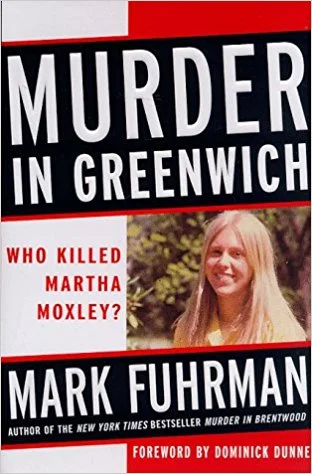
Mark Fuhrman: Murder in Greenwich

National Review, September 14, 1998

Fuhrman.jpg

SUMMER reading is supposed to be light. But those who prefer a bit of darkness to give them some shade from the heat of the sun may wish to consider this fascinating book by Mark Fuhrman, whose theme may put them in mind of Shakespeare. Yes, Shakespeare, Yes, that Mark Fuhrman. "Murder," wrote the Bard, "moves like a ghost." For a ghost always leaves trails of ectoplasm behind it, and so in its way does murder. Its victims haunt us, and it has long been believed that their restless spirits wander the earth calling for revenge. And that is the real subject of this book. Murder in Greenwich is about the revenge that the Moxleys of Greenwich, Conn., have yet to enjoy for the savage murder of their daughter, Martha. It is about the continuing revenge of Dominick Dunne (who inspired this book) on the criminal-justice system that freed the killer of his own daughter after the shortest of sentences. And it is about Mark Fuhrman's dreams of revenge for a career destroyed by O. J. Simpson's vicious carnival.

The Moxleys moved to Greenwich in 1974, when Martha was 14. Blonde and vivacious, she settled easily into a life of country-club fun, high-school success, and Ice Storm-style high jinks. Within little more than a year she was dead, her skull shattered by that most Greenwich of weapons, a six-iron.

But an unusual six-iron, a "Toney Penna" in fact. A rare brand, but one favored by Martha's neighbors the Skakels. The Skakels were rich, well connected (Ethel Skakel had married Bobby Kennedy), and wild. And theirs was a wildness which could have, some said, a dangerous edge.

Martha was with two of the Skakels, Tommy, 17, and Michael, 15, the night she died. Tommy is the last person known to have seen her alive. The murder itself took place not far from the Skakel property, a property that was never systematically searched by a police force that was curiously diffident in interrogating its inhabitants. Well, they were royalty, sort of. The boys (who have denied any involvement in the killing) were RFK's nephews, after all. Were the police, perhaps, just a little too deferential?

Dominick Dunne thought so. His 1993 best-seller, A Season in Purgatory, is a fictionalized version of the Moxley case. The golf club is turned into a baseball bat and the murderer becomes young Constant Bradley, scion of a family that is part Skakel, part Kennedy, and all Borgia. The hero bears some resemblance both to Kenneth Littleton, the Skakels' tutor, and to Mr. Dunne himself. He is a writer who "like[s] to cover trials. [He is] specifically interested in people who get away with things. People who go free."

Which is where Mark Fuhrman comes in. Dominick Dunne had grown to admire him in the aftermath of the Simpson fiasco. Meanwhile, Mr. Fuhrman himself was "looking for an unsolved murder to write about." So Mr. Dunne passed the baton, handing his files to Mark Fuhrman. As he explains, "Say what you want, the guy is a great detective."

Or at least a good prosecutor. Murder in Greenwich is just one side of a case that has yet to come to trial. We never hear from the defense. Nevertheless, Mr. Fuhrman runs briskly through the facts. Not quite a literary classic, Murder in Greenwich is still a compelling read, a real-life Agatha Christie novel. Drawing on his years of police experience, the author reviews the evidence, the alibis (he is unconvinced by Michael Skakel’s), and the rival suspects, to come to his conclusion. The only '"N word" he uses is "nephew."

At the same time, however, the reader is left in no doubt that Murder in Greenwich is another chapter in the O.J. wars, "the Simpson case all over again." And, so far as Mark Fuhrman is concerned, that means that, once more, the rich have got away with it. The author reveals enough class hatred in this book to launch a Gephardt presidential campaign, reinforced, doubtless, by the somewhat cool welcome he received in Greenwich.

Which should have come as no surprise. The O.J. trial turned Mr. Fuhrman into a pariah, but, in the phrase of America's prim totalitarians, he still doesn't quite get it. A Valjean who thinks that he is a Javert, he seems to believe that a case like this will give him back his respectability. He is wrong. It may be sweet revenge, but it will never restore him to what he was and what he wants to be again: "'Mark Fuhrman, Detective."

Nor, one suspects, will another trial, another conviction., and another sentence bring peace to Dominick Dunne. He is a crusader now, raging against the cruelty of his daughter's fate and its unjust consequences. He picks at his psychic wounds, unable to let scar tissue form. He prefers to return to the scenes of other crimes to ensure that they, at least, have an appropriate ending. Obsessive, certainly, morbid, perhaps, but who are we to judge a parent's grief?

Martha's mother, Dorthy, can. And she has welcomed the publication of Murder in Greenwich. "That's my life, these days," she has recently been quoted as saying. "The hope that someday we'll know who did this." She may get her wish. A Connecticut judge has now been appointed as a one-man grand jury to investigate the Moxley case. In early August that judge heard testimony from Kenneth Littleton, the Skakels' tutor. Once seen as a possible suspect in the murder, Mr. Littleton testified in exchange for immunity, which suggests that the field of suspects is narrowing still further.

And if, after all these years, there is a trial and a guilty verdict? Maybe, finally, Mrs. Moxley can put Martha's spirit to rest.

For our ancestors were right. The murdered do live on as ghosts, but they are phantoms that haunt our minds, not our homes. For a killing brings grief, but also uncertainty. A "foul, strange, and unnatural" ending, it leaves our world askew. The restless souls belong to the survivors, not the departed. A trial and a verdict can restore the illusion that things are as they should be. If Murder in Greenwich can hasten this process for Mrs. Moxley, Mark Fuhrman will have written a very good book indeed.

The Plot Sickens

Daniel Pipes: Conspiracy

National Review, December 31, 1997

Conspiracy.jpg

Poor, sad Princess Diana. Within hours of the tragedy in Paris, her death was being honored in the way most characteristic of our time: a conspiracy theory relayed over the Internet. She was murdered, you see, by British intelligence. The mother of a future King of England could not be allowed to marry an Egyptian. Ridiculous, of course, although Muammar Qaddafi seemed to think that there was something to it. Which would not surprise Daniel Pipes. His fascinating, though all too brief, new book traces the development of conspiracy theories from the time of the Crusades to the Roswell era. Naturally the Libyan leader makes an appearance. But, to be fair, he is no more deranged than many in the dismal crowd that Mr. Pipes summons for our inspection. For, as he explains cheerily, "this book is the opposite of a study in intellectual history. [It deals] not with the cultural elite but its rearguard, not with the finest mental creation but its dregs . . . So debased is the discourse ahead that even the Russian secret police and Hitler play important intellectual roles." Well, that's encouraging. With depressing effectiveness, the author shows how we have allowed ourselves to be seduced again and again by variants of the same couple of stories. And if there is a conspiracy there must be conspirators. Freemasons, perhaps, or maybe the Trilateral Commission.

And don't forget the Jews. The conspiracy theorists never have, something that Daniel Pipes dates back to the Crusades. Jews became a convenient local proxy for the Muslim enemy.

In a cruel paradox, as the pogroms intensified so did the idea that the Jews were planning a terrible vengeance. That fear in turn provoked further repression, and the cycle that was never really to end had begun. It is a plausible view, but, as the author concedes, it has a problem. Why pick on the Jews when "Muslims constituted a so much more substantial presence and threat"? Mr. Pipes never says, preferring merely to point to a pattern whereby "alleged conspirators are rarely those whom logic might point to."

For this is not a book that dwells on the psychological causes of conspiricism. This is a pity. It is a central question, and the answer is probably not too difficult to find. Take an obsessive personality, pour in a trauma or two, and garnish with a little paranoia. Add war, revolution, economic depression, or plague. When we are confronted with such vast, often incomprehensible cataclysms, a conspiracy theory can be a comfort. It provides an answer to people's questions and an object for their anger. It can also be fun. Winston Smith enjoyed his Hates.

Mr. Pipes touches on this, but he spends far more time describing the symptoms of the disease. He does this well. And it is a disease. At least from the point where an interest in conspiracy theories tips over into "a way of seeing life itself. This is conspiracism. . . It begins with belief in an occasional conspiracy theory . . . and ends with a view of history that dwells largely or exclusively on plots to gain world power or even destroy the human race."

Compulsively autodidactic, conspiracists live in a dark universe illuminated only by a vast and self-referential literature (two thousand books on the Kennedy assassination alone since 1963). Bolstered by obscure factoids and outright forgeries, its authors peddle theories of astonishing complexity. The right answer is never obvious and the obvious is never right. Readers are pushed further and further into irrationality. Which is not surprising. As the core belief of conspiracism is that all appearances are intended to deceive, reality itself becomes an illusion, a dangerous trick rather than a wake-up call.

In the West, at least, Pipes feels that conspiracism is in retreat, discredited by the twin failures of Communist Russia and Nazi Germany. "Hitler and Stalin had established the hideous price of conspiracy theories running rampant."

Let's hope so. But there is something a little Fukuyama-annish about such a view. We live, after all, in an age of rapid and highly unpredictable change. Even in this relatively benign era conspiracy theories continue to flourish. Most are not serious, just couch-potato mythologizing: but they can act, Mr. Pipes concedes, as a pathway to more dangerous fantasies--Timothy McVeigh is, apparently, a believer in UFOs. Above all, they chip away at the shared assumptions of truth that must underpin society.

In the case of American blacks this may have already happened. Mr. Pipes list some of the conspiracies that circulate within this community, but without appearing unduly concerned. He may be too relaxed. From the idea that AIDS was developed as a genocidal tool (as a supplement, doubtless, to the crack distributed in the ghetto by the CIA) to kente-clad anti-Semitism, there is plenty to suggest that a dangerous conspiracism has already taken root in an important part of American society. Its success may suggest that conspiracism remains more of a threat than Mr. Pipes would have us believe.

Perhaps he is trying to trick us.