Euro Scare?

Claire Berlinski: Menace in Europe: Why the Continent’s Crisis Is America’s, Too

National Review, May 8, 2006
Empire.jpg

There’s a bright, shining, merciful moment, right towards the end of this infuriating, odd, but occasionally perceptive polemic, when its author, Claire Berlinski, says what needs saying about the rancid and rabid anti-Americanism now disgracing Europe’s public discourse:

“[It] is a cultist system of faith, rather than a set of rational beliefs, and as such is impervious to revision upon confrontation with facts, logic, evidence, gestures of good will, public relations campaigns, or attempts on the part of the American secretary of state to be a better, more sensitive listener.”


Accurate enough, but her observation that there is nothing Americans can do to change this, “short of dying politely en masse,” suggests that Ms. Berlinski, a lively writer always happy to hype up the snark and the spark of her prose, is taking her readers not to France, or Germany, but to Planet Coulter. When, in another all-too-typical passage, Europe’s past is described as “one of nearly uninterrupted war and savagery,” it’s impossible to avoid thinking that while American anti-Europeanism is comparatively rare, given reason to flower — I note without further comment that Ms. Berlinski studied French literature at the Sorbonne — it can be just as irrational as the hatred for America stewing in the cafés of the Left Bank.

Oh, and while we’re on the topic, it may be quite true that Europe’s history is scarred by slaughter, but it’s quite false to suggest that this is something specific to that part of the world. Mass murder, butchery, invasion, and conquest are what humans do. All races. All cultures. Always have done. Always will do. Europe stands out only because of the extraordinary achievement that is the best of its civilization. It is not the corpses that surprise, but the contrasts: the juxtaposition of the charnel house and the cathedral, the victims trudging to the ovens to the sounds of an orchestra.

But this is not the sort of analysis you’ll find in Menace in Europe (lurid title, lurid book), a work dedicated to the wider, wilder, and highly marketable thesis of a possibly doomed, probably desperate, and certainly dangerous continent drifting into a gathering storm of economic failure, demographic crisis, and ethno-religious strife. Now, while Europe is undoubtedly facing (or, more accurately, failing to face) some very profound problems, it’s way too soon to be writing its obituaries. Claire Berlinski is careful to hedge her hints of apocalypse with caveats (“I do not prophesy the imminent demise of European democratic institutions, nor do I predict imminent catastrophe on European soil”), but there’s a clear sense that she, for one, is preparing for the funeral (“I don’t rule out these possibilities. . . . It is possible and reasonable to imagine a very ugly outcome”).

And, as has been the case with a number of other recent books on the Old World’s predicament (George Weigel’s The Cube and the Cathedral is a striking example), the logic of Berlinski’s thesis leads her to exaggeration. It has to, because the facts alone will not do the trick. So, for instance, it’s not enough for her to insinuate (with appropriate disclaimers) that the nastier ghosts of Europe’s past may be slouching towards rebirth, she also has to throw in the claim that “Europeans . . . sense in their lives a cultural, spiritual, and ideological void.” Good heavens (or not).

Certainly Europeans generally, and for excellent reasons, tend to be less optimistic than their counterparts across the Atlantic, but there’s no particular reason to think that (at least outside the more neurasthenic sections of the intelligentsia) they are wandering around their cities enveloped in black mists of angst, ennui, and existential despair. Quite how you measure a continent’s contentment, I do not know, but for what it’s worth, one recent (2004) Eurobarometer poll revealed that 85 percent of EU citizens were either fairly (54 percent) or very (31 percent) satisfied with their lives. Existence in a cultural, spiritual, and ideological void is not, it seems, quite as dreadful as some commentators appear to believe.

Far too often, Berlinski’s need to stick to her Chicken Little line forces her narrative in a direction that it should not take. A brutally effective demolition of French “peasant” leader José Bové (the clown who trashed a McDonald’s) dissipates into a discussion of the holy fools, cranks, fanatics, and zealots who have been bothering the continent for generations. It makes for some interesting history, but it’s irrelevant, and, if it is designed to demonstrate that susceptibility to psychopaths, charlatans, and madmen is (like war, genocide, and the rest of the rap sheet) a particularly European vice, it’s thoroughly misleading.

Similarly, the author passes over the opportunity to look at the (admittedly slim) prospects of a much-needed patriotic revival within Europe’s nations in favor of a lengthy and rather overwrought examination of the meaning of Rammstein, a popular German heavy-metal band that combines the style of Spinal Tap with the aesthetics of Albert Speer. Yes, this makes for good, alarming copy, and it’s a convenient device to bring up yet again the subject of that miserable Reich, but, in the end, Claire Berlinski’s horrified descriptions of leather, sleaze, bombast, and kitsch do little more than remind us that German rock is, like German cuisine, usually best avoided.

There are times too when she appears to have drunk too deeply of her own Kool-Aid. Suitably enough, given the doom and gloom that permeates this book, some of its strongest, and most convincing, sections relate to an area where some panic is indeed called for: Europe’s failure to integrate its growing Muslim minorities. It’s a problem that will only be made worse by additional inflows from the Islamic world, yet Berlinski’s overblown fears about the viability of an aging society mean that that mass immigration is, apparently, an “economic necessity.” (It’s anything but.) Equally, while she understands that the EU is no more than “a marriage of convenience” (a gross oversimplification, actually, but it will do), her nightmare vision of a feeble and feral continent leads her to describe this ill-starred union as “politically and economically imperative.” It is neither: It is, rather, both a symptom and a cause of Europe’s current impasse.

What makes Menace in Europe all the more frustrating is that, amidst the shouts of alarm, cries of disaster, and howls of invective, there are some very valuable insights, and, particularly in a sharp analysis of how Marseilles manages its multicultural population, some excellent reporting. In the end, however, they only compound the impression that this book is an opportunity missed.

How very European.

Quiet Hero

David Leavitt: The Man Who Knew Too Much

National Review, January 30, 2006

Turing.jpg

If you have ever needed reminding of a nation’s capacity for ingratitude, the story of Alan Turing ought to do the trick. And if you have never heard of Alan Turing, that only proves the point. Born in 1912 into the cheese-paring and snobbery of Britain’s colonial administrative class, Turing emerged from a traditionalist family and an old-school education with a wild, unorthodox mind, and a record of achievement that establishes him as one of the most important mathematicians of the last century.

In not much more than one astonishing decade, this extraordinary individual would not only play a critical part in paving the way for the development of the laptop on which I am now typing, but also, through his wartime code-breaking at Bletchley Park, help ensure that this article didn’t have to be written in German. His tragedy, and ours, was that there was too little in the way of an encore. Within a few years of his greatest triumphs, Turing was a convicted criminal, guilty of “gross indecency” with another man, an embarrassment, if not exactly an outcast. Not so long afterwards he was dead, a suicide at 41 with the help of an apple dipped in cyanide.

With the secrecy that surrounded Turing’s wartime activities now lifted, the essential facts of his life are well established and more than adequately covered in this new biography. After walking his readers briskly through the early years, David Leavitt presents them with the considerable challenge of Turing’s first major work, the catchily named “On Computable Numbers, with an application to the Entscheidungsproblem” (1937), a paper that was, in essence, the blueprint for the modern computer. “Computable Numbers” is, in Leavitt’s words, a “curious blend of humbly phrased, somewhat philosophical speculation and highly technical mathematics,” something, he concedes, that is “disconcerting” for the “general reader” (that’s you and me) since, invariably, easier passages “segue immediately into dense bogs of unfamiliar symbols, German and Greek letters, and binary numbers.”

Well, when it comes to navigating those “dense bogs,” Leavitt is, in keeping with one of the tasks of this biography (the book is part of Norton’s Great Discoveries series, designed “to tell the stories of crucial scientific breakthroughs”), a pretty good guide. As someone confused by an abacus and in awe of a pocket calculator, I admit that my knowledge of computing is, or was, practically zero. After a re-reading or two of the chapters devoted to Turing’s “universal machine” and its revolutionary implications, this level of understanding had been raised to somewhere between hazy and confused: no small achievement, and a tribute to Leavitt’s powers of explanation.

Leavitt is no less deft in describing Turing’s critical role in breaking the Germans’ Enigma codes. His writing leaves the mysteries of cryptanalysis less mysterious and, as a result, we can begin to grasp the remarkable intellectual feat involved in Turing’s penetration of the secrets of Hitler’s Reich. We’ll never know how many Allied lives were saved by “the Prof” and his work, or by how many years his effort shortened the war, but Churchill never doubted its importance. Turing and his team were, he wrote, to have “all they want.” And so they did. More material rewards were to prove elusive. Stinginess and secrecy meant that the only official recognition of Turing’s achievements was a bonus of a few hundred pounds and a rather minor medal. So far as is known, he never complained, and, to the end of his life, Turing kept the secrets of Bletchley Park to himself. He and his colleagues were, said Churchill, “the geese who laid the golden eggs and never cackled.”

But there’s more to The Man Who Knew Too Much than formulae, ciphers, and the click-click-click of the device that savaged Enigma. While his efforts inevitably fall short of the portrait contained in Andrew Hodges’s groundbreaking, and epic, biography, Alan Turing: The Enigma (1983), Leavitt nevertheless succeeds in drawing a wonderfully vivid picture of his shy, dry, brilliant hero, an eccentric boffin with chaotic, shabby tailoring, uncertain hygiene, an unsettling resemblance to Rudolf Hess, and a yen for long-distance running.

What works less well is Leavitt’s tendency to treat Turing’s homosexuality as a lens through which his whole life must be seen, sometimes ridiculously so. Thus in discussing a later work, “Intelligent Machinery,” a paper focused, as its name would suggest, on the possibility of building a truly “intelligent” machine, Leavitt notes how Turing’s strategy of opening with a summary of the views of those who disagreed with him “foreshadows the gay rights manifestos of the 1950s and 1960s, which often used a rebuttal of traditional arguments against homosexuality as a frame for its defense” — a comparison that is both accurate and pointless. A little later, we find “Computing Machinery and Intelligence,” Turing’s “most famous and in many ways most perverse paper,” described as a stew of anxiety over gender and sexuality, a reading that might have surprised Turing, a man comfortable with his sexual identity in a way that was, as so often with him, years ahead of his time.

Perhaps this was inevitable. Norton boasts that Great Discoveries will feature “writers from diverse backgrounds.” It’s that dodgy word “diverse” that should set the alarm bells ringing and that explains, undoubtedly, why Professor Leavitt, who teaches creative writing and is best known for novels focused on homosexual themes (The Lost Language of Cranes, While England Sleeps, among others), was chosen to write the biography of a mathematician.

The result, ironically, of his approach is somehow to diminish the horror of the unjust laws that largely confined Turing’s sex life to an emotional wasteland punctuated by furtive fumblings and discreet trips abroad. Nobody will ever know why he chose to kill himself (there were clear signs that he was going mad), but it’s impossible to imagine that the ordeal of prosecution and the humiliation of punishment (in essence, chemical castration) did not play their disgraceful part. That is not enough for Leavitt, who dilutes tragedy with absurdity by suggesting that the way in which Turing (a somewhat obsessive fan of Disney’s Snow White) committed suicide was designed to deliver an erotically symbolic message: “In the fairy tale the apple into which Snow White bites doesn’t kill her. It puts her to sleep until the Prince wakes her up with a kiss.”

Oh please.

Wonkette Jumps the Snark

Ana Marie Cox: Dog Days

New York Sun, January 6, 2006

Dog Days.jpg

If you need any confirmation that the glum little town that passes for this nation's capital is hopelessly obsessed with itself, take a look at "Dog Days" (Riverhead Books, 288 pages, $23.95), the Washington frolic and first novel by Ana Marie Cox, the below-the-Beltway blogger better known as Wonkette.

To get the most out of this book, you need to know beforehand what Ms. Cox has been up to on her blog. Sleazy, sarcastic, funny, and salacious ("Politics for People With Dirty Minds"), Wonkette first began lurking around computer terminals back in January 2004, a remote era lost in blogging antiquity when Assad's goons were still hanging out in Lebanon, Jennifer was still hanging with Brad, and John Kerry had not yet been hung out to dry. Following hot, and not a little sweaty, in the wake of Gizmodo (gadgets), Gawker (gossip), and Fleshbot (porn),Wonkette became the latest in a stable of blogs set up by British entrepreneur Nick Denton, its shtick an oddball mess of politics, D.C. rumor, sex, and satire. Throw in the excitement of an election season, along with Ms. Cox's striking good looks, and it's no surprise Wonkette soon shone as a blogosphere star.

The site reached some kind of peak, or nadir (take your pick) in mid-2004 with the saga of naughty Jessica Cutler. She was the senatorial staffer who chronicled her exhausting, grubby - but sometimes financially rewarding - romantic adventures on a Web site,Washingtonienne.com. Wonkette catnip! Ms. Cutler lost her job, but won notoriety, a book contract, and a Playboy spread, and, as she did so, Wonkette reported the disgraceful details to an overexcited world. It was a perfect, if slutty, symbiosis: Wonkette helped make Ms. Cutler a celebrity, and Ms. Cutler attracted readers to Wonkette.

Since then, despite continued critical acclaim (winner of a 2005 "Bloggie" as "best political weblog!"), Wonkette has jumped the snark: Washingtonienne was a one-off, there's a while to go until the presidential election, and, worst of all, the anarchic spirit that characterizes Ms. Cox's blog at its best has all too often been drowned in dully predictable Democratic spin. Unfortunately, the same weakness sometimes surfaces in "Dog Days," a generally very funny book, where the feeblest jokes - more Carter, alas, than Carville - are those aimed at making fools of the Republicans, something the GOP is quite capable of doing for itself.

If nods to contemporary liberal orthodoxy are one problem with "Dog Days," a related flaw is the way in which Ms. Cox takes pains to observe other pieties of our prim and proper era. Given Wonkette's wicked reputation, "Dog Days" is a strangely moralistic tale that concludes (spoiler ahead, but the book's plot, loosely inspired by that loose Washingtonienne, really doesn't matter that much) with Melanie, its once-promising heroine, appearing to abandon adulterous sex and binge drinking in favor of a wholesome return to the Heartland.

As if that's not bleak enough, anyone so obsessive (yes, yes, I was) as to read this book's "acknowledgments" section will be shocked to stumble across the eat-your-greens, Jim Lehrer moment when its supposedly hard-boiled author takes the time to thank political campaign types "for working so hard for so little when so much was at stake. Campaigns can be foolish; what you're fighting for isn't. "Oh, please. Cynics, however, will note that, in exchange for a deal reportedly "in the mid-six figures," Ms. Cox will soon be quitting Wonkette to write what sounds like an eat-your-greens, Jim Lehrer book about the next generation of political activists. Maybe she just needs to ensure that some of them will actually be prepared to speak to her.

But if you're after filth unsoiled by repentance (and who isn't?), a better option is the bracing, brazen smut of Jessica Cutler's (fictionalized) account of her rise to infamy. With its hints of "Fanny Hill," "Heathers," and, so, so distantly, "Mr. Smith Goes to Washington," "The Washingtonienne" is a shamefully compelling read, its seamy attraction best understood, perhaps, as the literary equivalent of a lap-dance.

For all its crumpled sheets and dodgy assignations, "Dog Days" is something very different, even if we forget its sporadic descents into liberal jabber and Puritan guilt. At times it's as much a work of anthropology as of fiction. Ms. Cox cleverly, and entertainingly, dissects the workings of some of the capital's competing power brokers, hustlers, losers, and drones. And if the detail can occasionally be too much (believe me, it can), it will doubtless delight all those on the Potomac who like nothing better than reading about themselves. Adding to their insider fun, the book is peopled by more lightly disguised D.C. personalities than an Abramoff indictment, but, even if the rest of us won't catch all the references, there's plenty here to enjoy.

As for the story's flow, it is what it is: pleasantly readable, frequently implausible, and enough to lure the reader on to the next page. More important, despite managing to confine her own role (as the "blogger girl") in her own book to a modest minimum, an unusual achievement in any volume coming out of Washington, Ms. Cox also pulls off the trick, rare in a comic work of this nature, of bringing a number of her principal players to life. Melanie, an aide to a stiff, awkward presidential candidate with a suspicious resemblance to John Kerry ("He looks human!" someone had exclaimed. Kind of a low bar, Melanie had thought ... "), and her co-conspirator, Julie, a political consultant of some kind, are believable both as individuals and representatives of a type. Meanwhile, the wanton waitress who poses as the skanky, scandalous blogger "Capitolette" is enough of a character to be performed by Marilyn Monroe at her best, or Jessica Simpson at her worst.

But the greatest pleasures of "Dog Days" are the laugh-out-loud insults, terrific jokes, splendid one-liners, brutal asides, and unkind descriptions that reveal the telegram talents of a blogger in top form. Sure, it's an uneven read, but who could fail to be charmed by the cheerful tastelessness of a novel that describes the mating rituals in a city where "standards of attractiveness ... tracked to availability and not physical beauty" as being "like the Special Olympics of sex ... everyone's a winner!"

Jessica Cutler, that's who. On her (new) Web site, she has written that she did not "love" the book "as much as I thought I would."

Oh well.

Incendiary Device

Chris Cleave: Incendiary

National Review Online, September 15, 2005

Incendiary.jpg

To British author Chris Cleave, it must have seemed like a dream come true. The rights to Incendiary, his first book, had been snapped up, an unusually large print-run had been prepared, and an extensive promotional campaign was in the works. In a sign of a best-seller to come, glossy posters advertising Incendiary were already up on the walls of London's subway system designed to entice commuters into buying what many thought would be the summer's big read.

And then, on the very day that Cleave's book was released, everything went horribly, tragically wrong. His dream, in a sense, became real, and, for some of those commuters, it became a nightmare, too. They were never to read that book. Their fate was to experience it. Incendiary, you see, is about a suicide-bomb attack on the British capital. The circumstances are different (the bombs are detonated at a soccer game) from what actually happened that terrible morning this July, but the results were very much the same. Read the way in which Cleave's heroine, a working-class woman from the East End of London (thus the ropey grammar), describes the survivors emerging from the massacre that has consumed her husband and her son: "Their eyes were wide and glassy and quite often they stumbled but they never blinked. There must of been hundreds of them shuffling out of the smoke. All of them with their eyes huge and wide like things pulled up from very deep in the sea."

It was pretty much that way in London on July 7, 2005, the day that Cleave's book came out.

In the wake of the Tube and bus bombings, the promotional campaign was largely abandoned, and the posters were taken down. They had shown smoke rising above the skyline and the question, "What if?" London now knew. Fifty-six were dead, hundreds more had been injured. When a few advertisements for Incendiary still appeared in the press (the publications in which they appeared had already gone to print) there were public apologies, and while the novel did not disappear from the shelves (I bought my copy in a shop on London's Victoria Street in early August), it tended to be tucked away in a discreet corner, perhaps with the latest installment of Jeffrey Archer's prison diaries or other embarrassments.

As for its author, judging by recent interviews, he remains appalled by the "sick coincidence" for which his book will always be remembered. "I wrote about something that could happen, and then it did happen," he told the Washington Post, and now I feel that I'm fundamentally tied, probably for the rest of my life, to those events." Even if Cleave occasionally sounds as if he has forgotten that there were others who have suffered far more because of those "events", he's probably right. Still, he should not complain too much. Incendiary was partially inspired by the Madrid bombings and the book's London editor has recalled how the editing process was rushed through before London itself fell victim to an attack.

But even if it's somewhat unseemly for Cleave to grumble about the London bombers' inconvenient timing, the wider accusation against his novel, that it was a crass exploitation of a tragedy that was bound to happen (and had indeed already done so elsewhere) is unfair. The struggle against Islamic extremism is likely to be one of the defining characteristics of this new century. Novelists should not be expected either to ignore it or to treat it only with the softest of kid gloves.

Judging by the response of some critics, it seems, however, that they are. Writing in the New York Times, the perpetually aggrieved Michiko Kakutani was outraged by Incendiary's very structure. The entire novel takes the form of an extended letter to Osama bin Laden from that shattered, grieving East End mother, and to Kakutani the fact it "begins with the words "Dear Osama" and ends with its heroine imploring the Qaeda leader to leave his cave and move in with her" is "simple tastelessness." But that's only true if we succumb to the mistaken desire to make a fetish out of bin Laden, a man who needs, very badly, to be cut down to size, both for our sanity and that of those lunatic enough to idolize him. Bin Laden is a man, nothing more, a murderous crackpot who richly deserves to be the subject of satire and the grim graveyard humor that is so much a feature of Incendiary. It's worth noting too that by the time of the invitation to bin Laden, Cleave's narrator is delusional, exhausted and broken. She just wants bin Laden to stop what he's doing and if that means he has to move in with her, so be it.

Others have faulted Incendiary for excessive bloodiness, but while it is true that the book does occasionally descend into Grand Guignol (and loses some force because of it), Cleave's determination to describe the details of the carnage is an essential corrective to our tendency to gloss over exactly what it is that our enemies want to do to us. In a society so unwilling to deal with reality that we limit the amount of times that images of planes crashing into the World Trade Center (let alone the dismaying, repulsive aftermath) are broadcast, Cleave's visions of horror are a useful antidote against complacency.

Unfortunately, Cleave himself sometimes seems tempted by a close relative of that complacency, the guilt-ridden and absurd idea that we in the West have brought the current troubles upon ourselves—perhaps, even, that we had it coming. There are suggestions of this throughout Incendiary, and they are exacerbated by the way in which Cleave imagines the official response to the suicide attacks in the soccer stadium. While some of his touches are deft (the return of barrage balloons, nauseatingly rechristened "shields of hope," to the London sky for the first time since the Blitz, each one, grotesquely, decorated with a picture of a bombing victim), others only demonstrate the belief in Western viciousness and ubiquitous, sinister conspiracy that is all too common among the chattering classes on both sides of the Atlantic. So, for example, as the story progresses, it becomes clear that when it comes to the suicide bombings, the British government has some dark secrets of its own to hide. Meanwhile the U.K. is shown lurching away from liberty and towards the persecution of its Muslim minority, a malevolent fantasy that has been shown up for the nonsense it is by Tony Blair's stumbling and hesitant response to the slaughter on July 7.

To write this way is to reveal intellectual frivolity in the face of real danger, something that is reinforced by the way in which Cleave allows the tired irrelevancies of Britain's dreary class warfare (the novel's bourgeois protagonists are uniformly venal, snobbish, and, well, you know the script) to share center stage with terrorist mass murder. It's a mark of how low matters have sunk in Britain that even in this respect Cleave is not, alas, alone. In the immediate aftermath of the July 7 attacks the leftist mayor of London, the oddball and unpleasant Ken Livingstone, noted that the terrorists had picked on "working-class" Londoners, a peculiar, and not particularly accurate, comment that made some jaundiced Brits wonder if the mayor would have been less upset if a prominent investment banker or two had been included amongst the dead.

Perhaps Cleave's problem was that, imagination exhausted, he simply had to fall back on the prejudices of contemporary "progressive" orthodoxy. Judging by Incendiary there's plenty of evidence to suggest that its author did indeed run out of ideas. The later part of the novel degenerates into soap opera and is really not worth reading. But this should not detract from the substantial achievement of the first 60 pages or so in which Cleave uses the (famously difficult) epistolatory format to give us a remarkable portrait both of his heroine and of the terrible events that so haunted her:

And the question that will haunt his readers is not "what if?" but "where next?"

Potter's Field

Charlie Higson: Silverfin

The New York Sun, May 20, 2015

Silverfin.jpg

With Clint Eastwood reduced to making films about ladies who box, Bond, James Bond, is the last true man's man. He blows smoke in the face of surgeons-general, adds no fruit juice to his martinis, and gives the pieties of feminism a pass. He has survived knives, a wife, bullets, nasty mechanical pincers, beatings, grenades, piranhas, and tortures too beastly to describe in a family newspaper. He's seen off Blofeld, Goldfinger, Scaramanga, No, Drax, and even that impertinent oaf, Austin Powers. He has weathered the challenges of SMERSH, Rosa Klebb's shoes, Roger Moore's safari suits, and the notion that M can be Dame Judi Dench. Now 007 faces his greatest, and potentially most humiliating, threat yet. James Bond - sophisticate, seducer, secret agent - has just been reimagined as a 13-year-old boy.

Charlie Higson's "SilverFin" (Miramax Books, 335 pages, $16.95), the first of five planned "Young James Bond" novels, was published in Britain earlier this year to dark mutterings from the veteran spy's fans, critical approval, and impressively strong sales. Now (don't tell Felix Leiter) it has been released over here. A comic book is also in the works. There is, predictably enough, also talk of a movie, although widespread (and now denied) rumors that the film would star Orlando Bloom as Bond Jr. seemed to ignore the fact that, fresh-faced though he may be, the former elf is well past puberty.

If all this sounds like there is someone somewhere trying to milk an old franchise for all it's worth, that's because it's true. Ian Fleming came from a distinguished, and famously shrewd, Scottish banking family that has never, in all its long history, been known to overlook the chance of making a pound or two. Fleming sold a controlling stake in his literary estate to the publishers, Booker plc, before his death, but the Fleming family bought it back in the late 1990s, and (the London Guardian reports) "a wave of new projects, including Bond merchandising and games, is being prepared."

The early chapters of "SilverFin" show the fine-tuned commercial instincts of those canny Scots at work. Its opening chapters set the scene in a manner that cannot fail to lure in all those potential buyers bored of waiting, waiting, waiting for their next fix of J.K. Rowling. Like Harry Potter, young Bond is an orphan, although mountaineering, not magic, is to blame for his parents' unfortunate demise. Like Potter, Bond is sent off to boarding school. An unconvincingly described Eton stands in for Hogwarts.

Needless to say, poor James has to contend with his very own Draco Malfoy, a villainous fellow pupil with, like Draco, a powerful father behind him. Trapped by the decidedly unsupernatural nature of his hero, Mr. Higson is unable to add the additional excitement of a brutal contact sport played on flying broomsticks: There's no Quidditch at Eton. Bond triumphs, instead, in cross-country running.

Mr. Higson's decision to cast as Bond's best chums two Indian and Chinese boys, rare birds indeed in a "public" school in 1930s England, is probably no less calculated. Pritpal Nandra and Tommy Chong will delight the diversity police always so busy patrolling the world of children's literature, and probably be good boxoffice, too. The same is true of "Red" Kelly, Bond's handily proletarian sidekick, useful in a punch-up and essential for giving young James the street cred that today's market calls for. We are told early on that Kelly thinks the privileged Etonian is "all right" despite being a "toff," and thus a member, we are supposed to understand, of a hated enemy caste.

That such touches are hopelessly anachronistic does not seem to worry the author too much. With the exception of a few pieces of carefully inserted period detail, there is little about this book that gives any real sense of the time in which it is supposedly set. Or, for that matter, the place: The Scotland in which James's adventure comes to its pleasantly savage conclusion is as bogus as "Brigadoon," utterly lacking the beguiling tweedy tartan authenticity that John Buchan brought to his "Thirty-Nine Steps."

Despite these - considerable - flaws, the second half of "SilverFin" gallops splendidly along with a fabulously nutty plot that involves sinister German scientists, carnivorous eels, man-eating pigs, daring escapes, grotesque deaths, a megalomaniac American businessman, and enough steroid abuse to launch a baseball team. Once he gets going, Mr. Higson displays a fine sense of pace, and a genuine ability to write the enjoyably un pleasant descriptions that will delight the small ghouls who will make up so much of his audience:

"James recoiled, but then forced himself to look at what had once been a man. ... The face was wrecked: it looked as if it had been split down the middle and forced apart, so that the nose was flattened and stretched, the teeth had separated and the eyes had curved around almost to the sides of his head. The eyes were the worst part. They were dark and wet, and James saw in them, not murder, but sadness and pain."

That's splendid stuff, but not quite good enough to buy forgiveness for what "SilverFin" (not to mention the annoying anti-smoking infomercials that pop up periodically throughout the book in an attempt, presumably, to dispel the fatal allure of a certain special agent's Balkan- and Turkish-blend cigarettes) could do to the commander's image. Those of his fans brave enough to read it will need to take appropriate steps afterward to banish the idea of 007 as a retro Cody Banks from their heads.

May I suggest a couple of vodka martinis? Shaken, not stirred.

Roaring Back From - and for - the Dead

Michael J. Graetz & Ian Shapiro: Death by a Thousand Cuts - The Fight over Taxing Inherited Wealth

The New York Sun, May 16, 2005

Death Tax.jpg

There are few more ominous signs of a grim read ahead than "advance praise" by the pompous, pedestrian, and stupendously dull Bill Bradley. According to the former New Jersey lawmaker, "Death by a Thousand Cuts" (Princeton University Press, 372 pages, $29.95) is "immensely readable ... an illuminating look at the estate tax and its implications for future American tax policy." The phrases "tax policy" and "immensely readable" are not usually found in the same sentence, but Mr. Bradley is, for once, quite right. Written in a bright, breezy style, "Death by a Thousand Cuts" is as about as accessible as a book about tax could ever hope to be. It is, indeed, "illuminating," but not in the way that the much unmissed senator would like you to think.

While "Death by a Thousand Cuts," a chronicle of the events leading up to the repeal of the death tax, has much that is intriguing to say about that blessed event, its real interest is as evidence of the way many members of the liberal establishment (the book's authors are both professors at Yale) have been left by an electorate set on ignoring their advice. Accepting that they simply lost the argument is out of the question. Instead they prefer to fall back on "forgive them; for they know not what they do" as an excuse for the voters' intolerable behavior - an explanation that is, when coming from anyone other than a messiah, remarkably patronizing.

So, for example, Thomas Frank, the writer of the best-selling "What's the Matter With Kansas?" a sporadically entertaining, if nutty, polemic, concludes that the inhabitants of Toto's home turf (and by implication much of the rest of the country) have been so befuddled by the culture wars that they fail to understand that their self-interest really would be best served by adopting the economic policies of William Jennings Bryan. "Death by a Thousand Cuts" shares that same disdain for the average voter. Michael Graetz and Ian Shapiro throw a highbrow hissy fit at the gullibility, effrontery, and downright stupidity of a nation of rubes unwilling or unable to understand what is in their best interest.

Struck by the fact that only around 2% of corpses will actually pay the death tax (the tax euphemistically referred to as the "estate tax"), the authors conclude that the widespread opposition to this squalid levy among the less affluent can be explained by their ignorance and, more sinisterly, the manipulation of that ignorance by a small coterie of determined ideologues conspiring to end "progressive" taxation, trash the New Deal, wreck the Great Society, and, doubtless, slaughter the firstborn. Okay, perhaps not the last.

For tales of conspiracy to resonate, however, the conspirators need a little heft and a lot of secrecy. The difficulty faced by the authors of this book is that the principal plotters - a think tank or two and, inevitably in a tax scrap, Grover Norquist of Americans for Tax Reform - look a touch puny, and they did much of what they did in public. They were trying to win a debate, and it's difficult to object to that. To beef up the sense of menace, therefore, Messrs. Graetz and Shapiro throw in tales of funding by "big money" and the "ultrarich," including Richard Mellon Scaife, a useful bogeyman since, at least, the dog days of the Lewinsky era.

The handy implication is that the abolition of the death tax owed as much to plutocratic selfishness as it did to genuine political conviction. Better still, if the authors can show that defenders of the tax were outspent by those who wanted to scrap it, then they can argue that it was not ideas that made the difference, but cash. The problem is that, despite a chapter subtly titled "Money, Money, Money," they cannot.

While the abolitionists may ultimately have had more resources specifically dedicated to this issue than their opponents, the death tax had enormous institutional support. Immune from serious challenge for decades, it was seen in Washington, in the academy, and in the press as part of the social consensus, as American as apple pie and April 15. Those who challenged it were underdogs, no-hopers, long shots - Davids, not Goliaths. But, as Davids are sometimes prone to do, on this occasion they won.

To claim, as Messrs. Graetz and Shapiro try so hard to do, that this was principally a triumph of generous funding, canny propaganda, and false consciousness is nonsense. The death tax may have been levied on the few, but it did its unfair share to darken the dreams of the many. As voters came to understand, and as was proved by the repeated reluctance of politicians to increase the level at which it began to bite (in 1993 Dick Gephardt even proposed lowering it to include estates of $200,000), the death tax was an attack on aspiration, a door slammed in the face of those strivers essential to the success of any economy - strivers who unlike the very rich have neither the time nor the money to construct elaborate shelters against the depredations of a greedy government.

Even now the death tax is not dead. It will shrink over the next few years until "final" repeal in 2010, only to come roaring back from - and for - the dead in 2011.This will not only undo all the good that will flow from its demise, but will also make 2010 an exceptionally perilous year for rich folk with greedy relatives. A far better course would be to put a stake through this monster's heart once and for all - and soon. Mr. Norquist? Professor Van Helsing?

There's Nothing About Drew

Fever Pitch

The New york Sun, April 8, 2005

Fever Pitch.jpg

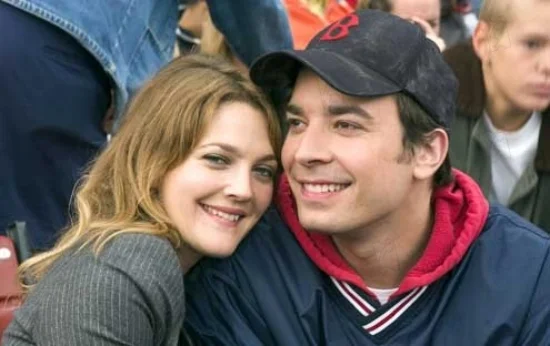
The best thing that can be said about the new American "adaptation" of "Fever Pitch" that opens this week is that its directors - the usually reliable Farrelly brothers - knew that doing justice to Nick Hornby's morosely funny memoir was beyond them. Instead, they borrowed, then watered down, his sports-obsessed persona, added elements of the romance thrown into the English film of the book, and moved the whole thing to Beantown. Dour, dull, relentless Arsenal and its terrifying fans of 20 years ago, a horde out of Peckinpah, are transformed into Capra cornpone: the feisty, loveable Red Sox, and the feisty, loveable salts of the earth that worship them. To describe the script as lame would be to dis the disabled; let's just say that stock footage of Boston's not particularly inspiring skyline (included, doubtless, to make viewers forget the fact that much of the film was shot in Toronto) provides some of "Fever Pitch's more entertaining moments.

As the Hornby character, Ben, Jimmy Fallon of "Saturday Night Live" does what he can to liven up a movie that is, whatever your view of cryonics, more dead than Ted Williams. He's not helped by Drew Barrymore, still clinging to the sweetheart image she so laboriously built up after falling from disgrace. She portrays Lindsey, Ben's supposedly sophisticated investment banker girlfriend, as Laurie Partridge with a spreadsheet.

In truth, however, Lindsey and Ben only play supporting roles to the real stars of this film, the Boston Red Sox and their regrettable (look, this is The New York Sun you're reading) come-from-behind victory at the end of last season. If you want to savor those moments again, but this time in the context of an utterly unconvincing love story, see this movie.

Nick Hornby: Fever Pitch

Yes, the ball is round, but all the rest is wrong

Charlie George.jpg

In the decade or so since it first appeared, as unexpected as an English World Cup victory, Nick Hornby's peculiar, touching, and obsessive "Fever Pitch" has established itself as part of Britain's pop-cultural canon, a bestselling book that wowed both snooty critics and a legion of fans rarely seen studying a page without pictures. Just as remarkably, it was a memoir centered on football that won over those who knew little, and cared less, about a game of 90 minutes devoted to the kicking of a small round ball.

Round ball? Ah yes, Mr. Hornby was writing about what we Brits call "football" - something never, ever, to be confused with the ponderous spectacle known internationally, and with some disdain, as "American football." Nor, for that matter, should it be muddled up with the effete "soccer" played in the United States. That's a genteel game favored by high school girls and Title IX vigilantes, a pastime of great importance to the moms who are this country's most annoying political demographic, but which has had little to offer the rest of us since the sad moment Brandi Chastain pulled her shirt back on.

A few years ago, Mr. Hornby adapted his book for a British movie version of "Fever Pitch" (1997) transforming his oddball chronicle into a routinely soapy romance with the home team playing the role of the Other Woman (a theme which he dealt with more effectively in "High Fidelity," with old records, his other obsession, standing in for the Gunners). Now it has been again adapted, this time by the Farrelly brothers, into a disappointing film about, of all things, baseball.

Don't waste your time with either of these movies: Read the book.

The sport Mr. Hornby describes so well is not the glossy, celebrity-drenched "beautiful game" of English myth and Latin reality, but something altogether more dreary - something very specific, mercifully, to its awful era and depressing place, the disheartening, despondent England of 20 or 30 years ago. The games were dull, uninspired, and bloody, 11-a-side recreations of the battle of the Somme, marked, only (to borrow Mr. Hornby's phrase) by "dingy competence." If "you want entertainment," snarled one well-known coach, "go and watch clowns."

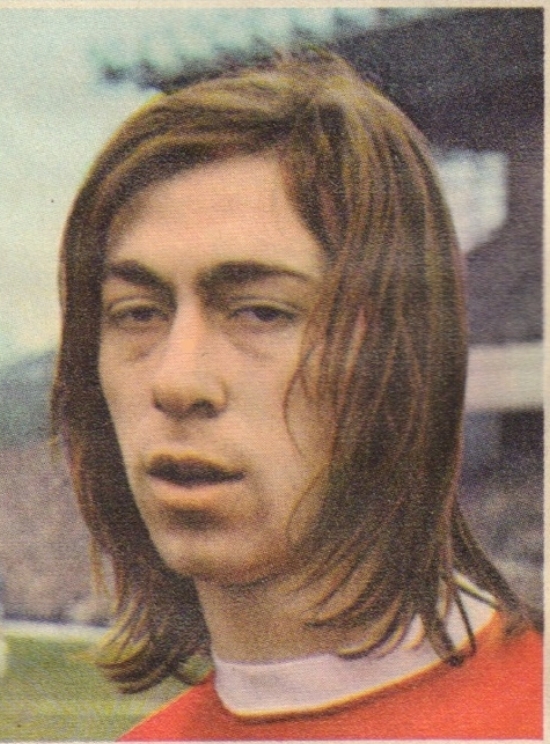
This was a time long, long before David Beckham, gentrification, and all-seater stadiums. It is a time remembered best with the help of driving rain, damp discomfort, and the smell of cigarettes and stale beer, a time when the game was dominated by characters like Arsenal's burly and menacing Charlie George, a creature whose very existence was proof that Neanderthal Man had survived into modern times. Mr. George was legendary, Mr. Hornby explains, for his inarticulacy, lack of savvy in dealing with the press, and, above all, the way in which the player's "long, lank hair remained unfeathered and unlayered right up until the time he unwisely decided upon a bubble perm from hell some time in the mid-seventies." No Posh for you, mate.

Back then, attending the Saturday afternoon footie, a blue-collar staple stretching back for a century, was an old rite rapidly turning rancid, marked by squalid, dangerously cramped stadiums, declining attendance and the constant threat of punch-ups, and worse, between warring fans. In the 1970s the violence was bad enough, but in the decade that followed "it was," Mr. Hornby wrote, "less predictable and much nastier. Police confiscated knives and machetes and other weapons ... things with spikes coming out of them; and there was that famous photograph of a fan with a dart sticking out of his nose."

Under the circumstances, it's a relief to report that, while its distinctly local flavor means that "Fever Pitch" is a book that will always be a minority taste in the United States, there's much more to it than reminiscences of a North London team whose exploits, however beautifully retold, are unlikely to compete with the fall of Troy as a saga with staying power. "Fever Pitch" is as much the self-mocking story of one man's obsession as it is a chronicle of games long gone: "With twenty minutes to go, Exeter went into the lead, and my girlfriend ... promptly did what I had always presumed women were apt to do at moments of crisis: she fainted. Her girlfriend took her off to see the ... ambulance men; I, meanwhile, did nothing, apart from pray for an equalizer."

If you are contemplating those words and thinking Mr. Hornby demonstrated an admirable sense of the right priorities, "Fever Pitch" is the book for you, and even more so for those understanding enough to be your friends. The stats-crazed, emotional roller-coaster, monomaniacal mind of the madder type of sports fan has rarely, if ever, been better described or, for that matter, more seductively. Following its publication, a startled nation suddenly found itself engulfed by copycat football nerds - boring, but essentially benign, and rarely associated with things with spikes.

But it is as autobiography that "Fever Pitch" really excels. Mr. Hornby was introduced to the game by his father, desperate to find something, anything, he could share with a young son hurt and angered by dad's departure from the family home. And it worked: "Saturday afternoons in North London gave us a context in which we could be together. We could talk when we wanted, the football gave us something to talk about ... and the days had a structure, a routine," Mr. Hornby wrote. "The Arsenal pitch was to be our lawn; the Gunners' Fish Bar on Blackstock Road our kitchen; and the West Stand our home." Supporting Arsenal ("the Gunners") became the means by which the boy finds himself and, finally, gradually, rather belatedly, comes of age, a story Hornby tells in a manner that is distinctively his own.

Mr. Hornby's own film adaptation was an agreeable enough effort, but it never won the audience of the original. To understand why, just compare the movie's conventionally happy conclusion with the book's final paragraph:

"Against Aston Villa, one week after Wrexham, my whole life flashed before my eyes. A nil-nil draw, against a nothing team, in a meaningless game, in front of a restive, occasionally angry but for the most part wearily tolerant crowd, in the freezing January cold. ... All that was missing was Ian Ure falling over his feet, and my dad, grumbling away in the seat next to me."

You don't get better than that.

Global Warning

Michael Crichton: State of Fear

crichton.jpg

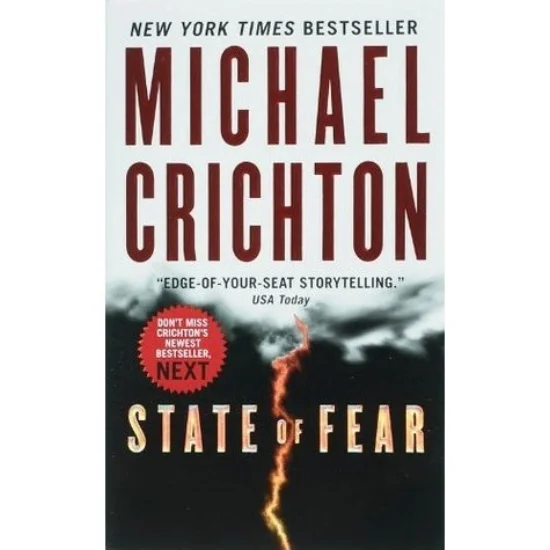
If you want to see what an apoplectic fit looks like in print, check out Michiko Kakutani’s review/denunciation in the New York Times of State of Fear, the latest book from Michael Crichton. Crichton is the author of Jurassic Park, Disclosure, The Andromeda Strain, and much more (or, in the case of Prey, less); in State of Fear he dares to challenge the numbskull pieties of “global warming” and that has made Michiko very mad indeed. State of Fear is, she writes, “shrill,” “preposterous,” and, horror of horrors, “right-wing.”

So many angry, foam-flecked adjectives jostle for attention in the text of Kakutani’s padded-cell philippic (I’d use the words “shrill” and “preposterous,” but she got there first) that the fastidious will want to mop the page for spittle before reading. Crichton’s book is, she sneers, “ham-handed”; the plot of this “sorry excuse for a thriller” is “ludicrous,” its disquisitions “talky,” its facts “cherry-picked,” its assertions “dogmatic,” and its efforts to make a case “lumbering.” Still, at least she spared Crichton contemporary culture’s most fashionable insult, that irrevocably staining mark of Cain, that deepest red of all scarlet letters, that other N-word. The Los Angeles Times does not; according to its reviewer, Crichton has written “the first neocon novel.” Ouch.

At this point, wiser, calmer readers will suspect that a book that attracts that sort of condemnation in the pages of the New York Times and the Los Angeles Times (reassuringly, The New Yorker didn’t like it either) must be really, really good. The wiser, calmer readers will be right. It is.

Crichton has, unsurprisingly, chosen to incorporate his message into the medium he knows best, the thriller, but what is surprising is that this latest effort is packed with graphs, scientific discussion, footnotes, a manifesto, and an extensive bibliography: not usually the stuff of popular fiction. And, remarkably, the whole package — all 600 pages of it — succeeds. State of Fear is a good, solid, exciting read, and if the writing is occasionally wooden, it is so in the finest, somewhat flat tradition of Ludlum, Turow, and the other bards of the airport bookstore.

State of Fear is a didactic work, but its author has not neglected the conventions of his genre: Men are men, women are hot (it’s the planet that’s not), and deaths are excruciating. Bullets fly, cars crash, poisonous octopi do their worst, hideous catastrophe looms, and, the last surviving fans of the late H. Rider Haggard will be delighted to know, cannibals make an appearance. Cannibals! And not effete Lecters either, but real honest-to-goodness, traditional missionary-in-the-pot anthropophagi, who know that fresh flesh needs neither sips of Chianti nor fava-bean frippery to make it something truly tasty.

But all those daunting graphs and lurking footnotes are a reminder that, populist format or not, Crichton is making a serious point about the dead and dangerous end that modern “environmentalism” has reached. In the hands of contemporary Greens, it no longer has much to do with brains, or, at least, reason. Protecting our planet has, he argues, degenerated into a religion — a matter of faith, not science.

The frenzied response to State of Fear proves his point. Crichton’s arguments have not been treated as a contribution to a legitimate debate, but as blasphemy. Yet if this is an urgent, insistent, sometimes overstated book, it’s because Crichton cares so much about the environment, not so little. Who with any brains does not?

Yes, Crichton raises the rhetorical stakes very high, but the real stakes are even higher. If the prescriptions of the Kyoto Treaty are followed, the cost could run into hundreds of billions of dollars a year, a cost that, if history is any indication, will be disproportionately borne by the world’s poor. Under the circumstances, the science that backs it had better be rock solid. Crichton argues that it is not.

To take just a sample of the intriguing data that turn up in this book, the melting of Antarctica is confined to just one relatively small peninsula. The continent as a whole is getting colder, its ice thicker. At the other end of the planet, Greenland too is chilling up, while here at home, the temperature in the United States is roughly where it was in the 1930s, there has been no increase in extreme weather, and changes in upper-atmospheric temperature have been far smaller than most global-warming models would suggest.

Those are some cherries, Ms. Kakutani.

In her disdain for inconvenient, ornery facts, however, Kakutani is sadly typical. While there are those in the Kyoto crowd who have genuine, and carefully thought-through, scientific concern about the fate of the Earth, the motivation of the many who shout so loudly and so dogmatically about the perils of global warming frequently owes less to logic than to neurosis, misplaced religious faith, and, often, the characteristic dishonesty of a Left looking for yet another stick with which to beat both Western civilization and those wicked, dirty capitalists.

And then there’s something else: greed. One of the more entertaining aspects of Crichton’s tale is that the clever, conniving, white-collar villains, regular thriller fare of course, are not the standard corporate swine. No, in this book they are environmentalists acting from exactly the sort of motives more usually attributed to the bad boys from the boardroom than to the saints from the NGOs. In State of Fear, the Gekkos are Green. They are caricatures, but Crichton is making a fair point: Big Environment is a big, big business, “a great fundraising and media machine — a multi-billion industry in its own right — with its own private agenda that’s not necessarily in the public interest,” and like any big business it comes complete with temptations, timeservers, fat paychecks, fatter payrolls, and a legion of lawyers trying to make a fast buck.

This combination of false gods and real mammon has replaced the hard science of global warming with scaremongering, publicity stunts (both have a key part to play in State of Fear), and relentless pressure, political and otherwise, to sign up for the new orthodoxy. The problem for its believers, however, is that it’s an orthodoxy that the facts do not support. In reality, the facts, such as they are, do not support any orthodoxy. There aren’t enough of them, and those that exist often appear to contradict one another. The hard science of global warming is, as Crichton explains, well, hard; the data are far from reliable, and there are so many variables that, even for today’s computers, the value of most climate-prediction models lies somewhere between a bookie’s tip and a crystal ball.

Crichton has his own theories as to what is going on (very roughly: mild warming, possibly purely natural, perhaps associated with the heat islands of urban development, or maybe both), but he is at pains to describe these as guesses, a humility that would be equally welcome among those who would base their highly interventionist environmental policy on little more than hysteria and a hunch — something, I suspect, that helps explain their reluctance to see their version of the truth subjected to serious intellectual criticism.

For matters to improve, Joe Friday science, freed from agendas, has to return to the center of the investigation of global warming. How mankind responds to those facts, once discovered, is a legitimate topic for political controversy and debate. Trying to establish what they are should not be. If Michael Crichton can push thinking even a little way in this direction, he will have written a very good book indeed.

A Strangely Important Figure

Jeff Britting: Ayn Rand

The New York Sun, January 26, 2005

Ayn Rand.jpg

To call Ayn Rand, the high priestess of the human will, a mere force of nature would to her have been an insult as well as a cliche. But how else to describe this extraordinary, maddening, and indestructible individual? Born a century ago this year into the flourishing bourgeoisie of glittering, doomed St. Petersburg, Alisa Zinovyevna Rosenbaum was to triumph over revolution, civil war, Lenin's dictatorship, an impoverished immigrant existence, and bad reviews in the New York Times to become a strangely important figure in the history of American ideas. Even the smaller details of Rand's life come with the sort of epic implausibility found in - oh, an Ayn Rand novel. On her first day of looking for work in Hollywood, who gives her a lift in his car? Cecil B. DeMille. Of course he does. Frank Lloyd Wright designs a house for her. Years later, when she's famous, the sage of selfishness, ensconced in her Murray Hill eyrie, a young fellow by the name of Alan Greenspan becomes a member of the slightly creepy set that sits at the great woman's feet. Apparently he went on to achieve some prominence in later life.

To Rand, none of this would really have mattered (well, the fame was nice). To her, an intensely Russian intellectual despite everything, it was ideas that counted. They were everything. When, after nearly 50 years, her beloved long-lost youngest sister, Nora, made it over from the USSR, they promptly fell out - over politics, naturally. Poor Nora was on her way within six weeks, back to the doubtless more easygoing embrace of Leonid Brezhnev.

Scarred by her Soviet experiences, Rand was a woman on a mission. She couldn't stop: not for her sister, not for anyone. She had plenty to say, and she said it - again, and again, and again. She wrote, she lectured, she hectored, she harangued. Words flowed, how they flowed, too much sometimes, too insistent often, but infinitely preferable to the silence of the Soviet Union that she had left behind.

And somehow her work has endured in the country she made her own. Her creed of ego and laissez-faire, and the reception it won, was one of the more interesting - and encouraging - cultural phenomena of mid-20th-century America. It has persisted, lasting longer, even, than the vast, daunting paragraphs that mark her prose style. Just over a decade ago, "Atlas Shrugged" (1957) was voted Americans' most influential novel in a joint poll conducted by the Book-of-the-Month club and the Library of Congress.

Hers is a remarkable story, and I find it curious that one of the only publications being brought out to commemorate the 100th-birthday girl - besides new printings of the novels by Plume - is Jeff Britting's new, very very brief account (Overlook Duckworth, 144 pages, $19.95). The latest in the series of Overlook Illustrated Lives, it's too short to do Rand much justice; any reader already familiar with Rand's life won't learn much.

Biographies in this series are intended as overviews rather than something more comprehensive. The author is an archivist at the Ayn Rand institute, the associate producer of an Oscar-nominated documentary about Rand, and obviously a keeper of the flame. Thus Mr. Britting has little to say about the romantic entanglements, more Peyton Place than Galt's Gulch, that devastated Rand's circle in later years.

Most notably, Rand had an affair with her chosen intellectual heir, Nathaniel Brandon. While both Rand's husband and the wife of the intellectual heir agreed (sort of) to this arrangement, it added further emotional complications to what was, given Rand's prominence, a surprisingly hermetic, claustrophobic little world, one best described in "The Passion of Ayn Rand" (Bantam Dell) - the compelling, and sympathetic, biography of Rand written by, yes, the intellectual heir's ex-wife.

As I said, Peyton Place.

Closed, neurotic environments filled with true believers are the hallmark of a cult, and there's a good case to be made that that's exactly what Rand was running. Take a look at the way in which she treated her acolytes: angry excommunications, overbearing diktats, dramatic interventions, and, disappointing in one who preached self-determination, rather too much Führerprinzip.

The cult-or-not controversy goes unmentioned in Mr. Britting's book. What a reader will find, particularly in the excellent selection of illustrations, is a real sense of how Rand's life related to her novels. One glance at her Hollywood-handsome husband, and the rugged succession of steely supermen who dominate her fiction make more sense ("All my heroes will always be reflections of Frank").

Rand herself, alas, was no beauty; her glorious heroines, ridiculously gorgeous, impossibly named, remarkably lithe, are less the template for - as some allege - a sinister eugenic agenda than the stuff of Ayn's randy dreams garnished with a dollop of Art Deco kitsch. The first, extraordinarily violent, coupling in "The Fountainhead" of Howard Roark with Dominique Francon is not a general prescription for the relationship between the sexes but merely Rand's own erotic fantasy ("wishful thinking," she once announced, to the cheers of a delighted crowd).

Likewise, her sometimes overwrought style is no more than - well, judge this sentence from "Atlas Shrugged" for yourself: "She looked at the lone straight shaft of the Taggart Building rising in the distance - and then she thought she understood: these people hated Jim because they envied him." Call Dr. Freud.

If sex in Rand's fiction can be savage, so is argument. Her sagas deal in moral absolutes, her protagonists are the whitest of knights or the blackest of villains, caricatures of good or evil lacking the shadings of gray that make literature, and life, so interesting. Yet "Atlas Shrugged" and "The Fountainhead," at least, have a wild, lunatic verve that sweeps all before them. Like Busby Berkeley, the Chrysler Building, or a Caddy with fins, they are aesthetic disasters, very American aesthetic disasters, which somehow emerge as something rather grand.

There is plenty in Rand to make a modern reader queasy, though you would not know so from Mr. Britting's worshipful text. For example, there is something to the claim that like so many of the intellectuals, left or right, of her time she succumbed to the cruder forms of social Darwinism. For a woman who worshiped man, Rand did not always seem that fond of mankind.

But the accusation by Whittaker Chambers in National Review that there was a whiff of the gas chamber about her writings is wrong. Rand lived in an era of stark ideological choices; to argue in muted, reasonable tones was to lose the debate. As a graduate of Lenin's Russia, she knew that the stakes were high, and how effective good propaganda could be.

Rand's nonfiction may have a greater claim to intellectual respectability, but it was the lurid, occasionally harsh, simplicities of her novels that would deliver her message to the mass audience she believed was out there. She was right. Her key insight was to realize that there was an appetite among Americans for a moral case for capitalism. In a restless age that believed in the Big Answer, neither historical tradition nor utilitarian notions of efficiency would suffice. Ayn Rand gave Americans that case, perhaps not the best case, but a case, and she knew how to sell it.

The establishment always disapproved. Critics sneered. Academics jeered. The publishers Macmillan turned down "Anthem" (1938), saying that Rand, a refugee from the Soviet Union, "did not understand socialism." Oh, but she did, and so did those millions of Americans who bought her books, books that played their part in ensuring that the dull orthodoxies of collectivism never prevailed here.

The last image in Mr. Britting's biography is of an exultant Rand speaking at a conference in New Orleans in 1981, the final public appearance of this magnificent, brilliant oddball. Her hosts tried to lure her there with the promise of payment in gold coins and travel in a private rail car.

Needless to say, she accepted.

The Trouble With Harry

G.P. Taylor: Shadowmancer; Wormwood

National Review, December 30, 2004

Shadowmancer.jpg

FOR those of us who like to believe, however tentatively, in human progress, the notion that there are 21st-century Americans who think that the brave, benign—and fictional—Harry Potter can be used as a recruitment officer for the occult is profoundly depressing. And yet there are surprisingly many who fear just that. For year after year now, different school districts across the country have faced complaints whenever the hero of Hogwarts rides his Nimbus 2000 broomstick onto the curriculum or into the library. But the Lord, or the market, works in mysterious ways and those so harried by the thought of Harry have recently found, well, a savior in the shape of a former policeman and roadie for the Sex Pistols, the Reverend G. P. Taylor, the vicar of Cloughton, a small town in the north of England. He’s the author of two bestselling children’s books (both, like Harry Potter, with a surprisingly strong crossover readership among adults), Shadowmancer and Wormwood, novels of deviltry, danger, and intrigue where the ultimate hero is neither wizard nor witch, but God.

Funnily enough, it was that disreputable Master Potter who prompted the parson to pick up his pen. As Taylor explained in an interview with the Christian Broadcasting Network, he lectures on the occult and the New Age and, during the course of one talk, he was discussing “the dangers of Harry Potter and all that sort of stuff.” At the end of the evening, a woman suggested that he write a book. It was a sign! Within nine months, Taylor had completed Shadowmancer, and after the now-traditional round of rejections (ask Harry Potter’s creator, J. K. Rowling), he published it himself, selling his motorcycle to provide the necessary cash. Word-of-mouth did the rest.

Subsequently, Faber & Faber, a major U.K. publisher, bought the rights to Taylor’s epic, and the rest is history. Shadowmancer spent 15 weeks at the top of the British book charts, and its successor, Wormwood, was also a hit. A Shadowmancer movie is planned and multi-book contracts have been signed on both sides of the Atlantic (the reverend’s writings have also found a large audience in America).

It’s a great story: Taylor’s success makes for an inspirational and possibly miraculous tale. Miraculous? Well, how else to explain that books quite so bad have sold quite so well? Linked chapters in a saga that is (Lord, help us) planned to stretch over many more volumes, Shadowmancer and Wormwood are both set in (to give Taylor his due) a vividly described 18th-century England, a place of squalor, poverty, and oppression, far more Gin Lane than Beer Street. They are an account of two rounds in the eternal battle between the Creator (here called Riathamus, a Latin form of an ancient British word meaning “king of kings”) and You Know Who. The first revolves around the struggle for a sacred relic and—the Reverend Taylor’s psychiatrist can make of this what he will—a wicked vicar’s lust for world domination; the second deals with the coming of a comet that may be the deeply unpleasant “Wormwood” prophesied in one of the Book of Revelation’s gloomier passages.

With such a dramatic background, it’s remarkable that Taylor’s books fail to enthrall; yet somehow they do. The plotting is all over the place, much of the writing is clunky (Iron Maiden meets the Sermon on the Mount) and the ill-defined, but vast, cast of characters and creatures that flit in and out of the narrative will bewilder many of the books’ younger readers—and, trust me, some of the older ones too. Thulak? Seloth? Dunamez? Diakka? Varrigal? Glashan? Life’s too short as it is.

But do Shadowmancer and Wormwood even succeed in fulfilling the spiritual task that Taylor, a devout and obviously sincere man, has set out for them? From these books and numerous interviews that he has given, it’s fairly clear that Taylor wanted to show that the fight against evil must be seen as religious (if not, claims Taylor, necessarily Christian, although his work is filled with Christian imagery). He also set out to deliver the clear message that the occult is far from being a harmless parlor game. It’s no surprise that it’s an angel, not a wizard, who is on hand to help Taylor’s heroes in their adventures, and magic, oh dear, that’s a no-no.

We see this in the middle of one dramatic scene, when Raphah, the young Ethiopian (in a nod to the pieties of multiculturalism, Taylor has boasted that he got “sick of little Harry Potter being a nice little white Anglo-Saxon Protestant”) who is one of the heroes of Shadowmancer, angrily confronts a woman and her faith in the Tarot:

“Do you really believe in the power of those picture cards? There is a far greater law than the one that controls the roll of the dice or the turn of a card . . . each one of you is taken in by what you hear. You’re quick to believe in spirits when it’s really someone banging on the side of the bed. None of you will turn to the one who can truly set you free.”

Fine, but this blunt lecture is a long way from, say, the subtler allegory that is C. S. Lewis’s Narnia, stories written by a man whose Christianity was no less muscular than that of the Reverend Taylor. Other than for those who are already cheering from their pews, the way Taylor punctuates his narrative with sermonettes and preachy nuggets is likely to be more annoying than convincing. In this respect, ironically, he is reminiscent of another best-selling British children’s writer, the gifted but irritating Philip Pullman, whose initially promising His Dark Materials trilogy ultimately dissolved into a dreary atheist rant.

That Taylor dislikes the occult, there’s no doubt. Unfortunately, he sees it not as it is, a conjuring-trick creed of cretins and the credulous, but as something that is genuinely powerful—all too real, and all too dangerous. He’s on the record as believing in ghosts (one of his houses was, he has said, haunted) and has presided over a few exorcisms in his time; earlier, in his wild, and somewhat regretted, youth, he experimented with tarot cards, séances, and Ouija boards.

These beliefs, when linked with Taylor’s violent, lurid, Heavy Metal aesthetic (this vicar puts the Goth in Golgotha), mean that his writing may invest the dark side, even if it always ultimately loses, with rather more seductive force than he may have intended. Here is how the angel Abram describes Hezrin, one of Wormwood’s more sinister demons:

“She is a collector of angels and any other trinket that takes her fancy. I have known her for an eternity, century to century, Paris and Rome, Constantinople and Babylon. The thing with [her] is that she never changes, always those same deep, beautiful eyes that capture the soul—and hands that will tear out your heart.”

Toto, I have a feeling we’re not in Narnia anymore.