Gaga Gurus

Adrian Wooldridge & John Micklethwait: The Witch Doctors: Making Sense of the Management Gurus

National Review, April 7, 1997
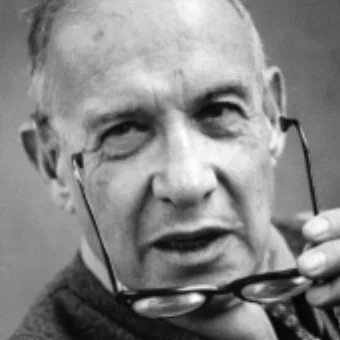
Drucker-portrait-bkt_1014.jpg

Witch doctors! It's an engaging title, promising bile, sarcasm, and maybe, just perhaps, a sneer or two. After all, this is a book about management gurus, those experts whose ever-changing theories fill bookstores and empty factories. Well paid and annoying, they scream out for a little abuse. In this book, they don't get it. As the authors note, somewhat smugly (they do write for The Economist), "it would have been much easier (and often far more pleasurable) to have trashed the industry." But they reject the hatchet in favor of a "scalpel job." In many respects they succeed. Often drily funny. The Witch Doctors is a succinct guide. If something can be said in a couple of pages, that's all the authors use, an approach that could put Tom Peters in the poorhouse. There are longueurs, but this is a management book that the reader will actually be able to finish. It even has a hero, the "ever-prescient" Peter Drucker.

Born, like so many other terrifying polymaths, in Habsburg Austria, Drucker was one of the first to take management theory beyond the mechanical approach developed by time and motion men such as Frederick Taylor or GM's Alfred Sloan. He also realized that he could make a living out of this. He became, in short, an early "knowledge worker," a Druckerism, typical in both its ugliness and its accuracy, which describes what he saw as a rising class of employees, valued more for brains than for brawn.

Like many Druckerisms it is also rather obvious. Drucker took some genuine insights, added a little nonsense and a bit of hype, and transformed his profession. Shamans to the suits, the management theorists (and their consultant spawn) are now everywhere. Messrs. Micklethwait and Wooldridge summarize the wares on offer. Much is bogus. Yet American managers currently spend $15 billion a year on outside, well, management.

Are they mad? No, say the authors. In a competitive world, a manager has to be seen to be doing something, anything, to keep ahead. Management theory feeds on this fear. Consult dull books with punchy titles, bring in McKinsey, go whitewater rafting with the guys from marketing: it will all help create an image of dynamism. As The Witch Doctors shows, this is all based on the illusion that there is a magic bullet, a permanent solution to problems of management. There is not, of course. For the management industry this is just fine. "The beauty of the system is that none of the formulas work—or at least they do not work as completely as the anguished or greedy buyers hope. The result is enormous profits for the gurus but confusion for their clients." As the authors write about "re-engineering," management theory "is less than it was originally cracked up to be. But that does not mean it is useless."

It is also less important than this book would have us believe. True, the how of today's restructurings may have been thought up by a Bain or McKinsey, but to call management theorists "the unacknowledged legislators of mankind" goes too far. As the authors themselves partly concede, the whys lie elsewhere, in capitalism's relentless process of creative destruction. The consultants may prefer to mask this, to cloak their function with talk of "empowerment," but for the most part this is just chatter. Gradgrinds in Guccis, they are really selling systems intended to motivate employees to be highly productive, but very cheap. Messrs. Micklethwait and Wooldridge probably grasp this, but at times even they can be taken in: "Teams . . . can be vital for innovation. . . Firms lay on special facilities to encourage them. Sun Microsystems offers laundry and dry-cleaning services. . . to members of teams who work round the clock." How generous.

To the NR reader, checking stock prices with quiet satisfaction, this hypocrisy may sound splendid, reassuring even, but it comes with a cost. The happytalk is starting to sink in, something that this book does not really consider. All those sharing, mushy, left-wing sorts of words are beginning to have their effect. The modern corporation is, after all, a soft target. Ownership is diffused, parceled out in tiny units across mutual funds and pension plans. These may have their own agendas, like the state pension funds happy to divest from a Texaco or a Philip Morris, pleased to make a political point with their retirees' savings. Meanwhile, management wants its bien-pensant approval too. Action is affirmative, daughters are taken to work, and everyone recycles. Before too long, people feel free to ask what a company for.

It's a stupid question. One of the answers, what this book calls "that stakeholder thing," is even worse. It takes a village, goes this argument, to run a corporation. A duty is owed to all "stakeholders": employees, consumers, the "community," and, oh yes, even shareholders. The authors are too clear-eyed to agree. German stakeholder capitalism is creaky, and the best way to deal with some of the problems in the Anglo-Saxon model "is to give more power to shareholders, not less."

And then the authors quote Gordon Gekko (Olivet Stone's, not NR's) in eloquent support. This is a bit like inviting David Duke to speak in favor of CCRI. Are the authors ashamed of their own conclusions? Perhaps. They are at pains, after all, to distance themselves from that rough Milton Friedman. He does know what a company is for. One thing only: to make money legally. This, we are grandly told, "looks ever less defensible."

This is not quite political correctness, but more a lofty Bill Bradleyism. It pops up throughout the book and reaches its irritating nadir in a discussion of management "diversity."

This, naturally, is a Good Thing. "America's WASP elite," whatever that may be, is singled out for the usual abuse. It is dominated by men, you see, and it simply lacks the multicultural "experience" essential (did the author ask the Japanese about this?) to mastermind the conquest of world markets. These "middle-aged, blue-suited, white shirted men" are clearly doomed to repeat the failures of their WASP predecessors. Failures, presumably, like the British Empire, the Industrial Revolution, Coca-Cola, and Ford.

Ludicrous of course, but just tough it out. Unlike most books on management. The Witch Doctors is enlightening. And worth finishing.

Grey Zone

John E. Mack: Abduction - Human Encounters With Aliens

C. D. B. Bryan: Close Encounters of the Fourth Kind 

National Review, September 11, 1995

Back in the 1950s space aliens were a straightforward bunch. By and large, they wanted little more than world conquest. Comfortingly, they were also imaginary. To be sure, there were those who claimed they have seen UFOs, but the aliens themselves remained elusive, "space brothers" of interest only to "contactees" such as "Professor" George Adamski, a California hamburger vendor with an extensive Venusian social circle. However, by 1992 the B-movie bogeyman had become real, moving from Hollywood to the even stranger surroundings of a five-day conference at MIT organized by David Pritchard, an MIT physicist, and John E. Mack, professor of psychiatry at Cambridge Hospital, Harvard Medical School. A curious Courtlandt Bryan attended, and Close Encounters of the Fourth Kind recounts what he found. The aliens, it would appear, have been busy. The old stories of global domination have been replaced by tales of abduction "recalled" by hundreds of people and, this time, believed to be true.

Most of these recollections are strikingly similar. The luckless victims are transported to the alien craft, where they are subjected to various unpleasant medical procedures associated with some sort of breeding program. Even worse, the aliens seem to have embraced a lunatic environmentalism worthy of our Vice President, raising once again the question of where Mr. Gore is really coming from. The aliens that have been seen come in a number of shapes and sizes, but, somewhat suspiciously, in the United States they mainly resemble those in Close Encounters of the Third Kind. In general they are spindly creatures, about four feet in height, grey skinned with large, black, tear-shaped eyes. These "small greys" are often said to be supervised by a "doctor," a larger grey skinned humanoid.

The good news, if you are over thirty, is that if you have not been abducted by now, it's not likely to happen. The aliens are said to focus on younger people, with abductions often beginning in childhood. The bad news is that you may already have been abducted but just cannot remember. The aliens, it is believed, tend to "mask" memories of abductions. It is only recently that these memories have begun to surface in significant numbers. Often the stories emerge painfully in therapy sessions such as those conducted by John Mack, sometimes, but not always, using hypnotic regression techniques. The aliens, it is claimed, have abducted hundreds of thousands of people.

Mr. Bryan himself makes little attempt to judge the phenomenon. He simply, and at times vividly, describes the conference sessions and the people he met. The book also features fairly lengthy interviews with some of the participants, as well as all too brief synopses of some of the competing theories. The broader UFO debate is also well covered in passages that range from a discussion of the tantalizing early sightings to the increasingly ornate conspiracy theories that now infest the field. In a book that has room for nor merely one but two supposed UFO crashes near Roswell, New Mexico, it would have been good to hear more from the skeptics, but Close Encounters of the Fourth Kind provides an excellent, if somewhat uncritical, introduction to the whole subject.

The reader also benefits from the fact that, throughout, Bryan managed to retain both his sense of humor and his open mind. Told of an organization of worlds run by "Zar," he had to "fight the steadily growing conviction that [his] abductee dinner companion was crazy as a loon." He steels himself to remain nonjudgmental, for "Zar would want that."

Mr. Bryan, by his own account, wishes to believe that aliens are coming our way. As the abductees call it, however, this may not be a pleasant experience. Their eerie stories dominate his book. In the end Bryan is not convinced that the abductees experienced extraterrestrial visitations, but he did "come away a believer in the sincerity and merit of their quest."

This must be right. Whatever it is, this phenomenon warrants serious, dispassionate investigation. Sadly, this is something that, judging by this book, it did not get at a conference that seems to have been part revival meeting, part Geraldo, and part public therapy. When Dr. Mack declares that "we must rethink our whole place in the cosmos," he is interrupted by a standing ovation.

Abduction, Dr. Mack's best-selling but drearily written book, published in 1994 and recently released in a revised paperback edition, is not much more enlightening. Here abductees tell their stories to the sympathetic Dr. Mack, who turns to metaphysics for a solution. "Western" science, we learn, "relies primarily on the physical senses and rational intellect." As such, concludes the Harvard professor, it is a "restricted way of knowing"' incapable of rising to the challenge posed by the abduction experience. Well, of course. Something about the way Dr. Mack uses the word "Western" signals that he is going to come to that conclusion.

John Mack moves quickly. He started meeting abductees in 1990. By April 1992 he was in India discussing these matters with "Tibetan leaders." A month or two later he told the MIT conference that he had "kind of moved away from trying to persuade the mainstream culture of the validity of this phenomenon." If his scientific forebears had shown such perseverance, we would still be living in caves.

Dr. Mack is careful to state that he is not "presuming that everything [the abductees] say is literally true." Nevertheless he writes of his "growing conviction about the authenticity of these reports . . . No plausible alternative explanation . . . has been discovered." He forgets, however, that these are early days in the exploration of this phenomenon. Alternative explanations, if not as yet entirely satisfactory ones, already abound. It seems, for example, that acute psychotic episodes and temporal-lobe dysfunction can produce impressions akin to those recalled by an abductee, albeit without the generally flimsy corroboration that sometimes exists in the abduction cases.

It is also necessary to look at the relationship between the abductee and his or her therapist. Dr, Mack is clearly sensitive to this point, which he discusses an increased length in the revised, and more cautious, version of his book. Interestingly, a good number of the "hypnosis" or "regression" sessions featured in the original edition arc now described as "relaxation" sessions, while some patients' "trances" have become "altered states of consciousness."

Dr. Mack would disagree, but these are, one suspects, distinctions without much of a difference, in which case the "reality status" (to use his phrase) of the abductees' memories must be even more questionable. In 1985 the American Medical Association's Council on Scientific Affairs warned that "recollections obtained during hypnosis not only fail to be more accurate but actually appear to be generally less reliable than recall." Hypnosis does, however, appear to increase the subject's confidence that something real is being remembered, whether or not it be the case.

Many abductee stories are uncannily similar to one another, something that struck Dr. Mack from the beginning. Charles Mackay, the splendidly acerbic author of Extraordinary Popular Delusions and the Madness of Crowds (1841), would not have been so surprised. Writing of medieval witchcraft trials, noted that "the great resemblance between the confessions of the unhappy victims was regarded as a new proof. . . but this is not astonishing . . . the same questions . . . were put to them all, and torture never failed to educe the answer required by the inquisitor."

"Relaxation" with the undoubtedly kind-hearted Dr. Mack is far removed from a torture session in a European dungeon. Nevertheless the question remains. Do abduction therapists somehow "lead" their patients into giving, consciously or otherwise, the sort of answers the patients think their therapists want to hear? Dr. Mack appears to concede that this could occur, but not in his sessions, even if they sometimes are, as he puts it, "co-creative."

If the impact of "co-creativity" on a "memory" is uncertain, what is the effect of that memory on the rememberer? This is a crucial difference between the UFO controversy and the abduction controversy. The existence of UFOs is generally no more than a fascinating mystery, even to those who may have seen them. However, for those who believe that they, and sometimes their children as well, are being repeatedly abducted for use in an alien breeding experiment, it is difficult to argue that life must simply go on. The therapist who encourages or sustains these beliefs is taking on a heavy responsibility,particularly given the somewhat fragile personalities of some of the abductees. Dr. Mack had two boys under age 3 in his own group of interviewees.

Ominously it was only on the last day of the MIT conference that these issues seem to have been discussed at any length. "We must," said one therapist, "be able to demonstrate . . . that what we are doing is reasonable, safe, and effective." This comment did not, apparently, merit a standing ovation. In fact, not only the abductees but the whole abduction mystery begs, in the words of David Pritchard, "for a careful and multidisciplinary investigation." To John Mack, however, this would be just "fussing over whether we have got something real here."

As Jung noted in his book on UFOs, "the Middle Ages . . . live on merrily." In an increasingly irrational and anti-scientific America, "fussing" about what is real is just what is needed, although it will pro ably end up telling us more about ourselves than about any extraterrestrial visitors, The alternative will not take us to the stars, but it might take us to Salem.

On the Edge

Anne Applebaum: Borderlands

National Review,  January 23, 1995

Trakai, March 1994  © Andrew Stuttaford

Trakai, Lithuania, March 1994  © Andrew Stuttaford

As Anne Applebaum writes in the introduction to this evocative and entertaining book, "Warsaw gave me a taste for instability." It is no surprise, therefore, that 1991 saw her heading toward the disintegrating Soviet Union. Rather than visit Moscow or Leningrad, however, she chose to journey down the empire's western frontier, from the Baltic to the Black Sea. In earlier times much of this region was known to Poles as the "Kresy," a word for "borderlands" that implies "a lack of demarcation, an endless horizon with nothing certain beyond." A vast flat plain, these borderlands have attracted invaders from east and west for centuries. The only remotely indigenous power capable of resistance was the spectacularly disorganized and short-lived Polish-Lithuanian Commonwealth. As a result the people of the Kresy never developed the sense of nationality enjoyed by their more fortunate neighbors. Most were simply "Tutejszy," a Polish word meaning "people from here."

In time the invaders were followed by settlers. By the turn of the century the region was populated by an extraordinary mix that included Slavs, Balts, Germans, Jews, Hungarians, Rumanians, and many others. It was, as Miss Applebaum points out, thoroughly messy. Such a state of affairs was unacceptable to Hitler and Stalin, who turned the region into a charnel house. By 1945 both the Jewish and German populations had been largely eliminated, and the Poles had been pushed back a long way west. As for those who remained, they were to become "Soviet." "The idea was simple, beautifully clear. Gradually all of the subtle dialects that had been spoken in the borderlands, all of the national variations and differences in costume and taste, all would be submerged in an onslaught of Russification. Difference would be destroyed."

Many, particularly on the embarrassed Left, now prefer to look on the USSR through the prism of the chaotic Gorbachev years. They see it as just another empire, something, perhaps, that might have been run by a socialist Habsburg. Refreshingly, Miss Applebaum is under no such illusion. "The region had been conquered before, but the Soviet empire cast a deeper shadow than any of its predecessors. Whole nations were forgotten: within a few decades the West no longer remembered that anything other than 'Russia' lay beyond the Polish border . . . it was as if the many and various peoples of the region had simply dissolved into . . . the vast, muddy Belarusian swamp."

Appearances can be deceptive, however, and Miss Applebaum wanted to see whether something of the old diversity still remained. At times movingly, the book tells what she found. The approach she took was simple — she let people speak for themselves. Miss Applebaum is clearly a well informed and sympathetic listener. As a result, much of the book is made up of interviews that vividly bring these too long neglected peoples to life. The survivors of the Soviet years are rapidly rediscovering their voice—and pretty cranky it can be, too. In a region of blurred identity and shifting borders, the old divisive obsessions have returned. Poles remind Lithuanians that Vilnius was once Wilno, a Polish city, while a Ruthene compares Ukrainians to wolves, that gather "only in packs, in mobs, at rallies."

It is easy, however, particularly in a book focused on nationality, to overstate these divisions. In fact, as is the case anywhere, people in these parts are generally more preoccupied by their economic circumstances than by their ethnic origins. Fortunately, Miss Applebaum has advanced appreciation of the ridiculous and is largely successful in keeping a sense of proportion about today's often absurd but generally harmless disputes among the peoples of the region. Rumors that records exist of speakers of an archaic form of Lithuanian in "Polish" villages near Vilnius may give rise to "hysteria," but only in "the tiny world of nationalist language studies."

Above all Miss Applebaum does not fall into the contemporary trap of seeing every Eastern European nationalist revival as a prelude to Yugoslavian-style disaster. In words that need to be read in Washington by those who view Russia as this region's policeman, she reminds us that "the stability so beloved of international statesmen had also been a prison." Post-Soviet nationalism may indeed "prove to be dangerous, destabilizing, and uncomfortable for diplomats," but it may be essential if successful and prosperous democracies are to be built in this devastated region. In this she must be right. There is, after all, not much else. Most of the ingredients of civic society have been obliterated. There is little or no history of self-government, and commercial traditions are weak, to say the least.

All that is left is a patchwork of half-remembered traditions that are part myth, part reality. That may not seem like a lot, but if, as Miss Applebaum demonstrates, it was tough enough-just-to withstand Soviet rule, it may be tough enough to provide the foundations of societies in which the people of the borderlands can at last be free do define what it means to be "from here."

Note: I have almost always been lucky in my editors, but not on this occasion: the idea that the Polish-Lithuanian commonwealth was "short-lived" was theirs not mine. In fact it lived on for several hundred years...