Faking a Prophet

National Review Online, September 29, 2011

nostradamus.jpg

The e-mail arrived on my computer, garlanded with exclamation marks and entitled "Holy Smoke!!" It was a day or so after the slaughter at the World Trade Center — murders, it seemed, that had been forecast nearly half a millennium ago by Nostradamus, the 16th Century French seer. He had written, I was informed, the following words:

In the year of the new century and nine months,
From the sky will come a great King of Terror,
The sky will burn at forty-five degrees.
Fire approaches the great new city…
In the city of York there will be a great collapse,
Two twin brothers torn apart by chaos.
While the fortress falls the great leader will succumb.
Third big war will begin when the big city is burning.

Spooky, eh? A lot of people seemed to think so. All over the country Scullys were transformed into Mulders. There was a run on Nostradamus books (the New York Times reported that in the week of September 11th no fewer than three editions of Nostradamus were in the Amazon Top 25, a feat more typically associated with that much younger wizard, Harry Potter). At least one website dedicated to the far-sighted Frenchman has had to suspend part of its service due to "excessive load." Amazingly, the extra demand had not been foreseen.

The problem, however, is that the two chilling quatrains are as bogus as Big Foot, as credible as a Clinton, as ridiculous as Roswell. Of course, this sort of thing has been happening for years, sometimes, even, in a good cause. In 1943, in an attempt to terrify the notoriously superstitious Nazi leadership, fake quatrains prophesying their doom were parachuted, like some mystical maquis, deep into the heart of occupied Europe.

More recently, a quatrain purporting to warn that in December 2000 "the village idiot" would be proclaimed leader of "the greatest power" consoled bitter Democrats in the aftermath of the presidential election. They should have known better. The verses were obviously faked. As we all know, the real "village idiot" went abroad and grew a beard.

Turning to the "WTC" verses, the latest, and easily most tasteless hoax, we find that the second quatrain ("In the city of York…") is entirely made up, much of it a borrowing, ironically, from a 1990s paper by a Canadian student looking to demonstrate how ambiguous sounding verses can be used to "predict" anything. The four lines of the first quatrain are, by the low standards of this field, somewhat more authentic. They appear to be cobbled together from random, and heavily modified, pieces of the great man's work. To take one example, there is a reference in the prophecies to a year and a number of months, but the year is 1999 and the number of months is seven (something that led the seemingly innumerate fashion designer Paco Rabane to shut up shop and flee Paris in, August 1999, ahead, he thought, of an imminent crash landing by the space station Mir). Russia's cosmic jalopy, however, continued to lurch round the planet while unkind skeptics gathered outside Mr. Rabane's shuttered offices, champagne glasses in hand, and celebrated an apocalypse averted.

The first "WTC" quatrain is not, in fact, the only example of cut and paste prophecy in the Nostracademy. Followers of the enigmatic Mr. Baines of the Nostradamus Society of America (it is worth visiting their website, just for the Vincent Price-style greeting) will know that their latter-day sage has adopted what he calls a "collage method" to interpret the prophecies. Using this technique, with its unfortunate reminder of that old saying about chimpanzees, typewriters, and Shakespeare, it was possible to claim that the World Trade Center attack (which, apparently, left Nostradamians "shocked but not surprised") was predicted in the Frenchman's writings. By jumbling up the words from no fewer than five quatrains, Mr. Baines has assembled a passage that appears to show that the knowledgeable Nostradamus had forecast the tragedy.

It appears not far from the age of the great millennium
In the month of September from the sky,
Will come the great king of terror,
At 45 degrees, the sky will burn,
The bird of prey appears and offers itself to the heavens
Instantly a huge scattered flame leaps up.

And so on…

With nearly one thousand quatrains to choose from to make up a text, this ghoulish grab bag of mixed-up verse proves absolutely nothing — other than some people's desperation to find meaning in gibberish.

And that is something that Nostradamus makes it very easy to do. A physician who built, amazingly, a reputation as an effective doctor on the basis of his "cures" for the plague (sawdust, cloves, roses, and a few other bits and pieces) he was, clearly, a remarkable salesman with a good sense of what was going to pull in the paying customers. So, in the introduction to his principal work, he cleverly portrays himself as an exciting man of mystery, an intriguing wand-toting Merlin "sitting by night in [his] secret study."

The verses themselves are filled with the sort of magical sounding apocalyptica that will always find a readership, and even today enliven any long wait in the supermarket checkout line. Of course, the wily seer took care to couch his warnings in such vague terms that he could never ever be proved to have got the future wrong. It was, grumbled a perceptive contemporary, the Englishman William Fulke, a clever trick. The "craftye Nostradamus," he complained, wrapped his predictions "in such dark wryncles of obscuritye" that no man could make any sense of them. But that is only partly the point. The ambiguity of the text actually adds to its attractiveness. Humanity likes a riddle. Besides, readers could fill in the gaps with their own imagination. They might not be able to make any sense out of the quatrains, but they could make nonsense, and for most people that would do just as well.

So, take a quatrain such as this:

When Venus will be covered by the Sun
Beneath the splendor will be a hidden form:
Mercury will have exposed them to the fire,
Through warlike noise it will be insulted.

And, so far as the authors of Nostradamus — Prophecies for Women are concerned, those lines can be reinterpreted as follows: "The mercurial nature of women will already have begun to expose men to a fiery new aspect of life, and through militancy on the part of women this maleness will be exposed and insulted."

Now there's something to look forward to.

In the view of the writers of Prophecies for Women, Nostradamus had put the PC in prophecy. He had, apparently, predicted a "paradigm shift that will place women in most of the positions of power throughout the civilized word during the years of the twentieth and twenty-first centuries," including, the authors guessed, the November 2000 election to the presidency of a certain former Texas governor. Wow. Except that it was meant to be Ann Richards. Oh well.

Other seemingly more successful predictions, the ones we tend to hear about, are the results of similarly wishful thinking, much of which is dissected in James Randi's indispensable and marvelously sarcastic The Mask of Nostradamus. As Mr. Randi shows, essential tools for the true believers include credulity, shaky historical knowledge, dubious translations, dyslexic anagrams ("Pay, Nay, Loron" for Napoleon) and a refusal to contemplate the harsh facts of Renaissance cartography. "Hister," I'm afraid, is the old name for the lower Danube; it is not, as is often claimed, a coy reference to a future Fuhrer.

But for many, probably most, people, none of Mr. Randi's arguments will make any difference. The notion of prophecy is more fun than dull reality, and, in a curious way, it can be a comfort to the gullible, a reassuring, if misleading, suggestion that there is at least some predictability and order in a changing world. It fits too with the mood of our superstitious times, with its shifting, uncertain notions of truth. These days, skepticism doesn't sell, and logic no longer convinces, even if it ever gets a chance to make itself heard. James Randi's book can be difficult to find, but his 16th century competitor fills the cyber shelves. Nostradamus enthusiasts at Amazon.com can buy The Prophecies, The Complete Prophecies, The Unpublished Prophecies, The Secret Prophecies, The Further Prophecies, The Final Prophecies, The New Revelations, The Secrets, The Dream Book, The Conversations (Volumes One, Two, and Three), The Essential, The Code, The Visions of The Future, The Final Reckoning, The Conspiracy, Across The Centuries, Predictions of World War III, and, most alarmingly, Comet of Nostradamus: August 2004 — Impact!.

On a personal note, I would be grateful if those people who have ordered Nostradamus 1999: Who Will Survive? could contact me. I have a bridge to sell them.

Pinter’s Poison

National Review Online, September 26, 2001

Harold Pinter.jpg

The Lincoln Center's festival of plays by Harold Pinter was, the critics said, one of the highlights of that long ago Manhattan summer, that summer before, the summer of 2001. The sequence of nine pieces was a celebration and a tribute, New York's homage to England's most celebrated dramatist, a man that the city had, apparently, taken to its heart. To Newsday, the plays were "deliriously rewarding," while the Village Voice found them "a source of pleasure and contemplation." One writer in the New York Times talked of "genius," while another, gleefully anticipating the menace of a typical Pinter production, warned that "alarm sirens should be screaming at Lincoln Center. Evil has arrived…" Well, the alarm sirens did scream in New York, but not at the Lincoln Center. Evil did come to Manhattan, but it was no play. And down, down in Hell, in that wrecked abomination that they call Ground Zero, the rescuers still dig, looking for traces of people, including, quite possibly, some who might have attended a Pinter festival just a few weeks before.

With his audience in body bags, and the city that had so recently honored him torn and broken, you might expect that the eloquent Harold Pinter could find something to say, something to let us know, in words that we could never hope to find, what he thought about this tragedy.

And so, in his own fashion, he did.

On September 20th, Pinter cosigned a letter to the London Daily Telegraph that gives us his view on downtown's mass murder. It begins with a brief nod to New York's dead, but then, comes briskly to the real point. "Stop the war!" As the letter is, effectively, addressed to America, we can only assume that its authors believe that the responsibility to abandon any fight lies with the U.S., not bin Laden. Retaliation, they argue, would be pointless. A crusade against countries which "are said to" harbor terrorists will not, the writers warn, bring safety to the "cities of America and Europe."

The "are said to" betrays, I suspect, the skillful dramatist's touch, the insertion of ambiguity, where there is, in fact, none.

The greater criminals, the letter implies, are to be found in London and Washington. "In Afghanistan, four million people are homeless and scores of thousands are starving or dying…because of sanctions, imposed by the West in their attempt to force the Taliban government to hand over Osama bin Laden." It is a new variant on that old tired theme of moral equivalence, the perverse logic once used to support the claim that there was no meaningful difference between the home of the Gulag and the land of the free.

And, as always, those making such a case need to keep clear of any awkward, inconvenient reality. Why the Taliban should want to play host to bin Laden is never discussed in the letter, and nor is there is any mention of the fact that Afghanistan's misery began long before the imposition of sanctions. There is no suggestion either that the Taliban's savagery, of a type so primitive that "medieval" would be an compliment, might have something to do with the country's current predicament. We are told nothing of the relief workers, driven out of Kabul by the Taliban's village Stalins, for being too modern, too helpful, too threatening. There is silence too about the regime's laws, cruel dictates that deny people medical care, or even the right to work, because they are, unfortunately for them, women. Widow? Well, that's just too bad. Mr. Pinter and his friends also seem to have little to say about those tens of thousands of Afghanistan's brightest who have fled, escapees from a nation where going beardless can be a crime, exiles from a country that they might otherwise have helped to rebuild.

But perhaps we should not be surprised at these omissions. Pinter's plays, renowned for their enigmatic silences, are as famous for what they leave out as for what they put in.

Equally well known, at least over in England, are Mr. Pinter's leftist politics, and it is these that place the letter to the Daily Telegraph in its real context. Now, he is, of course, a man of the theater, and these views may in part be a pose, a thrilling role, perhaps, for a dramatist who has always seemed to relish the drama of opposition and the excitement of some safely imaginary martyrdom, but that doesn't make them any more attractive. We saw this display at its self-indulgent worst during the Thatcher years, a time when the rich, successful playwright liked to portray himself as a dissident (he was a founding signatory of Britain's Charter 88, a British pressure group of which the very name was an insult to Charter 77's brave fight against the Communist system in Czechoslovakia), a fantasy Havel for Britain's alienated chattering classes.

With humbug comes hypocrisy. A self-proclaimed humanitarian (of course!) Pinter is, he likes to remind us, a campaigner against torture, and yet he is also "an active delegate" of the Cuba Solidarity Campaign, an organization that likes to claim that Castro's Caribbean charnel house "is the most democratic state in the world." Good leftist that he is, Pinter is, we must presume, an egalitarian, but he is an egalitarian with a big house, a fat bank account and a ludicrously self-important website, a website where he is at pains to remind us that he is married to Lady Antonia Fraser. Don't worry comrade, we peasants know our place.

And through it all, dank and poisonous, runs a visceral anti-Americanism. It is an old European infection, still all too common and with more than a whiff of the continent's dark 20th century about it, and it is likely to cause trouble as this crisis unfolds. It is a hating, jealous assumption of moral and intellectual superiority, the wrath of the pygmy who has discovered that he is no giant. You can hear this rage in the virulence of Pinter's language over the years (the U.S.A., is a "bully," "a bovine monster out of control," its crimes are "systematic, constant, clinical, remorseless") the one-sidedness of his causes, and in his choice of favored authoritarian regimes (Castro's Cuba, Sandinista Nicaragua), a curious selection that would seem to hint that the playwright is yet another European intellectual who still sees something sexy in the socialist jackboot.

Under these circumstances, Harold Pinter's signature on this letter should be seen for what it is, a particularly tasteless attack on an America he despises, whose hospitality he has recently accepted, whose checks he has just cashed and whose dead he now insults.

After Darkness

National Review Online, September 17, 2001

Union Square, September 14, 2001 © Andrew Stuttaford

Union Square, September 14, 2001 © Andrew Stuttaford

As the sun sets over an outraged Manhattan skyline small groups of people begin to gather outside their apartment buildings. They are holding candles, and they stand together, a little awkwardly, somewhat embarrassed. This is not a city that is comfortable with open displays of sentiment. This is a town where neighbors like to keep to themselves. But this night they stand together, sometimes looking to that new emptiness to the south, as the light cupped in their hands flickers, but never, quite, seems to go out. There's a soft wind, a perfect early autumn breeze that blows against the flags that seem to be everywhere, outside a bar, in the window of a supermarket, on a baby stroller, outside our local firehouse, a base now of brave men in mourning. The breeze also catches this city's newest, and saddest, banners, little paper fliers stuck to the walls, to the phone booths, to the streetlights, each one carrying a name.

Robert Sutcliffe, Larry Boisseau, Gilbert Ruiz, Sara Harvey, Ye Wei Liang…

Union Square, September 14, 2001 © Andrew Stuttaford

Union Square, September 14, 2001 © Andrew Stuttaford

Each piece of paper has a story to tell. Each is different, and yet each, heartbreakingly, is the same. They almost all come with that identical, awful heading, "Missing," evidence of tragedy and last, desperate hope. Readers are provided with addresses, ages, height, distinguishing characteristics, jewelry, and, often, a final, doomed location, usually a floor or a stairwell in the buildings that we are still learning to call the "former" World Trade Center. There are photographs, wedding-day joyful, passport unflattering, graduation-day solemn, awkward at a company dinner, smiling happily with a laughing toddler, raising a glass in a restaurant, posing proudly in a fireman's uniform.

Linda Oliva, Taimar Khan, Jan Maciejewski, Gene Calvi, Arnold Lim…

Union Square, September 14, 2001 © Andrew Stuttaford

Union Square, September 14, 2001 © Andrew Stuttaford

The Armory on Lexington Avenue and 26th Street has become one of the locations where relatives of the missing can go to give these details to the authorities. The building's monumental beaux-arts solidity gives off a reassuring aura of civic order. It is a red-brick counterpart to the city's tirelessly effective mayor, Rudy Giuliani; it is a place where government is doing what it should do, and doing it well. Kindly ladies sit in little makeshift booths dispensing hot meals and snacks. Military types jump in and out of humvees, shockingly soldierly in a city where camouflage is usually only a fashion statement. Those little fliers are all over the place, attached, seemingly, to every surface, even to the media trucks that line the sidewalks. I see a middle-aged woman reach out to touch one. She strokes the paper, softly.

John Scharf, Terry Gazzini, Alexis Leduc, Jason Jacobs, Vanavah Thompson…

It is not far from the Armory to Union Square, the place where downtown is traditionally said to begin. Despite two decades of gentrification, it is still a little scrappy, still believable in its century-old role as a rallying point for demonstration and protest. Tonight it is, once more, full. Thousands have come here, again carrying candles. Other flames flicker by little makeshift shrines, illuminating the faces that stare out from posters of the missing, pasted, to the trees, to the walls, to the entrance to the subway station, to the concrete of the construction barriers.

Arlene Babakitis, Kevin Williams, Joanna Sigismund, Kristy Ryan, Margaret Echtermann…

Union Square, September 14, 2001 © Andrew Stuttaford

Union Square, September 14, 2001 © Andrew Stuttaford

For a city that has got too used to the whiff of acrid smoke wafting up from ruined Lower Manhattan, the sweet smell given off by the candles is gentle relief. There is music too, "We Shall Overcome "sung beautifully by women with intense, clever faces, from NYU probably. Sung tonight, it is a memorial hymn, but also, perhaps, a reproach to those mourners who want justice as well as "peace." In this part of the square that night, there is a taste of future controversy, with banners that protest American bombs rather than the American bombed. Other posters warn against the temptations of racism. Fair enough, but we have no need of lectures, not now, not here. "War is not the answer," read the placards in one corner. We will see.

But we are downtown, a place where people prefer to do their own thing, so others, less political, start to sing different songs, from slow tunes to show tunes ("New York, New York," extempore and ragged, never sounded better), from pop hits to, several times, "The Star-Spangled Banner. " In an age of recorded music, we no longer remember lyrics, but two men who do, lead the way, coordinating the effort for the rest of us. It was a memorial service, Big Apple style, moving and raucous, a wake, a party and a jam session. Someone starts playing a sax. To add to the din, a jet, a fighter, swoops low overhead. In our newly learned reflex, we all look up.

Union Square, September 14, 2001 © Andrew Stuttaford

Union Square, September 14, 2001 © Andrew Stuttaford

There are cheers too, cheers for the fire truck making its way further downtown, and applause as someone succeeds, finally, in placing a little American flag in the hand of the statue of Washington that stands in the middle of the square. As the Stars and Stripes slide in to old George's metal grasp, the refrain goes out, "U.S.A., U.S.A., U.S.A."

Things are quieter in Washington Square Park, ten blocks or so to the south. A few people are sitting there, some, still, with candles, which are guttering now as they slowly burn out. It is late. Someone has a guitar and is playing songs from the Sixties. An appreciative old man, eccentric in baseball cap and Allen Ginsberg beard, spins round and round, dancing to the music in the jig of the irrevocably deluded. At the north end of the park there is a triumphal arch, splendid evidence of Victorian confidence. It commemorates the centenary of Washington's first inauguration (which took place here in New York, of course, not far from what we now know as Ground Zero). Prolonged restoration work means that it is surrounded by a supposedly temporary fence and this fence too now bears the spoor of Tuesday's slaughter, the evidence of our lost confidence, those poor hopeful, hopeless scraps of paper, garlanded with flowers and flags, illuminated by clusters of votive candles.

Sean Fagan, Andy O'Grady, Michael Baksi, Giovanna Gambale, Harry Goody…

Normally, if you gaze south from here, towards Houston Street and beyond, you can expect a view of the Twin Towers. At this time of the evening they glitter and shimmer, transformed from their daytime ordinariness. The blink, blink, blink of the lights at the end of their antennae become Manhattan's lodestars, reassuring against the backdrop of a blank, urban darkness. But not tonight. All that can be seen now is a vast cloud of smoke, transformed by the rescue operation's klieg lights into a ghostly, ghastly unnatural white. And we all know what is behind that cloud.

Nothing.

Two Cities

National Review Online, September 15, 2001 

East 51st Street, September 15, 2001 © Andrew Stuttaford

East 51st Street, September 15, 2001 © Andrew Stuttaford

There is a border now that divides Manhattan, somewhere to the south of Fourteenth Street. To those of us who have not crossed it since last Tuesday, it is “down there,” a once familiar territory where shops, schools, restaurants, and even some streets are closed. It is, they say, a shuttered dusty place, the gateway to the nightmare that we now call Ground Zero, the nightmare we never thought was possible. Not here. North of this line, we live in what is a very different city, a city with more of a resemblance to the Gotham that we once knew, that confident city that flourished here in the distant past, before September 11. We are the lucky ones and we know it. Even on Tuesday, life in this safer zone did not, quite, stop. Emerging from my Midtown office that grim, scarred, scared noon, Madison Avenue was quiet, too quiet, but there were still people in the street. They were talking not screaming, they were walking to the shops, not running for their lives. There were, of course, reminders of atrocity elsewhere, the scraps of overheard conversation, frantic and tense, the callers on their cellular phones, redial, redial, redial, and then, at last through, their shouted cries of reassurance audible to all, amplified by anxiety and the high volume etiquette of mobile communication, “No, no, I’m OK, don’t worry.”

And the smoke, not billowing, of course, on Madison and 50th (over Midtown the sky that terrible day remained untouched, a bright, brilliant, taunting blue), but three miles away, “down there.” It mocked us, a cruel cumulus to the south, death’s dark expanding banner, a bleak smudge on the heavens. It was, we already knew, a funeral pyre, and, in its height it was a perverse tribute to the immense size of those two oddly ungainly icons, the twin towers that now meant more to us than we ever could have imagined.

In this tranquil, still civilized part of Manhattan, our taste of smoke came later, with just a whiff on Wednesday when the wind turned north. It was a delayed, acrid belch from the beast that had consumed so many, so much, so quickly, so soon. Downtown’s butchery left other traces too in our zone of unnatural calm, the dust-covered fire engine, parked at 6 A.M. outside the station on a cordoned-off 51st Street, the cops chatting there quietly, tired (how long had they been up?), but still watchful, as a man who tried to bike past them was quick to find out.

There were the flags at half mast, a somber memorial fluttering from the police station, the firehouse and the office buildings. You could see other flags too, less funereal, more defiant, proudly on display in new, unexpected venues, at the entrance to a local bar, on the antenna of a delivery truck, behind the counter of a store. The Red, White and Blue flies “down there” too. We can see it on television, giving some dignity to that other, devastated New York, hanging from the ruins of what was once someone’s work place, put there by a rescue worker with a touch of poetry in his soul. We can only hope that he has survived.

Midtown Manhattan, September 15, 2011, © Andrew Stuttaford

Midtown Manhattan, September 15, 2001, © Andrew Stuttaford

At the deli, at lunchtime the second day, supplies have run a little low (the bridges were closed); the small depleted pile of sandwiches looks even careworn than usual. ”How old are these?," asks the customer, for an instant the voice of that aggressive, querulous Noo Yawk we all know so well. Then he realizes he doesn’t care. He buys his food with a rueful smile. There are more important things to worry about.

The bars in my neighborhood are open, not full, but not empty either, and in the Thai place where a friend (a refugee from an emptied Tribeca) and I ate on Wednesday night, the tables were busy. It will take more than murderers to persuade Manhattan to cook for itself. Only the buzz was different. There is anger now, as well as sadness, and more talk of international politics, probably, than would normally be heard in this restaurant in the course of a year. Osama Bin Laden, it is a name we all know now.

Thursday dawns, and with it, traffic, and some suggestion of a normal life, returns to much of Manhattan. But this is a flawed, illusory normality, undermined by unease and subverted by our sense of unearned survival. At the tip of the island, the firemen and the police still dig, stoic in their own tragedy (how many dead, two hundred, three hundred?) a line that held, a stolid link with the city’s fragile ordered past, the source, we dream, of miracles. Six firemen saved, the television tells us, sheltered in their SUV. They live! We celebrate, high fives in Hell. And then our joy is denied. There is, it turns out, another explanation, and then thoughts return “down there,” to the people we knew, and will know no more.

Night falls. I leave my office building. From the usually taciturn security guard, I hear an almost gentle “take care.” There is a curious smell in the air, pungent and harsh. Meanwhile, outside the hospitals, the relatives wait, photographs in their hands. Have we seen that brother, that wife, that cousin? They were last witnessed at their desk, glimpsed in an elevator, seen in a lobby, and now there is nothing, just silence. Later, past midnight, there is the sound of thunder, and the heavens light up. For an instant, we look up alarmed.

But this time the storm in the sky comes from nature, not man.

Speechless

National  Review Online, September 11, 2001

September 11.jpg

We are used, those of us who work in the financial markets, to watching the news as it breaks. The information snakes across our screens, impassive, unrelenting, flowing in the orange of a Bloomberg headline, or the boldface red of Reuters' breaking news. With luck, it is something quick, something timely, something to give a trader the edge, enough perhaps, to make that extra buck. There are televisions too, mounted, on the walls of our Midtown office, hanging , even, from the ceiling, relaying garrulous, greedy CNBC, and the nonstop chatter of a world going about its business. And then the chatter stopped. On the TV screens, we could see the smoke, billowing murderous and black, out of that first brutally wounded tower, a dismaying repeat, it seemed then, of an earlier tragedy. The messages went out to Downtown, to the people we knew were there. Some said that they might evacuate their building, others were not so sure. It looked as if, they hoped, everything would be OK.

There was still at that point a remnant, just, of normality, an impression, almost, of maneagable horror. What we were witnessing, it appeared, was another bloody chapter in the long terrorist war, cruel, spectacularly savage (could that really be true about a plane, we wondered) but not something so different from what New York City, and the world, had been through before.

So the routine news continued to flow, retail sales, CBOT December wheat, but there was no real return to work, just a few half-hearted glimpses at the dealing screen, with the gaze returning again and again to CNBC, to the images of that first tower, and then, suddenly, drawn by a fireball, to the other. More smoke, more flames, and fluttering down from the windows of the outraged building, scraps of paper, Hell's tickertape, the last trace of all those shattered offices.

Safe in Midtown, we watched the World Trade Center's end, we watched the destruction of the building we knew so well, the site, for us, of countless meetings, the workplace, we worried, of too many friends.

Later, we could see that the European stock markets had fallen, but, it was not something, really, that we wanted to discuss.

End of a Century

National Review Online, august 6th, 2001 

A few days ago, in a quiet English country town, the long, long life of Bertie Felstead finally came to an end. And when the old man died, a small, surviving fragment of the 19th century died with him. He had been a local celebrity, an approachable Methuselah, a dapper figure in blazer, regimental tie, and, sometimes, on very special occasions, a row of medals. He had bright eyes, a cheery, amazed-to-be-here smile, and a lifespan that stretched across civilizations. Born on October 28th, 1894, Mr. Felstead was ancient enough to have seen the imperial spectacle of Queen Victoria's Diamond Jubilee, sufficiently young to have outlived the Clinton presidency. It was an astonishing achievement, made all the more remarkable by the fact that, in his youth, Mr. Felstead was to participate in an event that characterized, more than most, the last moments of the world into which he was born. Historians like to tell us that the European 19th century did not end at the moment dictated by the calendar. Its optimistic bourgeois spirit, its almost naïve belief in progress, continued to flourish for more than another decade. It took the First World War to bring that "long 19th century," and so much else, to a close. Spiritually and physically, the Europe that emerged from that conflict bore very little resemblance to the seemingly stable culture that had existed only four years before. In August 1914, totalitarian hecatombs were the stuff of nightmare, believable, perhaps, by madmen or in the dark of night, unimaginable in the reassuring light of an Edwardian morning. Forty months later Lenin was already ordering his first mass executions.

The men that went off to fight that summer were still the soldiers of the older era, still the sort of men who believed that war could be a bit of a lark. With luck, they thought, it would be over by Christmas. In Britain, poignantly, the troops were all volunteers, professional soldiers, "Territorials" (National Guardsmen) perhaps, or the first wave of that trustingly patriotic civilian army that was doomed to die in the killing fields of Flanders and of France.

Christmas 1914, of course, eventually arrived, but peace did not. Despite this, up and down the line the holiday was marked by informal cease-fires, the sound of carols, and, surprisingly often, even more. The opposing armies shared meals, drinks, and cigarettes. There were contests, peaceful for once, a shooting match, card games, some soccer. The generals did not approve, but to see these encounters as an early pacifist spasm is to believe hindsight's myth. Those sentiments would come, but only later, after the disillusion brought by countless battles over scraps of Belgian mud. In that first, almost innocent Christmas of the war the troops were celebrating a truce, not a mutiny, a day off, not a desertion, and, yes, they were pleased to do so with their counterparts in the opposite trench. The enemy was still the enemy, certainly, but that word had not yet come to bear its full, modern significance. There could be room for a break in a war that was still, just, being fought according to the rules of a dissolving, shared civility.

A year later, the orders went out. There was to be no repetition of such disgraceful scenes. Christmas fraternization was a crime, a desertion, a betrayal of the glorious dead. In the event, these instructions were largely superfluous. The sporting contest of 1914 was no more. The war had become an abattoir struggle that stretched the length of a continent. There had been too many casualties, too many tens of thousands of corpses, too many bitter memories. The hundred-yard gulf between the two trenches was no longer so easily crossed by mistletoe, schnapps, and a burst of song. In a couple of magical spots along the Front, however, wonderfully, hauntingly, the older decencies still managed to linger on. One of those places was Laventie, in France. Bertie Felstead, in those days a private in the 15th Welch Fusiliers, was there. The man who was to survive into the 21st century participated in one of the final grace notes of the long 19th.

It was a story that this last witness would often tell. "We were only one hundred yards or so apart when Christmas morning came. A German began singing All Through The Night, then more voices joined in and the British troops responded with Good KingWenceslas…you couldn't hear each other sing like that without it affecting your feelings for the other side."

"The next morning all the soldiers were shouting to another, "Hello Tommy, Hello Fritz." The Germans started it, coming out of their trenches and walking over to us. Nobody decided for us, we just climbed over our parapet and went over to them. We thought nobody would shoot at us if we all mingled together." And nor they did. No shots were exchanged, only cigars and cigarettes. "We met, we swapped cigarettes and had a good smoke…Of course, we realized we were in the most extraordinary position, wishing each other Happy Christmas one day and shooting each other the next, but we were so pleased to be able to forget the war and shake hands."

Someone started kicking around a soccer ball. "It wasn't a game as such, more of a kick-around and a free-for-all. I remember scrambling around in the snow. There could have been 50 on each side. No-one was keeping score." No one was keeping score. Ah, the relief of it. Just for a moment, just for a snatched miraculous instant, there was a pause in that daily murderous struggle, a pause in that struggle where the savage accounting never seemed to stop, a pause in that struggle where high commands always knew the score.

Just for a few minutes, it was all so different. In the age before the mass ideologies and the slaughters that they made so easy, it was still possible for these opponents to remember what they had in common. "The Germans were men of their Fatherland, and we [were men] of our Motherland, and human nature being what it is, the feelings built up overnight and so both sides [had] got up…to meet halfway in No Man's Land." To Bertie Felstead, a civilized, understated man, a man of an older era, it was the natural thing to do and, as for those Germans that day, well, they were, he said, quite simply, "all right".

It couldn't last. The 20th century was not to be kept waiting. After about half an hour an officer appeared to warn his troops that they were in France to fight "the Huns, not to make friends with them." It was not long before artillery had replaced the carols.

In 1916, there were no Christmas Truces.

Spirits in the Sky

National Review Online, July 24, 2001

Drinks.JPG

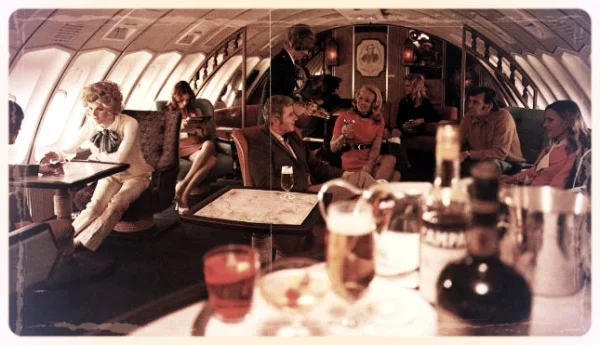
Is it possible, do you think, that Democratic senators are, in reality, demons sent by the Devil to pester, humiliate, and torment the rest of us? It may be a somewhat far-fetched theory, but take a look at the latest proposed policy initiative from Dianne Feinstein and see if you can come up with any other explanation.

 Ms. Feinstein, the senior senator from California, has decided that the experience of air travel in this country needs to be made worse. The senator, a lawmaker with, clearly, too little to occupy her time, has recently written to the CEOs of seven major air carriers suggesting that they should not serve any passenger more than two alcoholic drinks in the course of a domestic flight.

 Now, a "suggestion" from Dianne Feinstein is, like a "request" from Don Corleone, something to take seriously. Just in case any of the CEOs did not understand this, the sober-sided senator spelled out the threat implicit in her proposal. If the airlines would not comply "voluntarily" they would be required to do so by law. "I am," she warned sternly, "in the process of writing legislation." And that legislation would be tough. The ban, she explained, would apply "regardless of the type of alcoholic beverage served."

 Let us imagine what that could mean. You are in Coach, in a middle seat narrower than George W. Bush's Florida majority. One neighbor, grotesquely obese, is spreading out from the confines of his chair into your own space. The other, who does not appear to have washed for some days, is sobbing quietly after a nasty spot of turbulence over Des Moines. Two rows behind, a baby screams, but undeterred his mother carries on with the grim task of changing a diaper then and there (she has little choice — the line for the restroom stretches halfway down the plane). The flight itself, theoretically a six-hour hike from New York to Seattle, took off very late owing to unspecified "trouble" at O'Hare. You will, you already know, miss the meeting that was the purpose of your journey in the first place. The flight attendant has just informed you that the last chicken entrée has already been taken, leaving a choice of a bean-based mush or a packet of honey-coated pretzels. It has been two or three hours since your last drink. To numb the pain, you ask for a third Bud Light. Under the terms of the Feinstein fatwa your request will be denied.

 If there is anything guaranteed to spark an outburst of anger, this is it, which is ironic really, as the alleged purpose of the two drinks limit is to reduce "air rage." Of course, why Sen. Feinstein should be so worried by this subject is not clear. The senator was, after all, famously relaxed ("we've got to step back…let cooler minds prevail") when, in this year's most spectacular instance of aerial misbehavior, a hot-dogging Chinese jet collided into an American surveillance plane. We can only speculate as to what it is that has now led Ms. Feinstein to take a new harder line against trouble in the sky. It would, of course, be absolutely inappropriate to suggest that a double standard is at work and quite, quite wrong to hint that the senior senator from California is a self-important busybody, who finds it easier to boss around American citizens than stand up to Communist China.

 No, the answer must lie elsewhere. Was there, perhaps, an incident, senator, a squabble, maybe, on one fraught flight over just whose suitcase was going to have priority in a jam-packed overhead locker? We can only speculate. There is no evidence of such a drama, but then, why worry too much about that? There is no evidence of any epidemic of air rage either, but that does not seem to have stopped Ms. Feinstein.

 The real data are, in fact, rather reassuring. In response to the senator's proposal, a spokesman for an airline industry group, the Air Transport Association, has claimed that most of the four thousand or so (usually fairly minor) incidents of "air rage" that take place each year do so on the ground. Minor or not, that is four thousand too many, but it is worth remembering that U.S. airports catered for over six hundred million passengers last year. Based on those statistics, therefore, unruly travelers account for .0007 percent of the total, and most of those are enraged not by drink, but by delays. One of the principal causes of those delays, Sen. Feinstein, has been Washington's failure to bring the private sector into the management of the air-traffic-control system.

 What is more, when a drunken passenger is, or may become, a problem, the airlines already have all the powers they need. As Ms. Feinstein's own press release admits, under FAA regulations airlines are prohibited from serving alcoholic beverages to any person aboard who appears to be intoxicated. Disorderly passengers can be handcuffed or otherwise restrained. Quite rightly, as a number of loutish holidaymakers have recently discovered, they can also be prosecuted.

 As for those who argue that two drinks should be enough for anyone, well, that may be true for them (and for me. I'm a very frequent flier, but, in the air at least, a very infrequent drinker) but it is not for others, and those folks should be left to make their own choices. A drink or three can help wile away the time, or soothe, perhaps, the truculent traveler who might otherwise cause just the sort of problems which, supposedly, so alarm the senator. In addition, most of us know those terrified fliers (hi, Mom!) who need more than a little something to help them through their ordeal. Why should they suffer?

 In the end though, the utilitarian case misses the point. This particular example, the right to that third beer, may be not be the most important cause, but what matters here is the underlying principle, the principle that government should not take away any of our freedoms without a good reason. In this instance, Sen. Feinstein has not shown us that reason. The facts do not support her argument, and if we reject Satan as an explanation for Dianne's draft diktat (and, probably we must, although the Devil does, notoriously, find work for idle hands), then the only motive that can be found is in her own mindset, one all too typical of her party's leadership: priggish, arrogant, condescending, and unbelievably interfering.

 And you don't need to get in an airplane to be angry over that.

Another Fine Mess

National Review Online, July 18, 2001

Ken Clarke.jpg

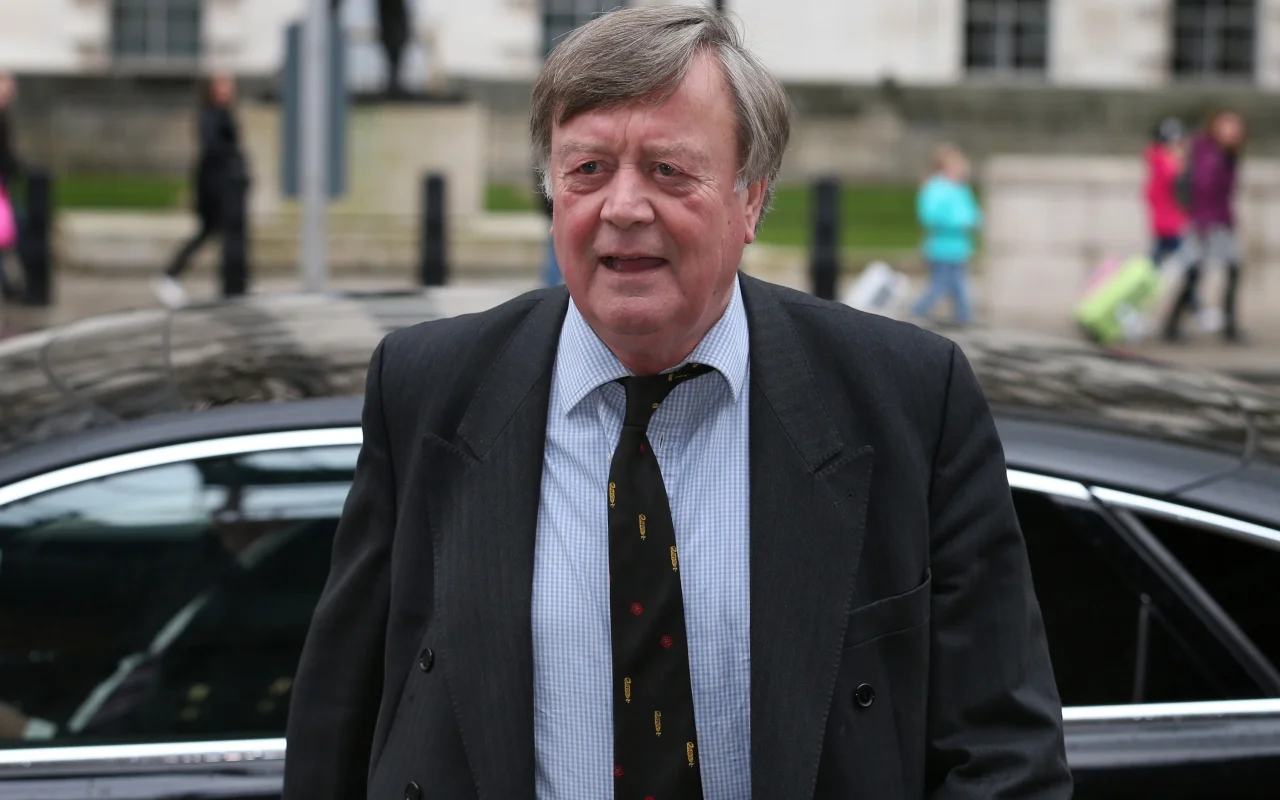
When the British Conservative Party decides to make a mess of things, it does so in style. Last night, Mrs. Thatcher's tatty successors did it again. Battered, humiliated, and crushed in two successive general elections, the Tories are now identified with precisely one popular policy, their opposition to any attempt to abandon the Pound in favor of the European Union's laughable single currency, the Euro. So last night, when Conservative MPs had the task of narrowing the shortlist of candidates for the party's leadership down to two contenders, what did they do? Why, naturally they gave the most votes to former finance minister Ken Clarke, who politically, at least, is best known for one thing. He wants Britain to adopt the Euro. Now, that is a perfectly respectable, if misguided, opinion, but it is a remarkable viewpoint to be held by the challenger for the leadership of a profoundly euroskeptical party, although that, in turn, is less strange than the fact that, when the final vote is held this September, Mr. Clarke is very likely to end up the winner.

In part, of course, Ken Clarke's success is the product of desperation. The Tories are patient folk, but, after two of the biggest defeats in British electoral history, they would quite like to start winning again. Opinion polls repeatedly show that Mr. Clarke is easily the most popular Conservative in the country, despite the fact that he rejects the Conservatives' most popular policy. He combines political heft (Clarke is widely perceived as having enjoyed a successful ministerial career, although no one can quite say why) with a likeable public image. Untidy (the suits!), non-workaholic (the naps!) and rather portly (the waistline!), Mr. Clarke has perfected the English art of concealing a sharp intelligence, and no small amount of arrogance, behind a façade of shabby bonhomie. He is known to enjoy a few drinks and it is a fair guess that lean cuisine remains a mystery to him. Spectacularly (he is also a former Health Minister) Mr. Clarke also smokes, and, as Deputy Chairman of British American Tobacco, he would probably like you to take up the habit as well.

Being a merchant of death, however, is not enough, by itself, to make Ken Clarke the best choice for the Tory party. When it comes to more conventionally political matters, he has shown himself to be a very conventional politician, with ideas that are very unlikely to prove much of a challenge to the Labour Party's existing dominance. Mr. Clarke came into politics in the 1960s and his attitudes stem from the orthodoxies of the compromising and vaguely defeatist Conservative Party of that era. This too is probably the source of his fixation with the EU. Back then, "Europe" was seen as a relatively prosperous, sunlit alternative to the gloom of Britain's decaying welfare state. Indeed, in those days, that is just what it was, but times have changed. Thinking in the EU has not, however, and its dirigiste economic model has now clearly run out of steam. Post-Thatcher it is the Continent that should look at the UK for economic inspiration, not the other way round.

This is a change that seems to have eluded Ken Clarke. He fails to grasp the fact that, for Britain, deeper integration within the federal European project can only mean one thing, an irrevocable return to the high-taxing, bureaucratized ways of 30 or 40 years ago. Mr. Clarke may be the most attractive of the candidates for the Tories' top job, but his failure of imagination over Europe means that he is also the most dangerous.

The GOP was faced with a similar temptation last year. John McCain offered the prospect of a landslide, but the price he asked, campaign "reform," was too much for a party that still had some principles. It was a decision made easier, of course, by the fact that, in George W. Bush, the Republicans had an alternative candidate with a reasonable chance of victory. Looking at the potential opposition to Mr. Clarke, in a party where the ranks of aspiring leaders had been thinned by electoral carnage, it is by no means sure that Britain's Conservatives have had the luxury of such a choice.

To prove this, just look at the relative success of one of Mr. Clarke's supposed rivals, the mysterious Michael Ancram, a man who had risen to obscurity as Chairman of the Tory Party. Unelectable (as a member of the hereditary aristocracy he is considered beyond the pale in Tony Blair's supposedly classless new Britain), his campaign platform consisted of two pretty daughters and one vague principle (something to do with "unity"). Nevertheless, in a sparse field it was enough. The great man got some votes, and by the end of his campaign the London Times could even talk about yet another Tory sect, the "Ancramites."

It was not to last. Ancram and the Ancramites were defeated in an earlier round of voting. Another challenger dropped out shortly thereafter, leaving two other candidates. One, Michael Portillo, a former defense minister, had been the early front-runner. Once viewed as Mrs. Thatcher's heir, Portillo, an occasionally charismatic politician, who was seen by some as a potentially exciting choice to take on Tony Blair, has, over the past few years, compounded bad luck (he was out of parliament at a crucial time) with worse tactics. A self-indulgent and very public "journey" of self-discovery designed to help him connect to a wider audience played poorly with a party that, even these days, still prefers some degree of emotional reticence. The wider audience was pretty startled too. Doubts as to what the former Thatcherite stood for were intensified by the speed of his departure from the Iron Lady's old certainties. British Conservatives are a pragmatic bunch. They understand the reason for a strategic retreat, but would, perhaps, have preferred that this one had been carried out somewhat less enthusiastically.

Unfairly, Mr. Portillo's admission a few years ago of some early homosexual relationships may also have inflicted some lasting damage, but in the end it was questions over his judgment and what he stood for that were to prove fatal. Despite a strong start, his campaign was clumsy, and, in the absence of any real evidence of his electoral pull, the old doubts returned and he was done for. He was eliminated in last night's ballot, passed on the one side by the popular appeal of Ken Clarke and, on the other, by the ideological attraction of the other remaining challenger, Iain Duncan-Smith, the most recent keeper of the Thatcherite flame.

Iain Duncan-Smith, or "IDS" as he has been dubbed by the egos of the Parliamentary Conservative Party, is an amiable former army officer and the son of a Battle of Britain hero. He is bright, well informed, and a confirmed Euroskeptic. In fact, unlike Mr. Clarke, there is no doubt that he actually supports Conservative policies. By rights, all this should make IDS the favorite for the final ballot in September (all Party members get to vote), except for one teeny-weeny problem. Many Tories worry that the undeniably retro Mr. Duncan-Smith may be completely unelectable. He is, they worry, too unknown, too old-fashioned, too uptight, and perhaps the worst offense, too bald (a no-no, allegedly, in politically sophisticated Britain). Over the next couple of months IDS will have to show that these concerns have been overdone. If he can do that, he will see off Mr. Clarke. If he cannot, Conservative Party members will face a difficult dilemma. Do they vote for Mr. Clarke, a proven vote-getter, who might win an election, but whose policy preferences run the risk of splitting the party, and enmeshing Britain in a federal Europe, or do they vote for IDS and run a high risk of a third electoral disaster, a disaster that might give Mr. Blair the mandate he needs to adopt the Euro?

IDS, I think, needs to get a move on.

Baltic Reflections

National Review Online, July 14, 2001

© Andrew Stuttaford

© Andrew Stuttaford

It is playtime now in Tallinn. The brief, bright northern summer has transformed the Estonian capital into a city of outdoor cafes, tourist buses, and long, lazy strolls. At night, if you can call it that, music bursts out of the bars and clubs, bouncing off old town walls, and echoing down winding streets still lit by a sun that seems never quite ready to set. Add to the picture some of Europe's most attractive architecture, a vista of church spires, merchant houses, and impressive medieval fortifications and you have, for once, a city that really does deserve the label "fairytale." But, as with all the best such tales, reality is not quite what it seems. A good portion of the old town is, in fact, a reconstruction, the product of years of careful rebuilding, a restoration made necessary by Russian bombardment towards the end of the Second World War. The country's prosperity is also less than Tallinn's glow may initially suggest. Estonia's current economic recovery, the most impressive of any former Soviet Republic, is the product of hard work and free-market economics, but it remains, inevitably, uneven. Outside Tallinn, much of the country remains trapped in post-Leninist torpor, while even in the capital itself existence is tough for many, particularly if they are old, dependent on a hopelessly inadequate pension, and wondering where it was that their lives had gone.

A new exhibition located, with characteristically blunt Estonian reproach, a hundred yards or so from the Russian embassy, gives part of the answer. It commemorates the 60th anniversary of the mass arrests and deportations of June 1941, an episode of totalitarian savagery that still haunts this small Baltic nation. The black mourning banners announcing the exhibit flutter in the breeze. They are dark reminders of a cruel past, a haunting contrast to the bright skies, pale stucco and cheery advertising of contemporary Tallinn, basking in the summer sun.

To enter the exhibit hall is to return to that past. Walk into the lobby and find yourself in a gray dawn, feet crunching on a gravel path. It was the last sound that many deportees were to hear in what they mistakenly thought was still their familiar, normal existence. It was the sound of visitors, but who was it, they must have wondered, so early in the morning? Secret policemen, their victims were soon to discover, prefer not to do their work in the full light of day.

The exhibit's second room, an old dining hall by the look of it, gives the background to the tragedy. On its stone floor, strangely, there are patches of illustration, faded signs of the zodiac, a relic, perhaps, of some earlier avant-garde daubing. They must have proved impossible to erase. In a way, that is appropriate. All around the room are relics of another modernist experiment, Soviet Communism, the future, the world was once told, that "worked," the future that, in June 1940, rolled into Tallinn on the back of Red Army tanks, and left an indelible stain on the history of Estonia.

It was to be the end of the country's pre-war independence, a brutal return to the foreign rule that had characterized this land for over seven hundred years, a return made worse by the fact that of all Estonia's alien rulers, the Soviets were the worst, barbarians with a Plan that had no room for small, inconvenient nationalities. Estonia's First Republic passed into memory and into myth; it was, as older people sometimes still refer to it, "the Estonian time," a lost Eden, a moment in the light no more durable, in the context of centuries of oppression, than the short Baltic summer. And yet its memory endured, preserved by the Estonians as a reminder to themselves, if not to an indifferent world, that they were still a nation. In Tallinn's museums you can still find lovingly preserved consumer products from the 1920s, chocolate bars and tins of coffee, resplendent under glass, poignant souvenirs of an outraged sovereignty.

You can see that same clutching for the past at the deportation exhibit. There is evidence, that all-important proof, of Estonia's inter-war existence prominently on display. Drawn from home movies and news reels,  jerking images of farmers, factories, picnics, politicians, parades with too many flags and all the other clumsy baby steps of a new nation flicker and shine as they are projected against the walls of the old banqueting hall.

Across the room, there are reproductions of the doomed republic's newspapers from 1940-41. They reflect the end of independence. In June and July, 1940 the front pages could still boast a few advertisements, for Alex Rahn's radio store, for example, or "Isis Kreem" ointment, but these suggestions of capitalist prosperity already have to coexist with pictures of arriving Soviet satraps, 'elections' where the communists win over 90 percent of the vote, and the first calls for Estonia to join the USSR. By August the same year, the advertising has gone, and so has the republic's independence. Free Estonia is mutated into the 'Estonian Soviet Socialist Republic', the latest recruit into Stalin's gargoyle Union. The headlines now jabber of progress, proletarians and production. The only significant information is what they leave out.

On June 14, 1941, the front page of the principal Estonian newspaper featured a photograph of rowers on a canal in Moscow. There was no mention, of course, of the real news that day, the simultaneous arrest and deportation of people across all three Baltic countries. Ten thousand were deported from tiny Estonia alone, of whom one third (counter-revolutionaries, I'm sure) were under the age of seventeen.

The Tallinn exhibit tells some of their stories. There was Niina (guilty!), arrested at 14, and Juula (guilty! Her brother was a philatelist, and thus, it was explained, a British spy). As for Ebba Saral, well, she was a criminal too dangerous to be confined to a mere cattle truck with the others. They put her on a sofa on a flatcar and, surrounded by guards, she rode into hell "like a queen." She and her husband (a professor — guilty!) both perished. There is a photograph of his grave, and copy of her death certificate, grudgingly issued nearly half a century after her execution. Fittingly, it is in Russian. This is, sadly, not a rare story. In the first year of the Soviet occupation a total of sixty thousand Estonians (four percent of the population, the equivalent of around eleven million Americans today) were deported, conscripted or murdered.

Two doors then lead from the exhibit's main hall. It is not much of a choice. One door leads to "prison," the other to "Siberia." "Prison" is an assembly of iron doors and a nightmare reconstruction of a squalid Soviet jail cell. "Siberia" displays homemade tools and rough-hewn luxuries, the former essential for existence, the latter for sanity. There are group photographs of the deportees, stoic in the tundra, dumped into a wilderness and left to adapt or to die. Some of them even managed to survive and so, miraculously, did the dream of freedom. An independent democratic Estonia finally reemerged from the wreckage of the Soviet Union in August 1991.

Understandably, this new Estonia has applied to join NATO. Russia's arrogant, disturbing opposition remains one of the best reasons to agree to the request. George W. Bush appears to sympathize. Speaking recently in Warsaw, he said that, "All of Europe's new democracies, from the Baltic to the Black Sea" should have the chance of NATO membership. It was, for the peoples of the former Soviet bloc, a marvelous moment. In Western Europe, needless to say, the political classes were not quite so sure. To many of those folks, the real threat lies elsewhere. Sweden's prime minister, a Social Democrat by the name of Goran Persson, marked Mr. Bush's arrival in Europe by calling on the European Union to build itself up as an alternative to American "domination."

Of course, Swedish Social Democrats know a thing or two about "domination." Not long after those Red Army tanks rolled into Tallinn, a few weeks, perhaps, after the day that Ebba Saral was taken to her death in the East, the Swedes (the government was led by a Social Democrat then, as now) decided to do something about Moscow's Baltic land grab. And what they did was give it diplomatic recognition, one of the first two countries in the world to do so.

The other was Nazi Germany.


Rough Justice

National Review Online, July 5 2001

Slobodan_Milo_evi_.jpg

The Serbs made a furtive sale and a dirty trade. It was a handover made in exchange for a dollop of aid and a whitewashed reputation. You do not have to be either an admirer of Milosevic or a worrier about black helicopters to find it more than a little distasteful. Last weekend's events in Belgrade and The Hague may have been a short-term victory for Uncle Sam, but, in the longer term, they may come to be seen as a disaster. What they really represented was a triumph for a form of intrusive international jurisprudence that already represents a menace to effective diplomacy and will, in the end, be a threat to the interests of this country. It is worth remembering, after all, that if there is any legitimacy to prosecutor Del Ponte's crusade, it is based on the authority of the United Nations, an organization that has never been notably friendly to the U.S.

Yes, that's right, the U.N., that same collection of moral colossi whose most recent notable achievement in the area of human rights has been the decision that the slave state Sudan represents a better guarantor of basic decency than does the United States. The sad thing about last weekend's drama was that it was all so unnecessary. Milosevic was, mercifully, already a beaten man, a thug at the end of his tether, who seemed destined finally to face the judgment of his own nation, a people that he had led to disaster and humiliation. The trial would have lasted longer than that of Romania's unlamented Ceausescu, and the punishment might have been less, shall we say, immediate, but the consequences would, for practical purposes, have been much the same. Yugoslavia's failed savior would have been finished. Almost as importantly, such a trial would have provided an occasion for his countrymen to confront their own past. With, doubtless, the help of some prompting from outside, the proceedings would have been a valuable chance for the Serbs to contemplate not only the crimes committed by their former leader, but also the horrors in which far too many of them had themselves participated. Milosevic, too, had many willing executioners.

There is a clear danger that removing the trial to The Hague will dilute that message. Handled with anything other than the most exquisite sense of fairness, it may well play into the hands of those who want to portray Milosevic as a martyr, a victim of victors' justice, a hapless scapegoat found guilty only by a kangaroo court. In such a scenario, the real evidence of terrible atrocity would almost inevitably be dragged into controversy and disrepute. The slaughtered tens of thousands would suffer further, grotesque insult. Their corpses would be mocked as tragic accidents and their mass graves as exaggerations. The dead would be left slandered and their memory reduced to nothing more than the bogus prop of a fraudulent show trial, the basis of a poisonous myth that could prove compelling in a Serbia where history too was a casualty of Milosevic's war. The very real chance of such a development cannot be ignored. The rump of the old Yugoslavia is an embattled and broken nation, surrounded by hostile states and, understandably, skeptical about the evenhandedness of NATO's new justice. It is a fertile ground, as we already know, for paranoia and crazed theories of betrayal.

Distance too, will pave the way for another, gentler form of denial, the seductive fantasy in which nobody, neither the Serbs, nor NATO, is guilty. Only the bogeyman Slobodan will be to blame. Safely tucked away in Holland, Milosevic will become the repository for a people's guilt, out of sight, out of mind and off their conscience. In Germany's immediate post-war years the conveniently deceased, and thus equally absent, Hitler fulfilled a similar function for surprisingly large numbers of his former supporters. It is not difficult to imagine the same occurring in Serbia, but more nastily. After all, in the Balkans national myths have a way of turning rapidly rancid, and, unlike in the territory of the fallen Reich, there is hardly anyone on the ground to keep the peace should the desire for revenge become too great to contain.

So if the decision to try Milosevic abroad is an opportunity missed, and a risk taken, what exactly was its point? It cannot have been deterrence. The prospect of a Dutch jail is unlikely to put off any more than the feeblest of dictators-in-waiting. What Milosevic's fate may do, however, is operate as a disincentive to some future despot contemplating a voluntary abdication. In the end, the Yugoslav leader had, of course, to be shoved out of office, but at least even he had the sense to go (reasonably) quietly when the game was up. The Hague has been his reward. Future dictators will draw the necessary conclusions.

In all probability, the real purpose of making such an effort to get hold of Milosevic was something else: It was to make clear that this latest application of international law was for real. To be fair, there was some practical justification for this. If, like the NATO allies, you intervene in the affairs of a foreign country, it is always handy to get a little legal backing, even if you have to make it up. The problem is that, in going along with this, the United States has given further momentum to the efforts of an increasingly assertive international bureaucratic class, prominent in the U.N. and elsewhere, to grab ever more power for itself. Kyoto was one notorious instance, but this is a continuous, relentless process. There will soon, for example, almost certainly be a permanent international criminal court (Iranian judges, anyone?), which will, you can be sure, have a permanent anti-American agenda.

Meanwhile, activist European magistrates have used this era's more expansive notions of international law to start taking it upon themselves to 'investigate' a perceived retired oppressor or two, none of whom, strangely, ever appear to be on the Left. Augusto Pinochet was harassed for years, and there's even excited talk about prosecuting Henry Kissinger, but when it comes to Mikhail Gorbachev, the hero of Afghanistan, Vilnius, and Tbilisi there is only silence. No French magistrate, I suspect, will be bothering Gorby.

President Bush appears to understand the implications of this. Quite rightly, he has made clear that the US will not subject itself to the proposed International Court, but international law has, of late, shown a tendency to turn up in the most unexpected places. The Bush administration will have to make sure, in its understandable enthusiasm to punish the butchers of the former Yugoslavia, that it is not inadvertently setting a precedent for future less savory 'international' prosecutions of, say, US troops on a peacekeeping mission.

Such an outcome really would give Milosevic the last laugh.