Strangers in a Shared Land

“We could have been Bosnia,” said Eerik-Niiles Kross, a center-right Estonian politician, former intelligence chief—and much more besides. He didn’t have to tell me why. Estonians remain haunted by the memory of their doomed interwar republic. It inspired their drive for independence from the Soviet Union, but it reminds them that what was lost can never be truly restored.

Read More

After Charlie

To look at most of the photographs of the march in Paris the Sunday after the terror attacks was to see something glorious after the horror that had gone before. More than a million people had gathered to proclaim their defiance in the face of jihadi insistence — enforced in this case by mass murder — that Islamic fundamentalists would determine what could or could not be written, said, or drawn about Islam. And then there were the images of the leaders — Merkel, Hollande, Cameron, and all the rest of a somewhat motley crew (but not Obama) — marching side-by-side, sometimes with arms linked in a gesture of unity. But all was not as it seemed.

Read More

From UKIP to ‘Brexit,’ Possibly

hortly after former Tory MP Mark Reckless had defected to UKIP and triggered a by-election (special election) in his Rochester and Strood constituency, David Cameron vowed that the Conservatives would stop Reckless from getting “his fat arse back onto the green benches” of the House of Commons. Well, the Tories did what they could, but there was no bum’s rush for the fat arse.

Read More

Testing The Limits

The Weekly Standard, October 20, 2014

Brāļu Kapi, Riga, March 1994 © Andrew Stuttaford

Brāļu Kapi, Riga, March 1994 © Andrew Stuttaford

“I don’t think it’s 1940,” the woman in Riga told me in June, referring to the year the Soviets brought their own variety of hell to Latvia. “But then, I wouldn’t have expected 1940 in 1940 either.” And then she laughed, nervously. With Russia’s ambitions spilling across the borders that the breakup of the Soviet Union left behind, and talk from Vladimir Putin of a broader Russian World (Russkiy Mir), in which the Kremlin has the right to intervene to “protect” ethnic Russian “compatriots” in former Soviet republics, the once bright line that had cut the Baltic states off from the horrors of their past now seems fuzzy.

And in a more literal sense the borders that separated the Baltics from their old oppressor have lately appeared more vulnerable than once believed. Moscow has been pressing and provoking in the Pribaltika for years​—​some subversion here, some denial of history there. There have been maliciously random trade bans (Lithuanian cheese, Latvian sprats, and quite a bit more besides) and carefully planned cyberattacks. But the bullying has been stepped up sharply this year. The saber-rattling has evolved from menacing “training exercises,” such as last year’s Zapad-13 (70,000 Russian and Belarusian troops war-gaming their way through a fight against “Baltic terrorists”), to include too many flights by Russian fighters near or even in Baltic airspace to be anything other than part of a significantly more aggressive strategy.

On September 3, Barack Obama traveled to Tallinn, the Estonian capital, to reaffirm NATO’s commitment to the three Baltic states, all of which have been members of the alliance since 2004. Two days later Eston Kohver, an Estonian intelligence officer investigating smuggling across Estonia’s remote and poorly defended southeastern frontier, was, claims Tallinn, grabbed by a group of gunmen and dragged across the border into Russia. His support team at the Luhamaa frontier post nearby were distracted and disoriented by flash grenades and their communications were jammed: They were in no position to help.

Shortly afterwards, Kohver turned up in Moscow’s notorious Lefortovo prison. According to Russia’s rather different version of events, the Estonian was captured while on a mission on the Russian side of the border. Kohver faces espionage charges that could mean decades behind bars. He has “decided” to drop the lawyer that the Estonian government had arranged for him. Court-appointed lawyers will fill the gap. The stage is being set for a show trial, complete, I would imagine, with confession.

After a year of Russian lies over Ukraine, I’m inclined to believe democratic Estonia over Putin’s Russia. The timing was just too good. Barack Obama descends on Tallinn with fine words and a welcome promise of increased support, and Russia promptly trumps that with a move clearly designed to demonstrate who really rules the Baltic roost. In the immediate aftermath of Kohver’s kidnapping the Estonians signaled that they were prepared to treat the whole incident as an unfortunate misunderstanding. No deal. The power play stands, made all the more pointed by the way that it breaks the conventions of Spy vs. Spy, a breach that comes with the implication that Estonia is not enough of a country to merit such courtesies.

If anything could make this outrage worse, it is the historical resonances that come with it. There are the obvious ones, the memories of half a century of brutal Soviet occupation, the slaughter, the deportations, the Gulag, and all the rest. But there are also the echoes of a prelude to that: the kidnapping of a number of Estonians in the border region by the Soviets in the days of the country’s interwar independence, intelligence-gathering operations of the crudest type. These days Russia prefers more sophisticated techniques: Earlier this year, it polled people in largely Russian-speaking eastern Latvia for their views of a potential Crimean-type operation there (as it happens, they weren’t too keen).

But whatever the (pretended) ambiguities of the Kohver case, there were none about what came next. Moscow reopened decades-old criminal cases against Lithuanians who acted on their government’s instructions and declined to serve in the Red Army after Lithuania’s unilateral declaration of independence in March 1990. That government may not have won international recognition at that time, but recognition​—​including from Moscow​—​followed within 18 months. To attempt to overturn now what it approved in the interim comes very close to questioning the legitimacy of Lithuanian independence today.

This could turn out to be more than merely symbolic harassment. The Lithuanian government has advised any of its citizens theoretically at risk of Russian prosecution on these grounds not to travel beyond EU or NATO countries. That’s not as paranoid as it sounds​—​Russia has been known to abuse Interpol’s procedures in ways that can make for trying times at the airport for those it regards as its opponents.

As if that was not enough, injury has since been added to insult: A week or so later, Russia detained a Lithuanian fishing boat in waters that are international but within Russia’s exclusive economic zone. Lithuania acknowledges that’s where the vessel was, but argues that it had every right to be there. Russia maintained that the boat had been illegally fishing for crab, and took it back to Murmansk. Such disputes blow up from time to time, but once again the timing is, well .  .  .

And of course these actions are unfolding against a background not only of Russian aggression in Ukraine, but heightened verbal violence against the Baltics. We can be confident that when (as it seems he did) Putin boasted to Ukraine’s president, Petro Poroshenko, last month that Russian troops could be in the Baltic capitals (and, for good measure, Kiev, Bucharest, and Warsaw) “within two days,” he did so safe in the knowledge that his threatening braggadocio would be passed on.

Konstantin Dolgov, the Russian foreign ministry’s Special Representative for Human Rights, Democracy, and the Rule of Law (yes, really), obviously didn’t want to rely on third parties to get the message out: He went straight to Riga to deliver the message that Russia “would not tolerate the creeping offensive against the Russian language that we are seeing in the Baltics.” He pledged Russia’s “most serious” support to its purportedly embattled “compatriots.” No matter that they are, in reality, considerably freer (and generally better off) than Russians in Russia itself.

To be sure, Balts have heard this sort of talk before, but it’s hard not to suspect that this time something wicked might be on its way. A direct assault remains highly unlikely. This is not 1940. But the probing, the baiting, and the bullying will intensify, and so will efforts to foment trouble among the large Russian minorities in Latvia and Estonia. The October 4 election in Latvia passed peacefully, but the fact that “Russian” parties took about a quarter of the vote nationally (out of an electorate that excludes 300,000 mainly Russian “noncitizens”) and over 40 percent in Latgale in eastern Latvia will not, to put it mildly, have been overlooked in Moscow.

As to what Putin might want out of the Baltics in the end, it’s hard to say. If he succeeds in proving that NATO’s shield is nothing more than bluff (with all the consequences elsewhere that such an unmasking would bring in its wake), leaving Latvia, Lithuania, and Estonia with nominal independence​—​flags, folk dancing, presidents, elections, and all that​—​would probably be acceptable so long as real power resided in Moscow. Continued Baltic membership in the EU might still be possible, even desirable: A Trojan horse or three within the EU could come in handy one day. Guesses too far? Maybe, but what we know is that Putin will try to take what he thinks he can get away with.

That’s why deterrence counts. Both Latvia and Lithuania have committed to increase defense spending from current (meager) levels to the NATO minimum target of 2 percent of GDP, a target that Estonia has met for a while. Latvia recently bought 123 secondhand armored combat vehicles from the United Kingdom. Estonia has announced that it will improve the demarcation of the border with Russia and will reinforce its border guard with special response teams. Recruitment is running at much higher levels for volunteer home defense units such as Estonia’s Kaitseliit and the Lithuanian Riflemen’s Union. Again, this is not 1940: This time the Baltics would fight.

That’s all well and good, but it’s important to remember that the Estonian military can boast fewer than 4,000 regulars. Latvia may be getting those combat vehicles, but it only has three tanks. In the end, the security of the Baltic states depends on their membership in NATO and the guarantee that comes with it: An attack on one NATO member, be it France or be it Estonia, is treated as an attack on all. In recent months, NATO has sent a blunt message​—​from tough declarations to an increased and increasing presence in the region​—​that this would indeed be the case, but Moscow’s continued pressure indicates that it is not convinced.

Until it is, this dangerous game will continue.

Baltics on the Edge

National Review Online, September 4, 2014

Hermann Castle, Narva, Estonia (with Ivangorod Castle, Russia, in the background), March 2015 © Andrew Stuttaford

Hermann Castle, Narva, Estonia (with Ivangorod Castle, Russia, in the background), March 2015 © Andrew Stuttaford

Prisoners of geology, Icelanders make it their business to understand volcanoes. Prisoners of geography, the peoples of the Baltic States do the best they can to understand the unruly, dangerous, and enigmatic superpower next door.

So, when Janis Berzins of Latvia’s National Defense Academy published a report in April titled “Russia’s New-Generation Warfare in Ukraine,” it was worth paying attention. Since then, Russia’s actions in Ukraine have evolved beyond the deployment of “little green men” and other irregulars of nominally uncertain provenance into an old-fashioned invasion, plain, simple, and bloody, but the West still needs to focus on what Berzins had to say. His subtitle — “Implications for Latvian Defense Policy” — suggests why.

With Putin seemingly set, so far as opportunity will allow, on reconstituting the “Russian World” (Russkiy Mir) that fell apart with the Soviet Union, it’s easy to imagine that Latvia and Estonia might be somewhere on the target list. They are both former Soviet republics. For two centuries, they were part of the Russian Empire. Both have large, imperfectly assimilated Russian minorities, who, Putin reckons, belong within that Russian World, a status that entitles them — lucky “compatriots” — to his “protection.” Each has a major, almost 100 percent Russian-speaking city (Daugavpils, Latvia, and Narva, Estonia) temptingly close to the Russian border.

Both countries are in NATO, and thus theoretically covered by Article V of the NATO Treaty, which provides that all the alliance’s member states “agree that an armed attack against one or more of them in Europe or North America shall be considered an attack against them all.” But in an age in which war can proceed by half-denied incursions and bogus popular uprisings (“non-traditional combat,” in Berzins’s phrase), who is to say what an “armed attack” really is? Berzins asks what would happen if a “Crimea-like situation” were to erupt in Narva. After all, Russia would undoubtedly insist that this too was the exercise of a “democratic right of self-determination.” And that, Berzins clearly fears, would cloud the picture enough for some Western politicians to claim that Article V should not apply. If that sounds too cynical, recall the lengths that some of them went last month to avoid calling the Russian assault on Ukraine (a country without the benefit of an Article V guarantee) by its right name: invasion.

According to the (anti-Putin) Russian commentator Andrey Piontkovsky, Putin is well aware that many NATO countries would be reluctant to be drawn into conflict by Article V. And even if they did come to Estonia’s aid, “Putin [could] respond with a very limited nuclear strike and destroy for example two European capitals. Not London and not Paris, of course.” Were that to happen, Piontkovsky believes, Putin would calculate that “all progressive and even all reactionary American society” would shout “‘We do not want to die for f***ing Narva, Mr. President!’”

Far-fetched? Probably. Putin is a gambler, but he’s not reckless. That said, it is worth noting, as did Anne Applebaum in a recent article for the Washington Post, that “Vladimir Zhirinovsky — the Russian member of parliament and court jester who sometimes says things that those in power cannot — argued on television that Russia should use nuclear weapons to bomb Poland and the Baltic countries . . . and show the West who really holds power in Europe.” Zhirinovsky is not, thankfully, in a position to shape policy, but he is occasionally used by those in the Kremlin to float ideas that they would like to see in circulation. As (notes Applebaum) Putin has put it, he “gets the party going.”

That this sort of talk is even out there will, as Putin knows, encourage a good number of NATO members to define Article V as narrowly as they can. Psychological pressure has always been a part of warfare, but it has an even larger role to play in Russia’s notion of a “New Generation” war. Within that, writes Berzins, “the main battle-space is the mind. . . . The main objective is to reduce the necessity for deploying hard military power to the minimum necessary, making the opponent’s military and civil[ian] population support the attacker to the detriment of their own government and country,” a strategy (essentially what once might have been called subversion, but taken to a whole new level) peculiarly suited to some of the more fragile countries that emerged from the wreckage of the Soviet Union. In this respect, Berzins’s account of the early months of the Russian onslaught in Ukraine makes depressing reading: “In just three weeks, and without a shot being fired, the morale of the Ukrainian military was broken [in the Crimea] and all of their 190 bases had surrendered.”

But Ukraine, I was repeatedly told during a visit to the Latvian capital, Riga, in June, was a failed state. Latvia is not. Nor is Estonia. Both have made remarkable strides since winning back their freedom from the USSR. They are members of the EU as well as NATO. Their economies have grown fast (if not smoothly), delivering a standard of living far better than that of their Russian neighbor. That is not the case in Ukraine. At their core, Latvia and Estonia have a powerful sense of national identity. Memories of their independent inter-war republics and the nearly half a century of brutal Soviet occupation that followed still sear. In 1940 they were annexed by Moscow without a fight. That would not happen again.

Nevertheless, their political structures are not yet as developed as they could be, and their economies are far from robust. There is a lot of Russian money floating around, particularly in Latvia, and their Russian-speaking populations (30 percent or so of the population in Latvia and approximately 25 percent in Estonia) are not only a cause for Putin, but a potential source of instability that the Kremlin is continually trying to exploit. This should not be overestimated: Most Latvian and Estonian Russians feel at least a degree of loyalty to those countries, and the approval that some of them show for Russian adventurism abroad (in the Crimea, for example) does not necessarily mean that they want Russian troops showing up at their front door.

Looking specifically at Latvia, Berzins cites instances of the early phases of New Generation warfare, including “supporting pseudo human-rights organizations, backing the organization of a referendum for Russian to be the second official language [it failed, but, tellingly, won a majority in Eastern Latvia], and surveying the population of the eastern border to get intelligence on their inclination to support a [Crimean-style] scenario.” Plus, adds Berzins, “in a more subtle way, Russia has been successfully influencing internal politics through some of the political parties.” That may be a reference to, amongst others, Harmony Center, Latvia’s largest, a party that draws most of its support from the country’s Russians, and that has links to Putin’s United Russia party. Its leader is the mayor of Riga, a city in which the population divides roughly evenly between Russian-speakers and ethnic Latvians.

Then throw the Russian media into the mix. It’s no secret that Russian television has become a pathway to a world of nationalist delirium, a world where two plus two does indeed equal five, a “parallel reality,” in Berzins’s words, “legitimizing . . . Russian actions in the realm of ideas.” And this is the TV that most Baltic Russians watch most of the time (local Russian programming is thin gruel). Its poison may be diluted by the fact that these viewers live in the West, but still . . .

And then there is the constant saber-rattling at the border, the incursions into Latvian or Estonian airspace, military exercises such as, most notoriously, Zapad-2013 (“West 2013”), in which some 70,000 Russian and Belarusian troops massed near the Latvian, Lithuanian, and Polish borders to war-game a scenario in which “Baltic terrorists” were the villains, an exercise designed to demonstrate who was really boss in this part of the world.

But for now, the spying, the probing, the pressing, occasional trade embargoescyber-attacks, dirty tricks (check out the way that Interpol was abused in the 2013 mayoral elections in Tallinn, the Estonian capital, for one example), a gnawing at the foundations is “all” that there has been. Polling the inhabitants of the border region is as close as Russia has come to crossing the line that would herald the next phase of a New Generation war — the seizing, maybe, of a building or two in Narva or Daugavpils by a bogus “people’s republic” and the arrival of those “little green men” — a phase that, for now, seems mercifully far off.

Berzins has suggestions as to how Latvia might head off that moment. These include increased funding for economic development in the poorer regions, a boost to military spending (Latvia has since committed to hike its defense spending to 2 percent of GDP, the minimum NATO target that nonetheless hardly any member states hit), and the introduction of something like Swiss-style conscription. But perhaps the most important — and the most optimistic — revolves around securing the revision of Article V to reduce the dangerous ambiguity that New Generation warfare has opened up, an ambiguity that quite a few NATO members might well prefer to keep intact.

It’s an ambiguity that comes with terrible perils — not just for Latvia and Estonia (and, quite probably, Lithuania as well: the third of the Baltic trio has a far smaller Russian-speaking population, but cuts off the Russian exclave of Kaliningrad from Moscow-friendly Belarus), but for NATO too. Standing by our Baltic allies — three democracies that have emerged from Soviet darkness — is the right thing to do, but it is a matter of self-interest too. If Putin prevails over the Baltic countries despite their NATO membership, that would, argues Piontkovsky, “mean the end of NATO, and the end of the U.S. as a world power, and the complete political dominance of Putin’s Russia not only in the area of the Russian World but in the entire European continent.” That may be overstating it, but such a blow to the prestige of Article V would at least risk an unraveling of NATO, with all the nightmares that would come in its wake.

Ambiguity can tempt the aggressor into believing that he get can get away with his next coup at little cost. This can, in turn, lead to catastrophe. Hitler was unconvinced that the British and the French would truly stand by Poland in 1939. The ambiguity over the Baltic guarantee can never be eliminated, but it can be reduced. The symbolism of Obama’s speech in Tallinn this week — and the promise to send additional U.S. Air Force units and aircraft to the Baltics — will have done no harm. The increasing presence of NATO aircraft in Baltic airspace in recent months is a good move, as is the stepped-up pace of joint NATO exercises on Baltic territory. A NATO rapid-response force of several thousand troops, capable of deployment within 48 hours, is now being proposed. Its equipment and supplies would be based in the east. Permanent manned NATO bases would be better still. As Estonia’s President Ilves remarked earlier this week, maintaining a “two-tier” NATO, divided between those countries with permanent bases and those without, sends the “wrong signal” to a “potential aggressor.” We can’t be sure that even bases would be enough to do the trick, but the more the West does now, the less likely it is that Americans will ever be asked whether they are prepared to die for Narva.

Latvia Divided

National Review, August 25, 2014

Riga, Latvia, June 2014 © Andrew Stuttaford

Riga, Latvia, June 2014 © Andrew Stuttaford

Riga — The cover of the British edition of Anna Arutunyan’s The Putin Mystique features a grainy, somewhat sinister image of the Russian leader, remote, mysterious, distant. In a bookstore on Riga’s Krisjana Valdemara Street, the Latvian edition is on sale; its cover shows Putin at the shooting range, a gun in his hand, a wry smile on his face, close, too close.

The key to understanding Putin, explained one Latvian official, is to think of him as a petulant and badly behaved teenager who likes to provoke, prod, and see what he can get away with. For quite some time now, that’s what Russia has been doing in the Baltic. Planes skim and sometimes cross borders. Military exercises are staged that seem intended to intimidate rather than to train. Last year saw some 70,000 Russian and Belarusian troops war-gaming a scenario in which “Baltic terrorists” were the villains.

Walk into the Latvian foreign ministry and you’ll see three large flags, Latvian, EU, and NATO. The EU is meant to secure Latvia’s economic development, NATO its safety. Article 5 of the NATO treaty provides that an armed attack on one NATO member is to be treated as an attack on all, but in a paper written in April, Janis Berzins of Latvia’s National Defense Academy wondered how NATO’s politicians would react in the event of a Crimea-like assertion of “self-determination” in Narva, an Estonian city on the Russian border where almost all the inhabitants are of Russian descent. It’s a question that’s just as easy to ask about Daugavpils, the overwhelmingly Russian-speaking capital of Latvia’s poorest, easternmost region.

Daugavpils, Latvia, June 2014 © Andrew Stuttaford

Daugavpils, Latvia, June 2014 © Andrew Stuttaford

And it’s not a question that can safely be confined to Daugavpils. When Putin speaks about the plight of his “compatriots” cut off from their kin by the collapse of the Soviet Union, it is countries like insultingly independent Latvia that he has in mind. Around 26 percent of Latvia’s 2 million people are of Russian descent (and, more significantly, a higher percentage speak Russian at home). Riga itself is roughly evenly divided between Latvian and Russian speakers. The city’s mayor, Nils Usakovs, an ethnic Russian, heads up the leftish Harmony Centre, a political alliance that draws much of its support from the Russian community and, less than reassuringly, has links to Putin’s United Russia party.

But if Putin is to play his games here, he needs his “compatriots” in Latvia to be not only numerous but unhappy. Ukraine, I am frequently told, was a failed state, but Latvia is not. Latvia’s Russians are freer, and generally richer, than their counterparts in the motherland. And they know it. At the same time, there’s no denying the sense of exclusion that many of them feel, especially the nearly 300,000 who are “non-citizens,” a status that Putin has described as “shameful” and worse.

To talk to Elizabete Krivcova of the Latvian “Non-Citizens” Congress is to hear an echo of Selma, but, to add some proportion to that picture, consider that Latvia’s non-citizens have permanent residency, can travel visa-free through most of the EU and (unlike Latvians) in Russia too, and are eligible for most social benefits. They are excluded from voting and a range of jobs, most of them in the public sector, but the door to citizenship is wide open. Quotas have long since been scrapped, and the citizenship requirements (residency, a language test, some knowledge of Latvian history, and so on) have eased over the years: Some 140,000 (including Krivcova) have now been naturalized.

The House on The Corner, Riga, Latvia, June 2014 © Andrew Stuttaford

The House on The Corner, Riga, Latvia, June 2014 © Andrew Stuttaford

But when I suggest to one prominent Latvian politician that it might be time to lance this boil and grant citizenship to all the rest, he flinches, quickly adding that this would mean “losing Riga.” His body language says more than his reply: This is not just an expression of political calculation. In 1989, a future president of Estonia spoke of the “biological and social terror of belonging to a people that is dying out.” That’s a fear evidently shared by a good number of the 1.2 million Latvians who remain in their native land, the last of the last after half a century of Soviet occupation in which Latvians were brutalized, imprisoned, exiled, slaughtered, and denied their right to be. It was a systematic process of national obliteration, and it was reinforced by a continuous inflow of Russian settlers designed to swamp the people whose country Latvia once was.

Many local Russians supported Latvia’s bid for independence, which it finally won in 1991, and most of them thought that they should automatically become citizens of the republic in which they had lived for a good part, or maybe even all, of their lives. Latvians did not agree. From a strictly legal point of view — and during an occupation denied legal recognition by much of the West, strictly legal was all Latvians had had — the restoration of the pre–World War II Latvian republic meant that only its citizens (or their descendants) would be immediately eligible for a Latvian passport: The settlers would have to wait in line.

This bought time for Latvia to reestablish itself as a national republic, time in which the population balance shifted in a direction that favored ethnic Latvians, but not by enough to resolve the demographic impasse that history had left behind. For ethnic Latvians, the way to proceed was with a unitary state, with Latvian as its sole official language: “We are too small to be Canada.” Russian speakers would be slowly assimilated: Indeed, those under 35 can generally now manage pretty well in Latvian. Left (usually) unsaid: The problem of the non-citizens, a significant percentage of whom are elderly, would fade away as the Soviet generations died off.

Riga, Latvia, June 2014 © Andrew Stuttaford

Riga, Latvia, June 2014 © Andrew Stuttaford

For many Russian speakers, this will not do. What they argue for is integration rather than assimilation, perhaps not formal bilingualism but certainly increased recognition by the state of both the Russian language and a distinct Russian cultural identity. The current generation is, it is maintained, not responsible for the crimes of the past. Maybe, but too many of Latvia’s Russians are still reluctant to acknowledge the full horror of what happened here. Whatever one thinks of criminalizing speech (I’m not a fan), it is still a jolt to see the poster in Krivcova’s office mocking recent legislation banning the denial, justification, or trivialization of both Nazi and Soviet aggression against Latvia. This is not the best way to reassure Latvians nervous about the bully next door and a fifth column within.

Nevertheless, despite occasional bouts of bad feeling — such as that generated by a failed 2012 referendum to introduce Russian as a second official language — the two communities rub along well enough. The difficulty is that there is a third party — Russia — in this mix, and it seems set on contributing all the poison it can. Latvia’s NATO membership means that the likelihood of a direct attack by Russia is very small. What can be expected instead is an intensification of Russia’s longstanding attempts to subvert the country from the inside. For now, a Donetsk- or Crimea-style “uprising” is unlikely: The Russians reportedly took soundings in the Daugavpils area and found, even there, little enthusiasm for a move of that type. Meanwhile, Riga is quiet. Even the polling that showed that most Russian-speaking Latvians supported the annexation of Crimea should not be cause for too much concern: Cheering on the ancestral motherland at a safe distance is very different from wanting it to turn up on the doorstep.

Freedom Monument, Riga, Latvia, June 2014 © Andrew Stuttaford

Freedom Monument, Riga, Latvia, June 2014 © Andrew Stuttaford

But the potential for trouble exists, made more dangerous by the fact that a huge majority of Latvia’s Russian speakers get so much of their information from Russian TV. The Russian stations are typically more entertaining than the local offering, but they act as portals into the venomous parallel universe where Kremlin propaganda roams. The loyalty of many of Latvia’s Russians to Latvia is real, but it is not particularly deep. It’s easy to see how Russia could stir the pot. It has the resources, and Latvia’s is a divided society, history is still raw, and there is more than enough resentment to go around. Another risk is that further Russian adventurism, even if well away from the Baltic, creates a heightened climate of mutual distrust within Latvia that rapidly degenerates into something worse. And then there is the general election due in October. Best guess is that Harmony Centre will again come out on top, if less convincingly than in 2011, and will once more be kept out of power by an unwieldy coalition of the weak, often chaotic “Latvian” parties, a result that will only emphasize the divisions that Mr. Putin will undoubtedly still be looking to exploit.

Cameron Cornered

The Weekly Standard, June 23, 2014

David Cameron.jpg

A time bomb does not have to be elegant; it just has to be lethal, primed, and in the right place when the moment comes. Britain’s next general election is set for May 7, 2015. That is likely the day when David Cameron will pay the full price for failing to have defused the revolt on his right.

Britain’s Euroskeptic U.K. Independence party (UKIP) is a poorly run protean mess, unhealthily dependent on the wit, zest, and charisma of its leader, Nigel Farage. And yet in the spirit of Farage (who has survived a plane crash, cancer, and being hit by a VW Beetle), UKIP keeps confounding those who so eagerly draft and redraft its obituary.

The run-up to the election to the European parliament in May was not the party’s most glorious stretch. Sustained battering by mainstream media and mainstream parties—much of it galvanized by UKIP’s heretical emphasis on immigration control—took a toll, and was reinforced by campaign missteps (Google “steel band,” “Croydon,” and “UKIP” for one notably ludicrous instance), including a pre-election radio interview of Farage that went so badly that his spin doctor tried—on air—to bring it to a close.

Less than a week after that interview, Britons went to the ballot box, voting both in the EU poll and, in some regions, local elections too. Results for the latter were counted first. UKIP took 16.5 percent of the popular vote, down from the remarkable 23 percent the party had scored the preceding year, but a reasonable tally considering that these elections were held in less UKIP-friendly territory than in 2013.

The election for the European parliament, however, involved the whole country, and UKIP topped the poll with 27.5 percent, well up from the 16.5 percent it secured in the 2009 EU vote. UKIP may have been assisted by a low turnout (34 percent), but it nonetheless became the first party other than Labour or Conservative to win a national election in over a century. Labour had to make do with regaining (and more) the ground it had lost in 2009 (a Labour government had been presiding over Britain’s slice of the financial crisis), boosting its score from 15.7 percent to 25.4 percent. The Conservatives slumped from first to third place with 23.9 percent. Their coalition partners, the hopelessly Europhile Liberal Democrats, saw their vote cut by roughly half and their team of EU parliament members reduced from 11 to 1, a richly deserved fate marred only by its incompleteness.

But a few days later UKIP ran into a reminder that one barrier remains unbroken. On June 5, it failed yet again to win a seat in the House of Commons. On paper, the constituency—Newark, a pleasant Conservative-voting market town unlikely to be confused with its namesake in New Jersey—looked promising. UKIP had done well there in local elections in 2013 and had headed the poll in that part of Britain in the EU vote. Helping still further, Newark’s (robustly right-wing) Tory MP had just resigned following a lobbying scandal that fit neatly into the UKIP narrative of establishment misrule. Typically, UKIP did not make the most of its opportunity. Perhaps tellingly, Farage opted not to run. Instead the party chose as its candidate a (robustly right-wing) septuagenarian member of the European parliament all too easy to caricature as UKIP at its most primitive.

The result was far from disgraceful: UKIP took over a quarter of the vote, up from the 3 percent or so its candidate managed in 2010. This was despite a concentrated Tory blitz (party workers, activists, and MPs by the hundred were shipped into Newark) that a hollowed-out Conservative party could not hope to reproduce on the national scale that a general election would require. Nevertheless UKIP’s second place (the Tory candidate romped home) meant that the party still had no MPs, a failing frequently cited as a mark of UKIP’s fundamental lack of seriousness. This was only underlined by the convivial Farage’s decision to spend the day before the Newark vote at a tourism conference in Malta. And, yes, he was photographed there in the early hours with a blonde who was not Mrs. Farage. There was a respectable explanation, but .  .  .

Bellowing at Brussels and, for that matter, 10 Downing Street is an unsurprising response to both EU overreach and the metropolitan liberalism of David Cameron’s government. There are numerous infuriated traditionally Conservative supporters who are prepared to “lend” a vote to UKIP in European and, increasingly, local elections, but will balk at doing anything that risks helping “Red Ed” Miliband’s unsettlingly left-wing Labour party into government.

As they fully understand, voting for UKIP could easily do just that. Under Britain’s first-past-the-post voting system, a protest vote can prove expensive. There’s good evidence to suggest that UKIP ballots (around 3 percent of the total) cost the Tories an absolute majority in the 2010 general election. With UKIP now attracting growing numbers of former Labour voters, the math is trickier than it was, but a higher UKIP percentage would undoubtedly do even greater damage to the Conservatives in 2015.

Making the choice sharper still, David Cameron has committed to an in/out referendum on Britain’s EU membership if he is reelected. Euroskeptics ought to remain, well, skeptical about this, not least because Cameron (a politician too unimaginative to contemplate a breach with Brussels) will try to gull Brits into the pro-EU camp with largely meaningless “concessions” allegedly wrung from the U.K.’s European partners. And he will probably succeed, meaning that Britain’s long European nightmare will continue. On the other hand, Cameron’s referendum would represent a chance, however remote, of a withdrawal, which is better than what Brussels-friendly Labour has on offer: nothing.

And right-of-center voters have another reason to be wary of voting for UKIP next year. “Europe” has evolved as an encapsulation of the broader discontent that many Tories (or former Tories) feel for Cameron’s mushy brand of conservatism, a discontent brilliantly exploited by Farage, playing Mrs. Thatcher’s finest tunes and meaning it. That has taken him a long way. The UKIP leader’s conundrum now is somewhat similar, ironically, to that faced by Cameron a little under a decade ago. Modern Britain is no longer the country that voted (often grudgingly) for the Iron Lady. Cameron tried to deal with that change by dragging the Conservative party to the center, calculating that the Tory right had nowhere else to go. Had it not been for Nigel Farage he might have gotten away with it.

The not unrelated difficulty for Farage is that he has harvested about as much of the right as he can, and thanks to the brutal math of first-past-the-post, that will not be enough to deliver the MPs to make the breakthrough he needs. So UKIP’s leader has attempted to widen his support by reaching out to what he has described as “patriotic old Labour” (put less diplomatically, the white working class), using immigration (Britain has received huge numbers of immigrants from elsewhere in the EU, immigrants that under EU law it is powerless to turn away) as the bridge to get there.

This has been a success, but it has involved downplaying UKIP’s earlier free market vim. The evolution of “red UKIP” is less of a problem for the party’s Conservative refugees than some of UKIP’s intellectual cheerleaders might imagine: Standing up for socialized medicine and generous state pensions plays pretty well with an older, often far from affluent crowd. But throw in some other leftish sub-currents, add the harsher edge to the party’s immigration rhetoric, and subtract some Thatcherite grace notes (talk of a flat tax has, for example, disappeared), and it becomes easy to suspect that a good number (especially on the upscale side of the social divide) of UKIP’s once-Conservative or libertarian-inclined voters will return to the Tory fold, particularly with Ed dread to push them there.

But neither this, nor the unappealing Miliband’s failure to click with the wider British electorate, nor the U.K.’s improving economic performance is likely to save Cameron. Britain’s embarrassingly outdated constituency boundaries favor Labour, which only has to win some 35 percent of the national vote to prevail. With the Liberal Democrats floundering, that modest target ought to be one Labour can hit despite recent stumbles in the opinion polls. UKIP meanwhile can expect to win few (if any) actual MPs once the general election comes round, but the party’s share of the poll will not sink back to that 3 percent grabbed by UKIP in 2010: UKIP—and the loyalty it can expect—is now entrenched too deep for that. And it is still the Conservative party that will miss its defectors most. At this late stage, it’s not clear what the Tories can do to entice enough of them back in time.

A Feast of Fools

National Review Online, May 27, 2014

That-s-All-Folks.jpg

Europe has long played host to strange, exuberant celebrations, from Roman Saturnalia to medieval Feasts of Fools to the bean-feasts of old Twelfth Night, when hierarchy was upended and decorum trashed. Master played slave, slave played master, and cook pretended to be king. But when the festivities ended, all was as before. Master and slave, cook and king returned to their stations. Order was restored, strengthened, and tacitly affirmed by a brief period of license that began with its end already agreed.

And that brings me to the elections to the EU parliament. These have always been a pastiche of democracy, rendered absurd by the absence of a European demos. Europe’s voters have always understood that their role in these elections was to perform as extras in a carefully choreographed drama, pay for the whole thing, pretend it was real, and then go away. A good number decided that they would rather not show up at all. There is no European nation, so why vote as if there was?

Back in 1979, the turnout for the first direct elections to the parliament was 61.99 percent. It then fell for each of the next six, reaching 43 percent in 2009. At the time of writing, the turnout for 2014 is calculated at 43.1 percent, an improvement desperately described as “historic” by one of the parliament’s spokesmen. If it was, it was only historic in the depth of the indifference that 43.1 percent represented. The EU parliament is far more powerful than it was in the past, and the catastrophe wrought by the euro has brought the EU to the center of European political debate as never before. That ought to have been worth more than an extra tenth of a percentage point. That it wasn’t says everything.

From the perspective of Brussels, this year’s show must appear to have gotten a little out of hand. An alarming number of the extras ignored their lines and noisily rewrote the script. They did so in ways too varied to list them all. Nevertheless, there were some standouts.

Over in the Sceptic Isle, Nigel Farage’s UKIP swept to the top of the poll with 27.5 percent, the first time for more than a century that a party that was neither Labour nor Conservative had prevailed in a nationwide contest. This was despite an unprecedented battering by the media and the other political parties and, it has to be said, a few own goals.

Across the English Channel, France’s Front National, a pariah for generations, won with 25 percent. In Denmark, the (somewhat) UKIP-like Danish People’s party took the top prize with 26.7 percent, and in Hungary, the conservative-nationalist Fidesz, the ruling party that Brussels most likes to hate, romped home with over half the vote, while the sinister Jobbik clung to 14.3 percent of the poll. That was a higher score than that achieved by the neo-Nazis of Greece’s Golden Dawn, who had to make do with 9.4 percent, not a bad haul nonetheless, considering that its leader and a number of its MPs are in jail. The gold medal in Greece meanwhile was grabbed by the far-left Syriza, with 26.6 percent, a result that could point to a Syriza victory at the next general election and ought to alarm Greece’s creditors. A win by Syriza in the EU elections would, its leader explained shortly before the vote, be a message to Greece’s current government “to take the memorandums [setting out the terms under which Greece received its bailouts], take the troika [the EU Commission, the European Central Bank, and the IMF, which supervise the austerity program], and go.”

And Syriza’s language found an echo in crisis-struck Spain. Establishment parties of center-left and center-right saw sharp declines in their support. Podemos, a brand-new party of the far left, and an offshoot of sorts of the anti-austerity Indignados protests, came from nowhere to take 8 percent of the vote. We will work, said its leader, “together with other partners from southern Europe to say that we don’t want to be a colony of Germany and the troika,” words that should make German taxpayers shudder.

Still, that vulnerable constituency finally has proper representation in the European parliament in the form of a young, pro-EU but anti-euro party, the center-right Alternative für Deutschland, which took 7 percent of the vote. It remains to be seen whether AfD’s success will be enough of a warning shot to stop Chancellor Merkel from selling her country down the river in the event of a revolt against austerity in the periphery and now, quite possibly, France. Probably not, if I had to guess.

Not everything went badly for those in charge in Brussels. In two “creditor” nations, Finland and the Netherlands, prominent Euroskeptic parties did far less well than expected, while in Italy comedian Beppe Grillo’s populist, and not always coherent, Five Star Movement was eclipsed by the center-left PD, now led by the charismatic Matteo Renzi, its supposedly Blair-like (be warned, Italy) new prime minister. That said, the Grillini still managed to account for 21.15 percent of the votes cast. It may be too soon to say that they have peaked.

But Brussels does not have to look as far as Rome for comfort. To start with, the low turnout almost certainly exaggerated the Euroskeptic portion of the vote when compared with the likely outcome in national elections. To be sure, a reluctance to turn up at the polling station may not show much engagement with the European project and that will distress more idealistic Eurocrats. But their more cynical counterparts know very well that apathy is not only better than outright opposition, but is, for the most part, also an ally. Large elements of the superstate-in-waiting have been able to be put in place only thanks to the unwillingness or inability of the electorate to understand where the often complex, often deliberately obscure process of European construction will lead. That still seems unlikely to change.

More than that, the European Parliament will continue to be a Euro-federalist redoubt. As José Manuel Barroso, the former Maoist who is now the EU’s top bureaucrat, announced on Sunday night, “The political forces represented in the European Commission have overall won once again. . . . They share a fundamental consensus for Europe that should now be reinforced.”

The Open Europe think tank has calculated that anti-EU and anti-establishment parties are “on course to win 229 out of 751 seats in the new European Parliament (30.5%), up from 164 out of 766 seats in the current parliament (21.4%).” That’s impressive, but in itself it is not enough to change anything. The parliament will be likely run by some sort of coalition of the center-left and -right, perhaps with an added Green tinge to make it all the more sickening. That won’t be much of a change. In an earlier piece of research, Open Europe noted that “the center-right European People’s Party (EPP) and center-left Socialist and Democrat (S&D) party families voted the same way 74% of the time in the 2009-14 parliament.” A de facto coalition will become de jure, that’s all. And its preferred approach will continue to be “more Europe” buttressed even more than before by the paranoid argument, and often paranoid belief, that Euroskepticism is some sort of fascism. After all, look at that Marine Le Pen.

The outsider parties not only lack the numbers to challenge this consensus, they lack the cohesion to do so. That reflects the fact that they spring from far more authentic — and thus more diverse — national political traditions than the unaccountable nothingness of the acronyms now in charge. The differences between the Euroskeptic parties and the nations they spring from mean that even a marriage of convenience between them (the parliament’s rules favor groupings of a certain breadth and size) can be fraught with danger. A mooted association with Le Pen’s Front National proved very damaging for Geert Wilders in the Netherlands and would be poison for Nigel Farage. The best hope is that the Euroskeptics can at least cast enough light on the workings of the parliament and the rest of the Brussels machine to stir up yet more discontent, but that will take time, perseverance, and a media that is willing to pay attention. Don’t hold your breath.

That’s not to deny that there will be talk of reform, and maybe even talk of the transfer of some power away from Brussels. There will be talk, plenty of it, but its main function will be to mask the whirring of the engine of ever-closer union, an engine that continues to drive integration along whatever the voters may say. To change that will take a revolt of the centrist parties in their domestic legislatures, provoked, perhaps, by the reality of the economic grind that continues to lie ahead and by fear of the political parties that may someday be strong enough to take advantage of it.

Until then, well, clear up the empty bottles; take down the balloons and bunting. È finita la commedia: Those in charge are back in charge, as, indeed, they always were.

Playing The Verdun Card

The Weekly Standard, May 26, 2014

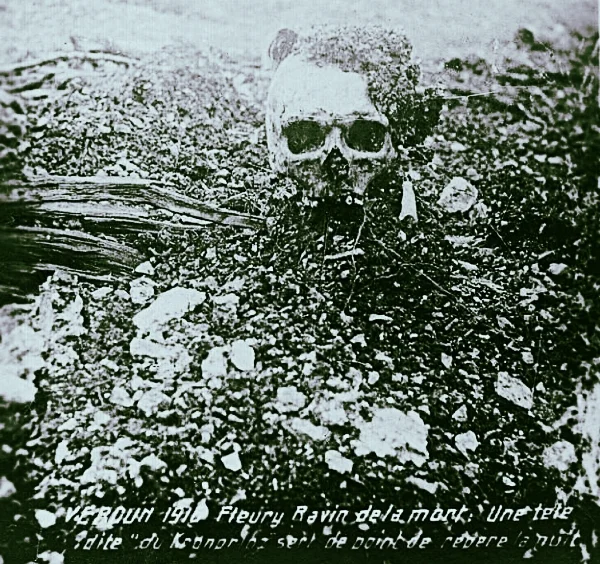
Verdun.jpg

In the curious pantomime that is the EU parliament, the French politician Joseph Daul is a star. He’s the president of the European People’s party (the principal center-right bloc in the parliament), an apparatchik with impeccable EU establishment credentials. He has euro-federalist beliefs, a funding scandal in his past, and a willingness to warn that Brussels is all that stands between the continent and a reversion to its warring ways. He’s also a little twitchy about the elections to the EU parliament later this month.

“I am convinced,” he announced recently, “that if Europe succumbs to the siren voices of populists and Euroskeptics, there will be a turning back towards chaos and war.”

This is an all too familiar eurocratic refrain, but it is heard even more frequently on those rare occasions when Europe’s voters are given a chance to slow down the march to a superstate. Trying to cajole his compatriots into choosing the euro in a 2003 referendum, Swedish prime minister Göran Persson recalled how Germany’s “weeping” Chancellor Kohl had told him that he did not want his sons to die in a third world war, an understandable sentiment, but an unpersuasive argument. Swedish voters stuck with the krona.

Two years later, another Swede, Margot Wallström, then the EU commissioner charged with selling the proposed EU constitution to a somewhat doubtful continent, took the opportunity presented by a visit to the Nazi concentration camp at Theresienstadt (Terezin) to observe that “there are those today who want to scrap the supranational idea. They want the European Union to go back to the old purely intergovernmental way of doing things. .  .  . Those people should come to Terezin and see where that old road leads.”

With this month’s election falling within a few weeks of the hundredth anniversary of a certain shooting in Sarajevo, the dire warnings now tend to refer to a different dark chapter in Europe’s tumultuous 20th century. Last year, José Manuel Barroso, the EU’s top bureaucrat, implied that those “who want to roll back our integration” were risking a regression to “the war [and] the trenches” of the past, a ludicrous variation on an already ludicrous theme.

If all this scaremongering were a matter of cynical calculation it might be possible to treat it with a degree of admiration. As a political tool, it has, after all, proved very effective: Fear works. And so does the manipulation of historical memory, another integral element in Brussels dezinformatsiya. If Europeans could be persuaded to blame the nation-state for their wars, they could be talked into distrusting their own patriotism and buying into the bogus made-in-Brussels “European” identity.

And, indeed, this is what we have seen over recent decades. As it came to be widely accepted that a united Europe was the key to peace, those who persisted in dissenting from the principle of a broader federalist agenda, except, perhaps, in reliably stubborn Britain, were pushed into uncomfortable and ultimately self-segregating corners far from
the electoral mainstream. Outside the skeptic isle, almost the only political parties prepared, until lately, to reject “ever closer union” were those drawn from the rougher ends of the political spectrum, an uninviting destination for centrist voters. That, in turn, made it easier to claim that Euroskepticism was, by definition, evidence of extremism and, maybe, a screw loose too.

The mantra that the EU was staving off a return to the hecatombs also operated as an unsubtle reminder to the Germans that they had a moral obligation to confine their role in the new Europe to keeping quiet and footing a large chunk of the bill. Meanwhile the rest of the continent—and, such is the power of guilt, much of Germany too—was led to believe that only Brussels could keep the Hun on the leash, a notion that rested on the absurd premise that panzers still prowled through Teutonic dreams. Such is the power of history.

The passing of time and the reemergence of German economic power have eroded some of the Bundesrepublik’s willingness to follow the demeaning postwar script, but by less than might be expected. Introducing the euro over the objections of most Germans made a mockery of their democracy. Preserving the single currency has stretched the country’s much-prized constitutional order and now threatens to become a permanent drain on its coffers, but the conservative, gently Euroskeptic (anti-euro, but pro-EU) Alternative für Deutschland is only likely to score 6-7 percent in the upcoming election, and no small portion of that support will owe more to the AfD’s mildly restrictive immigration policy than to its opposition to the single currency. Most of the rest of Germany’s political class remains in thrall to the tired myth that to retreat from ever closer union would be to advance into danger and, quite possibly, war.

But a myth it is. What kept the peace in Europe was, yes, in part, memories of Auschwitz and Verdun, but it was also, much more so, the product of the savage ethnic cleansing of Eastern Europe’s awkward German minorities, and, above all, the discipline imposed by the Cold War—by Soviet hegemony over half of the continent and American leadership of the other. The evolution of the EU was the consequence of this new, rather chilly peace, not the creator of it. Brussels subsequently performed an invaluable role in shepherding Moscow’s former European colonies back to the West after the Soviet collapse, but on foundations built by the Atlantic alliance.

Those who used and abused this myth to drive the EU forward were in many cases not so much Machiavellis as priests who had faith in a tale they themselves spun. And it proved to be a highly convenient myth. The insistence that nationalism is inherently dangerous is an extrapolation from a totally defeated, especially toxic, and specifically German form of nationalism. But it gave those in charge of the European project an ever-expanding license to remove more and more of anything that marked out the distinctiveness of a nation from the regular democratic process: The voters, poor creatures, so susceptible to “populists,” you see, could not be trusted to do the right thing.

Slice by slice, sovereignty has been transferred from democratic nation-states to a largely unaccountable supranational technocratic elite which in turn has become dangerously disconnected from the reality that encounters with the electorate might have brought, and dangerously emboldened as a result. And so the euro was put together with little regard for its own rule book, common sense, or anything resembling informed popular consent. Once launched, the currency union was run in a way that was, if anything, worse. After hubris, nemesis, and with it, old demons began to stir.

The long economic crisis has shattered the never completely convincing illusion of a continent that was leaving nationality behind. Northern Europeans resent being compelled to bail out nations of a eurozone periphery for which they feel little affinity and less respect. The eurozone’s laggards detest what they see as harsh rule by foreign diktat. Vintage stereotypes are dusted off. Greeks are thieves. Chancellor Merkel is a Nazi. Trapped in the jaws of a dysfunctional currency union, and lacking the democratic legitimacy to fix it and either the imagination or the courage to try something else, the establishment parties have little to offer but more of the same. And so the hard times grind on.

And as hard times tend to do, they are persuading increasing numbers of voters to turn to alternatives they once would never have considered. While the effect may be magnified by low turnout (which fell—the sixth consecutive drop—to 43 percent in 2009), this month’s European election is likely to see something that looks a lot like a Euroskeptic wave. Some 25 percent  of the vote could go to Euroskeptics  of one description or another, up from 15 percent or so (it’s difficult to be precise) in the current parliament. As waves go it will be choppy: This is a ragtag group, drawing from left and right and ranging from the benign (such as Britain’s UKIP) to the sinister (Greece’s neo-Nazi Golden Dawn, given its big break by the failures of an EU that once claimed it had consigned black shirts to history). It will be neither numerous nor cohesive enough to change very much in the short term. But what these parties do have in common is a determination to wrest back control of their countries’ destinies from what is rightly seen as remote, micromanaging, and alien bureaucratic control.

This month’s vote will be followed by noisy, angry, and overwrought polemics, but not by dramatic transformation or the guns of August. That said, as the Barrosos and the Dauls push on—and they will—with the trudge towards ever closer European integration, doubtless claiming that the rise of “dangerous” Euroskepticism makes it even more imperative than before, they will be ignoring a nastily inconvenient truth from Europe’s past: Imposed multinational federations don’t end well.

Sarajevo learned that a century ago. And then it learned it again.

Four-Ring Circus

National Review Online, February 9, 2014

sochi_olympics_rings.jpg

Organized Fun, the Olympic Games, parades, the aesthetics of the Cirque du Soleil, fireworks (face it, they are dull), and just about anything to do with sport are about as low as it is possible to get on the list of things I enjoy. I was, therefore, a natural pick to write about the opening ceremony for the Sochi Games. Thank you, NRO!

So there I was on Friday evening, not in Sochi (thank you, NRO travel budget!), but on my sofa in New York City, watching as NBC showed America the recording of an event that everyone else had seen hours before. No matter; we had already shared in an enjoyable prelude played out through Twitter, BuzzFeed, that friend who e-mails you stupid photographs, and the rest of today’s media giants — double toilets, unfinished hotel rooms, bugged showers, the slaughter of stray dogs, epic corruption, a $51 billion price tag, and the announcement from Sochi’s mayor that there were no gays in his town — that suggested that these Olympics might be more entertaining than most. Who now remembers Albertville?

The evening began with Bob Costas chatting away in what looked like a room in a Golan-Globus Fortress of Solitude. There was an Obama interview. For those in the dark about Russia’s history, an NBC narrator described seven decades of Soviet despotism, mass murder, gulag, and evil empire as a “pivotal experiment,” a mealy-mouthed, carefully neutral description that made Walter Duranty’s infamous omelets look like a fearless exercise in speaking truth to power.

The ceremony itself opened rather nicely with a young girl running through the Cyrillic alphabet, using each letter to introduce someone or something from Russia’s past. Let’s be fair; this would not have been the moment for Russia — or any nation — to air its dirty Lenin, and Russia did not. Stalin’s C (as I said, Cyrillic) would have to wait for another night. Instead we were treated to a recital of some of the best of Russia’s heritage, including Chekhov, Malevich, Kandinsky, Nabokov (Nabokov!), and some icons of my own space-obsessed childhood, Gagarin and Lunokhod, that plucky little motorized bathtub that crawled across a small slice of the moon in 1970. More disreputably, the organizers slipped in a boast that the Russians had invented television, a claim that did not slip past half-Scottish me and would have annoyed John Logie Baird, the Scotsman whose achievement this really was.

Let Scotland’s Daily Record take up the tale:

“During a video taking viewers through Russia’s alphabet, a row of TV screens appeared next to the letter T and a picture of Russian-American inventor and engineer Vladimir Zworykin . . . Scots commentator Hazel Irvine was quick to reassure viewers that the achievement still belonged to her home country immediately after the clip finished.”

This view of history, at ease with elements of both the Soviet past and what preceded — and indeed opposed it — and happy to play fast and loose with accuracy was a foretaste of what was to come.

Yes, there were fireworks. Whatever.

The young girl was duly hoisted up for a flight across an impressive representation of Russia’s vast and varied landscape. In a remarkable display of diplomatic restraint, it did not include any stretches of landscape currently belonging to any other country.

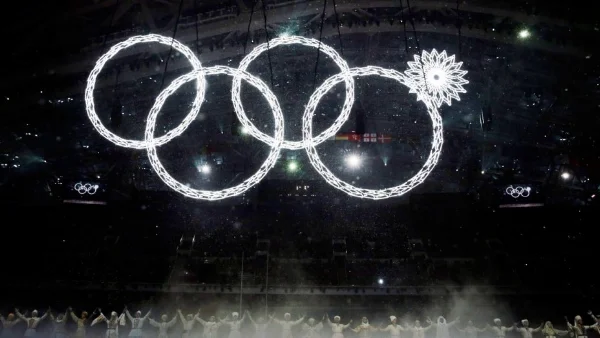
Finally came the technical glitch (or, if you prefer, the last hurrah of determined Trotskyite wreckers) that schadenfreudians — out in force for these Olympics — had been so eagerly waiting for. One of the five giant snowflakes that were meant to flower into Olympic rings, well, flaked, although not, reportedly, on the Potemkin footage that played on Russian TV (oh come on, you knew there was going to be a reference to that village somewhere in this piece).

The athletes emerged (I think) from some underground lair into the stadium, each team led by a snow hottie topped with a kokoshnik (look it up; I did), as they sauntered in, nation after nation after nation after nation, Lithuanians in two shades of sharpie green, mighty San Marino, some euphemism for Taiwan, and, of course, USA! USA! decked out in Ralph Lauren cardigans that would have made Betsy Ross wish that she had just stuck to plain blue.

And what were the Germans wearing?

It sounded to me like the bunch from Belarus got a very big cheer and the Ukrainians, too. Russians have a very expansive definition of home team.

The centerpiece of the show was a pageant meant to represent the sweep of the latest approved version of Russian history. And some of it was very striking, even lovely, not least a giant, silvery troika, so evocative of the country’s vast, snowy landscapes, and, for that matter, the finest of all descriptions of Russia, “speeding like a troika” in Gogol’s Dead Souls, a passage that ends, a little ominously for the rest of us, like this:

Whither then, are you speeding, O Russia of mine? Whither? Answer me! But no answer comes — only the weird sound of your collar-bells. Rent into a thousand shreds, the air roars past you, for you are overtaking the whole world, and shall one day force all nations, all empires to stand aside, to give you way!

Nikolai Gogol (1809–1852), of course, was Ukrainian-born.

Nobody ever said that Russian history was uncomplicated, but the spectacle in Sochi was clearly designed to smooth things out a bit — no, a lot — something very much in keeping with the wider Putin project in which all of Russian history, Czarist, Soviet, and whatever it is now, is crammed into a single, supposedly unifying past in which all Russians, regardless of ideology, did the right, patriotic thing for a nation that was always a force for good.

Thus we witnessed onion domes, Cossacks, Peter the Great, the ballroom scene (beautifully done) from War and Peace, followed by glimpses of turn-of-the century technological progress cleverly used to pave the way for the passage dedicated to that “pivotal experiment.” This was presented primarily as an acceleration — continuity, you see — of the country’s drive to industrialization and modernity all drenched in red (light, not blood) and crowned by the shapes of constructivism’s bold geometry, including what looked like fragments of Tatlin’s Tower, the monument to the Third International that — like communism’s radiant future — never made it past a very rough draft.

And what was this? Two giant heads, an enormous hammer, a vast sickle, excerpted, as it were, from the sculptress Vera Mukhina’s massive, sinister and, in its way, magnificent, Worker and Kolkhoz Woman (1937). To look at, it was wonderful, to think about, not so much. Imagine if Germans hosting a (modern) Olympics had included some of the iconography that their countrymen had used back in Berlin the first time round. That it is unthinkable in a way that Sochi’s sexed-up Soviet design was not speaks volumes — volumes filled with nothing good.

Later there was a sequence showing the supposedly kinder, gentler, Soviet Union that evolved after the tyrant whose name was not mentioned had left the scene, a sort of Russian Graffiti with music that somehow, I suspect, was not entirely representative of the early Brezhnev years.

Speeches? Of course there were speeches. The president of the International Olympic Committee said something about the Olympics embracing diversity (well, there had already been a performance by the fake lesbian pop duo t.A.T.u.) and explained that the games were “never about erecting walls to keep people apart,” which may or may not also have been a reference to Sochi’s eccentric restroom construction. After that, some Swan Lake danced by what seemed to be electric jellyfish, and a confusing sequence involving escapees from the set of Tron.

The Olympic torch arrived on the last leg of its long relay, a tradition since, ahem, Berlin, and was handed over by Maria Sharapova to a posse that included Alina Kabaeva, holder of an Olympic gold medal in rhythmic gymnastics, holder of a Russian parliamentary seat, and, if the rumors are true, holder of Vladimir Putin too. Yes, that’s right, rhythmic gymnastics . . .

The flame itself was lit by another parliamentarian, Irina Rodnina, three-time winner of an Olympic gold medal for figure skating and the author of a racist tweet about Barack Obama.

The gold medal for trolling was awarded to Vladimir Putin