Red Affront

National Review Online, October 3, 2000

Prague.JPG

In some senses, Prague got off lightly. In London, after all, "anti-capitalist" demonstrators had recently spray-painted the Cenotaph with the suggestion that Britain's principal war memorial would make a good place to urinate. The mainly foreign protesters in Prague last week were far more refined. They merely chose to march into town under red flags and the hammer and sickle, symbols of a regime that not so long ago was murdering and imprisoning tens of thousands of Czechs.

The occasion, of course, was the joint annual meeting of the World Bank and the IMF. Such events now attract the protests of another set of anti-capitalists, the vicious travelling circus of the anti-globalization movement, and the intimidation and violence that it brings with it. This was the case in Seattle and Melbourne. Now it was Prague's turn.

Anti-globalization is the latest manifestation of the Left's seemingly indefatigable attempts to mess things up for the rest of us. Undaunted by the economic, environmental, and human disaster of socialism's last hundred years, they have now turned their angry attention onto free trade, and the supposedly sinister forces behind it, the World Bank and the IMF. There are, of course, differences from the past. This new Left is not as monolithic as its predecessors. The iron discipline of the Comintern has been replaced by a plethora of tiny cells, connected, strengthened, and somehow amplified by the power of an Internet able to create an impression of size even where none exists. So, the Prague action was meant to be supported by demonstrations across the globe, each of which was excitedly previewed on the web. In Melbourne, C.A.C.T.U.S. (Campaign Against Corporate Tyranny United in Struggle) was planning a carnival, while in Bangladesh the Garment Workers Unity Forum and the Revolutionary Unity Front intended "to make a demonstration waving black flags." In these United States, steelworkers in Chicago were apparently preparing to confront Harris Bank with a puppet show.

Harris Bank was left intact. Prague was not so lucky. Six or seven thousand protesters arrived from abroad, determined to shut down the city in the name of their version of global justice. Naturally, they were quick to move on Wenceslas Square, a sacred place for many Czechs, the heart of their Velvet Revolution, but a site of tragedy too: the spot where, in 1969, Jan Palach, a young student who really understood what idealism was, burned himself to death in protest against an earlier generation of invaders that had come to this city. Then, of course, it was the Soviet Army, but, as we have seen, the symbols of the anti-globalizers, those red flags, that hammer and sickle, they are just the same. And so was the message: "Do it our way, or there will be violence."

Of course, no one was ever that explicit. Most of the protesters were quick to come out with statements rejecting any violence, but their websites gave them away. One of the most prominent contained a list of suggested activities that included "occupations of offices, blockades and shutdowns, appropriating and disposing of luxury consumer goods, sabotaging, wrecking or interfering with capitalist infrastructure, appropriating capitalist wealth and returning it to the working people." That does not sound entirely peaceful to me.

The producers of www.destroyimf.org were more straightforward, running with the slogan "Turn Prague into Seattle." Many protesters tried to do just that. In the process they cost the people of what is still a poor country a great deal of money. Demonstrators fought with police, ripped up sidewalks, threw Molotov cocktails, and, in what is rapidly becoming an irritating cliché, stormed McDonalds, the franchised Winter Palace of their gimcrack revolution. The comrades at www.destroyimf.org could barely conceal their excitement at the drama of it all, a re-run, it seemed, of the glorious days of the Bolshevik rising. To one John Reed wannabe, September 26 had been "the day the IMF died." Judging by the breathless commentary on their website, it had been eleven hours that shook the world: "1215: Fighting begins; anarchist column takes the railway below the bridge. 1400: Protest columns fan out to the south and east. 1900: Column surrounds opera house. 2300: Minor running battles and windows smashed."

It seems that the revolutionaries were, at least in part, successful. The IMF and World Bank proceedings wound up a day early, the organizers unconvincingly claiming that they had completed all the work that they had come to Prague to do. Even if that were true, they should have stayed put, sipping champagne to pass the time and to make their point, occasionally, perhaps, hurling a few stale canapés into the baying mob below. The early retreat was a sign of weakness, and it was not the first from the supranational financial institutions. Since the whole anti-globalization movement started gathering pace, official reaction has been a blend of appeasement and apology. We caught a glimpse of this approach at Seattle in Bill Clinton's shifty "defense" of free trade, and we have seen plenty of it since then.

This is strange. It is not as if the foes of globalization have much intellectual force behind them. Their arguments are a blend of Al Gore greenery and Maoist economics, all wrapped up in a sort of sickly sentimentalism about the Third World that would, in fact, further impoverish that luckless part of the world. Bogus, economically illiterate, and potentially catastrophic, it is not a case that should be difficult to rebut, but none of our leaders seems to be trying hard to do so. Instead we see shame-faced equivocations or worse, the Uriah Heep-like pandering of those such as World Bank President Wolfensohn, a man pleased to pronounce that we live in a world "scarred by inequality." In between their bouts of savagery, the protesters in Prague were, he noted, "asking legitimate questions."

What nonsense. Here and there, you may find a true believer. There was the British schoolteacher who confided to Reuters that she was in Prague because her clearly rather odd child "often woke up in the middle of the night, frightened about global warming." For the most part, however, the game being played in the Czech capital was of a different, much nastier kind. It was partly about violence, the sheer Clockwork Orange fun that a punch-up can bring, and it was all about power, the right to boss everybody else around.

For all the talk about the working classes, the dispossessed seamstresses of Latin America, and the impoverished women farmers of Africa, the demonstrators tended to be Western European and university-educated. For such people, protests of this nature reinforce their bourgeois sense of moral and social superiority over the lower orders, the class they feel born to rule. As one of the organizers, Martin Shaw, a "Nottingham University graduate and anarchist" explained to the London Daily Telegraph, "Working people do not have the benefits of an educational system and they are afraid of losing their jobs." Not only that, but these blue-collar saps are couch potatoes, sitting back "in front of their televisions," grumbled another activist, rather than joining the battle against world capitalism. The corollary of this is that the "working people" need the Martin Shaws of this world to put things right for them. If you think that this sounds like the early 20th-century revolutionaries, you would be right. There is the same apocalyptic language, the same overweening sense of self-importance, the same absence of a paying job.

Unfortunately, too, there are the same prospects of some very real success. For, at bottom, these protesters are speaking the language of those very organizations that they claim to oppose. To take one, closely related, example: Environmental activists used to perform the same outsider role as the anti-globalizers do today, but much of their belief in regulation and control proved appealing to the soft-left consensus that prevails in our international institutions. And so, to their barely concealed delight, environmentalists found themselves co-opted into the global bureaucratic process. Their unelected, unaccountable pressure groups were magically transformed into "Non-Governmental Organizations." Better funded, but still unelected and still unaccountable, these NGOs were given consultative seats at the supranational legislative table. The result, at least in part, was the ludicrous Kyoto treaty.

A similar future beckons for some appropriately house-trained anti-globalizers. The cluttered WTO agenda in Seattle was evidence that officialdom is open to some of their ideas, an impression that Mr. Wolfensohn's platitudes will have done nothing to contradict. In Prague, indeed, certain pressure groups were invited to meet and debate with the IMF/World Bank delegates. This will only be the beginning of a prolonged courtship and, as for those other Non-Governmental Organizations, you and me, well, you can be sure that we will not be invited along.

Candida's Camera

National Review, Sept 11 2000

royalle_candida.jpg

WHEN actress Candida Royalle (Legends of Porn, Classic Swedish Erotica 2, Teenage Pony Girls) announces that she is "going to be hard on you," you sit up and pay attention. Not that we needed the warning. We had all paid good money ($49) to see her perform, and we were sure she would not let us down. Nor does she. True to her name, Candida is open, frank, and often very revealing. Miss Royalle knows how to give a good lecture. Yes, lecture. To the crowd gathered in an upstairs room in Manhattan's "School for the Physical City," Candida Royalle is much more than a sex star. She is an entrepreneur, sharing her hard-won practical insights with an eager and ambitious audience. The event has been arranged by The Learning Annex, an "alternative adult-education organization" that offers evening classes at a number of cities across the country. The demand for its "powerful, inspirational, nurturing, and insightful" seminars is in the American tradition, a reminder of the relentless drive for self-improvement that took this nation from log cabin to Martha Stewart. Recent courses have included Spanish, calligraphy, running your own laundromat, the power of persuasion, becoming a medical transcriptionist, and "Breaking into Adult Movies—in front of or behind the camera!"

Candida's pupils are ushered into a large, brightly lit classroom painted in the Pokemon palette that only an educational bureaucrat would choose. It's all very normal—Educating Rita rather than Deep Throat. There's no buzz, no guilty anticipation, just a naughty pile of coarse, er, course materials heaped on a side table: flyers for FOXE ("Fans of X-Rated Entertainment"), an order form for Breaking into XXX—the Porn Stud Handbook. And our teacher? Miss Royalle is a trim fortyish blonde in a short skirt, more Mary Kay than Miss Jean Brodie.

This is not enough to hold two members of the class, who slink off within minutes, disappointed perhaps to discover that the evening will not feature "adult situations." Maybe they will be back for the Tantra lessons ("Reach higher levels of sexual ecstasy than ever!"). The only other source of awkwardness is the presence of a film crew shooting the lecture for National Enquirer’s TV show. Strangely, not everyone wants to appear in front of these particular cameras.

These are shy folks, mostly. One woman, an exotic dancer, is interested in making "bubble-bath-type videos" for her fans, but she is an exception. This mainly male crowd doesn't want to get naked. They want to be "suits," Sam Goldwyns of smut. That's wise, for as our lecturer explains, the life of a wannabe porn stud is far from easy. Performing under conditions that would make even Priapus pause (Viagra helps, apparently), men are props, not star attractions. As such they are not likely to make much money. Most people aren't renting adult movies to gape at the guys. So the women are paid more. As even the EEOC might agree, this is not discrimination, it's the marketplace.

Which is really the theme of the evening. Naughty pictures are now a significant American industry. The Nude Economy is for real: By some estimates, annual sales of pornography in the U.S. alone already exceed $10 billion. That's a Fortune 500, Wall Street Journal kind of number, one that tells us, among other things, that proper management has finally come to this improper trade. And that's where the Learning Annex fits in. As Candida's students earnestly take notes, she briskly runs through the economics of adult video, who gets paid how much to do what to whom, the complexities of copyright, the perils of distribution, and the market in foreign licensing.

It's surprisingly dry stuff, and the ensuing discussion is matter-of-fact. In the United States, business is a serious matter, and while we have come a long way from the Comstock laws, our cheery, upbeat lecturer is subject to an equally demanding set of rules, those of American enterprise. To Candida's obvious delight, it's a tough code and a little austere. And in the way she describes it, with relish and without irony, there's a touch of Cotton Mather, a hint of the old Puritan idea that self-denial is the key to success. The boogie nights are clearly over. The film set should be free of drugs and alcohol and carefully budgeted. The artistic impulse must also be kept firmly under control (only "one-third of the film can be story, with 60 minutes for sex"). There's respect for hard work, suspicion of ripoffs ("Watch everything, watch everyone . . . if it's yours, watch it like a hawk"), and a shrewd appreciation for what counts—the bottom line in every sense.

Unfortunately, these days the bottom line is not enough. Sanctimony has evolved, not died. We live in a time when many businesses, particularly those with a potential image problem, feel they have to go beyond the buck. They like to demonstrate, at least in their advertising, that they have some higher—usually vaguely politically correct—redeeming social purpose. Forestry companies become model environmentalists, brewers natter on about "responsible" drinking, and "the people of Philip Morris" are so busy sheltering abused women and feeding the hungry it's amazing they have any time for making cigarettes.

Candida Royalle is no exception. A few years ago the former "teenage pony girl" founded Femme Productions to make films that, she says, that men too will want to watch. Now she takes herself, well, a little seriously. As her website notes, Candida has "addressed many conferences . . . including the World Congress of Sexology, the Smithsonian Institution, [and] the American Psychiatric Association." Sadly, it's not enough for her films to be dirty, fun, and profitable. In our relentlessly didactic era they must also promote "positive sexual role modeling."

What's that? Well for one thing, something that, as we are clearly expected to know, Republicans oppose. Like most corporate piety, Candida's spiel has a liberal tinge. As some readers may remember ("House of Porn," October 27, 1997), Ms. Royalle is a founding member of Feminists for Free Expression, and presumably someone well able to understand that the principal threat to her business comes from a much larger group, the feminists against free expression and their fellow-travelers in the "progressive" camp. Despite that, her talk is punctuated by moments of leftish political commentary. There's an almost nostalgic swipe at "Reagan/Meese" and a dark warning that if George W. is elected, "we're really in for it."

But her audience doesn't seem worried. This is a Coolidge crowd. Their business is business. They have no more interest in discussing threats to free expression than a moonshiner would have in debating Prohibition. To these aspiring pornographers, the First Amendment is a commercial device, not a human right. They want to concentrate on record-keeping, employee relations, soundtracks, budgets, legal obligations, and the uses of DVD ("save your bloopers"). It's all about the economics of sex. Though far from romantic, it is still a pursuit of another American fantasy, the dream of success. Is it true, asks the exotic dancer, that one porn star makes "as much as $150,000 a year"?

At that, two stockbrokers in the class exchange faintly superior smiles. Still, they understand where she is coming from.

Hollywood Ten

National Review Online, August 8, 2000

Bo Derek.jpg

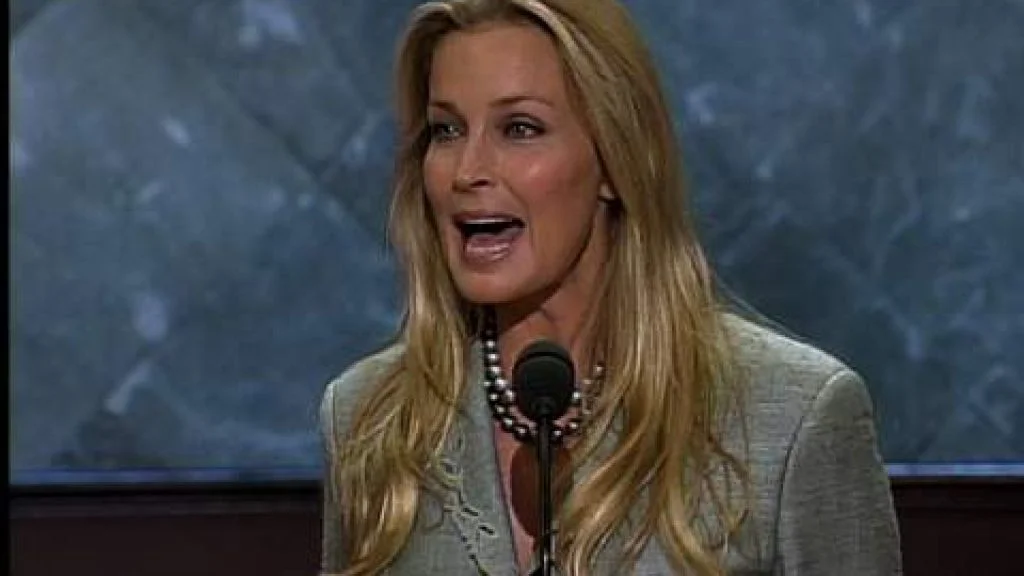
Is there no end to the empathy? It's a long, hard GOP convention for the hard-hearted among us, a grim procession of blind mountaineers, teachers, "the children," breast-cancer advocates, diabetic beauty queens, and deaf ones too. Tonight, though, twenty minutes or so after the showing of a "compassion video," the podium will brighten up. As the Republican's convention website boasts, a "film icon" is coming to town. Hepburn? Bacall? Well, no. It's Bo Derek, actually, more of a poster than an icon, perhaps, but a welcome visitor nonetheless. And who'd have thought it? Bo Derek, a cheerleader for George W. Yes, that's right, THE Bo Derek. You know, cornrows, the 10 girl, sex goddess of the later disco era, the seductress clad in a wet swimsuit, and, often, gloriously, much much less.

It turns out that she's on the right, an unlikely star for an all too strait-laced party. She's a Republican and has been for years. Back in 1996, she was quoted as saying that her heroes included General Schwarzkopf and Presidents Reagan and Bush. As for Bob Dole, well, "the man was an absolute superman. His energy wiped me out." And that was before the Viagra.

Bo's no Barbra Streisand, though. Sure, she'll speak at the convention for a minute or two, but for the most part she's happy to play the supporting role. She isn't a Hollywood wonk, with a program for every problem, hectoring and haranguing the peons as to how they should live their lives. As she has explained to Fox News's Bill O'Reilly, "movie stars…live in a bubble…and for me to give my opinions and maybe influence anybody is absurd."

Her Republicanism seems practical, unideological. As a younger woman she saw herself as a Democrat. She thought the Democrats were "nicer people" who cared about people more. Then filming abroad opened her eyes: "You can't help but compare America to other countries the more you travel, and that's when I just realized in looking [at] different issues that I was a Republican." The free market, she realized, works. Welfare is fine "when people really need help, but as a lifestyle, I don't think it's good for the people receiving it…It discourages dignity and incentives."

She is no social conservative. It would be better to see her as a R-rated Christine Todd Whitman. A (generously illustrated) profile in the current issue of Cigar Aficionado describes her as pro-gay rights, pro-choice and, on occasion, anti-clothes. "We're born nude and it just seems like the most natural thing." There's a brief nod in the direction of some feminist piety (something about women voting the same way), but I suspect that Bo is never going to be one of the sisters. She had an unforgivably happy marriage to a much older guy, she took off her clothes in a lot of movies and, let's face it, she just looks too good.

However, her opinions don't make her look good in notoriously liberal Hollywood. It is even hinted that Bo's politics may have held back her career. Well, maybe, but when that career includes Bolero, Tarzan the Ape Man, and Ghosts Can't Do It, there may be another explanation. Nevertheless, when she describes the reaction to her views, her story rings very true. "It's really tough to have a nice, open conversation," she told O'Reilly. Apparently, her entertainment-industry pals "get really angry…and they treat me as though I'm some hateful monster."

Yes, I bet they do. They are liberals, supporters of that other cigar aficionado, the one in the White House. And, as we all know, the Left doesn't have much time, or respect, for anyone who dares to disagree with them. As Bo's clearly discovered, Democrats are not "nicer people." She's brave to speak her mind, but she's going to be lonely. Conservatives in the movie business are few and far between, and they are likely to stay that way. There's Moses, of course, our own Charlton Heston, and some of the more secular action heroes, Willis, Norris, Schwarzenegger, but these guys do have a touch of the last stand about them. TV isn't much better, although it was good to see Rick Schroder, NYPD Blue's Lieutenant Sorenson, at the convention on Tuesday night. He was smart, compelling, and — unlike most of Republican showbiz — under 40. Otherwise, the Right is only left with a presence in country music (and I'm not so sure about that k. d. lang) and wrestling, of course: the Rock, the thinking man's Jesse Ventura, is in the GOP line-up.

Sadly, this isn't going to be enough, and even more sadly, this matters. In our tranquil, ill-educated times, showbiz sets not only the cultural, but the political agenda. The drip, drip, drip of a predominantly liberal message in the movies, TV, and the other entertainment media is bound to wear through to the ballot box. We saw this in Britain, where a hostile cultural scene proved to be the harbinger of the crushing Conservative defeat in the 1997 election. Writing in the London Sunday Times the following year, the newspaper's then-resident leftist, the writer Robert Harris, noted — with, probably, some satisfaction — that he couldn't think of one single "important" British writer or, for that matter, a film director, theater director, composer ("apart from Lord Lloyd Webber"), actor, or painter who was a Conservative.

As Mr. Harris went on to point out, "the entertainment and fashion industries are now two of the biggest economic sectors in the world. Never have we lived in a time more conscious of style, and never in democratic history has it been less stylish to be on the right."

Now, he was writing in a British context, but, like it or not, it's not too difficult to see the same process gathering pace over here. It's not going to be easy to reverse. On this battlefield, the Right are simply too few. Sure, Republicans have got the Rock, but the Democrats have the (Sharon) Stone. Bo Derek may turn some heads, but she's not enough to turn the tide. Suggesting a solution to this problem is beyond the scope of this article, but to those who say that this all doesn't matter, that substance will prevail over style, I have only three words to offer: William Jefferson Clinton.

Loud and Clear

National Review Online, June 16, 2000

PRDay.jpg

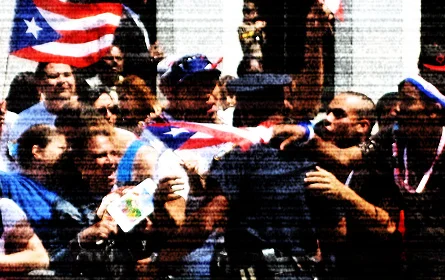
The ‘wolf pack’ attacks in Central Park were a disgrace. The reaction to them — an unappetizing blend of ethnic politics and PC posturing — has not been much better, evidence of a mindset that, if it didn't exactly cause last Sunday's nightmare, certainly paved the way for it. Key to it is the idea that the police are always in the wrong. If they make an arrest they've gone in too hard, probably, it will be alleged, from racist motives. Any mistake will bring vilification, maybe prosecution, and certainly Al Sharpton. As for the cops involved in the Diallo tragedy, their bonus was pre-trial condemnation as murderers by the First Lady of the United States.

If, on the other hand, the police do nothing, they are also to blame. They are lazy bums, we will be told, more interested in their next doughnut than helping the public. And this, of course, became the spin on Central Park. Leftist lawyer Ron Kuby, a newcomer to the law-and-order crowd, worried that the police may have been sitting 'on their fat butts' rather than doing their jobs. Ah, what sweet liberal relief.

Awkward questions over the Puerto Rican parade could be glossed over as the media turned on an easier target — the police. The story became not what the bad boys did do, but what the NYPD didn't do, the "Cop Out" as the Daily News put it. Inevitably, Reverend Al caught the mood, appearing as an adviser to two of the victims in a $5,000,000 lawsuit against, not, naturally, the assailants, but the city.

Of course, much of the criticism was unfair. Rudy Giuliani's claim that 2,500 bottles of beer had been confiscated may have had the ring of desperation about it, but most cops did a good job. Also, it must be remembered that it's not easy to see what's going on in the middle of a huge crowd. Spotted from a couple of hundred yards away wilding can all too easily be mistaken for high jinks, spring-break fun, rather than feral nastiness.

Besides, if the police had moved in and acted pre-emptively, what would have been recorded by all those amateur video cameramen in the park? Not women, naked, humiliated, and in tears, but white cops pushing their way through a minority crowd, and I think we know how the evening news would have played that story. Somebody else would have sued for $5,000,000. The police explanation that the mob was about to get out of control would have been rejected, as being based on derogatory, racist assumptions.

Mind you, it appears that, on this occasion there is something to the criticism: Too many of the police were those crucial couple of hundred yards away, at the perimeter rather than in the action. Police treatment of some of the victims also left much to be desired and added to reports of crowd control that seemed strangely detached, "lackadaisical" in the words of one witness. A disturbing number of New York's Finest just did not want to get involved. In short, NYPD blew it, and if you believe the conspiracy theorists, they did so, because they were told to.

This has been denied, and believably so. There was no need: The police are getting the message. Why take that risk, why go down that darkened alley, when your only reward is Geraldo to Couric to Rosie criticism on the TV? The constant agitation is taking its toll. Cheap shots at the police claim more victims than just the boys in blue. It's no coincidence that Big Apple crime figures are on the rise, and not only in Central Park. Across the Atlantic the Brits have gone down the same anti-police route, culminating in the publication of an official report of absurd political correctness. The consequences? Street crime in London is running at twice last year's levels.

And if there was a day for a cowed New York police force to be careful, restrained and low profile it was last Sunday. At the National Puerto Rican Day Parade there can be no room for anything that could be remotely interpreted as a Sipowicz moment. Ethnic parades are a weird phenomenon, more Serbia than Central Park, yet they are the principal symbols of New York's ruling ideology, the "glorious mosaic" of former mayor David Dinkins, a vision of racial harmony best represented by that old Coke commercial ("I'd like to teach the world to sing"). In reality, of course, such a view is not the real thing. So the police normally take a pretty tough line with parades, confiscating drinks, lining the streets, and generally delivering a message of zero tolerance. Just ask the folks on St. Patrick's Day.

But there wasn't enough of that last Sunday. Zero tolerance was, at times, replaced with anything goes. Revelers may have been 2,500 bottles short, but as one onlooker explained, "alcohol was all over the place." It wasn't supposed to be that way, but then with the Puerto Rican Day parade it rarely is. For the authorities want us to believe that this parade is the jewel in the mosaic, "an annual celebration", as Hillary's website puts it, "of Puerto Rican culture, music and ethnic pride," a happy and enjoyable day for all. In reality, as is inevitable with almost any large gathering, the picture is more tricky than that. Mentioning that fact beyond, perhaps, a coy reference to "exuberance," is not part of the liberal script. It was fascinating to see that, as the first serious reports of trouble emerged, New York politicians were quick to defend the parade. There had been problems, certainly, but they couldn't be allowed to get in the way of the greater 'truth' that they wanted us to hear. The day had been a success, they soothed in the tone of voice that they would have used to tell Mrs. Lincoln that, yes indeed, the play had been a smash.

And sadly, the police had learned their lines too well.

Moms Away: The new brand of gun nut

National Review, June 5, 2000

 © Andrew Stuttaford

 © Andrew Stuttaford

IT'S not so much what they said (although that was bad enough), but how they said it. Several hundred thousand gun nuts were gathered on the Mall. They were hectoring, self-righteous, and, when it came to firearms, quite incapable of rational discussion. I'm referring, of course, to the "Million Moms" and their march. It was Mother's Day 2000. The Moms were in D.C. to call for "commonsense" gun control—licensing, registration, the usual thin edges of the wedge. There was opposition from the Second Amendment Sisters, but theirs was only a small rebel encampment, all baseball caps and American flags.

 © Andrew Stuttaford

 © Andrew Stuttaford

This day belonged to the other side, to the pink and white T-shirts of the Million Mom March. It was a triumph for Donna Dees-Thomases, the self-styled "suburban mom" who organized the march. It had taken around nine months to set up. As Mrs. Dees-Thomases, a publicist by trade, likes to say, "women understand what you can create in nine months." The march itself (which was really more of a rally) was impressive, seemingly flush with cash (thanks for the free bottled water!), and well organized. There were tents, placards, posters, pink banners (but rarely the Stars and Stripes) fluttering in the breeze. Charlton Heston didn't show, but there were plenty of other celebrities, all under the command of a stern-faced Rosie O'Donnell. The Moms themselves were a disciplined bunch, standing for hours under a hot early-summer sun, attentive to the speeches coming from a large stage. They could also gaze at a number of giant screens dotted around the Mall that showed images of the audience, the speakers, and, from time to time, misleading statistics of the "if you have a gun in the house you are doomed" variety. This being the United States of Oprah, there were occasional moments of tears and communal hugging, but not too many. This was a disproportionately upscale group, more restrained, Katie Couric rather than Erin Brockovich.

 © Andrew Stuttaford

 © Andrew Stuttaford

It was also a crowd of dupes. The Million Mom March was brilliantly manipulative agitprop, a textbook example of how the Left will find a potentially popular, modest-sounding issue and twist it in a way to help along their agenda.

Not that they will admit it. These campaigns are always portrayed as being above mere politics. Donna Dees-Thomases is at pains to stress that her cause is "bipartisan." It is, of course, unfair, very unfair, to draw any conclusions from the fact that her sister-in- law is Susan Thomases, a longtime confidante of Hillary Rodham Clinton, but if this rally was independent it was only in a very NPR sort of way. Hillary herself attended the march, and her husband videotaped a message of support. Gore 2000 stickers and signs were everywhere. I did see one placard concerning George W, but it suggested that he "wasn't fit to run a laundromat." On the podium the (so to speak) big guns were more discreet. Susan Sarandon briefly slipped the leash with a speech that seemed to be headed in the direction of five-year plans and the collectivization of agriculture, but most speakers stuck to the subject—"commonsense," limited firearms legislation. That was their single issue, they claimed, and "in November" they want it to go the Moms' too. If it is, Al Gore will be in the White House and, ultimately, the Bill of Rights will be in the outhouse.

 © Andrew Stuttaford

 © Andrew Stuttaford

They may succeed. Gun control resonates with all those suburban moms who feel that firearms are, well, icky. Back in the early 1980s, their mothers or aunts or older sisters used to feel the same way about cruise missiles. Disarmament then, and now, is a perfect wedge issue that can be pitched purely at the emotional level. Speaker after speaker talked of an epidemic of gun violence. Singer Melissa Etheridge kept "hearing a lot of fear." Well, yes, Melissa. That's because of events like this march. Death, we were led to believe, stalks the suburbs and the schoolyard, and he's packing heat. In fact, over the last 20 years the murder rate's down and firearms-related accidents have fallen dramatically. All this at a time when gun ownership has greatly expanded. Even schools are safer. But you won't have heard those facts at this rally.

The Moms aren't big on facts or reasoned argument. Their spin kit ("Public Relations 101") has firm instructions for supporters wanting to publicize the march on TV or in the newspaper: "Before your interview, inform the local media contact that you will not engage in debate with others." To discussion, these mothers, like others in the "progressive" camp, prefer the coercive language of crisis (health care, global warming, you name it) to push their agenda. It's an approach that works best when it can be tied in with real tragedies. And so it was on the Mall. Homemade placards bore the pictures of murdered loved ones. Speakers included a teacher from Columbine, grieving mothers, and crippled children, a trail of tears designed to lead to only one conclusion. There was, of course, no mention of those thousands whose lives have been saved by the defensive use of guns.

Yes, thousands, probably far more. But as Mrs. Dees-Thomases understands, what politician is brave enough to raise that point with a teacher from Columbine? Just in case someone does dare, the Moms' leader bas another arrow in her quiver. She bas labeled her march a campaign for "safe kids." As she knows, Americans seem to accept any number of restrictions on their freedom so long as they are allegedly for the benefit of "the children," the Trojan Ponies of our liberty. To this end, the Moms' keynote deceptive statistic (every campaign should have one) is that twelve "kids" are killed every day by gunfire (to reach that number, you have to include tots of 19). At the rally itself, the imagery was child-centered. There was a stroller march down the Mall and a sing-along with Raffi. Up on the stage, it was W. C. Fields's hell; kids making speeches, kids singing songs, and even kids lining up to ring a sort of reverse Liberty Bell (it was made from melted-down guns). For those who had not already had enough of little children, the viewing screens would occasionally show footage of yet more.

The only people able to speak for all these youngsters, it was argued, are mothers. They have to be the right sort of mothers, of course. Pistol-packing mamas need not apply. Dads, of course, didn't rate a mention.

For the Moms, this is seductive stuff. It tells them that they are a uniquely moral force, that they are important, custodians of the future or something like that. No wonder they are lapping it up. The implications for the rest of us are not so great. The underlying message of the march was that society has to be run, first and foremost, in the interests of its children as determined by (approved) moms. And whatever else that means, it means more gun control. To those who ask why, writer Anna Quindlen had one. revealing answer: "because I said so." The crowd went wild—laughing, cheering, and repeating the phrase. They forgot one thing. The American people are not all children.

Or are they?

Andy, Get Your Gun

National Review, February 21, 2000

S&W.jpg

I DIDN'T want to be Bernie Goetz. I just wanted a handgun. Legally. Something to keep at home. A move within Manhattan had taken me away from the comforts of doorman security (you know how it is). A little extra protection seemed prudent, 911 calls can take a while to answer, and Rudy isn't going to be mayor forever. Should be pretty straightforward, I thought. In my native Britain it would be impossible. But this is the United States, home of the Second Amendment, land of liberty. Government knows its place. They do things differently in America. But then there's New York City, a place where the old constitutional certainties have been replaced by the rules of the NYPD, License Division. If you believe that this is a local problem, a Big Apple nightmare that could never apply to you, think again, A dozen states already insist on handgun permits. Citing as always "the children," it is clear that Candidates Gore and Bradley want to expand on this at the federal level. The Brady Act was not enough. There's earnest talk of licensing, registration, additional checks to which, allegedly, only the unreasonable could object.

But the unreasonable have a point. New York City's licensing system has turned a right into a privilege. Like all privileges, it's enjoyed only by the few. There may be more than 7 million people in the five boroughs, but only 40,000 have valid handgun permits. Licensing isn't the thin end. It is the wedge. If you want to find out what that modest-sounding licensing requirement can mean in the hands of a bureaucracy that doesn't want you to have a handgun, come here, to the City.

It starts with a form, of course—PD 643-041 (Rev. 1-94) h1. Some of the questions are obvious (arrest record and, excitingly, "aliases"). Others are odd ("Have you ever been denied appointment in a civil service system?") or, seemingly, aimed at members of the Clinton administration (list any incidents of "Temporary Loss of Memory"). Watch out for question 19: "Have you ever had or applied for any type of license or permit issued to you by any City, State or Federal agency?" You haven't? Well, if you are a driver you have. Forget to mention your driver's license and you will be rejected and have to start all over again.

Next, submit the form. This, naturally, can be done only in one place, and in person: Room 110 at Police Headquarters, Manhattan. Nowhere else will do—not Room 109, and certainly not Room 111 Anywhere in Brooklyn, Queens, Staten Island, or the Bronx is out of the question (although Queens—and nowhere else— is where you must go for your rifle or shotgun permit). The form needs supporting documentation: yes, including that driver's license. It is not enough, however, merely to present your driver's license. A notarized statement certifying that you did indeed apply for that driver's license is also essential. The fact that your photograph and signature are on the license is irrelevant. No notary, and it's no go.

It's at this point that capitalism comes to the rescue. Even in New York. There is no need to struggle through this process alone. A small industry of license consultants has sprung up. Some, doubtless, add little value, but the repeated official warnings against them are very reminiscent of something chat might have come from a pre-Miranda cop explaining that, no, no, you really don't need that fancy lawyer. I opted for the pistol-consultant equivalent ($395 all-in) of a fancy lawyer, Larry Goodson of License Services, "Specialists in Firearms Licensing, Training, Selection and Safety," an outfit in Queens. We never met. Like Charlie in Charlie's Angels, he was a mysterious voice over the phone. I imagined him as one of those drill sergeants in an old war movie, dispensing the gruff advice that would see his rookies through their grueling ordeal. Much of which, we know, would consist of waiting for that encounter with destiny.

Which can take a while. There aren't many gun-license applications each year (between one and two thousand), but when it comes to processing them, the city that never sleeps, dozes off. The applicant just has to wait, hoping that his home can be a castle even without a cannon. And if the Grandson of Sam came crashing through the door? Well, a friend of mine recently managed to frighten away an intruder from his apartment, but he had a loud voice, a sand wedge, and, crucially, a cowardly burglar. Would I be so lucky? A lifetime of avoiding hand-to-hand combat would mean that any brawl would be likely to turn out badly. The only weapons in my place were kitchen utensils, a Swiss Army knife, and, perhaps, a very heavy book.

The weeks passed, safely, but without any word from Police Headquarters. Finally, after five months, a letter arrived. I had to contact the License Division within "five days of receipt" to fix up an interview in, you guessed it. Room 110. "Failure to respond and/or comply with this notice will result in disapproval of your application." Away on vacation? That, probably, would be too bad. Do not pass Go, do not collect handgun.

The interview is to be taken seriously. This is not just a quick check for drool on the chin or blood on the hands. The police want to be sure that the would-be gun owner knows the law, and they might, warned pistol consultant Larry, try to trip me up. Try they did. The interviewing officer was courteous, friendly even, but it didn't stop him from asking whether I would be taking my gun to the target range every weekend once I received my premises residence license (with target endorsement). It was a trick. As, fortunately, I remembered, holders of such permits can take their guns to the range only twice a month (unloaded, in a locked box). At the end of the interview, there is little clue as to how you have done ("That's to avoid incidents," explained Larry). Next, two more officers have to review the case.

Which they did for another three months. Then, finally, the great day arrived, if not the permit. I had been approved, but the permit has to be picked up in person at Police Headquarters in, for variety, Room 152. Neglect to claim the permit within 30 days and it will he canceled, and the applicant is back to square one, Room 110. With the permit comes a handgun-purchase authorization. This entitles the holder to purchase a gun from another licensee, a licensed dealer, a policeman, or, so long as the deceased held a valid license, a corpse. Fail to buy a gun within 30 days, and the authorization is canceled, along with the pistol license that it took eight months to obtain.

Finding somewhere to buy a gun legally in Manhattan is not much less challenging than looking for a liquor store in Saudi Arabia. Early negotiations with a fellow called "Chop" in a Midtown outlet didn't work out, but a trip to New York Ironworks hit, so to speak, the target. It's a store where the NYPD crowd goes to buy weapons, extra equipment, and fashion essentials such as "Frisk 'Em" gloves. It is also just around the comer from Police Headquarters, which matters, because that is where, for the fourth time in this process, the new gun owner has to return. Within 72 hours and packing heat (so long as the heat is unloaded and in a locked box). It's a quick pass through the metal detectors (yes, they do work) and then back to Room 152 (so long as it's Monday to Friday, between the hours of noon and 2 P.M.). The pistol will be poked and prodded, and the bill of sale perused. Survive this and the process is complete. The gun can be kept at home. So there it sits, gripped by its newly mandatory trigger lock, a last line of defense.

For the time being anyway. The pistol license, of course, is issued subject to certain conditions. And the first of these, listed right at the top of the Police Department's little handbook for licensees? The license "is revocable at any time."

Illustrated Men

National Review, august 9, 1999

Tattoo.png

THE German was heavily tattooed, a North Sea Queequeg, but it was when he pulled his trousers down that the crowd finally reacted—with gasps, squeals, nervous laughter. It was not that Theodor—aus Hamburg—was particularly well endowed, just that he was hung like a chandelier designed by Torquemada. There were chains, studs, odd metal piercings, distinguishing characteristics that even Bill Clinton couldn't deny. Theodor's little striptease took place at the Second Annual New York City Tattoo Convention, three inky days in the Roseland Ballroom. Entering that gray, gloomy building you notice a plaque "In Honor of the Married Couples Who First Met Here," a list of names each with the date of that first happy encounter. What, I wondered, would the Lubes (from 1927) or even the Fortgangs (1961) have thought of Theodor?

They would have seen tattoos before. There have been professional tattooists in Manhattan for over 150 years. The Bowery's Sam O'Reilly invented the electric tattoo machine over a century ago. Its descendants were there at the Roseland, the sound of their needles like a swarm of wasps, their sting leaving not venom, but tiny dots of color.

Tattooing was a part of the rough carnival subculture that has long been an American staple, its vaudeville-era stars tattooists with names like "Painless Jack" Tryon, "Sailor George" Fosdick, and Lew "The Jew" Alberts. It may have been banned by God (Leviticus 19:28, since you ask), but in the United States tattooing was a small, half-licensed rebellion, a male-bonding process for tough guys. Marines, the boys in the fleet, even England's George V, a navy veteran, wore one.

The designs reflected tough-guy tastes. Anchors, devils, sailing ships, boxing gloves, daggers, Old Glory, a pair of dice, and, of course, "Mother." Other gals on view might include a busty "Miss Liberty," a bare-breasted mermaid, or a Hawaiian maiden with only a ukulele for modesty.

This brand of macho chic lives on. You could hear it in the Led Zeppelin that thundered through the Roseland's speakers. You could taste it in the Ballroom's bar, where people were drinking Bud and (glorious vision!) smoking. You could see it on the forearms and biceps of the bulky thirtysomethings in the crowd, burly dudes, all ponytails, denim, and tattoo.

But what was Theodor doing here. There was nothing very macho about him. He may have had an Iron Cross hanging from his nipple, but he was pretty weedy, not the sort of man that I'd want in my Wehrmacht. What he was, however, was an illustration of a society in evolution.

We tend to view cultural shifts in terms of some dramatic event: the arrival, say, of Marcel Duchamp at the Armory Show, or Elvis at Sun Records. But history isn't really like that. The greatest changes are, like Theodor's body, marked in countless tiny, mostly unpredictable ways.

And so the endless, tedious campaign against Western values has resulted not in their defeat in some watershed event, but in their gradual transformation, a transformation achieved by innumerable microscopic reevaluations of our culture. Even tattoos have now been reinterpreted. To be sure, there are many for whom a spot of ink is nothing more than what it always was: a bit of fun or, these days, a fashionably naughty gesture. We all know the type, the college girl with a flower above the ankle, the investment banker with enigmatic Chinese calligraphy on his shoulder. According to one estimate, 20 million Americans have been tattooed. But for another, smaller, more self-important crowd, the tattoo means something else. It is part of an imagined "tribal renaissance," an attempt to tap into the (allegedly) superior authenticity of those primitive folk who never left the squalor of the rain forest, mud hut, or atoll.

The problem is that these original noble savages were really just people with too much time on their hands and too few toys. They played with what they had, and what they had was their bodies. Consequently they didn't just tattoo. They pierced, they stretched, they cut, and they scarred.

And so, argue neo-tribalists, should we. At the Roseland, one man posed for gawkers by the door, his bald head a riot of color, his nose, in a nod to headhunter cool, pierced by a bone.

Others milled around inside, the sort of people, I suspected, unable to get through airport metal detectors without drama. Cheek rings glinting in the fluorescent light, these modern primitives searched for specialized merchandise tables, eyeing the latest in septum tusks and nostril screws from Pleasurable Piercings. If you're thinking this sounds more S & M than Samoa, you're probably right. This is not an authenticity that has to be accurate. It just has to annoy, alarm, or provoke. And so tattoos are also creeping across the body, far beyond the point where they can be concealed by a rolled-down sleeve or a buttoned shirt. That would imply discretion, the opposite of this definition of authenticity. The man with a tattooed face is walking graffiti, and we, hopeless conformists, are the bland, blank wall.

Or so he would like to believe. In fact, he's rebelling against an authority that exists only in his imagination. He's messed himself up for nothing. This illustrated man may be a primitive, yes, but only in the sense that he hasn't kept up with the times, in reality, as he fails to understand, nobody really cares what he does to himself. He'll regret it one day. He should get over it.

Oh, that's right. He can't. They don't come off.

Strange Brew

National Review, July 12 1999

Bewitched.jpg

THERE are no atheists, it is said, in a foxhole, but there may, it seems, be witches. Earlier this year, some soldiers at Fort Hood, Texas, the country's largest military base, celebrated the arrival of spring in the way that they, as witches, enjoy. They prayed to the goddess Freya and then leapt over a fire straight into battle with Rep. Bob Barr, the Georgia Republican. In Barr's view, allowing these ceremonies "sets a dangerous precedent that could easily result in all sorts of bizarre practices being supported by the military under the rubric of religion.' What's next? Will armored divisions be forced to travel with sacrificial animals for Satanic rituals?" Democratic congressman Chet Edwards from, riskily, Waco, thinks that's wrong. He is quoted as having "serious differences with the philosophy and practices" of the witches, "but it would be terrible policy to require each installation commander to define what is a religion."

The Army, perhaps remembering the success of earlier pagan militaries (Roman Legions, 300 Spartans, the Mongol Horde), would appear to agree with Edwards. It has worked out an accommodation with the witches, or "Wiccans" as they prefer to be known. Wicca is recognized as a bona fide religion by the Army. Puzzled padres need only turn to the Army chaplain's hand-book. Religious Requirements and Practices of Certain Selected Groups, for guidance on how to deal with recruits who wish to put the war in warlock.

The Army is not alone. Wicca has been recognized as a religion by such authorities as the IRS, Michael Dukakis, and, of course, the courts. In Dettmer v. Landon (1985), the District Court of Virginia noted that Wicca "is clearly a religion for First Amendment purposes," a view that was upheld by the appeals court. That case concerned the right of prisoners to Wiccan ceremonies. More recently, Crystal Seifferly won her legal battle to be allowed to wear her pentacle, a Wiccan symbol, to high school in Michigan. Michael Dukakis? When governor of Massachusetts, he appointed Laurie Cabot the official Witch of Salem.

Which is a safer job than it used to be. In modern America, witchcraft is out of the broom closet and onto the Internet (with over 2,000 websites). The old popular image of Oz's Wicked Witch is melting, melting away, replaced by the sirens of Eastwick, the girls on TV's Charmed, and Nicole Kidman and Sandra Bullock in Practical Magic. ABC has a hit with Sabrina the Teenage Witch. Even Willow, the sensible one in the, er, cult show Buffy the Vampire Slayer, turns out to be a follower of Wicca. Among teenage girls, there's a Generation Hex, with witches becoming something of a role model.

And Wicca is big business. Its books sell well (the Supermarket Sorceress's Enchanted Evenings offers "75 simple spells from supermarket ingredients"). And many cities and towns can boast a supernatural store or two, even Brookland, Ark. (pop: 1,000), where some locals are protesting the opening of Dagda's Cauldron Occult Shop. But don't worry: If Dagda's not around, there's always mail order (Enchantments, Inc., say) for your Hemlock Bark, Twinkle Toes incense, and Squint Oil ("will bring home a straying mate. Secretly sprinkle on clothes").

How many witches are there in America? Accurate calculations are hard to come by (the Canadians, who like to count these sorts of things, recorded 5,500 "pagans" in their last census), but it is generally estimated that there are around 50,000 Wiccans in the United States, a total that is said to be growing fast.

This might surprise poor Bob Barr. Citing an image of George Washington at prayer, the congressman managed to suggest that witchcraft was somehow un-American. He could not be more wrong. For if ever a religion was tailor-made for a contemporary America in full flight from the Enlightenment and the Founding Fathers, it is Wicca.

It is, first of all, bogus. Its origins, we are told, stretch back to the dawn of time, to an age when men worshipped the Goddess. This explains why so many Wiccans communicate in Hobbitspeak, with olde worlde talk of Athanes, Stangs, Runes, Summerland, and scrying-glass. In fact, much of Wicca has a different source; the ancient and fabled culture that was Britain in the 1950s, where numerous Wiccan rites were thought up by one Gerald Gardner, a retired civil servant with a reported interest in nudism and flagellation. (So Wicca is approximately as old as Kwanzaa.)

But there was only so much that Gardner could do. He did put forward a few principles (such as the idea that anything one does, good or bad, will be repaid threefold), a bit of nature worship, and some "magick" (spelled with a k to distinguish it from the David Copperfield variety). In essence, though, he left his religion as something of a blank slate. Transplanted across the Atlantic, it was perfect for a society that attaches a cachet to "spirituality" but where many people don't want the inconvenience of difficult rules or dogma.

So, no coven has a monopoly on Wiccan truth. If you don't like one proposition, just find another, or set out on your own as a "solitary." To be sure, some more general principles are evolving. Lacking much of a structure, Wicca has proved even more susceptible to the fads and fancies of the late 20th century than its more conventional competitors. It tends to be loopily feminist (if you are a man, don't even think about going to the Circle of Aradia's Goddess Campout) and gushingly environmentalist.

And, temptingly, it is a fantasy so much more exciting than humdrum reality. All those Smiths and Browns and Joneses can reinvent themselves as Mountainwaters, Summerwinds, and Willowsongs. Best of all (this is America), new Wiccans become automatic victims, complete with their own personal holocaust. The old European witch manias have been dubbed the "burning times." Of course, most of those killed were not witches in any sense of the word, but no one seems to mind.

What they do care about is the privileged status this supposed victimhood might give them in our grievance society ("warlock," by the way, is held to be a derogatory term, so be careful). The old witch's cackle is being replaced with the litigant's whine. Bill O'Reilly of Fox News ran into complaints from the Military Pagan Network (an actual group, complete with its own website) when, in discussing the Fort Hood controversy, he insensitively referred to a "Bradley Fighting Broomstick."

Aftcr the recent tempest in a cauldron in Massachusetts, he should have known better. There, the unflattering image of a witch contained in a campaign ad run by Gov. Paul Cellucci helped provoke protests (there were, to be fair, more complex issues involved) by the Witches' League for Public Awareness and the attendance of 75 witches at one of the gubernatorial debates. Still, Cellucci won the election.

Mug's Game

National Review, December 6, 1998

Starbucks-Logo.jpg

“Ohhh,” Monica e-mailed her boyfriend (no, not that one), "how i long for the time when we can just spend a day together ... starting w/ coffee at Starbucks . . ." Starbucks. It's where an intern bought a mug to give a President, and it's where Nicole Simpson first met Ron Goldman. I go there, and so, probably, do you. By the year 2000, the chain, which started with a single store in Seattle, will have two thousand outlets. We spend $1 billion a year there. When future historians try to conjure up the atmosphere of the Clinton years, they will have to include the faint smell of roasting coffee, preferably a variety— Ethiopia Yergacheffe, perhaps?—from some really Third World part of the Third World.

At first glance this may seem a welcome development in a country once famous for the horror of its coffee. Still, if we are what we eat, then we should also be what we drink. The flight from Folgers must mean that we have changed.

Well, the country is richer. Hardscrabble is so over. So we reject that older Robusta America in favor of a mall-chic coffee where the person behind the counter is a "barista" and the smallest serving is a "tall." Starbucks has become a symbol, a sign of class and a certain refinement. Its coffee is an object of desire at $3 (or more) a shot. Aficionados are "cuppers," bean geeks able to discuss the "tanginess" of a Costa Rica Tres Rios without bursting into laughter.

We shouldn't mock this. Aspiration is the engine that drives America. Yet there is something wrong: consider the music of Starbucks, the CDs lined up for sale by the register.

Not the jazz. That their stores play and sell jazz is no surprise. Starbucks is marketing its coffee as a grown-up pleasure and to many, jazz has always been sophistication’s soundtrack. No, the company's taste in contemporary music hints at the problem. Starbucks urges upon us pop of the most improving, didactic kind. Songs of the Siren, a 1996 "tribute to women's voices," was one finger-tapping choice. Naturally, the feminist rockers of Lilith Fair have not been overlooked. The company is a "proud sponsor" of the tour, in a "perfect blend of coffee, community, and music."

Now take a look at the books on sale amid the Frappuccini. Naturally, an Arabian Mocha Sanani drinker does not Hunt for Red October with Tom Clancy. But Marion Wright Edelman? That's much more like it. One of her offerings is on display at my local Starbucks, near the Van Gogh mugs and that timeless childhood classic. Girls Who Rocked the World: Heroines from Sacagawea to Sheryl Swoopes.

You may also find a recent memoir by Starbucks CEO Howard Schultz, Pour Your Heart Into It. Starbucks is a great American success story and a triumph for Mr. Schultz, a kid from Brooklyn's post-war projects. But the world view revealed in this lugubrious volume (printed, in case you were worried, "on totally chlorine-free paper") sometimes seems more Alger Hiss than Horatio Alger.

Mr. Schultz downplays his formidable business skills, but makes sure to mention his health-care kaffeeklatsch with Bill Clinton. The rest of this drearily "progressive" recital includes some over-excited environmentalism (who could forget the epic struggle over "double cupping," the now-abandoned practice of putting one paper cup into another to protect tender fingers from hot coffee) and cloying reminders that the Starbucks CEO wants "diversity in our management team."

And surely a strong bottom line. As Mr. Schultz is doubtless aware, political correctness sells. In the eyes of pious Boomers, all the NPR-ishness only burnishes the coffee chain's upmarket image.

It's a piety that Starbucks exploits brilliantly, which would be fine, so long as everybody else were not expected to play along.

But they are. And as the success of Starbucks shows, they do. The Boomers may have had the party, but the whole country has to live through the hangover. A generation that never could say no to itself is proving very eager to say it to the younger folk. Like grumpy older neighbors, they want the stereo turned down and the strong drinks put away. As Howard Schultz explains, he is trying to offer a place where students can meet "free from the heavy influence of alcohol."

The only heavy influence around is that of the paternalistic Mr. Schultz. He is the perfect spokesman for an era when "decaf latte" has entered the upper-middle-class lexicon as shorthand for a little self-indulgence.

Indulgence?  Once we knew the true meaning of that word. Indulgences should be decadent, degenerate, altogether de trop. They should not be decaffeinated.

The 1890s swept cheerfully by on a torrent of absinthe, champagne, and opium. Today, smoking is out, sex is "inappropriate," and a few beers will get you branded a "binge drinker" by Harvard's School of Public Health. Which leaves coffee. It's allowed, and pathetically the country is grateful, even excited. Too FDA'd out for real, unvarnished bad-for-you fun, America has defined delight down.

Like the English were once said to do, Starbucks drinkers "take their pleasures sadly." Even the modest pleasure of a little Java has to "mean" something. These days, it's the coffee that has to make us "good to the last drop." So Starbucks steps in with the sip that sanctifies.

Suddenly I want a Maxwell House. Double-cupped.

Achy Breaky Hearts

National Review, July 20, 1998

Stiff Upper Lip.jpg

Nobody wants to get a report telling him that he has cancer. My father certainly did not. But, as his secretary tells it, his only response as he read the note from his pathologist was a muttered "Well, well, well." One radical prostatectomy later, he should, with a bit of luck, survive for many years. But reactions as calm as his may not. Understatement, not making a fuss, is a vanishing virtue. Our culture, allegedly, respects it; Rose, the heroine of Titanic, picks up her life after the ship goes down. She does not mention Jack, the love she has lost, for the next 86 years. This is portrayed as a good thing. But it is a false tribute, a polite compliment to a god in which people no longer believe. Understatement is passé, perceived as a musty, rather masculine quality that is no longer quite relevant.

Even the Republicans have realized this. Their 1996 Convention was a lugubrious, weeping procession, designed to mask the fact that the GOP had gone to the old school for its candidate. The American people were not fooled. They wanted their mush, and they wanted it convincing. And so they rejected a laconic war veteran in favor of a President capable of choking up over the life and hard times of Ruth Bader Ginsburg. Or at least faking it, secure in the knowledge that there were votes to be won from such an embarrassing display.

The Stoics would have been disgusted. Wise old Greeks, they understood that there was no emotion that cannot usefully be repressed. It was a philosophy that elevated calm rationality and an acceptance of the misfortunes that life may bring. It was a point of view that was to linger. It had to. As successive generations were quick to realize, life could be "poor, nasty, brutish, and short."

And they dealt with it. Stoicism was a habit, not a philosophy. In a world where disease, childbirth, and war conspired to keep life expectancies short, there was no time for therapy. Whining would not work; grim determination just might. To be sure, religious belief provided some support, a mechanism for accepting the savage unpredictability of existence. As a popular nineteenth-century tombstone epitaph for a child explained, "The Lord gave and the Lord hath taken away, blessed be the name of the Lord.'' Especially since, it was widely believed, he offered the righteous the prospect of a sweeter hereafter. Notions of immortality made suffering in this life much easier to bear.

So did the force of example. We liked our heroes tough. The English general Lord Uxbridge was unfortunate enough to lose a leg at Waterloo. He did not, however, lose his sense of humor, noting within a few minutes of the amputation that he had enjoyed "a pretty long run. I have been a beau these 47 years." It was time, he said, to give younger men a chance. The leg received a decent burial. As for Lord Uxbridge, he returned to the scene some wars later and insisted on dining at the table where he had lain as his leg was sawed off.

What he never did was write a book about the problems of the differently abled. To be sure, his stoicism was praised at the time, but it was also, to a degree we find unimaginable today, expected. As an ideal, at least, acceptance of adversity was something to be aimed for, part of a series of interlocking obligations that made an often hard life bearable. People did not want to feel each other's pain. They had quite enough of their own.

And yet they coped—grumbling, certainly, but moving on with their lives. Which, over time, got better, and as they did old attitudes began to fade. Science smoothed out life's rough edges, but what was left, paradoxically, became harder to bear. We defined disaster down, leaving each succeeding generation to mutter that the young do not know how lucky they are.

That may not have been immediately apparent in 1914. The soldiers in the trenches during the First World War persevered under appalling conditions, but when they followed their officers over the top, their stoicism died with them. The soldier's stolid acceptance of adversity came to be seen not as his ally, but rather as an accomplice in his destruction. Stoicism was a mug's game, evidence only of a deadened sensibility. It was a quality enjoyed only by men who had ceased to care for themselves.

This view had been anticipated by Freud. Even before the Great War his bizarre tales of trauma and repression had been finding an audience. For the first time, technology had created a society where a large number of people had time on their hands. And they were using that time to worry. Freud played on this anxiety, and his ideas spread rapidly in a culture that was too shattered by Passchendaele and the Somme to argue back.

Particularly against something so seductive as psychoanalysis. It was so easy. Suffering in silence no longer made any sense. Moaning could be medicine, a ''talking cure" that worked. Dignity died on the psychiatrist's couch and self-control was caricatured and turned into a vice. Look at the couple glaring out of Grant Wood's American Gothic (1930). Thin-tipped and somewhat intimidating, these ordinary Midwesterners (the artist's sister and a local dentist) have been transformed into icons of repression.

Well, they may not have been the Waltons, but they, and others like them, were probably doing their best. And, often, their descendants still do. From time to time we see them on CNN, piling sandbags on the levee as flood waters rise somewhere in the Dakotas, or rebuilding a small town after yet another Texas tornado.

These stories are breaking news, but they have the feel of a rerun, a Capra movie perhaps, shot in black and white, the echo of an older, wiser America. Traditional resilience is a quiet story, ill suited to an age that colorizes its dramas. So we rewrite the script, twisting the language of stoicism to describe something entirely different.

The bedraggled individuals on daytime TV may be encouraged to proclaim themselves "survivors" (normally of some graphically described form of "abuse"), but the tough talk is an illusion. Encouraged by our culture of therapy, these "survivors" have turned their troubles into theater, a ludicrous soap opera with themselves as the stars and us as an all too appreciative audience, our voyeurism justified as part of the "healing process." They have not overcome their trauma. They have embraced it and let it define their existence. And we let it define ours, secure in the knowledge that we too will have our chance, that everyone can become a victim.

Even the real survivors. The night of the World Trade Center bombing, a New York television station showed a group of schoolchildren who had been stuck for an hour or so in one of the building's elevators. Trapped in the dark they may have been, but their teacher had kept their spirits up until rescue came. It was a sweet, brave story. The children seemed fine. They had gone through an adventure, not a trauma. And then the anchorwoman leaned forward, her face twisted into the mask of concern usually reserved for a famine in a faraway country. Would the children be receiving "counseling"? She already knew the answer. And so did I.

Well, well, well. Perhaps it is time for stoics to complain.