Yea to the Nej

Vikings are meant to ravage Europe, not to save it, but on September 14 Sweden's voters decisively rejected the option of signing up for the euro. The Swedes' rejection of that economic suicide note may have set in motion a process that could save the continent from the worst consequences of the EU's disastrous single currency. To start with, Sweden's nej was a valuable reminder to the electorates in the U.K. and Denmark (both of which have yet to accept the euro) that there is nothing inevitable about its introduction in their countries. It was also a signal to those Eastern European states that will join the EU next May that they too should think very carefully before adopting a currency that will almost certainly be unsuitable for their level of economic development for many years to come. Most important of all, if Brussels chooses to listen (early signs are not, needless to say, encouraging), the Swedish vote was a useful warning that the EU's current approach may lead to political and financial disaster.

Read More

Iced Vice

ice cream.jpg

First they came for the beef and cheese nachos. Now they have come for Cold Stone Creamery's Mud Pie Mojo. In a development that was as predictable as it is absurd, the killjoy cranks over at CSPI, the Center for Science in the Public Interest, have issued a report denouncing ice-cream shops for hawking "coronaries in cones." Well, no surprise there. Writing in the July issue of Reason magazine, Jacob Sullum describes how the center (despite its name, it has nothing do with either science or the public interest) has a menu of menaces that must not be allowed anywhere near a dining room. These include fried mozzarella sticks ("just say no"), double cheeseburgers ("a coronary by-pass special"), and even fettuccine Alfredo ("a heart attack on a plate"). Hold the salt on those fries (Hypertension!), in fact, hold the fries too (Acrylamide! Cancer!), fly from buffalo wings, peel away from crispy orange beef and put down that "culinary equivalent of a loaded pistol," a baked potato with butter, sour cream, bacon bits and cheese.

Danger doesn't end with the main course. Desserts, such as the Cheesecake Factory's notorious carrot cake, have also come in for stern criticism: It was, clearly, only a matter of time before Ben & Jerry's, Haagen-Dazs, and even poor, bland, TCBY heard the knock on the door.

But does it matter? CSPI immodestly describes its researchers (even that seems too generous a word) as "food sleuths," but for now, these self-appointed calorie cops have no warrant. This does not mean that their critics can relax. The center may peddle hysteria, half-truths, and the guilty pleasures of self-denial, but they have a way with the media and in the lunatic world of the gathering "war against obesity" theirs is likely to be an influential voice. For that reason, if no other, their crusade against cones is worth a closer look.

Let's start with the hype. No campaign of this type is complete without a crisis. The Greens make Chicken-Licken look like an optimist, the gun-control crowd never cease to amaze with their tales of carnage and then, of course, there's "passive smoking." The junk-food jihadists are no less melodramatic. Sound the alarm! There's an "obesity epidemic"! Why call it an epidemic? Well, epidemics demand a tough response. If Americans can be convinced that they are in peril from a plague of pudginess, there's no saying what they won't agree to.

CSPI's ice-cream screed is a reminder that the center is a master of hyperbole, if not of science. Those "coronaries in cones" are capped by the warning that a Baskin-Robbins large Vanilla shake is "worse for your heart" than "drinking three Quarter Pounders," a disgusting image that should not be allowed to obscure the fact that no food as such is bad for your heart. What matters is the overall composition of your diet, the amount of exercise you do, and so on. This report won't tell you that. Instead CSPI's propagandists prefer to pursue their morbid rhetoric of heart disease ("you'll need… cholesterol-lowering …drugs" to cope with a Friendly's Caramel Fudge Brownie Sundae) and death (a "super" version of one of Friendly's Candy Shop Sundaes is for the "self-destructive"). Oh, please.

Hand in hand with the hype (indeed it's a corollary of it) is the assumption that Americans are not responsible for what they eat. This gives the fat police an excuse (if people can't control their eating then someone — usually government — must step in to do it for them) and the overweight an alibi — thus its appeal. At its most extreme this line of thinking manifests itself in the ludicrous claim that fast food is somehow addictive, but generally the girth Gestapo confine themselves to behaving as if the man at the lunch counter is not much more intelligent than the cow that went into his sandwich. He is, it seems, a dull, helpless dolt, unable to take a rational decision for himself, a clueless creature, powerless before the might of a well-crafted commercial.

This is the idea that underpins remarks by Jayne Hurley, a "senior nutritionist" for CSPI, that it is "as if these ice cream shops were competing with each other to see who could inflict the greatest toll on…arteries and waistlines." That's a good sound bite, but like a CSPI-approved diet, there's not a lot to it. In reality, the only people "competing" to put on the pounds are the vanilla-chasing ruminants who choose (and that's the word) to dine there. They may not know the exact number of calories involved (a key CSPI complaint), but, believe me, Jayne, the customers who opt for a Ben & Jerry's Chunky Monkey in a chocolate-dipped waffle cone understand that it ain't no health food.

The third, all too familiar, element in this drama is the feeble response of the food industry. In particular, management at Kraft Foods appears to have learnt nothing from the tobacco fiasco — despite sharing a parent company with Philip Morris. An essential part of any successful litigation against Kraft will be to show that the company owed a "duty" to protect its customers from their own greed. That's an argument that is laughable, but it's also lethal. The moment that the food companies concede that there's something to it, they are in deep, deep trouble. Needless to say, this is exactly what Kraft has done. The company's stock has fallen sharply, and deservedly so, since it made the announcement (about reducing portion sizes and calorie content) that will be a key building block in any case against it. Lemmings, of course, plunge in packs. PepsiCo and McDonald's are amongst the other food giants busily making the same mistake.

There are early signs that the ice-cream chains may turn out to be just as misguided. The correct response to CSPI-style criticism is to say that consumers — and consumers alone — are responsible for the results of their overindulgence. Period. No more discussion. Pass the creamy peanut-butter sauce. Instead, there was, so to speak, a touch of waffle in the response from the Cold Stone Creamery. This included the observation that "lower calorie options for our customers…are also made available in all our stores." So what? Even if the only treat on offer was regular sweet-cream ice cream with a Reese's Peanut Butter Cup, roasted almonds, and hot fudge in a chocolate-dipped waffle cone (1,400 calories!), that shouldn't matter. No one is forced to buy it, and if you do, the consequences are yours and yours alone.

But if we have a leaner future ahead of us, the same is not true of trial lawyers. They may well have a very rich feast to look forward to. There is one obstacle they will have to watch out for, however. Tobacco litigation was in one sense relatively straightforward. If some wheezing patient could be shown to have puffed away at a certain brand of cigarettes for years, the first steps of a case against the manufacturer of those smokes could then be taken. Imagine, though, the difficulty faced by a lawyer confronted by the potential junk-food plaintiff who has just waddled in through his door. The fees could be as large as the litigant, but who to sue? To be sure, there are trenchermen who confine their eating to just one spot, but most do not. Apportioning the blame for super-sized portions won't be easy. Did the pizzas cause the damage or was it the pies, the pralines, the penne or, heaven forbid, the plaintiffs themselves? CSPI's executive director has acknowledged as much. The ice-cream extravaganza, he says, has "something to do with the size of Americans' pants," but "no one disputes that the obesity epidemic has many causes." True enough, and that simple fact could greatly complicate any litigation.

The best way for trial lawyers to avoid such difficulties will be to follow the precedent of that piece of extortion better known as the tobacco "settlement." Rather than have to prove the cases of individual plaintiffs, with those tricky facts and awkward questions of causation, it will be far easier to claim that obesity has "cost" state and federal governments countless billions of dollars. Rapacious and unprincipled governments (that's all of them, in case you wondered) will play along. It will be argued that the bill for obesity should be paid by the industry that allegedly created the problem. There will be dark talk of "misleading" advertising, "irresponsible" marketing and "dangerous" ingredients. As their legal expenses mount, companies will slim down menus, various tasty ingredients will disappear, and countless "advisory councils" on nutrition will be hired. It will do no good. Confronted by the power of big government and the greed of big law, big food will, so to speak, chicken out and negotiate a pay-off.

Get your Toffee Coffee Cappuccino Chiller while there's still time.

Horror Show

Joe Bob Briggs: Profoundly Disturbing -  Shocking Movies that Changed History

National Review, August 26, 2003

Briggs.jpg

The title is reassuringly lurid and the cover comfortingly nasty, but, on opening this book, anxious readers may worry that Joe Bob has left the drive-in. Now that would be profoundly disturbing. Author, journalist, cable-TV stalwart, and former NR columnist, Briggs overcame fictitious origins and nonexistent competition to become America's finest drive-in-movie critic. He saw Nail Gun Massacre and he watched All Cheerleaders Die. Who else could take on that sort of responsibility?

He is the Zagat of the Z-movie, the one indispensable guide for those who like slaughter, sex, and lethal household tools with their popcorn. He wallows in the movies that other critics flee. Ebert on Shrunken Heads? Silence. Kael on Fury of the Succubus? No comment. But Joe Bob was there for them both. He's funny, well informed, and succinct (The Evil Dead is "Spam in a cabin"), and he tells his audience what it needs to know (Bloodsucking Freaks: "pretty good fried-eyeball scene . . . 76 breasts . . . excellent midget sadism and dubbed moaning"). If Joe Bob tells you to "check it out," that's what you do.

And when, as a result, you are watching man-eating giant rats starting their gory feast (Gnaw), you will still be laughing at the memory of what Joe Bob had to say. Yes, he both subverts and celebrates these films, but who cares? It's better to lighten up, grab a beer, and just see Joe Bob as someone who delights in rummaging through cinema's trash heap and telling us what he's found.

He does this brilliantly, in a style — Hazzard County, with a touch of Cahiers du Cinema — that is all his own; but, after all these years, is the drive-in still enough for Mr. Briggs? Joe Bob's Jekyll, the erudite and rather more suave "John Bloom," has been developing a journalistic career of his own, while Joe Bob himself has been spotted on stage and screen, and in the pages of Maximum Golf magazine; can the country club be far behind?

In spite of this, it's still startling to find that Briggs chose The Cabinet of Dr. Caligari as the first movie to discuss in his new book. The fact that it's foreign isn't the problem. Joe Bob has written about plenty of foreign films; they usually feature kickboxing, kung fu, gratuitous violence, more kickboxing, incomprehensible dialogue, over-choreographed fight scenes, and the exploitation of attractive young actresses who manage to lose their clothes and their lives in the course of the movie. They are, in short, identical in almost every respect to the domestic offerings he reviews.

Caligari is different. Yes, it's a horror movie, but it's a coffee-on-the-Left-Bank, furrowed-brow unfiltered cigarette of a horror movie and, like a number of the other films described in this book, it's far from typical territory for the sage of the slasher pic. It's a German expressionist masterpiece from 1919, an allegory of totalitarianism often thought to have anticipated the Nazi terror to come. There are no nunchucks in Caligari. Still, there's more than an echo of the drive-in in the irreverent glee with which Joe Bob penetrates the Teutonic gloom. All too often, Caligari is shown with a melodramatic "silent movie" musical backdrop, rather than the modernist score envisaged by its makers. Perhaps worse still, it has also been relentlessly over-analyzed by film highbrows. To Joe Bob, this is like "trying to watch Schindler's List with 'Turkey in the Straw' playing in the background and a professor pointing out every shaft of light as a pivotal moment in German Expressionism."

Caligari is, Briggs argues, a film that "changed history," but in this book that can mean less than you might think. The movies in Profoundly Disturbing may all "have been banned, censored, condemned, or despised" at one time or another, but some of them wouldn't change the course of an afternoon, let alone history.

Perhaps this is why Joe Bob is careful to stress that, in a number of cases, the only history that has been changed is cinema history. How the films he discusses relate to the broader cultural picture is complex: Did a movie influence the culture, merely reflect it, or a bit of both? As he tries to find an answer to this question, quality can be irrelevant. Deep Throat is a terrible film even on its own terms, but somehow it managed to help shape the Ice Storm era and thus had much greater cultural impact than the far more artistically significant Caligari. Caligari may have warned Germans about the dangers of totalitarianism, but little more than ten years later Hitler was in power.

If Profoundly Disturbing doesn't always convince us that the movies it describes "changed history," it is, nonetheless, a hugely entertaining account of the frequently bizarre way they came to be made. Some of these films were made by people operating at the creative edge (the art director of Texas Chainsaw Massacre was, we learn, able "to indulge his lifelong fascination with animal bones") while others were manufactured by those who had hit artistic rock-bottom (Linda Lovelace for President) and didn't care. This is a cinema of desperate improvisation (the night before the "classic tongue-ripping scene" in Blood Feast, the victim still hadn't been cast) and even more desperate finances.

And then there's Mom and Dad (1947), a "sex education" movie that circulated for over 20 years through small-town America. This cautionary tale of the dangers of premarital naughtiness included footage of a live birth and hideous syphilitic sores. It grossed an estimated $100 million. Showings came complete with two women in nurse's outfits and a 20-minute lecture by "Elliot Forbes," an "eminent sexual hygiene commentator." At one point there were no fewer than 26 Elliot Forbeses, "most of them retired or underemployed vaudeville comedians."

If this all sounds like a carny stunt, it's because it was. Profoundly Disturbing includes a good number of more "serious" films (and Briggs writes about them very well), but the movies that make up its sleazy, captivating core are the successors of the freak show, the circus, and old-time burlesque. As told with gusto by an author obviously far from ready to quit the drive-in (whew!), theirs is a story of that wild, ludicrously optimistic entrepreneurial spirit that is, somehow, very typically American. Combine those hucksters, visionaries, and madmen with the dreams of a restless, somewhat deracinated population spreading across a continent and we begin to understand how this country's popular culture became the liveliest in the world — if not always the most elevated. Mencken was right: No one ever went broke underestimating the taste of the American public.

Why so much of that taste revolves around mayhem and gore (that sex has box-office appeal is no surprise) is a mystery beyond the scope of Profoundly Disturbing. Suffice to say that it does, and the result is a book that blends fascinating pop-culture history, first-rate film criticism, and learned commentary on the stunt-vomit in The Exorcist.

Check it out.

Who’s Afraid of the Dark?

National Review Online, August 18, 2003

o-NEW-YORK-BLACKOUT-2003.jpg

NEW YORK, NEW YORK — It was a nightmare for commuters, the sick, and for anyone with perishable food to sell. In an age of terrorism, the darkened buildings, stalled, stifling elevators, and idled subway cars were a haunting and, in those first minutes of power failure, terrifying reminder of the vulnerability of a complex technological society to a single well-targeted blow. But, as it turned out, for many in midtown Manhattan the blackout was, let's admit it, really rather fun. As everyone now knows, the power went down shortly after 4 P.M. and, as the sultry summer afternoon drifted into an unusually authentic twilight, it didn't take long before Second Avenue was transformed into a sweaty, raffish playground, Bourbon Street on the East River, bars still open, their interiors only slightly darker than usual, drinkers lit by candlelight, forbidden cigarettes (don't tell Nurse Bloomberg) and one, two, three, four tepid beers, no one was counting.

And on the sidewalks entrepreneurs were quick to set out their wares, bags of ice (for a while), snacks, water, flashlights, and bottles of beer of a vaguely exotic brand, Sapporo, not Bud. Larger stores quickly gave up the struggle, but the bodegas never paused. The usual merchandise — the flowers, the packets of powdered vitamins, the groceries that you always forget to buy, the batteries (yes!), the cigarettes, the fruit, and, decaying even more rapidly than normal, that peculiar unidentifiable meat, was still for sale, all prices rounded up now to the nearest dollar, for cash registers were ancient history, useless relics of a vanished civilization, as dead as an air conditioner, a traffic light, or a refrigerator. Fortunately, the bodegas were made of sterner stuff than their hardware. The next morning, there was still no power but my local — it's run by the sort of Koreans who give Kim Jong Il nightmares — was still open and serving hot coffee, hamburgers, and other unimaginable luxuries. How? A gas stove. No problem. These guys would not shut up shop for the Apocalypse.

But back to Thursday night: As the hours passed, darkening, electric in a very different way, strangers swapped stories on stoops, sidewalks, and street corners, a touch of the old neighborhood in a part of town that never really was one. The men at the parking garage sat around their radio and, CNN for a day, passed on the news to those who wandered by. A fire on the West Side? A disaster in Canada? Lightning? Who knew? When's the power coming back? No idea.

At home we listened to the radio, and tried to make out the picture on, yes (don't ask), our battery-operated TV. No Friends, no Buffy rerun, no E! News Live, just Chuck Scarborough over on a blurry Channel 4. He was doing his best, calm through all the confusion (I read later that he was on for nearly nine hours straight). He was magnificent, our Ed Murrow, the voice of civilization, continuity, and reassurance — or at least he would have been except for the awkward fact that almost no one in the city could actually watch him (the battery-operated TV crowd is a very elite group). Oh well, never mind. On the radio, meanwhile, there was talk, news, gossip, the occasional press conference, speculation, and at one station a DJ with, he said, nothing but "a handheld mike and a CD player." It was enough.

Later, a group of cops patrolled the avenue, Giulianis on Bourbon Street, checking on those who had partied too hard and too long. Here and there, flashlights guided the way and, for the truly desperate, there was always the dim illumination of a cell-phone dial pad. On the side streets it was quieter. There were fewer people, and it was, somehow, darker, but the noisier of the two French bistros on 51st Street was, as always, busy; there was not much food, but plenty of wine; tables full, each with a candle, each with a couple. The candlelight was romantic, but feeble against the darkness — not that anyone seemed to mind.

That August night was a night for candles, their light flickered in the windows of high rises, a hint of the medieval amid Manhattan's concrete and glass, their smoke perfumed the air and added to the haze in the street. The mayor recommended flashlights. Safer, he said, prosaic, I thought. It turned out that Bloomberg was right: Candles were responsible for a number of fires that night, blazes that contributed to the death of one person and, yet again, the serious injury of a fireman doing what firemen do — protecting a city that still remembers the sacrifices of that bright blue September morning.

Up the street from the French were the Japanese. Empowered by a power cut, the usually reserved little sushi place had annexed a spot of sidewalk. Tables were set up with linen, neatly packaged snacks, and a small group of diners. Elegant paper lanterns glowed where streetlights once glared. We walked a little further. One block to the west is where the office buildings really begin to soar. They loomed, still blocking the sky, only more so. In the foreground Third Avenue cut through the gloom, still a mess of traffic: jammed, unmoving, cars, vans, trucks, headlights, noise, and anxiety. Will I get home? Is there enough gas? As for the buildings behind, no longer their usual glittering spectacle, they made for a slightly forbidding backdrop, massive, almost gothic hulks, dark now except for those prudently or neurotically (take your pick) managed few where emergency generators were producing light and, dare to dream, air conditioning.

There would, we knew, have to be enquiries, commissions, and allocations of blame. Fingers would be pointed, lessons would be learned, and precautions would be taken — just like last time. But that was for tomorrow. The night of the great blackout was not a night for recrimination, it was a night for strolling the streets, enjoying our city, and, just like visitors to New York are always said to do, gazing stupidly into the heavens. But we were no hicks. It was not skyscrapers we were staring at, but another, stranger wonder.

The stars.

Bullying Berlusconi

Berlusconi.jpg

As Silvio Berlusconi has now discovered, publicly comparing a German politician to a concentration-camp guard is a really, really dumb idea, but the row that has followed has been out of all proportion to one very bad-tempered remark. With something approaching relish, Europe's grandees are citing this gaffe as another reminder that the Italian premier is not up to the supposedly immense responsibilities of the presidency of the EU council. Of course, critics of Berlusconi claim to have more to their case than one stupid joke. They grumble about his unpredictability, his imperiousness, and the way that he is said to use his extensive media holdings to influence the democratic process. Above all, they point to Berlusconi's continuing legal problems as evidence that he is unfit to represent that city on a hill, the Europe of Chirac, Schroeder, and the Common Agricultural Policy. Berlusconi's difficulties with the law — a tawdry, and seemingly endless, cycle of convictions, acquittals on appeal, and courtroom maneuvering — aren't pretty, to put it mildly, but they have to be seen in the context of a country where politically motivated prosecutions are far from unknown. What's more, they relate back to a period when Italy had yet to emerge from the grip of a political class so corrupt that, for many businessmen, the payment of bribes had become an inevitable, if unwelcome, part of everyday life.

Besides, it's not as if Berlusconi went around beating people up. That distinction is reserved for German foreign minister Joschka Fischer. These days he's a darling of the EU's elite despite (or, perhaps, partly because of) his extremist past. Back in the late 1960s and early 1970s, Fischer was part of a radical Left that was all too prepared to cross the line that divides legitimate protest from outright political violence. In 1973, Fischer took part in the brutal beating of a young policeman at a riot in Frankfurt. That moment of 'revolutionary struggle' was caught on camera, but most of his activities in those years remain clouded in somewhat sinister mystery. To take one example, after initial denials (attributed to 'forgetfulness') we now know that Fischer attended a 1969 PLO Conference in Algiers that passed a resolution calling for the extinction of the state of Israel. Fischer was there — an ugly place to be for a German less than twenty-five years after Auschwitz, and a gesture far more 'insensitive' than Berlusconi's ill-judged insult.

Ancient history, you say? Well, let's take a look at Lionel Jospin, a man widely respected across the EU for his "integrity." He was France's prime minister until last year, and the Socialist contender in that country's presidential elections — until he was beaten into third place by a neo-fascist (and people call Italy's politics a disgrace?). At about the time young Joschka Fischer was beating up a policeman young Jospin was an activist in a revolutionary Trotskyite group known as OCI. A youthful mistake? Perhaps, except that it was a youthful mistake that Jospin was to continue making into middle age. He maintained discreet links with OCI for another two decades. Jospin has said that he has no need to feel "red-faced" about his red past, but, strangely, he never chose to mention it to the electorate. Lionel's affection for Leon (a mass murderer, lest we forget) was only discovered a few years ago — after Jospin had become prime minister).

And then there's money. The wicked Berlusconi is not alone in having allegations of bribery and corruption thrown his way. Take a glance at Giscard D'Estaing, the man the EU hired to cobble together its new "constitution." This squalid blueprint for permanent bureaucratic rule was unveiled recently amid scenes of choreographed rejoicing that reached their apogee when one brown-nosing Green MEP hailed Giscard as a new Socrates, a description that would have had the Greek sage reaching again for the hemlock.

The notoriously vain Giscard was, doubtless, delighted to have a second chance to leave a mark on history. These days his one, rather lackluster, term as president of France is best remembered for a widely rumored affair with sexy Sylvia Kristel (Emmanuelle) and, less impressively, for his habit of accepting hundreds of thousands of dollars worth of diamonds from Central Africa's cannibal-emperor Bokassa. Giscard has never really had much to say about those glittering pebbles, but then he has never had to. The French establishment looks after its own — Giscard was never charged with any crime.

Ah yes, some might say, and that's why Berlusconi is different. He has actually been prosecuted. Fair enough, but then so has Jean-Claude Trichet, the next chief of the European Central Bank. He was charged with approving false accounts for Credit Lyonnais, a bank that has cost the French taxpayer billions of dollars. He has, however, just been acquitted and is, therefore, free to take up his new job at the ECB in November. Now, an acquittal is an acquittal (unless it is Berlusconi who is being acquitted, in which case it doesn't seem to count), and we must--of course--assume that the unfortunately-named Trichet is innocent, but it says something about the EU that it is prepared to appoint a man with this shadow over his past to one of the most sensitive--and powerful--financial jobs in the world.

Matters may not end so happily for Edith Cresson. She is an undistinguished former French prime minister best known for her suggestion that one in four Englishmen are homosexual. She was the EU's 'research and education' commissioner between 1995 and 1999 and she is now facing criminal charges in Belgium of forgery and conflict of interest relating to her time in office in Brussels. The case has been under investigation for four years (not so long by Belgian standards for politically sensitive prosecutions) and is forecast to last at least another twelve months or so, after which the EU Commission will then decide whether to seek additional administrative penalties against her.

The commissioner responsible for investigating Cresson is, with nice symmetry, an undistinguished former opposition leader. Neil Kinnock led the Labour party to defeat against Mrs. Thatcher and, more remarkably, John Major. He is a man in a good position to know that the Cresson scandal was no isolated incident: Berlusconi's alleged wrongdoing is small beer compared with what has been going on in Brussels. In 1999 Kinnock and all his fellow commissioners, "accepted responsibility" by resigning after the publication of a highly critical report detailing fraud and corruption within the Commission then led by another undistinguished former prime minister — Luxemburg's Jacques Santer. The report had been prompted by the persistence of Paul van Buitenen, a Dutch whistle-blower from the commission's control department. He was suspended on half-pay and labeled a madman, but eventually his complaints grew too noisy for even the EU parliament to ignore and, somewhat reluctantly it authorized the independent inquiry that was to doom the Santer Commission.

Santer continued to describe himself as "whiter than white," but despite that, he was replaced by a slightly more distinguished former prime minister — Italy's Romano Prodi. Prodi remains "president" of the Commission today and is, we must presume, "whiter than whiter than white." Only boors will choose to mention that, like Berlusconi, the pristine Mr. Prodi was under criminal investigation on at least two occasions in the 1980s and 1990s. No charges were ever brought, but it's worth remembering that just as there tends to be something a little political about prosecutions in Italy, there can also be more than a touch of the political about decisions not to prosecute.

But back to Kinnock. As we have seen, he accepted his share of "responsibility" for the failings of the Santer Commission by resigning. He then agreed to accept even more "responsibility" by being appointed to the new Prodi Commission, promoted and being put in charge of "administrative reform." This is why the Cresson case has ended up in his in-tray.

Madame Cresson, meanwhile, is not going quietly. Her prosecution by the Belgians is, she says, an attempt to "damage the name of France" (no cheap jokes, please) and she has sent a letter to Jacques Chirac asking for the "protection of the Republic." That "protection" is something that Chirac, the toast of the EU parliament during the Iraq crisis, knows a bit about himself. The French government has now endorsed a law that will safeguard Saddam's old pal from prosecution for as long as he is president. This isn't unique (Berlusconi has secured similar immunity in Italy), but it may come in handy given certain characteristics of Chirac's time as mayor of Paris, which reportedly included both traditional and more exotic misbehavior including some $2,000,000, for example, claimed in reimbursement for food and drink expenses.

Neil Kinnock's "reforms" have, meanwhile, proceeded at a predictably leaden pace, prompting a despairing Van Buitenen to resign from the Commission in 2002, saying it was "unreformable." The EU's Court of Auditors probably agrees. It has been criticizing the commission's accounting for years. One of the few people who seem to really care about this is Marta Andreasen, the new chief auditor appointed to the EU last year. She went public with claims that the commission's chaotic and confusing 'system,' which is meant to track around $100 billion a year, might be open to fraud. She was promptly suspended, but on full pay — there has been some progress). In fact, Andreasen's comments were relatively restrained. The Court of Auditors has estimated that losses from fraud account for around five percent of the budget. To add to the drama, it turned out that the EU's internal auditor (another determined Dutchman, this time by the name of Muis) had been preparing a report of his own. It backed up much of what Andreasen was saying, not that that did her much good.

To his credit, Muis persisted, but only for a while. He has tendered his resignation citing the now traditional "slow pace of reform." There are suggestions that he was also frustrated by the Commission's reluctance to allow him to investigate the growing scandal at Eurostat, the EU's statistical office, a place where, it seems, nothing quite added up. The details are murky, but there's talk of secret bank accounts and siphoned-off funds. As usual the whistle-blower, (Danish, this time, not Dutch), was left twisting in the wind. She claims to have been bullied out of her job. Requests to that great reformer Kinnock for legal assistance were rejected. That, at least, has now changed. The case, a spokesman for Kinnock told the Financial Times, is "more complicated than we originally thought." Indeed it is.

Now, the point of reciting these tales of hypocrisy and corruption within the EU (and there are plenty of other stories where they came from) is not to exonerate Berlusconi. All those wrongs don't make a right. At the same time, they do make the indignation over the Italian prime minister look a little, well, selective. For an explanation, forget the dodgy dealings back in Italy. Berlusconi's real crime is something far worse — he is a capitalist, a conservative (of sorts) and, horrors, an Atlanticist, and in today's increasingly intolerant Europe the reward for such heresy is meant to be political and legal destruction.

And that's the real scandal.

Mac Attacked

National Review Online, July 7, 2003

Chicago, October 1989  © Andrew Stuttaford

Chicago, October 1989  © Andrew Stuttaford

The realization came as I chowed down on a good breakfast of egg, sliced Canadian style bacon (water added!), sweeteners (one or more of sugar, dextrose or corn syrup solids), the salts of the earth and laboratory (specifically sodiums phosphate, pyrophosphate, aluminum phosphate, erythorbate, nitrite, citrate, stearoyl-2-lactylate and good old salt), enriched (a cocktail of thiamine, riboflavin, niacin, iron and folic acid), bleached wheat flour (confusingly, wheat flour may contain malted barley flour), vital wheat gluten, trivial wheat gluten, yeast, (and, self-sufficiently, yeast nutrients — ammonium sulfate, calcium sulfate, calcium carbonate, ammonium chloride, non-calcium phosphate), partially hydrogenated (more water!) soybean oil (except when it's cottonseed), vinegar, high fructose corn syrup, corn meal, soy flour, soy lecithin, lecithin without soy, dough conditioners (an intriguing blend of calcium peroxide, mono-and diglycerides), numerous acids (fumaric, acetic, citric, sorbic and ascorbic), calcium propionate, potassium sorbate, corn starch, beta carotene, eye of newt (all right, I made that one up), cultured milk, cheese culture, unsophisticated cream, enzymes, sinister-sounding "fungal" enzymes and, a touch weirdly under the circumstances, colors and flavors just known as "artificial," all washed down with carbonated water, caramel color, more acid (phosphoric and citric this time), more sodium (saccharin — "cause[s] cancer in laboratory animals!"), "natural" flavors (and, helping nature out, potassium benzoate "to protect taste"), caffeine, potassium citrate, aspartame, and, finally, that proofreader's nightmare, dimethylpolysiloxane. McDonald's really, really wanted me to know the contents of an Egg McMuffin and a Diet Coke and, yes, there is, indeed, such a thing as too much information.

I was in a Mickey D's on a main street somewhere in northern Massachusetts. It was a bleak, blue collar, pink slip of a town, the sort of town that is more Dunkin' Donuts than Starbucks, the sort of town where someone ought to be able to find a scrap of fat and a bad for you bun without running the risk of a lecture. No such luck.

There, amid the dispirited detritus of a tarnished Golden Arches, amongst the straws, the stains, the rumpled napkins and those sad, sad sachets of tomato ketchup were some new, perky strangers, politically correct pamphlets (printed, naturally, on "acid-free recycled paper, 30% post-consumer waste") in NPR beige and Sierra Club green. McDonald's is, I learned, a "socially responsible" neighbor, busily promoting "environmentally sustainable practices" and the work of Dr. Temple Grandin, "one of the world's foremost authorities on animal behavior" (until that ugly moment at the abattoir, future happy meals need to be kept, well, happy).

And, yes, there's more. "Nutrition," the reader is told, "is a long-standing priority at McDonald's." So I should hope. The place is a restaurant after all.

Unfortunately, that is not what Mickey D's means. Nutrition is not food. Food is super-sized, fatty, and fun. It's burgers (add cheese!), fries (add salt!), hot dogs (add mustard!), and it's a barbecue in July (add beer!). Nutrition, by contrast is glum, not fun. It's subtract, not add. It's greens, not fries. Food is a chocolate shake. Nutrition is no-fat milk. Food is an all-you-can-eat buffet. Nutrition is a doctor checking your cholesterol, a bureaucrat vetting your dinner plate and a fast-food chain beginning to sweat. Most of the leaflets on display were designed to demonstrate McDonald's commitment to "balanced eating" and to help its clients with their "nutrition goals": The truly obsessed could find out more on the company's website or by dialing a special number.

Well, my nutrition goal that day was an Egg McMuffin, a choice that a disturbing number of people would find upsetting, reprehensible, and, quite probably, suicidal. For, "obesity," it is increasingly obvious, is set to be the new tobacco. The Savonarolas of self-denial have found another pleasure to wreck, and a scold of "advocates," cranks, and worrywarts has, so to speak, weighed in with relish. To take just two examples, the American Obesity Association (yes, really) is referring to obesity as an "epidemic" that is shaping up to become "the leading public health issue of the 21st Century" — and, no, they are not bragging. Meanwhile, the never knowingly under-alarmist Center for Science in the Public Interest is gleefully quoting HHS statistics showing that gluttony and sloth "contribute to" (whatever that might mean) between 310,000 to 580,000 deaths in America each year, a hungry man holocaust that's "13 times" greater than the death toll from that more familiar liberal bogeyman — the firearm.

Needless to say, attorneys too are preparing to feed at this tempting new trough. The first lawsuits have been filed, each for a Quarter Pounder (or more) of flesh. These have faced difficulties, but all the ingredients for a successful rerun of the great tobacco shakedown are clearly falling into place — the defendants (the fast-food chains) have enticingly deep pockets and their wares can be linked to health problems that come, supposedly, with a high cost to this country (around $117 billion annually according to the junk statisticians at the Centers for Disease Control) and which are, ominously, coming under scrutiny from within the (ever expanding) beltway as well as the trial bar. Naturally, none of this is blamed on the tubby "victims" themselves. Much like those unfortunate geese conscripted into the cause of  pâté de foie gras, they are said to have had little choice in what was slid down their gullets.

So, as we saw in the cigarette wars, notions of personal responsibility are either watered down — "dealing with overweight and obesity…is also a community responsibility," explained (now former) Surgeon General Satcher — or denied altogether. It's now claimed that Big Mac mavens may, like smokers, have been tricked into their unhealthy habit — all those munching and, we can be sure, litigious morons had absolutely no idea that mountains of burgers, fries, nuggets and shakes might lead them to put on a pound or two. Better still, fast food may even be, wait for it, "addictive." John Banzhaf, the "public interest" law professor who pioneered tobacco litigation, has argued that "fast foods can produce addictive effects — like nicotine — in many users; and that the chains deliberately manipulate the foods to make them far more dangerous and habit-forming than they would otherwise be."

When this sort of nonsense appears on the agenda, "the children" are never far behind. Sure enough, fast food's foes are busy pointing to the fact that the nation's tots are not so tiny any more. Across the fruited plain, tubby tykes (most of them, presumably, orphans: in this discussion we never seem to hear very much about parental responsibility for their kids' diet) are waddling their way through an "obesity epidemic" all their own. The need to save them from this peril will inevitably be used to justify both litigation and, almost certainly, intrusive and patronizing legislation — the not so thin end of a very bulky wedge. It's only a matter of time before Ronald McDonald is Joe Cameled by the calorie cops.

With pockets that aren't just deep, but super-sized, McDonald's is right to be worried. Ironically, its very success will count against it. Those golden arches are ubiquitous (millions and millions of potential litigants) and, worse, they have become a symbol of all that infuriates the anti-corporate crowd about big-business America. Anticipating the struggles to come, McDonald's France has already started to wave the white napkin, suggesting (in a paid magazine "advertorial") that customers should not visit its restaurants more than once a week. No word yet on whether Vichy water will be added to the menu.

Sterner souls on this side of the Atlantic have since disavowed this attempt at surrender, but, even in the U.S., the company's tactics look dangerously like appeasement. As the cigarette companies discovered, appeasement is unlikely to work. The leaflets displayed in that Massachusetts McDonald's are a pointless gesture — little more than drivel sprinkled on grease — and they will not do any good. The information they contain may be technically complete, if mildly insulting (most customers are quite capable of working out for themselves the purpose of different serving sizes without additional explanation), but it falls far short of the health warnings (basically, "you're doomed if you eat any of this") and other "disclosures" sought by the restaurant chain's critics, critics who will be aided by lawyers as insatiable as the pudgy plaintiffs they purport to represent.

What's more, by this and other moves (it has, for instance, recently announced the creation of an "advisory council on healthy lifestyles") the company may well be conceding, if only by implication, the core of its assailants' case — that fast-food joints have some sort of duty to guide their clients towards (to borrow McDonald's tortured language) more "healthful eating." That's a mistake, legally, politically, and intellectually. It takes the debate into territory where a burger behemoth will find it difficult to prevail: far better, instead, to render leaflets and advisory council into post-consumer waste. If diners choose to eat none too wisely, but all too well, the consequences should be their responsibility and theirs alone — and Mickey D's should say so.

McDonald's has no need to apologize for what it does best — delivering cheap, sinful, and surprisingly succulent slop to those who don't have the time, inclination, or talent to make other arrangements. And, if, despite what the sad saga of the McLean Deluxe might suggest, there really is a demand for "healthier" food under the golden arches, the logic of the marketplace will lead McDonald's to salad bar, tofu and side orders of carrots. For now, the company is stressing the healthiness of its salads, Fruit 'n Yogurt parfaits (280 calories without granola!) and Chicken McGrill (300 calories without the mayo!), but, don't worry, it has not abandoned those who prefer a fattier feast. The new bacon, egg, and cheese McGriddles (450 calories! 80 percent of your daily cholesterol, ahem, "value"!) show obvious promise and, in another exciting development, McDonald's is looking at adding more sugar to its buns (to make them toast more easily).

Now that's what I call heartening.

Everybody Must Get Stoned?

Jacob Sullum: Saying Yes - In Defense of Drug Use

National Review, June 20, 2003

Sullum.jpg

Jacob Sullum is a brave man. In his first book, the entertaining and provocative For Your Own Good, he attacked the excesses of anti-smoking activism and was duly—and unfairly—vilified as a Marlboro mercenary, a hard-hearted shill for Big Tobacco with little care for nicotine's wheezing victims. Fortunately, he was undeterred. In Saying Yes, Sullum, formerly of NATIONAL RF.VIEW and now a senior editor at Reason magazine, turns his attention to the most contentious of all the substance wars, the debate over illegal drugs. Sullum being Sullum, he manages to find a bad word for the mothers of MADD and a good one for 19th-century China's opium habit.

Sullum's effort in Saying Yes is more ambitious (or, depending on your viewpoint, outrageous) than that of most critiques of the war on drugs. Supporters of legalization typically base their case on moral or practical grounds, or both. The moral case is broadly libertarian—the individual has the right to decide for himself what drugs to take—while the practical objection to prohibition rests on the notion that it has not only failed, but is also counterproductive: It creates a lucrative (black) market where none would otherwise exist. Sullum repeats these arguments, but then goes further. Taken in moderation, he claims, drugs can be just fine—and he's not talking just about pot.

Whoa. In an era so conflicted about pleasure that wicked old New York City has just banned smoking (tobacco) in bars, this is not the sort of thing Americans are used to reading. Health is the new holiness and in this puritanical, decaf decade, most advocates of a change in the drug laws feel obliged to seem more than a little, well, unenthusiastic about the substances they want to make legal. Their own past drug use was, they intone, nothing more than youthful "experimentation." Most confine themselves to calling for the legalization of "softer" drugs and, even then, they are usually at pains to stress that, no, no, no, they themselves would never recommend drugs for anyone.

Sullum is made of sterner stuff. He admits to "modest but instructive" use of marijuana, psychedelics, cocaine, opioids, and tranquilizers with, apparently, no regrets. (Judging by the quality of his reasoning, I would guess the drugs had no adverse effect on him.) He seems prepared to legalize just about anything that can be smoked, snorted, swallowed, injected, or chewed—and, more heretically still, has no truck with the notion that drug use is automatically "abuse." "Reformers," he warns, "will not make much progress as long as they agree with defenders of the status quo that drug use is always wrong."

In this book Sullum demonstrates that if anything is "wrong"—or at least laughably inconsistent—it is the status quo. The beer-swilling, Starbucks-sipping Prozac Nation is not one that ought to have an objection in principle to the notion of mood-altering substances. Yet the U.S. persists with a war on drugs that is as pointless as it is destructive. This contradiction is supposedly justified by the assumption that certain drugs are simply too risky to be permitted. Unlike alcohol (full disclosure: Over the years I have enjoyed a drink or two with Mr. Sullum) the banned substances are said to be products that cannot be enjoyed in moderation. They will consume their consumers. Either they are so addictive that the user no longer has a free choice, or their side effects are too destructive to be compatible with "normal" life.

To Sullum, most such claims are nonsense, propaganda, and "voodoo pharmacology." Much of his book is dedicated to a highly effective debunking of the myths that surround this "science." There's little that will be new to specialists in this topic, but the more general reader will be startled to discover that, for example, heroin is far less addictive than is often thought. The horrors of cold turkey? Not much worse than a bad case of flu. (John Lennon—not for the only time in his career—was exaggerating.) Even crack gets a break: Of 1988's "crack-related" homicides in New York City, only one was committed by a perpetrator high on the drug. That's one too many, of course, but 85 percent of these murders were the result of black-market disputes, a black market that had been created by prohibition.

So if drug users are neither necessarily dangerous nor, in most cases, addicts, can they be successful CPAs or pillars of the PTA? Sullum argues that many currently illegal drugs can safely be taken in moderation—and over a long period of time. He interviews a number of drug users who have managed to combine their reputedly perilous pastime with 9-to-5 respectability. Sullum concedes that they may not necessarily be representative, but his larger point is correct: The insistence that drugs lead inevitably to a squalid destiny is difficult to reconcile with the millions of former or current drug users who have passed through neither prison nor the Betty Ford. As Sullum points out, "excess is the exception," a claim buttressed by the fact that there are millions of former drug users.

Typically, drug consumption peaks just when would be expected—high school, college, or shortly thereafter. Then most people grow out of it. The experience begins to pall and the demands of work and family mean that there's no time, or desire, to linger with the lotus-eaters. Others no longer want to run the risks of punishment or stigma associated with an illegal habit. Deterrence does-— sometimes—deter, and it may deter some of those who would not be able to combine a routine existence with recreational drug use. But this is not an argument that Sullum is prepared to accept: He counters that the potentially vulnerable population is small and may well become alcoholics anyway, "thereby exposing themselves to more serious health risks than if they had taken up, say, heroin." Sullum is not, we are again reminded, an author who is afraid of controversy.

But is he too blithe about the degree of potential medical problems associated with drug use? As he shows (occasionally amusingly and often devastatingly), much of the "evidence" against drug use has been bunk, little more than crude scare- mongering frequently infected with racial, sexual, or moralistic panic; but it doesn't follow that all the dangers arc imaginary. To be sure, he does acknowledge some other health hazards associated with drugs; but he can sometimes be disconcertingly relaxed about some of the real risks.

His discussion of LSD is a case in point. The causal relationship between LSD and schizophrenia is complex (and muddled by the fact that both schizophrenics and schizotypal individuals are more likely to be attracted lo drugs in the first place), but it's not too unfair to describe an acid trip as a chemically induced psychotic episode. The "heightened sense of reality" often recorded by LSD users is, in fact, exactly the opposite—a blurring of the real with the unreal that is also a hallmark of schizophrenia. Throw in acid's ability to generate the occasional-—and utterly unpredictable—"flashback" and, even if many of the horror stories arc no more than folklore, it's difficult to feel much enthusiasm for legalizing LSD except, just perhaps, under carefully controlled therapeutic conditions.

What's more, as a substance that, even in small doses, will create a prolonged delusional state, LSD is not exactly the poster pill for responsible drug use. But this exception should not distract us from the overall strength of Sullum's case. It is possible, he writes, to "control" drug consumption "without prohibition. Drug users themselves show that it is." It's unnecessary for him to add that the abolition of prohibition would imply a relearning of the virtue of self-control, a quality long imperiled by the soft tyranny of the nanny state.

For Sullum is not advocating a descent into Dionysian frenzy. The poverty of "Just Say No" may be obvious, he writes, "but moving beyond abstinence does not mean plunging into excess. Without abstaining from food, it is possible to condemn gluttony as sinful, self-destructive, or both . . . Viewing intoxication as a basic human impulse is the beginning of moral judgment, not the end. It brings us into the territory of temperance"—a word Sullum uses, accurately, to mean moderation. The 19th-century anti-alcohol campaigners who hijacked it were as cavalier with vocabulary as they were with science.

Proponents of legalization will, naturally, say yes to this book, but their opponents should read it too. Sullum's arguments deserve a response from those who disagree with him. As he points out, the costs of the war on drugs far exceed the billions of dollars of direct expenditure. They also include "violence, official corruption, disrespect for the law, diversion of law-enforcement resources, years wasted in prison by drug offenders who are not predatory criminals, thefts that would not occur if drugs were more affordable, erosion of privacy rights and other civil liberties, and deaths from tainted drugs, unexpectedly high doses, and unsanitary injection practices." Under these circumstances, it's up to the drug warriors to come up with a convincing explanation as to why we are fighting their drug war. Judging by this well-written, persuasive, and important book, they are unlikely to succeed.

Area 51 Revisited

National Review Online, May 23, 2003

The White Letterbox, August 2002  © Andrew Stuttaford

The White Letterbox, August 2002  © Andrew Stuttaford

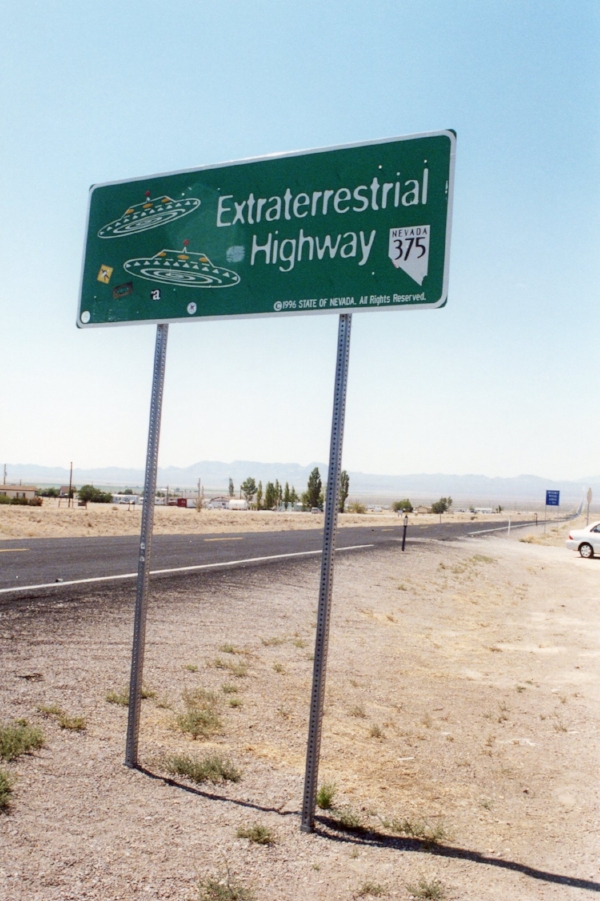
The famous "black mailbox" is, these days, white. It is battered, chipped, and covered with graffiti, but white, definitely white, not black at all — a suitable symbol for Area 51, a place where legend and reality never quite seem to match. To find it, drive north from Las Vegas into the Nevada desert, bleak and broiling at the time of my visit, blistering in the late August sun, an empty, strangely lovely place of dust devils, triple-digit temperatures, and massively overheated imaginations. Highway 93 will take you most of the way. Just past the supermarket at Ash Springs, turn left at the intersection onto that stretch of Highway 375 now officially (thank you, Governor Miller!) known as the Extraterrestrial Highway. No little green men, but a large green sign — decorated, naturally, with a couple of flying saucers — tells the visitor that this is no ordinary scenic route. This is a drive where it is wise to watch the skies as well as the road.

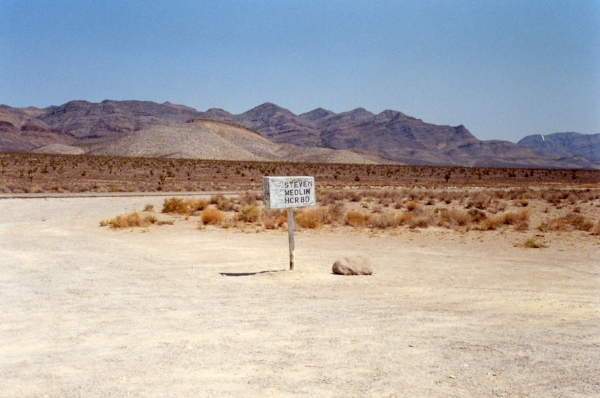
The mailbox itself is another 20 miles farther along. It stands, a solitary sentinel in the desert, just to the left of the highway. A dirt track heads southwest, to the mountains in the distance and, much nearer, to a far more formidable obstacle, the boundary of a vast forbidden zone: Area 51, the secret installation that some call Dreamland.

Area 51! The name follows the numbering pattern established for mapping the old nuclear-testing site that it, alarmingly, adjoins. The notoriety dates from that moment, sometime in the early 1990s, when America's interest in UFOs, never a field reserved solely for the sane, tipped over into outright mania — a mania exploited by the entertainment industry to create a series of movies and TV shows that simultaneously fed off, and fed, the narratives and obsessions of those who believed E.T. had come for real. The result was to create an echo chamber of the ludicrous, where fiction, fantasy, and (very rarely) fact bounced off one another to create ever-amplifying myth, paranoia, and pre-millennial speculation. For some, the story centered on the sweaty, delusional sexual psychodrama of all those probing, prying, prurient abductions; for others it was a blend of gearhead fantasy and conspiracy theory centered on a mysterious, lonely base baking in the Nevada sun.

Extraterrestrial Highway, August 2002  © Andrew Stuttaford

Extraterrestrial Highway, August 2002  © Andrew Stuttaford

Area 51! It was a video game, a book (many, many books, actually, including Area 51, Area 51: The Reply, Area 51: The Truth, Area 51: Excalibur, Area 51: The Mission, Area 51: The Sphinx, and Area 51: The Grail), and a rap CD by the Body Snatchaz. It was the subject of sci-fi drama, numerous documentaries, frequent articles, and wild, wild rumors, all fed by tall tales and repeated sightings of lights in the sky — enigmatic, hovering, darting, pulsating, unexplained, all colors, all shapes, and, for the credulous, all meanings. It was, inevitably, a place where Mulder and Scully came calling and it was, only slightly less predictably, the base from which Will Smith and Jeff Goldblum saved the world in Independence Day.

Area 51! Depending on who you chose to believe, it was a top-secret testing ground for the U.S. Air Force, a treasure house of extraterrestrial technology, a morgue for little green (well, gray actually) corpses, or, more cheerfully, a facility (ever since a treaty signed with Eisenhower in 1954) for aliens who were still alive. More lurid still, there was talk of genetic experimentation, of ghastly unnatural cocktails of human and alien DNA, and of subterranean vats filled with body parts and other unknown horrors.

Subterranean vats filled with body parts? If that's not enough to put off uninvited visitors to Area 51, a locally produced pamphlet warns what the U.S. government will do to those who stray too close:

When you approach the boundary… there are signs on both sides of the road — Do Not Pass The Signs or you will be arrested on a charge of trespassing on the Nellis Bombing and Gunnery Range. The fine for a first offense is $600… You will see two tripod mounted surveillance cameras. You may also see guards in white jeep Cherokees or champagne colored Ford pick-ups watching you from nearby locations. As long as you do not violate the boundary, they have no authority to interfere with your activities. If you hike near the border — do not pass any of the orange posts that mark the boundary!

Well, that sounded like way too much trouble, the sort of challenge more suited to a fearless investigative reporter than to me. Craven and cautious, I rejoined Highway 375 and headed further west, to Rachel, Nev., home of the Little A'Le'Inn.

Little A'Le'Inn, Rachel, NV, August 2002  ©  Andrew Stuttaford

Little A'Le'Inn, Rachel, NV, August 2002  ©  Andrew Stuttaford

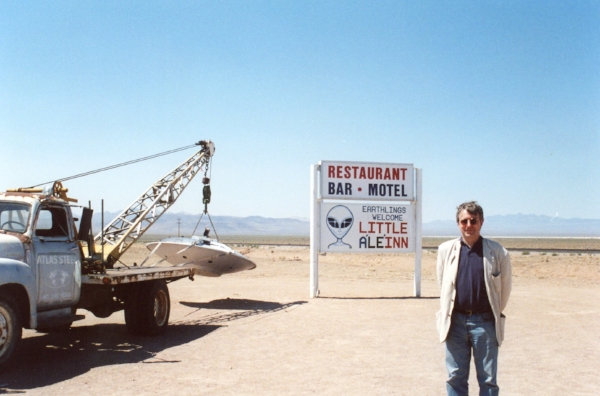
Rachel is a slight, scrappy settlement with a population of under 100 — an encampment more than a town, little more than a few trailers and a Baptist church dumped in the middle of the high desert plain. Except for the alien invasion just across the horizon, not a lot is going on in this burg. For entertainment, there's checking the readings on the radiation-monitoring station (a reminder of all those nuclear tests), hanging out at the Quik Pik convenience store, and, of course, the Little'A'Le'Inn (formerly the Oasis, Club 111, the Stage Stop, the Watering Hole, and the Rachel Bar and Grill), the Silver State's best-known intergalactic diner/motel, home of the "World Famous Alien Burger" ("served with lettuce, tomato, pickle, onion, and our Special Secret Alien Sauce") and notorious epicenter of Area 51 intrigue.

The diner ("earthlings," a sign says, are "welcome" — phew!) itself is impossible to miss. Alien figures peep out through its windows, and a tow truck is parked outside — a small flying saucer hanging forlornly from its hoist. To enter, go through the door invitingly marked "Notice — Cancer & Leukemia cases… Possible Compensation Available!" (another souvenir of those pesky nuclear tests) and you will find yourself in a large, low-ceilinged dining room with a pool table, a bar, and the biggest collection of alien ephemera outside the flea markets on Jupiter.

There are rubber aliens, plastic aliens, glow-in-the-dark aliens, inflatable aliens, gray, green, purple, and orange aliens, aliens in T-shirts, an alien in a dress, and mom, pop, and junior alien all sharing a comfortable chair. The walls are lined with more — alien yo-yos, alien cigarette lighters, alien ashtrays, alien sippy cups, alien guitar frets, alien playing cards, alien beer coolers, alien beer mugs, alien sunglasses, alien jewelry, alien key rings, alien refrigerator magnets, alien postcards, alien Christmas decorations, alien baseball caps — and the T-shirts, as countless, it seems, as the stars in the sky: "Area 51 — it doesn't exist and I wasn't there."

For more dedicated enthusiasts, there are books, magazines, pamphlets, videos (yes, that old autopsy film — again), and, lining the walls, those inevitable blurred, ambiguous pictures of lights in the sky that are always a feature of places such as these. And then there are the bumper stickers praising Newt Gingrich and attacking that hopeless man from Hope.

Gingrich? Clinton? There is a sense that this is a place that time may be passing by, that the Little A'Le'Inn may be becoming the Little A'Le'Out. Back in the 1990s, Rachel was a hotbed of alien activity (or, at least, the search for alien activity), complete with a research center/trailer (close to the Quik Pik) run by one Glenn Campbell (not to be confused with Glen Campbell — one "n," Rhinestone Cowboy). The town played host to UFO seminars, UFO Friendship Campouts, UFO technicians (supposed ex-Area 51 employee Bob Lazar — worked on alien technology, saw mysterious alien writing), Ufologists, UFO tourists, and, of course, Larry King. Yes, Larry King — UFO Cover-Up? Live From Area 51. You missed it?

Rachel, Nevada, August 2002  ©  Andrew Stuttaford

Rachel, Nevada, August 2002  ©  Andrew Stuttaford

But that was then. The saucers will return, doubtless, to soar again over our popular culture, but UFOs, for now, appear to be going the way of the hula hoop, and it's going to take more than Spielberg's revealingly lackluster Taken (complete with Area 51 references) to bring them back. That's not to say that Rachel's visitors have been reduced solely to the ranks of the extraterrestrial. Some humans — true believers or just the curious — are still coming to scrutinize the skies, to peer at the base, and to dodge the fearsome "cammo dudes" who guard its perimeter. Others show up just to giggle, cheerfully buying the tchotchkes that celebrate a phenomenon in which they do not really believe.

The small group of diners at the Inn was mainly European, strangers in a stranger land, laughing as they chowed down on alien burgers and surveyed the alien kitsch. They had found their alien Graceland, a desert theme park of the absurd, another piece of exuberant Americana to treasure and to mock, a spectacle impossible to imagine in their own constrained, more sober continent. Gamely, a member of the Inn's staff told her story. She had, naturally, seen those "lights in the sky." That's not so peculiar in the vicinity of an air base where new planes and other hardware are tested, but no one seemed to mind.

It's telling that Glenn Campbell has moved on. They remember him with a smile at the Quik Pik, but the self-dubbed "Psychospy" has abandoned Rachel for cyberspace. According to his website, Area 51 is now a "has-been." The Research Center "has moved on to broader issues." And so has the U.S. The saucer frenzy of the 1990s was self-indulgence for safer times, play-acted paranoia suitable for an era when the country believed it had no real enemies. Now the adversary is visible, his strength, ironically, the product not of some highly advanced technological civilization, but of something almost more alien — a primitive, theocratic fanaticism that should have been buried centuries ago. Under these circumstances, talk of an extraterrestrial menace seems embarrassingly frivolous. Besides, nowadays most people rather like the idea of secret bases.

So long as they are on our side.

Prize Specimen

National Review Online, May 7, 2003

We will never know how many Ukrainians died in Stalin's famines of the early 1930s. As Nikita Khrushchev later recalled, "No one was keeping count." Writing back in the mid- 1980s, historian Robert Conquest came up with a death toll of around six million, a calculation not so inconsistent with later research (the writers of The Black Book of Communism (1999) estimated a total of four million for 1933 alone). Four million, six million, seven million, when the numbers are this grotesque does the exact figure matter? Just remember this instead:

The first family to die was the Rafalyks — father, mother and a child. Later on the Fediy family of five also perished of starvation. Then followed the families of Prokhar Lytvyn (four persons), Fedir Hontowy (three persons), Samson Fediy (three persons). The second child of the latter family was beaten to death on somebody's onion patch. Mykola and Larion Fediy died, followed by Andrew Fediy and his wife; Stefan Fediy; Anton Fediy, his wife and four children (his two other little girls survived); Boris Fediy, his wife and three children: Olanviy Fediy and his wife; Taras Fediy and his wife; Theodore Fesenko; Constantine Fesenko; Melania Fediy; Lawrenty Fediy; Peter Fediy; Eulysis Fediy and his brother Fred; Isidore Fediy, his wife and two children; Ivan Hontowy, his wife and two children; Vasyl Perch, his wife and child; Makar Fediy; Prokip Fesenko: Abraham Fediy; Ivan Skaska, his wife and eight children.Some of these people were buried in a cemetery plot; others were left lying wherever they died. For instance, Elizabeth Lukashenko died on the meadow; her remains were eaten by ravens. Others were simply dumped into any handy excavation. The remains of Lawrenty Fediy lay on the hearth of his dwelling until devoured by rats.*

And that's just one village — Fediivka, in the Poltava Province.

We will never know whether Walter Duranty, the principal New York Times correspondent in the U.S.S.R., ever visited Fediivka. Almost certainly not. What we do know is that, in March 1933, while telling his readers that there had indeed been "serious food shortages" in the Ukraine, he was quick to reassure them that "there [was] no actual starvation." There had been no "deaths from starvation," he soothed, merely "widespread mortality from diseases due to malnutrition." So that was all right then.

But, unlike Khrushchev, Duranty, a Pulitzer Prize winner, no less, was keeping count — in the autumn of 1933 he is recorded as having told the British Embassy that ten million had died. ** "The Ukraine," he said, "had been bled white," remarkable words from the journalist who had, only days earlier, described talk of a famine as "a sheer absurdity," remarkable words from the journalist who, in a 1935 memoir had dismayingly little to say about one of history's greatest crimes. Writing about his two visits to the Ukraine in 1933, Duranty was content to describe how "the people looked healthier and more cheerful than [he] had expected, although they told grim tales of their sufferings in the past two years." As Duranty had explained (writing about his trip to the Ukraine in April that year), he "had no doubt that the solution to the agrarian problem had been found".

Well, at least he didn't refer to it as a "final" solution.

As the years passed, and the extent of the famine and the other, innumerable, brutalities of Stalin's long tyranny became increasingly difficult to deny, Duranty's reputation collapsed (I wrote about this on NRO a couple of years ago), but his Pulitzer Prize has endured.

Ah, that Pulitzer Prize. In his will old Joseph Pulitzer described what the prize was designed to achieve: " The encouragement of public service, public morals, American literature, and the advancement of education."

In 1932 the Pulitzer Board awarded Walter Duranty its prize. It's an achievement that the New York Times still celebrates. The gray lady is pleased to publish its storied Pulitzer roster in a full-page advertisement each year, and, clearly, it finds the name of Duranty as one that is still fit to print. His name is near the top of the list, an accident of chronology, but there it is, Duranty, Times man, denier of the Ukrainian genocide — proudly paraded for all to see. Interestingly, the list of prizewinners posted on the New York Times Company's website is more forthcoming: Against Duranty's name, it is noted that "other writers in the Times and elsewhere have discredited this coverage."

Understandably enough, Duranty's Pulitzer is an insult that has lost none of its power to appall. In a new initiative, Ukrainian groups have launched a fresh campaign designed to persuade the Pulitzer Prize Board to revoke the award to Duranty. The Pulitzer's nabobs do not appear to be impressed. A message dated April 29, 2003 from the board's administrator to one of the organizers of the Ukrainian campaign includes the following words:

The current Board is aware that complaints about the Duranty award have surfaced again. [The campaign's] submission…will be placed on file with others we have received. However, to date, the Board has not seen fit to reverse a previous Board's decision, made seventy years ago in a different era and under different circumstances.

A "different era," "different circumstances" — would that have been said, I wonder, about someone who had covered up Nazi savagery? But then, more relevantly, the Pulitzer's representative notes that Duranty's prize was awarded "for a specific set of stories in 1931," in other words, before the famine struck with its full, horrific, force. And there he has a point. The prize is designed to reward a specific piece of journalism — not a body of work. To strip Duranty of the prize on the grounds of his subsequent conduct, however disgusting it may have been, would be a retrospective change of the rules, behavior more typical of the old U.S.S.R. than today's U.S.A.

But what was that "specific set of stories?" Duranty won his prize "for [his] dispatches on Russia especially the working out of the Five Year Plan." They were, said the Pulitzer Board "marked by scholarship, profundity, impartiality, sound judgment and exceptional clarity…."

Really? As summarized by S. J. Taylor in her excellent — and appropriately titled — biography of Duranty, Stalin's Apologist, the statement with which Duranty accepted his prize gives some hint of the "sound judgment" contained in his dispatches.

"Despite present imperfections," he explained, he had come to realize there was something very good about the Soviets' "planned system of economy." And there was something more: Duranty had learned, he said, "to respect the Soviet leaders, especially Stalin, who [had grown] into a really great statesman."

In truth, of course, this was simply nonsense, a distortion that, in some ways bore even less resemblance to reality than "Jimmy's World," the tale of an eight-year-old junkie that, briefly, won a Pulitzer for Janet Cooke of the Washington Post. Tragic "Jimmy" turned out not to exist. He was a concoction, a fiction, nothing more. The Post did he right thing — Cooke's prize was rapidly returned.

After 70 years the New York Times has yet to do the right thing. There is, naturally, always room for disagreement over how events are interpreted, particularly in an era of revolutionary change, but Duranty's writings clearly tipped over into propaganda, and, often, outright deception, a cynical sugarcoating of the squalor of a system in which he almost certainly didn't believe. His motivation seems to have been purely opportunistic, access to the Moscow "story" for the Times and the well-paid lifestyle and the fame ("the Great Duranty" was, some said, the best-known journalist in the world) that this brought. Too much criticism of Stalin's rule and this privileged existence would end. Duranty's "Stalin" was a lie, not much more genuine than Janet Cooke's "Jimmy" and, as he well knew at the time, so too were the descriptions of the Soviet experiment that brought him that Pulitzer.

And if that is not enough to make the Pulitzer Board to reconsider withdrawing an award that disgraces both the name of Joseph Pulitzer and his prize, it is up to the New York Times to insist that it does so.

*From an account quoted in Robert Conquest's The Harvest of Sorrow. ** On another occasion (a dinner party, ironically) that autumn Duranty talked about seven million deaths.

Turn Off, Tune Out & Drop Out: Do you know what week it is?

National Review  Online, April 23, 2003

TV-1.jpeg

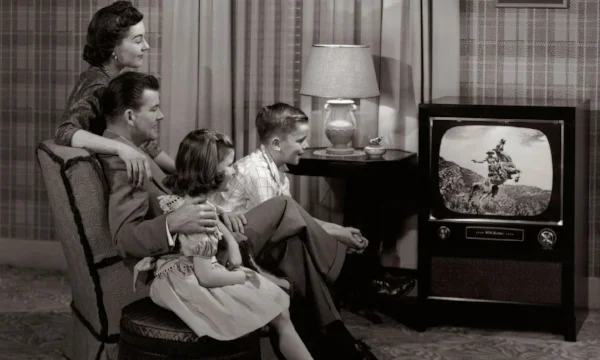
If there’s one fashion disaster that has endured throughout the ages it is the hair shirt. There is something perverse about our species, a self-indulgent sense of guilt that makes us take rather too much delight in self-denial. Ever since the awful moment when the first caveman was hectored by the first Neanderthal nag, the killjoy has been a malign presence at our side, a preaching, prattling parasite condemning and chastising, perennially telling humanity what to do — always for our own good, naturally. The excuse for such interference used to be the Hereafter, the preservation of the immortal soul, the pitch to avoid the sulfur, fire, and brimstone. But we live in more secular times these days — and with the afterlife increasingly an afterthought, do-gooders are busily turning their attention to this life too. Health is the new holiness. Narcotics are a no-no, sex is “high risk,” boozers are losers, tobacco is a taboo, the Big Mac is a lawsuit, and, now, seemingly in a final insult, one of the last remaining pleasures, television — that flickering, fascinating window into countless different worlds, that most kindly of household appliances — is coming under savage attack.

Yes, April 21-27 is TV-Turnoff Week! Just days after televised images of toppled statues and desert heroics transfixed this nation, an organization calling itself the TV-Turnoff Network is advising us to switch off the tube for what could be a long, long week. In a press release issued, fittingly enough, on that annual hair-shirt holiday, April 15, the Network predicted that “more than seven million people will participate in over 17,000 organized Turnoffs in every state in the U.S., as well as numerous other countries.”

I don’t know about you, but there’s something about the idea of an “organized Turnoff” that sounds deeply depressing to me. A quick check of a list of the Turnoff’s supporters is enough to confirm that, despite some benign participants, its core is indeed a killjoy cabal. Signatories of a letter supporting the Turnoff Week include the American Medical Association and the American Heart Association, miscellaneous “advocacy” groups including “The Alliance for Childhood” (opposed to “test-stress” but, readers will be relieved to know, in favor of a “new national commitment to peace education”) and, inevitably, Hillary’s old chums at the Children’s Defense Fund, as well as an organization with a name — Shape up America! — that led to some unaccustomed exertion on my part: a shudder of fear as, slumped on the sofa, I hastily put down my drink and reached for the remote, desperate to find something, anything, that would push the thought of “shaping up” far from my mind.

Superficially, at least one of the points made by those who have signed that letter might seem to have some appeal: “Research demonstrates conclusively that turning off the TV boosts school performance. Federal studies show that at all grade levels, students who watch an hour or less of TV per day consistently have better reading skills than other students — and this disparity increases at higher grade levels.” Well, maybe, but after a moment of thought, it’s not hard to see that this argument muddles cause with effect. Brighter kids — or children with more actively involved parents — are far more likely than their dimmer brethren to look for intellectual excitement beyond the boob tube. The contrary notion, the idea that Jackass addicts will, once their sets have been switched off, turn to Dickens, Melville, and Hemingway for their thrills is, quite simply, absurd.

There is, of course, potential for serious discussion about how much television Americans, and particularly younger Americans, choose to watch; but that’s not what the Turnoff Taliban is really about. Look a little closer at what their supporters have to say, and it’s easy to see that their destination is Rodham County: “Watching less television also means less exposure to a wide array of antisocial behaviors, including violence, over-consumption and racial and gender stereotyping.” It’s not difficult to suspect that the Turnoff Network’s greatest objection is not to the medium, but to what they see as its message.

These folks choke over their lattes at what they call “commercialism.” In other words, they disdain the cheery excesses of American capitalism, the ceaseless, chattering parade of vulgar hucksters, relentless hustlers, and insistent ad men who play so important a part in the consumer capitalism that the Turnoff crowd so affects to despise. They look down on the greedy, grabby, gabby, glittering, energetic mess of a culture that has brought this country so much prosperity, and its people so much opportunity.

That’s an old — and familiar — form of snobbery. But these days, of course, the hair shirt comes mainly in green, and so it’s no surprise to discover that amid the alternative forms of entertainment proposed for TV-Turnoff Week is a celebration of the most dismal of all the killjoy carnivals — Earth Day (April 22). “Turn off the tube and go for a hike, help in a stream clean-up, or write a letter to a legislator about an environmental issue that’s important to you.” Help in a stream clean up?

Further suggestions carry less ideological freight and don’t, at least, involve waterproof clothing. They can, however, be just plain goofy — “Shakespeare’s birthday is traditionally observed on April 22 or April 23 (depending on your source). Take an evening and read some of his sonnets as a family, or act out a scene from a play.” Well, if it’s dad who has decided to deprive his wretched offspring of the joys of television, King Lear might be a selection to avoid. Other choices included in the Network’s list of “101 screen-free activities” include (and I’m not making this up) watching the clouds, looking at stars, and learning about native trees and flowers. And if watching the clouds, looking at stars, and studying native flora is not excitement enough, why not “make paper bag costumes and have a parade?”

As with most liberal campaigns, not only do “the children” play a prominent part in the Turnoff Network’s message, but so does a health threat — in this case, smoking’s most likely successor as national scapegoat: the pudgy menace of “obesity” currently waddling across the fruited plain and dooming us all to early, if substantial, graves.

Fear of fat already seems set to tarnish the allure of those infamous Golden Arches and may now, it seems, be used to cast a shadow over the simple pleasures of a night with Seinfeld. “More than one in four American adults is obese,” we are warned, and tiny tots, it appears, are no longer so tiny — “more than one in ten children is obese.” All is not lost, however. “Turning off the TV reduces sedentary behavior — because no other waking activity is as sedentary as watching TV — and can affect nutritional choices, as it means seeing fewer advertisements for high-fat, high sugar foods” — advertisements which we poor peons are, presumably, powerless to resist on our own.

Of course, the Turnoff is not intended to stop at a week. Those seven days are just a first step. Worse is to come. Parents are urged to “try and restrict viewing to a half-hour per day or one hour every other evening.” That’s an unnecessarily rigid approach which will not only succeed in isolating their children from much of contemporary culture — good as well as bad — but which also makes very little intellectual sense. When it comes to deciding what children should watch on TV, quality should surely be a more important measure than quantity, a notion clearly lost on an organization that, for bad measure, also recommends canceling your cable — thus banishing from the home even relatively educational programming, such as A&E and the History Channel.

And the TV-Turnoff Network even has plans for those of us who, despite all the dangers, persist with the tube. In its opinion, viewers need to be subjected to a little improving propaganda every now and then. In a recent filing with the FCC, the Network called on the Commission to “adopt a regulation that requires all TV broadcast stations to run periodic announcements throughout the broadcast week and in all dayparts [sic] reminding viewers that excessive television-viewing has negative health, academic and other consequences for children and that parents and guardians retain and should exercise their First Amendment right and ability to turn off their television sets and limit their children’s viewing time.”

That’s a pretty strange way to look at the First Amendment, but unfortunately I don’t have time to discuss it.

Buffy is on in a couple of minutes.