Other People's Money

Sebastian Mallaby: The World's Banker

The New York Sun, September 30, 2004

Wolfensohn.jpg

If there's anything more guaranteed to set off my inner sans-culotte than pampered, arrogant Teresa Heinz Kerry, it's a gathering of international bureaucrats, the spoiled, sanctimonious, worthless, and annoying aristocrats of our own sadly yet to be ancien régime. Locusts in limousines, they periodically descend on some unfortunate city, clogging the streets with their retinues, the restaurants with their greed, and the newspapers with their self-importance. Seen from this perspective, and judging by its remarkably unflattering cover photograph, "The World's Banker" (The Penguin Press, 462 pages, $29.95) an account by the Washington Post's Sebastian Mallaby of James Wolfensohn and the World Bank he is president of, promised to be a delightful, malicious treat. Mr. Wolfensohn, thin-lipped and narrow-eyed, glares out from the cover, seemingly disdainful of anyone impudent enough to even pick up the book. There is no attempt at a smile: Why bother to ingratiate? The look is the mask of a predator, a big beast to be avoided in boardroom, brawl, or multilateral institution.

Sadly, it's not always right to judge a book by its cover. While the Wolfensohn portrayed by Mallaby is not an altogether likeable character, "The World's Banker" is far from a hatchet job - either of the man or the institution over which he so imperiously presides. Over the years, both have made themselves into tempting targets for a cheap shot or two, but Mr. Mallaby takes the high road, treating them fairly, if sometimes (deservedly) critically. What's more, with a bright, breezy (occasionally too breezy) and assured style that reflects his years at the Economist, the author takes the complex and (let's admit it), potentially excruciating topic of the World Bank and makes it accessible to the general reader.

That said, the high road comes with a toll. This may be my inner Kitty Kelley surfacing, but this book's narrative would have hung together better with a little more Wolfensohn and a little less bank. Certainly the World Bank, like it or loathe it, is an important, some would say essential, institution. But in trying to tell its story through the partial biography of just one man, Mr. Mallaby has, despite a heroic effort, ended up with a slightly, and probably inevitably, unsatisfactory hybrid. His book does full justice neither to Mr. Wolfensohn nor to his bank.

There's another problem. A book that features the drama that is Mr. Wolfensohn had better be about Mr. Wolfensohn, and only about Mr. Wolfensohn. Anything or anybody else will be hopelessly upstaged. Mr. Mallaby has plenty to say about Bolivia, Uganda, and Indonesia, but much of the significance of what he is writing will be lost as even the most earnest readers find themselves impatiently turning the pages in expectation of the next fabulous, appalling Wolfensohn moment. The goat from Mali! The Frenchman's speech! Rostropovich! Harrison Ford! Um, Paul O'Neill! There are titanic rows, great rages, astonishing coups and, oh yes, that ego, well worth a full biography in its own right.

To describe this magnifico as merely protean would be an insult. He is a force of nature whose talents, personality, chutzpah, and remarkable networking skills took him from a comparatively modest upbringing in the Antipodes to Harvard, the Olympics (fencing for Australia!), Carnegie Hall (he's a cellist!), success in the City of London, Wall Street, and, since 1995, his current role.

As Mr. Wolfensohn ponders the chances of a third term at the bank, it is worth asking how much of a success has he made of the first two. Like many of the titans of high finance, his management skills appear - and this is being kind - rudimentary, a mixture of threats, bluster, overbearing ambition, and impatience. It's perhaps significant that Robert Rubin, whose background at Goldman Sachs must have made him very familiar with such types, was one of those in the Clinton administration most resistant to Mr. Wolfensohn's relentless, and typically skilful, lobbying for the World Bank job. It's no surprise to read that the great man's time in Washington has been marked by staff turmoil, mad fads, vast expenditures, grandiose planning, and feuds with shareholders: All the hallmarks, in short, of a Wall Street grandee at work.

All this sound and fury has signified something, however. In weighing Mr. Wolfensohn's career at the bank, Mr. Mallaby concludes that he can boast of some very real achievements - no small matter in a field where progress can mean a better life for large numbers of the desperately poor and, indirectly, for the rest of the planet. In a world that is ever more complicatedly, and sometimes dangerously, interconnected, it is no longer possible for the West to ignore the less prosperous parts of the globe - even if it wanted to. That is something Mr. Wolfensohn understood well, and that Mr. Mallaby makes clear.

If much of the World Bank's progress has seemed to come uncertainly, awkwardly, in fits and starts and after numerous wrong turns, neither Mr. Wolfensohn nor his employees are wholly to blame. When it comes to development, there is no magic bullet, no one answer, not trade alone or aid alone, not free market fundamentalism, not massive infusions of capital, not 'empowerment', not structural reform, not tough dictates suited to the Victorian workhouse, not the sentimentality and soft targets of the 1970s. And certainly not the leftist prescriptions and cultural imperialism of far too many NGOs. The correct approach probably draws on aspects of most of the above strategies and quite a few others besides.

"The World's Banker" gives a useful introduction to many of these issues, but only an introduction. Nevertheless, given the importance of this neglected topic, it is to Mr. Mallaby's credit that his readers, like the developing countries the World Bank was designed to assist, will be left asking for more.

A Hero of Our Time: Gareth Jones, 20th-century truth-teller.

The notebooks—worn, creased, and drab, but haunting nonetheless—lay carefully set out on a table in the lobby of a New York hotel. Their pages were filled with notes, comments, and calculations, jotted and scribbled in the cursive, spiky script once a hallmark of pre-war Britain's educated classes. Their author had, it seems, wandered through a dying village deep within Stalin's gargoyle empire. "Woman came out and started crying. 'They're killing us. In my village there used to be 300 cows and now we only have 30. The horses have died. How can I feed us all?'" It was the Ukraine, March 1933, a land in the throes of a man-made famine, the latest murderous chapter in Soviet social engineering. Five, six, seven million had died, maybe more. As Khrushchev later explained, "No one was counting."

But how had these notebooks found their way to a Hilton in Manhattan? Some years ago, in a town in Wales, an old, old lady, older than the century in which she lived, was burgled. As a result, she moved out of her home. When her niece, Siriol, came to clear up whatever was left, she found a brown leather suitcase monogrammed "G.V.R.J." and, lying under a thick layer of dust, a black tin box. Inside them were papers, letters, and, yes, those notebooks ("nothing had been thrown away"), the last records of Gareth Jones—"G.V.R.J."—Siriol's "jolly," brilliant Uncle Gareth, a polyglot traveler and journalist. In 1935 he had been killed by bandits in Manchuria, or so it was said. All that was left was grief, his writings, and the memory of a talented man cut down far, far too soon.

Seven decades later, as I sat talking to Siriol Colley in that midtown hotel, looking through Jones's papers, his press clippings, even his passport, it was not difficult to get a sense of the uncle she still mourned. Welsh to his core, he was typical of those clever, energetic Celts who did so well in the British Empire, restless (all those visa stamps, Warsaw, Berlin, Riga . . .), ambitious, and enterprising. Despite his youth, Jones seemed to get everywhere, Zelig with a typewriter. On New Year's Day 1935, for instance, he was in San Simeon, Kane's Xanadu itself, side by side with William Randolph Hearst. Earlier, we find him on a plane with Hitler ("looks like a middle-class grocer"), and, why, there he is, smiling on the White House lawn in April 1931, standing just behind a hopeless, hapless Herbert Hoover.

Above all, this man who reportedly charmed his captors in Manchuria by singing them hymns, was what the Welsh call “chapel”: pious, hardworking, teetotal, a little priggish, and armed with a sense of right and wrong so fierce that it gave him the strength to report the truth of what he saw, at the cost, if need be, of his career and, some would say, his life. Jones’s politics were typically chapel too, steeped as they were in the Liberal traditions of Welsh Nonconformism. Ornery, high-minded, pacifist, egalitarian, a touch goofy, a little bit utopian, Jones was just the sort of Westerner who might have been attracted to the Soviet experiment. And so he was—initially. In a 1933 article for the London Daily Express, Jones recalled how “the idealism of the Bolsheviks impressed me . . . the courage of the Bolsheviks impressed me . . . the internationalism of the Bolsheviks impressed me,” but “then,” he added, “I went to Russia.”

And there, for Jones, everything changed. His accounts of his visits to the USSR (the first was in 1930) are a chronicle of mounting disillusion. Reading them now, particularly the occasional attempts to highlight some Soviet achievement or other, it’s easy to see that this young Welsh liberal, this believer, wanted to trust in Moscow’s promise of a radiant future, but Communist reality—dismal, savage, and hopeless—kept intruding. Unlike many who came to inspect the people’s paradise, he reported on its dark side too. For Jones, there was no choice. It was the truth, you see.

By the autumn of 1932, Jones was sounding the alarm (“Will There Be Soup?” and “Russia Famished Under the Five-Year Plan”) about the catastrophe to come: “The food is not there.” Early the next year, he returned to Moscow to check the situation for himself, took a train to the Ukraine, and then walked out into the wrecked, desperate countryside. Once back in the West, he wasted no time, not even waiting to get back home before telling an American journalist in Berlin what he had seen: Millions were dying.

Soviet denials were to be expected. That they were supported by the New York Times was not. The newspaper’s Moscow correspondent, Walter Duranty, reassured his readers that Jones had been exaggerating. The Welshman was, he condescended, “a man of a keen and active mind . . . but [his] judgment was somewhat hasty . . . It appeared that he had made a forty-mile walk through villages in the neighborhood of Kharkhov and found conditions sad.” Sad—not much of an adjective, really, to describe genocide.

The Times’s man, who had won a Pulitzer the previous year for “the scholarship, profundity, impartiality, sound judgment and exceptional clarity” of his reporting from the Soviet Union, did not share Jones’s sense of “impending doom.” Yes, “to put it brutally,” omelettes could not be made without breaking eggs, but there had been “no actual starvation or deaths from starvation.” Duranty came, he claimed, to this conclusion only after “exhaustive enquiries about this alleged famine situation,” but other discussions probably influenced him more. The big story in Moscow in the spring of 1933—bigger by far than the death of a few million unfortunate peasants—was the pending show trial of six British engineers. Courtroom access and other cooperation from Soviet officialdom would be essential for any foreign journalist wanting to satisfy the news desk back home. That would come at a price. The price was Jones.

Eugene Lyons, another American journalist in Moscow at the time, later explained that “throwing down Jones was as unpleasant a chore as fell to any of us in years of juggling facts to please dictatorial regimes—but throw him down we did, unanimously and in almost identical formulas of equivocation. Poor Gareth Jones must have been the most surprised human being alive when the facts he so painstakingly garnered . . . were snowed under by our denials.” According to Lyons (not always, admittedly, the most reliable of witnesses, but the essence of his tale rings true), a deal was struck at a meeting between members of the American press corps and Konstantin Umansky, the chief Soviet censor. “There was much bargaining in a spirit of gentlemanly give-and-take . . . before a formula of denial was worked out. We admitted enough to soothe our consciences, but in round-about phrases that damned Jones as a liar. The filthy business having been disposed of, someone ordered vodka and zakuski.” Spinning a famine was, apparently, thirsty work.

Undaunted by the attacks on his accuracy, Jones intensified his efforts. There were articles in the Daily Express, the Financial Times, the Western Mail, the London Evening Standard, the Berliner Tageblatt, as well as a lengthy letter to the Manchester Guardian in support of Malcolm Muggeridge, who had, like Jones, told the truth about the famine and, like Jones, been vilified in return (suggestions that there was starvation in the USSR were, said George Bernard Shaw, “offensive and ridiculous”). In a letter published by the New York Times in May 1933, Jones hit back at Walter Duranty. The reports of widespread famine were, he wrote, based not only on what he had seen in the villages of the Ukraine, but also on extensive conversations with other eyewitnesses, diplomats, and journalists. After a few polite remarks about Duranty’s “kindness and helpfulness,” the tone turned contemptuous. Directly quoting from Duranty’s own dispatches, Jones charged that censorship had turned some journalists into “masters of euphemism and understatement . . . [They] give ‘famine’ the polite name of ‘food shortage’ and ‘starving to death’ is softened down to read as ‘widespread mortality from diseases due to malnutrition.’. . . Mr. Duranty says that I saw in the villages no dead human beings nor animals. That is true, but one does not need a particularly nimble brain to grasp that even in the Russian famine districts the dead are buried . . . [T]he dead animals are devoured.”

Moscow responded by barring Jones from the USSR. He was cut off for good from the site of the story he had made his own. Duranty received a rather different reward. Some months later he accompanied the Soviet foreign minister on a trip to America, a journey that was to culminate in FDR’s decision to extend diplomatic recognition to the Communist regime, a decision that was fêted, fêted in that famine year, with a celebration dinner at New York’s Waldorf-Astoria hotel, at which Duranty was honored with cheers and a standing ovation. On Christmas Day 1933 came the greatest prize of all—an interview with Stalin himself. Well, of course. It was a reward for work well done. Duranty had, said the dictator, “done a good job in . . . reporting the USSR.”

But history had not yet finished with Gareth Jones. The young Welshman possessed, explained David Lloyd George, the former prime minister for whom Jones had, some years before, worked as an aide, “a passion for finding out what was happening in foreign lands wherever there was trouble, and in pursuit of his investigations he shrank from no risk.” So, it’s no surprise to find him in Japan in early 1935, interviewing, questioning, snooping, and perhaps attracting the sort of attention that could turn out to be fatal. By July that year he was heading through the increasing chaos of northern China toward Japanese- controlled Manchuria (Manchukuo). On July 26, Jones updated the narrative he was writing for the last time. He was, he wrote, “witnessing the changeover of a big district from China to Manchukuo. There are barbed-wire entanglements just outside the hotel. There are two roads . . . [O]ver one 200 Japanese lorries have traveled; the other is infested by bad bandits.” Two days later, the bandits struck. Jones was kidnapped. He was murdered two weeks later. It was the eve of his 30th birthday.

We will probably never know who was ultimately responsible for Jones’s death. There had been a ransom demand, and so, perhaps, this was just a kidnapping that went horribly wrong. There are, however, other possibilities. The Japanese would certainly not have welcomed a Westerner watching the takeover of yet another Chinese province, and there is some evidence that the kidnappers were under their control. It’s also intriguing to discover that one of Jones’s contacts in those final days was linked to a company now known to have been a front for the NKVD, Stalin’s secret police. To Lloyd George, only one thing was clear: “Gareth Jones knew too much.”

And if he knew too much, the rest of the world understood too little. For decades, like the dead whose story he told, this lost witness to a genocide seemed doomed to be forgotten, a family tragedy, a footnote, but now that’s changing. Jones is at last returning to view, thanks in no small part to the efforts of the indefatigable Siriol Colley, the author of a book about her uncle—and a second is on the way. (Colley’s son Nigel has also set up a website: www.colley.co.uk/garethjones/index.html.)

One thing, however, has not changed. On December 4 last year, not long after the Pulitzer committee decided that Duranty should retain his prize, Colley wrote to the New York Times asking whether the paper could at least issue a public apology for the way in which its Moscow correspondent had smeared Jones. She’s still waiting.

Comfort Zone

National Review Online, September 7, 2004

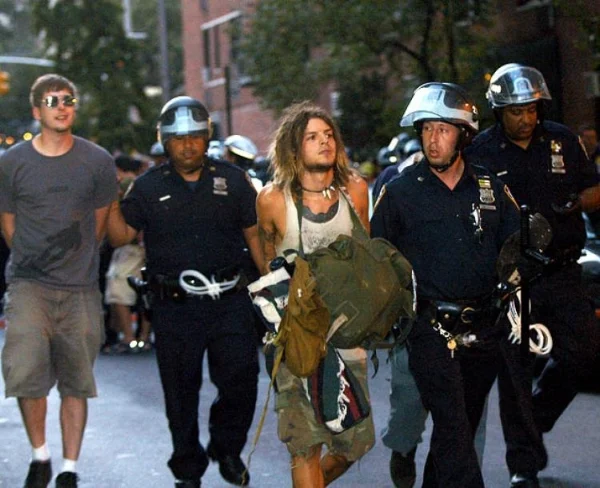
GOP Convention 2004.jpg

So the GOP convention passed off, to use the bland, blinding bureaucratic phraseology, without major incident. There were many arrests, sure, and on the Sunday before a march involving hundreds of thousands of demonstrators, but these are part of the regular theater, or in the case of some of the protests, the pantomime, of American politics in our age of unease and unusual rancor. But the other possibility, the possibility about which we murmured, we whispered, we speculated and in anticipation of which not a few folk fled town, did not, thank God and, I suspect, good security, come to pass.

But the fear, the unease that has never really left, not here, not in this city, since that beautiful, horrible September morning was all too real. How could it not be? There is the dread of the future, triggered by alerts, color-coded warnings and plain commonsense, and then there are the still raw memories of the past, prompted by that hole in the sky at the southern end of our island, or in endless, countless, smaller ways, the postcards that still sell pictures of those two doomed towers, the fire truck I saw parked near Rockefeller Center on Tuesday with its small metal plaque honoring the "brothers of Ladder 4" who died at Ground Zero: Angelini, Brennan, Haub, Lynch, O'Callaghan, Oitice, Tipping, Wooley....

The convention site itself, ugly, clunky Madison Square Garden, and the faded Beaux-Arts Farley building, together with the streets that surrounded them, were a ring-fenced fortress of foreboding, oddly quiet for Manhattan, cut off from the shove and the push of the streets of Midtown by the still makeshift barricades of our savage new era—vast concrete blocks here, a sand-filled city truck there. In part they were designed to ensure that New York City did not suffer a rerun of Chicago 1968, but as with the barriers outside the Central Synagogue on 55th Street, or those that crowd the Vanderbilt entrance to Grand Central Station, there can be no doubt about what or who they were really intended to deter. In time, as extreme Islam's war against the West endures (and George W. Bush is right, it will) such barriers will be prettied up, will be made to blend, will become just another part of our urban and psychological landscape, but for now they are an open scar, yet another reminder of the price our civilization is being made to pay for its survival.

Access to the convention was, like so much else these days, color-coded. Different colored cards gave admission to different parts of the convention complex, to the media center to some, to the floor to others. We strolled through the security zone that enveloped us, cards hanging from our necks, evidence that we all somehow belonged. We had been checked, approved, authorized, our papers were in order. In this, the land of the First Amendment, these portents of a garrison state were a little spooky, and not a little sad, but the far more significant tragedy is that, in this conflict of sneak attack and mass atrocity, they were indeed necessary.

Needless to say, smiling, unsmiling, friendly, withdrawn, beneath their helmets and their caps, New York's Finest were everywhere, pulled, it seemed from every unit the city had to spare, mounted, on foot, in patrol car, on motorbikes, courteous and watchful, checking out those inside the zone, monitoring those outside, and waiting, waiting, waiting.

By night the drama—and the tension—was, quite literally, highlighted by the searchlights of helicopters hovering above and of the klieg lights rooted below. Between them they seemed to illuminate every sinister nook and each questionable cranny. Elsewhere, looking out from the zone, there were signs that life went on as usual. Broadway shone, as it always shines, the high-rises glittered and shimmered as far as one could see. To the east, the Empire State Building, once again, but tragically now, New York's tallest, was bathed in red, white, and blue. The disconcerting sense of normality—of once what was—was emphasized by the white stars and posters of red white and blue bunting that bedecked Macy's, and the cheery flashing sign over the Garden: Welcome delegates!

Some time, it must have been after midnight on Wednesday, there were a few demonstrators out in the streets beyond the zone. Bush is a murderer! Bush is a liar! Bush will kill for oil! Peace now! Three or four ladies, tackily glamorous in showgirl costume, ran by laughing and giggling, cardboard missiles strapped—How should I put this?—in the place where Hedwig still had that angry inch.

Someone shouts expletive-sodden abuse at a delegate, something about blood-spattered hands and Halliburton, but the delegate walks on, oblivious or unconcerned, protected by the cops who are everywhere, many with glow-sticks that cut red swathes through the air as they point where to go. And where not to. Even here, in the vicinity of the zone, but outside it, we are carefully controlled, move along, move along, allowed to cross the streets only at designated points, not here, no sir, not here, and herded behind red plastic netting until it is the moment to cross.

From time to time, large buses swept by, ferrying delegates to their hotels. Behind darkened windows, they could look out. No one could see in. Later came the vice-presidential cavalcade, motorbikes, a couple of limos, police cars, an SUV bristling with odd-looking antennae. I thought I caught a glimpse of Lynne Cheney through a partly opened window. The speeches had gone well, but she was staring out, pensive, a little anxious it seemed.

Back home, I pulled out Theodore White's history of the 1960 campaign for his description of the conventions that year. Here he is with the Democrats: "Through the Biltmore lobby paraded two rival Puerto Rican delegations, with their steel drums and guitars, making music and dancing in Latin costume. Here floated the pretty girls, almost indistinguishable from one another in their official red-white-and-blue-dresses and skimmer hats, soliciting delegates, giggling, jiggling, pinning badges on anyone who lingered...."

That's all gone now. Ancient history. What a shame.

Bowery Bums

National Review Online, August 31, 2004

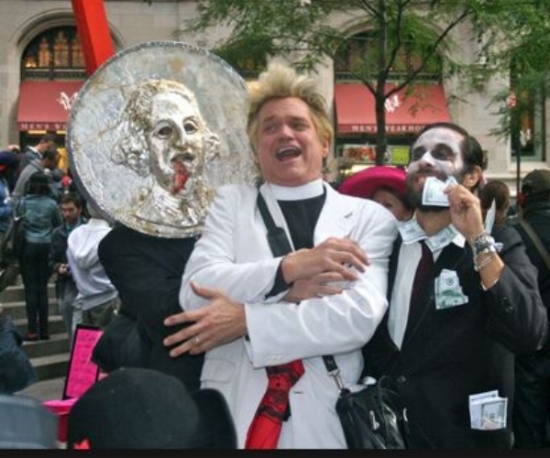
Rev Billy.JPG

New York, N.Y.—It was Saturday night. Despite the killjoy sign—"No drugs, weapons or alcohol"—the killjoy heat, the killjoy humidity, the killjoy rabble, and the killjoy location (a church!), I went in through the door. Left-wing agitators, maybe even anarchists, were in town and someone (an assignment our killjoy editor had rather discouragingly told the New York Times was the "short straw") had to keep an eye on them. But, in my Gomorrah, the city I call home, the city of Pinch Sulzberger, Al Sharpton, Susan Sarandon, and the ever-degenerate George Costanza, where to begin?

After detailed research—several minutes at least on the Internet—a meeting hosted by the Reverend Billy and his First Amendment Revival Church & Gospel Choir seemed like a good place to start. The venue, St. Mark's-in-the-Bowery, is often described, ominously, as a center for arts in the East Village, and nothing good, we know, can come from the bohemians who choose to live down there. As for Reverend Billy's topic ("prepare for nonviolent dramatic civil disobedience"), it seemed promisingly, suitably, wickedly subversive. Yes, yes, necessary disclaimer, of course such folks are not part of the Democratic mainstream, but they are, ask Howard Dean, increasingly the source of much of the party's energy, inspiration, and verve.

Needless to say, the sight inside the old church (built, interestingly, on the foundations of the chapel where Peter Stuyvesant once worshiped) was not pretty. But not for the reasons you might think. Blasphemy? It's been done before. Piercings? Who cares? Tattoos? Whatever. The glimpses of post-apocalyptic tailoring? Just local color, normal for the East Village. Worrying about those Mad Max shreds and tatters would make as much sense as going to France and being bothered by berets. Even the occasional, horrifying glimpse of Birkenstock was no great difficulty for me, a veteran of the fashion disaster that was Britain in the 1970s.

No, the problem in that room was the stink of self-righteousness, a smug fug of self-congratulation, stupidity, sanctimony, and bile. Republicans were bad, bad, bad. Ashcroft was evil, and America's rights were under siege. The Patriot Act, hiss, and the Sedition Act, boo, were two centuries apart but one and the same in their iniquity. On the Reverend's word, we raised our hands in the air, each of us clutching a little scrap of paper on which someone had typed that magic, marvelous First Amendment: "Congress shall make no law respecting an establishment of religion, or prohibiting the free exercise thereof; or abridging the freedom of speech, or of the press; or the right of the people peaceably to assemble, and to petition the Government for a redress of grievances."

Fine sentiments indeed, even if I wasn't completely convinced that all those present wanted to allow Republicans their right peaceably to assemble in a city that has, we have been told again and again, no time for them, their opinions, or their yahoo red-state sensibilities.

And as for the blonde-dyed, caustic, sarcastic Reverend Billy, he's a star (see his congregation quiver), a celebrity, a snide counterculture darling, a mall-rat Savonarola, a critic of consumerism, a parodist, a prankster, a preacher—but not, I'm afraid, a parson. Dressing up as a vic is just Billy's shtick, a pantomime pastiche as bogus as his logic is faulty, his politics are ludicrous, and his gospel choir is hot.

But if Billy was silly, he was Reverend Rationality compared with the freak show unfolding in the darkness outside. Making my way through the churchyard, over the flagstones that mark the last resting places of poor David Jones (died 1823) and lucky John Wilson (managed to hang on until 1826), past the bust of an outraged Peter Stuyvesant (if a head made of copper could scream, it would, that evening, have been screaming), past the pile of provisions and cooking utensils being assembled for the drama to come, past downtown Kropotkins and trust-fund communards, past suburban shamans and, rare authenticity, a few genuine Bowery bums, I find a large circle of people gathered around two women, shrill of voice, strident of opinion, silver of face makeup, and, well, confusing of message. These ladies' hopes of "magic action in the streets" were clear enough, sort of, but, as we all turned round and round on their shouted instructions, our hands reaching imploringly for the night sky, the "action in the center of the magic of the web" began to seem very, very murky.

And that was before someone told us that we were trees. Yes we were! The trees were rooted in the energy of the earth. We were rooted in the energy of the earth. Trees had branches. We were branches. We had to feel the energy, or something, from the Earth. The Earth, earth! An element, yes, yes, I got it. At last. Others came later. Fire, two sparklers, fizzing and spitting flame into the center of our circle and then, yes, you guessed it, water, poured and re-poured between two plastic glasses (recyclable, I'm sure). The crowd watched on, impressed, enthralled, captivated. Twelve hours later they would be marching through Manhattan because, you know, George W. Bush is, like, dumb.

The irony, I suspect, would have been lost on them.

Cage Heat

National Review Online, July 30 2004

Boston.jpg

Boston, Mass.—It was, said U.S. District Judge Douglas P. Woodlock, a man who has, quite obviously, never seen the inside of a Manhattan apartment, a "grim, mean and oppressive space," but, on a sunny Thursday afternoon, the fenced-in "cage" designed to hold demonstrators protesting at the Democratic National Convention (or, at least, haranguing the delegates as they go to and fro) is practically empty. "Pens are for animals," say the signs, but this is the pen of a Kentucky Fried Chicken's dreams, airy, spacious, an acre to roam where, what's more, the human inhabitants are, I suspect, almost all vegetarians.

Now and again, there are moments of excitement. A small group bears down on the wire barrier with bolt-cutters, bluster, and bravado. "Up with dissent, down with de fence, up with dissent down with de fence." Boston's Finest roll their eyes, smirk, and mutter into radios. Snip. Cut. Chop. More muttering into radios. Snip again, cut again, chop again, and, wild cheering, it's through to the outer boundary. Boston's Finest move in. A tussle, a scuffle, maybe an arrest. Other protesters film the struggle. News media film the protesters filming the struggle. The police prevail. The thin metal line holds. The other, licensed lunatics, the ones, you know, caged inside the Fleet Center, are safe, free to continue plotting and planning for victory unmolested, their dreams and delusions undisturbed by demonstrators.

Drama done, the cage slips back into torpor, the only sound to be heard an old sweet song, "We Shall Overcome," over and over and over again. A choir? Eager activists? No, just a guy at a podium with a cassette player and a mike. The tune echoes through the loudspeakers placed all through that empty space, loudspeakers designed for the crowd that has never turned up, loudspeakers that fail to rally the few faithful who linger and lurk, but do not deign to sing along.

Only the posters and the placards, tied to the wire, stuck to the pillars, and hanging from a gate, are doing their duty, stolidly proclaiming their message, conventional (Repeal The Patriot Act!), inspirational, (Tear Down This Wall!), insulting, and, suitably for the age of Teresa Heinz Kerry, multilingual (Democrats—No Cojones!), anarchistic (Don't Vote, It Only Encourages Them!), paranoid, (Free Speech—The Second Victim of 9/11!), surprising (Bush-Cheney 04!), adventurous (Polygamy Now!), honest (This Is A Farce!), strange (Wilderness!), and desperate (Flee The Pen!).

Those who have fled the pen can be found nearby, clad in the cranky clown costume (keffiyehs, alarming piercings, Jesse James face masks, making-a-point make-up, white man's dreadlocks) of anti-globalization street theater everywhere, as they gamely, if a little lamely (there was more enthusiastically vicious trouble later: with my usual keen journalistic instincts I had already left the scene), go through their paces beneath the indifferent gaze of the yuppies sitting in the sports bars that spill out onto the sidewalk. Drums sound, slogans are screamed and cops, stoic in that sci-fi-riot-squad gear that they wear nowadays, are taunted by those that they are sworn to protect. A solemn girl sits cross-legged in the street, wearing a gag. I'd like to ask her why, but....

Others indulge in darker mutterings, drearily familiar accusations from this country's sour, distorted foreign-policy debate, "Halliburton," "oil," and, wait for it, "lies," all make their now customary appearance. As the afternoon warms up, placards dance somewhere out there on the lunatic fringe, denouncing the wickedness of the dollar, announcing the candidacy of Nader, warning of the imminence of Hell, and, weirdly even in this company, discussing some sort of conspiracy involving Yevgeny Primakov, the former KGB agent who rose to be Yeltsin's prime minister. And let's not forget all those occupations (unless they are of Lebanon). End the occupation of Iraq! End the occupation of Palestine! End the occupation of Haiti! Yes, Haiti. Tibet, meanwhile, must be freed. Quite how, however, is not explained.

And in an era of revived, and often highly organized, protest, the activists have support people, an entourage, staff. There are "medics" with paper red crosses and healing bottles of, uh, water, and, scattered throughout the crowd and clad in a green so bright (I think) that it made me grateful to be color-blind, the "legal observers," socialist attorneys, two strikes with a third for self-importance, from the National Lawyers Guild (an "association dedicated to the need for basic change in the structure of our political and economic system") scribbling, scribbling, scribbling mysterious commentary into the notebooks that they all seem to carry.

Suddenly, there's a disturbance, photographers, police, movement. Dennis Kucinich has arrived. Sanity at last.

Well, these things are relative.

A Very Contemporary King

King Arthur

National Review Online, July 23, 2004

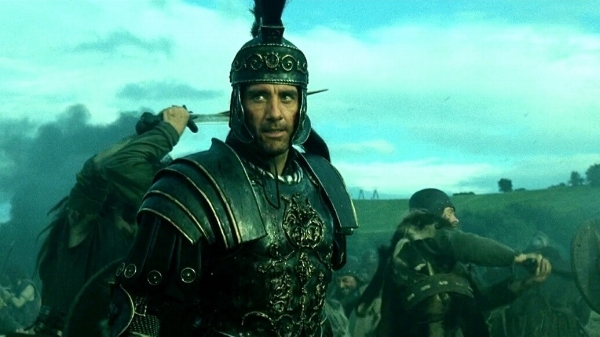
king-arthur-1.jpg

You would need to have a heart of stone to leave out the stone, but that's just what the team behind King Arthur has done. In a year of a Troy without Zeus, Antoine Fuqua has directed a King Arthur without the Lady of the Lake, Uther Pendragon, Morgana la Fey, Mordred, the Holy Grail, Camelot, Avalon, or, yes, even a stone. Not even a pebble. The rationale? Well, this new Arthur, the Roman-British Lucius Artorius Castus, complete with a glum band of Sarmatian knights (a bunch of foreigners—this Brit notes) is, supposedly, the real deal. His is the story that Thomas Malory, Geoffrey of Monmouth, Lord Tennyson, T. H. White, and all those other hacks somehow managed to overlook.

The authenticity is, of course, bogus, but then Hollywood's view of historical reality ("Oh, fight, fight, fight! That's all you ever think of, Dickie Plantagenet!" King Richard and the Crusaders (1954)) usually is. In the age of Oliver Stone, we should be grateful that the only certain Lucius Artorius Castus died no more than a couple of centuries before the events described in the film. Somewhat cautiously, John Matthews, the movie's consultant historian has, been at pains to point out that he is "not saying that the Arthur represented in the movie is 100 per cent true." Matthews is saying, however, "that he represents the Arthurian truth."

Now that that's, um, cleared up, it's still a mystery exactly why commercial filmmakers chose to rewrite a story that has, let's face it, found a pretty good audience for over 1,000 years. Was it all the chivalry that frightened Fuqua off? Check out his Sir Bors, and you might think so. In Sir Thomas Malory's 15th century telling of the tale, Bors was, well, a bit of a bore. "For all women Sir Bors was a virgin save for one, that was the daughter of King Brangoris...Save for her Sir Bors was a clean maiden." Anyone who called King Arthur's Bors a "clean maiden" would not have got out of Britannia alive. Played by the talented Ray Winstone, a former boxer, he's a genial cockney Sarmatian thug, a Dark Ages soccer hooligan, an East End Lothario with a love of birds, the bottle, and a brawl—lock, stock, and two smoking scabbards.

But there was more to Camelot than chivalry. If it was smut that Fuqua fancied, different versions of the saga have plenty to pick from, including incest, illegitimacy, adultery, date-rape Merlin-style, and, unforgettably, naughty Guinevere and her James Hewitt in shining armor. According to Malory, who had already written with some relish about Guinevere "writhing" in frustration on her bed (Lancelot had been neglecting what were meant to be, ahem, Arthur's duties), the moment that the quest for the Holy Grail had come to an end, the queen and her knight "loved together more hotter than they did [before]", so often, it seems, "that many in the court spake of it, and in especial Sir Agravain... for he was ever open-mouthed." And so, after reading that, was I.

King Arthur, by contrast, is disappointingly chaste. Lancelot and Guinevere (played by Keira Knightley as a mix of Xena, and mute, lovely Nova from Planet of the Apes) exchange a smoldering glance or two and a tender battlefield death scene, but that's it. Her relationship with Castus isn't much "hotter," catching light only at the moment that the future king pulls, not a sword out of a stone, but Guinevere's fingers out of their sockets. Even the naughty opportunity presented by the movie's setting—according to some sources, ancient Picts and Celts fought, rather perilously, one would think, in the nude—is neglected. That would, the gorgeous Knightley told the London Daily Telegraph, "have been much too distracting." Well, yes, Keira dear, it would. And that would have been a good thing. King Arthur is a movie that could use some distraction.

A more likely explanation for the decision to abandon the old, familiar narrative was the need to avoid embarrassing comparisons with John Boorman's magical Excalibur, a movie that is likely to remain the definitive Arthur for many years to come. Far easier to capitalize on the post-Gladiator boom (the screenplays for King Arthur and Gladiator were both written by David Franzoni: He's doing Hannibal next) in sword, spear, and shield epics, with a supposedly authentic reworking that conveniently brings a medieval romance back to the days of newly trendy antiquity.

As to that authenticity, I wouldn't worry too much about it. If it's ancient nits you want to pick, there are more in King Arthur than in a dirty Gaul's hair, but who cares? When it comes to the lost lord of Camelot, all claims of authenticity are spurious. We will never know who he was—or if he was. There may, once, have been a great leader whose memory survived, first as recollection, then, later as his last warriors died off, and their children, and their children's children, as a campfire saga, a winter's tale, heroic certainly, exaggerated probably, but strong enough a story that its fragments survived to inspire historians hundreds of years later, starting with Nennius, the eight-century Welsh monk who was the first to tell of Arthur, the dux bellorum, and his twelve victories over the invading Saxons.

Or possibly the great king was just a composite, a blend of the real and the imagined, Artorius and Aurelianus, Artgur, perhaps, and Arcturus too. Maybe he always was what he was to become, nothing more than a dream, a fiction, a symbol, an inspiration, a fantasy. For the truth is that the "authentic" Arthur has long been the Arthur of the myth, his tale an epic first written down in an era when the frontiers between history and legend were shifting, elusive and lacked any border guards. They told the tale of Britain's great king, and they embellished it, and they embellished it again, Welshmen, Frenchmen, Germans, Normans and, yes, even the English, all across that Christendom of castles, cathedrals and chivalry. His was a story defined by monks, explained by knights, sung by poets. He was a man of no precise era, and no exact place.

John Boorman understood this. His extraordinary, beautiful Excalibur floats between epochs. It's a requiem for the Celtic dark ages, and a medieval epic, a pagan tale and a Christian quest. There are knights, to be sure, in armor, but an armor so wonderfully strange that those who wear it transcend any fixed past and become warriors outside of time, playing out their drama against a backdrop of Wagner and Orff, as they thunder towards, to quote Tennyson, that "last dim, weird battle in the west," and a king, the king, passing beneath the setting sun.

Compared with this, Fuqua's muddy, emasculated epic comes across, well, as a little prosaic. It's nicely shot, the battle scenes work, and, even if Clive Owen's gloomy, brooding, darkly handsome Castus sometimes seems more prince of Denmark than King of Britain, he's a compelling screen presence. Pierce Brosnan, be afraid, very afraid. For an audience in the right mood (hard liquor would help), there are worse ways to spend an hour or two.

After all, King Arthur was produced by Jerry Bruckheimer and, like all the cream of the Bruckheimer crop (Top Gun! The Rock! Con Air! Armageddon!), it has moments of loopy magnificence. The problem is that this dank, damp tale of Romans, woad-daubed tribesmen, and proto-genocidal Saxons warring away in the Scottish lowlands is most effective when it refers back to the ancient, grander legend, with the knights' (oddly un-Sarmatian) names, Gawain, Galahad, Lancelot, Bors, with the roundtable at which the Sarmatians sit, or, best of all, with the moment when the young Castus pulls out the sword, Excalibur, that marks the grave of his fallen father.

The most interesting aspect of this latest version of an old, old story is the way in which, like many of the earlier retellings, it is used to reflect the values of its own time. So, for example, Arthur's wayward queen, Tennyson's "stately" monarch, is played by a somewhat feral Knightley as a girl-power Guinevere, all woad, weaponry and attitude. No wonder poor Castus spends so much of the movie looking so anxious. To add to his worries, the poor man also has to contend with the disillusioning discovery that his spiritual inspiration, Pelagius, a holy man (an authentic historical figure, really, of the right time, more or less, and the right place: he was either of British or Irish descent) has been deemed a heretic, and executed by the wicked folk in Rome.

As it happens, Pelagius's heresy seems extremely attractive (I'm no theologian, but so far as I can make out, he rejected the notion of original sin and was a fan of free will), but there's no evidence to justify his place in King Arthur or, for that matter, the report of his execution. He's probably just there for use as a fresh stick with which to beat the Catholic Church (without exception, the priests and the monks who appear in this movie are portrayed unsympathetically) as well as, post-Da Vinci Code, to throw in a fashionably alternative view of Christianity. Under these circumstances, it's no surprise that (spoiler coming, if you care) the film ends with Castus' marriage to the pagan Guinevere in a seaside Stonehenge with more than a touch of Spinal Tap about it.

Contrast that with how, in Tennyson's Idylls of the King, an earlier updating of the legend permeated with high-Victorian romanticism and unafraid of magic and mythology, the poet describes the arrival of the barge that will take the dying Arthur away to Avalon:

Then saw they how there hove a dusky barge,

Dark as a funeral scarf from stem to stern,

Beneath them; and descending they were ware

That all the decks were dense with stately forms,

Black-stoled, black-hooded, like a dream-by these

Three Queens with crowns of gold: and from them rose

A cry that shivered to the tingling stars,

And, as it were one voice, an agony

Of lamentation, like a wind that shrills

All night in a waste land, where no one comes,

Or hath come, since the making of the world.

I know which version I prefer.

Brian's Back

National Review Online, July 1 2004

Life of Brian

Life of Brian.jpg

Do you remember Brian, Brian Cohen? Yes, that Brian. You know, Monty Python's Brian, Life of. Well, 25 years on, he's back—back for his Second Coming. It has been a sly, mocking resurrection, a manifestation confined to a limited number of movie theaters, all timed to take advantage of (a little) this vintage comedy's quarter century and (a lot) Mel Gibson's startlingly savaged Savior. The Pythons themselves have been characteristically reticent about the timing of the film's re-release. Coyly, its director, Terry Jones, merely told the press that it was "just a piece of shameless commercial opportunism on our part. We were just hoping to make a quick buck on the back of Mel's Passion." Well, whatever it took, in a time marked both by the rise of superstitious belief and, worse still, an explosion of religious conflict unthinkable only a few decades ago, the return of sane, gentle Brian Cohen is good news indeed, worthy of a hymn, a hallelujah, or a hosanna or two except for the fact that—as that most modest of men used to say—he was not the Messiah: Perhaps a round of quiet applause will suffice.

It seems strange now, but when Brian's biopic was first released in the U.K., there was furious controversy, angry debate, and (wild language for amiably agnostic Albion) even talk of "blasphemy." Vicars vented, priests prattled, bishops called for a boycott, a few politicians remounted their high horses, and, chicken-hearted EMI pulled its backing (George Harrison stepped in with replacement funding).

In the land of the Pilgrim Fathers, the reaction was, predictably, even harsher. Writing recently in the Village Voice, J. Hoberman recalled how Life of Brian "scored a perfect trifecta—denounced as blasphemy by the Roman Catholic Archdiocese of New York, the Lutheran Council ('a disgraceful assault'), and the Rabbinical Alliance of America ('foul, disgusting')." The movie was picketed, banned in certain places, and, the ultimate seal of approval, condemned by Senator Strom Thurmond (a whitewashed sepulcher if ever I saw one).

The protests took their toll. On both sides of the Atlantic, cinemas hesitated over whether or not to take the film, but a decent number did the decent thing. The movie found an audience and, so far as is known, neither viewers nor projectionists nor popcorn sellers were bothered by boils, struck by lightning, or plagued by locusts, flies, frogs, or any of the other unpleasantness so often associated with annoying the Man Upstairs. Rumors that one ticket vendor was turned into a pillar of salt somewhere in the north of England can safely be discounted.

As usual, God got it right. Despite being born on the appropriate day in the appropriate town (something that briefly confused the three wise men and led to some unpleasantness over the gold, frankincense, and myrrh), Brian was, the movie makes clear, not the Messiah. He was not Him, his mother was Mandy, not Mary, and his Life was not blasphemy. Reinforcing this point, Brian is shown listening—at a distance, and with some interest—to the Sermon on the Mount. Jesus is portrayed with respect. It is only His message that gets garbled ("Blessed are the cheese makers"?) by a crowd too preoccupied by its own bickering to concentrate on what Christ had to say. Come to think of it, that scene would make a fine sermon in its own right.

This is not to claim that Life of Brian is some sort of religious tract. Far from it. If there's any type of belief that runs through the movie, it's disbelief, unbelief, a world-weary skepticism that reaches its height or its depth (take your pick) on a jam-packed Calvary with the massed ranks of the crucified singing a rousing song that, in its blend of nonchalance, nihilism, and slightly deranged Epicureanism, has few peers:

...If life seems jolly rotten

There's something you've forgotten

And that's to laugh and smile and dance and sing.

When you're feeling in the dumps

Don't be silly chumps

Just purse your lips and whistle—that's the thing.

And...always look on the bright side of life...

Always look on the light side of life...

For life is quite absurd

And death's the final word

You must always face the curtain with a bow.

Forget about your sin—give the audience a grin

Enjoy it—it's your last chance anyhow...

It has a pretty good tune too.

To be sure, Life of Brian is unlikely to make it very soon into the Vatican's video collection but, unless the Pythons' secularism is of itself "offensive," there really ought to be little in their film to annoy most people of faith—so long as they have a sense of humor, that is. The real target of the movie's satire is not religion as such, but the unholy baggage that too frequently comes with it—the credulity, the fanaticism, and that very human urge to persecute, well, someone.

Watch, for example, poor Brian as he flees Jerusalem pursued by his "disciples." His frantic attempts to deny that he is the Messiah are ignored by a crowd desperate for someone, anyone, anything, to worship, but also intent on proving their own righteousness in that most pleasurable of ways—at the expense of others. Acolytes of Brian's gourd feud with devotees of his shoe, and all indulge in the nasty joys of schism. If Ingmar Bergman had directed Life of Brian, the rest of the movie would have been a grim depiction of an even grimmer religious war, concluding, doubtless, with a bleak finale in some northern European wasteland. But as Bergman didn't, and Terry Jones did, we get a naked hermit, the "miracle" of the juniper bushes, a Pontius Pilate who can't pronounce his "r"s, and, to end it all, that surprisingly cheerful crucifixion.

But as amusing as this movie is (and it is—despite 25 years in the vaults, it stinketh not), Life of Brian is difficult to watch without a sense of sadness. At the time it was made, the Pythons' "Passion" seemed to be taking aim at a soft target. In the West, at least, centuries of superstition, intolerance, and fanaticism seemed gradually to be receding into the past, mourned by a dwindling few. The established religions appeared reconciled to a comfortable, if decreasingly prominent, niche within the secular states of the post-Enlightenment, and where the West led, the rest of the world would surely follow.

Times change. To take just a few wretched examples from the cornucopia of cant on offer on these fruited plains, the nation created by the revolution that was the Age of Reason's finest hour now finds itself lost in nonsense. It is wrapped up in the Rapture, preyed on by Gantrys, prayed at by Falwells, prayed for by Jacksons, dumbed down by creation scientists, and hectored by ranting First Amendment fundamentalists who react to a cross as if they were vampires. Oh yes, fanaticism can be secular too. Just ask the People's Front of Judea (or was it the Judean People's Front?), zealots content to leave Brian to die on the cross, a handy martyr for their cause.

And when organized religion fades, the disorganized variety rushes in. As we stumble back towards the darkness of that beckoning cave, we let ourselves be spellbound by, to take a selection, pagans, Wiccans, shamans, seers, crystal-gazers, aliens, pieces of red string, table-tappers, Gaia, suburban necromancers, sidewalk psychics, and that blend of bunkum, baloney, science fiction, and Hollywood that calls itself the "religion" of Scientology.

But above all—and compared to which those tatty idiocies are nothing but trivia—the return of militant Islam and its encroachment once more on the people and the territories of the West force us to face, yet again, the horrors of religious war, this time an onslaught from Arabia's seventh-century darkness, in which the promise of heaven will be used as a justification for true believers to create a hell on earth for all those who oppose them. In a time when young men fly planes into office buildings in the hope of earning themselves an eternity with 72 virgins, it's difficult to look at those parts of Life of Brian in which the movie played on the baroque cruelty of (what then seemed) ancient history without as much unease as amusement. The long and originally very funny sequence that culminates in John Cleese being stoned for blasphemy now conjures up images of the Taliban's bestial Kabul. Later on, we see the Judean People's Front planning to kidnap and then behead the wife of Pontius Pilate, and the bloodiness of the scheme only serves to underline the utter incompetence of the conspiracy. We laughed then, back in 1979. Beheading? Ridiculous. We don't laugh so easily in 2004. Not after Daniel Pearl. Not after Nick Berg. Not after Paul Marshall Johnson.

So, to break the mood, turn for some words of wisdom from sensible, doomed, hapless Brian. There's a lovely moment when, appalled by the spectacle of the faithful gathering beneath his window, he tells them that, "you don't need to follow me, you don't need to follow anybody. You've got to think for yourselves, you're all individuals." Simple stuff, but, these days, pretty good advice.

Even if it's not The Greatest Story Ever Told.

The Fall of Troy

Troy

National Review Online, June 2, 2004

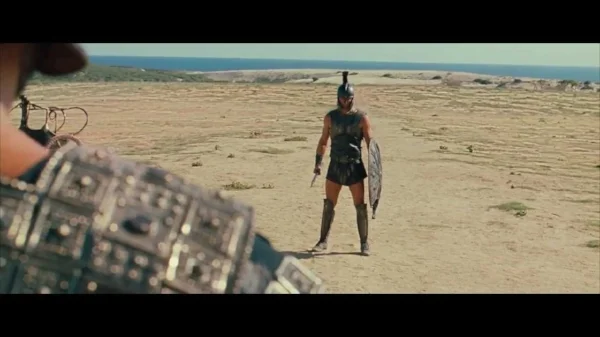
Troy.jpg

It took three movies to do justice to The Lord of the Rings, five (so far) to tell the tale of Star Wars, two to chronicle the demise of Tarantino's Bill, and three, incredibly, to give us the Matrix saga, a saga with a concept, but no plot at all. In Wolfgang Petersen's new Troy, by contrast, Homer's Iliad, a story that has endured intact for 3,000 years, one of the glories, indeed, of Western culture (or, if you are the reviewer at the Eugene, Oregon Register-Guard, "a dry classroom epic"), is sliced, diced, and distilled into blandness, all so it can fit into the confines of just one film and, presumably, rake in a buck or two. Homer's Troy took ten years to fall, Petersen's collapses in about three weeks, taking most of the ancient epic with it. There's no Cassandra, for example, and there are no gods. Achilles survives long enough to skulk inside the Trojan Horse, Ajax falls in battle rather than (the usual story) by his own hand, and Agamemnon is butchered honorably at war rather than, on his return home by, embarrassingly, his wife's boyfriend. And no, the fact that the film has a bit of the Odyssey tacked on at the end (all that business about a horse) is absolutely no compensation, particularly for those of us who were rooting for the Trojans.

But perhaps this is too harsh. It's never easy to film a much-loved classic. The very success of the original is evidence of its hold over the imagination. The dreams and the images that readers conjure up for themselves are far more powerful than anything the filmmaker can produce. There are exceptions, Jeremy Brett's Sherlock Holmes, perhaps, Schlondorff's Tin Drum, certainly, and, of course, The Lord of the Rings trilogy itself. Against that, who can forget the spectacle of all those querulous tots grumbling that the first Harry Potter movie wasn't "quite right"—even as the ungrateful little swine lined up to see it again and again and again? Adaptations are, by their nature, tricky, and whether it's Dickens or Wharton or Highsmith or Wolfe or any one of countless others, we can all think of authors badly let down by their transfer to the silver screen.

Mention of Wolfe, Tom Wolfe, suggests a kinder way to look at Petersen's epic. Measured against Wolfe's Bonfire of the Vanities, one of the greatest novels of the late 20th century, Bonfire of the Vanities (the movie) was a terrible disappointment. Seen as an entertainment in its own right, however, it really wasn't too bad. No, no, it really wasn't. Perhaps then, to be fair, we should take a step back from the blind poet and his wine-dark seas and just take a look at the merits of Troy in its own right.

Unfortunately, that won't take very long.

Troy is, let's just say this now, a bad movie. It's certainly not Gigli bad, and it's not even Van Helsing bad, but it's still bad, and, and unlike the much underrated Mummy movies (bad in a good way), it is bad in a bad way. The script is more wooden than the horse; the special effects lack the grandeur we have come to expect in our epics and Troy's gimcrack Troy looks like Rome/Babylon/Athens as re-imagined for one of Las Vegas' lesser casinos. And here's something else. One thing those ancients could do was, you know, sculpt. Well, the statues in Petersen's Troy look as if a blind man had carved them with a cheese grater, so much so that when they toppled (a moment of tragedy) it was difficult not to cheer. On the credit side, the battle sequences themselves are fine, if not Zulu, LOTR, or Private Ryan; but it is only the marvelously shot (and performed) hand-to-hand combat between Achilles and Hector that, despite its odd blend of Shaolin and Sparta, really manages to grip.

The cast? Well, leaving aside the fact that so many are blondish and blue-eyed that I kept thinking that it was the Vikings who were storming the beaches of Troy, they do their best. Eric Bana is sympathetic as Hector the prince, the brother, the husband, if slightly unconvincing as the warrior (on a $175 million budget surely the filmmakers should have been able to pull in Viggo Mortensen), Peter O'Toole is ham as much as Priam, but finely cured and well worth watching. Sean Bean (Odysseus) is terrific and much of the criticism of Orlando Bloom's weak and ineffectual Paris seems poorly judged when one remembers that, according to Homer, Paris was weak and ineffectual.

But if Paris has had a rough ride from the critics, that's nothing compared with poor Helen (Diane Kruger). Salon's Stephanie Zacharek, thought she was "pretty enough in a Darien, Connecticut, kind of way—not exactly Helen of Troy, but maybe Helen of Abercrombie & Fitch (Think of her as the face that launched 1,000 golf carts)," while Phillip French of the London Observer thought she looked "more like a waitress than a princess, less a face that launched a thousand ships than a face that served a thousand lunches." The Washington Post's Stephen Hunter rated hers "as a 457-ship face," not generous, but kinder than Slate's David Edelstein who reckoned that this Helen would only be able to raise one hundred ships, "although if you throw in that lithe body and a favorable wind, you could bump the number up to 250." Fussy, fussy, fussy. Diane Kruger is gorgeous. One thousand ships, no question. End of discussion.

And Achilles? Well, given what we know about certain nautical traditions, Brad Pitt's resplendent Achilles could probably have launched a fleet in his own right. Buff, muscled, and tough, "Rachel's" husband looks the part, every inch the warrior, even if his blond mane, mumbled diction, and somewhat simian features are more suggestive of a surf nazi than Zeus's beloved, the best of the Achaeans. Pitt's problem is not his acting, but his script. In Homer's Iliad, Achilles is the central figure around which the drama revolves. Remove too much of that original text, and there's not much of Achilles that remains.

Take the death of Patroclus, the event that brings Achilles back into the war to kill Hector. In the movie, Patroclus is Achilles's teenage protégé and cousin, close, but with nothing not to ask or not to tell about. With Achilles still sulking in his tent, the youngster takes the great man's armor, and is slain by a Hector convinced that he is battling the Greek hero himself, a sad loss to Achilles, doubtless, but one that is difficult to reconcile with the grief, rage and the revenge we are shown in Troy, a revenge that culminates in Achilles attaching Hector's corpse to his chariot, and dragging it around and around the walls of the besieged city, an outrage as much then as it would be now.

With Homer, it all makes so much more sense. Although the Greeks tended to define these matters far less rigidly than we do, Achilles and Patroclus were almost certainly lovers, and, far from being surprised that Patroclus was mistaken for him, that was exactly why Achilles lends him his armor all the while warning Patroclus not to push his luck too far, a temptation, he knew, that his friend would find hard to resist. But carried away by early victory, Patroclus ignores that advice, with terrible results. Hector kills him, strips him of his armor ,and it is only a fierce fight by the Greeks that prevents his body from being left out there for the dogs.

Now we understand Achilles's rage. It is a blend of guilt, love, and, both for him and the lost Patroclus, humiliation. Quite why Petersen chose to PG the relationship between Achilles and Patroclus is anyone's guess. Perhaps he thought that a bisexual warrior (oh yes, Achilles liked girls too. A lot.) would be bad box office in our own, more conventional, era. And it was, I suspect, also convention, and an astonishing lack of imagination, that made Petersen turn his back on the gods. He thought, he said, that they were "silly" and unnecessary to the plot. Well, there's one in the eye for the blind poet who insisted in writing the whole thing in the first place.

Except, of course, that it isn't. The gods were central not only to the arc of Homer's glorious enchantment, but to its meaning. To the Greeks fate was capricious, often unfair and frequently unkind. The good could perish miserably, and the bad could prevail. All that man could do was his best. His best hope was to be remembered well. And it is there we find the tragedy of Hector (a good man despite the rather problematic treatment of the dead Patroclus) as he does battle with Achilles, son of the sea nymph Thetis, a battle he could not win (go for the heel!), a battle against a man who was all but invulnerable (go for the heel! Go for the heel!), a man who was being helped by a goddess. And this tragedy is an echo of the tragedy that lies at the heart of the Iliad, the tragedy of the individual helpless before fate. To be sure, that's not dissimilar to the belief of modern, secular man, recognizing, at last, that we are adrift in an indifferent universe, but even that bleak view has its own bleak comforts. Our universe at least isn't out to get us. The Greeks, believing in fickle gods who turned hostile on a whim, could never be so sure.

If Petersen thinks that's "silly" he should consult Christopher Logue, the man he should have asked to be his scriptwriter. Logue, an English poet, has been working on an "account" of the Iliad for the last 40 years, an adaptation, possibly the finest ever written in the English language. And it has plenty of room for the gods:

Patroclus fought like dreaming

His head thrown back, his mouth-wide as a shrieking mask—

Sucked at the air to nourish his infuriated mind

And seemed to draw the Trojans onto him,

To lock them around his waist, red water, washed across his chest,

To lay their tired necks against his sword like birds.

—Is it a god? Divine? Needing no tenderness?—

Yet instantly they touch, he butts them,

Cuts them back:

—Kill them!

My sweet Patroclus,

—Kill them!

As many as you can,

For

Coming behind you through the dust you felt

—What was it?—felt Creation part, and then

Apollo!

Who had been patient with you

Struck.

Silly? I don't think so. Stripped of its tragic core, and its magic, its necessary, wonderful magic, this pedestrian, pointless, prosaic Troy never involves, never engages. We never care. Achilles, Paris, Hector, Helen, whatever. So, in what looks a lot like desperation, Petersen has tried to inject some invented contemporary "relevance" into a story that, properly filmed, would already have had it.

"Nothing has changed in 3,000 years. People are still using deceit to engage in wars of vengeance. Just as King Agamemnon waged what was essentially a war of conquest on the ruse of trying to rescue the beautiful Helen from the hands of the Trojans, President George W. Bush concealed his true motives for the invasion of Iraq."

Oh whatever, Wolfgang, whatever.

Crushing Mr. Creosote

National Review Online, April 29, 2004

Soso Whaley
Soso Whaley

Soso Whaley is a feisty not quite fiftysomething animal trainer based in New Hampshire, a champion roller skater (a silver medal for her tango!), the hostess of Camo-Country TV's Critter Corner and an adjunct fellow at the Competitive Enterprise Institute, a free-market think tank. (Oh, did I mention that she's a filmmaker with plans to make a documentary about camel-racing in Nevada?) When we ate together the day before Tax Day, in a drably functional midtown Manhattan McDonald's Express filled with surprisingly skinny teens, this is what she chose: six Chicken McNuggets, sweet 'n sour sauce, and two baked apple pies (one for later).

This April that's not unusual fare for Soso. She's eating at McDonald's a lot this month. In fact, she's only eating McDonald's this month. By the 14th, she had dined (I've seen the pile of receipts, neatly collected, dated, and filed) on Crispy Chicken; Chicken McNuggets (six-pack and ten); Chicken McGrill; McChicken; for a touch of the exotic, Hot 'n Spicy McChicken; and, in a welcome break for the nation's poultry, hamburger, double cheeseburger, Quarter Pounder with Cheese, Big Mac, Big N' Tasty with Cheese (no, I have no idea what that is), and Filet-O-Fish; Egg McMuffin, a bewildering selection of McGriddles (bacon, egg and cheese; sausage, egg, and cheese; and the ascetic sausage alone), hash browns, hotcakes, the wildly multicultural sausage breakfast burrito, Fruit 'n Yogurt Parfait ("I love that," sighs Soso), hot fudge sundae, a flurry of McFlurries (Butterfinger, M&M, Oreo—the Nestle Crunch is yet to come) and much, much more.

And, she says, she's feeling "great" (her diary can be viewed on the Competitive Enterprise Institute's website), and she's lost weight (around five pounds by the time we met). Poor, sad Morgan Spurlock didn't do quite so well. Around 20 years younger than Soso, this tall, seemingly robust New Yorker also spent a month eating only at McDonald's and made Super Size Me, a film about the experience. The movie looks as if it will do well, but Spurlock did badly, very badly.

Neither Soso nor I know exactly what Spurlock ate (Super Size Me comes out on May 7), but, as he has described them in numerous interviews, the results were nastier than a four-day-old Bacon Ranch Salad: headaches, vomiting, depression, a super-sized gut and—sad, sad news for his girlfriend (a vegan chef, conspiracy theorists please note)—a shrunken libido. The numbers tell their own terrible story. Spurlock gained 25 pounds and his cholesterol soared (from a modest 165 to a more challenging 230). His body "basically fell apart over the course of thirty days." His face—oh the horror, the horror—turned "splotchy," his knees "started to hurt from the extra weight coming on so quickly," and as for his liver, well, don't ask. O.K., you can ask. Spurlock's liver had, in the less than reassuring words of his doctor, "turned into paté."

Soso, by contrast, is made of sterner, more stoic stuff, a daughter of Eisenhower's Kansas, a creation of a sterner, more stoic time, a woman, I can report, whose face is splotch-free. Our lunch together was marred neither by vomiting, nor depression, nor headaches, and the "gas" that had been a rather distressing feature ("all that extra fiber") of the early days of her McDonald's diet had, mercifully, disappeared. Questions about her sex drive were met with a wry chuckle. This robust Heartland heroine, "a meat and potatoes gal," has even survived a few rounds with Hell's tubers, McDonald's revolting French fries, themselves. "Oh, they're OK," said Soso, smiling over her pile of McNuggets, but she didn't, I noticed, order any fries.

So what was Spurlock's problem? Could it have been something he ate? On his movie's website, Spurlock sets out the ground rules. He was to subsist only on McDonald's products, he had to eat every item on the menu at least once, but he was not allowed to choose Super-sized portions unless they were offered, in which case he had to accept them. More challenging still, his plate or, as we are talking McDonald's, his tray, had to be scraped clean. Completely clean.

And when it comes to his movie, many critics have, appropriately enough, lapped it up. Ebert & Roeper gave Super Size Me "two thumbs up", while Variety found it an "entertaining, gross-out cautionary tale" that "leaves little doubt that eating this stuff on a regular (or even occasional) basis is bad, bad, bad for ya." To the New York Times it was one of a clutch of "entertaining, moving and historically significant" movies at this year's Sundance Film Festival, a festival where Spurlock won the award for best director for what The Hollywood Reporter has dubbed his "brilliantly subversive" work.

Subversive? Hardly. Fashionable? Certainly. Blaming "Big Food" for America's big people is merely the Left's latest big lie. For real rebellion, try Soso. She's an autodidact, an individualist, a contrarian, an ornery soul, someone who likes to find stuff out for herself. "I understood I was being misinformed by the media and that made me mad." It began with animal rights. Soso's work with our furry friends led her to question the frequently uncritical acceptance of the stories being peddled by the likes of PETA, and from there it was a short jump to doubting the gimcrack orthodoxies of "global warming" and after that, provoked by the hype surrounding Super Size Me, a date with destiny under the golden arches.

Spurlock shot a movie about his time at McDonald's, and now Soso is shooting a movie about hers. "Spurlock made his film to make his point and I'm making my film to make mine." The Competitive Enterprise Institute is helping with the publicity, but other than that, Soso has kept her independence. McDonald's has no involvement in her project (and, I was told, is not a CEI donor). When Soso buys a bacon, egg & cheese McGriddle she does so on her own dime.

Soso's ground rules were similar to Spurlock's, but without the compulsory super-sizing, the obligation to finish everything up or, most importantly, the intention of eating, as Soso has put it, "like a troglodyte." She's got a point. Condemning McDonald's on the basis of the kamikaze consumption of Super Size Me makes about as much sense as using Monty Python's Mr. Creosote as an example of typical restaurant dining. Spurlock's bizarre breakfasts, lunatic lunches, and demented dinners added up to some 5,000 calories a day, freak-show feasting that proves nothing about McDonald's. It wasn't what the greedy slob ate, but how much.

Soso feeds where Spurlock fed, but her more modest meals are amounting to a little less than 2,000 calories a day, a still far-from-frugal discipline that leaves room for cheeseburgers, choice, and Fruit 'n Yogurt Parfait. In some ways, it can be argued that her new diet has been an improvement over the old, not much of a feat given its emphasis (the Portsmouth, N.H., Herald reported, a touch disapprovingly) on "lots of meat and too many on-the-go meals like candy bars and doughnuts," something that may have contributed to the rather disappointing cholesterol count with which Soso began the month.

Above all, Soso's long march through Mickey D's menu is an effective demonstration that maligning McDonald's as one uniquely lethal food group is ridiculous in an age when its restaurants offer far more variety than in the past. There's green in those golden arches. Vegetables have been spotted! And by vegetables I don't mean either the wrecks of a Russet that the burger chain calls "fries" or, for that matter, the people prepared to eat them. McDonald's sells salads, lots of them. Two weeks into her big adventure, Soso had already chowed down on side salad, and, scourge of the henhouse that she is, Bacon Ranch Salad with Grilled Chicken, Caesar Salad with Crispy Chicken, and the California Cobb Salad.

But there's no need to feel guilty about sucking down a few burgers as well. They too can be part of a balanced diet, "it's food," adds Soso. "Food is food. Don't eat too much." People, she argues, need to think about what they eat, and then take responsibility for the consequences. Some exercise would also help. "It's just too easy to blame McDonald's."

Not any more.

++++++

Soso went on to make a splendid film,  "Mickey D and Me", about her experience. I appear briefly in the course of this segment. 

Goodbye to All That

National Review Online, April 27, 2004

Irish Pub.jpg

They banned Ulysses, the authorities did, they banned it as "obscene" in Britain, and they banned it as obscene in America, and they banned it as obscene just about anywhere else where English speakers could be shocked, offended, or otherwise appalled by James Joyce's strange, lovely mix of prose poetry, incomprehensibility, genius, and naughty talk. That was then. Nowadays, Leopold Bloom's Dublin odyssey is revered, a masterpiece, a monument, a part of our high culture, but its author would still be in trouble. Not for his book, but for his lunch. Times and taboos change, but killjoys and scolds do not.

Joyce used to eat in Davy Byrne's pub, a meal he later bequeathed to Bloom, a Gorgonzola sandwich, a glass of burgundy and a cigarette. The sandwich? No problem, so long as the cheese had been labeled as required by EU regulations. The Burgundy? Well, "glowing wine on his palate lingered swallowed. Crushing in the winepress grapes of Burgundy. Sun's heat it is." Who's going to argue with that? Not you, not me, not even Brussels. But that cigarette, oh dear, that cigarette.

Since late March, those addictive little sticks of dangerous delight been banned from Davy Byrne's, and every other pub in Ireland. They've been banned in restaurants, they've been banned in offices, they've been banned in factories and they've been banned just about anywhere else the Irish government considers a workplace, even banned, let Willy Loman howl, in company cars. There are exceptions, but most of them are not a lot of fun—prisons, nunneries, the Central Mental Hospital in Dundrum and, with grim, but kindly logic, hospices.

And Micheal Martin, the instigator of the ban? He's the typographically challenging busybody-in-chief, a bore, and a smug, self-righteous zealot. His one experience of a cigarette, as a foolish "teenager" naturally, was "disgusting." While he may have a drink now and then, he never, never gets "tipsy." Of course he doesn't. He's too busy planning his next crusade, pondering ways to restrict the advertising of alcohol. And when he's done thinking about that, this nanny, this ninny, this drone, this nosey, hectoring clown is "very tentatively" mulling a fat tax. Ireland's tragedy is that this monstrous figure has the job of his dreams—and everybody else's nightmares. By being appointed Ireland's Minister for Health and, wait for it, "Children," Martin was given a blank check for bossiness. On January 30, 2003, he cashed it.

On that dark day, Martin made a speech. Citing the findings of an "independent scientific working group," he announced that, "on the best of international scientific evidence...there is harm in Environmental Tobacco Smoke. Proven harm about which there is not only a consensus in the worldwide scientific community, but a significant substantial consensus." What's the difference between a "significant substantial" consensus and an ordinary consensus? Who knows? All we do know is that the Martin consensus evidently does not include all that awkward, inconvenient research showing that the health effect of passive smoking on adults is minimal, nonexistent, or statistically irrelevant. That data does not count.

And while we're talking data, let's chat about dosage. A substance can be perfectly safe, even good for you, in low quantities, but lethal in large amounts. Martin has no time for such quibbling. So far as this Einstein, this Galileo, this prince of precision, was concerned, all that we simpletons needed to be told was that in a smoky room, we'd be breathing in "a load of" dangerous chemicals that "do us enormous damage." This horrifying state of affairs had, Martin explained, led him to take "radical new measures.... I'm banning smoking in the workplace...I am publishing draft regulations.... I'm doing this because—as this report makes inescapably clear—I have no choice. There is no other option open to me...as you know, I've already taken a number of initiatives to reduce tobacco consumption...I've raised the age limit for buying tobacco.... I've stopped tobacco advertising in newspapers and magazines.... I believe that in every decade, we are presented with one major choice where...we change the future for the better.... I'm making the call the way it must be made."

"I", "I", "I", "I", "me", "I", "I", "I", "I", "I". Did I mention that our Mr. Martin is a tad self-important?

To be fair, there wasn't a lot of "we" about it. Martin may have had "no choice," but nor did members of the Irish parliament, let alone their electors. There was no vote approving the ban. The minister simply exercised the discretion given to him by an earlier piece of legislation. It's a well-known trick to anyone familiar with the way that the EU imposes its rules and in a way, that's only fitting. For while, behind the (forgive the phrase) smokescreen of healthcare concern, the real motives behind this move include Martin's ego and the uncontrollable urge of politicians to control their fellow citizens, one critical additional element has been the Irish establishment's determination to prove to the outside world how their country is modern, "European," Communautaire, international.

Turn again to that January 30 speech, with its reference to consensus in "the worldwide scientific community", the "best of international scientific evidence and to "the use of internationally recognized experts on tobacco control." A year later, Martin was boasting (not inaccurately) that his initiative had triggered "significant momentum across Europe." Foreigners impressed! That's what counted. The ban he had earlier described as "a massive cultural change" was (the Belfast News Letter reported) marking Ireland out as a "forward-thinking, modern society." "Ireland had," Martin said, "transformed itself in many ways over the last decade...Irish people have demonstrated their capacity to change and to adapt." Indeed they have, but as anyone familiar with the destruction of Georgian Dublin will know, unthinking modernization, or what passes for modernization, can come at a high price.

Writing in the London Independent late last year, a journalist recalled walking one rainy day into a pub in County Clare:

"A warm miasma...reached over and enfolded us in its arms. It was a heady mélange of smells—of burning turf and spilt beer, of mushroom soup and cigarette smoke and wet tweed slowly drying...The atmosphere was extraordinary—thick and savory and textured, like anchovy toast, like the barmbrack spread with butter that my aunt gave us every teatime. The embracing fog of fragrances was practically visible in the fumes that rose to the murky ceiling from every corner of the room. Fumes of sweet turf-smoke, fumes from our drying clothes, fumes of burning tobacco and exhaled smoke, all of it drifting lazily upward like a sacrifice to the household gods. We stuck around. What else could you do?"

History be hanged. In Micheal Martin's antiseptic, go-ahead Celtic tiger there can be no place for messy, awkward anachronisms such as the fug, the fellowship and the fumes of a country pub on a rainy day. The much-heralded choice, 'diversity' and openness of the New Ireland do not, it turns out, mean very much. If, as is always claimed, most drinkers prefer no-smoking pubs, then the market should be left to provide them with that choice. To argue that some supposed fundamental freedom to hang out in a smoke-free bar means that all pubs have to renounce tobacco is to make a mockery of liberty in a country where generations fought, and died, for the real thing.

You'd think that, in the land of craic, cussedness, conflict, and Cuchulain that there would have been more opposition, but while there was some grumbling, some debate, some jeering, only the splendid Deirdre Healy of John Player & Sons (the manufacturers of Eire's most popular cigarette) struck a note that, in its defiance and its poetry was, somehow, very, very Irish. The impact of the ban on her company's business would, said this warrior queen, be no more than "a slap in the face from a butterfly's wings."

Some butterfly, some wings. Prohibition has been introduced, on schedule and on the lines that Martin wanted. Worse still, like so much nanny state nagging, the new law seems to have been accepted, something that was even acknowledged by two visiting statesmen, two giants of our time, Gerrit Zalm, Holland's finance minister, and Jean-Claude Juncker, the premier of mighty Luxembourg. The two men were in Ireland for an EU summit and, in what was possibly the most supine diplomatic gesture seen in Europe since Neville Chamberlain boarded that plane to Munich, they smoked their cigarettes out in the cold.

But, in Ireland's worst moments a hero usually emerges to inspire, enchant, and Irish history being what it is, come to an unfortunate end. On March 30, John Deasy, a member of the Irish parliament, did just that. He committed an unthinkable act in one of the Dail's bars. He smoked not one cigarette, but three (some say two). The whole story remains, so to speak, cloudy, but it appears that Deasy first asked for a fire door to be opened so he could step outside into an alleyway. Request denied! It had not yet been designated a smoking area (it has now—too late for Deasy). Thwarted, the MP remained at the bar, enjoyed his three (or was it two?) cigarettes regardless, washed down, quite possibly, with three pints of beer (whether the barman served this outlaw, this smoker, is still under investigation). Retribution was inevitable. In Micheal Martin's Ireland, such open defiance could not be left unpunished.

And it wasn't. These days there's no smoking without a firing. Deasy was promptly removed as Fine Gael's justice spokesman. More was to come. On April 13 this wretch, this reprobate, this renegade, this rebel, was questioned for half an hour by officers from Dublin's feared South West Area Health Board. He runs the risk of prosecution and a fine of over $3,000. Yes, yes, yes, I know. As an MP, let alone a justice spokesman, Deasy should, of course, have complied with the law (which, disgracefully, he had done nothing before to oppose). But, when you read how this freedom fighter has refused to apologize and, better still, has told the media ("a bunch of hypocrites") to take "a running jump," it's impossible not to cheer.

James Joyce, I suspect, would have felt the same way.