Friends Let Friends Brexit

The Weekly Standard, March 21, 2016

Anglo-America Flags.png

Complacency, laziness, or a simple failure to keep up can reduce foreign policy to a habit, unexamined and out of date. The United States traditionally smiled on the idea of tighter European integration. Binding the nations of Western Europe more closely together would bolster them against Soviet expansionism and render them less likely to fall out (yet again) among themselves, the latter a pastime that tended to cost American lives. British membership in what became the European Union (the U.K. joined in 1973) was supported by Uncle Sam, not least because the Brits could be expected to push the nascent bloc in a more Atlanticist direction, politically and economically.

Against that historical backdrop, there is nothing surprising about the increasingly tough line taken by the Obama administration against "Brexit"— a vote by the British people to exit the EU in a referendum to be held on June 23. The president has long made known his preference for "a strong U.K. in a strong European Union." And preference may be too weak a word. In 2013 the State Department's Philip Gordon explained that British membership in the EU was "essential and critical to the United States." It's neither.

As referendum day approaches, the administration's tone has become a tad menacing. Speaking last October, America's senior trade diplomat, Michael Froman (who worked as a trainee at the European Commission years before), warned that Washington would not put much priority on a free trade deal with a post-Brexit Britain. Being one of America's closest allies and the fifth-largest economy in the world apparently doesn't count for much.

Meanwhile, according to the chairman of the Senate Foreign Relations Committee, President Obama is planning a "big, public reach-out" to mutinous Brits in the near future. Some tact might be worth a try.

Again, seen against the historical background, there's nothing very unusual about all this. Seen against contemporary reality, however, it looks overwrought. The administration's starting point, one must assume, is concern that Brexit would do serious harm to the rest of the EU. That's not likely, but even if it were a real risk, a glance at the calendar should avert panic. It is not 1914 and, despite its vanity and that nutty Nobel Prize, the EU is not the guarantor of European peace. Nor is it 1980: The Soviet threat is history.

And nasty Vlad Putin? Well, pushing the EU's "ever closer union" far beyond where it was prudent to go, whether with the euro or recklessly loose immigration policies, has created the conditions in which extremism can thrive, conditions the Kremlin has not been slow to exploit. Old ghosts are stirring across the continent and Putin, getting pally with a Le Pen and chummy with a Syriza, is only too pleased to rile them up. In this respect, the EU has been a problem, not a solution.

For all the troubles set in motion by the EU's surfeit of ambition, there are few signs that it is prepared to change course. The default answer, whether in Brussels or Berlin, to the union's mainly self-inflicted woes continues to be "more Europe" — at the Greek border, in the finance ministries of the eurozone, everywhere. The dream of a new kind of "empire" (to borrow the word used by former European Commission president José Manuel Barroso) is alive if not well. And — let's not forget — in this dream the EU stars as a challenger to the colossus across the ocean, both in the way it runs itself (no Anglo-Saxon capitalism, merci!) and internationally.

This goal matters more than it once did, and much more than the U.S. foreign policy establishment seems willing to recognize. Despite its current difficulties, the EU is far more formidable than two or three decades ago: Its reach has stretched both within its borders and beyond. There is already an EU "foreign minister." Angela Merkel has in the past expressed interest in a European army. That could evolve into a curb on the ability of more confident powers (Britain and France, say) to take independent action and in any event would be an unwelcome distraction from NATO.

The best guess is that Brexit would leave the EU somewhat shrunk but essentially unscathed. There will be no great unraveling. For Washington to oppose Brexit for fear it might dent the (now destabilizing and destructive) progress of "ever closer union" makes no sense. Such an outcome is improbable, but it would be a feature, not a bug.

And the argument that the United States should encourage the U.K. to stay in to act as a brake on the EU's long march towards Barroso's empire overlooks the fact that the time when the U.K. could alter the EU's trajectory has passed. In the 1980s the EU turned towards economic liberalization in a manner unthinkable to its dirigiste founders, largely thanks to the U.K. and more specifically the influence of Thatcherism, then at its peak. A decade or so later, British pressure played a significant part in the EU's expansion into lands that Moscow once controlled. That helped anchor much of Eastern Europe in the West, a development that Washington had every reason to celebrate.

But these successes were the product of a specific time and—in those halcyon days between the collapse of communism and the collapse of Lehman Brothers—a specific ideological moment. Mrs. Thatcher is no more, and the behavior of some of her successors is a reminder that Washington cannot assume a British government will be as in tune with American economic and political thinking as was the case during the Reagan years. What's more, Britain now represents a smaller part of a larger union from which the wise decision to keep clear of the euro has left it semi-detached, although not detached enough. Its ability to nudge the EU along a more America-friendly path is not what it was.

While the U.K. finds it more difficult to influence the EU, the EU is busy reshaping the U.K. This is more than the cumulative effect of all the powers that have been transferred from London to Brussels over the years. It also reflects the passing of time, shifting demographics, and what people have become used to: 1973 was an eon ago. Younger Brits feel more "European" than their elders. June 23 may well be the Brexiteers' last chance to get their country out — and back. A recent YouGov poll showed 63 percent of those between the ages of 18 and 29 wanting to remain in the EU; 56 percent of those over 60 thought the U.K. should quit. The understanding of what it means to be British is changing, a transformation that is eroding the old instinctive, if sometimes patchy, Atlanticism of this country's closest and most reliable European ally. That's a transformation that will gather pace if Britain remains in the EU, and it's a transformation that the United States should not want to see.

By contrast, the possibility of a very different transformation in the way the British Isles are run may offer a sounder basis for American opposition to Brexit. There is an obvious danger that the U.K.'s departure from the EU might provoke the departure of (relatively Europhile) Scotland from the U.K. The broader consequences of that are as misty as a Highland glen, but the prospect of the Scottish National party— a party only reluctantly committed to NATO — running an independent Scotland won't thrill the Pentagon. On the other hand, even if Britain remains in the EU, the chances of Scotland's eventually going its own way — particularly if oil prices revive — already appear to be high. In that event, all that Brexit will do is speed things up. That said, the uncertainty that will inevitably follow Britain's break with Brussels might persuade nervous Scots that they would rather stick with the auld devil they know, especially as a tartan return to the European fold is far from guaranteed. Spain, mindful of restless Catalonia, would not endorse a precedent that made it easy for secessionist states to "rejoin" the EU.

Then there's the economy. If the U.K. opts for Brexit (still unlikely, I reckon), it will make for a choppy June 24 in the financial markets. And not just June 24.

But hysteria is what markets do. Britain could flourish outside the EU. It could not, however, afford to ignore its ex over the water. The U.K. may have to accept a closer relationship with the EU (perhaps something akin to the status enjoyed by Norway in the European Economic Area) than many Brexiteers would like. For its part, Brussels will need to remember how good a market Britain is for the EU's exporters. It will have to rein in a natural inclination to "punish" the Brits, an inclination sharpened by paranoia that too smooth a separation might tempt others to stray. But the alternative would damage both the U.K. and its former EU partners.

Encouraging the two sides to agree to a velvet divorce might be the next occasion on which Washington has to rescue Europe from itself.

What did “Super Tuesday” tell us about the Presidential election?

Prospect, March 2, 2016

New York City, March 2016 © Andrew Stuttaford

New York City, March 2016 © Andrew Stuttaford

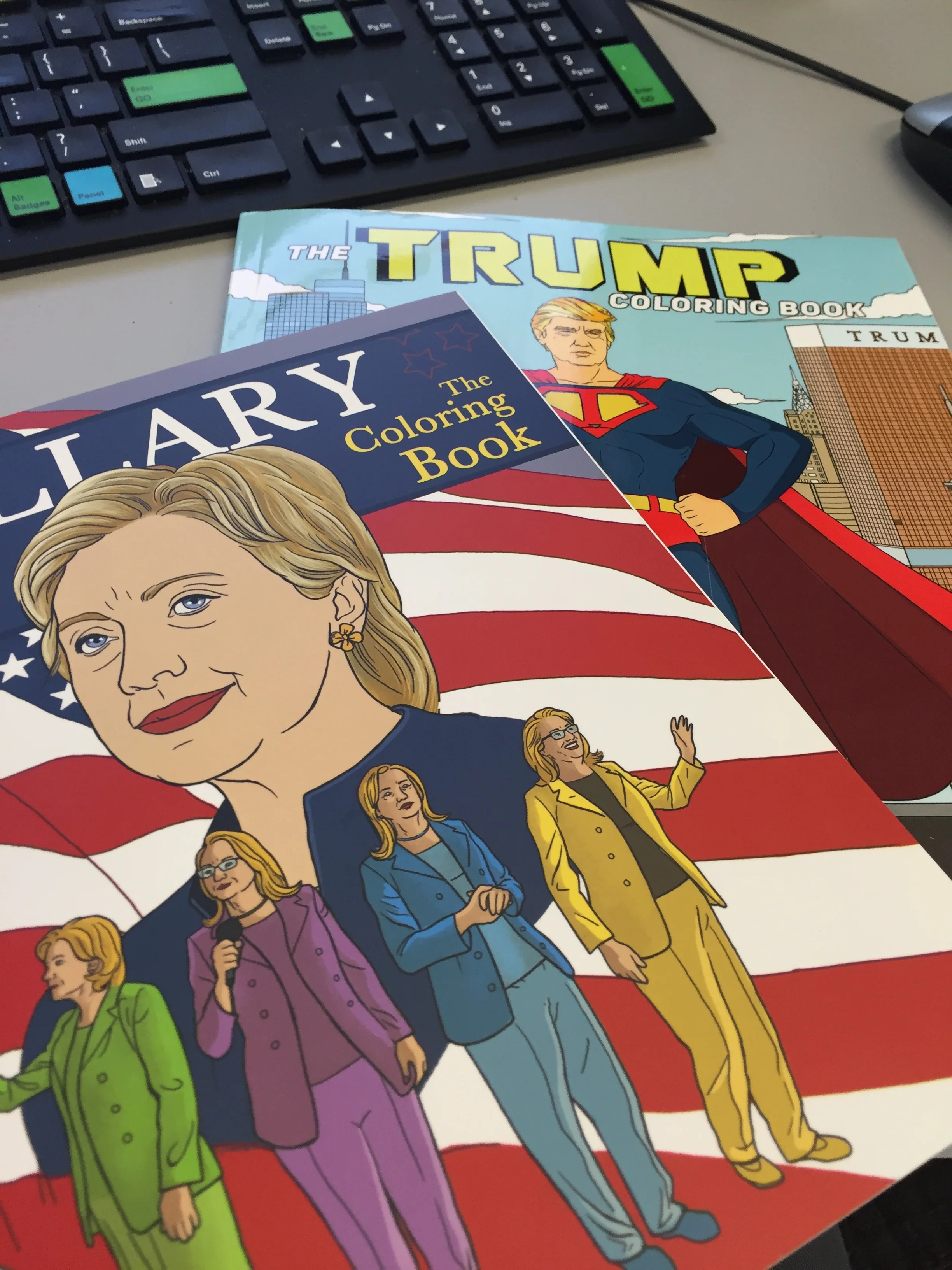
Let’s get the easy stuff out of the way. Hillary Clinton had a good night, stumbling in places where she was expected to stumble: Colorado, and also Vermont, where Sanders is the junior senator. But benefiting from solid African-American support in the south and snatching a significant victory over Sanders in Massachusetts, just across the Vermont border. Senator Sanders is not going to give up his quest any time soon, but, in the absence of an indictment arising out of Clinton’s email adventures, Hillary looks well set to take the Democratic nomination in due course. That there has been any doubt about that, and that America’s Corbyn was the source of that doubt, says something about the unsettled mood of the American electorate.

And that brings me to the Republicans. There was no fresh earthquake, but the aftershocks of what had already hit the GOP were only marginally less devastating. Trump romped home in a series of victories that would have been unthinkable just a few months ago. But the Republican establishment can take a few crumbs of comfort from the fact that The Donald’s triumph was not quite as complete as some were beginning to anticipate. Averaged across the twelve states, percentage-wise he scored in the mid-thirties. Impressive, but far below the 49 percent he took in a recent CNN poll of Republican voters. His delegate haul—less than half those up for grabs on Tuesday—fell short too: Trump’s path to the magic 1,237 (the number of delegates required to secure the nomination) is not clear yet.

Building on earlier success in Iowa, Ted Cruz, the junior senator from Texas, prevailed in his state, in Oklahoma next door and Alaska. Cruz is a hardliner, clever, abrasive and don’t-you-forget-it devout. He has craftily reinvented himself as an outsider despite Princeton, Harvard, an impressive legal career, a seat in the senate and a wife who works at Goldman Sachs. But he is only the junior outsider, outranked in the wilderness by a billionaire, and, currently running second to Trump in the delegate count, he may end up the insider candidate who leads the last stand against Trump—who runs him closest at the end.

But most of the Republican establishment would rather work with the more emollient Marco Rubio, a senator from Florida and and the Republican most likely to beat Hillary. Once again, Rubio failed to live up to his advance billing, but he managed to win in Minnesota and—an achievement these days—ran Trump close in Virginia. Overall, however, he was outscored on Tuesday by Cruz and a loss to Trump in the Florida primary on 15th March would be a blow from which he would probably not recover. But for now he’s very much in the race. His problem is that so is Cruz.

If we ignore (as we should) retired neurosurgeon Ben Carson, plugging on despite poor results for self-promotional reasons of his own, that leaves Ohio governor John Kasich, now positioning himself as a moderate of sorts and (although he denies it) as someone’s vice presidential pick. His results did not amount to a great deal, but he only fell a few percentage points behind Trump in Vermont and he came close to respectability in Massachusetts. That was enough. He’s not pulling out yet.

So what’s next? Trump, who has long since transcended what were thought to be the rules of the American political game, will sweep on through outrage and gaffes, the strong favourite to win the GOP nomination and the strong favourite to lose against Hillary. Republicans who oppose Trump are focusing on his failure (to date) to win over more than half of their voters. Their best hope is that the non-Trump forces can coalesce behind one credible champion—Rubio, preferably, or Cruz—in sufficient numbers to put to a stop to a momentum driven by forces much greater than any of the candidates in this race. Failing that, they have to pray that, between them, Rubio, Cruz, Kasich and the good doctor can amass sufficient delegates to take the fight against Trump all the way to the Republican convention in July. Yes, these are long shots, very long shots.

Meanwhile, Hillary is measuring the drapes for the White House.

Not Too Tricky To Be Ike's Veep

Irwin F. Gellman: The President and the Apprentice - Eisenhower and Nixon, 1952-1961

Standpoint, March 1, 2016

eisenhower-and-nixon.jpg

The thing about “archive rats”, to borrow Stalin’s useful insult, is that they unearth facts that unsettle the authorised version of history. It’s a label that Nixon scholar Irwin Gellman can wear with pride. He has been burrowing in the archives for decades in obvious places (the National Archive, the Nixon Library), overlooked places (the Cabot Lodge papers), and in places (he none too subtly implies) that other historians could not be bothered to inspect — every one of the approximately 845 boxes of the “largest part of the Nixon manuscripts, called the 320 series”. 

The result is The President and the Apprentice, a somewhat obsessive, intriguingly contrarian retelling of the story of Nixon and the Eisenhower presidency. Traditionally, Eisenhower’s time in office has been regarded as a wasted opportunity, only partly redeemed by the supposed disdain he felt for his vice-president, Richard Nixon. More recently, academics have been re-rating Ike (it probably helped that doing so made his Republican successors look bad) but that re-rating has yet to percolate through to a popular consensus still shaped by dim memories of high-school history lessons and, more vividly, media depictions of Eisenhower’s America as a land that progress forgot.

Nixon has also benefited, to a degree, both from the attention of revisionist historians and the passing of the decades since his disgrace. His funeral was attended by President Clinton and all his surviving predecessors (Clinton was representing, he declared, “a grateful nation”). For all that, to most Americans Tricky Dick remains a President Evil, snarling while he plots dark deeds and incriminating tapes whir. He has never been forgiven by liberal opinion-formers for his role in exposing the traitor Alger Hiss (“vindicated” again, I note, in a book published last autumn).  Nor have they forgiven him for his style — or styles, all those “new Nixons” — for his abrasiveness, his awkwardness, his embarrassingly obvious striving and, worst of all, for a series of election victories that announced that America was more like him than them.

Even those historians willing to look beyond the standard caricatures of this complicated man’s complicated career have struggled to put Nixon’s relationship with Eisenhower in a positive light, something that Mr Gellman, previously the author of The Contender, an account of Nixon’s Congressional career, sets out to correct. This is no hagiography; it is a scholarly work, but a combative one too. Reinforced by what he has mined from all those archives, Gellman debunks myths, he challenges the comfortably liberal narrative, and when people have lied he says so. Nixon was brought down by his lies, but to no small extent his reputation has been trashed by the lies of others. To take just one: No, Mr Truman, he didn’t call you a traitor.

While The President and the Apprentice leaves a generally favourable impression of the Eisenhower administration, it is not a broad rethink of this already rethought presidency. It is too narrowly focused on the Nixon vice-presidency for that. But Gellman does attempt to address what has become a central criticism of those years: that Eisenhower did too little too slowly to come to the help of African-Americans, at the wrong end of institutionalised racism across the country and, in the South, victims of something very much worse. Nixon, whatever his private thoughts on racial matters (the much later White House tapes do not make pretty listening in this respect), had no time for Jim Crow, segregation, or the petty (and not so petty) viciousness of the racial discrimination of the era. And nor, despite some attitudes that might dismay in 2016 (as a father, he would not have been too happy to discover who was coming to dinner) did Eisenhower, a man, it must be remembered, brought up in turn of the 20th century Kansas. That said, even allowing for a difficult political environment, the duo’s reluctance to make more use of the bully pulpit in support of civil rights must count against them. And their hopes that changing attitudes and improved African-American access to the voting booth would be enough to do the trick were at best wishful thinking.

True to form, Gellman does not let the Democrats off the hook, highlighting what was once in plain sight, but is now often consigned to the memory hole. Democrats did much to obstruct and (in LBJ’s case, for a characteristically calculated blend of reasons) dilute the 1957 Civil Rights Act, the first legislation of its kind since 1875. This was a reflection of the priorities of their southern redoubt, as was the unwillingness of many Democrats (including, Gellman points out, both JFK and LBJ) to offer public support for Eisenhower’s decision to send in the army to enforce the integration of Little Rock Central High School, Arkansas.

To be sure, President Truman ordered the desegregation of the military (although it was the Eisenhower administration that essentially implemented it), but, after reading this book it’s hard to deny that Truman, later an opponent of the sit-ins at segregated lunch counters (organised by “Communists”, apparently), and no stranger to the N-word, has been credited too much, and Eisenhower too little, for what they each did to push the US further down the long march to racial equality, an imbalance that, of course, fits all too neatly into the historical perspective of the American Left.

To FDR’s first Veep, “Cactus Jack” Garner, the vice-presidency was “not worth a bucket of warm piss”, but Gellman makes a strong case that Nixon made far more of this unloved position than might have been expected. He was not any sort of co-executive; the Dick Cheney vice-presidency lay far in the future. But he was valued for his contribution to, and coolly objective analysis of, the frequently rough political scene at home (a melée that the grand old general preferred to be seen to soar above, but understood enough about to know — usually — what he didn’t know) and, as the years passed, also for his thoughts on abroad. Nixon was, so to speak, a youthful understudy whom Ike (conscious of how ill-prepared Truman had been when he took over from FDR) felt a patriotic obligation to train, but he was also a real force within the White House, given real jobs to do.

Not unreasonably, Gellman sees this as proof of the faith that, particularly in the second term, Ike put in Nixon: “The president gave assignments to those he trusted, and he trusted Nixon.” That’s true, but, in the case of Eisenhower, cold behind that five-star beam, that word “trust” should be read as conveying a faith in Nixon’s competence rather than anything with more emotional resonance. Gellman backs up his more upbeat take on the relationship between president and vice-president with a series of letters and obiter dicta from Eisenhower signalling the respect and affection the president had for Nixon. Maybe, but they can also be interpreted as pats on the head for a promising young subordinate by a man who knew how to motivate those under him. And Gellman cannot avoid the reality that Eisenhower let Nixon twist in the wind, not once, but twice. 

The first time was when, during the 1952 election, a scandal blew up over a fund that had been raised by some Californian businessmen to help the far-from-wealthy Nixon with his senatorial expenses, an arrangement that did not deserve to be labelled as corrupt. A larger, possibly more questionable fund that benefited Adlai Stevenson, the liberal icon running against Eisenhower for the presidency, received rather less coverage: how odd! Eisenhower made clear Nixon was on his own, but even when Nixon had vindicated himself with the brilliantly manipulative “Checkers” speech, still hesitated to stand by his man. The second occasion, four years later, was when Eisenhower effectively made Nixon beg for his slot on the re-election ticket, a position that he had clearly earned, a cruel spectacle that the normally indefatigable Gellman finds “baffling”.
And then, four years after that, there was the moment during a press conference when Eisenhower was asked to cite a major contribution that then presidential candidate Nixon had made to his administration. Ike replied that, given a week, he “might think of one”.

Gellman fillets these incidents with his customary diligence, handily demolishing some of the mythology that surrounds them and adding some detail  often omitted from the historical record (for example, Eisenhower promptly apologised for that remark). But, despite Gellman’s best efforts, the sense that something was awry between the two men lingers.

If I had to make a guess (and when it comes to the enigmatic Ike, one can only guess) the key to Eisenhower’s behaviour was partly the sense, not unusual among the great, that no one could be good enough to succeed him. But there was something else at play, and Gellman points to it with his argument that Ike’s leadership style was in peace as it was in war: “he led a team of subordinates, who were expected to go where Ike sent them, be his eyes and ears, provide intelligent and informed advice, deliver his messages, and occasionally become casualties.” They were, therefore, in the end, disposable.

But Nixon hung on. 

Into the O.K. Corral

National Review Online, February 26, 2016

Boris-Brexit-Newspapers.jpg

In a new article posted elsewhere on this website, my old friend Rupert Darwall has, with characteristic elegance and precision, dissected some of the issues surrounding Britain’s referendum on its membership of the EU, a vote set for June 23. For anyone interested in what’s at stake (and I appreciate that not everyone on NR’s side of the Atlantic will be), it’s a must-read.

  As Darwall explains, this particular chapter in Britain’s unhappy European union began in 2007, when then–opposition leader David Cameron gave a “cast-iron guarantee” of a referendum on the EU’s notorious Lisbon Treaty. That treaty, another of Angela Merkel’s gifts to the Continent, was a disgrace to democracy, designed to bludgeon through the functional equivalent of the EU’s rejected constitution. Unfortunately, it came into force before Cameron became prime minister. His referendum would have had no legal effect. Being a pragmatic sort, Cameron dropped it.

Cameron could have gotten away with that flip-flop but for a pattern of behavior, both before and after that decision, that gave the entirely fair impression that he neither shared nor even understood euroskeptic concerns. Thus he made clear his irritation with those Conservatives who were “banging on about Europe.” He denounced UKIP, at that time more clearly a tribe of the ex-Tory Right than it is today, as a party of “fruitcakes, loonies or closet racists, mostly,” a slur that backfired badly.

Compounding this — and whatever eurofundamentalists might claim to the contrary — Cameron was generally cooperative in his dealings with the EU, something all too typical of what Darwall accurately describes as the prime minister’s “steady-as-you-go” politics.

But his clubbable approach generated no gratitude in Brussels and fueled mounting suspicion among euroskeptics at home. Darwall writes that if Cameron’s “party had trusted him more on Europe, he would have been better placed to withstand the pressure for [the] referendum” that now lies just ahead. That’s true. It didn’t help him that the increasingly uneasy Tories also felt threatened by a UKIP insurgency that was itself boosted by Cameron’s inability or unwillingness to fight Britain’s corner in Europe. The result was that, in 2013, he had to concede an “in/out” referendum that, if the voters opt for Brexit, could bring his premiership to an end.

Ranging more generally, Darwall argues that “other than the cap on net migration, there is little from the EU that constrains [Cameron’s] policy ambitions for Britain.” There’s quite a bit to that, but it should come with the important qualification that this is true of Cameron’s ambitions. As Darwall notes, in many areas the prime minister’s ideas converge with those of Britain’s European partners. Once those ideas are enacted into law at the EU level, they are nearly impossible to repeal. A future Tory prime minister, more interested in the free market and, say, scientific realism (Cameron is a climate warrior), will find such faits accomplis very frustrating indeed. With the EU in an increasingly dirigiste mood, that poisonous legacy will only get worse.

But all this is, in a sense, a sideshow, ignoring, as Darwall puts it, “the nine-tenths of the iceberg below the surface”:

How can a Union on the path to becoming a full-fledged political union — what the agreement Mr. Cameron secured in Brussels at the weekend calls “further political integration into the European Union” — accommodate a large nation that is on a diverging path?

It cannot. The EU is what it is, and what it is is a machine grinding relentlessly in the direction of “ever closer union,” a phrase that is both aspirational and of profound legal and institutional consequence. Allowing exemptions from the EU’s forward march — such as those releasing Britain and Denmark from the obligation to sign up for the euro — grows more difficult by the year and needs, well, “cast-iron” legal protection of the type that Cameron has notably failed to secure in his current “renegotiation” with the rest of the EU.

That’s why Cameron’s deal largely covers what Darwall rightly dubs “second-order issues.” The British prime minister desperately wanted his country to stay in the EU, but he had to give the euroskeptic hordes something. Because of the nature of the EU, “second-order” was all that could ever be on offer. The result, fears Darwall, is a distraction, a package that enables Cameron “to trap euroskeptics in a manufactured choice when the real one is still over the horizon.”

In a way, that’s too pessimistic. The deal Cameron has struck is so feeble that, at best, all it can do is give a hand to waverers wanting an excuse to vote to remain in the EU. That’s not nothing, but the deal will not be center stage other than as comic relief. Rather, the debate will probably slide out from underneath Cameron’s control and into more important territory. On the euroskeptic side it will be focused on Britain’s regaining control of more of its own destiny, not least where immigration is concerned.

For their part, those looking to persuade Brits to rally behind the status quo will also, I suspect, move rapidly away from Cameron’s sad surrender and concentrate instead on the underlying case for continued membership of the EU. There will be happy talk of travel, peace, and free trade, but the key message will be negative: Leaving the EU is, they will warn, a leap in the dark, risky at the best of times, utter madness now.

Aided by the fact that Brexiteers have so far failed to unify around an easily grasped, unfrightening alternative to membership in the EU (such as the variant of the “Norwegian option” long advocated by EU Referendum’s Richard North), fear will prevail. Brits will stick with the EU, the devil they know.

That will be a tragedy, and that is the trap this referendum really represents. Darwall eloquently highlights the danger that the EU represents to British democracy. And he frets that “Mr. Cameron’s small-bore approach — asking for little and getting less — stores up problems for the future by fostering the impression that a vote in June to remain in the EU settles the matter of Britain’s relationship with Europe.” My worry, by contrast, is that that impression is correct: The vote will settle the question.

Darwall reckons that the “tensions inherent in Britain’s EU membership will remain” even after the vote to stay in that he expects. So they will. Where we differ is over Darwall’s obvious belief that they will count for something. He thinks that “Mr. Cameron’s referendum will not be the end of the story.” But my guess is that, for all practical purposes, it will. Euroskeptics are an aging segment of the electorate. Absent some truly major convulsion shaking the EU into reopening its core treaty for discussion, this vote is their last good shot at Brexit. And they are likely to miss.

Fear Is The Key

The Weekly Standard, February 19, 2016

Private Eye.jpg

Voters in the United Kingdom will be choosing — in a referendum to be held by the end of next year, and perhaps as early as June — whether or not to stay in the European Union. Barack Obama wants the U.K. to stay put and is reportedly planning "a big, public reach-out" to persuade Brits to stick with the EU.

It's not the first time the American president has weighed in on this most British (or European) of questions, but the timing was telling. It came immediately after EU "president" (it's complicated, but that designation will have to do) Donald Tusk unveiled the draft settlement intended to bring David Cameron's attempt to "renegotiate" Britain's position in the EU to a satisfactory conclusion. What was unveiled was underwhelming; the derision with which it was greeted was anything but. It's not hard to guess why Obama believes that Cameron could use a helping hand.

Britain's prime minister cannot be entirely surprised that it has come to this. An unimaginative politician without much feel for what truly matters, Cameron has never wanted Britain to exit ("Brexit," as such a departure is unattractively known) the European Union. He agreed to the planned referendum reluctantly and only as a device to head off the Euroskeptic challenge to his Conservative party ahead of the 2015 general election.

Cameron's idea was, when reelected, to recommend that Britain remain in the EU on the basis of a new deal negotiated with its European partners: a deal he must have realized would not— could not — amount to very much. The EU rests on a set of fundamental principles. These include "ever closer union" (the ratchet that provides that integration must forever move forward), the "four freedoms" (the free movement of goods, capital, services, and people within the union), and the primacy of EU law. Abandoning or even diluting any of those principles, even for just one country, would risk unraveling the whole European project: It was never going to happen.

Cameron's problem was that many of the objections that the British have to the EU flow from those very same principles. "Ever closer union" means what it says: U.K. sovereignty is continuously being eroded, with its democracy going the same way. Britain's laws and its courts are subordinated to those of the European Union. And, most sensitively of all, Brits fear they have lost control of their borders: EU immigration into the U.K. is currently running at a net 180,000 per year, an issue made all the more toxic by the migrant crisis on the Continent.

All the prime minister could do was try to use his renegotiation to change the subject, focusing attention on sideshows, some significant and some not. Thus the proposed agreement would, among other less than glorious "victories," chip away at some "in-work" welfare benefits enjoyed by EU migrants, give the feeblest of boosts to the role of national parliaments, and win the U.K. a degree of protection from eurozone bullying. But, overall, the result is a sad, scaled-back little ragbag of half-measures and trivia that still has yet (as I write) to be finalized. Despite some flummery (it will be filed with the U.N.!), the eventual settlement may well, legally, be nothing more than an agreement to agree, which is to say very little indeed.

Cameron began his efforts to sell this crock on an upbeat note. It would pave the way for a "substantial change" in Britain's relationship with Brussels. (Well, no.) "Hand on heart," he had "delivered" on the "commitments" made in the Conservative manifesto. (Nope, not hardly.) The deal was so good that, if Britain were not already a member of the EU, he would have advised joining on these terms. (Words fail me.)

The reviews were savage. The press coverage that followed the disclosure of the deal's details was some of the worst that Cameron has ever known. And the grumbling in Conservative ranks didn't take long to get going. To one Tory MP, Cameron had been reduced to "polishing poo." Nor was the discontent confined to dissidents in Westminster (at least 20 percent of his parliamentary party at the latest count). Most Conservative activists are Euroskeptics; so too about half of Tory voters. Polls show a swing of support towards Brexit.

A nervous Cameron has turned (again) to "Project Fear" (the name comes from a strategy used successfully and rather more legitimately in the 2014 referendum on Scottish independence), spinning scare stories to frighten Brits away from the Brexit door. This plays on the understandable anxiety that many British voters have about life outside the EU.

Late last year I was discussing, with a leading Brexit advocate, the chances voters would choose to leave the EU. In his view, the country divided roughly into thirds: One-third would opt for Brexit come what may; one-third would always prefer to stay in the EU; the rest are somewhere in the middle and could go either way.

This last group, obviously, will decide the outcome, and its members are likely to be susceptible to bleak warnings of the catastrophes that divorce from Brussels could set in motion. They may not be enthusiastic about the EU, but they will not want to risk too much to escape it. Cameron's grim (and quickly discredited) prediction that, in the event of Brexit, migrant camps in Calais could be relocated to the U.K. was one example of Project Fear at work. There have been plenty of others in recent months (Mass unemployment! No more cheap flights abroad! Goldman Sachs to move an office!) — so many and so absurd that they have given birth to an Internet meme depicting fire-breathing dragons, giant waves, and other horrors that will follow in Brexit's wake.

Uncertainty is one of fear's most effective enablers. Euroskeptics need to paint a clearer picture of what sort of arrangements Britain might have with the EU after a divorce. But the Leave camp is badly divided, not least over what the country's options could include. One alternative would be to sign up for the European Economic Area and "do a Norway." This would give the U.K. access to the EU's single market, and there would be little in the way of immediate, visible change, something wavering voters in the middle may find reassuring. For other Brexiteers, that's too modest: Britain, the fifth-largest economy in the world, ought, they argue, to be able to cut a better bargain. But what if its jilted European partners, angry and worried about the precedent being set, balk at agreeing to anything, Norwegian-style or otherwise, that makes leaving the EU look too easy? At this point, it's impossible to say: awkwardly for the Out crowd there are only so many questions that can be answered in advance.

The final version of the deal between Cameron and the rest of the EU has— as we go to press — yet to be settled. From what's already known, we can be sure that what's in it will not change the minds of the solidly Euroskeptical. But what of the wobbly center? The deal may contain enough to convince some of those who lean Brussels's way, and might even win over some of the genuinely undecided. But what those calling for Brexit should really fear is not Cameron's deal, but fear itself. And most of them aren't taking that threat seriously enough. Yes, the polls may have shown some encouraging signs of movement in Brexit's direction, but their overall message suggests that the dismal status quo will prevail.

These are politically volatile times, but, as things stand now, the best guess is that the British will vote against taking what is all too easily caricatured as a dangerous leap into the dark.


Will we lose America if we vote for Brexit?

Prospect, February 17, 2016

Anglo-American Alliance.jpg

The news that Barack Obama is, in the words of the chairman of the Senate Foreign Relations Committee Bob Corker, planning “a big, public reach-out” to persuade British voters to remain in the EU should not come as a great surprise. Obama has made his thoughts clear on this topic for a while now, and so have his surrogates, including Michael Froman, America’s most senior trade official. In October last year, Froman somewhat menacingly suggested that the US would not be particularly interested in signing a trade agreement with a post-Brexit Britain.

For his part, Obama was in sync with the long-established, bipartisan Washington line. Henry Kissinger may never have said, in the words famously attributed to him, “Who do I call if I want to call Europe?” but the US has backed deeper European integration since the dawn of the Cold War. It was regarded as a supplement of sorts to NATO as well as a guarantee that Europeans would not again be at each other’s throats. Having, as they saw it, come in to rescue the old world twice in one century, Americans were anxious to avoid a third go-round.

And with British power waning, the US thought that London should throw in its lot with Brussels, not least because the Brits could be useful allies there. Damon Wilson, a former member of George W Bush’s National Security Council, recently fretted that Brexit would deprive the US “of a critical voice in shaping not only EU policy, but the future of Europe.” This viewpoint that may not reflect political reality (no member state is more outvoted in the EU than Britain), but it remains highly influential nonetheless.

However, a few months earlier, Jeb Bush had this to say about Froman’s not so veiled threat: “Great Britain is a sovereign nation, and they must make this decision about their relationship with Europe on their own. The US should not be putting a thumb on the scale and certainly shouldn’t bully an ally.” Marco Rubio, another candidate for Republican presidential nomination, followed suit: “Irrespective of what decision the UK makes… they’ll continue to be certainly our best friend in the world and one of our strongest alliances.”

Donald Trump may be raising the prospect of “revolutions” in Europe, but even in less excitable sections of the American right, sympathies are starting to swing away from the Brussels project. The succession of crises that has shaken the EU has also shaken the perception that it is a stabilising force on the continent—a perception that has always underpinned America’s longstanding enthusiasm for an “ever closer union” it has never quite understood.

And members of America’s conservative pundit class have recently begun to take a more critical look at what the EU stands for. Its supranationalism and suspicion of Anglo-Saxon capitalism don’t play well, and nor do obvious signs of anti-Americanism. For now, the broader Washington consensus on the EU is more or less unchanged, but there will be more sympathy for Brexit on the American right than there would once have been.

Conversely, to a good number of American progressives, including almost certainly Obama, the EU is a glimpse of a better tomorrow, a fine example to their own country, nicer, greener, its supranationalism an advantage. To be sure, Brexit would be unhelpful to America’s broader interests as traditionally defined (reinforced by worries that if a British departure from the EU triggers Scottish independence, the implications for NATO could be grim.) At the same time, there’s an element of moral disapproval too, fuelled by bien-pensant prejudice: walking away from that better tomorrow would be retrograde, reactionary, nationalist.

Then again, the EU’s disasters and triumphs, let alone the twists and turns of the Brexit saga pass most Americans by. And it’s hard to think that US business is much more concerned by a British rejection of “ever closer union.” Yes, there’s widespread appreciation for the single market, but the disapproving comments of some American multinationals and Wall Street power players about Brexit can largely be disregarded as political moves designed to curry favour in London, Brussels and Berlin. For the most part, American companies can be expected to take a pragmatic view. The problem for them is less Brexit than the uncertainty over what it will look like. British voters may feel the same way.

‘Polishing Poo’: Cameron’s Dirty Deal with the EU

National Review Online, February 10, 2016

TuskCameron.jpg

To pull a rabbit out of a hat, there has to be a hat. In a speech in January 2013, British prime minister David Cameron promised to negotiate a fundamental reworking of Britain’s relationship with the European Union. There would then be a referendum to decide whether Brits wanted to quit the union or stick with it to enjoy the “new settlement” Cameron had secured. There was bold, delusional, or dishonest (take your pick, I’ll go for dishonest) talk of strengthening the EU’s “democratic legitimacy,” of opting out of the forced march toward “ever closer union,” of power “flowing back” to the member states, of an increased role for national parliaments. Euroskeptics scoffed. They were right to. There was no hat. The EU is what it is, and what it is not is some sort of super-free-trade zone: If Cameron got what he wanted, it would no longer be the EU. The rest of the EU was never going to go along with that.

And, now, three years later, the EU’s “president,” Donald Tusk, is brandishing a draft deal that makes that all too clear. Mr. Cameron doesn’t seem too fussed. Many Britons have identified Tusk’s settlement for the malevolent nothing that it is, but their prime minister is insisting that the rabbit that they don’t see is in fact there. He is, he explains, on the edge of winning a splendid new deal for Britain.

It’s customary at times like this to drag out tired old analogies with poor Neville Chamberlain, so notoriously swindled by a wily foreigner at Munich, but that comparison doesn’t work here. No one has swindled Cameron, but if he sells this deal, he will have swindled his country.

In that speech three years ago, Cameron noted how many Britons were asking, “Why can’t we just have what we voted to join — a common market?” Well, that was what they were told they were joining. But what the U.K. actually signed up for was very different — and infinitely less benign.

Yes, “common market” was indeed what Brits used to call that mysterious structure run out of Brussels, but that was a label that concealed more than it explained. In joining what were then more accurately known as the European Communities, Britain had committed itself not only to a trade pact, but also to ever closer union. And that was a project that had been grinding on for a long time. The institutional machinery was already in place to ensure that the integration process — and with it the continuous and irreversible transfer of powers away from national democracies — only moved forward.

And that has continued. The pace may not have been certain, but the direction always was. The changes that David Cameron talked about in 2013 (and before then) were not mere technicalities. They were aimed at the essence of what the European Union, the intended graveyard of the nation-state, was supposed to be. The fact that Cameron wanted quite a few of these changes to be for the benefit of all the EU’s members made things worse still. They were not only a challenge to Brussels but to the euro-fundamentalist political class across a wide swathe of the EU. To repeat myself: The idea that Cameron would secure the unanimous agreement of Britain’s European “partners” to this (because that’s what would, under EU rules, be required) was nonsense.

Cameron, no fool, must have known this, but he was playing a different game. The referendum had essentially been forced on him by the threat to the Tories posed by UKIP’s euroskeptic insurgency. The “renegotiation” would buy valuable time to safely (fingers crossed!) see him through the 2015 election. If it turned out to be a dud, well, he would sort out the problem then.

And a dud is what it has turned out to be

One Tory MP described the proposed deal as “a slap in the face for Britain.” More like a punch, I’d say, made more vicious by the contempt for the electorate with which it was landed: “Hand on heart,” boasted Cameron, “I have delivered the commitments made in my manifesto.” Hand on heart . . . 

Meanwhile, he did his best to stifle dissent within a Conservative party in which many were startled by Cameron’s interpretation of what they had naïvely believed was their manifesto, too.

Speaking in the House of Commons, another Conservative MP, Steve Baker, commented that the deal looked and smelt “funny.” “It might be superficially shiny on the outside, but poke it and it’s soft in the middle.” He asked the prime minister whether he would admit to having “been reduced to polishing poo?”

Cameron wouldn’t, but, dung or not, his renegotiation was always going to be a dud. Bit by bit, he had dropped or diluted his demands. The grand constitutional rearrangements were shelved and the EU’s job-destroying social legislation was left untouched. The tough talk of regaining at least some meaningful veto rights over immigration into the U.K. from elsewhere in the EU dwindled (mostly) into snarling about welfare benefits, a telling retreat. The surge of EU migrants into the U.K. (currently running at a net 180,000 people per year) has done much to fuel British euroskepticism, but Cameron was compelled to accept that he could only nibble at its edges. The free movement of people within the EU is one of the union’s fundamental principles: It wasn’t something that was going to be bartered away.

Cameron ended up asking for little. He will receive less. Thus, so far as benefits are concerned, his proposed scaling back of “in-work” benefits for EU migrants has itself been scaled back. Even that only kicks in if Britain applies an “emergency brake” in the event of undue pressure on public services or the welfare system. And who decides whether the conditions for applying that emergency brake have been met? The EU Commission. Ah.

To be fair, the Commission has said that those conditions are met in Britain — for now.

Wait, there’s more.

The definition of those EU citizens that the U.K. can turn away on the grounds that they represent a “present” threat to public policy or security will be broadened. That’s a welcome change, but it does nothing to address the way European human-rights legislation — all too often stretched beyond reasonable interpretation — can stand in the way of the deportation of equally undesirable non-EUcitizens. Cameron once undertook to tackle this, too. (No matter that doing anything about it was — for reasons too complicated to go into here — a legal impossibility as long as Britain remained within the EU.) He gave up on that as well.

Meanwhile, the introduction of a “red card” system that would, under certain circumstances, allow national parliaments to block EU legislation is one of the few “constitutional” reforms to survive, but it would require the support of another 14 national parliaments before it could be played. The chances of that ever happening are, to say the least, remote.

Another area of British concern has been that the nine EU countries — including the U.K. — not in the euro zone might be ganged up upon by the 19 who are. So, if enough of the nine (it’s not indicated how many) get together, they will be allowed to give their “reasoned objection” to measures designed to integrate the euro zone further. How kind! These objections will then be “discuss[ed]” with a view to finding a “satisfactory solution.” And if that can’t be found, well, silence.

More helpfully, it’s confirmed that Britain will not have to contribute to future euro-zone bailouts, and there will be some protections for Britain’s financial sector from euro-zone regulators. There will also be a prohibition against discrimination against individuals and entities based on the fact that the member-state where they are established has not adopted the single currency, something that will, again, please the City.

Then there’s “ever closer union,” that lethal ratchet. Cameron has been handed a few words, of limited legal consequence, to the effect that the U.K. “is not committed to further political integration into the European Union,” whatever that might mean. But nothing direct is said about the European Court and its habit of interpreting EU law in a way that takes “ever closer union” as a guiding principle. This matters: In the event of a conflict between European law and the law of any member state (including Britain’s), European law prevails. As long as the EU is the EU, that, too, is not going to change.

Is the deal even binding? At the moment it’s only a draft. There will be more bargaining to come, but this proposal, or something close to it, will probably be agreed to by all the EU’s leaders, conceivably as early as next week. Once that’s happened, it can (arguably) be reversed only by a unanimous vote. Once filed with the United Nations, it is (arguably) also binding under international law.

Arguably: With the EU the devil is always in the details, and the law in this area is decidedly murky. The deal will commit the EU’s leadership to amend the EU’s secondary legislation to reflect what has been agreed, a procedure that will give the EU’s (reliably euro-fundamentalist) parliament an opportunity to weigh in. And if it declines to sign off on the deal, what then? After all, the British will have already voted.

Tusk also accepts that the EU treaties may “possibly” need amending at some (unspecified) point to reflect “a few elements” in the proposed deal. Forget that “possibly.” The word is “certainly,” and the amendments may have to cover more than a “few” elements. Amending the treaty is a lengthy, rarely straightforward business, requiring the agreement of all 28 member-states. If that’s not forthcoming — if a parliament votes it down, say, or a referendum gets in the way — what then? It’s by no means clear that Tusk’s agreement to agree would have the legal force that he and Cameron claim. Again, this would take place after (maybe years after) the British referendum, which may take place as early as June.

So, what’s a Brit to think? Well, even on the most favorable construction, the deal does next to nothing to restore Britain’s control over its borders, next to nothing to return any powers to its parliament, next to nothing to extricate Britain from the jaws of “ever closer union,” and nothing at all to restore supremacy to its courts. Adding insult to injury, what’s been thrown the country’s way are, for the most part, not even scraps but promises of scraps, promises that may well not be binding.

Apart from that, it’s a great deal. Hand on heart.

Money Manager

Ben Bernanke: The Courage to Act  - A Memoir of a Crisis and Its Aftermath

The Weekly Standard, February 5, 2016

Georgetown, Washington DC, November 2008 ©  Andrew Stuttaford

Georgetown, Washington DC, November 2008 © Andrew Stuttaford

In The Courage to Act, former Federal Reserve chairman Ben Bernanke reveals, a little unexpectedly, that he can tell a taut tale well, and in a manner accessible to someone who wouldn’t know a CDO from an Alt-A mortgage. After a likable autobiographical beginning, the book is centered on the Fed's response to the financial crisis that started to unfold just over a year after Bernanke took office in 2006. Bernanke was right to see that catastrophe threatened to engulf more than Wall Street, and he was right to see that, in the much-mocked phrase, something had to be done.

It's easy to criticize the technical aspects of bailouts based on Depression-era powers usable in "unusual and exigent circumstances" and put together with "chewing gum and baling wire." But that misses the point. Financial panics feed on themselves. What mattered about the rescue packages was not their structure but what they symbolized: Money, a lot of money, was available, and the mechanisms were in place to dole it out. With confidence gone and liquidity evaporating, that was what markets needed to know.

Neither left nor right nor center rejoiced in what was widely characterized as a helping hand for the rich, but there were more explicitly ideological objections to the bailouts, too, most notably from congressional Republicans. They ranged from the nutty—TARP as "Bolshevism," a label that would have surprised Lenin—to a more intellectually coherent insistence on greater respect for the disciplines of laissez faire.

But to argue against the interventionism of 2008-09 on the grounds that markets are best left to sort themselves out was (as the ebbing Bush administration also appreciated) to succumb to a form of fundamentalism with no connection to political reality. From Greece to Spain to France to Italy, economic stagnation, or worse, has shaken the European Union's political order to a degree largely unimaginable a decade or so ago. And not in a way that bodes well for free enterprise.

Over here, the maelstrom on Wall Street did its bit to propel Barack Obama into the White House. The feebleness of the economic recovery that followed has played its part in the rise of Donald Trump and Bernie Sanders. To maintain that America's political center would have held in the event of a collapse in the banking system—empty ATMs and all the rest—is absurd.

As it was, the mayhem triggered by the implosion of Lehman Brothers offered a taste of a larger calamity dodged. Bernanke would have preferred to help out Lehman, too—both the Fed and an essentially helpless Treasury understood that its failure would be an "epic disaster." But the law, he writes, stood in the way: Lehman Brothers was in such bad shape that it wasn't eligible for the emergency financing deployed elsewhere. It's been suggested that this was merely a convenient excuse. Bernanke himself admits that the Fed was reaching the limits of the politically and financially feasible. Market conditions were such that any assessment of Lehman's underlying strength (and eligibility for aid) was more art than science, leaving some wiggle room had the Fed been prepared to take it.

Nevertheless, I'm inclined to believe Bernanke's insistence—his version of events, unsurprisingly, is more or less in line with what Tim Geithner and Hank Paulson have to say in their memoirs—that the law counted. In an age of technocratic excess, that's cause for mild patriotic celebration. In marked contrast to the lawlessness that scarred the defense of the eurozone, the Americans stuck by the rules.

But any celebration is tempered by the knowledge that the Fed's emergency powers have been rewritten in the wake of the Dodd-Frank Act to exclude lending to specific institutions ("broad-based" lending is still permitted), a right Bernanke claims to have been "happy to lose." This change was cheered on by the likes of Elizabeth Warren; the Republican chairman of the House Financial Services Committee, fretting about moral hazard, thought that it did not go far enough. As it is, this restriction will almost certainly make it impossible for the Fed to give the sort of support it gave to smooth J. P. Morgan's takeover of Bear Stearns, let alone to AIG. And that'll be fine—until it's not.

When it comes to moral hazard, Bernanke notes that "no firm would willingly seek Bear's fate." It wasn't insouciance over risk that brought so much ruin, but the failure to understand it.

Drawing the correct line between the necessary independence of the Fed and necessary democratic accountability is (as Bernanke clearly appreciated) not straightforward, particularly during a financial rescue operation when the maintenance of market confidence—and thus, often, secrecy—is of the essence. A couple of years after the bailouts, it emerged that the emergency financing extended to Wall Street's finest was much larger than realized. Congress would not have taken the news well had it known this at the time.

Given the seriousness of the situation—and the fact that the Federal Reserve had to do most of the heavy lifting—Bernanke likely found an acceptable balance between the needs of finance and the demands of Capitol Hill. But occasionally some of his comments ("even the risk of a once-in-a-century economic and financial catastrophe wasn't enough for many members of Congress to rise above ideology and short-run political concerns") betray the impatience of the technocrat with democracy's rougher edges.

There are hints, too, of technocratic bias in Bernanke's analysis of the causes of the crisis. He's unwilling to let interest rate policy take much of the blame and, to be fair, he makes a decent case why it shouldn't. He does admit that the Fed was slow to notice the problems that were developing and slow to fully grasp their significance. He acknowledges that a ludicrously fragmented regulatory system had failed to keep up with rapidly evolving capital markets. But in the end, private sector culprits—including subprime lunacy, the bewilderingly intricate interconnectedness of the modern financial system, and good old-fashioned panic—dominate his perp walk.

Hyman Minsky, the economist who, decades ago, warned that a prolonged period of financial stability could lead to dangerous investor complacency, gets the shout-out he deserves. But did the widespread perception—boosted by heavy, if misdirected, regulation—that markets were well regulated reinforce that overconfidence? There is also the inconvenient fact that capital adequacy rules strongly encouraged banks to favor mortgage lending and, critically, the purchase of mortgage-backed securities—so long as the latter were rated Triple A by the rating agencies that were, themselves, given a privileged position by regulators.

Triple A! What could go wrong?

Bernanke also has little to say on the way that postcrisis regulation has hit the willingness of banks to lend. That's ironic, given his belief that shrunken credit flows made the Great Depression worse; doubly so, as reining in the banks has probably canceled out no small part of the boost that the ultra-low interest rates generated by quantitative easing (QE) were meant to bring.

Bernanke recalls that after QE1 and QE2, he had concluded that the Fed's securities purchases had been "effective" but "not enough, on their own, to achieve an adequate pace of economic growth and job creation." QE3 came next. That began to taper off toward the end of his tenure, by which time Bernanke believed that the economy was in considerably healthier shape.

It was impossible, he concedes, to know how much of the recovery was due to the Fed's work, but Bernanke is convinced that "unconventional monetary policies" promoted growth and reduced the risk of deflation. That could be true. But there may eventually be a harsh price to pay for choosing to put the laws of economics to one side for so long. Years in which interest rates—the cost of money—have been so disconnected from market forces have left a trail of mispriced investment and unwise borrowing that is likely to end up in a nasty bust. What will an already overstretched Fed be able to do then?

Bernanke was not given the benefit of the doubt that Alan Greenspan—the "Maestro"—enjoyed. Tough times will do that. His immediate response to the crisis infuriated many. The measures he took in the years that followed were greeted with another round of jeers by many and crossed fingers by more. Even those who profited from the stock market recovery built on his cheap money seemed suspicious of their friend at the Fed.

Only a few brave contrarians have called Ben Bernanke a maestro. His historical reputation will probably be all the better for that. By detailing what he did and why he did it, this book won't hurt it, either. In the end, the consequences of his grand gamble will count for more. And we still don't really know what those will be.

A Distant Funhouse Mirror

Christopher Buckley: The Relic Master

National Review, January 25, 2016

ToH_B1_MOF_229_StNectaire_ReliquaryStBaudime2.ashx_.jpg

By the late Middle Ages, scraps of Mary Magdalene were strewn all over Europe. Not only was her body (or most of it) on display in the town of Saint-Maximin in Provence (it’s still there, if you want to take a look), but, as Charles Freeman notes in his Holy Bones, Holy Dust: How Relics Shaped the History of Medieval Europe (2011), “there were three more of her bodies” to see, one near Ancona, one in Rome, and one in Constantinople. Lucky Abbéville had a head; Cologne had embraced two of her arms, and “five more were known” elsewhere. Relics were part of the sea of faith, to borrow a phrase, in which most Christians swam, but they were also a handily profitable device to prop up temporal and spiritual power. As such, they were an excellent business opportunity.

Enter Dismas, the Swiss hero of The Relic Master, Christopher Buckley’s beguiling, funny, and slyly erudite new book. Dismas (named, not inappropriately, after the penitent thief crucified alongside Christ), a former mercenary — a Reisläufer — and former monk (“couldn’t get used to the hours”), has become a dealer in relics, one of the best, a man not without a certain degree of integrity. Disdainful of the sloppier and more disgraceful frauds, he deals in nothing he knows to be false. He stands by that leaf he sold from the Burning Bush.

Dismas is in Basel for the 1517 relic fair, a fair that never existed but is located by Buckley in a city that plays host nowadays to an annual fair showcasing contemporary art. The kneecap of Saint Afra then, a spot painting by Damien Hirst now, objects of desire and of worship, objects that magically bestow much-coveted properties on their owners, some sort of holiness in the first case, some sort of sophistication in the second, as well as the status that comes with buying anything — kneecap or spot — that is outrageously expensive enough.

Such relics often fetched tidy sums, not least because of the revenues brought by the pilgrims who came to venerate them, thereby possibly improving their prospects in the afterlife — for a price: “Donate such and such sum,” writes Buckley, “to venerate such and such relic, and so many years would be deducted from your term in Purgatory.” They could be useful, indulgences: get-out-of-purgatory-sooner cards, never short of takers. After Basel, Dismas delivers a haul of relics to one of his two main clients, an archbishop of great splendor and greater cynicism. After careful episcopal evaluation, it is determined that the 296 relics “would provide an aggregate indulgence value of 52,206 years off time in Purgatory. And provide his grace with a tidy return on his investment.” It was madness, but, like many manias, not without its internal logic.

Buckley’s tone is amused and amusing, but choosing to write such a book now, after the Internet bubble, after the 2008 bust (how were collateralized mortgage obligations, uh, valued, anyway?), and at a time when billion-dollar “unicorns” gallop through private-equity portfolios, undercuts any suggestion of condescension. Thus Dismas and many, many others discover that their cash has been looted by a crooked financier, Master Bernhardt. The locals contemplate what might be an appropriately grotesque punishment — burning, death by bear, something even nastier involving fishhooks? In the end, he gets off with a “well-attended” beheading. Absent the beheading, an echo of Madoff there, I thought; Bernie, Bernard, ah.

The year 1517 is an interesting one — a year at the cusp — for Buckley to pick. Within weeks of Dismas’s expedition to the relics fair, he is in Wittenberg, visiting his other key client, the Elector Frederick of Saxony. And Dismas is with Frederick when the elector is told that Martin Luther has been busy at the Castle Church: “‘Ninety-five [theses],’ Frederick smiled, ‘is our church door sufficiently commodious?’”

Dismas is soon wondering what Luther’s less than indulgent treatment of indulgences might mean for his trade: “Many indulgences were earned by venerating relics. If indulgences were abolished, who would come to venerate the holy bones?” He was right to worry: Frederick gave up collecting relics within a year or two. And then there was grim John Calvin. His Treatise on Relics (1543) is a work far rougher on those souvenirs of sanctity than anything you’ll find in Buckley. So much of the Virgin Mary’s milk was on display, jeered Calvin, that “had the Virgin been a wet-nurse her whole life, or a dairy, she could not have produced more than is shown as hers in various parts.” A dairy.

Hints of the shift in thinking beginning to percolate through Europe at this time are scattered through The Relic Master. Dismas is a traditionalist, but he struggles to answer some of the increasingly awkward questions that his friends are beginning to ask. Surely the “indulgence business” was in the Gospels “somewhere.”

I’ll pause now to reassure anyone worried that he or she has stumbled into a discussion of a learned volume on 16th-century religious controversies rather than a review of the latest book by Christopher Buckley, a famously enjoyable writer related, so to speak, to this magazine. Fear not: The Relic Master covers some serious historical ground and boasts an impressive list of sources at the end, including Freeman’s book and an account of a marriage in 16th-century Nuremberg that I, for one, will be hurrying to read — one day. But it also features killings, torture, hand-to-hand fighting, attempted crucifixions, a beautiful girl, bizarre superstitions, three loutish arquebus-slingers, trout nibbling at a severed arm, power politics, a lecherous Medici, herbal Viagra that works, black humor (“Frederick’s not a burner”), good jokes, and some splendidly wry writing: “Tetzel was a supple theologian. He’d pioneered a new form of indulgence whereby you could buy full indulgence for sins you had not yet committed. Even Jesus hadn’t thought of that.” Supple.

It’s never easy to know how to handle the distant past in fiction. Hollywood’s classic couldn’t-care-less generated some terrific lines (“War, war! That’s all you ever think about, Dick Plantagenet! You burner, you pillager!”) but failed to convince, while more respectable attempts at the old ye olde were neither authentic nor readable: Sir Walter Scott, I’m looking at you. Others have mined history to make fun of the present, or to make fun of the past; some — Robert Harris, for example, in his Cicero trilogy — have treated it seriously, both as a window into a vanished civilization and as a device to reexamine more modern times. Others still (such as, in his own way, Umberto Eco in The Name of the Rose) have tried to understand a way of thinking that can seem impossibly alien today.

There are glimpses of that lost sensibility in The Relic Master. Buckley’s characters are not Enlightenment folk centuries out of time, or even Bob Hopes cracking wise on the road to Chambéry — but their 16th-century attitudes are presented lightly and never weigh down what is essentially a romp, a caper, written with a wink (“A German pope? Judgment Day will come first”) in breezily contemporary prose (not a “prithee” in sight). Buckley is often described as a satirist, but in this book he comes across more as someone enormously entertained by man’s perennial absurdity, an absurdity he relishes pushing just that bit further, teasing then — and now.

So far as the plot is concerned, the MacGuffin involves the faking of one Jesus burial shroud and then the taking of another (it’s complicated). Dismas’s dream of a prosperous retirement in safe, neutral Switzerland (Harry Lime might sneer, but the Swiss have long been a sensible people) has been trashed by the banker who looted his savings. That compels him to go on one last, atypically dodgy “mission” — that’s where the shroud(s) come in — to earn back that retirement in the mountains. And as we all know, one last missions have a way of turning tricky. Dismas’s farewell tour is no exception. I won’t be a spoiler, but I will say that, once again, fishhooks have an unpleasant role to play, that a ridiculously narcissistic Dürer (yes, that Dürer) is an accomplice, that the girl shoots a mean crossbow, that an imperial posse is thwarted, that disguises are deployed, that a performance of the Last Supper is sabotaged, and that the arquebus-slingers — Unks, Cunrat, and Nutker, three goons with strong Three Stooges characteristics — turn out not to be so bad in the end.

It’s a story that — as capers should — rolls merrily along. It was clearly fun to write, and it is certainly fun to read, but the very best of this book comes in moments such as this, included in the description of Dismas’s arrival in Wittenberg:

“Did you bring wonderful things?”

“One or two. Saint Barbara. A toe.”


Oregon occupation: a resistance against tyranny?

Prospect, January 14, 2016

ehmer.jpg

If you want to understand the drama now unfolding in Oregon, checking out a photograph of Duane Ehmer riding his horse Hellboy across the high desert is not a bad place to start. Striving for the iconic, the Stars and Stripes in his hand, the Stars and Stripes on his jacket, the Stars and Stripes on his saddle blanket, he makes a pathetic, bathetic, cockeyed, grand—take your pick—spectacle, a performance for others, living out a dream for himself: Clint, Custer, the cavalryman at the crest of the hill, a Remington made flesh.

The stand-off at the Malheur National Wildlife Refuge began when a group of people, some armed, occupied the refuge’s headquarters (no staff were present at the time) as a protest, they said, against the federal government’s harsh treatment of two local ranchers, 73-year old Dwight Hammond and his son Steven.

The Hammonds were in a fix. Two fires they had set on their ranch—the first in 2001 supposedly routine maintenance (although the prosecution argued it was designed to cover up poaching on government property), the second in 2006, a defensive ‘backfire’—had spread onto neighbouring federal land. The damage was minimal, but the Hammonds hadn’t notified the Bureau of Land Management—the US government body responsible for administering more than 250 million acres of public land—before lighting either. That was unwise, and, in the case of the 2006 fire, quite possibly dangerous.

Father and son were sued in a civil case (they ended up paying the government $400,000). They were also prosecuted, convicted and imprisoned, but for very small fractions of the minimum five years mandated by the law. The trial judge ruled that a five-year term would be “grossly disproportionate”; it would constitute “cruel and unusual punishment” and, as such, be unconstitutional. The government appealed the sentence, outraged, perhaps, that these miscreants had got off too lightly. Then again, the Hammonds and the BLM, a sometimes overbearing body often resented by ranchers, had been feuding over grazing rights—and much more beside—for years. Uncle Sam may have simply taken the opportunity to deal with the Hammonds once for all.

But “grossly disproportionate” is routine when it comes to the application of America’s notorious minimum sentencing guidelines. After the appellate court considered the precedents that make the cruel all too usual, the Hammonds were resentenced to five years apiece, with credit for time served (both had already completed their original sentences). The two returned to prison this month.

The Hammonds’ plight attracted the attention of Ammon Bundy, one of the fourteen children of Cliven Bundy, the anti-government militant who had been at the center of the armed stand-off at his Nevada ranch in 2014 that (eventually) arose out of his longstanding refusal to recognize the authority of the BLM (and pay his grazing fees). The nut hadn’t fallen far from the tree: the younger Bundy arrived in Oregon to help, he claimed, the Hammonds out. The talk was of peaceful protest, but with ‘militiamen’ beginning to show up on the scene, the Hammonds, recognizing, I suspect, trouble when they saw it, said that they weren’t interested.

No matter: Bundy and his team took over the refuge buildings on 2nd January and, as at the time of writing, there they remain, backed up by a fluctuating number of supporters, some appreciated by Bundy, some not. Many are associated with the ‘militias’ and other ‘patriot’ groups operating on the wilder, poorer, whitest fringes of the American right, frequently lost to paranoia, conspiracy theory, and apocalyptic expectations of various kinds. If there’s one thing that unites them it’s their alienation from an America that is, in their view, no longer the republic of its founders and, as a result, of questionable legitimacy or none.

So far, the authorities have handled the stand-off with care, clearly hoping that the occupiers will drift away. It may be over twenty years since the deadly sieges at Waco and Ruby Ridge, but there’s evidently little appetite on the part of law enforcement to risk a repetition of two tragedies made much worse by heavy-handed tactics, with hideous consequences then—and later: the Oklahoma City bombers were pushed further down the path to mass murder by those earlier deaths in Texas and Idaho.

For their part, the men with guns in a remote corner of Oregon may be acting out a script, however idiotic, of heroic last ditch resistance against the tyranny that has usurped their America, but, up until now, there have been relatively few signs that they want to take their own private Alamo much further than they already have: On the contrary, in fact.

But the Hammonds will stay in jail, and the BLM will stay in charge. This stand-off will do little or nothing to speed up the retreat from mandatory minimum sentencing which is belatedly—and gradually—underway. As for triggering any changes in the complex and politically fraught issue that haunts this confrontation—the way that the Feds manage and mismanage millions of acres (including about half of Oregon and, incidentally, more than a third of California) that would often be better in local, state or private hands—well, that’s not going to happen.