Grey Zone

John E. Mack: Abduction - Human Encounters With Aliens

C. D. B. Bryan: Close Encounters of the Fourth Kind 

National Review, September 11, 1995
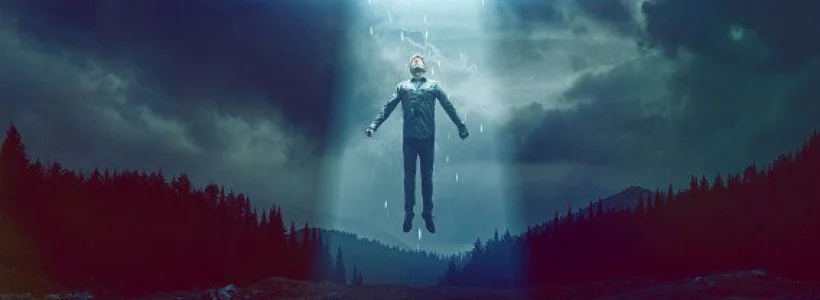
Back in the 1950s space aliens were a straightforward bunch. By and large, they wanted little more than world conquest. Comfortingly, they were also imaginary. To be sure, there were those who claimed they have seen UFOs, but the aliens themselves remained elusive, "space brothers" of interest only to "contactees" such as "Professor" George Adamski, a California hamburger vendor with an extensive Venusian social circle. However, by 1992 the B-movie bogeyman had become real, moving from Hollywood to the even stranger surroundings of a five-day conference at MIT organized by David Pritchard, an MIT physicist, and John E. Mack, professor of psychiatry at Cambridge Hospital, Harvard Medical School. A curious Courtlandt Bryan attended, and Close Encounters of the Fourth Kind recounts what he found. The aliens, it would appear, have been busy. The old stories of global domination have been replaced by tales of abduction "recalled" by hundreds of people and, this time, believed to be true.

Most of these recollections are strikingly similar. The luckless victims are transported to the alien craft, where they are subjected to various unpleasant medical procedures associated with some sort of breeding program. Even worse, the aliens seem to have embraced a lunatic environmentalism worthy of our Vice President, raising once again the question of where Mr. Gore is really coming from. The aliens that have been seen come in a number of shapes and sizes, but, somewhat suspiciously, in the United States they mainly resemble those in Close Encounters of the Third Kind. In general they are spindly creatures, about four feet in height, grey skinned with large, black, tear-shaped eyes. These "small greys" are often said to be supervised by a "doctor," a larger grey skinned humanoid.

The good news, if you are over thirty, is that if you have not been abducted by now, it's not likely to happen. The aliens are said to focus on younger people, with abductions often beginning in childhood. The bad news is that you may already have been abducted but just cannot remember. The aliens, it is believed, tend to "mask" memories of abductions. It is only recently that these memories have begun to surface in significant numbers. Often the stories emerge painfully in therapy sessions such as those conducted by John Mack, sometimes, but not always, using hypnotic regression techniques. The aliens, it is claimed, have abducted hundreds of thousands of people.

Mr. Bryan himself makes little attempt to judge the phenomenon. He simply, and at times vividly, describes the conference sessions and the people he met. The book also features fairly lengthy interviews with some of the participants, as well as all too brief synopses of some of the competing theories. The broader UFO debate is also well covered in passages that range from a discussion of the tantalizing early sightings to the increasingly ornate conspiracy theories that now infest the field. In a book that has room for nor merely one but two supposed UFO crashes near Roswell, New Mexico, it would have been good to hear more from the skeptics, but Close Encounters of the Fourth Kind provides an excellent, if somewhat uncritical, introduction to the whole subject.

The reader also benefits from the fact that, throughout, Bryan managed to retain both his sense of humor and his open mind. Told of an organization of worlds run by "Zar," he had to "fight the steadily growing conviction that [his] abductee dinner companion was crazy as a loon." He steels himself to remain nonjudgmental, for "Zar would want that."

Mr. Bryan, by his own account, wishes to believe that aliens are coming our way. As the abductees call it, however, this may not be a pleasant experience. Their eerie stories dominate his book. In the end Bryan is not convinced that the abductees experienced extraterrestrial visitations, but he did "come away a believer in the sincerity and merit of their quest."

This must be right. Whatever it is, this phenomenon warrants serious, dispassionate investigation. Sadly, this is something that, judging by this book, it did not get at a conference that seems to have been part revival meeting, part Geraldo, and part public therapy. When Dr. Mack declares that "we must rethink our whole place in the cosmos," he is interrupted by a standing ovation.

Abduction, Dr. Mack's best-selling but drearily written book, published in 1994 and recently released in a revised paperback edition, is not much more enlightening. Here abductees tell their stories to the sympathetic Dr. Mack, who turns to metaphysics for a solution. "Western" science, we learn, "relies primarily on the physical senses and rational intellect." As such, concludes the Harvard professor, it is a "restricted way of knowing"' incapable of rising to the challenge posed by the abduction experience. Well, of course. Something about the way Dr. Mack uses the word "Western" signals that he is going to come to that conclusion.

John Mack moves quickly. He started meeting abductees in 1990. By April 1992 he was in India discussing these matters with "Tibetan leaders." A month or two later he told the MIT conference that he had "kind of moved away from trying to persuade the mainstream culture of the validity of this phenomenon." If his scientific forebears had shown such perseverance, we would still be living in caves.

Dr. Mack is careful to state that he is not "presuming that everything [the abductees] say is literally true." Nevertheless he writes of his "growing conviction about the authenticity of these reports . . . No plausible alternative explanation . . . has been discovered." He forgets, however, that these are early days in the exploration of this phenomenon. Alternative explanations, if not as yet entirely satisfactory ones, already abound. It seems, for example, that acute psychotic episodes and temporal-lobe dysfunction can produce impressions akin to those recalled by an abductee, albeit without the generally flimsy corroboration that sometimes exists in the abduction cases.

It is also necessary to look at the relationship between the abductee and his or her therapist. Dr, Mack is clearly sensitive to this point, which he discusses an increased length in the revised, and more cautious, version of his book. Interestingly, a good number of the "hypnosis" or "regression" sessions featured in the original edition arc now described as "relaxation" sessions, while some patients' "trances" have become "altered states of consciousness."

Dr. Mack would disagree, but these are, one suspects, distinctions without much of a difference, in which case the "reality status" (to use his phrase) of the abductees' memories must be even more questionable. In 1985 the American Medical Association's Council on Scientific Affairs warned that "recollections obtained during hypnosis not only fail to be more accurate but actually appear to be generally less reliable than recall." Hypnosis does, however, appear to increase the subject's confidence that something real is being remembered, whether or not it be the case.

Many abductee stories are uncannily similar to one another, something that struck Dr. Mack from the beginning. Charles Mackay, the splendidly acerbic author of Extraordinary Popular Delusions and the Madness of Crowds (1841), would not have been so surprised. Writing of medieval witchcraft trials, noted that "the great resemblance between the confessions of the unhappy victims was regarded as a new proof. . . but this is not astonishing . . . the same questions . . . were put to them all, and torture never failed to educe the answer required by the inquisitor."

"Relaxation" with the undoubtedly kind-hearted Dr. Mack is far removed from a torture session in a European dungeon. Nevertheless the question remains. Do abduction therapists somehow "lead" their patients into giving, consciously or otherwise, the sort of answers the patients think their therapists want to hear? Dr. Mack appears to concede that this could occur, but not in his sessions, even if they sometimes are, as he puts it, "co-creative."

If the impact of "co-creativity" on a "memory" is uncertain, what is the effect of that memory on the rememberer? This is a crucial difference between the UFO controversy and the abduction controversy. The existence of UFOs is generally no more than a fascinating mystery, even to those who may have seen them. However, for those who believe that they, and sometimes their children as well, are being repeatedly abducted for use in an alien breeding experiment, it is difficult to argue that life must simply go on. The therapist who encourages or sustains these beliefs is taking on a heavy responsibility,particularly given the somewhat fragile personalities of some of the abductees. Dr. Mack had two boys under age 3 in his own group of interviewees.

Ominously it was only on the last day of the MIT conference that these issues seem to have been discussed at any length. "We must," said one therapist, "be able to demonstrate . . . that what we are doing is reasonable, safe, and effective." This comment did not, apparently, merit a standing ovation. In fact, not only the abductees but the whole abduction mystery begs, in the words of David Pritchard, "for a careful and multidisciplinary investigation." To John Mack, however, this would be just "fussing over whether we have got something real here."

As Jung noted in his book on UFOs, "the Middle Ages . . . live on merrily." In an increasingly irrational and anti-scientific America, "fussing" about what is real is just what is needed, although it will pro ably end up telling us more about ourselves than about any extraterrestrial visitors, The alternative will not take us to the stars, but it might take us to Salem.

Close Encounter

Roswell, New Mexico, is, as its postcards say. in the middle of nowhere. A hundred miles from the Texas border, this dusty small town is far removed from the chic of Santa Fe and Taos. Once an Air Force town, Roswell's buzz-cut traditions still flourish at the New Mexico Military Institute. Traditional values find further inspiration from the Ten Commandments, carved on a slab just outside the court house—on Main Street, of course. Nearby are a gunsmith, two wedding shops, a shoe store, and, perhaps more surprisingly, The International UFO Museum and Research Center.

Five miles up the road, just across from the old Roswell Army Air Field, is The UFO Enigma Museum. In July 1947, the air base played a central role in the "Roswell Incident," a series of peculiar events that explains why this obscure Southwestern city of fifty thousand people is the site of not one but two UFO museums.

Read More

On the Edge

Anne Applebaum: Borderlands

National Review,  January 23, 1995

Trakai, March 1994  © Andrew Stuttaford

Trakai, Lithuania, March 1994  © Andrew Stuttaford

As Anne Applebaum writes in the introduction to this evocative and entertaining book, "Warsaw gave me a taste for instability." It is no surprise, therefore, that 1991 saw her heading toward the disintegrating Soviet Union. Rather than visit Moscow or Leningrad, however, she chose to journey down the empire's western frontier, from the Baltic to the Black Sea. In earlier times much of this region was known to Poles as the "Kresy," a word for "borderlands" that implies "a lack of demarcation, an endless horizon with nothing certain beyond." A vast flat plain, these borderlands have attracted invaders from east and west for centuries. The only remotely indigenous power capable of resistance was the spectacularly disorganized and short-lived Polish-Lithuanian Commonwealth. As a result the people of the Kresy never developed the sense of nationality enjoyed by their more fortunate neighbors. Most were simply "Tutejszy," a Polish word meaning "people from here."

In time the invaders were followed by settlers. By the turn of the century the region was populated by an extraordinary mix that included Slavs, Balts, Germans, Jews, Hungarians, Rumanians, and many others. It was, as Miss Applebaum points out, thoroughly messy. Such a state of affairs was unacceptable to Hitler and Stalin, who turned the region into a charnel house. By 1945 both the Jewish and German populations had been largely eliminated, and the Poles had been pushed back a long way west. As for those who remained, they were to become "Soviet." "The idea was simple, beautifully clear. Gradually all of the subtle dialects that had been spoken in the borderlands, all of the national variations and differences in costume and taste, all would be submerged in an onslaught of Russification. Difference would be destroyed."

Many, particularly on the embarrassed Left, now prefer to look on the USSR through the prism of the chaotic Gorbachev years. They see it as just another empire, something, perhaps, that might have been run by a socialist Habsburg. Refreshingly, Miss Applebaum is under no such illusion. "The region had been conquered before, but the Soviet empire cast a deeper shadow than any of its predecessors. Whole nations were forgotten: within a few decades the West no longer remembered that anything other than 'Russia' lay beyond the Polish border . . . it was as if the many and various peoples of the region had simply dissolved into . . . the vast, muddy Belarusian swamp."

Appearances can be deceptive, however, and Miss Applebaum wanted to see whether something of the old diversity still remained. At times movingly, the book tells what she found. The approach she took was simple — she let people speak for themselves. Miss Applebaum is clearly a well informed and sympathetic listener. As a result, much of the book is made up of interviews that vividly bring these too long neglected peoples to life. The survivors of the Soviet years are rapidly rediscovering their voice—and pretty cranky it can be, too. In a region of blurred identity and shifting borders, the old divisive obsessions have returned. Poles remind Lithuanians that Vilnius was once Wilno, a Polish city, while a Ruthene compares Ukrainians to wolves, that gather "only in packs, in mobs, at rallies."

It is easy, however, particularly in a book focused on nationality, to overstate these divisions. In fact, as is the case anywhere, people in these parts are generally more preoccupied by their economic circumstances than by their ethnic origins. Fortunately, Miss Applebaum has advanced appreciation of the ridiculous and is largely successful in keeping a sense of proportion about today's often absurd but generally harmless disputes among the peoples of the region. Rumors that records exist of speakers of an archaic form of Lithuanian in "Polish" villages near Vilnius may give rise to "hysteria," but only in "the tiny world of nationalist language studies."

Above all Miss Applebaum does not fall into the contemporary trap of seeing every Eastern European nationalist revival as a prelude to Yugoslavian-style disaster. In words that need to be read in Washington by those who view Russia as this region's policeman, she reminds us that "the stability so beloved of international statesmen had also been a prison." Post-Soviet nationalism may indeed "prove to be dangerous, destabilizing, and uncomfortable for diplomats," but it may be essential if successful and prosperous democracies are to be built in this devastated region. In this she must be right. There is, after all, not much else. Most of the ingredients of civic society have been obliterated. There is little or no history of self-government, and commercial traditions are weak, to say the least.

All that is left is a patchwork of half-remembered traditions that are part myth, part reality. That may not seem like a lot, but if, as Miss Applebaum demonstrates, it was tough enough-just-to withstand Soviet rule, it may be tough enough to provide the foundations of societies in which the people of the borderlands can at last be free do define what it means to be "from here."

Note: I have almost always been lucky in my editors, but not on this occasion: the idea that the Polish-Lithuanian commonwealth was "short-lived" was theirs not mine. In fact it lived on for several hundred years...

A Question of Identity

Methodically, and with just the right amount of blue paint, someone has removed the Cyrillic script from Riga's street signs. Other consequences of the long Soviet occupation remain all too visible. Latvia may have regained its independence, but Russian officers still drive down Elizabetes (formerly Kirov) Street. Riga's skyline is famous for its elegant spires, but the view also includes Stalin gothic and Intourist concrete. In perhaps the ultimate humiliation, half a century of Soviet rule has turned this once affluent Baltic city into a place where visitors are advised not to drink the water. The confused and shifting politics of the immediate post-independence period meant that, with the important exception of a strikingly successful monetary reform, many of the structural changes essential to the rebuilding of the economy were not introduced. In particular, privatization was a shambles. Even today only about 20 per cent of industry is privately owned, although rather more is under private "control."

Read More

Out of the great unknown

The Baltic Independent, November 24, 1993


Balticmap.png

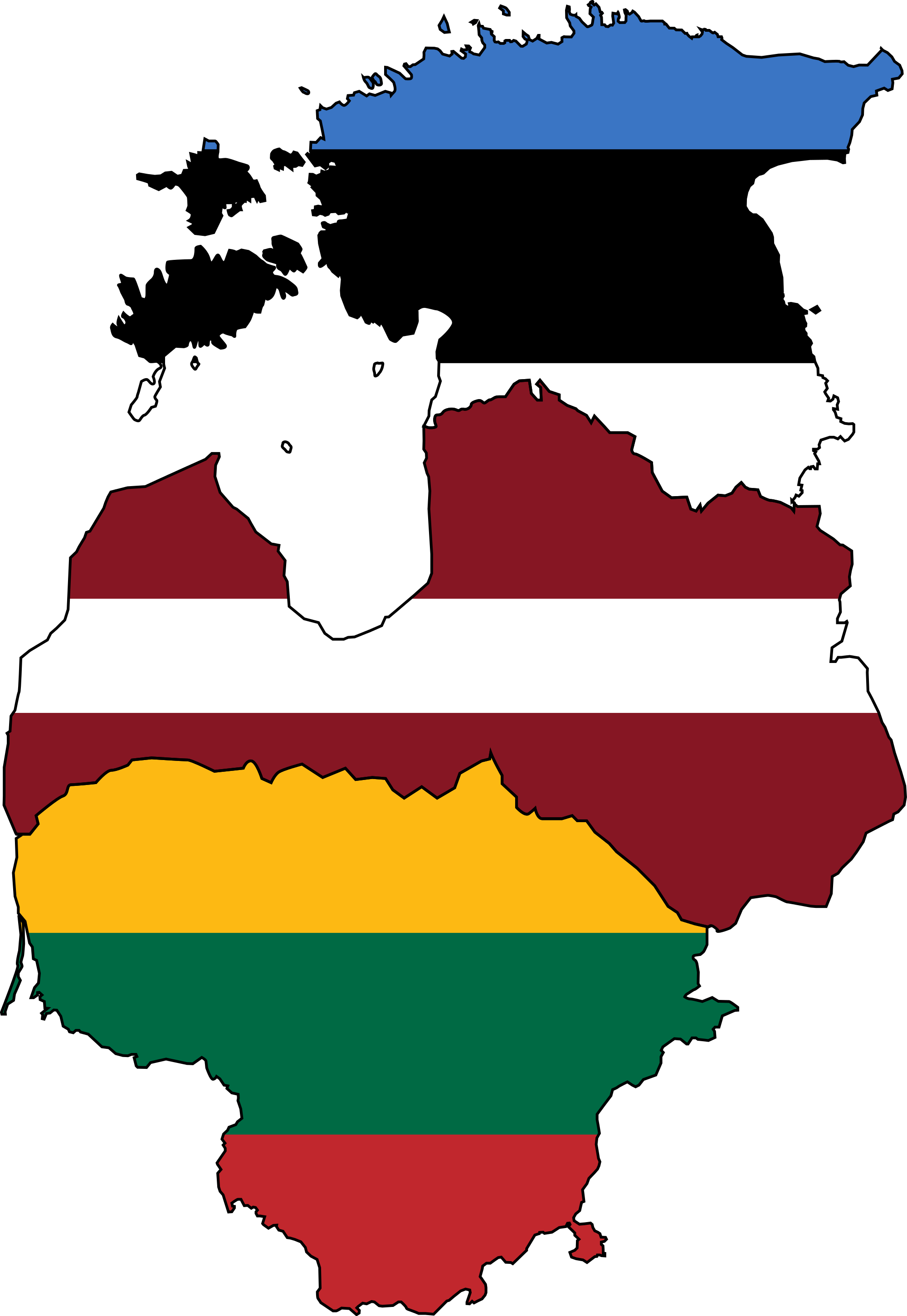
STRANGE AS it may seem, Algirdas Brazauskas is not a household name. As citizens of a continent-sized superpower, Americans have never felt the need for information about other, much smaller, countries such as those on the Baltic, thousands of miles away. The US media generally reflects this lack of interest and, it its own way, does its best to add to the confusion. Take, for example, the most basic question of all. Where are the Baltic States? For fifty years they were nowhere, erased from the map and lost in the vast mass of the Soviet Union. Now Latvia, Lithuania and Estonia (or rather Lat., Lith., and Est.) have finally returned to the maps used by American newspapers and TV, but as nomads. Ignoring all international treaties, Latvia becomes Estonia and Estonia becomes Latvia. Meanwhile Lithuania lurches towards Belarus, ignoring the threat posed by a ballooning Kaliningrad oblast.

Outside the émigré community and a few specialists, Americans know little of the Baltic States, Arvo Pärt  may have his listeners and Jaan Kross some readers, but Baltic culture remains something of a mystery. Larger bookshops might stock phrasebooks for the languages of Southeast Asian hill people, but not for the languages of those remote tribes inhabiting Tallinn, Vilnius and Riga. Avowedly, Baltic products other than dusty piles of amber in “Russian”, shops, are equally difficult to find.

Amusing as it may be, American ignorance of the Baltics is not without its dangers for a region very dependent on Western support. For example, “the Baltics” are repeatedly muddled up with “the Balkans” (Slovakia and Slovenia are faced with a similar problem) and at times it seems that this confusion has also coloured, if only subconciously, the American media’s response to the question of the Baltic’s Russian population. There is little real awareness of the region’s history and it is not unusual to see discussion of “Eastern European nationalism” that draws little distinction between, say, Serbia and Estonia. This, of course, can then be exploited by a Russia all too ready to describe Baltic citizenship laws as a form of ethnic cleansing.

Such talk is well received by America’s liberal intelligentsia with their guilty nostalgia for the Pax Sovietica. Meanwhile their old adversaries, the cold warriors, who in the past could always be relied upon to take up the cudgels for a “captive nation” are hopelessly divided as to how to respond to a Russia that is no longer an evil empire.

All is not lost, however. Memories of Baltic resistance to Soviet rule from 1989-91 have not entirely faded and there are still many here who wish the republics well, even if they do not know exactly where they are. Ever larger numbers of American tourists are returning from a Baltic increasingly touted as an attractive if still somewhat off-beat, destination. In addition, not all the stories coming from the region have been negative. Economic reform, particularly in Estonia, has attracted favourable attention and even The New York Times recently felt free to talk of the “Baltics’ new glow.”

Further positive reports can be expected if the Baltic States can show that they are heading in the direction of the free market and liberal democracy. As these come about, Americans will increasingly come to think of Latvia, Lithuania and Estonia as Western and (perhaps an obscure) part of their world, rather than Eastern. This would not exactly constitute a security guarantee, but it would be a good second best. Besides, the Clinton administration is not in the business of offering guarantees to anyone, but that is a different story.

Back to Normal

National Review, November 1, 1993 

Tallinn, August 93  © Andrew Stuttaford

Tallinn, August 93  © Andrew Stuttaford

AFTER JFK or Moscow's Sheremetyevo, the airport in Tallinn is something of a shock. Passport inspection takes no more than a minute (visas are not required for an increasing number of Westerners), and customs is a quick walk-through. Taxis are plentiful, and the drive downtown is easy. In short, for the Western traveler all is normal—and that is just fine with the Estonians. Mart Laar, the cheery 33-year-old historian who is now this Baltic state's prime minister, explains, "We are trying to build a normal, open European society." Pointing to the physical and psychological devastation left by fifty years of Soviet occupation, Laar warns that this will not be easy. "We didn't promise the very good life, the very big and quick success. . . . The only thing I promised was an enormous lot of work." Undaunted, Estonia is pressing on with radical free-market reforms. These are currently the work of the Center-Right coalition led by the Isamaa (Fatherland) Party, but most parties seem to support the free market. Socialism is widely seen as a failure, and disagreement mainly concerns the details and pace of reform.

Raekoja Plats, August 1993  © Andrew Stuttaford

Raekoja Plats, August 1993  © Andrew Stuttaford

The early fruits of these reforms can already be seen in Tallinn, Estonia's capital. Restaurants and bars abound, and, to those familiar with Moscow's chaotic sidewalk retailers, Tallinn's shops are impressive. Other private businesses are appearing, with success usually evidenced by sleek mobile phones and even sleeker receptionists. The streetcars wear Coca-Cola's colors and "erootika" has long since replaced Pravda on the newsstands. From grey concrete suburbs to grey plastic shoes the Soviet inheritance is still visible; but, overall, the visitor is left in little doubt that this is a city rapidly rejoining the European mainstream.

Pikk, August 1993  © Andrew Stuttaford

Pikk, August 1993  © Andrew Stuttaford

The consensus behind the economic reforms also reflects the current composition of the electorate. This is dominated by ethnic Estonians, despite the fact that today they account for only some 60 per cent of the population of 1.5 million. The preponderance of ethnic Estonian voters stems from the fact that the franchise at the time of the September 1992 elections was in effect restricted to citizens (and the descendants of citizens) of the independent, and largely homogeneous, Estonia annexed by the USSR in 1940. This has led to an electorate inspired and brought together by a common culture and history. In particular this electorate remembers the independent Estonia that emerged from the ruins of the Russian Empire in 1918 after centuries in which the Estonians had been dominated by (as one Tallinn museum glumly concedes) "German, Danish, Swedish, and Russian conquerors."

The development of the Estonian republic was far from smooth, but, by the time of its reconquest by Moscow in 1940, Estonia's per-capita income was roughly on a par with that of Finland. This is essential to understanding the drive behind today's reforms. Things may be difficult today, but Estonians can at least look back and see that it is possible to build an independent and prosperous Estonia.

In the two years since regaining independence in August 1991, Estonia has made extraordinary progress toward its goal of establishing a "normal" economy—despite suffering a (relatively modest) share of the post-Soviet disorder.

Tallinn, August 1993  © Andrew Stuttaford

Tallinn, August 1993  © Andrew Stuttaford

Most importantly, perhaps, in June 1992 Estonia replaced the ruble with its own currency—the kroon. The kroon was linked to the Deutschmark at a fixed rate of 8 to 1. Devaluation is prohibited by law. The kroon is fully backed by Estonia's hard currency and gold reserves. The Estonian Central Bank, Eesti Pank, may issue new kroons only in line with increases in these reserves. Eesti Pank is not allowed to lend to the government, nor may the government run a deficit. In 1992, a year of deep economic crisis, the government's budget surplus was equivalent to 1.7 per cent of GDP, an achievement beyond the ability of most Western governments. By June 1993 foreign-exchange reserves had tripled, and even an initially skeptical IMF was impressed.

Tallinn, August 1993 @ Andrew Stuttaford

Tallinn, August 1993 @ Andrew Stuttaford

A "normal" money is the first step to a "normal" economy, and the kroon is, in the words of Eesti Pank's governor, "good for anything, from the latest model of Western car to a call girl." The contrast with the recent past is striking. In the dying days of the ruble, inflation was running at an annual rate of over 1,000 per cent. There was rationing, and many products were unavailable for those without hard currency. Inflation is now 40 per cent, a very good level by Eastern European standards, and falling. Goods have reappeared in the shops and are available to all, foreign or local, although to the average Estonian they remain expensive. To be sure, change has been far from painless. GDP has fallen by over 40 per cent since 1989, real disposable household income fell by more than 50 per cent in 1992 alone, and unemployment is many times higher than the official figure of 3 per cent. Estonians themselves, however, do not appear unduly downcast by this turn of events. Rather, they appear to relish their liberation from the lunatic Soviet economy. Anecdotal evidence suggests that the economy has bottomed out and that, particularly in Tallinn, the private sector is showing real growth, much of which is not reflected in the official statistics. This is almost certainly true of the service sector, while so far as manufacturing is concerned, it is interesting to note that energy consumption has fallen by far less than would be suggested by official figures of falling production. Equally, one small indicator of the real development of the Estonian economy may be found in the fact that, throughout Eastern Europe, only Hungary has, per capita, more cellular-telephone subscribers.

Times remain hard, notably for the heavily indebted state businesses, and maintaining a sound monetary policy has not been easy. Nevertheless, Eesti Pank's tough line has already survived a commercial-banking crisis. Despite pressure, the government appears to be adopting a similar approach to economic policy, resisting, so far as possible, a regime of bail-out and subsidy.

Tallinn Town Hall, August 1993  © Andrew Stuttaford 

Tallinn Town Hall, August 1993  © Andrew Stuttaford 

Prime Minister Laar clearly rejects protectionism and, as Economy Minister Toomas Sildmae explains, with a well-educated work force and wage rates a tenth of those in Western Europe, Estonia wants trade, not aid. More generally, Sildmae sees his job as creating "the framework for the normal development of business" rather than managing that business. The hope is that the private sector will take up the slack left by the retreating state sector.

Privatization is obviously critical to this, but, as is typical in Eastern Europe, it has not been a smooth process. There are the usual allegations of corruption and "spontaneous privatization," although there seems far less evidence of this than elsewhere.

Attempts to provide restitution for former owners unlawfully expropriated in the 1940s have also led to delay. Mart Laar defends this in terms that would astonish the United States Congress. "Western countries have forgotten that the basis of their economic system is [private] property." Laar feels that it is impossible to have an effective free market without restoring the value of property. Therefore, he wants to show that it is possible to give property back to its rightful owners—even after fifty years. There is more to this policy, however, than the restoration of incentive. Put simply, it was made clear to me in a number of conversations with different officials that the government wants to return this property because, morally, it is the right thing to do.

Pikk Jalg, August 1993  © Andrew Stuttaford

Pikk Jalg, August 1993  © Andrew Stuttaford

Despite the delays and difficulties, much of small business is now in private hands. In the important agricultural sector, the collective farms have been broken up. Overall, Economy Minister Sildmae estimates that 40 per cent of industrial production is now outside the state sector.

The larger enterprises continue to be a major economic problem, however. Although a surprising number have been sold, and more will be, others are clearly doomed. There is a general view that many of these factories are "too big for Estonia." They were built to satisfy the needs of the now-collapsed Soviet command economy, and, in the words of one official, they "are not exactly world class." Perhaps most seriously, they are largely manned by imported Russian workers and thereby combine the Soviet period's disastrous economic and demographic legacies.

THE FIRST Estonian Republic was a consciously ethnic state, home for a small nation denied self-determination for nearly seven hundred years. This was reflected in the racial mix; ethnic Estonians made up some 90 per cent of the population. Today's figure of 60 per cent is a direct result of the Soviet annexation, which led to massacre, deportation, and emigration, followed by a period of sustained Russian immigration.

Toompea, August 1993  © Andrew Stuttaford

Toompea, August 1993  © Andrew Stuttaford

There has been some Russian emigration over the past two years, but Estonians seem to recognize that there can never be a return to the old homogeneous republic. The new citizenship laws reflect this. In essence, most Russians will be eligible for permanent resident status. A substantial number are also immediately eligible for Estonian citizenship and many more will become so after a period of residence. Russians will enjoy full social rights, and there will continue to he access to Russian-language schools. Applicants for Estonian citizenship will have to pass a fairly basic language test; with little more than one million Estonian speakers worldwide, such a requirement is understandable.

Nevertheless, this has been a difficult period for Estonia's Russians, many of whom have lived there for decades. In the Soviet era there was no need to learn Estonian. Few Russians had any real consciousness that they were living in another country. Literally overnight this population found itself "abroad." Despite this, Mart Laar feels that ethnic relations are improving. "The hate that existed five years ago is gone."

Certainly this appears true in Tallinn, where Russians make up about 50 per cent of the population. Lenin Boulevard is no more, but Russian-language street signs remain unmolested. More of a problem are a number of towns close to the Russian border. Their inhabitants are predominantly Russian, moved there by Moscow to man the large factories that no one now wants. Narva, the largest of these towns, still displays a statue of Lenin and has politics to match. Poorly informed, somewhat apathetic, and with little visible economic future, the people there have proved relatively easy to manipulate by a Soviet-style leadership. It is primarily to this population that Laar is referring when he says, "The main problem that we have with the Russians is that they are not Russians. Most of them are not feeling themselves as Russians. They are feeling themselves as Soviets. ... If they become Russian all the problems are solved."

Tallinn, August 1993  © Andrew Stuttaford

Tallinn, August 1993  © Andrew Stuttaford

Undoubtedly it is more complex than that, and it is surprising that more Estonians will not consider transferring Narva and its problems to Russia. Nevertheless there are signs of hope. There is certainly ethnic tension in Estonia, but it has led to less violence than in, say, Germany, where the standard of living is far higher and the immigrant population is comparatively small. Russian opinion also appears far from monolithic, not least, perhaps, because many Russians in Estonia are well aware that they are economically far better off than their counterparts in Russia itself.

Ethnic relations in Estonia are never going to be easy. To Estonians their Russian population will always be a living reminder of the Soviet occupation. Equally, transformation to minority status will be difficult for the once imperial Russians. Nevertheless, if Estonia is left to itself and its innovative economic policies succeed, there is a chance that a modus vivendi can be found.

The problem, as always in this part of the Baltic, is that Estonia may not be left to itself. Six thousand Russian troops remain there, including a sizable detachment in Tallinn itself. In increasingly threatening terms Moscow has made it clear that further withdrawals will be dependent on what it deems to be fair treatment of Estonia's Russian population. This is in line with a general shift on Russia's part toward greater assertiveness in protecting what it feels to be its interests in its "near abroad"—the republics of the former USSR.

Red Army 'liberator', August 1993  © Andrew Stuttaford

Red Army 'liberator', August 1993  © Andrew Stuttaford

Much of this is no more than saber rattling, reflecting an increasingly complex political situation in Moscow. Nevertheless, the continued presence of Russian troops only serves to polarize opinion in Estonia. Equally, threats of external intervention give nothing but encouragement to hardliners on both sides.

Even with its current problems Estonia is (as I was repeatedly told) no Yugoslavia, but, if Russia continues to meddle, that is what much of the Baltic region may become.

Springtime in Moscow

She could not have been more explicit. The twentysomething celebrity's "favorite politician" was Ronald Reagan, and she was pleased to see that fact published in a local magazine. Clearly I was in Moscow, not New York. It was the second week of March, Ruslan Khasbulatov was in full cry, and Boris Yeltsin seemed to have gone to earth. The former Soviet capital has more to offer, however, than fractious parliamentarians and politically incorrect reading material.

Read More