Democracy Dies in Regulators’ Offices: The SEC, Regulatory Creep, ESG, and ‘Climate’
National Review Online, July 23, 2021
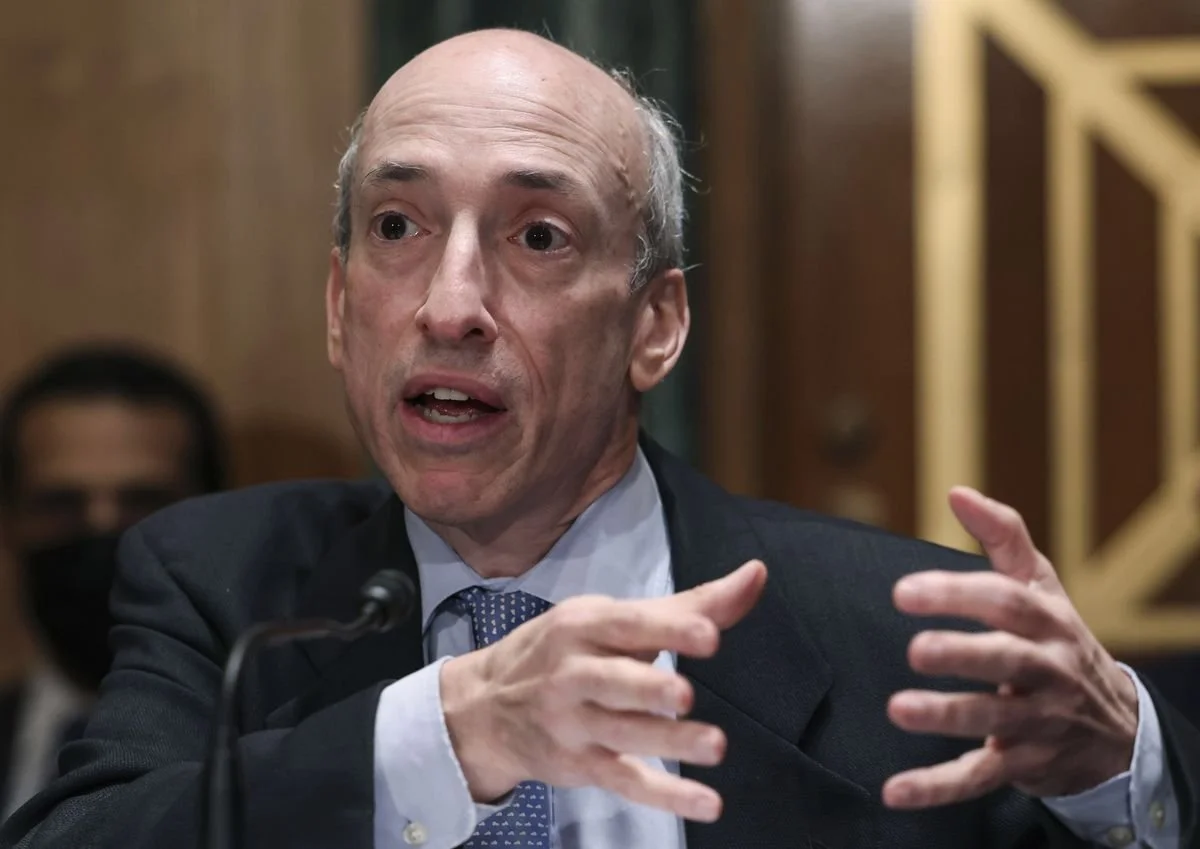
This isn’t the first time that I have written about regulatory creep, and it won’t be the last. Lacking the legislative majorities required to push through much of his agenda, Joe Biden is turning to regulators for help. His won’t be the first White House to rely on unelected bureaucrats in this way, but one — how to put this — distinctive aspect of the Biden approach is the way that regulators are, with, presumably, the administration’s connivance, extending their mandates to places they were never intended to go. It’s not pretty, but as a device to bypass the democratic process it can be startlingly effective.
And so, from March, we find this from the SEC:
The Securities and Exchange Commission’s Division of Examinations today announced its 2021 examination priorities, including a greater focus on climate-related risks . . .
“This year, the Division is enhancing its focus on climate and ESG-related risks by examining proxy voting policies and practices to ensure voting aligns with investors’ best interests and expectations, as well as firms’ business continuity plans in light of intensifying physical risks associated with climate change…
“Our priorities reflect the complicated, diverse, and evolving nature of the risks to investors and the markets, including climate and ESG . . .”
And via Reuters in May:
The U.S. Securities and Exchange Commission (SEC) plans to propose a rule requiring that public companies disclose a range of workforce data as the agency steps up environmental, social and governance (ESG) disclosures, its new chair, Gary Gensler, said on Thursday.
Or via Reuters in June:
The U.S. Securities and Exchange Commission (SEC) may require public companies to publish data on a whole range of new areas, including greenhouse gas emissions, workforce turnover and diversity, as its new chairman looks to enhance the SEC’s disclosure regime.
There are plenty of other such news items to choose from. Thus it was a pleasant surprise to read a speech given earlier this week by SEC commissioner Hester Pierce. Before turning her attention to what she described as “the overflowing ESG bucket,” she cautioned, “before I go there, however, I better give my standard disclaimer, which is that the views I represent are my own views and not necessarily those of the SEC or my fellow Commissioners.” Given what followed, I’m not sure how necessary that disclaimer really was. I’ll just add that Pierce is a Trump appointee.
As a reminder, ESG (the “E” stands for environment, the “S” for social, and the “G” for governance) is rapidly becoming the dominant variant of socially responsible investing (SRI). One of the reasons it has caught on so quickly is that the elasticity of its definition has opened up an immense opportunity for grift (the other “G” in ESG: ESG has spawned a flourishing and highly profitable ecosystem).
Pierce explains how this ecosystem will shape the rulemaking to come. To take just one example:
The ESG consultants, standard-setters and raters who are now making a lot of money in producing, seeking to standardize, and assessing voluntary disclosure have an incentive to ensure that whatever rule gets written keeps that money flowing. Consultants have an incentive to argue that the rules apply to as large a pool of issuers as possible—including small public companies and large private companies.
ESG is also a mechanism for the accumulation of power. Whether through the actions of public (the SEC, say) or private regulators (a stock exchange, say), activist investors (a much wider category than they used to be, now that Wall Street has discovered the fees that are involved), or venal corporate managers who’d rather answer to ill-defined “stakeholders” than to shareholders, ESG has become the key to using corporate power and money to force through an agenda that once would have been the preserve of legislatures. The fact that E, S, and G can conflict with each other only adds some bleak amusement to this dismal spectacle.
Pierce:
Some issues are clearly ESG, such as carbon emissions, employee turnover, and dual class shares. . . . ESG readily expands, though, to include whatever the speaker or the news media are focused on at the moment. As more and more issuers and asset managers are grasping for the ESG label, they likely will press to expand the number of topics further to make it easier for them to justify calling themselves ESG . . .
ESG’s lack of a coherent unifying principle plays out in interesting ways. A recent Wall Street Journal article gave the example of a European company that is seeking to get a break on its interest rate for meeting certain ESG targets for increasing both women in management and the use of recycled plastic. I can imagine how such negotiations might go, “We’ll increase our recyclables to 13% and our women to 40%, and you decrease the interest rate by 20 basis points.” “No, if you increase recyclables to 20%, we’ll let you increase women to only 30%, and we’ll cut the interest rate by 15 basis points.” Not only are women being treated as interchangeable with one another for ESG purposes, but women are being treated as interchangeable with recycled plastic. Offense taken on both counts . . .
A key focus of Pierce’s talk is the extent to which the SEC should mandate certain ESG disclosures. She comments that the more varied the ways in which ESG is understood, the more difficult it becomes to lay down what should or should not be disclosed. That is to take too optimistic a view of the direction in which the SEC appears to be going. The disagreement over what ESG is — or should be — not to speak of ESG’s underlying intellectual incoherence has created an opening for the agency to take a highly expansive view of the areas where it can or cannot mandate disclosure: For the SEC, it is a feature, not a bug. And it has every intention of exploiting it.
Pierce, by contrast, appears to believe that companies should (essentially) only be required to disclose what is “material” to an investor and that what is material ought to revolve primarily, whether directly or indirectly, around financial return. She’s right to think this and, as she notes, traditionally, this has been the SEC’s approach.
Pierce:
The Commission has looked to materiality as our guiding principle when crafting disclosure requirements because it is an objective standard by which we can exercise our statutory authority to decide what is necessary or appropriate in the public interest or for the protection of investors. Reasonable investors are not a uniform bunch, but they do share a desire for monetary returns on their investments. Mandating that issuers provide them with information that does not contribute to assessing the prospect for investment returns costs them in, among other things, bills for lawyers and consultants to prepare the disclosures; employee, management, and board time and attention; and potential litigation expenses. Why would we want to impose these costs on shareholders without providing them with the offsetting benefit of material information?
Put another way, why should investors who are looking solely for financial return be forced to accept that return being damaged by a politically driven disclosure regime that imposes higher compliance and other operating costs at the expense of the bottom line?
There’s an old phrase about taxation without representation that comes to mind.
The next section of Pierce’s speech comes with an interesting proviso (my emphasis added):
Even if we assume that Congress gave us the necessary latitude to require disclosure of any immaterial information of our choosing, why would we want to do so? And if not materiality, what would an alternative limiting principle be? If specific ESG metrics are material to every company in every sector across time, we can identify them one-by-one for incorporation in our rules, but throwing out materiality or stretching it to encompass everything and anything would harm investors.
However diplomatically Pierce may have phrased this, that is an implicit recognition that the SEC (and, to repeat myself, it is not the only regulator to be behaving in this way) is trespassing on grounds that ought to be the preserve of legislators, not the administrative apparat — the post-democratic state is what it is. It’s also a reminder that some corporate and/or shareholder lawyers need to be gearing up to push back.
One (major) complication for those objecting to the direction in which ESG and the closely linked notion of stakeholder capitalism are going is that that course is being set by a cabal that includes a number of major institutional investors. The idea of a small group of Wall Street oligarchs joining with a collection of corporate managers, foundations, activists, and elements within the state to shape social policy is deeply distasteful, yet as investors in the companies they hold should they not be entitled to vote “their” shares how they see fit?
Pierce (my emphasis added):
Some of the loudest voices in favor of ESG disclosures for issuers are asset managers who advise pension funds or fund complexes. Sometimes commentators classify asset managers as investors, but the fact that they work for investors does not make them investors. As fiduciaries to pension plans, institutions, or funds, these asset managers of course are obligated to put their clients’ interests first. Doing so may allow them to take ESG factors into account, but only if certain circumstances are met, including that the ESG factors have a clear link to risk-adjusted returns or to objectives that the client has chosen to override financial returns. Portfolio managers within a fund complex may have a diversity of views on ESG matters, given that each fund is an investor with its own tailored set of objectives. Yet, many fund complexes make voting decisions centrally and speak with a single voice on ESG issues, a voice that elevates ESG considerations. Professors Paul and Julia Mahoney point out that pension plan fiduciaries and fund managers—who are humans susceptible to pressure from peers, personally held values, employees, and others—may be making voting and investment decisions based on their own self-interest rather than in the interest of the funds they manage. Our disclosure rules should be designed to aid fiduciaries in focusing on issuer disclosures that are important to achieving their clients’ financial objectives. Mandating the disclosure of ESG metrics, to the contrary, could provide agents (whether corporate officers or fund managers) with an out if their performance lags.
If the SEC were truly interested in investor protection, it would be directing its attention toward the behavior of these investment-management firms (and, in certain cases, the FTC might like to examine the concentration of power they represent). There is nothing wrong with these businesses’ customers consciously choosing to invest in a way that involves accepting that they will give up some return in exchange for the fulfilment of social and political objectives. The more choice offered to investors the better. On the other hand, the way things are going, which is effectively to force investors to put their money to work in, financially, a sub-optimal way is, to borrow a word from the woke, problematic. The claim that ESG offers the possibility of doing well by doing good is questionable in the short-term and almost certainly impossible over the long term (partly, but only partly, because the potential for outperformance will quickly be priced in).
Much of the later part of Pierce’s talk is devoted to questioning the ability of the SEC to set ESG standards. Running through it is her dismissal of the idea that ESG can be measured in any truly objective way.
Some examples (there are plenty more to choose from):
If the SEC in the name of standardizing terminology were to start evaluating whether an adviser’s or fund’s interpretation of ESG matched the SEC’s conception of ESG, it would raise questions we have no business asking or answering. Are funds that avoid fossil fuels ESG, while those that include companies working to replace wood and coal fuel in developing nations with natural gas not ESG? Should short positions offset the carbon footprint of long positions? How should synthetic positions be treated? Does a fund that concentrates on reducing carbon footprints qualify as an ESG fund even if its portfolio companies rank poorly with respect to working conditions or water usage?
. . . Individual metrics spark controversy too. Treating ESG metrics as if they are on par with standard accounting metrics and susceptible to financial-type audits, as some would like us to do, ignores the messier reality. Scope 3 emission disclosures are common, for example [For a discussion on Scope 3, go here], but there is still uncertainty about how to calculate them accurately and without prohibitive cost. Treatment of carbon offsets is another area about which there is not consensus.
The SEC is not particularly well-suited to make judgments about which climate metrics should be reported by whom. Agencies authorized by Congress to act in these areas are better at making these judgments and, indeed, are already doing so. The Environmental Protection Agency (“EPA”), for example, runs the Greenhouse Gas Reporting Program (“GHGRP”), which requires “reporting of greenhouse gas (GHG) data and other relevant information from large GHG emission sources, fuel and industrial gas suppliers, and CO2 injection sites in the United States.” Do we need another disclosure regime specifically designed for GHGs? The EPA only requires GHG emission data at the facility level from the largest GHG emitters, but some are advocating that the SEC require GHG emission data from every single U.S. company, public or private. What does the SEC know about emissions that the EPA does not?
And Pierce does not shy away from contemplating the challenge to democracy that the SEC’s ESG initiatives may represent:
Many advocates of ESG disclosure mandates are concerned about even immaterial political spending by corporations, yet ESG mandates would place political issues front and center at corporations, and the SEC along with them. Congress and state legislatures, with their direct accountability to the American people, and civil society institutions are the proper venues for deciding political and social issues . . .
To date, Congress has not granted authority to the SEC to address ESG issues for the purpose of promoting goals unrelated to the federal securities laws. Serious democratic legitimacy concerns arise when an independent agency expands its own authority. These concerns increase significantly when the agency delegates to one or more unaccountable third-party standard-setters the authority to establish disclosure requirements for an ever-expanding list of politically and socially sensitive subject matters.
Democracy may die in darkness, but it can be regulated away too. Mind you, the latter is merely one example of the former.
Read the whole of Pierce’s speech. It matters.
From National Review’s Capital Letter, July 23rd, 2021