German Reparations: Far From a ‘Carthaginian Peace’
National Review Online, September 10, 2024
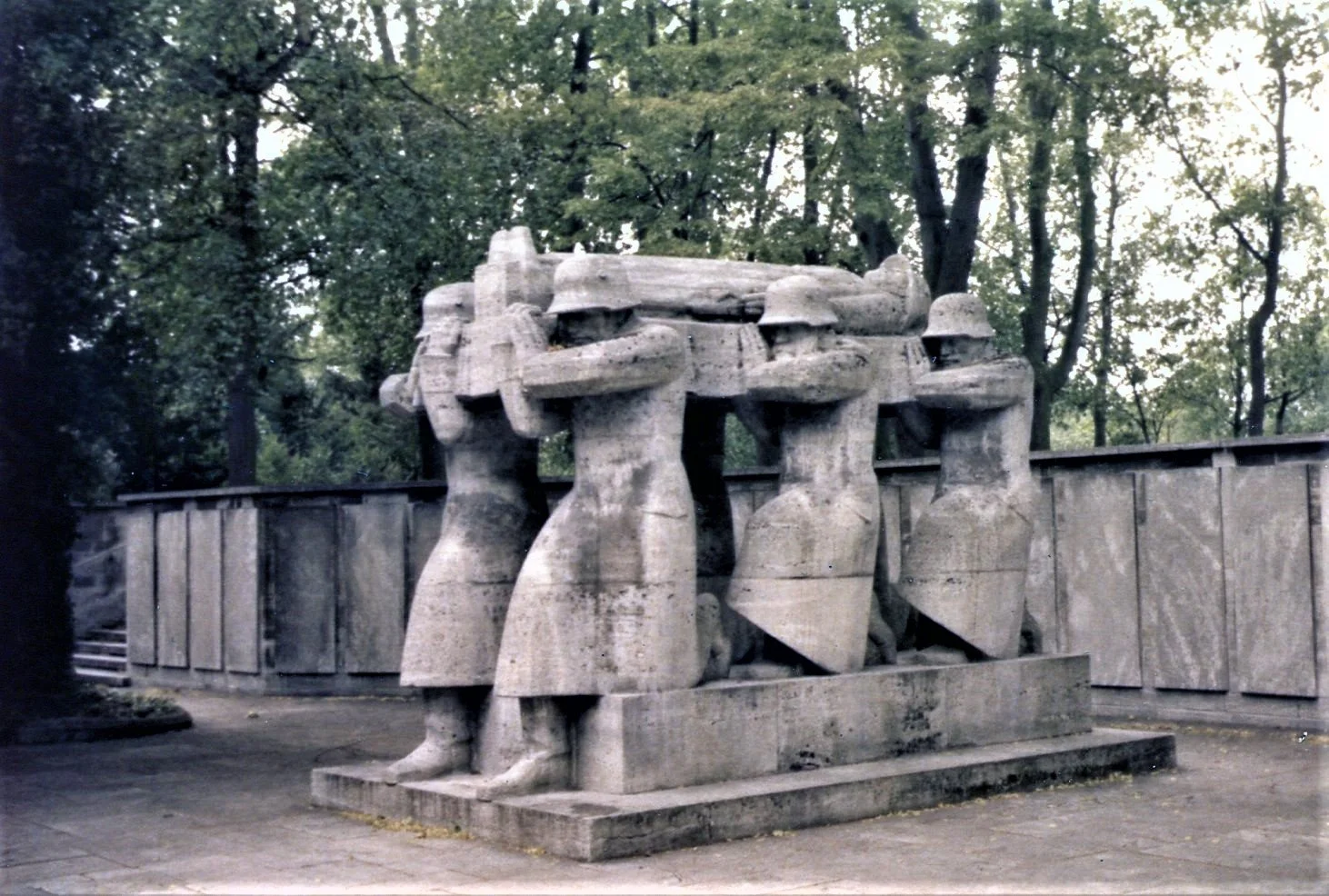
Würzburg, West Germany, August 1977 © Andrew Stuttaford
Winston Churchill was “a chief villain of world war 2?” Well, that’s the view (neatly filleted by Andrew Roberts, Churchill’s finest contemporary biographer, National Review’s Mark Wright, and others) of Darryl Cooper, the podcaster recently interviewed by Tucker Carlson. Carlson described Cooper as possibly the “best and most honest popular historian in the United States,” which would be both alarming and remarkable were it true. Cooper takes a revisionist view of the second world war that goes far beyond a continuing reexamination of the past — a basic part of any historian’s work — or even an exaggerated contrarianism into far darker territory.
This is the Capital Letter, not the History Letter, but there was one comment which marched into Capital Matters territory. It appears at the end of a tweet in which Cooper refers to the Treaty of Versailles. “The terms,” he wrote, “would keep Germany in destitution for another decade.”
But did they?
No.
But the power of myth is what it is.
Germany, like the other great powers, had expected that a major European war would be quick, and that its costs would be borne by the losers, who would not, natürlich, be German. After its defeat in the Franco-Prussian war in 1871, France had paid Germany reparations equivalent to 25 percent of French GDP. Germany was unprepared to finance a long war of attrition. It went off the gold standard in 1914, raised taxes and issued debt, but was more relaxed than it should have been about the central bank stepping in to take the debt that lenders would not. Money printing began. Between the end of 1913 and the end of 1918, Germany’s monetary base (more or less equivalent to M0 in the modern definition) increased by more than six times.
Turn to Milton Friedman (spoiler ahead), “inflation is always and everywhere a monetary phenomenon in the sense that it is and can be produced only by a more rapid increase in the quantity of money than in output.” But in Germany, “output” fell. GDP shrunk by 20-30 percent between 1914-18. Price controls, rationing, and foreign exchange controls had slowed visible inflation, helped, presumably, by the plunder of food, raw materials, machinery, and capital goods from German-occupied territories, as had the safety valve provided by the handy black market. But suppressed inflation is not extinguished inflation. Once wartime controls were lifted, inflation would inevitably accelerate. And so, it did, culminating in hyperinflation so severe that the addition of a mere “hyper” doesn’t do it justice. In The Pity of War, Scottish-American historian Niall Ferguson writes that the cost-of-living index in December 1923, the last year of hyperinflation, was 1.25 trillion times its prewar level.
But was that due to Germany’s reparations bill? Once again, no.
The conviction that the country had been ruined by its vindictive and victorious foes was widely shared in Germany, and it is a belief for which Cooper evidently has some sympathy. It was a key part of the narrative of German victimhood exploited so effectively by Hitler, but like so many of the stories he peddled, it was a myth.
Those searching for a “Carthaginian” peace (to use one of the adjectives Keynes hurled at the Treaty of Versailles) should look at the Treaty of Brest Litovsk agreed between Germany and revolutionary Russia in March 1918. Germany’s winnings were territory containing roughly one-third of the former Romanov empire’s population, half of its industrial land, and 90 percent of its coal mines with a sweetener of 6 billion marks on top. Germany’s defeat in the west nine months later meant that this was not to be, but the treaty’s provisions endure as a reminder of how Berlin behaved when the jackboot was on the other foot.
To be sure, Versailles’ headline reparations number — 132 billion gold marks (about $31.5 billion at the time) — was enormous (Germany’s GDP was around 35 billion gold marks). The supposedly villainous Winston Churchill deplored it at the time, although, relates Andrew Roberts, he was not in a position to do anything about it. However, look more closely at that figure, as Ferguson and others have done, and it becomes considerably less daunting. To start with, the way the repayments were structured suggested that once Germany had repaid the first 50 billion, the victorious Entente might not press too fiercely for the rest. Take 50 billion as the starting point, subtract 7 billion for payments that had already been made, factor in inflation’s destruction of almost all the real value of its domestic debt, and Germany is left with a debt/GNP ratio in gold marks (160 percent), less than Britain’s (165 percent). Reparations would be a heavy burden, but it was not unreasonable to think that Germany could cope.
Moreover, the ascent into hyperinflation was primarily due, not to reparations imposed from outside, but to choices made by Berlin. Conditions were very hard for many Germans in the first years after Versailles, but the nearest that Germany came to “destitution” in the decade after its defeat was the period in the mid-1920s covering hyperinflation’s peak, defeat, and painful aftermath. That aftermath also saw the beginnings of a recovery, which, although incomplete and fragile, is now remembered as Weimar’s Goldene Zwanziger (“golden twenties”), a label difficult to reconcile with a claim of a decade of “destitution.” The economy hurtled toward slump after October 1929, but that was set off by Wall Street, not Versailles.
The standard way to tackle the inflation that had been gathering steam during the war would have been through the restoration of fiscal discipline once the guns fell silent. But that was a risk that the government of a weak new republic, facing a dangerous threat from the revolutionary left and something more ambiguous from the authoritarian right, did not want to take. There were other considerations too. Life was not easy for a people traumatized by loss, whether personal, national, or both, and trying to weather the unsettling consequences of Germany’s defeat. Providing relief, however meager, to a population that included once unimaginable numbers of widows, fatherless families, and disabled veterans was hardly the stuff of extravagance.
The tack taken by the government was understandable, but the result was to pour more fuel onto the inflationary fire, a hazardous option even if it added a little warmth in the short term. As mentioned above, inflation had wiped out much of the government’s domestic debt. Berlin also hoped that a crumbling mark would help exports, a plus in itself that might also scare the war’s victors, anxious to protect their home industries, into proposing easier terms. Changing their minds was, Ferguson recounts, another reason, at least at this stage, why so little (serious) effort was made to restore order to the nation’s finances. The healthier they looked, the more its former adversaries would believe that reparations were affordable, and the less inclined they would be to scale them back.
Germany’s real per capita GDP grew by 20 percent between 1919 and 1922, far faster than its peers. Unemployment remained low, ranging between 1.4 and 4.6 percent. The growth may have had shaky foundations, but it was not exactly destitution. Businesses too had their debt inflated away. The higher the debt, the larger the windfall. Research has shown that the more indebted a firm in 1918-19, the more employees it took on between 1919-23.
But if some were doing well, others, whether working class or members of the once comfortable bourgeoisie, were in desperate straits. The real value of the billions the latter invested in war loans and other government debt had evaporated. Rents had been frozen, meaning those who were landlords were being paid only a pittance.
Inflation still accelerated (it crossed into hyperinflation, a monthly inflation rate of 50 percent or more, in mid-1922), as did social unraveling as more and more people found themselves unable to keep up. Crime grew, thieving turned into looting, protest into rioting. Barter increasingly replaced cash, the streets hosted foreign exchange markets, and “currency girls” were forerunners of the hard-currency prostitutes in Moscow’s Weimar (inflation in Russia peaked in 2,330 percent in 1992). Farmers were reluctant to send food to the cities in exchange for cash of perpetually shrinking worth. Shortages mounted, parallel moneys sprang up, prices lost their meaning, a budget was a guess. The faltering tax system had broken down. The ever-widening gap between tax receipts and government spending was filled by printing more paper. This could not go forever, and it didn’t. In 1923 GDP crashed to 50 percent of its 1913 level. Unemployment soared to 30 percent, adding to the numbers of the left behind.
That January, after Germany fell into arrears paying reparations due in kind, French and Belgian troops had occupied the heavily industrialized Ruhr, rich in resources — notably coal, but others too — that they intended to commandeer. Local workers, refusing to cooperate, downed tools. There was widespread (mainly) passive resistance against the occupiers. Berlin printed more money to help beleaguered Ruhr workers and businesses. The struggle in the Ruhr ratchetted up the pace of hyperinflation, and reparations can be blamed for that, but how much difference that really made to a storm that was already out of control is unclear.
On November 15, 1923, a few days after Hitler’s abortive beerhall putsch, a new currency, the Rentenmark, was launched. Issued by the Rentenbank, a new bank independent of the government, it was supposedly backed by mortgages on agricultural land and real estate, a structure designed to act as an automatic brake on money issuance. But, like the word wertbeständig (constant value) printed on its face, this was a declaration of intent, no more than that. The Rentenmark was fixed at 4.2 to the U.S. dollar, a rate supported by intervention in the currency markets on a basis established by the Rentenbank’s board. The old mark was pegged at 4.2 trillion to the U.S. dollar (compared with 4.2 just before the war), and the central bank was to cease printing money to finance deficits. The 12 zeros would be dropped later (the mark later became the Reichsmark, which traded at parity with the Rentenmark). The Rentenmark was, writes a different Fergus(s)on (Adam, double-S, author of When Money Dies, a book written in the 1970s to warn pre-Thatcherite Britain of where inflation could go) a “confidence trick,” but it worked. Hyperinflation just stopped. With the exception of a brief jump in 1925 to about 9 percent, inflation was to remain in the low single digits for years, a run interrupted only by the deflation of the early 1930s.
But, as is the case now in Argentina, the restoration of fiscal discipline and the easing of constraints that distort the free market can carry a high initial cost. Eastern Europeans who lived through an even more dramatic transformation after the collapse of communism know how that works. The pain is instantaneous, set off by administrative fiat as subsidies, say, are withdrawn. The rewards, which are organic, arrive piecemeal, can take time to come through, and even longer to spread and truly take root. The shelves in stores, for example, might start to fill, but who can afford to buy what’s on them?
Something similar took place in Germany after hyperinflation was swept away. But hyperinflation’s most toxic legacy was political, not economic. The middle classes neither forgot nor forgave its destructive effect on their finances and, critically, their sense of security. It poisoned them against the republic and refreshed their anger over Germany’s defeat, brought about they told themselves — and were repeatedly told — by a stab in the back. When the time came, they would turn to a leader who they thought would put things right.
In the meantime, Germany’s prospects had been boosted in 1924 by the U.S.-led Dawes Plan. Reparations payments were to be reduced until the economy was in better shape. France and Belgium agreed to pull out of the Ruhr. And U.S. banks would lend $200 million to help Germany’s economic stabilization. Over the next four years more American loans followed giving a useful fillip to the economy.
Germany’s recovery continued, albeit unevenly and not without considerable turbulence, not least as businesses that had done well under hyperinflation, often expanding with the help of money borrowed at negative real interest rates, tried to adjust to its new, higher cost. As companies that based investments on the ultra-low interest rates of the last decade are now discovering (office property anyone? SPACs anyone?), mispriced money is an invitation to malinvestment. When interest rates return to more normal levels (and in Germany they overshot in the other direction), that malinvestment will be unmasked, and that won’t be pleasant.
Adding to the pressure was the return of realistic pricing of transport, fuel, and other inputs, not to speak of a reinvigorated taxman making up for lost time. As more businesses ran into difficulty, demand slowed. Projects that had been moneymakers in the hyperinflationary era were now nothing more than expensive overcapacity. Bankruptcies rose, and unemployment rose again (a trend sharpened by lay-offs in the swollen public sector). After falling rapidly in 1925 to about 7 percent, it averaged 18 percent in 1926, only to halve between 1926 and 1927, although the low levels recorded in the early 1920s remained out of reach. The underlying recovery was real enough, and per capita real GDP growth moved up strongly. Average real incomes leapt by 80 percent between January 1924 and June 1928. By 1929, GDP per capita was 12 percent higher than in 1913. That said, the positive aggregate numbers concealed areas of significant weakness, agriculture for one.
The country’s improved position began to be reflected in its parliamentary elections. In May 1924, months after hyperinflation’s terrible last year, the Nazis had made their first appearance in a national election via a proxy party (the Nazi party had been banned after the failed Munich putsch), scoring 6.5 percent, the communists’ share of the vote multiplied more than sixfold to 12.6 percent, and parties of the center-left and center-right took a hit. But, in a snap election that December, the Nazis’ proxies lost over half their support, and the communists nearly a third of theirs. The centrist parties took back some ground, although the election of Paul von Hindenburg in the presidential election the next year was attributable in part to the support of voters from the right with no fondness of the republic. In the 1928 parliamentary election, the Nazis (legal again) fared even worse than their stand-ins with under three percent of the vote. The communists recovered somewhat (helped doubtless by still high unemployment), and continued their advance at the next election (September 1930), but they were overtaken by the Nazis. With the economy in free fall, their share of the vote shot up to 18.3 percent, propelling Hitler’s party to second place in the parliament.
The Great Depression was getting going. And at this stage Germany may have been hit harder than anywhere else, not least because it had been so dependent on U.S. credit. With the money needed at home in the wake of Wall Street’s turmoil, this had largely dried up, just one aspect of a metastasizing financial crisis. Memories of hyperinflation still fresh, the government opted for austerity. In 1930 the unemployment rate climbed to nearly 23 percent. Worse was to come. None of this had much to do with reparations, but the response of the old Entente to Germany’s plight was far removed from the caricature implicit in Cooper’s tweet. Versailles had not doomed Germany to a decade of destitution, but it was in deep trouble now.
The terms of the Young Plan, the successor to Dawes, giving additional reparations relief, had been agreed in principle even before the stock market crash, but were confirmed afterwards. Then, prompted by President Hoover, a one-year reparations moratorium in 1931 was agreed upon. In 1932 the Lausanne Treaty, which envisaged wiping out 90 percent of the remaining reparations obligations in exchange for a final payment of 3 billion gold marks (payable in bonds redeemable after three years) was never ratified, but the parties largely behaved as if it had. Hitler, not yet in power, promised to repudiate those bonds (and in due course the Nazis did just that), a promise to which Churchill responded with the observation that “there has been no Carthaginian peace.” The loans “poured into the lap of Germany since the firing stopped, far exceed the sum of reparations which she has paid.”
Not for first or last time in his life, Churchill was right.
Extracted from the Capital Letter for the week beginning September 2, 2024