Tricks of the Light
Daniel Kehlmann - The Director
John Banville - Venetian Vespers
Daphne du Maurier - After Midnight
André Aciman - Room on the Sea
The New Criterion, November 1, 2025
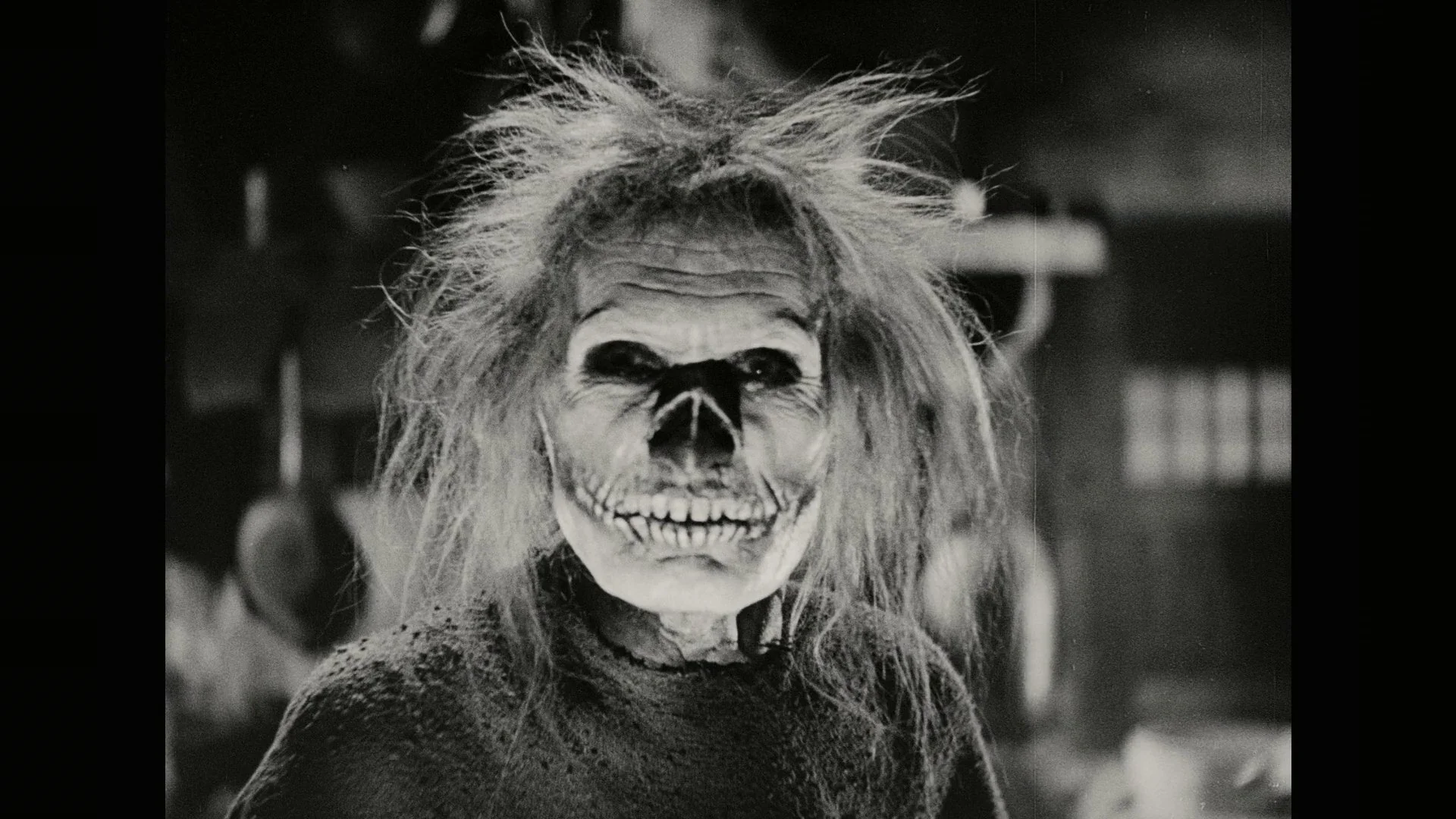
Weimar Germany’s three greatest film directors were Fritz Lang, F. W. Murnau, and G. W. Pabst. Two, Lang and Pabst, were Austrian. All three moved to the United States, where Lang succeeded, as, prior to a fatal car crash, did Murnau. But Pabst did not. So, with the Nazis running Germany, he resumed his career in France instead. He may or may not (accounts differ) have been planning to give Hollywood another try, but, if so, he waited too long: Pabst was in Austria, by then incorporated into Hitler’s Reich, visiting his elderly mother when war broke out.
In the engrossing, grim, and, on occasion, darkly comic Lichtspiel (originally published in 2023), the German author Daniel Kehlmann describes, invents, or embellishes what happened to Pabst—and what he did then. Translated into English by Ross Benjamin and renamed The Director, it was released in the United States earlier this year. At its core is an examination of the relationship between an artist, his art, and the tyranny under which he works (and with which he works)—my dreary description of an enthralling, disconcerting, shape-shifting ride.
Lichtspiel is an old German word for cinema. Literally, it means a game (or play) with light. Used as the title of a book, it presages trickery ahead. Pabst was no Nazi and never pretended to be one, but he acted out a version of himself sufficiently accommodating to satisfy the authorities in Berlin. Kehlmann, The Director’s second “director,” then remolds that remodeled Pabst to fit the story he wants to tell, which he bolsters by recruiting a cast both fictitious and not, and by playing games with chronology and with reality itself. In a book filled with unreliable voices and confected events, some of what is being depicted can only be attributed to lies, hallucinations, a vivid imagination, and one or two trips into the surreal or, maybe, the supernatural.
When Pabst returns to “this Berlin ruled by brutes,” the city appears at times closer to some of the Expressionist dreamscapes—if dream is the right prefix—so often associated with Weimar:
[T]he streets seemed to have been treacherously rearranged . . . the edges of the houses seemed askew; under the streetlamps fell sharply delineated shadows, darker than black; and while the street down below rolled away very straight into an endless distance, a chimney up above thrust itself into an oversize moon. This was how films had looked fifteen years earlier, and strangely enough this thought soothed him.
Though not for long. The next day, he keeps his appointment (no choice, really) with “the Minister” (unnamed, but obviously Goebbels). Their meeting is one of several remarkable set pieces that are The Director’s peaks. Ensconced in a massive office reached only through a bewildering sequence of corridors, the Minister—of whom, unnervingly, there were briefly two, until the second merged with the first before Pabst’s eyes “in a blur”—is ebullient, charming, threatening, volatile, monstrous, in charge, and, unlike those people in Hollywood, familiar with Pabst’s work: “Great admirer. Palu, magnificent! [The pacifist] Westfront masterpiece, despite everything! Street, politically not for me, but Garbo, God, Garbo!”
The deal the Minister offers is straightforward enough. A concentration camp is always an option, but instead of that, Pabst—whom the Minister, brandishing a menacing papal pun, inaccurately labels “rote Pabst” (Red Pabst), a Communist—merely has to apologize for past ideological transgressions and do his part to “build a new Germany.” His movies won’t be political but “artistic . . . sublime,” and the Minister has just the thing for him. Pabst demurs, but once in the car that will take him to the railway station, he is already reading the script.
The Minister/Goebbels is one of numerous historical figures allocated roles by Kehlmann that may, strictly speaking, be fictitious but, hallucinations and elements of the fantastic apart, are more or less plausible. Among them are two legends that Pabst did much to create, Greta Garbo, who starred in his Die Freudlose Gasse (Joyless Street) in 1925, and Louise Brooks, with whom, later the same decade, he made two films, Die Büchse der Pandora (Pandora’s Box) and Tagebuch einer Verlorenen (Diary of a Lost Girl), and spent one night.
Some of these characters are used to demonstrate the different ways and different levels of enthusiasm with which creative types went along with the Nazis. At the far end of the spectrum there is Leni Riefenstahl and at the other a lightly disguised P. G. Wodehouse. Wodehouse had been caught out by the speed of the German advance into France in 1940 and was interned for a while in Silesia, an experience he related in some good-humored and apolitical but certainly ill-advised broadcasts. Afterwards, he lived in Berlin for a while, before returning to France to await a tricky liberation.
In The Director, the imitation Wodehouse’s inimitably Wodehousean account (a topping pastiche, Mr. Kehlmann) of his (fictional) attendance at the premiere of Pabst’s Paracelsus (the Englishman had been conscripted to provide “international flair”) is, despite his running into Pabst’s wife, who is drunk and desperate to get out of Germany, and a frightening ending, unquestionably the funniest of the book’s set pieces. Its highlights include encounters with Riefenstahl, the Nazis’ less gifted but more reliable approximation of the Soviets’ Sergei Eisenstein: “She had evil eyes and bared frightfully white teeth. Her skin seemed to be cast from Bakelite.”
Riefenstahl had not enjoyed Paracelsus: “Talking, talking, talking. . . .Without strong! Without talent! Without action!”
Our Wodehouse responds: “It is short on javelins, I suppose.” Earlier on, he had noticed a chilly exchange between Pabst and Riefenstahl. His, for want of a better word, keeper explains that Pabst had spent a few days working with her on her latest film: “supposedly it didn’t go well.” It didn’t.
As depicted by Kehlmann in another, considerably more sinister set piece, Pabst, who had codirected Riefenstahl in a “mountain film” in 1929 (the Palu referred to by the Minister), had been drafted by the ministry to lend a hand to Riefenstahl on her Tiefland (Lowlands), a troubled, hugely expensive production based on a Spain-set opera that was said to be one of Hitler’s favorites. Riefenstahl may have been the Busby Berkeley of fascist kitsch, but directing Tiefland ’s more human drama was proving a stretch. Casting herself at over forty as a young Spanish dancer—Hammelfleisch dressed as cordera—had not helped:
Pabst took off his glasses. Now his vision was blurred, which made it better: something brownish gray in a billowing dress was briskly jumping back and forth and clicking the castanets.
He is told that filming is going “wonderfully” and that Riefenstahl doesn’t need any assistance, although she will listen to “consultants.” Pabst’s efforts are repeatedly thwarted by “the greatest director in the Reich.” Angering her could have . . . consequences.
Looking at the extras, Pabst wonders how Riefenstahl has recruited so many young men, a scarce commodity given the demands of the war. He speaks to one of them. He has a curious accent, “half Italian, half Slavic.” He is very thirsty, and when Pabst arranges for him to get some water, other extras chip in saying that they are thirsty too. When Pabst asks if there is anything that can be done, he is reminded that time is money. He gets back to work. An assistant subsequently informs a horrified Pabst that the extras have come from a camp (they were Gypsies—Roma and Sinti—and some were later murdered in Auschwitz):
“There’s nothing we can do. We didn’t make it happen. We can’t keep it from happening. It has nothing to do with us. . . . Nothing can be done.”
“No,” said Pabst. “I guess not.”
Pabst had reason to go along. There was no way out, no Trapp door into Switzerland. If he had defied Goebbels, the regime would also have taken out its wrath on his wife, his child, and his mother too.
There was pull as well as push. Back in Germany, budgets were generous, and Pabst had his pick of the best creative and technical talent (that was still there). Making a movie, unlike, say, writing a novel, could not be pursued alone. Artistically, like other directors in that time and place, he would be freer than many imagined. Film under the Nazis was not all parade grounds, evil Jews, and heroic soldiers, or even, overtly anyway, political. Escapism had its uses, especially as the war soured.
Pabst is not punished for a bizarre, jarring sequence in Paracelsus, the second of the three movies he shot in those years, that could be read as an allegory of the madness that had swept through Germany. “What the Devil was that?” asks the Wodehouse character at the premiere, who has at least an inkling.
“Once you get used to it and know the rules,” a fellow director reassures Pabst, “you feel almost free.” But abiding by the rules has a corrosive effect. Pabst’s (fictional) son, attending an elite school, complies first to survive, then out of conviction. Pabst’s wife turns to drink. And Pabst learns the value of silence, of euphemism, of going along, of overlooking. Paracelsus starred Werner Krauss, an excellent actor but best known these days for his performance in the notoriously anti-Semitic Jud Süß, a film that matched his own prejudices.
Pabst justifies all this, to himself perhaps, to others certainly, by the importance of art. That’s what matters, that’s what endures whatever the circumstances under which it was made—a logic he takes to a terrible conclusion in the book’s gripping last great set piece. He is in Prague finishing Der Fall Molander (The Molander Case) as the Red Army approaches. With his moral sense blunted by all the overlooking and his belief in the all-importance of art curdled into fanaticism, he crosses a line that should never have been crossed.
The book concludes with a note, prompted by Pabst’s relatives, in which Kehlmann stresses that although The Director was
largely inspired by the life stories of the historical G. W. Pabst and his family, it is a work of fiction. . . . The Molander Case is considered lost. Practically nothing is known about the circumstances of its shooting.
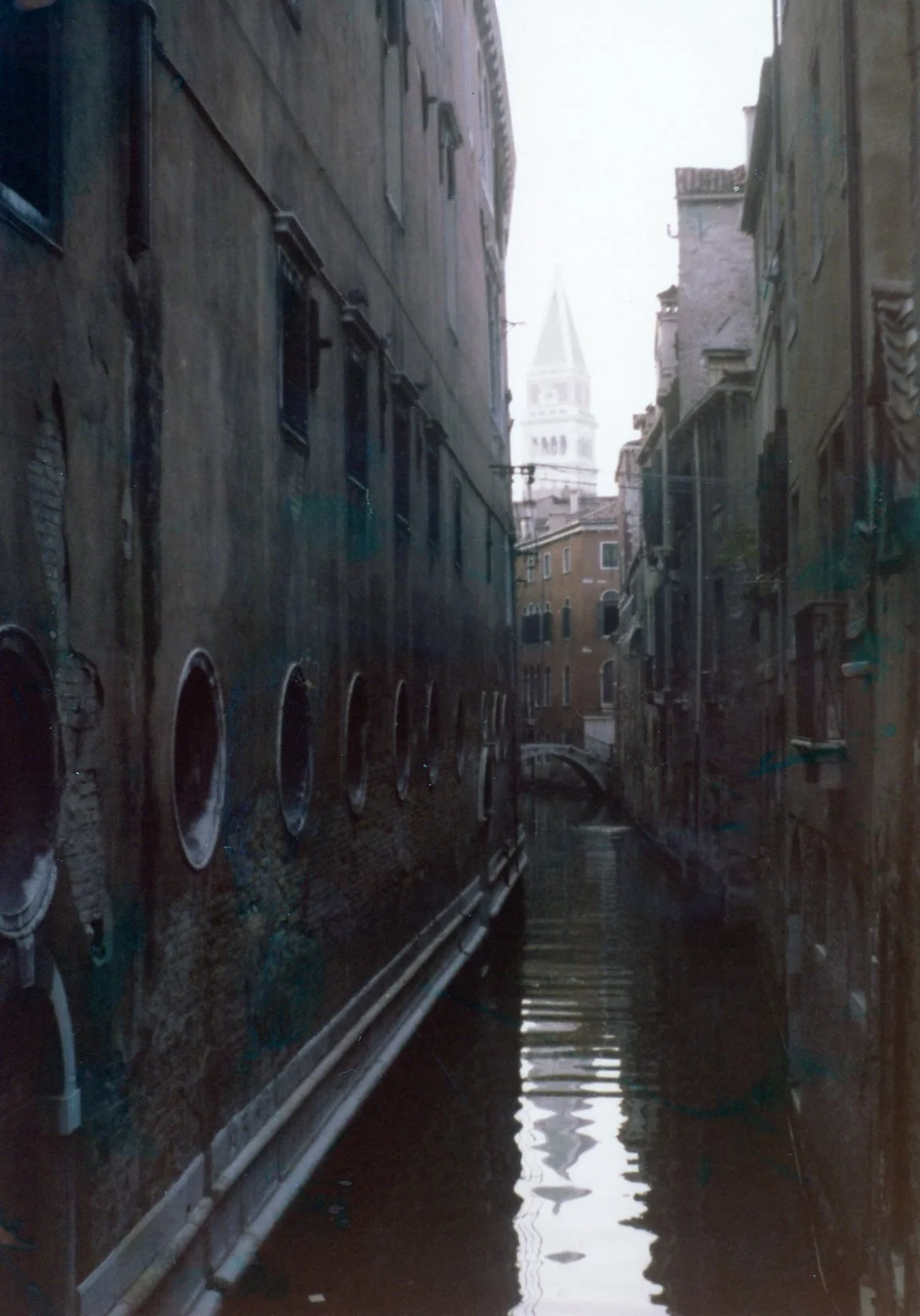
Venice, August 1976 © Andrew Stuttaford
After wartime Berlin and an increasingly chaotic Prague, fin de siècle Venice could be a welcome break, and so to Venetian Vespers, the new novel by the Booker Prize–winning Irish writer John Banville. Note that “could.” Venetian Vespers is prefaced by a quote from The Turn of the Screw: “I remember the whole beginning as a succession of flights and drops, a little see-saw of the right throbs and the wrong.”
No less ominously, its opening paragraph features an eerie scene that the narrator, a writer named Evelyn Dolman, has been “dreaming of for months”: “Dusk, a deserted room, a scrap of black silk on a marble table, darkening waters beyond.”
Dolman is convinced that, with a view of what “must be the lagoon,” the room is connected to Venice, “that mysterious, not to say phantasmal, city set, impossibly, in the midst of a swamp.” Venice had been on his mind. At the time, he was due to go there with his new wife. He had never been to La Serenissima, yet the room not only seemed familiar, but also he felt it was one in which he had already lodged.
Those hoping for a cheery read filled with merry gondoliers will be disappointed. But before the gloom really descends, there is Dolman’s droll and delightful account of his failure to achieve the literary glory of which he, armed with his “pen, that steely poignard,” had once dreamed. Instead, he had to settle, not entirely unsuccessfully, for Grub Street: Punch, The Strand, articles for national newspapers, short stories, even book reviews. His Layman’s Guides to the cathedral cities of the south of England had been “warmly received,” although his “searing” novel describing the life of the poor had not. Given this, humble origins, and a touch of the sturdier variety—“No Beardsley I, no, nor Wilde, either”—of knut about his dress sense, it is a surprise that he landed Laura, a beautiful American heiress. Who chose whom? Good question.
Solving that mystery is complicated by the fact that the only person from whom we ever hear directly is Dolman, in an account apparently written (for whom?) some years after the events of that winter in Venice that still seem to define and disturb his existence, reduced to “the ashen wastes of aftertime” in which he dwells. “Seem,” and not because we only have his account of a saga in which a good number of the protagonists have little interest in the truth. Does he? Moreover, much of what he relates is so bizarre or so tortuous that it can be hard to believe, even more so as he betrays signs of mental disturbance. Was he gaslit, not so compos mentis in the first place, or both? More questions.
For a Grub Street hack Dolman describes his misadventures in a sharp, surprisingly compelling way—Venetian Vespers is hard to put down. Dolman’s ghostwriter from the future uses his plastic keyboard to supplement the steely poignard, finding a clever, roughly credible balance between late Victorian orotundity, contemporary readability, and its nominal author’s limitations.
A recurring dream was not the only warning that something might be amiss even before Venice. There had been something off about the early days of Dolman’s marriage. The enigmatic Laura is often distracted, not quite there, and in the bedroom, so to speak, she is not there at all, a striking contrast to the inventive ways in which she had marked her engagement. Dolman had been “shocked to discover that [his] bride-to-be was no stranger to the night-world where Eros reigns,” not the worst thing, one might think, but Dolman starts wondering—and cannot stop wondering—“in whose embraces had she acquired such expertise in the arts of love?” Another question. Was its answer, speculates Dolman, why her father had abruptly changed his will shortly before the accident that claimed his life? Just about all his millions went to Laura’s spinster sister.
Once in Venice, recalls Dolman, he never lost:
the sense of having been picked out from the groundlings and led onto a kind of moving stage and drawn irresistibly into the midst of a steadily darkening drama, in which everyone had learned off his or her part to perfection and played it with the utmost expertise, fluidity, and panache—
everyone, that is to say, except myself, poor clod, who had not been given so much as a glance at the play-script.
As Dolman describes and later comes as close as he can to interpreting what then transpired, that seems to be a better explanation than many. The very first night in the rambling, “decaying,” and “immemorially ancient” palazzo where the newlyweds will be staying, he, restless, leaves Laura behind to go out on a stroll, heading at her suggestion to Florian’s on the Piazza San Marco. There he is greeted by Freddie FitzHerbert, a visibly shifty individual claiming to be an old school friend (Dolman doubts it), unwelcome company. But Freddie’s sister, Francesca, no, no, Cesca, well . . . Dolman returns to the palazzo, drunk, infatuated with Cesca, and in “a state of general amorousness.” Angered, once more, by his wife’s “calm remoteness” and his own frustration, he rapes her. By the time he wakes up, badly hungover, Laura has vanished. He never sees her again, probably. If a trap has been set for him, he has brutalized his way into it early.
Years later, Dolman is, he writes, still unable to unravel all of what followed, a chronicle of manipulation and deceit in which little is what it first appears, and few are who they first seem. Too much feels off-kilter: strange sightings, snippets of conversation, the palazzo’s trickster layout, an infection, a sudden death, more. And then there’s Venice itself, a city despised by Dolman and not just for its unfortunate foreign location. Its chill cannot be measured by the thermometer; its shadows, mists, and unlit corners reinforce Dolman’s growing unease, and then:
Out of the dark under an archway a figure stepped forward suddenly and accosted me, speaking in an urgent, rapid undertone. It was a female of some sort, young, it seemed, and slight, and shrouded in a long dark cloak, the hem of which rustled on the floor, and a soft, floppy hood that almost entirely concealed her features. . . .
The figure in the cloak went ahead, clasping me by the wrist now with a cold, bony hand, that might have been that of a child, but the touch of which was like that of some clammy, spined creature of the deep. The steps were steep, and treacherously narrow at the inner sides where they merged with the curve of the wall.
Up we went, and up, she ahead and I following after, into ever deepening gloom.
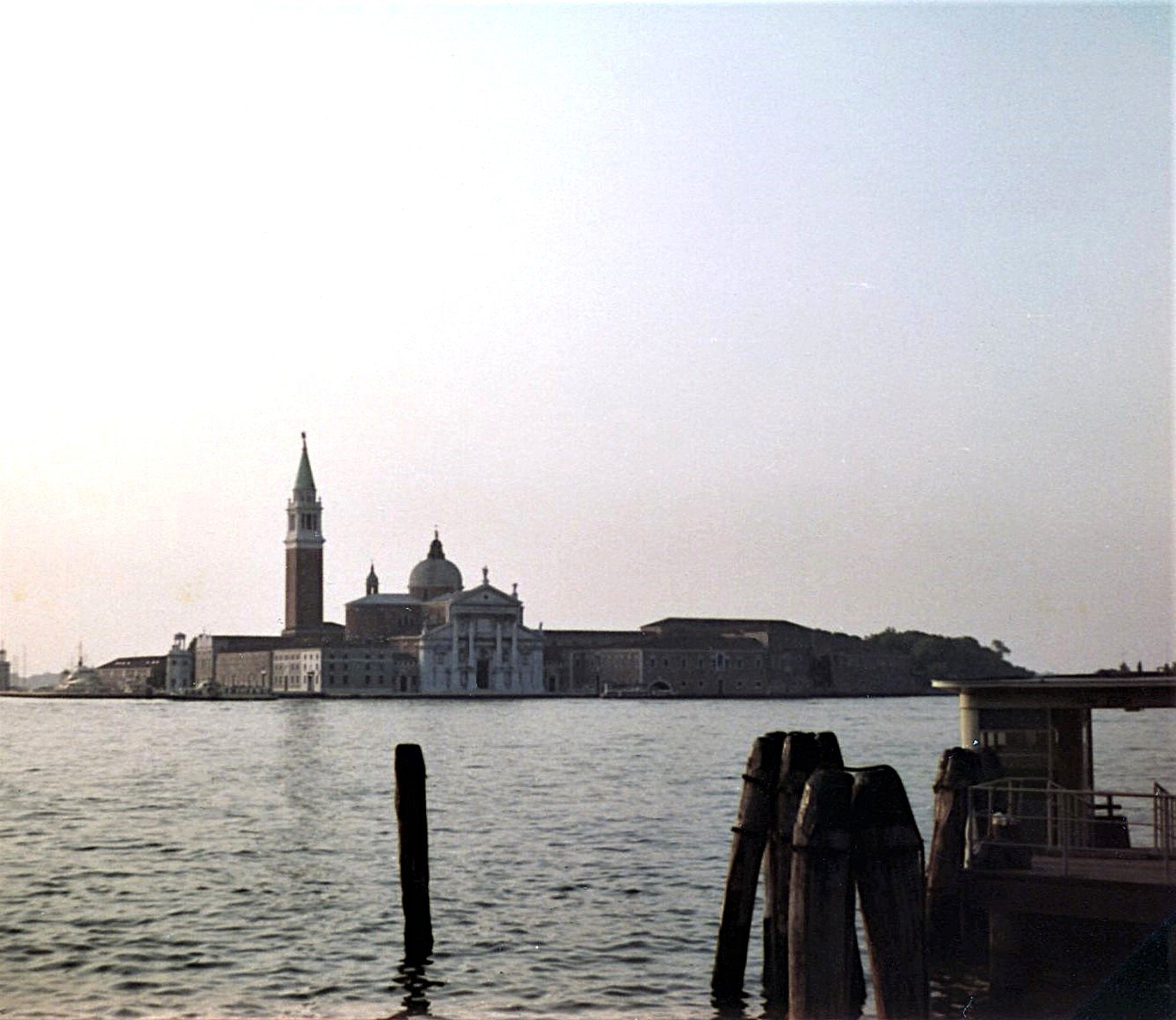
Venice, August 1976 © Andrew Stuttaford
As John, the doomed husband in Daphne du Maurier’s “Don’t Look Now,” was to learn, Englishmen should not chase after hooded figures in Venice:
The child struggled to her feet and stood before him, the pixie hood falling from her head on to the floor. [John] stared at her, incredulity turning to horror, to fear. It was not a child at all, but a little thick-set woman dwarf . . . and she wasn’t sobbing anymore, she was grinning at him, nodding her head up and down.
“Don’t Look Now” and “The Birds” are the two standouts in After Midnight, a new collection of thirteen previously published short stories by du Maurier (1907–89). Most are—as short stories go—relatively lengthy, and they are, in varying degrees, dark, although the source of that darkness (supernatural? psychological? something else?) is often left ambiguous. The reason that our former feathered friends have turned on us in “The Birds” (a tale that differs in many respects from Alfred Hitchcock’s adaptation) is more mundane, something to do with the wind, an Arctic air stream, and the tides, although as so often in du Maurier’s tales of unease, the i’s are not dotted and the t’s are not crossed. She challenges our imaginations to do their worst and feeds them with more than enough to do so.
I was struck, rereading these stories, in some cases for the first time in more than a few decades, by their sense of a bygone era. This adds an extra patina that ought to appeal to a modern audience. Thus, read now, rather than when I first did in the 1970s, “The Birds,” which was initially published in 1952, more clearly evokes thoughts of the relentless attack from above to which Britain had been subjected only a few years before. There are references to “the war” of a type commonplace in Britain for decades after 1945 but which stand out far more now. The story may also hint at the anxieties of the early Cold War years: “They’re saying in town the Russians have done it. The Russians have poisoned the birds.”
As had so nearly been the case in 1940, comforting certainties no longer held. Spotting something gray and white on the sea, the tale’s hero, Nat, is confident that it is the “good old Navy . . . they never let us down.” But it was the gulls, massing amid the breakers.
The birds are disciplined, merciless: “they tried to go for young Johnny’s eyes.”
In “The Alibi” (first published in 1959 in a collection titled The Breaking Point), a gray-uniformed nurse pushes “a pram containing identical twins,” and a strip curtain is still made out of “old wartime blackout material.” In “The Pool,” which also appeared in The Breaking Point, children drink ginger beer on the lawn to fend off the heat. Grandpapa makes do with a “fly-whisk used years ago in Egypt.”
Inevitably, du Maurier’s own life, her views, and her personality emerge. In the startling “The Blue Lenses,” a woman has come through an operation with her eyesight more or less restored. But there’s a catch. Everyone she sees has the head of an animal. Which particular animal reveals who they really are, with some alarming results. Her husband now has the head of a vulture. Not good. “The Blue Lenses” was one of a series of stories written, du Maurier told a friend, to get the “pottiness,” which had included growing paranoia, out of her system, and it was not the only one to display a dark perception of human nature, something detectable in many of her tales over the years.
This could extend to the way she saw marriage, relations between the sexes, and, more broadly still, sexuality itself, a point of view influenced by both her own marital troubles and her bisexuality. Thus, whether deliberately or not, “Ganymede,” which is also set you know where, can be seen as a riposte of sorts to Thomas Mann.
When du Maurier, by then renowned as the author of Rebecca, showed Victor Gollancz, her loyal publisher, the stories that were mostly premiered in The Apple Tree (1952), he was thrilled by the new direction she was taking but recommended dropping two of the candidates. Of the dropped, “Split Second” appears in After Midnight. So does “Monte Verità,” to which Gollancz suggested a key change prior to its eventual inclusion in the earlier volume, which du Maurier accepted and which I shall not reveal. The twists so characteristic of du Maurier’s tales are best left for readers to discover.
Gollancz warned her to brace for some shocked reviews. These odd, sometimes nasty tales were not what would be expected from someone tagged as a “romantic” writer. Oh, well. She pressed on. As Margaret Forster relates in her fine 1993 biography, du Maurier was delighted to have an outlet for her “macabre tastes.” More such stories were to follow, and, even if one or two of those in After Midnight don’t quite work—too long, mainly—this collection is well worth a look, now.
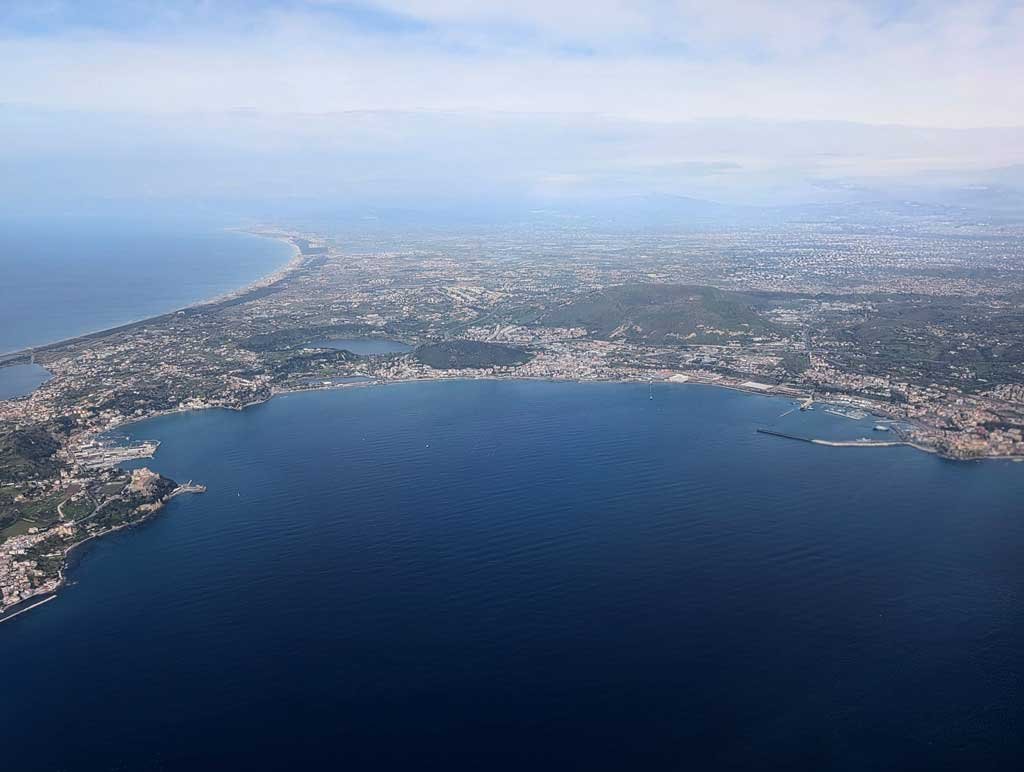
It is back to Italy again, either in reality or as fantasy, in the three novellas that make up Room on the Sea by the Egyptian-born Italian American writer André Aciman.
Of the trio, it is the first, the magical, in a couple of senses, The Gentleman from Peru, that is the must-read. Daphne du Maurier would probably agree. Like du Maurier, Aciman toys with classical myth, in this case that of the Aeneid ’s lugentes campi (fields of mourning), an area of Hades where the heartbroken linger. He also plays with our notion of time, a device used by du Maurier in two of the stories in After Midnight.
The hotel is on the Amalfi Coast, not far from where the Romans believed that the gateway to the underworld could be found. Its dining room is quiet, as civilized dining rooms should be, except for a group of younger upscale Americans. One, Mark, has hurt his shoulder playing tennis. An older, well-dressed man, another guest, who has been, the Americans think, studying them (“weird”) walks over and briefly lays his palm on Mark’s shoulder. The pain is gone. He accepts a glass of wine as thanks and introduces himself: Raùl. He has come to this area every summer since his earliest childhood. He owns a house nearby, but it is leased out.
One of the Americans, Margot, asks him an oddly aggressive question. Raùl doesn’t mind. It is, he says, a good way to get him to say more than he normally would to a perfect stranger. Margot snaps back that she is not “perfect.” Raùl does her one better, adding that she is not a stranger either and then tells her something about herself that he could not possibly have known, a trick he repeats with the others, including one, he says that has taken “three centuries” to be revealed. Margot, meanwhile, has stormed out.
As the beginnings of stories go, this is hard to beat.
Later, Raùl takes Margot, whose early hostility has faded a little, then completely, on two excursions, each beginning with almost identical lunches, to half-hidden places that tourists don’t see, places from his past that evidently mean a lot to him. They go to the house he owns, and can still visit:
On the stairway up, however, she suddenly stood still, turned around, and, looking out of the bay windows in the library, simply said: “I know I’ve been here before.”
He did not say anything, but stared at the afternoon glow upon the stairs and to himself muttered, “I know.”
And that’s all I will reveal about this exquisite, haunting tale. To say more, other than, like the other two novellas in Room on the Sea, it is about longing, and, in Raùl’s case, almost unimaginable longing, would be to give away too much.
To move, in the story that gives this book its name, to Manhattan’s central jury room and its environs is something of a comedown. It is there that a romance is edging into being between two potential jurors. The duo are two stereotypically slightly atypical stereotypes. Paul is a successful, semiretired Wall Street lawyer (Upper East Side), Catherine a psychiatrist (Upper West Side). Both are married to spouses who hate cilantro. No drama there—it’s vile—but it is something trivial over which the would-be adulterers can safely but disloyally bond. The tale proceeds smoothly, as does the carefully incremental courtship. Their chat is a little precious, maybe credibly so, but do psychiatrists really say things like “All people have a weeping, hurt little child in them”? If they do, thank God for pharmaceuticals.
Both are empty nesters, with marriages in a rut but not unhappy. In a link to The Gentleman from Peru, there is talk of lives and might-have-beens. It turns out that they had lived in the same building for two years, when she was at nyu and he was a “rookie lawyer.” The discussion, carried out in a coffee shop, a Chinese restaurant, an art gallery, the usual, enters more significant territory, to things they’d like to do together, in another lifetime of course. And then this other lifetime begins to heave into view, a lifetime that could include a lengthy visit to Italy. The clock is ticking. I noted grimly that, judging by the dates they were in that same building, these conspirators planning what might be a last, if hopefully prolonged, hurrah must be my age.
The final novella, Mariana, was inspired by the Letters of a Portuguese Nun (Lettres portugaises) a seventeenth-century volume comprising five letters, allegedly written by Mariana, a Portuguese nun, seduced and forsaken by a French officer. It is now generally believed to have been a work of fiction by a French aristocrat. Aciman’s Mariana is an American graduate student at an academy in, yes, Italy seduced and then coldly dumped (“no one told me of my expiration date”) by Itamar, an artist who is also resident there. She is stuck, horribly, painfully stuck. She cannot go back to being the Midwestern girl she once was, but she cannot move forward either. If there’s an alternate life, she cannot see it. The entire novella consists of a single eloquent, anguished letter Mariana has written to Itamar describing the affair, its aftermath, and her feelings, a letter from what Evelyn Dolman would call the aftertime, a letter she will never send.