Chef's Surprise
Peter Pomerantsev - How to Win an Information War: The Propagandist Who Outwitted Hitler
National Review, May 16 2024 (July Issue)
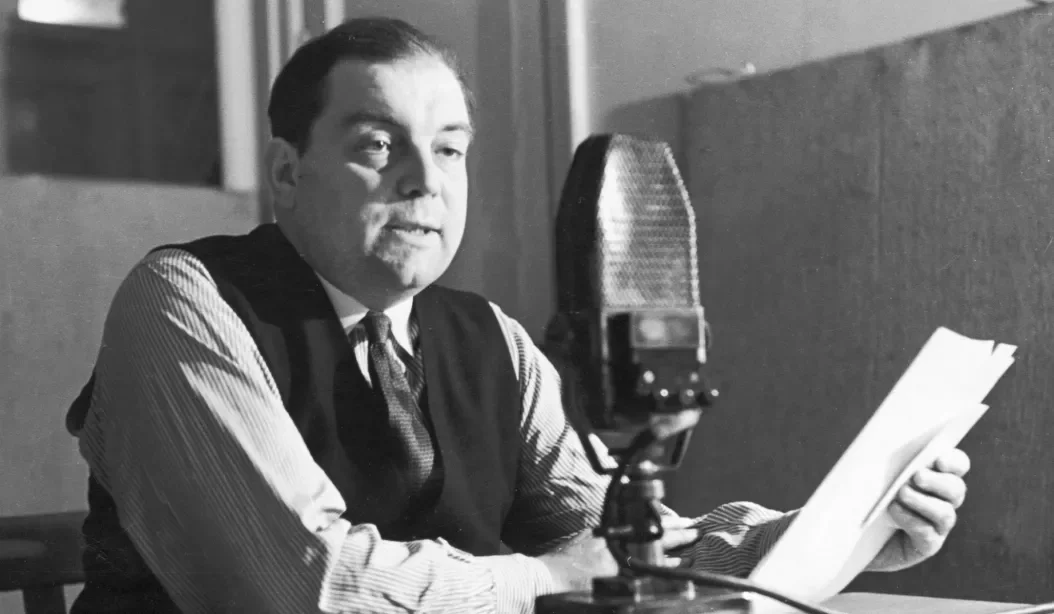
In 2006, Peter Pomerantsev, a British writer born in Soviet Ukraine (his parents emigrated shortly after his birth), moved to Moscow, wanting to work in television. As set out in his Nothing Is True and Everything Is Possible (2014), most media programming there was organized to entertain, beguile, and distract, to preserve the illusion of freedom even as its remnants were being dismantled. His latest book, How to Win an Information War, revolves around the World War II activities of Sefton Delmer (1904–1979), a British propagandist dedicated not to preserving illusions but to whittling them away. His most remarkable project (probably) was using GSI, a “radio station” purportedly based in Germany (in reality in the south of England), not to win over his German listeners but to unsettle them in ways that the Nazis would not welcome.
With his understanding of propaganda and sharp eye for the unnervingly offbeat, Pomerantsev has unearthed an ideal subject in Delmer. Brought up in the Kaiser’s Germany, Delmer was the son of an Australian-born British academic who was teaching English literature at Berlin University, not the place to be in August 1914. After rejecting an offer of German citizenship, his father was arrested, but young Sefton, who spoke fluent German, continued to attend his school in Berlin, a tricky experience. His father was eventually released, and the family was allowed to leave. But, although now ensconced in an English school, Sefton was still treated as an outsider.
In the end, he came to feel at home in Blighty, but by 1928 he was back in Germany. He had been appointed chief Berlin correspondent for the Daily Express, a plum posting at any time but particularly when Weimar’s greatest metropolis, or the more fortunate parts of it, were caught up, Delmer recalled decades later, in a “mad whirl, . . . a kind of Pompeian revel on the eve of the Vesuvian eruption,” a revel for which he was well suited.
In Berlin, explains Pomerantsev, Delmer found “that everything that had made him vulnerable as a child — his fluid identity, his cultural ambidexterity — would suddenly be turned into an advantage.” His insider-outsider knowledge of Germany, his manipulative skills, and his position at the Daily Express all helped propel him into high society and, once he had identified Hitler’s potential, into Nazi circles too. He first interviewed Hitler in 1931, with other interviews and many conversations to follow; he cultivated prominent Nazis, and they cultivated him. They saw him as a possible conduit to British intelligence (he wasn’t), but they also felt comfortable with this bilingual Englishman who invited them to parties embellished with sex appeal (dancing girls) and snobbery (Hohenzollern princes) and who would, at times, write excitedly about their rallies and campaigns. As Hitler addressed a crowd, “the tempest of answering hails swept the square like a hurricane.”
Suspicions that Delmer had been too close to the Nazis hung over him for years. His defense that “a reporter will shake hands with the devil himself on a story” was not enough to dispel them. In fact, far from being a fellow traveler, he had been quick to sound the alarm, telling his newspaper’s formidable proprietor that should Hitler become chancellor, a preventive war would be needed.
When, a few years later, a distinctly non-preventive war broke out, Delmer was, after considerable hesitation by the authorities, finally handed the role he wanted in Britain’s propaganda apparatus. The background that qualified him so perfectly for such a job — his deep familiarity with Germany and the Germans as well as his former friendship with leading Nazis — also again raised doubts over his trustworthiness. These were overruled when it became evident that German radio was winning a wider audience in Britain than British broadcasters managed to attract in Germany. Delmer was put in charge of one of the two British faux radio stations supposedly broadcasting into Germany from Germany. One, on the left, called for revolution, and the other, which took a more right-wing stance, had been on hiatus until Delmer took the helm. He was told that no holds should be barred and that bad language — part of the draw of the most successful German propaganda program — would be required. He was happy to oblige.
Given Hitler’s popularity and the triumphs that marked the early years of his war, Delmer considered that attempts by the British to engage with “good Germans” and try to reason them into rebellion would get nowhere until Germany was clearly losing the war. He believed, relates Pomerantsev, that it would be more productive to appeal to baser, less elevated, more self-interested instincts. Above all, the grip of the Nazis’ propaganda was so strong that people’s connection to them had to be attacked at its root: “One needed to climb into [their] relationship — not lecture them from outside.”
One crack in that relationship that could serve as an opening was the difference between Germans’ admiration for their armed forces and their Führer, on the one hand, and the disdain they had for Nazi functionaries, often seen as self-important and venal, on the other. Delmer dubbed the latter die Parteikommune — a clan out for itself, the antithesis of Hitler’s loudly proclaimed transformation of “Aryan” Germans into a united national community.
Delmer used GSI as a vehicle for “black” propaganda. Ordinary “white” propaganda is essentially presented as what it is, but “black” propaganda conceals its true origins and is disguised as coming from someone or somewhere else. GSI’s scripts were written to convince its listeners that they were eavesdropping, Delmer wrote, “on the insider conversations of a clandestine military organization” located in Germany, patriotic, conservative, anti-communist, appalled by the Parteikommune, distrustful of Nazi radicalism, but still retaining some (it varied) sympathy for Hitler. At that time, GSI’s content bore no resemblance to anything else sent out by the BBC or London’s other propaganda outlets. Its purpose was to disrupt, not to convert.
GSI’s pretend troops were led by an individual known only as der Chef. Der Chef was later joined by an “adjutant” and others, like their supposed leader, all played by German émigrés. Der Chef was performed as a Prussian soldier of the old school, foulmouthed, antisemitic, and angry, a virtuoso of taboo-shattering vitriol frequently directed at the SS, the Gestapo, and the Parteikommune. And then there were the gossip and rumors he passed on, given credibility by the way disinformation was buried under truths and half-truths, and made all the more inviting by salacious, sometimes wildly pornographic tales (“bait,” said Delmer) featuring, among other highlights, orgies, sadomasochism, a whore in front of an altar, and disgraceful uses of (rationed) butter. These tales were so lurid that a notoriously prim British cabinet minister complained to the foreign secretary, possibly after a tip-off by critics of Delmer who favored a conventional, more idealistic approach.
But Der Chef survived to rage on, albeit with less obscenity, spreading conspiracy theories that aped and distorted those of the Nazis (Jews, Bolsheviks, and traitors were lurking within the party elite), as well as making more routine complaints about corruption, incompetence, access to inaccessible delicacies, and all the rest. And all the while Delmer kept trying to widen the rift between party and people and between party and army (thus battlefield setbacks could be blamed on the Partiekommune) not by calling for revolt but by planting ideas at odds with the myths that enveloped the Reich. As Pomerantsev sees it, Delmer “stimulated [Germans’] curiosity, whereas the Nazis wanted them to give up on truth.”
Before too long, Der Chef was unmasked as a British ruse, although he lingered on at his post for another year. Delmer, meanwhile, was widening his propaganda war. “His Empire of Tricks was expanding,” writes Pomerantsev, and his ingenious new ploys are vividly described.
Delmer’s success helped corrode morale, but it’s impossible to say how much it contributed to Germany’s defeat. For the most part, the armies of the Third Reich fought on until they fragmented along with the regime. The Allies’ insistence on unconditional surrender was not, especially with the Soviets being one of them, something that even the most skillful propagandist could talk away.
There are, of course, parallels between the Russian and German trajectories after defeat in, respectively, the Cold and Great Wars. And so Pomerantsev’s analysis of propaganda (and its effects) in today’s Russia complements rather than detracts from his fascinating, if flawed (Freud’s shadow looms a little too large), discussion of its Nazi precursor. Germany then and Russia now have in common narratives of humiliation, rebirth, and revenge, bolstered by national and ethnic myths and weaponized to pave the way for dictatorship, war, and barbarism. But any information efforts to counter those narratives can, as Pomerantsev notes, be only “as effective as the military operation” that backs them up.
And 2024 is not 1945. Unless Ukraine drives out the invader or a liberal revolt prevails in Russia (both are unlikely), the least bad outcome we can hope for is an unstable armistice, a continuation of a new cold war, and harassment (cyberwar and all the rest) inside and outside Ukraine. This will be supplemented by technologically enhanced information warfare, viral and dangerously convincing, which has long since left Delmer, let alone Gutenberg, behind. Combating it will take ingenuity, speed, and determination. That won’t be easy, but it will provide an infinitely better defense of our freedoms than retreating into an information bunker within which unaccountable officials use conveniently flexible definitions of disinformation and misinformation to tell us what we can and cannot say.
This article appears as “The Dark Art of Propaganda” on National Review Online.