Incendiary Device

Chris Cleave: Incendiary

National Review Online, September 15, 2005
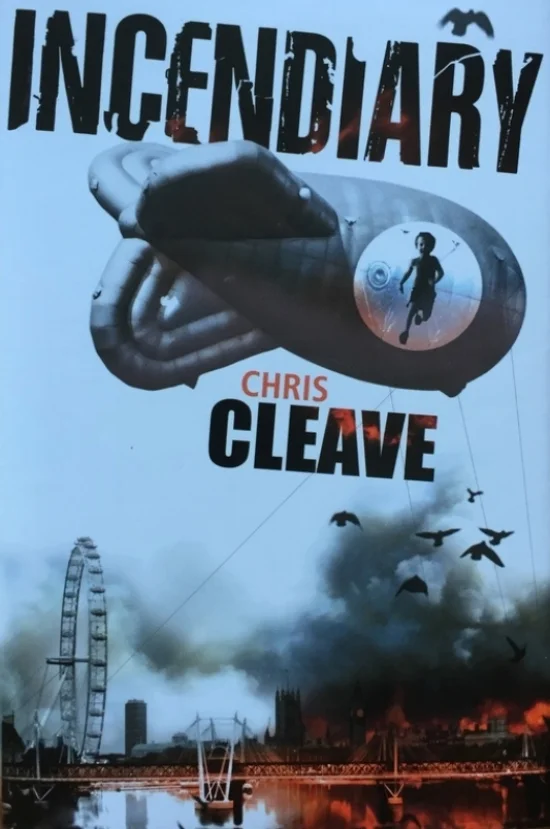
Incendiary.jpg

To British author Chris Cleave, it must have seemed like a dream come true. The rights to Incendiary, his first book, had been snapped up, an unusually large print-run had been prepared, and an extensive promotional campaign was in the works. In a sign of a best-seller to come, glossy posters advertising Incendiary were already up on the walls of London's subway system designed to entice commuters into buying what many thought would be the summer's big read.

And then, on the very day that Cleave's book was released, everything went horribly, tragically wrong. His dream, in a sense, became real, and, for some of those commuters, it became a nightmare, too. They were never to read that book. Their fate was to experience it. Incendiary, you see, is about a suicide-bomb attack on the British capital. The circumstances are different (the bombs are detonated at a soccer game) from what actually happened that terrible morning this July, but the results were very much the same. Read the way in which Cleave's heroine, a working-class woman from the East End of London (thus the ropey grammar), describes the survivors emerging from the massacre that has consumed her husband and her son: "Their eyes were wide and glassy and quite often they stumbled but they never blinked. There must of been hundreds of them shuffling out of the smoke. All of them with their eyes huge and wide like things pulled up from very deep in the sea."

It was pretty much that way in London on July 7, 2005, the day that Cleave's book came out.

In the wake of the Tube and bus bombings, the promotional campaign was largely abandoned, and the posters were taken down. They had shown smoke rising above the skyline and the question, "What if?" London now knew. Fifty-six were dead, hundreds more had been injured. When a few advertisements for Incendiary still appeared in the press (the publications in which they appeared had already gone to print) there were public apologies, and while the novel did not disappear from the shelves (I bought my copy in a shop on London's Victoria Street in early August), it tended to be tucked away in a discreet corner, perhaps with the latest installment of Jeffrey Archer's prison diaries or other embarrassments.

As for its author, judging by recent interviews, he remains appalled by the "sick coincidence" for which his book will always be remembered. "I wrote about something that could happen, and then it did happen," he told the Washington Post, and now I feel that I'm fundamentally tied, probably for the rest of my life, to those events." Even if Cleave occasionally sounds as if he has forgotten that there were others who have suffered far more because of those "events", he's probably right. Still, he should not complain too much. Incendiary was partially inspired by the Madrid bombings and the book's London editor has recalled how the editing process was rushed through before London itself fell victim to an attack.

But even if it's somewhat unseemly for Cleave to grumble about the London bombers' inconvenient timing, the wider accusation against his novel, that it was a crass exploitation of a tragedy that was bound to happen (and had indeed already done so elsewhere) is unfair. The struggle against Islamic extremism is likely to be one of the defining characteristics of this new century. Novelists should not be expected either to ignore it or to treat it only with the softest of kid gloves.

Judging by the response of some critics, it seems, however, that they are. Writing in the New York Times, the perpetually aggrieved Michiko Kakutani was outraged by Incendiary's very structure. The entire novel takes the form of an extended letter to Osama bin Laden from that shattered, grieving East End mother, and to Kakutani the fact it "begins with the words "Dear Osama" and ends with its heroine imploring the Qaeda leader to leave his cave and move in with her" is "simple tastelessness." But that's only true if we succumb to the mistaken desire to make a fetish out of bin Laden, a man who needs, very badly, to be cut down to size, both for our sanity and that of those lunatic enough to idolize him. Bin Laden is a man, nothing more, a murderous crackpot who richly deserves to be the subject of satire and the grim graveyard humor that is so much a feature of Incendiary. It's worth noting too that by the time of the invitation to bin Laden, Cleave's narrator is delusional, exhausted and broken. She just wants bin Laden to stop what he's doing and if that means he has to move in with her, so be it.

Others have faulted Incendiary for excessive bloodiness, but while it is true that the book does occasionally descend into Grand Guignol (and loses some force because of it), Cleave's determination to describe the details of the carnage is an essential corrective to our tendency to gloss over exactly what it is that our enemies want to do to us. In a society so unwilling to deal with reality that we limit the amount of times that images of planes crashing into the World Trade Center (let alone the dismaying, repulsive aftermath) are broadcast, Cleave's visions of horror are a useful antidote against complacency.

Unfortunately, Cleave himself sometimes seems tempted by a close relative of that complacency, the guilt-ridden and absurd idea that we in the West have brought the current troubles upon ourselves—perhaps, even, that we had it coming. There are suggestions of this throughout Incendiary, and they are exacerbated by the way in which Cleave imagines the official response to the suicide attacks in the soccer stadium. While some of his touches are deft (the return of barrage balloons, nauseatingly rechristened "shields of hope," to the London sky for the first time since the Blitz, each one, grotesquely, decorated with a picture of a bombing victim), others only demonstrate the belief in Western viciousness and ubiquitous, sinister conspiracy that is all too common among the chattering classes on both sides of the Atlantic. So, for example, as the story progresses, it becomes clear that when it comes to the suicide bombings, the British government has some dark secrets of its own to hide. Meanwhile the U.K. is shown lurching away from liberty and towards the persecution of its Muslim minority, a malevolent fantasy that has been shown up for the nonsense it is by Tony Blair's stumbling and hesitant response to the slaughter on July 7.

To write this way is to reveal intellectual frivolity in the face of real danger, something that is reinforced by the way in which Cleave allows the tired irrelevancies of Britain's dreary class warfare (the novel's bourgeois protagonists are uniformly venal, snobbish, and, well, you know the script) to share center stage with terrorist mass murder. It's a mark of how low matters have sunk in Britain that even in this respect Cleave is not, alas, alone. In the immediate aftermath of the July 7 attacks the leftist mayor of London, the oddball and unpleasant Ken Livingstone, noted that the terrorists had picked on "working-class" Londoners, a peculiar, and not particularly accurate, comment that made some jaundiced Brits wonder if the mayor would have been less upset if a prominent investment banker or two had been included amongst the dead.

Perhaps Cleave's problem was that, imagination exhausted, he simply had to fall back on the prejudices of contemporary "progressive" orthodoxy. Judging by Incendiary there's plenty of evidence to suggest that its author did indeed run out of ideas. The later part of the novel degenerates into soap opera and is really not worth reading. But this should not detract from the substantial achievement of the first 60 pages or so in which Cleave uses the (famously difficult) epistolatory format to give us a remarkable portrait both of his heroine and of the terrible events that so haunted her:

And the question that will haunt his readers is not "what if?" but "where next?"
Loyalty Dance

National Review Online, February 19, 2004

Red-Color News Soldier by Li Zhensheng, Phaidon, 316 pages, $39.95

“A single death,” said Joseph Stalin, who knew a thing or two about such matters, is a tragedy; a million deaths is a statistic.” In trying to understand the holocausts of the last century, it seems to be the individual stories that move us the most. Enormity is best described in miniature. We are aware of the nightmares of Auschwitz, Treblinka, or Belsen, of the crematoria, of the bodies heaped into pits, but to grasp the full horror we turn elsewhere, perhaps to a young girl hidden in Amsterdam, scribbling, scribbling, scribbling as if words would shield her from the doom to come.

As with Nazi slaughter, so it is with the massacres of Communism. In the Gulag Archipelago, Solzhenitsyn chronicled the dungeons and killing fields of the Soviet charnel-house, but it is not so much the history as the man we remember, Alexander Isayevich, old Russia’s last hero, the prophet raging at Brezhnev’s squalor, the convict in the camp photo, the alter ego, Ivan Denisovitch, and his quiet day in hell, “a day without a dark cloud. Almost a happy day.”

But if in the West we are, too late and too little, finally coming to grips with the reality of the USSR, its eastern cousin has usually escaped such scrutiny. Oh yes, there will be some who tell tales of Red China’s first ten years (six, seven, eight million dead, maybe more, no one was keeping score) and others, almost certainly specialists in this field, who will whisper (careful, careful, there’s that chance of tenure to consider) about the hecatombs of the Great Leap Forward (twenty-five, thirty million perished, at this point the numbers blur). There are even a few dedicated souls who try to count the cost of the murderous carnival that was the Great Proletarian Cultural Revolution (perhaps one million gone, all on an old man’s whim), an episode of mass psychosis that destroyed the hopes of a generation, and, appallingly, found a wicked echo in the West in the self-indulgent spasm we now call ‘1968′.

But for the most part there is silence, a shrug of the shoulders, indifference, even denial. After all, these awkward events took place so far away, so long ago. Who knows what happened? Who cares? Besides, it is claimed, after warlords and emperors, Mao’s rule was progress of a sort. As for those teeming Chinese, well, their concepts of the individual bear no relation to our own, do they? They were happy, we are told, ecstatic even, in their primitive, but noble, communes, content to be coolies for Communism, wanting nothing more than rice, a little red book and a collective canteen.

Of course, when it comes to the crimes of Communism, we’ve heard similar excuses before, but in the way they are applied to China, it’s difficult not to think that there is something else at play, something racist, an old prejudice dressed up in new progressive clothing.

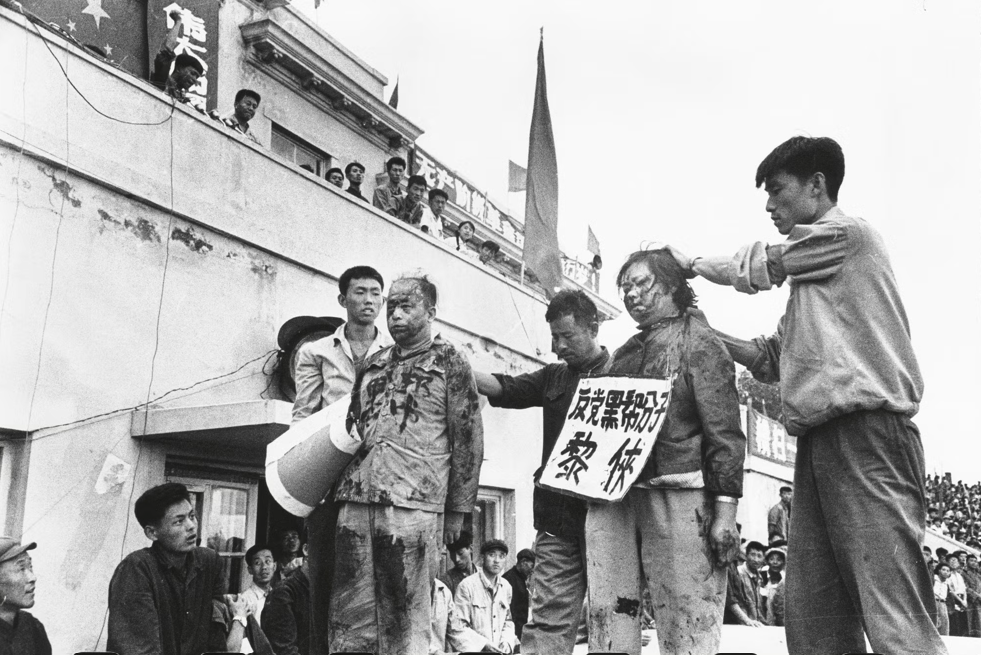
And there’s no better answer to it than a collection of photographs published late last year. In image after image Red-Color News Soldier reminds us that, beneath the red stars and the blue drab, there were individuals, tormented, tormenting, weeping, cheering, or perhaps just simply numb, staring impassively as some fresh victim is broken before them. This is the Cultural Revolution seen through the eye, and the lens, of one man, Li Zhenseng. It is this personal focus that will give readers greater insight into that time than many more conventional histories filled with the statistics that Stalin so despised.

Li was born, as the Communists liked to say, “in the old society,” the chaotic, war-torn China of 1940, but came of age “under the Red Flag.” Blessed with talent and an appropriately proletarian background, he made his way to film school and a job as the photographer for the principal newspaper in China’s far Northeast. It was 1964, the era of the Socialist Education Movement, Li’s camera records the rallies, military maneuvers, and, with grim inevitability, and in images reminiscent of the Soviet destruction of the kulaks, the persecution of enemies of the people, in this case, “rich peasants.” Two supposed plutocrats are forced to stand for hours, grubby and exhausted in their worn, tired farmer’s clothing, their worn, tired farmers’ heads bowed before a sullen crowd, denounced by a local woman who has managed to whip up tears and indignation for the occasion. There’s a photograph of one of their “mansions,” a rundown house in a rundown village surrounded by a rundown crowd shipped in for the spectacle. Inside, a gorgeous hoard is on display: some shoes, a radio, a leather jacket, and a watch, more than enough to condemn a man.

Less than two years later, Mao launched his cultural revolution. “It is right,” he said, “to rebel,” and that’s what the Chinese did. But this was a curious, twisted rebellion, spontaneous and orchestrated, out of control and carefully directed, grotesque political theater with a cast of millions, inspired, enflamed, and managed by the old monster as a device to destroy his rivals and once more secure his grip over the nation that he had wrecked again, and again and again.

At the beginning, Li was an enthusiast, “excited,” at the prospect of revolutionary renewal, but it isn’t too long before his photographs begin to reveal his doubts. There’s something off-kilter about many of these pictures, a strangeness that goes beyond their bizarre subject matter. Li says now that this was a sign that he was beginning to have his own opinions about what was going on. Even when photographing relatively benign events, of workers, say, singing songs based on the chairman’s slogans, “I frequently tried to choose angles or compositions that showed it was all a bit crazy to me.”

But Li’s resistance, if that’s the word for the actions of a man who even now sometimes seems curiously conflicted about the events of those days, did not stop there. During the Cultural Revolution, “negative images” were prohibited. Photographers might be allowed to attend the festivals of cruelty that defined those years, but they were required to hand over their negatives. “Most followed this order, and in the end their negatives were all set on fire and destroyed.” Li followed a different course. After he had processed his films, he held back some of the negatives, “all those images “beyond the assignment” – the condemnations and the executions” and stashed them away, first in his office, later in a hiding place at his home. Remarkably, over 30,000 of them survived and, excluding whatever may be in China’s official archives, they may be the best remaining record of that terrible time.

Inevitably, the most striking photographs are also the most horrific. We are shown picture after picture of victim after victim, head bowed before the mob or crowned with a dunce’s cap, face and clothes spattered with ink and worse. Li remembers how it was:

The first Red Guard stepped in front of [Ren Zhongyi] with the basin of black ink. He asked Ren to put his hands in the basin and to smear the smelly ink over his own face. But the guard thought he hadn’t smeared it enough, that he didn’t look monstrous enough, so he held up the whole basin and splashed the ink over Ren’s face, his eyes, his nostrils all the way down to the cement floor…As if this was not enough, the first guard then poured half the basin all the way down his neck, the ink dripping down from his waist, along his legs to his feet, and coming out of his blue trousers. I was using black-and-white film, so afterward I could not distinguish between blood, tears, and ink.

In other appalling images, we see prisoners standing silent and shattered as they are denounced for hours before immense crowds. Many bear placards setting out their names and their “crimes.” The names are often crossed out. The implication is clear. These are unpersons. They no longer exist.

However, while it is no justification for the baroque savagery with which he was treated, Ren Zhongyi was a high party official, a man who probably clambered over a mountain of corpses to hold the position he did. More typical, and more tragic, was Wu Bingyuan, a technician accused of counterrevolutionary activities (a pamphlet). Li recalls that when Wu heard his sentence, death, “he looked into the sky and murmured, “this world is too dark”; then he closed his eyes and never in this life reopened them.” The photographs show Wu being paraded through the streets of the city. Later, shackled and bound, he’s pictured at his place of execution. His eyes are still shut. We see him kneeling, back turned to the firing squad. His eyes are still shut. The final image is of Wu’s corpse. His eyes are still shut.

Revolutions devour the best and the brightest, and, for all the lip service–and sometimes more–that Li paid to the spirit of the time, a quick glance at photographs of his likeable, intelligent face, and occasional daring attempts at more stylish dressing, leaves little doubt that he was someone for whom the revolution would eventually come calling. And so it did. By the bleak standards of Mao’s China, he got off quite lightly. He lost his job, and he and his wife were separated from their infant son and exiled to the countryside for “rectification” and an indefinite term of hard labor. Two years later, the death of Lin Biao heralded a slight relaxation in conditions. “The worst of the red storm was over.” Li came home, picked up his life and, once again, his camera.

Towards the end of the book, there are photographs of the ceremonies with which Li’s city marked Mao’s death. Hundreds of thousands gather in a stadium, and there, right in the front row, is Ren Zhongyi, rehabilitated, in charge, and unlike so many of those that his party had condemned, a survivor. Li searches for signs of genuine grief in the crowd but succeeds only in finding one woman “with a few teardrops on her coat.”

Shortly thereafter the party started to deal with the legacy of those years (they were “an error,” it later explained). The new leadership jailed Mao’s widow (and a handful of other ultra-leftists), but the motive for doing so was power politics, not justice. For the millions of victims, there was no recompense, just silence and the occasional scapegoat. The book closes with photographs of the sentencing and execution of an official who rose to prominence during the Cultural Revolution. There’s a shot of her standing surrounded by guards. They are dislocating her jaw.

That way, she couldn’t proclaim her innocence.

Mac Attacked

National Review Online, July 7, 2003

Chicago, October 1989  © Andrew Stuttaford

Chicago, October 1989  © Andrew Stuttaford

The realization came as I chowed down on a good breakfast of egg, sliced Canadian style bacon (water added!), sweeteners (one or more of sugar, dextrose or corn syrup solids), the salts of the earth and laboratory (specifically sodiums phosphate, pyrophosphate, aluminum phosphate, erythorbate, nitrite, citrate, stearoyl-2-lactylate and good old salt), enriched (a cocktail of thiamine, riboflavin, niacin, iron and folic acid), bleached wheat flour (confusingly, wheat flour may contain malted barley flour), vital wheat gluten, trivial wheat gluten, yeast, (and, self-sufficiently, yeast nutrients — ammonium sulfate, calcium sulfate, calcium carbonate, ammonium chloride, non-calcium phosphate), partially hydrogenated (more water!) soybean oil (except when it's cottonseed), vinegar, high fructose corn syrup, corn meal, soy flour, soy lecithin, lecithin without soy, dough conditioners (an intriguing blend of calcium peroxide, mono-and diglycerides), numerous acids (fumaric, acetic, citric, sorbic and ascorbic), calcium propionate, potassium sorbate, corn starch, beta carotene, eye of newt (all right, I made that one up), cultured milk, cheese culture, unsophisticated cream, enzymes, sinister-sounding "fungal" enzymes and, a touch weirdly under the circumstances, colors and flavors just known as "artificial," all washed down with carbonated water, caramel color, more acid (phosphoric and citric this time), more sodium (saccharin — "cause[s] cancer in laboratory animals!"), "natural" flavors (and, helping nature out, potassium benzoate "to protect taste"), caffeine, potassium citrate, aspartame, and, finally, that proofreader's nightmare, dimethylpolysiloxane. McDonald's really, really wanted me to know the contents of an Egg McMuffin and a Diet Coke and, yes, there is, indeed, such a thing as too much information.

I was in a Mickey D's on a main street somewhere in northern Massachusetts. It was a bleak, blue collar, pink slip of a town, the sort of town that is more Dunkin' Donuts than Starbucks, the sort of town where someone ought to be able to find a scrap of fat and a bad for you bun without running the risk of a lecture. No such luck.

There, amid the dispirited detritus of a tarnished Golden Arches, amongst the straws, the stains, the rumpled napkins and those sad, sad sachets of tomato ketchup were some new, perky strangers, politically correct pamphlets (printed, naturally, on "acid-free recycled paper, 30% post-consumer waste") in NPR beige and Sierra Club green. McDonald's is, I learned, a "socially responsible" neighbor, busily promoting "environmentally sustainable practices" and the work of Dr. Temple Grandin, "one of the world's foremost authorities on animal behavior" (until that ugly moment at the abattoir, future happy meals need to be kept, well, happy).

And, yes, there's more. "Nutrition," the reader is told, "is a long-standing priority at McDonald's." So I should hope. The place is a restaurant after all.

Unfortunately, that is not what Mickey D's means. Nutrition is not food. Food is super-sized, fatty, and fun. It's burgers (add cheese!), fries (add salt!), hot dogs (add mustard!), and it's a barbecue in July (add beer!). Nutrition, by contrast is glum, not fun. It's subtract, not add. It's greens, not fries. Food is a chocolate shake. Nutrition is no-fat milk. Food is an all-you-can-eat buffet. Nutrition is a doctor checking your cholesterol, a bureaucrat vetting your dinner plate and a fast-food chain beginning to sweat. Most of the leaflets on display were designed to demonstrate McDonald's commitment to "balanced eating" and to help its clients with their "nutrition goals": The truly obsessed could find out more on the company's website or by dialing a special number.

Well, my nutrition goal that day was an Egg McMuffin, a choice that a disturbing number of people would find upsetting, reprehensible, and, quite probably, suicidal. For, "obesity," it is increasingly obvious, is set to be the new tobacco. The Savonarolas of self-denial have found another pleasure to wreck, and a scold of "advocates," cranks, and worrywarts has, so to speak, weighed in with relish. To take just two examples, the American Obesity Association (yes, really) is referring to obesity as an "epidemic" that is shaping up to become "the leading public health issue of the 21st Century" — and, no, they are not bragging. Meanwhile, the never knowingly under-alarmist Center for Science in the Public Interest is gleefully quoting HHS statistics showing that gluttony and sloth "contribute to" (whatever that might mean) between 310,000 to 580,000 deaths in America each year, a hungry man holocaust that's "13 times" greater than the death toll from that more familiar liberal bogeyman — the firearm.

Needless to say, attorneys too are preparing to feed at this tempting new trough. The first lawsuits have been filed, each for a Quarter Pounder (or more) of flesh. These have faced difficulties, but all the ingredients for a successful rerun of the great tobacco shakedown are clearly falling into place — the defendants (the fast-food chains) have enticingly deep pockets and their wares can be linked to health problems that come, supposedly, with a high cost to this country (around $117 billion annually according to the junk statisticians at the Centers for Disease Control) and which are, ominously, coming under scrutiny from within the (ever expanding) beltway as well as the trial bar. Naturally, none of this is blamed on the tubby "victims" themselves. Much like those unfortunate geese conscripted into the cause of  pâté de foie gras, they are said to have had little choice in what was slid down their gullets.

So, as we saw in the cigarette wars, notions of personal responsibility are either watered down — "dealing with overweight and obesity…is also a community responsibility," explained (now former) Surgeon General Satcher — or denied altogether. It's now claimed that Big Mac mavens may, like smokers, have been tricked into their unhealthy habit — all those munching and, we can be sure, litigious morons had absolutely no idea that mountains of burgers, fries, nuggets and shakes might lead them to put on a pound or two. Better still, fast food may even be, wait for it, "addictive." John Banzhaf, the "public interest" law professor who pioneered tobacco litigation, has argued that "fast foods can produce addictive effects — like nicotine — in many users; and that the chains deliberately manipulate the foods to make them far more dangerous and habit-forming than they would otherwise be."

When this sort of nonsense appears on the agenda, "the children" are never far behind. Sure enough, fast food's foes are busy pointing to the fact that the nation's tots are not so tiny any more. Across the fruited plain, tubby tykes (most of them, presumably, orphans: in this discussion we never seem to hear very much about parental responsibility for their kids' diet) are waddling their way through an "obesity epidemic" all their own. The need to save them from this peril will inevitably be used to justify both litigation and, almost certainly, intrusive and patronizing legislation — the not so thin end of a very bulky wedge. It's only a matter of time before Ronald McDonald is Joe Cameled by the calorie cops.

With pockets that aren't just deep, but super-sized, McDonald's is right to be worried. Ironically, its very success will count against it. Those golden arches are ubiquitous (millions and millions of potential litigants) and, worse, they have become a symbol of all that infuriates the anti-corporate crowd about big-business America. Anticipating the struggles to come, McDonald's France has already started to wave the white napkin, suggesting (in a paid magazine "advertorial") that customers should not visit its restaurants more than once a week. No word yet on whether Vichy water will be added to the menu.

Sterner souls on this side of the Atlantic have since disavowed this attempt at surrender, but, even in the U.S., the company's tactics look dangerously like appeasement. As the cigarette companies discovered, appeasement is unlikely to work. The leaflets displayed in that Massachusetts McDonald's are a pointless gesture — little more than drivel sprinkled on grease — and they will not do any good. The information they contain may be technically complete, if mildly insulting (most customers are quite capable of working out for themselves the purpose of different serving sizes without additional explanation), but it falls far short of the health warnings (basically, "you're doomed if you eat any of this") and other "disclosures" sought by the restaurant chain's critics, critics who will be aided by lawyers as insatiable as the pudgy plaintiffs they purport to represent.

What's more, by this and other moves (it has, for instance, recently announced the creation of an "advisory council on healthy lifestyles") the company may well be conceding, if only by implication, the core of its assailants' case — that fast-food joints have some sort of duty to guide their clients towards (to borrow McDonald's tortured language) more "healthful eating." That's a mistake, legally, politically, and intellectually. It takes the debate into territory where a burger behemoth will find it difficult to prevail: far better, instead, to render leaflets and advisory council into post-consumer waste. If diners choose to eat none too wisely, but all too well, the consequences should be their responsibility and theirs alone — and Mickey D's should say so.

McDonald's has no need to apologize for what it does best — delivering cheap, sinful, and surprisingly succulent slop to those who don't have the time, inclination, or talent to make other arrangements. And, if, despite what the sad saga of the McLean Deluxe might suggest, there really is a demand for "healthier" food under the golden arches, the logic of the marketplace will lead McDonald's to salad bar, tofu and side orders of carrots. For now, the company is stressing the healthiness of its salads, Fruit 'n Yogurt parfaits (280 calories without granola!) and Chicken McGrill (300 calories without the mayo!), but, don't worry, it has not abandoned those who prefer a fattier feast. The new bacon, egg, and cheese McGriddles (450 calories! 80 percent of your daily cholesterol, ahem, "value"!) show obvious promise and, in another exciting development, McDonald's is looking at adding more sugar to its buns (to make them toast more easily).

Now that's what I call heartening.