Cage Heat

National Review Online, July 30 2004

Boston.jpg

Boston, Mass.—It was, said U.S. District Judge Douglas P. Woodlock, a man who has, quite obviously, never seen the inside of a Manhattan apartment, a "grim, mean and oppressive space," but, on a sunny Thursday afternoon, the fenced-in "cage" designed to hold demonstrators protesting at the Democratic National Convention (or, at least, haranguing the delegates as they go to and fro) is practically empty. "Pens are for animals," say the signs, but this is the pen of a Kentucky Fried Chicken's dreams, airy, spacious, an acre to roam where, what's more, the human inhabitants are, I suspect, almost all vegetarians.

Now and again, there are moments of excitement. A small group bears down on the wire barrier with bolt-cutters, bluster, and bravado. "Up with dissent, down with de fence, up with dissent down with de fence." Boston's Finest roll their eyes, smirk, and mutter into radios. Snip. Cut. Chop. More muttering into radios. Snip again, cut again, chop again, and, wild cheering, it's through to the outer boundary. Boston's Finest move in. A tussle, a scuffle, maybe an arrest. Other protesters film the struggle. News media film the protesters filming the struggle. The police prevail. The thin metal line holds. The other, licensed lunatics, the ones, you know, caged inside the Fleet Center, are safe, free to continue plotting and planning for victory unmolested, their dreams and delusions undisturbed by demonstrators.

Drama done, the cage slips back into torpor, the only sound to be heard an old sweet song, "We Shall Overcome," over and over and over again. A choir? Eager activists? No, just a guy at a podium with a cassette player and a mike. The tune echoes through the loudspeakers placed all through that empty space, loudspeakers designed for the crowd that has never turned up, loudspeakers that fail to rally the few faithful who linger and lurk, but do not deign to sing along.

Only the posters and the placards, tied to the wire, stuck to the pillars, and hanging from a gate, are doing their duty, stolidly proclaiming their message, conventional (Repeal The Patriot Act!), inspirational, (Tear Down This Wall!), insulting, and, suitably for the age of Teresa Heinz Kerry, multilingual (Democrats—No Cojones!), anarchistic (Don't Vote, It Only Encourages Them!), paranoid, (Free Speech—The Second Victim of 9/11!), surprising (Bush-Cheney 04!), adventurous (Polygamy Now!), honest (This Is A Farce!), strange (Wilderness!), and desperate (Flee The Pen!).

Those who have fled the pen can be found nearby, clad in the cranky clown costume (keffiyehs, alarming piercings, Jesse James face masks, making-a-point make-up, white man's dreadlocks) of anti-globalization street theater everywhere, as they gamely, if a little lamely (there was more enthusiastically vicious trouble later: with my usual keen journalistic instincts I had already left the scene), go through their paces beneath the indifferent gaze of the yuppies sitting in the sports bars that spill out onto the sidewalk. Drums sound, slogans are screamed and cops, stoic in that sci-fi-riot-squad gear that they wear nowadays, are taunted by those that they are sworn to protect. A solemn girl sits cross-legged in the street, wearing a gag. I'd like to ask her why, but....

Others indulge in darker mutterings, drearily familiar accusations from this country's sour, distorted foreign-policy debate, "Halliburton," "oil," and, wait for it, "lies," all make their now customary appearance. As the afternoon warms up, placards dance somewhere out there on the lunatic fringe, denouncing the wickedness of the dollar, announcing the candidacy of Nader, warning of the imminence of Hell, and, weirdly even in this company, discussing some sort of conspiracy involving Yevgeny Primakov, the former KGB agent who rose to be Yeltsin's prime minister. And let's not forget all those occupations (unless they are of Lebanon). End the occupation of Iraq! End the occupation of Palestine! End the occupation of Haiti! Yes, Haiti. Tibet, meanwhile, must be freed. Quite how, however, is not explained.

And in an era of revived, and often highly organized, protest, the activists have support people, an entourage, staff. There are "medics" with paper red crosses and healing bottles of, uh, water, and, scattered throughout the crowd and clad in a green so bright (I think) that it made me grateful to be color-blind, the "legal observers," socialist attorneys, two strikes with a third for self-importance, from the National Lawyers Guild (an "association dedicated to the need for basic change in the structure of our political and economic system") scribbling, scribbling, scribbling mysterious commentary into the notebooks that they all seem to carry.

Suddenly, there's a disturbance, photographers, police, movement. Dennis Kucinich has arrived. Sanity at last.

Well, these things are relative.

Crushing Mr. Creosote

National Review Online, April 29, 2004

Soso Whaley
Soso Whaley

Soso Whaley is a feisty not quite fiftysomething animal trainer based in New Hampshire, a champion roller skater (a silver medal for her tango!), the hostess of Camo-Country TV's Critter Corner and an adjunct fellow at the Competitive Enterprise Institute, a free-market think tank. (Oh, did I mention that she's a filmmaker with plans to make a documentary about camel-racing in Nevada?) When we ate together the day before Tax Day, in a drably functional midtown Manhattan McDonald's Express filled with surprisingly skinny teens, this is what she chose: six Chicken McNuggets, sweet 'n sour sauce, and two baked apple pies (one for later).

This April that's not unusual fare for Soso. She's eating at McDonald's a lot this month. In fact, she's only eating McDonald's this month. By the 14th, she had dined (I've seen the pile of receipts, neatly collected, dated, and filed) on Crispy Chicken; Chicken McNuggets (six-pack and ten); Chicken McGrill; McChicken; for a touch of the exotic, Hot 'n Spicy McChicken; and, in a welcome break for the nation's poultry, hamburger, double cheeseburger, Quarter Pounder with Cheese, Big Mac, Big N' Tasty with Cheese (no, I have no idea what that is), and Filet-O-Fish; Egg McMuffin, a bewildering selection of McGriddles (bacon, egg and cheese; sausage, egg, and cheese; and the ascetic sausage alone), hash browns, hotcakes, the wildly multicultural sausage breakfast burrito, Fruit 'n Yogurt Parfait ("I love that," sighs Soso), hot fudge sundae, a flurry of McFlurries (Butterfinger, M&M, Oreo—the Nestle Crunch is yet to come) and much, much more.

And, she says, she's feeling "great" (her diary can be viewed on the Competitive Enterprise Institute's website), and she's lost weight (around five pounds by the time we met). Poor, sad Morgan Spurlock didn't do quite so well. Around 20 years younger than Soso, this tall, seemingly robust New Yorker also spent a month eating only at McDonald's and made Super Size Me, a film about the experience. The movie looks as if it will do well, but Spurlock did badly, very badly.

Neither Soso nor I know exactly what Spurlock ate (Super Size Me comes out on May 7), but, as he has described them in numerous interviews, the results were nastier than a four-day-old Bacon Ranch Salad: headaches, vomiting, depression, a super-sized gut and—sad, sad news for his girlfriend (a vegan chef, conspiracy theorists please note)—a shrunken libido. The numbers tell their own terrible story. Spurlock gained 25 pounds and his cholesterol soared (from a modest 165 to a more challenging 230). His body "basically fell apart over the course of thirty days." His face—oh the horror, the horror—turned "splotchy," his knees "started to hurt from the extra weight coming on so quickly," and as for his liver, well, don't ask. O.K., you can ask. Spurlock's liver had, in the less than reassuring words of his doctor, "turned into paté."

Soso, by contrast, is made of sterner, more stoic stuff, a daughter of Eisenhower's Kansas, a creation of a sterner, more stoic time, a woman, I can report, whose face is splotch-free. Our lunch together was marred neither by vomiting, nor depression, nor headaches, and the "gas" that had been a rather distressing feature ("all that extra fiber") of the early days of her McDonald's diet had, mercifully, disappeared. Questions about her sex drive were met with a wry chuckle. This robust Heartland heroine, "a meat and potatoes gal," has even survived a few rounds with Hell's tubers, McDonald's revolting French fries, themselves. "Oh, they're OK," said Soso, smiling over her pile of McNuggets, but she didn't, I noticed, order any fries.

So what was Spurlock's problem? Could it have been something he ate? On his movie's website, Spurlock sets out the ground rules. He was to subsist only on McDonald's products, he had to eat every item on the menu at least once, but he was not allowed to choose Super-sized portions unless they were offered, in which case he had to accept them. More challenging still, his plate or, as we are talking McDonald's, his tray, had to be scraped clean. Completely clean.

And when it comes to his movie, many critics have, appropriately enough, lapped it up. Ebert & Roeper gave Super Size Me "two thumbs up", while Variety found it an "entertaining, gross-out cautionary tale" that "leaves little doubt that eating this stuff on a regular (or even occasional) basis is bad, bad, bad for ya." To the New York Times it was one of a clutch of "entertaining, moving and historically significant" movies at this year's Sundance Film Festival, a festival where Spurlock won the award for best director for what The Hollywood Reporter has dubbed his "brilliantly subversive" work.

Subversive? Hardly. Fashionable? Certainly. Blaming "Big Food" for America's big people is merely the Left's latest big lie. For real rebellion, try Soso. She's an autodidact, an individualist, a contrarian, an ornery soul, someone who likes to find stuff out for herself. "I understood I was being misinformed by the media and that made me mad." It began with animal rights. Soso's work with our furry friends led her to question the frequently uncritical acceptance of the stories being peddled by the likes of PETA, and from there it was a short jump to doubting the gimcrack orthodoxies of "global warming" and after that, provoked by the hype surrounding Super Size Me, a date with destiny under the golden arches.

Spurlock shot a movie about his time at McDonald's, and now Soso is shooting a movie about hers. "Spurlock made his film to make his point and I'm making my film to make mine." The Competitive Enterprise Institute is helping with the publicity, but other than that, Soso has kept her independence. McDonald's has no involvement in her project (and, I was told, is not a CEI donor). When Soso buys a bacon, egg & cheese McGriddle she does so on her own dime.

Soso's ground rules were similar to Spurlock's, but without the compulsory super-sizing, the obligation to finish everything up or, most importantly, the intention of eating, as Soso has put it, "like a troglodyte." She's got a point. Condemning McDonald's on the basis of the kamikaze consumption of Super Size Me makes about as much sense as using Monty Python's Mr. Creosote as an example of typical restaurant dining. Spurlock's bizarre breakfasts, lunatic lunches, and demented dinners added up to some 5,000 calories a day, freak-show feasting that proves nothing about McDonald's. It wasn't what the greedy slob ate, but how much.

Soso feeds where Spurlock fed, but her more modest meals are amounting to a little less than 2,000 calories a day, a still far-from-frugal discipline that leaves room for cheeseburgers, choice, and Fruit 'n Yogurt Parfait. In some ways, it can be argued that her new diet has been an improvement over the old, not much of a feat given its emphasis (the Portsmouth, N.H., Herald reported, a touch disapprovingly) on "lots of meat and too many on-the-go meals like candy bars and doughnuts," something that may have contributed to the rather disappointing cholesterol count with which Soso began the month.

Above all, Soso's long march through Mickey D's menu is an effective demonstration that maligning McDonald's as one uniquely lethal food group is ridiculous in an age when its restaurants offer far more variety than in the past. There's green in those golden arches. Vegetables have been spotted! And by vegetables I don't mean either the wrecks of a Russet that the burger chain calls "fries" or, for that matter, the people prepared to eat them. McDonald's sells salads, lots of them. Two weeks into her big adventure, Soso had already chowed down on side salad, and, scourge of the henhouse that she is, Bacon Ranch Salad with Grilled Chicken, Caesar Salad with Crispy Chicken, and the California Cobb Salad.

But there's no need to feel guilty about sucking down a few burgers as well. They too can be part of a balanced diet, "it's food," adds Soso. "Food is food. Don't eat too much." People, she argues, need to think about what they eat, and then take responsibility for the consequences. Some exercise would also help. "It's just too easy to blame McDonald's."

Not any more.

++++++

Soso went on to make a splendid film,  "Mickey D and Me", about her experience. I appear briefly in the course of this segment. 

Goodbye to All That

National Review Online, April 27, 2004

Irish Pub.jpg

They banned Ulysses, the authorities did, they banned it as "obscene" in Britain, and they banned it as obscene in America, and they banned it as obscene just about anywhere else where English speakers could be shocked, offended, or otherwise appalled by James Joyce's strange, lovely mix of prose poetry, incomprehensibility, genius, and naughty talk. That was then. Nowadays, Leopold Bloom's Dublin odyssey is revered, a masterpiece, a monument, a part of our high culture, but its author would still be in trouble. Not for his book, but for his lunch. Times and taboos change, but killjoys and scolds do not.

Joyce used to eat in Davy Byrne's pub, a meal he later bequeathed to Bloom, a Gorgonzola sandwich, a glass of burgundy and a cigarette. The sandwich? No problem, so long as the cheese had been labeled as required by EU regulations. The Burgundy? Well, "glowing wine on his palate lingered swallowed. Crushing in the winepress grapes of Burgundy. Sun's heat it is." Who's going to argue with that? Not you, not me, not even Brussels. But that cigarette, oh dear, that cigarette.

Since late March, those addictive little sticks of dangerous delight been banned from Davy Byrne's, and every other pub in Ireland. They've been banned in restaurants, they've been banned in offices, they've been banned in factories and they've been banned just about anywhere else the Irish government considers a workplace, even banned, let Willy Loman howl, in company cars. There are exceptions, but most of them are not a lot of fun—prisons, nunneries, the Central Mental Hospital in Dundrum and, with grim, but kindly logic, hospices.

And Micheal Martin, the instigator of the ban? He's the typographically challenging busybody-in-chief, a bore, and a smug, self-righteous zealot. His one experience of a cigarette, as a foolish "teenager" naturally, was "disgusting." While he may have a drink now and then, he never, never gets "tipsy." Of course he doesn't. He's too busy planning his next crusade, pondering ways to restrict the advertising of alcohol. And when he's done thinking about that, this nanny, this ninny, this drone, this nosey, hectoring clown is "very tentatively" mulling a fat tax. Ireland's tragedy is that this monstrous figure has the job of his dreams—and everybody else's nightmares. By being appointed Ireland's Minister for Health and, wait for it, "Children," Martin was given a blank check for bossiness. On January 30, 2003, he cashed it.

On that dark day, Martin made a speech. Citing the findings of an "independent scientific working group," he announced that, "on the best of international scientific evidence...there is harm in Environmental Tobacco Smoke. Proven harm about which there is not only a consensus in the worldwide scientific community, but a significant substantial consensus." What's the difference between a "significant substantial" consensus and an ordinary consensus? Who knows? All we do know is that the Martin consensus evidently does not include all that awkward, inconvenient research showing that the health effect of passive smoking on adults is minimal, nonexistent, or statistically irrelevant. That data does not count.

And while we're talking data, let's chat about dosage. A substance can be perfectly safe, even good for you, in low quantities, but lethal in large amounts. Martin has no time for such quibbling. So far as this Einstein, this Galileo, this prince of precision, was concerned, all that we simpletons needed to be told was that in a smoky room, we'd be breathing in "a load of" dangerous chemicals that "do us enormous damage." This horrifying state of affairs had, Martin explained, led him to take "radical new measures.... I'm banning smoking in the workplace...I am publishing draft regulations.... I'm doing this because—as this report makes inescapably clear—I have no choice. There is no other option open to me...as you know, I've already taken a number of initiatives to reduce tobacco consumption...I've raised the age limit for buying tobacco.... I've stopped tobacco advertising in newspapers and magazines.... I believe that in every decade, we are presented with one major choice where...we change the future for the better.... I'm making the call the way it must be made."

"I", "I", "I", "I", "me", "I", "I", "I", "I", "I". Did I mention that our Mr. Martin is a tad self-important?

To be fair, there wasn't a lot of "we" about it. Martin may have had "no choice," but nor did members of the Irish parliament, let alone their electors. There was no vote approving the ban. The minister simply exercised the discretion given to him by an earlier piece of legislation. It's a well-known trick to anyone familiar with the way that the EU imposes its rules and in a way, that's only fitting. For while, behind the (forgive the phrase) smokescreen of healthcare concern, the real motives behind this move include Martin's ego and the uncontrollable urge of politicians to control their fellow citizens, one critical additional element has been the Irish establishment's determination to prove to the outside world how their country is modern, "European," Communautaire, international.

Turn again to that January 30 speech, with its reference to consensus in "the worldwide scientific community", the "best of international scientific evidence and to "the use of internationally recognized experts on tobacco control." A year later, Martin was boasting (not inaccurately) that his initiative had triggered "significant momentum across Europe." Foreigners impressed! That's what counted. The ban he had earlier described as "a massive cultural change" was (the Belfast News Letter reported) marking Ireland out as a "forward-thinking, modern society." "Ireland had," Martin said, "transformed itself in many ways over the last decade...Irish people have demonstrated their capacity to change and to adapt." Indeed they have, but as anyone familiar with the destruction of Georgian Dublin will know, unthinking modernization, or what passes for modernization, can come at a high price.

Writing in the London Independent late last year, a journalist recalled walking one rainy day into a pub in County Clare:

"A warm miasma...reached over and enfolded us in its arms. It was a heady mélange of smells—of burning turf and spilt beer, of mushroom soup and cigarette smoke and wet tweed slowly drying...The atmosphere was extraordinary—thick and savory and textured, like anchovy toast, like the barmbrack spread with butter that my aunt gave us every teatime. The embracing fog of fragrances was practically visible in the fumes that rose to the murky ceiling from every corner of the room. Fumes of sweet turf-smoke, fumes from our drying clothes, fumes of burning tobacco and exhaled smoke, all of it drifting lazily upward like a sacrifice to the household gods. We stuck around. What else could you do?"

History be hanged. In Micheal Martin's antiseptic, go-ahead Celtic tiger there can be no place for messy, awkward anachronisms such as the fug, the fellowship and the fumes of a country pub on a rainy day. The much-heralded choice, 'diversity' and openness of the New Ireland do not, it turns out, mean very much. If, as is always claimed, most drinkers prefer no-smoking pubs, then the market should be left to provide them with that choice. To argue that some supposed fundamental freedom to hang out in a smoke-free bar means that all pubs have to renounce tobacco is to make a mockery of liberty in a country where generations fought, and died, for the real thing.

You'd think that, in the land of craic, cussedness, conflict, and Cuchulain that there would have been more opposition, but while there was some grumbling, some debate, some jeering, only the splendid Deirdre Healy of John Player & Sons (the manufacturers of Eire's most popular cigarette) struck a note that, in its defiance and its poetry was, somehow, very, very Irish. The impact of the ban on her company's business would, said this warrior queen, be no more than "a slap in the face from a butterfly's wings."

Some butterfly, some wings. Prohibition has been introduced, on schedule and on the lines that Martin wanted. Worse still, like so much nanny state nagging, the new law seems to have been accepted, something that was even acknowledged by two visiting statesmen, two giants of our time, Gerrit Zalm, Holland's finance minister, and Jean-Claude Juncker, the premier of mighty Luxembourg. The two men were in Ireland for an EU summit and, in what was possibly the most supine diplomatic gesture seen in Europe since Neville Chamberlain boarded that plane to Munich, they smoked their cigarettes out in the cold.

But, in Ireland's worst moments a hero usually emerges to inspire, enchant, and Irish history being what it is, come to an unfortunate end. On March 30, John Deasy, a member of the Irish parliament, did just that. He committed an unthinkable act in one of the Dail's bars. He smoked not one cigarette, but three (some say two). The whole story remains, so to speak, cloudy, but it appears that Deasy first asked for a fire door to be opened so he could step outside into an alleyway. Request denied! It had not yet been designated a smoking area (it has now—too late for Deasy). Thwarted, the MP remained at the bar, enjoyed his three (or was it two?) cigarettes regardless, washed down, quite possibly, with three pints of beer (whether the barman served this outlaw, this smoker, is still under investigation). Retribution was inevitable. In Micheal Martin's Ireland, such open defiance could not be left unpunished.

And it wasn't. These days there's no smoking without a firing. Deasy was promptly removed as Fine Gael's justice spokesman. More was to come. On April 13 this wretch, this reprobate, this renegade, this rebel, was questioned for half an hour by officers from Dublin's feared South West Area Health Board. He runs the risk of prosecution and a fine of over $3,000. Yes, yes, yes, I know. As an MP, let alone a justice spokesman, Deasy should, of course, have complied with the law (which, disgracefully, he had done nothing before to oppose). But, when you read how this freedom fighter has refused to apologize and, better still, has told the media ("a bunch of hypocrites") to take "a running jump," it's impossible not to cheer.

James Joyce, I suspect, would have felt the same way.

Veil of Tears

National Review Online, April 21, 2004

Veiled women France.jpg

"Islam," as Samuel Huntington wrote, "has bloody borders." True enough, but in an age of mass immigration where are those borders? Precise numbers are hard to come by, but there are now thought to be at least 12 million Muslims within the EU, territories where, no more than half a century ago, Islam was little more than exotica, a religion of far-off desert places, its presence a distant, if troubling, memory; the faith of the Ottoman empire that, at its peak, reached the gates of Vienna; the faith of the Moors, who swept through Spain, advanced deep into France, and ruled Andalusia for hundreds of years; the faith of the Barbary pirates, slavers and scourge. And then, when a booming postwar Europe started looking south and east for sources of new labor, history went into reverse. Muslims returned, but as immigrants this time, not invaders. Their stories vary from individual to individual and from country to country, but almost everyone can agree on one point: In France, where there are five million Muslims (about 7.5 percent of the population; other estimates are significantly higher), something has gone terribly wrong.

Even by the low standards of Western Europe, the integration of France's Muslim minority (which is predominantly of Arab/North African ancestry) has been patchy, to put it kindly. Isolated in the desolation of the cités, high-rise, dole-queue suburbs generally located a discreet distance from the principal urban centers, many Muslims are cut off from the French mainstream physically, economically, and psychologically. It's no surprise that the primitive—and reassuring—certainties of Islamic fundamentalism have found an audience. How great an audience is a matter of dispute, and, inevitably in the country of Le Pen's National Front, racist mythologizing. Pick an anecdote or a statistic for yourself, but whether it's rising anti-Semitism, or the horrifyingly routine gang rape of Muslim girls who step out of line, or increasingly politicized violence, they all suggest that a catastrophe is in the making.

And successive French governments have not had a clue what to do. The unspoken, and ludicrous, hope was that most immigrants—including, presumably, their French-born children—would return "home," allowing the problem to subside. They haven't and it didn't.

Affirmative action might (or might not) have helped, but it ran contrary to the founding notion of a republic where all citizens were simply French regardless of race or religion, and was never really tried. Equally, France's prickly sense of its own identity left less room for the sloppy sense of diversity that arguably bought (until recently) a broad measure of social peace on the other side of the English Channel. Meanwhile, high rates of ethnic-minority unemployment (25 percent or more in some areas) meant that the workplace was no longer the effective engine of assimilation that it had once been.

Prompted partly by post-9/11 panic, the government has at least acknowledged that all is not well, but its attempts to help have often made things worse. Last year the then interior minister, Nicolas Sarkozy, no bleeding heart, set up a "Muslim Council" (Sarkozy has also been flirting with support for affirmative action) as an equivalent to similar, and long-established, bodies for Roman Catholics, Protestants, and Jews. A suitably safe moderate was selected as chairman, but when the process moved from selection to election, disaster ensued. Depending on how you count them, fundamentalists won at least one third of the seats. Designed to enshrine a moderate "French" Islam, the new council may in fact have helped legitimate extremists as an authentic representative voice of France's Muslims.

The position taken by the French government over the Iraq war only added to the problem. To the extent that Chirac's motive was to appease the country's Muslims, he failed. By radicalizing the debate, and bringing paranoia about America, "the West," and, quelle surprise, Israel onto center stage, France's president succeeded in inflaming the very hatreds his policy was designed to damp down. To be sure, there were signs, as the tanks rolled into Iraq, that even Chirac was becoming alarmed at the tone that the rhetoric, and worse, was taking. His emollient prime minister was dispatched to make a few emollient remarks: anti-Semitism was, Jean-Pierre Raffarin soothed, a bad, bad thing. But by then, it was too late.

When their policies are failing, politicians like to create a diversion. Jacques Chirac is no exception. A commission he set up last July to look at the treatment of religion in an explicitly secular republic came up with 25 recommendations, including, for example, the suggestion that Yom Kippur and Eid al-Kabir should be school holidays, but the French government has chosen to act on only one, that "conspicuous signs of religious adherence" should be banned from public schools. These include yarmulkes and "large" crucifixes but, given that neither Orthodox Jews nor Assyrian-Chaldean Christians (tiny community, large crosses) pose much of a threat to France's established order, adding these items is just so much multiculturalist window dressing. The real target of this legislation is Islamic head covering. In France that's usually a headscarf ("foulard"). Chirac's frequent references to the veil ("voile") are just demagoguery: The burka, I suspect, is rarely seen in Bordeaux. With opinion polls showing 70-percent approval, the new law swept through the national assembly by 494-36 in February, and then, a month later, was approved 276-20 in the senate. The new rules will come into force from the beginning of the school year in September.

Criticism has come from some very predictable sources. Bin Laden's number two, the nutcase doctor Ayman al-Zawahiri (or a mimic pretending to be al-Zawahiri) denounced the ban as "new evidence of the Crusaders' hatred for Muslims." Those comments, of course, should be treated with contempt, as should complaints from those Muslim countries that have themselves proved very hostile to public displays of any religion other than Islam. France, of course, has seen a significant number of protests, almost always featuring women in headscarves, lambs voting for Ramadan. Other critics have included, Human Rights Watch, senior United Nations officials, the United States, and even, obliquely, the pope.

There are indeed obvious—and compelling—libertarian objections to the new law as a restriction of religious freedom, but to characterize it as a simple expression of bigotry is to do it an injustice. In theory at least, the law is merely a principled application of laïcité, the state secularism that is roughly analogous to the separation of church and state in the United States. Seen in those terms the law is certainly no more oppressive than some of the more rigid First Amendment rulings seen in this country in recent years. What's more, if freedom is the issue, what about the freedom of those Muslim girls who choose not to wear the headscarf, a freedom increasingly under threat from fundamentalist bullying.

In a recent article, one member of the presidential commission recalled how, after initial doubts, he was convinced to support a ban. "Since 1989...and especially in the last two to three years, it has become clear that in schools where some Muslim girls do wear the headscarf and others do not, there is strong pressure on the latter to "conform."  This daily pressure takes different forms, from insults to violence...We received testimonies of Muslim fathers who had to transfer their daughters from public to (Catholic) private schools where they were free of pressure to wear the headscarf.... In the increasing number of schools where girls wear the hijab, a clear majority of Muslim girls who do not wear the headscarf...asked the commission to ban all public displays of religious belief. A large majority of Muslim girls do not want to wear the scarf; they too have the right of freedom of conscience. Principals and teachers have tried their best to bring back some order in an impossible situation where pressure, insults, or violence sets pupils against one another, yet where to protest against this treatment is seen as treason to the community."

To read those words is to understand that the post-Enlightenment West, where the principle of religious freedom has carried little cost in societies where religion was either in retreat, or at the very least accepted boundaries set by the state, is ill-equipped to deal with the challenge posed by an aggressive, growing, fundamentalist faith steeped in a very different tradition. In this conflict, Western notions of what is "political" and what is "religious" are next to meaningless. Seen one way, the hijab is nothing more than a simple expression of piety, seen another it is a political statement, no less threatening than the brown shirts and red stars of previous eras.

That said, it's difficult to avoid the conclusion that, even where it does not topple over into absurdity (under certain circumstances, beards too, and even bandanas, can be banned), the new law will make a bad situation worse, radicalizing the previously indifferent, creating flashpoint after flashpoint, confrontation after confrontation and, ironically, turning the hijab, a symbol of repression if ever there was one, into a token of rebellion guaranteed to appeal to the very adolescents the law is designed to govern. Worse still, this move is highly likely to spur the creation of separate Muslim schools (which under French law would be eligible for generous government subsidy) where the headscarf ban would not apply, something that would deepen still further the intellectual isolation of their pupils from the French mainstream. To add to France's predicament, if there's one thing potentially more disastrous than the enforcement of this law, it would be its repeal. Repeal would be seen as an acknowledgement of French weakness in the face of the fundamentalists, empowering them still further, and would add to the mounting unease of the native French, the Français de souche, about the Muslims in their midst. Jean-Marie le Pen could not ask for more.

Yes, it's a mess, but that's the danger of trying to solve a deep-seated, difficult, and sensitive problem with a quick, politically expedient, fix. Halting the spread of Islamic fundamentalism in France is going to take time, determination, generosity, and, just as importantly, a willingness to fight the battle of ideas in a way that won't be easy in a country held in thrall to the PC bogeyman of "Islamophobia."

Don't hold your breath.

Ronald’s Bad Choice

National Review Online, February 5, 2004

Chicago, September 1989 © Andrew Stuttaford

Chicago, September 1989 © Andrew Stuttaford

Whoever thought up the weird blend of menu, sermon, and keep-fit manual that McDonald's has now dubbed "Real Life Choices," he has at least proved one thing. Creepy Ronald is not the only clown working under those famous golden arches. Thanks to this initiative, diners waddling into any branch of the burger chain located in the New York tri-state area can participate in a program designed "to help [them] stay on track with [their] diet regimen and incorporate McDonald's food without feeling guilty." However, before going any further in describing this latest insult to the nation's intelligence, I have one small request. Please get up from your chair and remain standing while incorporating the rest of this article. Thank you. I'll explain later. When a junk-food joint offers a "program" as well as a menu, it should stir suspicion even among its most gullible customers. (You remember them. They were the trusting fools that actually ate a McLean Deluxe.) And when that program is given a name so drenched in corporate saccharine as "Real Life Choices" only two things are certain: It will be a complete fantasy and there will be no additional "choice." An exaggeration? Well, let's look at that "choice." Speaking to MSNBC, a marketing director for McDonalds brightly conceded that, no, the program was not exactly a new menu option, but rather "a new way of ordering." Ah, I see.

This is how it works. Fearful of fat? Cautious about calories? Chary of carbohydrates? Well, the program will allow you to request standard menu items modified to take account of your specific dietary concerns. It really isn't that difficult. Feel free to tuck into six (white meat) Chicken McNuggets(r) and a side salad, but only use half a package of Newman's Own Low Fat Balsamic Vinaigrette Dressing. I feel slimmer already.

The company has said that it is trying to "[teach] consumers how to eat the McDonald's food they love." Just in case any consumers are offended by the notion that they need teaching how to eat, McDonald's has added celebrity glitz to Real Life by recruiting Pamela Smith, "a leader in the wellness movement... best-selling author" and "wellness coach" to Shaq O'Neal, to help design the program.

Full details are set out in a handy leaflet. The advice is straightforward and insulting only to those with an IQ above that of a French fry. So, for example, fatphobic Chicken McGrill Sandwich ® fanciers are told to forget the mayo, but pick Picante, BBQ, or Buffalo sauce instead. The carbohydrate-averse are also allowed a Chicken McGrill Sandwich ® — so long as they drop the lettuce and tomato. But be careful! Dieters who prefer watching fat and calories to casting an eye over carbohydrates should add lettuce and tomato to their sandwiches. And what, you may ask, about desperate diners worried about fat, calories, and carbohydrates? What are they meant to do when confronted with the troubling dilemma posed by lettuce leaf and tomato slice? You may ask, but McDonald's has no answer. Those losers, clearly, are on their own.

But there's more to Real Life Choices than slim pickings. The program also boasts "tips for healthful living." Take advantage of "hum-drum tasks...by doing them with vigor!" Vigorously stand up to take a phone call (vigorously rising to your feet to read this article would, I reckon be just as effective), vigorously park at the far end of the lot, and vigorously wash your car by hand. "Any extra movement boosts the metabolism and burns calories better." There's no word on how many calories would be burned tearing up patronizing propaganda, but, as a service to readers, I'll pass on a few more of the ways in which McDonald's suggests that the hum-drum can be made more vigorous. Make sure you comply.

"Walk to a co-worker's desk, as opposed to calling them."

So, what's behind this nonsense? If we rule out theories that the tri-state McDonald's hierarchy has either descended into a form of collective insanity or been possessed by mischievous demons, the only possible explanation is that the company is trying to formulate a response to chatter about a supposed obesity "epidemic." The lawsuit filed against McDonald's earlier last year by two chunky children may have been dismissed for a second time (the judge barred the plaintiffs from re-filing, saying, rather tactlessly under the circumstances, that they did not deserve "a third bite at the apple"), but no one seriously doubts that there will be others in its wake.

"Use a carry-basket at the supermarket, as opposed to pushing a cart."

Equally ominous is the fact that legislators and bureaucrats are showing mounting interest in this issue. For example, last October Health and Human Services Secretary Tommy Thompson took time out from his doubtless demanding schedule to "commend" McDonald's and Burger King for introducing some lower-fat items on their menus. "It was," he condescended, "a step in the right direction of providing consumers with less fat." Meanwhile, there's draft legislation both in Congress and, locally, the New York state assembly that would oblige fast-food chains to post calorie counts on their menu boards. Over on the left coast, Oakland's mayor Jerry Brown, an always-reliable bellwether of the modishly bizarre, has come out in favor of a tax based on "the unhealthy quality of foods." Even poor old Joe Lieberman has tried to get in on the act. He wants the Federal Trade Commission to investigate the way that fast food and other snacks are marketed.

"Walk to pick up the morning paper instead of having it delivered."

The notion that the increasing rate of obesity is the fault of the capitalists who sell fast food, rather than the consumers who eat it is, has proved popular among many overweight Americans willing to blame anyone other than themselves for the aesthetic tragedies that are their stretch pants. Everyone loves an alibi. The cranks, busybodies, and lovers of self-denial now peering through our restaurant windows are only too happy to oblige. As Mary Wootan, the director of nutrition policy for the deranged, but influential, Center for Science in the Public Interest explained at the American Public Health Association's annual meeting last November, "we have got to move beyond personal responsibility."

"Make several trips up and down the stairs instead of using the elevator."

Happily, judging by the estimated $40 billion a year they spend in the pursuit of one diet or another, there are still plenty of Americans who disagree. Seen in this light, McDonald's Real Life Choices are nothing more than shrewd marketing, a canny attempt to make sure that the chain doesn't lose customers frightened by the flap over flab, and perhaps even to attract a few more. Premium salads introduced by the company last April have reportedly been something of a success. And, to be fair, it is possible to eat perfectly healthily at McDonald's. Contrary to the killjoys' shrill claims, there really is no such thing as "bad" food. What matters is a balanced — and moderate — diet. There's no reason that a cheeseburger (or two) cannot be a part of it.

"Use a push-mower instead of a riding mower to mow the lawn."

Likewise there's probably nothing, other than absurdity (and remember, laughter uses up a few calories), actually wrong with all those hints for a healthier humdrum. Yes, they are irritating, but following them wouldn't hurt. It might even help — a little. However, the irony for McDonald's is that in launching a program surely designed, at least in part, to head off lawsuits it may have actually increased its legal risk.

The company's most effective response to potential plaintiffs is the (entirely reasonable) argument that its meals are safe. If some folk choose to overindulge, the consequences are their responsibility, and theirs alone: It is not up to Mickey D's to police how much people choose to pile onto their trays. To use a legal term, McDonald's does not owe a "duty of care" to its clients' waistlines, arteries, or bathroom scales. Unfortunately, measures such as the Real Life Choices program, or, to take another example, the somewhat surreal decision to hire Oprah's personal trainer as a consultant) muddy the message. They seem, if only implicitly, to acknowledge that the company's critics may have a point. Any trial lawyer worth his salt (forgive the nutritionally incorrect phrase) will portray such steps as an admission by McDonald's that it bears some legal responsibility for the obesity "epidemic."

And even the details of such programs can, in the hands of a skilful attorney, be turned into a courtroom nightmare. If McDonald's believed that the program was necessary, why did it wait until 2004 before introducing it — and then only in three states? Worse still, were some of "the tips for healthful living," to use a dread word, "misleading"? After all, they included the counterintuitive, and undeniably self-serving, suggestion that diners should "plan ahead to have "power snacks" or meals every 3-4 hours, energizing choices such as fruit and yogurt or cheese, tortilla roll with meat or cheese, or sandwich [that] can do the body good!" Now, I'm no expert on the human metabolism, but recommendations that we should all graze our way to good health may raise an eyebrow or two.

There's not much more reason to think that the company's efforts will do anything to lessen the political pressures it is going to face. Indeed, by increasing the perception that the food giant is somehow to blame for our plague of pudginess, it may well worsen them. That the company is apparently so spineless in the face of these threats should be no surprise. All too often, the boardroom answer to ideologically driven criticism (and if you think the attack on fast-food restaurants is really to do with waistlines, I have a bridge to sell you) is appeasement. McDonald's, it seems, is no exception and, as that company is about to discover, appeasement never works.

O.K., you can sit down now.

++++

I talked to MSNBC about this topic here. 

As Rome Starts to Smoulder

National Review Online, December 9, 2003

Railway.jpg

Human nature never disappoints in its capacity to dismay. The fact that, six decades after Auschwitz, there is, once again, anxiety about rising anti-Semitism in Europe is proof enough of that. Vandalized synagogues, desecrated graveyards, torched schools, tales of beatings, bullying, and thuggery in the streets bring a touch of the pogrom to 21st-century headlines. And then there are all those words, speeches, articles, and opinion pieces in the better papers. They are subtler than 60 years ago, with a more discreet viciousness, carefully calibrated and coded, no Stürmer stridency, no conspiratorial Protocols, just hints and insinuations — well sometimes a little more than that — of something altogether more primitive. In Holland, for example, there's Gretta Duisenberg, grim Wim's grimmer wife. Until recently, old Wim was in charge of the European Central Bank, busily presiding over economic stagnation and a destructive interest-rate policy. Compared with Gretta, however, he was a paragon of good judgment. Asked how many signatures she hoped to gain for a petition calling for economic sanctions on Israel, the charming Mrs. Duisenberg laughingly settled on this number: Six million.

A coincidence, she said later. Perhaps, but Europe has recently seen quite a few such coincidences, evidence, it is alleged, that the lessons of the Holocaust have yet to be learned in the continent that gave it birth. The thought that an old evil may be about to return is disturbing, but, for some, it's an image that is as convenient as it is frightening. To Europe's Left, the specter of the Third Reich has long been useful political theater, a bloody brown shirt to wave at its opponents and, these days, a handy device for suppressing any attempt at serious debate over mass immigration. Take Pim Fortuyn. He was a libertarian free spirit, but, for his comments on immigration and multiculturalism, he found himself denounced as a "xenophobe" and, mark of Cain, a "fascist." End of discussion and, as it turned out, end of Fortuyn too.

Meanwhile, to some Americans, particularly on the right, the notion of a Europe flirting with the worst of its past fits in nicely with their portrayal of a continent as depraved as it is decadent. Think back to the dramas of earlier this year. With the grotesque spectacle of the French foreign minister cynically articulating the case for "peace," what better way to puncture his country's pretensions of moral superiority than to focus on the apparent reappearance of anti-Semitism in the land of Dreyfus, Laval, and Le Pen? Anti-Semitism is bad enough in its own right, but it is also the sin forever associated with Vichy's moral squalor. To highlight its rebirth, particularly at a time when France was under fire for deserting old allies, was a useful way for Chirac's critics to conjure up memories of the period in French history with which it is usually associated, that epoch of white flags, a railway carriage at Compiègne, and, at times, all-too-enthusiastic collaboration.

And to complete that picture of treachery, betrayal, and capitulation, who should turn out to be France's closest ally in the struggle against U.S. "hegemony"?

The Germans.

Bringing this shameful era into the debate may have proved an effective, and not entirely unfair, tactic but it runs the risk of reducing the discussion to crude (if entertaining) stereotypes (full disclosure: I've done a bit of this myself). In reality, France's policy in the face of Baathist tyranny and Islamic extremism has been, like Vichy, a fascinating blend of spinelessness and realpolitik, repellent but more complicated than just another display of cowardice by a nation of cheese-eating surrender monkeys.

While it is, alas, true that Europe has seen some recurrence of "classic" (if that's the word) anti-Semitism, the idea that the continent is somehow moving towards a repetition of the nightmare of 60 years ago is an exaggeration even more absurd than France as chicken supreme. For proof, look no further than the furor over what is still a relatively small number of violent incidents. Despite this, however, there can be no doubt that something wicked is indeed afoot. To understand it, we should look closer at two topics often obscured by propaganda, prejudice, and political correctness. The first is European attitudes towards Israel, the second, extremism among Europe's Muslim population.

When a recent opinion poll found that nearly 60 percent of EU citizens believed that Israel was a threat to world peace, comfortably ahead of those doves in Pyongyang (53 percent), it seemed yet more proof that an old virus was already abroad in the land. Perhaps, but check the numbers and you'll see that the U.S. (also on 53 percent) was rated as just as dangerous as crazy little Kim. That's ludicrous too, of course, but it's evidence that this polling data reflects not gutter prejudice but something almost as insidious: Europeans' desire to accept any compromise so long as it could buy them a quiet life — at least for a while.

It's an attitude that used to show itself in the argument, once popular among large sections of the European Left, that there was a broad degree of moral equivalence between the Cold War's American (Holiday Inn, McDonalds) and Soviet (Gulag, mass graves) protagonists. It's an attitude that regards "peace" (that word again) as a good that trumps all others — so when Israel is labeled the worst threat to world peace, or the U.S. and North Korea are described as being as dangerous as each other, it shows only that Europeans, left powerless by years of relative decline, falling self-confidence, and shrunken military budgets, have realized that both Israel and America are more interested in self-defense than suicide. That these two countries may be fully entitled to take the positions they do is, naturally, quite irrelevant.

This is the context in which Ariel Sharon has taken to talking about "a great wave of anti-Semitism," but Americans — and Israelis — need to acknowledge that it is quite possible to be critical, indeed severely critical, of current Israeli policies without being in any way anti-Semitic. Indeed, even when they are manifestly unreasonable, contemporary European attitudes to Israel are generally best seen not as anti-Semitic, but rather as an extension of that self-loathing that seems increasingly to define Western cultural and political life. Go back to the 1960s and an impressed and remorseful Europe tended to see Israel as a plucky little country, filled with the survivors of the worst that Europe could do to them, cheerily working on their cheery kibbutzim to build a cheerily collectivist future that would in itself be a living rebuke to the reactionary attitudes that had made the Holocaust possible.

Prompted in no small part by Soviet propaganda efforts, that attitude began to change, particularly after the Six Day War and, even more so, in the wake of the 1973 conflict. Conveniently, some might say, in the light of OPEC threats to Europe's oil supply, Israel came to be seen as the oppressor, not the oppressed, a colonialist, "racist" (evil Zionists!) outpost of European savagery, rather than a refuge from it. As such, condemnation of Israeli policy was not so much an expression of European disdain for "the Jews" as yet another manifestation of Europe's hatred for itself. Combine that sentiment with today's televised images of the hard-line response of the Sharon government to the revived Intifada and it's easy to see that the anger now directed at Israel was almost inevitable.

But if it's a mistake to attribute all this hostility to anti-Semitism, it is also a mistake that to deny that European vituperation of Israel has now reached such a level that it may be tapping the wellsprings of a very ancient psychosis, as well as, it should also be admitted, the more "modern" anti-Semitism long associated with Europe's hard Left. Under these circumstances, it is unfortunate, to say the least, that so much of the imagery and the language used by Europe's harsher critics of the Jewish state recalls the anti-Semitism of an earlier era. Coincidence? Doubtless Mrs. Duisenberg would say so.

It is unlikely, however, that there can be any such merciful ambiguity (however stretched) about the curious behavior of the EU's "Monitoring Centre for Racism and Xenophobia," an organization that, appropriately enough given its rather Orwellian name, allegedly decided to shelve publication of a report commissioned from Berlin Technical University's highly respected Anti-Semitism Research Institute on the causes of the increased number of attacks on Jews in Europe. Why? The institute had come up with the wrong answer.

Naturally, that's not the center's explanation. Under intense pressure from its critics (which, with characteristic arrogance, the center is trying to spin as evidence of "how important and sensitive [its] work is"), it has now released the draft report on its website, while continuing to maintain that it is not "fit for publication." It is, they sniff, "neither reliable nor objective," This is a stance in line with its earlier claims that the report was of "insufficient quality," a view, unsurprisingly, the institute rejects. In essence, the Berlin researchers argue that the real objection to their report, which found, plausibly enough, that young Muslims (particularly immigrants from the Middle East and North Africa) were responsible for much of the rise in anti-Semitic incidents, was its lack of political correctness.

This rings true. The EU pursues a relentlessly multiculturalist agenda. Under these circumstances, the publication of data showing that young Muslims, rather than old Nazis, ought to be starring in Brussels's morality play was highly awkward. Inconvenient reality had, therefore, to be changed, or at least ignored, no big deal for a fraudulent (in all senses) "Union" that has long shown its contempt for the marketplace, the nation, history, tradition, and democracy.

So, it's no surprise that the EU's hacks ("independent experts...in the field of racism and xenophobia") repeatedly (according to the Daily Telegraph) attempted to persuade the Berlin Institute to tone down its conclusions. To its credit, the institute refused and we have seen what happened next. To the EU, combating anti-Semitism, it seems, is less important than preserving the dangerous illusions of multiculturalism, and, probably, recognizing the demographics of a Europe where there are more Muslims to appease than Jews to protect.

As a symbol of the dishonesty and confusion that surrounds this issue, that's hard to beat, but in the meantime, France's chief rabbi is concentrating on more practical matters. He's advising young Jews to wear baseball caps rather than skullcaps. Wearing a yarmulke, apparently, might make them a target for "potential assailants."

Not that Brussels would care.

Times Lied, Millions Died

National Review Online, November 24, 2003

Duranty.jpg

So that's it then. Despite all the protests, the Pulitzer Prize board has decided that it will not revoke the award won by Walter Duranty of the New York Times for his reporting in Stalin's Soviet Union. This was not a decision that it took lightly, mind you. The board's members want everyone to understand that they only took their decision after "more than six months of study and deliberation." Six months — that's around one month, perhaps less, for each million who died in the holodomor, the man-made famine that Duranty tried so hard to deny. Here's how Petro Solovyschuk from the Ukraine's Vinnytsia region remembers that time:

I no longer lived in my house. I slept in patches of clover, in haystacks; I was swollen from hunger, my clothes were in shreds. Our house was torn down and they took everything to the collective farm. Only a pile of clay remained. And there is no trace of my family — not a grave, nor a cross. There are only these names: my father — Makar Solovyschuk, died May 1933; my mother — Oliana Solovyschuk, died March 1933; my brother — Ivan Solovyschuk, died April 1933; my sister — Motrya Solovyschuk, died April 1933.

Here's what Walter Duranty said in June of that year: "The 'famine' is mostly bunk."

To be fair, the board's argument is not without some logic.

In recent months, much attention has been paid to Mr. Duranty's dispatches regarding the famine in the Soviet Union in 1932-1933, which have been criticized as gravely defective. However, a Pulitzer Prize for reporting is awarded not for the author's body of work or for the author's character but for the specific pieces entered in the competition. Therefore, the Board focused its attention on the 13 articles that actually won the prize, articles written and published during 1931...In its review of the 13 articles, the Board determined that Mr. Duranty's 1931 work, measured by today's standards for foreign reporting, fall seriously short....

But what can the board mean by "today's" standards? The distortions, cursory research, and rehashed propaganda that characterized so much of Duranty's work even prior to the famine were a disgrace to journalism — then just as much as now.

The board adds that there was "not clear and convincing evidence of deliberate deception, the relevant standard in this case. Revoking a prize 71 years after it was awarded under different circumstances, when all principals are dead and unable to respond, would be a momentous step and therefore would have to rise to that standard."

Quite how those circumstances are "different" isn't explained. Are we meant to believe that it was perhaps reasonable in those days to expect that the Five-Year Plan would be buttressed by a Pulitzer Prize-winning lie or two? The board does not say. As for trying to justify its inaction on the grounds that "all the principals are dead and unable to respond," let's just say that's an unfortunate choice of words in the context of a horror that left five, six or seven million (Khrushchev: "No one was counting") dead and, thus, one might agree, "unable to respond."

But the argument (with which I have some sympathy) that, however repellent they were, the events of 1932-33 should be irrelevant in considering a prize won for writings that predate them, can only be taken so far. Duranty's behavior in those later years is certainly relevant in coming to an assessment as to whether the flaws in his prizewinning work were the product of a deliberate piece of deception. And the evidence from 1933 is clear. Duranty was a liar. And if he was a liar in 1933, it's probable that he was a liar in 1931.

To make things worse, not only may Duranty have been lying, but also the New York Times may have known that he was lying. One historian has pointed to State Department papers recording a 1931 (note the date) conversation between Duranty and a U.S. diplomat in Berlin suggesting that there was an "understanding" between the New York Times and the Soviet authorities that Duranty's dispatches always reflected the official opinion of the Soviet regime rather than his own point of view.

Now, Duranty could have been lying about that too, or the diplomat could have misunderstood what he was being told, but, like so much of this story, it raises issues that need airing in something more than one brief press release. As the body responsible for administering journalism's most prestigious prize, the Pulitzer board ought to be advocates of openness and disclosure. We are told that it considered this matter for over six months of "study and deliberation." Assuming this is true, the board should publish its findings in full.

But if the Pulitzer Prize board can, in theory at least, make a respectable case for leaving the prize in Hell with Duranty's ghost, the New York Times, usually so exquisitely sensitive to the injustices of the past, is on less certain ground. To be sure, over time it has distanced itself from its former Moscow correspondent, but not (apart for some rather feeble cosmetic gestures) from his Pulitzer.

In response to the latest campaign to revoke the prize, earlier this year the New York Times commissioned Columbia University history professor Mark von Hagen to review Duranty's work. He turned out to be no fan of a man who, the New York Times once said, had been on perhaps "the most important assignment ever entrusted by a newspaper to a single correspondent over a considerable period of time." In the report, von Hagen describes Duranty's work from 1931, for example, as a "dull and largely uncritical" recitation of Soviet sources, but the report itself contains no final recommendation. Subsequently, however, von Hagen has argued that the prize should be withdrawn for the sake of the gray lady's "honor."

Honor? Well, when it comes to accepting responsibility for Duranty, the New York Times (usually so eager to be seen as being on the side of the angels) has always tended to be a little reticent, so perhaps it is no surprise that its publisher, Arthur Sulzberger Jr., seemed a touch unwilling to go quite as far as his historian. Oh yes, he did what he had to. He dutifully forwarded von Hagen's report to the Pulitzer board. He even sent a cover letter with it in which he condescended to "respect" whatever the board might choose to decide, but he just couldn't resist adding the thought that rescinding Duranty's prize evoked the old Stalinist practice of "airbrush[ing] purged figures out of official records and histories," a view, interestingly, that von Hagen does not share.

Sadly for Pinch and his paper, any airbrushing would likely to be ineffective anyway. Whatever was finally decided, the controversies of recent years have ensured that the historical record will always be clear. The 1932 Pulitzer, the prize about which the New York Times was so proud for so long, was won by a liar and a fraud, won by a journalist to whom genocide was not news that was fit to print, won by a journalist who by his silence made his newspaper an accomplice to mass murder.

If I were Arthur Sulzberger Jr., I would have begged them to take that prize away.

Spells in the City

National Review Online, October 31, 2003

Teen Witch.jpg

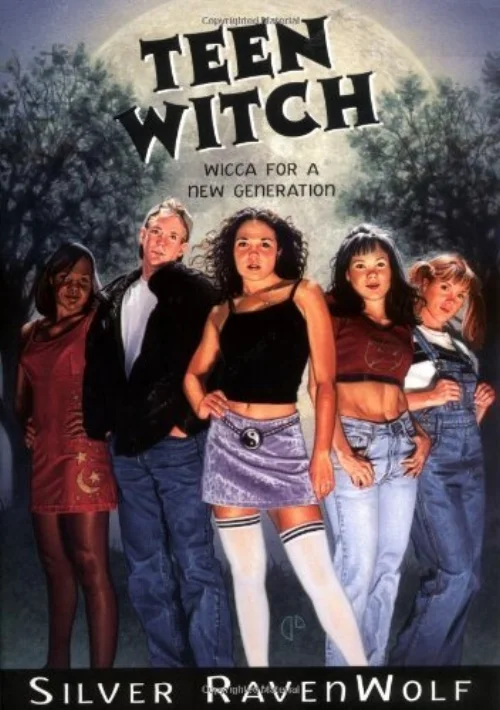
Be afraid! Halloween is here. 'Tis the season to be sinister, a dank, dark time of poisoned candy, apples laced with razor blades, Jamie Lee Curtis reruns, Richard Nixon masks, feral children asking for "treats," and, in a quiet corner of my local Barnes & Noble, a table piled with books that go bump in the night. Histories of hauntings lurk near volumes on vampires and a stray copy of Living History that seems, well, strangely at home. O.K., O.K., I admit it. I put it there. There are tales of devils and stories of ghosts, depictions of demons, and everywhere, orange, black, and nasty, the pumpkin's evil grin. And don't forget the witchcraft, except it's "Wicca" now, and slicker. The wicked witches of old, warty, cackling, and vile, slinking out of deep, dark woods to cast spells over crops, tiny tots, and the unlucky peasants' luckless livestock have vanished, only to be replaced by even creepier creatures. Heaped like kindling (unfortunate simile, I know), are books by and about those legions of women (and it is mainly women) who have taken to "magick," chanting, drumming, howling at the moon, and delving into the supposed wisdom of a largely invented past.

And, make no mistake; broomstick surfers take themselves very, very seriously these days. The age of lovely Samantha Stephens, sparkling and funny, more martini glass than cauldron, has faded away, replaced in our duller, more earnest era by the likes of Buffy's dour Willow, self-involved, self-important and, although this might be expected in sorceresses who like to chant, drum, and howl at the moon, utterly lacking any sense of the ridiculous.

Even the promisingly named How to Turn Your Ex-Boyfriend into a Toad kit turns out to be for real (well, not the toad bit). Its publishers explain "that everything you need is right here in this fun kit: Use the mirror for a special spell to make yourself irresistible to everyone who sees you; the candles will help you to hot up your sex life and you can use the incense in its special toad holder to find your soul mate."  

Judging by the response of one Amazon.com reviewer (spelling has been changed in the interests of literacy) to the book on which the kit is based, toad holders may be just what the witchdoctor ordered:

This ...is a must-have for all women interested in witchcraft. Although some may see it as selfish, the revenge spells are great too, and they really work! (...Remember, when casting a revenge spell, you cannot inflict on your victim any pain that they have not given to you, so IT'S ONLY FAIR!). The "toad spell" is fantastic! I cast the "bring back my love" spell on my Internet love (who has been distant lately) and the next day he called for the first time!! The "lucky lottery" spell really works too...I can't wait to try every spell!

If mirrors, spells, candles, and toad holders don't catch their attention, younger readers can always pick up "the BIG book for Pagan teens," Silver Ravenwolf's Solitary Witch: The Ultimate Book of Shadows for the New Generation. Ravenwolf, "a Wiccan High Priestess and Clan Head of The Black Forest Family," has written everything, her publisher boasts, "that a teen Witch could want and need between two covers." That could be handy for some, but probably not for those who have already bought Ravenwolf's Teen Witch: Wicca for a New Generation, or her To Ride a Silver Broom: New Generation Witchcraft, or, even, sigh, Silver Ravenwolf's Teen Witch Kit: Everything You Need to Make Magick!. The kit comes complete with "six magickal talismans (including a silver pentacle pendant), salt, and a spell bag," and, "best of all," its box "converts into your own personal altar."

But, for all the Celtic cornpone, Samhain kitsch and olde-tyme gibberish, there are still some reminders that this is a 21st-century magnet for the modern, the mercenary, and the motivated. Deborah Gray, "Australia's good witch," is keen to help these strivers out. Her Spells to Get Ahead Pack: All the Magic You Could Possibly Need in One Witchy Pack is out on display, witchy pack after witchy pack after witchy pack (each complete with "pouches and phials to add power to your charms, plus a special magic crystal") to help "the ambitious girl" in her quest to "be gorgeous, be rich, be avenged, be a winner!" Be avenged? Good witches, clearly, are not what they were.

And as that ambitious girl hops from meeting to meeting, magic crystal in her hand and vengeance in her heart, she won't want to mar her gorgeousness with a musty volume of spells, curses, and spooky old recipes. She'll be more comfortable toting another work from the Barnes & Noble selection, The Pocket Spell Creator: Magickal Reference at Your Fingertips. "There is simply no other book that helps you create, finalize and perfect spells easier or better. And, of course, faster!" It's magick — 24/7 and portable.

And even those who are already familiar with familiars, rites, redes, and scrying will be sure to learn something from A Witch's Book of Answers, FAQ for the broomstick set, a fashionably diverse crowd nowadays with a membership that includes psi-witches, kitchen witches, traditional witches, Gardnerians, Alexandrians, fam-trad witches, fluff-bunny witches, hereditary witches, natural witches and hedgewitches. The advice from its authors, Eileen Holland ("Wiccan priestess [and] solitary eclectic Witch") and the intriguingly monomial "Cerelia," is loopy, but largely benign — if unlikely to win many prizes from General Boykin.

Adding to the merriment, their inclusion of an extract from Cerelia's poem Cycles & Rain is good both for a laugh and as a reminder that the broomstick has landed on one of feminism's wilder shores.

come out to the forest clearings mistletoe and rowan trees if you have the heart who will you find there? women with their menstrual blood flowing down their legs women stamping, women steaming women singing in the rain women winding widdershins and banging tambourines

But don't worry, chaps. Cerelia is quick to reassure us that not every man is "corrupt and evil" (thanks!).

Some of the answers that the book provides are, in a sense, fairly conservative, "it is not possible for a Witch to fly or change into an animal on Earth (except in a psychic sense)", but there's a broadminded nod to Fox Mulder: "It may be possible for Witches to do so in other solar systems." Other revelations include a potential explanation for the recent blackout (if light bulbs burn out and street lights go off when you're nearby, "that's just part of being a Witch"), a hint of schism, "Witches can really get into a snit about...how to dress candles," and more than a little mystery: "chaos magic is big but sloppy."

Mumbo jumbo? Nope, Witchcraft, we read, is "based on science," leading Ms. Holland to the entirely reasonable conclusion that the "universe would fly apart without desire."

There's a lot less certainty when the discussion turns to Gerald Gardner. Gardner, writes Cerelia, "holds the distinction of bringing contemporary Witchcraft to the modern world." Indeed he does. Somewhat awkwardly for those who maintain that Wicca is descended from an ancient cult of the Goddess, this retired British civil servant made most of it up sometime in the 1940s and 1950s. The eccentric Mr. Gardner's pastimes were not confined to witchcraft. He was also a keen naturist and a fan of flagellation. Cerelia grumbles that many of Gardner's "personal likes and fantasies" may have crept into the rites that he developed. Indeed they did. As she notes, the insistence that witches had to be "skyclad" (naked) while practicing their craft was "probably" (probably?) his idea, and her description of the initiation ceremonies in Gardnerian Witchcraft does seem to include a remarkable amount of binding, blindfolding and "whipping with cords."

Interestingly (although you won't learn this from A Witch's Book of Answers), Gardner was also a former disciple of Aleister Crowley, once infamous as "the wickedest man in the world." His mother just preferred to dub him "the Beast." Not unreasonably (well, young Aleister did kill his first cat at the age of eleven) she thought he was the spawn of Satan.

Now, that's what I call a story for Halloween.

Yea to the Nej

Vikings are meant to ravage Europe, not to save it, but on September 14 Sweden's voters decisively rejected the option of signing up for the euro. The Swedes' rejection of that economic suicide note may have set in motion a process that could save the continent from the worst consequences of the EU's disastrous single currency. To start with, Sweden's nej was a valuable reminder to the electorates in the U.K. and Denmark (both of which have yet to accept the euro) that there is nothing inevitable about its introduction in their countries. It was also a signal to those Eastern European states that will join the EU next May that they too should think very carefully before adopting a currency that will almost certainly be unsuitable for their level of economic development for many years to come. Most important of all, if Brussels chooses to listen (early signs are not, needless to say, encouraging), the Swedish vote was a useful warning that the EU's current approach may lead to political and financial disaster.

Read More

Iced Vice

ice cream.jpg

First they came for the beef and cheese nachos. Now they have come for Cold Stone Creamery's Mud Pie Mojo. In a development that was as predictable as it is absurd, the killjoy cranks over at CSPI, the Center for Science in the Public Interest, have issued a report denouncing ice-cream shops for hawking "coronaries in cones." Well, no surprise there. Writing in the July issue of Reason magazine, Jacob Sullum describes how the center (despite its name, it has nothing do with either science or the public interest) has a menu of menaces that must not be allowed anywhere near a dining room. These include fried mozzarella sticks ("just say no"), double cheeseburgers ("a coronary by-pass special"), and even fettuccine Alfredo ("a heart attack on a plate"). Hold the salt on those fries (Hypertension!), in fact, hold the fries too (Acrylamide! Cancer!), fly from buffalo wings, peel away from crispy orange beef and put down that "culinary equivalent of a loaded pistol," a baked potato with butter, sour cream, bacon bits and cheese.

Danger doesn't end with the main course. Desserts, such as the Cheesecake Factory's notorious carrot cake, have also come in for stern criticism: It was, clearly, only a matter of time before Ben & Jerry's, Haagen-Dazs, and even poor, bland, TCBY heard the knock on the door.

But does it matter? CSPI immodestly describes its researchers (even that seems too generous a word) as "food sleuths," but for now, these self-appointed calorie cops have no warrant. This does not mean that their critics can relax. The center may peddle hysteria, half-truths, and the guilty pleasures of self-denial, but they have a way with the media and in the lunatic world of the gathering "war against obesity" theirs is likely to be an influential voice. For that reason, if no other, their crusade against cones is worth a closer look.

Let's start with the hype. No campaign of this type is complete without a crisis. The Greens make Chicken-Licken look like an optimist, the gun-control crowd never cease to amaze with their tales of carnage and then, of course, there's "passive smoking." The junk-food jihadists are no less melodramatic. Sound the alarm! There's an "obesity epidemic"! Why call it an epidemic? Well, epidemics demand a tough response. If Americans can be convinced that they are in peril from a plague of pudginess, there's no saying what they won't agree to.

CSPI's ice-cream screed is a reminder that the center is a master of hyperbole, if not of science. Those "coronaries in cones" are capped by the warning that a Baskin-Robbins large Vanilla shake is "worse for your heart" than "drinking three Quarter Pounders," a disgusting image that should not be allowed to obscure the fact that no food as such is bad for your heart. What matters is the overall composition of your diet, the amount of exercise you do, and so on. This report won't tell you that. Instead CSPI's propagandists prefer to pursue their morbid rhetoric of heart disease ("you'll need… cholesterol-lowering …drugs" to cope with a Friendly's Caramel Fudge Brownie Sundae) and death (a "super" version of one of Friendly's Candy Shop Sundaes is for the "self-destructive"). Oh, please.

Hand in hand with the hype (indeed it's a corollary of it) is the assumption that Americans are not responsible for what they eat. This gives the fat police an excuse (if people can't control their eating then someone — usually government — must step in to do it for them) and the overweight an alibi — thus its appeal. At its most extreme this line of thinking manifests itself in the ludicrous claim that fast food is somehow addictive, but generally the girth Gestapo confine themselves to behaving as if the man at the lunch counter is not much more intelligent than the cow that went into his sandwich. He is, it seems, a dull, helpless dolt, unable to take a rational decision for himself, a clueless creature, powerless before the might of a well-crafted commercial.

This is the idea that underpins remarks by Jayne Hurley, a "senior nutritionist" for CSPI, that it is "as if these ice cream shops were competing with each other to see who could inflict the greatest toll on…arteries and waistlines." That's a good sound bite, but like a CSPI-approved diet, there's not a lot to it. In reality, the only people "competing" to put on the pounds are the vanilla-chasing ruminants who choose (and that's the word) to dine there. They may not know the exact number of calories involved (a key CSPI complaint), but, believe me, Jayne, the customers who opt for a Ben & Jerry's Chunky Monkey in a chocolate-dipped waffle cone understand that it ain't no health food.

The third, all too familiar, element in this drama is the feeble response of the food industry. In particular, management at Kraft Foods appears to have learnt nothing from the tobacco fiasco — despite sharing a parent company with Philip Morris. An essential part of any successful litigation against Kraft will be to show that the company owed a "duty" to protect its customers from their own greed. That's an argument that is laughable, but it's also lethal. The moment that the food companies concede that there's something to it, they are in deep, deep trouble. Needless to say, this is exactly what Kraft has done. The company's stock has fallen sharply, and deservedly so, since it made the announcement (about reducing portion sizes and calorie content) that will be a key building block in any case against it. Lemmings, of course, plunge in packs. PepsiCo and McDonald's are amongst the other food giants busily making the same mistake.

There are early signs that the ice-cream chains may turn out to be just as misguided. The correct response to CSPI-style criticism is to say that consumers — and consumers alone — are responsible for the results of their overindulgence. Period. No more discussion. Pass the creamy peanut-butter sauce. Instead, there was, so to speak, a touch of waffle in the response from the Cold Stone Creamery. This included the observation that "lower calorie options for our customers…are also made available in all our stores." So what? Even if the only treat on offer was regular sweet-cream ice cream with a Reese's Peanut Butter Cup, roasted almonds, and hot fudge in a chocolate-dipped waffle cone (1,400 calories!), that shouldn't matter. No one is forced to buy it, and if you do, the consequences are yours and yours alone.

But if we have a leaner future ahead of us, the same is not true of trial lawyers. They may well have a very rich feast to look forward to. There is one obstacle they will have to watch out for, however. Tobacco litigation was in one sense relatively straightforward. If some wheezing patient could be shown to have puffed away at a certain brand of cigarettes for years, the first steps of a case against the manufacturer of those smokes could then be taken. Imagine, though, the difficulty faced by a lawyer confronted by the potential junk-food plaintiff who has just waddled in through his door. The fees could be as large as the litigant, but who to sue? To be sure, there are trenchermen who confine their eating to just one spot, but most do not. Apportioning the blame for super-sized portions won't be easy. Did the pizzas cause the damage or was it the pies, the pralines, the penne or, heaven forbid, the plaintiffs themselves? CSPI's executive director has acknowledged as much. The ice-cream extravaganza, he says, has "something to do with the size of Americans' pants," but "no one disputes that the obesity epidemic has many causes." True enough, and that simple fact could greatly complicate any litigation.

The best way for trial lawyers to avoid such difficulties will be to follow the precedent of that piece of extortion better known as the tobacco "settlement." Rather than have to prove the cases of individual plaintiffs, with those tricky facts and awkward questions of causation, it will be far easier to claim that obesity has "cost" state and federal governments countless billions of dollars. Rapacious and unprincipled governments (that's all of them, in case you wondered) will play along. It will be argued that the bill for obesity should be paid by the industry that allegedly created the problem. There will be dark talk of "misleading" advertising, "irresponsible" marketing and "dangerous" ingredients. As their legal expenses mount, companies will slim down menus, various tasty ingredients will disappear, and countless "advisory councils" on nutrition will be hired. It will do no good. Confronted by the power of big government and the greed of big law, big food will, so to speak, chicken out and negotiate a pay-off.

Get your Toffee Coffee Cappuccino Chiller while there's still time.