The Good Russian

Richard Lourie: Sakharov - A Biography

National Review, August 12, 2002

Sakharov's Grave, Vostryakovskoye Cemetery, Moscow, 1991 © Andrew Stuttaford

Sakharov's Grave, Vostryakovskoye Cemetery, Moscow, 1991 © Andrew Stuttaford

It takes more than a Bolshevik to erase history. Lenin intended his revolution to be a clean break with the unruly, uncontrollable past, but, in the end, he failed. Remnants of the older—and, for all its faults, more humane—Russia succeeded in enduring through three-quarters of a century of Communist brutality. Andrei Sakharov, the subject of this new biography by Richard Lourie, may have been born in the formative years of the Soviet dystopia, but he is best seen as a child of the earlier, finer civilization that the revolution had been designed to destroy. Miraculously, he too managed to survive.

More than that, he was even—for a while—to flourish within the Soviet system. The regime knew how to promote talent as well as to punish it. Although Sakharov was never a party member, his scientific ability was enough to bring him into the inner circles of the Soviet establishment. It was his moral strength, however, that was to take him out again. It turned out that the enormously gifted scientist, an explorer of the impossibly complex, was to find fulfillment in his dedication to some very basic truths. Sakharov, the man who gave the Kremlin the H-bomb, became a champion of human rights and—in a delightful irony—an architect of the Soviet collapse.

It was an extraordinary journey, and any attempt to make sense of it must begin with an understanding of the Russian intelligentsia into which Sakharov was born—a group, as Lourie puts it, that is "something between a class and a clan." Its members were, and are, "educated people whose sense of honor and duty compels them to take action against injustice." But, as Lourie also notes, "Lenin and some of the other Bolsheviks [also] were of the intelligentsia, its crude and jagged cutting edge. And there were also spiritual extremists." Indeed there were. Those true believers still shouting Stalin's praise at the very moment his executioners gunned them down were no less representative of the intelligentsia than were those gentle, thoughtful folk found in Turgenev or Chekhov.

What these people had in common was the idea that it was they who should set (and live up to) the standards necessary to build a better Russia. They saw themselves as intellectually and morally superior both to the dangerous and benighted masses below and the crude and despotic rulers above. They believed that they were the nation's true elite, elevated and yet oppressed. Theirs was a state of mind prone to lethal naivete and Utopian fantasy, to dreams of a finer, purer way of life that were to pave the way for the Bolshevik nightmare.

That Sakharov inherited this utopianism can be seen from his "Reflections," the 1968 essay that marked his definitive break with the Communist regime. It was an extraordinarily brave attack on totalitarianism, strangely skewed by a lingering attachment both to collectivism and dopily enthusiastic futurism. Science fiction is blended with Stalinist mega- project ("Gigantic fertilizer factories and irrigation systems using atomic power will be built... gigantic factories will produce synthetic amino acids"). As Lourie notes, Sakharov at that time still had hopes of a worldwide socialist paradise, to be achieved by technological advance, heavy taxation, and "convergence" between "democratic socialism" and "the leftist reformist wing of the bourgeoisie."

If this dreamlike world view was one aspect of Sakharov's fidelity to the traditions of the Russian intelligentsia, so too was his dedication to his work and the notion that he could somehow do something for the greater good. These are demanding standards to maintain in the best of times. Trying to live up to them in the moral slum that was the mid-20th-century Soviet Union was to lead Sakharov to a life of barely comprehensible contradictions. So, in the late 1940s, we find the future winner of the Nobel Peace Prize busily designing weapons of mass destruction, an apparently decent man conscientiously putting his talent for murderous innovation at the disposal of a regime already responsible for the deaths of millions the old-fashioned way.

Loyalty to his country (enhanced by memories of its huge wartime losses) was partly to blame, as were the shreds of belief in a Soviet future (the letter that Sakharov wrote to his first wife on the occasion of Stalin's death makes for nauseating reading). Ignorance, certainly, offered no alibi. Sakharov knew. The facility where he worked was built by slave labor. He wrote later that he saw them everywhere—"long lines of men in quilted jackets, guard dogs at their heels"—but it did not stop him doing his best for the government that had imprisoned them.

Then something changed. This loyal servant of the Soviet state began asking awkward questions. And when he didn't get the answers he wanted, Sakharov did what very few dared do. He persisted—and it is the great weakness of Lourie's book that it never really explains why. Superficially, the story is straightforward, and so is the way that Lourie tells it. Increasing concern over the dangers posed by the atmospheric testing of his nuclear devices led Sakharov to urge restraint. He was told, none too kindly, to keep his thoughts to himself and to get back to work, but he continued with his complaints, embarking on a voyage that would take him from privilege to protest, through gradual alienation to outright dissidence, internal exile, and, ultimately, triumph.

To be fair to Lourie, pinning down what drove Sakharov may be a hopeless task. This most public of dissidents was a private, reserved man. Aged about 50, he claimed to have only one close friend (a friend who subsequently let him down in a characteristically squalid, characteristically Soviet way); it is easy to detect a similar pattern of emotional distance in Sakharov's first marriage.

With Sakharov, however, there is always that capacity for surprise. Whatever the shortcomings in their relationship, he fell apart when his first wife died. A little later this quiet, dry, slightly prudish introvert found himself drawn to the lively, abrasive, and demanding Elena Bonner. Understandably enough, their partnership (they subsequently married) is often (and Lourie's book is no exception) discussed in a primarily political context, but it was, clearly, much, much more than that. This was a great romance, a grand, gorgeous late-flowering love affair that carried alt before it, a light in the midst of totalitarian darkness, a bastion of integrity in a state that had none.

But those looking for the source of Sakharov's anti-Soviet struggle need to look further than Elena Bonner. She accelerated the process and made it more bearable for the beleaguered physicist (two against an empire is better than one), but this was a question of speed, not destination. By the time the pair first met, it was 1970—and Sakharov was already in irrevocable opposition.

The key to the puzzle must lie elsewhere. Readers of Lourie's book are given enough clues to draw some conclusions of their own. It is necessary to look again at the influence of what Sakharov once referred to as the intelligentsia's "inherited humanist values." Add those values to a demanding family tradition, courage, and a certain innate goodness, and we start to understand why Sakharov began asking those awkward questions, both of his government and of himself And once he had begun, there could be no going back. Dedicated scientist that he was, Sakharov could not rest until he had arrived at the solution, no matter the cost.

This quest ought, one day, to be at the core of a more substantial biography. In the meantime, Lourie's book will do, not least because the stories it tells do give a good measure of the man that Sakharov became. Here's a wonderful example dating from the late 1970s (1978 according to Lourie; Sakharov in his Memoirs places it two years earlier). Bonner and Sakharov had been shown photographs of a dissident exiled to Nyurbachan, a settlement in a remote part of Siberia. Troubled by the look on the exile's face (that was all it took) they decided to visit him.

On the way to the airport, their taxi was rammed. Undaunted, they took another. The first leg of their journey brought them within 400 miles of their objective, but the next flight was "unexpectedly" delayed by 24 hours. They camped out at the terminal, and took the plane the next day. On landing, they were told that the bus to Nyurbachan had been canceled. There were still 15 miles to go. The secret police were obviously watching their every move. Lourie tells us what this indomitable duo, no longer young, no longer in good health, then did.

"Though it was getting dark, Sakharov and Bonner decided to walk . . . The forest path was moonlit, the air fresh, a Siberia of stars above the trees. They stopped for bread and cheese, sipping coffee from a thermos . . . Alt the KGB's machinations had only afforded them hours of happiness."

And, yes, they reached their destination.

Hollow Laughter

Martin Amis: Koba the Dread - Laughter and The Twenty Million  

National Review Online, July 16, 2002

Stalin, Moscow, 1997  © Andrew Stuttaford

Stalin, Moscow, 1997  © Andrew Stuttaford

Back in the time of the revolution he was described as a gray blur, and it is as a gray blur that Stalin survives today, a nullity, a gap in our memory, an absence. In the lands of his old empire, they remember more, far, far more. The absence there is absent fathers, absent mothers, absent grandparents, absent uncles, absent aunts, absences in the millions, all victims of the monster who remains, remarkably, still present in Red Square (there's a small bust at his burial site by the Kremlin's walls and usually someone takes the trouble to leave a flower or two). In our ignorant, spared West, the West that never knew him, not really, we catch only glimpses of what we think what was. The images are caught on fading, flickering newsreel, a friend from the greatest of America's wars, FDR's pal, smiling benignly out, hooded eyes beneath a peaked cap, good old Uncle Joe.

In his new book, Koba the Dread: Laughter and the Twenty Million, the British novelist Martin Amis makes an attempt to fill this gap. It is a curious, compelling but more than occasionally self-indulgent work, a meditation that uneasily combines snatches of its writer's autobiography with tales of the Soviet holocaust.

The tone too seems just slightly off. Amis has long been known as a master of the acid one-liner, but it jars to read his snide reminiscence of the trivial (attendance at Tony Blair's dreary millennium celebrations) within a few pages of this extract from a letter written by the elderly Soviet theater director, Vsevolod Meyerhold after his arrest and torture by the secret police:

I was made to lie face down and then beaten on the soles of my feet and my spine with a rubber strap…For the next few days, when those parts of my legs were covered with extensive internal hemorrhaging, they again beat the red-blue-and-yellow bruises with the strap and the pain was so intense that it felt as if boiling water was being poured on these sensitive areas. I howled and wept from the pain…Lying face down on the floor, I discovered that I could wriggle, twist and squeal like a dog when its master whips it.

Meyerhold was shot three weeks later. He managed, at least, to outlive his wife. She was found murdered in their apartment a few days after his arrest. Reportedly, her eyes had been cut out.

And so yes, London's Millennium Dome may, indeed, have resembled a "second-rate German airport," but, in the context of such horror, so what?

It's not just the tone and the awkward snippets of autobiography. Martin Amis's style, mannered, arch and self-consciously clever, also seems out of place, an all too elegant frame for such a crude and bloody canvas. We read of the "fantastic sordor" of the Gulag's slave ships, and that Stalin's "superbity" was "omnivorous." When told of the Wehrmacht's initial successes on the Eastern front, the Soviet dictator apparently "collapsed as a regnant presence." The baroque vocabulary acts as a barrier between the reader and the events that it is being used to describe. It may also signify the emotional distance that Amis himself feels from the Soviet tragedy. Good writer that he is, he understands "why Solzhenitsyn needs his expletives, his italics, his exclamation marks, his thrashing sarcasm," but rarely seems to feel such a compulsion himself.

What Amis does offer is a brief, and competent, introduction to the Stalin years, drawing both on recently published research and, very obviously, a long acquaintanceship with Robert Conquest, the finest English-language historian of Stalinist terror, who happens also to be an old friend of the Amis family. Tics of style and tone apart, the tale is well told, and clearly benefits from the skills of an accomplished and insightful writer. We learn, for instance, that Stalin failed to show up for his mother's funeral, a decision that "scandalized the remains of Georgian public opinion." The insertion of those three bleak words, "the remains of," tells the reader all that he or she needs to know about Stalin's impact on his native land.

Similarly, in describing the catastrophe of collectivization Amis manages in a few short lines both to summarize the onrush of disaster and to speculate what that might say about the differing personalities of Lenin and Stalin. Faced by peasant resistance, "Lenin accepted defeat, withdrawal and compromise. In other words, he accepted reality. Stalin did not. The peasantry no longer faced a frigid intellectual. It faced a passionate lowbrow whose personality was warping and crackling in the heat of power. He would not accept reality. He would break it." The result was a death toll that ran into the millions and, in Amis's vivid phrase, "swaying, howling lines" in front of the few food stores with anything to sell.

It is a hideous story, and Martin Amis should be thanked for retelling it. In forgetting those who were murdered, it is as if we kill them again, and yet with Stalin's dead that it is just what the world seems content to do. As many as seven million died in the genocidal Soviet famine of the early 1930's, yet in most histories it usually merits no more than a footnote. Walter Duranty, the New York Times correspondent who tried to deny the famine's existence earned a Pulitzer for his "reporting" in Moscow, a prize that the "paper of record" still includes on its roll of honor.

As for the other slaughtered millions (Amis believes that Stalin was responsible for a total of at least 20 million deaths — and there are other, much higher, estimates), their fate is often passed over in silence or with the most insultingly cursory of regrets. Almost no one has ever been held accountable. There has never been a Soviet Nuremberg. Solzhenitsyn has calculated that between 1945-1966 West Germany convicted some 86,000 people for crimes committed for the Nazis. The number of those found guilty of similar atrocities on behalf of the Communist Party in the former Soviet Union is unlikely — even now — to run into triple digits. In the countries of the former USSR, however, there is at least an argument (albeit misguided) for inaction: it is said that the long duration of Soviet rule manufactured too many accomplices to permit — yet — a full examination of the past in societies where democracy remains fragile.

In the West there is no such excuse, yet, when Stalin is discussed at all, the tone is often strangely sympathetic, and the tally of victims is frequently subjected to downwards revisions on a scale that would embarrass even David Irving. Where Koba The Dread fails, and fails most completely, is in trying to explain why. As a first step, Amis looks again at the old question as to whether Hitler's crimes were "worse" than those of Stalin (Conquest, interestingly, believes that they were, but can give no reason other than the fact that he "feels" so), but this controversy is, forgive the phrase, a red herring. Any moral distinction between these two bestial systems is so slight as to be irrelevant, and yet our response to them is strikingly different. In contemporary discourse, the Nazis are totems of wickedness, while Communism (despite accounting for far greater slaughter, a slaughter that still continues) is somehow seen as not so very bad.

As a shorthand for these perversely different responses to two very similar evils, Amis records how at a debate featuring the two Hitchens brothers (Christopher and Peter), Christopher Hitchens (quoted elsewhere in Koba as — astonishingly — still believing that Lenin was a "great" man) referred to evenings passed in the company of his "old comrades," a remark greeted with affectionate laughter (it is the laughter referred to in the title of Amis's book), a laughter that would be inconceivable as a reaction to a light-hearted reference to happy days with the fascists.

As Amis (who admits to laughing himself) concedes, "this isn't right." To explain that laughter, he turns, unconvincingly, to the elements of black farce that were never absent from Communist rule (but which were, he neglects, crucially, to say, equally present under the Nazis), and then, more believably, "to the laughter of universal fondness for that old, old idea about the perfect society, [which] is also the laughter of forgetting. It forgets the demonic energy unconsciously embedded in that hope. It forgets the Twenty Million."

And in that one word "unconsciously," Martin Amis gets it all wrong. Murder, turmoil, and repression were always explicit in that "old, old, idea" and they play no small part in its appeal. Glance, just for a second, at Lenin's writings and you will be amazed by the morbid love of violence that permeates his prose. The "Just City" of Marxism's dreams always came with a concentration camp. The Bolsheviks had the genius to understand this. Their intellectual descendants know enough to try and cover it up: thus the silence about Stalin, thus that disgusting laughter.

Martin Amis's achievement is that, in writing this odd, flawed book, he has done something to help ensure that it is we — and not Stalin's heirs — who will have the last laugh.

Sob Sisters

National Review Online, June 26, 2002

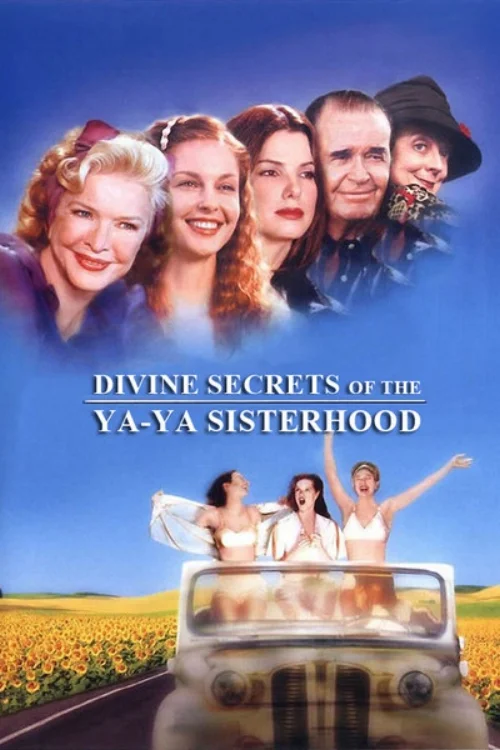
Divine Secrets.jpg

Even the trailers were a sign that I was in a strange place. Instead of the usual fare, tantalizing glimpses of fast cars, brutal murders, sinister aliens, and seething high-school passion, the movies previewed included a "mature love story" (apparently dedicated to the astonishing idea that romance is possible among the over-50s) and a multigenerational family drama (we were urged to "go ahead and cry") starring Susan Sarandon. But the sobs would not have to wait for Socialist Sue. For this was chick-flick night, a chance to discover the Divine Secrets of the Ya-Ya Sisterhood, a movie that is, warned the Los Angeles Times, "rich in emotional life." And moviegoers know what that means — tears, rows, mothers fighting daughters, daughters fighting mothers, hissy fits, shouting matches, and hugs, all culminating in a definitive reconciliation somewhere towards the conclusion of the final reel, often at about the time one of the key characters perishes of a terminal, but not unsightly, disease.

If that is what you are looking for, the Ya-Yas don't disappoint, except that the only person to die is the hapless (but handsome) Jack Whitman, who comes to the requisite tragic end, but relatively early in the movie. Jack is unlucky in love, and unluckier in war. He joins the air force not long after Pearl Harbor (seemingly more to impress his father than to depress Hitler) and, poor fellow, is killed before he has had much chance to enjoy his budding affair with the lovely Vivi, drama queen and lead Ya-Ya. Like Jack, Vivi (played excellently as a younger woman by Ashley Judd, and, in her old age, by a less-convincing Ellen Burstyn) never appears to get over this setback. Being dead, Jack has an excuse. Vivi does not. No matter. In this movie, self-indulgent is usually just an adjective, only a criticism when applied to those perennial symbols of boomer disdain for the older generation: drink, cigs and Feelgood-era pharmaceuticals.

Of course, a touch of the exotic always helps pull in the ladies: Just ask Fabio. In Divine Secrets this is provided by a gorgeous Louisiana setting, the perfect excuse for good music, bad behavior, ridiculous names (Siddalee!), cookery porn (crayfish!), and wild overacting (ham!). Naturally, this being the south, the past, as Faulkner once put it, is never dead; it is not even past. No one is prepared to follow the advice of another, less distinguished, southerner and simply "move on." Instead, most of the movie is dedicated, mainly through a series of flashbacks, to showing how the damaged Vivi proceeds to damage everybody else for the next six decades. Propped up only by the support of the Ya-Yas (a sorority she formed with her three closest childhood friends), pills, booze, and tobacco, Vivi is a poor wife and unsatisfactory mother. We only meet her husband, Shep, in his later years, but his weary expression is more than enough to tell the tale of a marriage that has been more for worse than for better. Old Shep has become a withdrawn, stoic figure (portrayed with dignified melancholy by James Garner) still fond of his high-maintenance Ya-Ya, but careful always to lock the door to his (separate) bedroom at night.

Vivi's dealings with her children are shown in rather more detail. The high maintenance wife was, it turns out, an even higher-maintenance mother, capable of acts of love, of cruelty, and of something that was a bit of both. As a result, her relationship with her offspring is, to say the least, tricky. Remarks by her eldest daughter, Sidda (a rather muted Sandra Bullock), in a magazine interview trigger a crisis between mother and daughter, which only the Ya-Yas can resolve. They do so by kidnapping Sidda and gradually revealing her mother's deepest, darkest, and far from divine, secret: Vivi once had a breakdown so total that she was taken away from her kids and institutionalized. Relief all round! Mom wasn't nasty after all, just nuts. A blissful Sidda reconciles with Vivi, Shep unlocks his door and Sidda decides to marry her Shep-in-waiting, Connor (a soft-spoken Irish hunk played with quiet charm by Angus MacFadyen), a man who has clearly not been studying his future in-laws' family history.

Does any of this make any sense? Not exactly. An even vaguely believable story is one of the casualties of the film's complex heritage. Divine Secrets is a bowdlerized version of Rebecca Wells's novel of the same name, which is itself a prettied-up companion to her 1992 debut, Little Altars Everywhere, and quite a lot has got lost in the process. Typical products of an era when most Americans seem to have believed that they had been molested by a close relative during childhood, these books fill in the gaps left in the movie's narrative by a creative team unwilling, presumably, to frighten off potential ticket buyers.

The books reveal that Vivi was not only badly abused by her mother (something that is hinted at in the film) but, quite probably, her father too. This complies with a basic rule of boomer fiction (fatally flawed families) and makes much more sense as a source of Vivi's later instability than the more romantic alternative put forward in the movie: that the Ya-Ya was pining for her pilot. Vivi may have been crazy about Jack, but I doubt if his death would have been enough to drive her mad. Equally, the remarkably tortured relationship between Vivi and her grown children becomes more understandable after reading that the abuse she inflicted on them was far worse than anything depicted on screen.

Not that this matters. The audience for this film is expecting two hours of lush Louisiana gush, the moviegoers' equivalent of aromatherapy, massage, and a nice long soak, and that is what they get, much of it in front of the most empathetic stretch of water since that famous Golden Pond. Those few who worry about plot details will probably have read the books, and, as we have discussed, if they haven't they will need to. As for the other characters in the movie, no one has to think too hard about them; their characters are caricatures, crudely drawn bayou nobility with the mannerisms of a clutch of drag queens. They are talking props, a Greek chorus with nothing (but too much) to say and if everyone (except calm Shep and doomed Connor) and everything in this movie seem a little overwrought, well, that's just chick-flick high-jinks. Besides, a quick look at some of Ms. Wells's original prose would suggest that understatement was never on the cards:

"If Sidda Walker had been able to witness Vivi and the Ya-Yas in the light of that summer moon in 1942, their young bodies touching, their nipples luminous in the light, she would have known she came from goddess stock. She would have known that a primal, sweet strength flowed in her mother like an underground stream, and that the same stream flowed in her. Whatever scars Vivi had inflicted with her unhinged swings between creation and devouring, she had also passed on a mighty capacity for rapture."

Oh, is there a little of that loopy feminist-pagan thing swinging around unhinged in there? You bet, but, reduced to a subtext, it is one of the few aspects of the film that is underplayed, except, that is, for a moment of total absurdity near the end: Vivi, standing in the center of a circle of flaring, blazing sparklers is shown offering up a prayer to a Virgin Mary, who, one can only hope, is kindly enough not to burst out into amazed, startled laughter. As for me, a man from Mars watching a film from Venus, it was just another reminder that rationality, logic, and a sense of proportion had long since fled this unapologetically manipulative piece of hokum. If chicks could dig a flick like this, I was ready to proclaim to the world the superior reasoning powers of my own sex. Then I remembered something:

The movies of Jerry Bruckheimer.

The Ex-Files

National Review Online, May 17, 2002 

It has been a rough couple of months for fans of 1990s television. Waifish Ally is waving goodbye, ER's noble Mark Greene has already passed beyond the help of the most dedicated trauma surgeon, and even simpering Steve from Blue's Clues has abandoned his cerulean canine in favor of a beard and a band. Sunday, though, will truly see the end of an era. With the airing of its final episode, the X-Files will x-pire. Like Samantha, Fox Mulder's abducted sister, the series will be sorely missed. Its tales of alien mayhem and spooky intrigue are a dark, twisted delight, an unreality show that took paranoia to prime time and made suspicion a star. Brilliantly written and beautifully shot, the X-Files is film noir for color TV. Chiaroscuro interiors echo themes of a world lost in the shadows of conspiracy and moral ambiguity, while the series' pale landscapes are vistas of a not-quite-normal America, a place where everything is bleached out, other than the bizarre.

And, half-lit in the gloom, or, sometimes, seen as no more than a blur, there emerges a cast of characters to savor (occasionally, given the writers' rather unhealthy interest in cannibalism, quite literally so): monsters, mutants, maniacs, murderers, mechanical cockroaches, prehistoric mites and, most frightening of all, white men in suits. But there's no need to worry too much. If they can actually manage to avoid death, disease, demons, alien bounty hunters, abduction and walking off the show, Mulder and Scully will be around to protect us.

Strangely romantic heroes in an unromantic age, this oddly matched duo search for truth in a maze of lies. The eccentric interplay between them only adds to the show's offbeat appeal. Working with the exasperating Mulder, poor Scully finds herself in an often-thankless role. Sancho Panza and Doctor Watson would feel her pain. Played by Gillian Anderson, a strikingly attractive redhead (Doctor Watson would have approved), Dana Scully is the scientist, balanced, skeptical, and altogether quite sane. None of these adjectives apply to David Duchovny's Fox Mulder, a man with the soul of Don Quixote, the beliefs of Shirley Maclaine, and the mind of Sherlock Holmes. He is clever, cranky, obsessive, and inspired. Crumpled and faintly saturnine, there is also something of Sam Spade about him, but without the booze or, usually, the broads (despite getting lucky with a trainee vampire, Mulder's love life — and death (but that's another story) — is generally confined to pornography).

The X-Files has been a critical and popular triumph. At its peak four or five years ago, the show was regularly drawing audiences of around 20 million in the U.S. and it has been broadcast in well over a hundred countries (although what they make of it in Yemen is anyone's guess). With success came spin-offs (the X-Files movie, the Lone Gunmen TV series, various X-Files novels, video games), paraphernalia (t-shirts, action figures, trading cards, an "X-Files Ken and Barbie," comic books, posters, CDs, calendars, and no fewer than six "official guides") and, of course, learned tomes (Conspiracy Culture from Kennedy to the X-Files, Deny All Knowledge: Reading the X-Files, and a lengthy (and invaluable) section in Paul Cantor's Gilligan Unbound: Pop Culture in the Age of Globalization).

Launched in 1993, the series was also one of the first cyber-sensations. Its conspiratorial themes and otherworldly subject matter were at one with the weirdness of the amazing, expanding web. The brave new show and the brazen new medium echoed each other, and as the thoughts and the ideas bounced between them, rapidly amplifying and becoming ever more absurd as they did so, they helped create an intellectual climate in which the X-Files could thrive.

This new means of communication was also used to create some old-fashioned buzz. As science fiction with more than its fair share of gore, the X-Files attracted its first viewers among exactly the same 18-34 (largely male) demographic that was the source of the Internet's most enthusiastic early adopters. Word of mouth recommendation was said to be the most effective advertising. Word of web turned out to be even better. It is impossible to quantify the contribution made by the Internet to the build-up in the X-Files' audience (from an average of around seven million in the first season to the high teens of millions two years later), but the show's creators were always careful not to neglect the geeks' dank ghetto, a recognition that reached its height when they listened to cyber-feedback and made heroes out of the Lone Gunmen, three nerds whose idea of fun was "hopping on the Internet to nitpick the scientific inaccuracies of Earth 2."

However, it is not necessary to be Clyde Bruckman (the insurance salesman with the ability to predict the manner of someone's death) to realize that the X-Files would eventually have to close. The truth may still have been out there, but fewer and fewer have seemed to care. The number of viewers has fallen to around 8-9 million, and Agent Mulder hasn't been seen for weeks. Scully seems distracted and disengaged, a woman with more than autopsies on her mind, played by an actress who has now been in a period film (House of Mirth! Edith Wharton! Costumes!) and may be a tad too grand these days for little green men. And, yes, before anyone writes in, I know that aliens are gray. The more recent recruits, Agents Doggett and Reyes, are New Coke to Fox and Dana's Classic, perfectly acceptable, but not really worth the effort.

As even the makers of M*A*S*H eventually realized, no series can last forever. What was once original goes stale, innovation turns into a formula that even alien DNA cannot keep alive. While the X-Files has never been shy about repeating itself (we have seen a mutant that munches on human livers, a mutant that feasts on human fat, a mutant that is hungry for human hormones, and a mutant that browses on human brains) there comes a moment when there really is nothing else to say.

More than that, the X-Files is a product of a time that has passed. It is a relic of the Clinton years as dated as a dot-com share certificate, a stained blue dress or Kato Kaelin's reminiscences.

It's the attitude, stupid. Typical of that era, the X-Files combines credulity (too many episodes show alarming signs of a New Age "spirituality") with cynicism, irony, and a notable sense of detachment. This is a show where, for all the drama, no one seems genuinely involved — even with each other. There has clearly been an attraction between Mulder and Scully almost right from the start, but for many years they could not be bothered to do very much about it (Scully now appears to have had a child by Mulder, but that's a more complicated matter than it may first seem). Meanwhile, the underlying plot has twisted and turned, sometimes into deliberate self-mockery, sometimes into incomprehensibility, sometimes into real suspense. There are episodes that teeter between horror and comedy, while there are others (some of the most effective, interestingly enough) that are just played for laughs. This is Po-Mo Sci-Fi, a wild, self-referential, but essentially meaningless jaunt into the unknown. It is Seinfeld with flying saucers, another show, ultimately, about nothing. Nothing serious, anyway.

Nothing serious? Apart, that is, from the existence of a vast conspiracy involved, somehow (more details on Sunday?), with covering up, and perhaps assisting, the planned alien colonization of this planet. But aliens were the pet rocks of the mid-90s, and it's too soon for nostalgia. The X-Files' continuing obsession with our gray-skinned tormentors is, well, so over. The same is true of its conspiratorial premise and all those suggestions of an irrevocably untrustworthy and malevolent government. While Chris Carter, the series' creator, seems to see himself as a left-libertarian (it is not necessary to be an Earth 2 nitpicker to detect in the X-Files a worldview a little closer to that of Oliver Stone than the Cato Institute), it is not surprising that the show found a mass audience in that now bygone era, the epoch of Reno amok and the Gingrich revolution.

Of course, there's no real mystery as to why Chris Carter had to turn to aliens, the feds, and sinister "syndicates" for his dark side. As he once put it, "With the Berlin Wall down, with the global nuclear threat gone…there is growing paranoia because…there are no easy villains anymore." At the time, viewers seemed to agree, but we have since been taught that such an assumption was hopelessly, tragically wrong. With Duchovny largely absent (he'd had enough: E.T. was not really to blame), the X-Files would have been set for decline even without 9/11, but you would have to be Norm Mineta to avoid noticing that ratings fell almost 25 percent between the May 2001 season finale, and the ninth season's premiere last November. The X-Files was a show for self-indulgent, more complacent times, an entertainment for before. That is something that makes one aspect of the series' 1993 debut seem, now, eerily appropriate.

Its date — September 10.

I See Dead People

National Review Online, May 2, 2002

Bodyworlds.JPG

When the dead are art, then art is dead. Corpses belong on the battlefield, in the morgue or underground, but not in an art gallery. Images of dead bodies, paintings, drawings, even photographs, are a different matter, but that is death at one remove, extinction at a decent distance. At the Atlantis Gallery, a loft-like exhibition space in London's East End, there is no such discretion. There they have the real ex-McCoy: Genuine corpses and the bits and pieces that once belonged inside them, all on view for the price of £10 ($14 U.S.) a ticket (discounts for children!). This is a cadaver circus, the best exhibit of the ex to the west of Lenin's mausoleum, and, judging by the long line that snaked down Brick Lane, quite a lot more popular.

The gallery's new show, Body Worlds, is dedicated to the work of the "Plastinator," a fedora-wearing German doctor with the vaguely sinister name of Gunther von Hagens. Over the last 25 years grisly Gunther has been working with "plastination," his patented technique for preserving the dead. Basically, it involves the doctor saturating the deceased's tissue with special plastics while cackling madly in a castle somewhere in Transylvania (OK, I made up the last part). Results will vary depending on the resin used: A plastinated lung was soft to the touch, a squishy gray sponge for a bath time in Hell, but a thin cross-section from the chest cavity was hard and rather shiny, translucent, red and white, a little like prosciutto left out in the sun for slightly too long, and then, for some mysterious reason, laminated.

These small samples were only a foretaste, a mere snack for Hannibal Lecter before the exhibition's full-bodied main course. For the show's real novelty is that plastination allows entire corpses to be displayed in "upright, life-like poses". The process solidifies what it preserves, but before the tissue finally sets, it can be posed in interesting ways. It's a bit like molding a Barbie doll except that the ingredients include human as well as plastic. What's more, there is another advantage: "preserved muscles can take over supportive functions." In other words, when plastination is complete, von Hagens's "specimens" (that's what he calls them) can stand on what is left of their own two feet.

But there's a catch. The Plastinator's definition of a "life-like" pose is, well, not exactly mainstream. The specimens do not look like anybody you would ever, ever hope to meet. They have been "anatomically prepared." I'll say. Von Hagens is a man who is comfortable in other people's skin. This jolliest of ghouls (he seems always to be smiling) is a slicer and a chopper, a Silly Putty vampire who treats the dead like Play-Doh. When plastination's promoters claim that the process allows "entirely new forms of anatomical display" they are not kidding. Body Worlds is more Doctor Phibes than House of Wax and so before I go any further, can we agree that those remaining readers of a sensitive disposition should now abandon this article and do something more cheerful with the rest of their day?

Now that the wimps have gone, let's cut to the chase, for that is what von Hagens likes to do. By the time that he has finished with them, his "anatomically prepared whole bodies" are nothing of the sort. If there is one thing that these bodies are not, it is "whole." To start with, most have been skinned. The idea is to reveal what lies beneath. To emphasize this point one luckless individual is shown holding up the bundle that was once his skin. It is complete, all in one piece, right down to the limp glove-shaped flesh that must have once encased its owner's hands. The skin's former occupant, meanwhile, is reduced to a red-brown-white mass of sinew and bone, politely proffering his discarded epidermis as if it were a garment being passed to a coat-check girl. Other delights include the filleted Muscleman and a startled-looking fellow who has been bisected absolutely everywhere, a posthumous worse-than-Bobbit for all to see.

It is difficult to believe that these displays add much to scientific knowledge, or would even be particularly innovative in an anatomy lesson. We live in hypocritical times, however, and attempts are made to portray the show as serving some sort of educational purpose. These are the didactic dead, complete with surgeon-general moments: A blackened lung or two (those wicked smokers) and a wizened liver (those naughty drinkers). Von Hagens also likes to talk grandly about "the democratization of anatomy." Everyone has a right to peek.

And then there is that last defense of the intellectually indefensible, the claim that the exhibition is "art." Von Hagens himself is carefully ambiguous on this subject. At times he will say that there is nothing artistic about his specimens. Their poses are, he explains, merely a teaching device. But then his vanity begins to seep in. He concedes that he is, perhaps, "a skilled laborer in the field of art." Reference is made to creativity, Renaissance traditions and "aesthetic-instructive presentations." Even his fedora is more than a hat. Von Hagens muses that it "symbolizes… internalized individualism…born of the conviction that an unusual outward appearance fosters non-conformist thinking." A mini-Mengele? Maybe, but there is also a touch of Dieter from Saturday Night Live.

The clearest evidence of von Hagens's artistic pretensions can be seen in his most "aesthetically" displayed specimens. The Chess Player contemplates the board, his exposed brain a reminder that this is someone long past checkmate. Nearby, a pregnant woman reclines in a ghastly parody of a provocative pose, womb cut open to reveal the eight-month fetus within. The skeleton of The Runner is suspended in motion, tendon and sinew flowing out behind him in an impression of speed. Rearing Horse With Rider features the husk of a stallion mounted by the remains of his rider, a man with a brain in each hand, one human, and the other equine. Art? No, just a savage form of carney kitsch.

This sense of the freak show increases in the section devoted to the unborn. The smallest are tiny, just wisps of life in a jar. Others, deformed and misshapen, are deeply disturbing, none more so than a pair of Siamese twins, two awkwardly joined gray homunculi, discomfort still visible on their pinched, twisted faces, good value, I suppose, for £10 a ticket.

The dead, of course, will never discover what happens to the bodies they left behind. What they don't know won't hurt them, but will it hurt us? Mankind is an inquisitive species: It is part of our genius. The exhibition was interesting, if morbid. And I am not alone in thinking so. Over eight million people have seen this show in different venues across Europe, but that large a number somehow makes the phenomenon more troubling. Societies that lose all sense of reverence for the dead will lose it also for the living. There is a small memorial slab (plastic, naturally) "to the body donors" at the entrance to the exhibition, but the show's cheerful, inquisitive visitors were clearly there for recreation, not a requiem.

And there's cash in these carcasses. Body Worlds is big business. According to the London Sunday Times, since its European debut the show has netted around $70 million. There are souvenirs for sale, no, not what you might think, but DVDs, mouse pads, posters, even a tee shirt featuring a plastinated rabbit, a Thumper beyond Uncle Walt's worst nightmares.

Plastination makes this all possible, and it provides the essential alibi. It sanitizes death. Von Hagens describes his "beautiful specimens" as "a sensuous experience…frozen at a point between death and decay." Well, what is the case is that the very strangeness of Von Hagens's grotesque tableaux eliminates almost any empathy that the spectator might feel. These dismembered and rearranged beings lose their humanity at the same time as they expose it. They are alien, almost literally so: Without much in the way of faces, their heads bear more than a passing resemblance to the invaders in Mars Attacks. There are some occasional traces of a lost exterior, a scrap of hair, perhaps, or a yellowing fingernail, but, for the most part (the fetuses are a striking exception), Von Hagens transforms "his" people into creatures of such peculiarity that it is easy to forget what they came from. That this is necessary for the show's visitors (and it seems to be) should come as a relief: It would suggest that we have not yet completed our descent into cultural barbarism.

Can the same be said for Von Hagens himself? I'm no psychiatrist, but he goes about his business with a gusto that is not altogether wholesome. To the extent that his work involves consenting cadavers (donor forms are available at the exhibition), it is difficult to object other than on the grounds of good taste. No one, after all, was made to go to the show, or to be in the show. Or were they? There are troubling stories (mostly denied), reports of bodies being bought, of a consignment of corpses shipped in from Siberia. To the extent that these tales are true, they are deeply disquieting (the fact that the Plastinator now works mainly out of China is not reassuring), but even if the rumors are false, their mere existence reveals unease about this exhibition that it will take more than resin to resolve.

As for me, I won't be eating prosciutto for a while.

Sunday School for Atheists

National Review, March 25, 2002

his-dark-materials-covers-829675.jpg

The His Dark Materials trilogy, by Philip Pullman was, some said, the moment that literature for the young finally came of age. On January 22, Philip Pullman, a children's writer (although he objects to that label), was awarded Britain's prestigious Whitbread prize for the final installment of his best-selling His Dark Materials trilogy. In the opinion of the judges, The Amber Spyglass was Britain's book of the year. It was an unprecedented honor for a work aimed at younger readers, but Pullman is a man who must be getting used to praise, and not just in Britain. His writing has been described as "very grand indeed" in the New York Times, while reviews in the Washington Post have included adoring references to the "moral complexity" and "extravagant . . . wonders" to be found in Pullman's work.

There can, indeed, be little doubt that the first book in the trilogy. The Golden Compass, is a masterpiece, a sparkling addition to the canon of great children's fiction that leaves poor Harry Potter helplessly stranded in the comparative banality of his Platform 9-3/4. Within the time it takes to read his first few, skillfully drawn pages, Pullman takes us into a beguiling parallel universe. His spikily endearing heroine, 11-year-old Lyra, lives in an England that is a curious blend of the Edwardian and the modern. It is a place where the boundaries between what we would think of as the natural and the supernatural are blurred, no more distinct than the fraying edges of the alternate realities that Pullman describes so well. In Lyra's world every person has a daemon: a companion in animal form, part soul, part familiar spirit. There are witches in Lapland, and the most feared warriors in the North are a rampaging race of armor-clad bears, ursine Klingons who have fallen into decadence under the rule of a corrupt and vicious usurper.

In constructing this captivating, fascinating fantasy, Pullman has pillaged the past and looted from legend. He is a magpie of myth, an author whose work borrows from saga, folklore, and some delightfully obscure parts of the historical record, and, oh yes, he can write.

Lyra raised her eyes and had to wipe them with the inside of her wrist, for she was so cold that tears were blurring them. When she could see clearly, she gasped at the sight of the sky, The Aurora had faded to a pallid trembling glimmer, but the stars were as bright as diamonds, and across the great dark diamond-scattered vault, hundreds upon hundreds of tiny black shapes were flying out of the east and south toward the north. "Are they birds?" she said. "They are witches," said the bear.

That literature of this, well, literacy is being written for the young (Pullman's target audience begins at around 11, Lyra's age) is wonderful. And finding a large market for it in this grunting, ineloquent era is little short of a miracle. More than a million copies of Pullman's books have been sold in the U.S., and the same again in his native Britain.

Their author, however, would be a little uneasy to hear the use of that word "miracle." For he is, alas, a man with a message, and by the end of the trilogy the message has drowned out the magic. Narrative thrust is abandoned in favor of a hectoring, pontificating preachiness-—which has itself probably played no small part in the rise of Pullmania among the chattering classes on both sides of the Atlantic.

Pullman, you see, is a man with an apse to grind. He hates the Church, and he hates it with a passion. This is an unusual fixation for someone from the scepter'd isle; most of the English are rather relaxed about religion, tending to lack strong views about the matter one way or the other. Our predominant faith is a benign, "play nice" agnosticism, vaguely rooted in the Anglican tradition. Metaphysical debate is as foreign to us English people as a sunny day in November.

Philip Pullman is made of more strident stuff. He wants, he once told the Washington Post, "to undermine the basis of Christian belief." This is an immodest ambition even for a winner of the Whitbread prize, and the rationale behind it seems crude, no more sophisticated than that of the high-school heretic, and gratingly simplistic from such a clever writer. The history of the Christian Church is, Pullman intones, a "record of terrible infamy and cruelty and persecution and tyranny." True, to an extent; but the full story is a little more complex than that. It is no surprise to discover that C. S. Lewis is a particular bogeyman: Pullman claims to hate the Narnia hooks "with deep and bitter passion." Among other offenses, Lewis apparently celebrated "racism [and] misogyny"—a choice of thought crimes that reveals the supposedly skeptical Mr. Pullman as a loyal follower of a very orthodox form of political correctness (the inquisitorial piety of our own time). PC's dismal spoor can be found throughout his books, a spot of class hatred here, a little global warming there.

And, above all, there is his omnipresent attitudinizing vis-a-vis religion. It's not so much the role of a wicked Church that is the problem (malevolent clergymen with twisted creeds are nothing new in fiction), but the tiresome little lectures that come with it. So, for example, in The Subtle Knife a speech attacking the sinister Church of Lyra's world becomes an attack on all churches everywhere: "Every church is the same: control, destroy, obliterate every good feeling." There is plenty more of the same, crude, nagging, and bombastic, its form objectionable, whatever one might think of the content. In writing his tales of Narnia, C. S. Lewis may also have been a man on a mission, but at least he had enough respect for his readers to prefer allegory and parable to assertion and propaganda. It is worth remembering that, compared with Pullman, Lewis was writing for a much younger audience, children of an age at which it is quite possible to read and reread the Narnia adventures and miss most or even all of the Christian references; aged eight or nine, I did. Nevertheless, Lewis was content to leave his message oblique; Pullman never allows his readers such freedom.

Despite these concerns, the second book. The Subtle Knife, remains imaginative and alluring if less startlingly original than its predecessor, and still able to survive increasing amounts of its author's pedestrian philosophizing. By the end of The Subtle Knife, however, it is becoming painfully apparent that Pullman's overall theme (basically, a variation on Paradise Lost) is unlikely ever to soar; a devastating weakness in a work that, like many epics, is structured as a quest. The Amber Spyglass, the allegedly grand finale of the series, is intended to bring resolution, but it is difficult to care. The object of Lyra's quest remains (at best) obscure and (at worst) highly pretentious, an unholy grail that simply does not engage the imagination.

When I asked 11-year-old Holly, the daughter of some friends, what she thought of these books, she said that they were "well-written." The story itself didn't quite catch her attention.

Dust is to blame; The Amber Spyglass is a book in which, despite some sporadically spectacular passages, any real sense of excitement is, quite literally, ground into Dust. Scattered over page after wearying page, this endlessly discussed "Dust" is the substance that represents consciousness in Pullman's universe, but it runs the risk of inducing unconsciousness in his youthful and, doubtless, exhausted readership.

And there is, unfortunately, no escaping it. For there is Dust to be found in every nook and cranny of this wordy, wordy, wordy culmination of Pullman's three-volume morality play, which is, at its core, nothing less than an assault on the notion of Original Sin. In the end, the assault takes very literal form: After a battle that rather uneasily combines elements of Star Wars with the Book of Revelation, God (or, at least, an entity who is clearly meant to the the Christian God) is overthrown, the underworld is liberated, and a "Republic of Heaven" is proclaimed.

The true nature of this apparently marvelous republic is never made clear. It may be the materialist heaven on earth, but there are also hints that it could be the New Age's goblin-infested alternative, that empty-headed, shallowly superstitious zone where everything, and nothing, is sacred. It makes for a somewhat frustrating conclusion to this very frustrating trilogy, a flawed, fascinating creation of great promise that is eventually brought down by its tendency to go too far—much like naughty old Adam himself, as Philip Pullman would never say.

Ode to Troy

National Review Online, March 21, 2002

achilles_fights_hector-300x225.jpg

"Now. Hear. This."

Bellowed onto a bare stage in New York's West Village, the words are an order, an incantation, and a greeting. They are a shout across time, an introduction to a story that has been told for almost 3,000 years, the story of the anger of Achilles and the prelude to Troy's fall. Homer's Iliad is a primeval tale that never seems to grow old, a source of ancient legend and contemporary truth. It is one of the monuments of our culture, a core text, venerable and venerated, and yet, despite the passing of millennia, it is a saga that remains fresh enough to be reexamined, retold, and reworked

This is what the British poet Christopher Logue has been trying to do with his own extraordinary "accounts" of Homer's epic. These are not translations (Logue knows little Greek), but reimaginings, based on what has come before, but not confined by it. And no, they are not an example of today's usual crass modernization, the "updating" staler than the classic it is designed to replace. Logue's work is steeped in the past, but unafraid of the present. Angry goddesses, he tells us, "had faces like 'no entry' signs [as] they hurried through the clouds." And somehow, we know what he means.

In War Music, a show playing at New York's Wings Theatre until March 30th, Verse Theater Manhattan is now presenting an adaptation of Logue's work. It is a stark, unencumbered production (no scenery, no props). The audience's attention is focused on what matters — the words. War Music is a performance that hovers somewhere between a poetry reading and drama. Moving, brutal, and chilling, it succeeds as both.

The play picks up the story at the point where the Greek warrior Patroclus has gone to try and convince Achilles, his friend and commander, to rejoin the fight against Troy. Patroclus fails, but succeeds in persuading the sulking hero to lend him his armor and his troops. A living El Cid, Patroclus dons Achilles's armor, terrifies and then routs the enemy.

Nothing was left of Hector's raid except
Loose smoke-swaths like blue hair above the dunes,
And Agamemnon's ditch stained crimson where
Some outraged god five miles tall had stamped on glass.

But Patroclus himself will not survive the day. With the god Apollo against him, he is brought low before the walls of Troy and then butchered by Hector, the city's most formidable defender. Looking to avenge the death of his friend, Achilles then manages a grudging reconciliation with his fellow Greeks. The army is rallied. War Music draws to a close with this greatest of heroes setting out in his chariot for battle.

The chariot's basket dips. The whip
Fires in between the horses' ears;
And as in dreams, they rise,
Slowly it seems, and yet behind them,
In a double plume, the sand curls up,
Is barely dented by their flying hooves,
And the wind slams shut behind them.

Hector, we now know, is set to be slaughtered.

I attended the premiere of War Music in Manhattan just over six months ago. One of its producers is a friend, and the warm summer evening was a celebration of a successful debut. More than that, it was an affirmation, a tacit acknowledgement of the West's fragile, yet triumphant cultural continuity. Crossing the years and an ocean, this age-old tale of heroes and gods had been brought from the Aegean to the Hudson, to be performed in a city that, as Troy once was, is famous for its towers. Four days later, two of those towers were gone, vanished, like their predecessors, into fragments and history. Carnage had come to visit, concealed, once more, in reassuring camouflage: in airliners, this time, rather than a wooden horse.

The Wings Theatre is not that far from where the World Trade Center used to stand. In the aftermath of the attacks, the theater's neighborhood was cut off from traffic. With the exception of some benefit performances for the Red Cross, the play was suspended. This current production is a re-launch, lightly tuned up, but heavy now with additional meaning, its savage story of battle, sacrifice, and courage inseparable from images of GIs fighting in faraway mountain caves or of firemen gathering in the lobby of a doomed skyscraper.

The main change to the play since September is that the actress who played Achilles has been unable to resume her role. The actress? An actress playing Achilles? Ah yes, perhaps I should have mentioned this before. All the roles in War Music are divided up between three women, a casting decision that might have surprised old Homer, but brings a fascinating additional dimension to this production. It is a device that succeeds, except when the actresses attempt a war cry. Women cannot roar. Helen Reddy was wrong.

The war cries are themselves a rare example of (attempted) realism in a play that goes to some lengths to avoid it. The sex of its cast is only one example. War Music is as stylized as a Doric frieze; the performers move across the stage in precise geometrical patterns, remorseless as destiny. The three women (an echo, perhaps, of the three Fates) seem to both play and preside over their characters, leaving an impression of individual dispensability in the service of the rules of a greater drama. This sense is reinforced both by the occasional use of third person narration when within character, and the fact that each woman plays more than one part.

This is not to reduce the actresses to ciphers. Far from it. All three give strong performances. Two moments, particularly, stand out.

The first, early on, shows Patroclus imploring the reluctant Achilles to rejoin the fray. It is a delicate, cleverly drawn scene, made more intriguing by the fact that both men are played by women. As a woman, the attractive, strong-featured Jennifer Don can show us both Achilles the warlord and Achilles the lethal, pouting primadonna without ever descending into the high camp that would almost certainly dog a man asked to perform the same role. Similarly, the slight, short-haired and somewhat androgynous Jo Barrick conjures up a convincing portrayal of Patroclus the warrior and Patroclus the coy flirt in ways that a male actor, burdened by contemporary notions of masculinity, would find extremely difficult — at least within the confines of a single character. The conversation between Achilles and Patroclus is, at one level, an exchange between soldiers, and, yet, at another it is clearly much, much more. In Agamemnon's military only a fool would need to ask, and it would be quite unnecessary for anyone to tell.

The second highlight also features Barrick, this time as the goddess Hera, Zeus's wife (and, the audience is reminded, his sister too). It is a performance that illuminates the horror at the heart of Homer's vision, a glimpse into a universe where divinity is not, as twenty-first century man might fear, absent or indifferent, but is, instead, actively malevolent. Cajoling, cunning and cruel, Barrick's Hera seems to come from Hell not Olympus, as she sweet-talks Zeus into abandoning his son Sarpedon to death at the hands of the Greeks. Later on we see a return to this theme as the goddess incites Menelaus ("the redhead?" asks Zeus indifferently) to further acts of slaughter, pointing out random victims for destruction, with a casual, capricious joy.

King human. Menelaus. If you stick
Him, him, and him, I promise you will get your Helen back.

And yet despite these repeated and destructive interventions, it is striking how mere mortals continue to persevere. They accept the notion of an unkind fate, yet attempt to defy its reality. That is their tragedy, and their glory. These are men who want to be remembered well.

War Music's fierce, terrible beauty makes it a text for our times, and so do the circumstances of its restaging. The return of this play to the vicinity of atrocity is yet another victory over the barbarians. In a small way, it echoes the greatest of all Homer's epics: not the poems themselves, but their very survival. Preserved for nearly thirty centuries, his stories still speak to us, and because they have endured to do so, they are a reminder of what our culture's traditions and memory can mean.

Without knowing our past, we are nothing, and in honoring the past, we give our civilization a future.

Embassy Sweet

National Review Online, March 11, 2002

the_american_embassy.jpg

If you want to see yet another unexpected consequence of our new, more disturbing era, take a look at The American Embassy, which premieres on Fox tonight. As a result of 9/11, this fledgling show already faces a once unimaginable identity crisis and a number of difficult decisions about what it wants to do when it grows up. Back in the more frivolous times when it was first imagined (the initial episode was filmed a year ago) everything was all so straightforward. The new series (then planned to be called Emma Brody) was clearly intended as a replacement, or at least a dietary supplement, for Ally McBeal. Ally is losing viewers at about the same pace as Calista Flockhart is shedding pounds, and it must have seemed like a good idea to take the same recipe (attractive, slightly neurotic yuppie, unlucky in her relationships) and try to bulk it up with a foreign location (London!) and a potential love interest (not Robert Downey Jr.!) able to pass a urine test.

And indeed, The American Embassy may succeed on those terms despite creaky dialogue and story lines so derivative that this show's premiere already feels like a rerun. As a not-quite innocent not-quite abroad, Emma (pleasantly played by Arija Bareikis), the not-quite Ally, makes an appealing heroine. Other elements shamelessly borrowed from the McBeal playbook include girly introspection, a wacky office, occasional pratfalls, and large amounts of slightly goofy sex for people other than the heroine.

The closest (in the first episode, at least) that Emma comes to consummating a relationship, and it is pretty close, is in an airplane lavatory. At the last moment, however, the mile-high club is exchanged in favor of the mile-sigh club as Ms. Brody decides this brief, but passionate, encounter has to end respectably. The restroom Romeo is a future colleague and thus, under the rules of today's stern morality, untouchable. For the time being, anyway. As is traditional in these dramas, we can expect plenty of "will they/won't they" suspense over the months to come. In the meantime, viewers are left to wonder why exactly it was that the scriptwriters chose to burden this supposedly romantic character with the unappetizing last name of "Roach."

What is different, of course, is the series' international location, which does, it has to be admitted, add a certain inaccurate glamour to the whole production. Emma is starting work as a vice consul at the U.S. embassy in London and her adventures take place in a charming, storybook city, a Windsor wonderland beyond the boasts of the most brazen travel agent, a fairytale capital of, as Ms. Brody describes it, "backwards traffic and awe-inspiring grandeur." I noticed no fewer than 20 shots of the houses of Parliament, a couple of views of St. Paul's cathedral, a glimpse of Tower Bridge and, as would be expected, an ogle of Buckingham Palace.

This "London" is a fantasy metropolis (trust me, as a former Londoner, I know), something that may lead to bitter disappointment when the first The American Embassy fans show up on Oxford Street, and are confronted by a city that is somewhat grubbier than this show would have them believe. Emma inhabits a London without burger joints, public housing and, it would seem, any architectural development since the Edwardian age. A subplot of the first episode concerns a missing child. Has she been murdered? Is she sleeping under a bridge, or prostituting herself for a line of coke and a slice of bread? Not a bit of it. She turns out to be holed up in a houseboat moored in "Little Venice," a picturesque canal quarter in the west of the city. This is not a show for fans of gritty urban realism.

Even the U.S. embassy itself has gone through a mysterious, and flattering, transformation. America's diplomats turn out to have been moved from the glass and concrete box that can, in reality, be found in Grosvenor Square to altogether more picturesque surroundings, a rather elegant redbrick establishment that, like so much of Emma Brody's London, I found myself recognizing without quite being able to place. Also, can it really be right that her supposed flat is located in a building that looks suspiciously like that wonderfully gothic hotel near St. Pancras railway station?

If Emma's London conforms to the popular stereotype, so do Emma's Londoners. We get to know three, all guys, in the course of the first episode, a transvestite, an aristocrat, and a wimp, which pretty much sums up the traditional American view of the rich range of British masculinity (Full disclosure: Not only am I a former Londoner, I am a British former Londoner). Cross-dressing Gary is Emma's loveable neighbor, smooth Lord Wellington is the potential suitor, a well-bred rival for the lecherous Roach. Finally, there is the local recruit, an embassy clerk with narrow shoulders and a faint resemblance to a Harry Potter gone to seed, who is, at one point, addressed by his American boss as "Brit Man."

Brit Man? Yes, with its foreign locations, exotic natives, and teasing nicknames, there are ways in which this series can sometimes, appear a little, well, colonialist, with the embassy staff in the imperial role, a role that includes living a life largely divorced from that of the inhabitants of the country in which they find themselves. Perhaps it is the same for all diplomats everywhere, but these Americans appear to live an insular existence, seemingly content to socialize amongst themselves, secure in their little corner of a transplanted homeland, happy to play (American) football in front of the Victorian splendor of Hyde Park's Albert Memorial.

Then, right towards the end of this first episode, the outside world comes crashing in. A terrorist bomb explodes outside the embassy. This highly effective sequence was shot some time before the events of last September, but it gains added power from them. The footage turns from color to black-and-white and back again. Scattered scraps of paper float through the air in what is now an eerily familiar nightmare. We see, poignantly, that the flag still flies over the assaulted building, but there are corpses on the sidewalk. The shock of these concluding images is heightened by the contrast with the carefree nature of what has preceded. These scenes may have been filmed as fiction, but they will be viewed as history.

And that is where the once innocuous decision to locate the series in an international outpost of American power has left its producers with a problem not faced by, say, the more domestic (even if it is set in the city of Ground Zero) comfort programming of Friends. In a year of living dangerously, the emotional intrigues of a young vice consul abroad may no longer be enough to convince or satisfy the necessary audience. This may have already been acknowledged by the decision to change the show's name from Emma Brody to the more serious-sounding The American Embassy, a place, claims Fox, "where the challenges of America's controversial role in the world of nations are an everyday reality." The focus seems set to shift away from personal to international affairs as we are promised "an array of stories of much greater complexity than one could ever imagine."

Whether this is what is delivered, and, more importantly, whether we want to watch it, will be one small measure as to whether we, and our popular culture really have changed in the aftermath of that blue, bright, murderous morning.

A Fundamentalism of Their Own: With the Atheists in Boston

National Review, February 6, 2002

On Good Friday, when others were in church, I visited an atheists' convention. Choosing to hold the gathering—the 28th National Convention of the American Atheists—over the Easter weekend was, their president explained, not much more than a matter of favorable hotel rates. Ellen Johnson smiled as she said this: It was not a claim that a skeptic would expect anyone to believe. So America's infidels gathered in their doubters' redoubt, a nondescript Hyatt on the grounds of Boston's Logan airport, transformed for a few days into a heretic Vatican. Around 250 souls (maybe that's not the word) had turned up for the fun, typically bright, somewhat eccentric sorts, often with the style sense of faculty members at a failing community college. Guys, shoulder-length hair does not work with bald on top. Oddballs? Well, the affable man sitting next to me did spend a surprising amount of time busily crossing out the word "God" from his dollar bills. Cranks? Judging by the pamphlets on display outside the main auditorium, quite possibly, although, to be fair, I did not witness anyone actually picking up a copy of The Unpleasant Personality of Jesus Christ.

It was not, it has to be said, a conservative crowd. Mentioning George W. Bush in a speech was better for jeers than for cheers. I did run into one likable rightist. “National Review, eh? There aren't many of us here." Not that it worried him. As a nonbeliever from the South, be was used to being in a minority', and he was enjoying the opportunity' for a little secular chitchat. Why the atheists? Well, the humanists were "just too touchy-feely." He had a point. Apart from one appalling moment when a hunched-shouldered woman whimpered that she was "afraid," there was none of the mush-'n'-gush that so often mars public gatherings nowadays. Refreshingly, too, there was little talk of "the children," although the enthusiasm that greeted the recital of an essay on school prayer by the young daughter (she's against) of an atheist from Alabama (so's he) had more than a touch of the Laura Bush about it.

That isn't to say that emotion was not on display. This was not a gathering very typical of the roughly 10 percent of all Americans who have no religious faith (a larger group than Jews, Muslims, Lutherans, or many others). For the most part, such secular folk keep their concerns to themselves. They are, spiritually speaking, part of the Leave Us Alone coalition, indifferent to theological controversy and free from transcendental torment. The Hyatt's heathens were made of more awkward, angrier stuff.

Given their background, that's not surprising. American Atheists is the organization (it has fewer than 5,000 members) founded by the "most hated woman in America," Madalyn Murray O'Hair, whose litigation brought an end to organized school prayer. She was a famously confrontational character, and even today her successors are a touch irritable. Contrary to rumor, there are no horns on their heads, but watch out for the chips on their shoulders. These are the Wahhabis of atheism, disbelief's true believers. Oppressed by their sense of oppression, they also show signs of succumbing to the temptation of that most pernicious of contemporary cults, the cult of the victim.

There were tales of social anxiety, embarrassment, and snubs, regrettable certainly, but hardly the Inquisition. In listening to the anguished protests against trivial slights, it was difficult to avoid the conclusion that this was a group that had lost all sense of proportion. On September 11, the United States was subjected to murderous assault at the hands of religious extremists. In addition to the carnage, bin Laden's war represents an attack at the ideological and spiritual level: It is a challenge to the West and to its enlightenment. Hog-tied by the pieties of multiculturalism and constrained by a perceived need to appease Muslim "allies," this country has proved incapable of mounting an intellectually effective response. If ever there was a moment for a clear, sensible leadership from supporters of the secular, it is now.

Judging by their convention, however, this is not something that we can expect anytime soon from America's atheist activists. In discussing the aftermath of 9/11, the convention's focus rested not on Islamic fundamentalism but on safer, stupider topics, grotesque in their self-indulgence and irritating in their irrelevance; the iniquity of "God Bless America" (the G-word is, apparently, a problem in a national song) and government's supposedly disgraceful role in the use of religion to comfort a wounded nation. The overthrow (by the reviled George W. Bush, no less) of a real theocracy, that of the Taliban, barely rated a mention. In their obsession with wicked old Christianity, these atheists seemed to be lost in yesterday's struggle. They were ready to fight the Kaiser, but it is Hitler who is now in town.

There were, it was true, a couple of lectures that dealt with the threat from Islamic extremism. The first, on "holy terror," had the merit of making the point that there was a need to defend and to promote Western culture, a rare assertion in contemporary America. The second was a talk by "Ibn Warraq" (prudently, he uses a pseudonym), the author of Why I Am Not a Muslim, a book with a title and theme echoing that of Bertrand Russell's Why I Am Not a Christian.

Brought up a Muslim on the Indian subcontinent, Mr. Warraq is a slightly old-fashioned figure, a shabbily genteel man with more than a hint of India's mid-20th-century intelligentsia about him. His talk (blunt in language and sharp in logic) was a fascinating analysis both of the roots of Islam and of its association with today's religious violence. How accurate it was, I'm not expert enough to judge, but it is worth remembering that Lord Russell never had to conceal his real name. Certainly, in its analytical and textual rigor, Ibn Warraq's lecture was a considerable improvement on the patronizing sugarcoating that usually passes for discussion of Islam, the "religion of peace."

Revealingly, though, the time dedicated to these two talks was no greater than that allocated for slapstick: a presentation on religious kitsch ("Bibleman" has, appropriately enough, so far as skeptics are concerned, to be seen to be believed) and a guide to some of the more demented Christian websites. Both these lectures were amusing enough, but the emphasis placed on them suggested an audience more comfortable with taking cheap shots than concentrating on what really matters. A talk on the cloning controversy revealed the same flaw. The opportunity for serious argument was lost in the course of an endless joke involving foreskins, nuns, and a hermaphroditic divinity. The joke wasn't funny and, in the context of a convention of atheism, was about as shocking as a striptease in a brothel.

It was also a wasted opportunity, but perhaps this was at least partly inevitable. Any convention, unless choreographed by Elizabeth Dole, is bound to include some partisan entertainment to rally the troops. Nevertheless it was a shame. There is a need for a more frank discussion about those areas where the dictates of religion and the requirements of science come into conflict, but such a happy moment seems a long way off. After all, even debates between faiths are off-limits these days, deemed too tricky for our era of moral relativism and exquisite PC sensitivity. The virtue of good judgment has been turned into the vice of "judgmentalism," and we live with the result: an era of religious hucksters and New Age nonsense, a time of woolly thinking when no distinction is made between the writings of St. Augustine and the babblings of some two-bit West Coast Wiccan.

Could atheism be an antidote? You do not have to be a nonbeliever to see that its theoretically rational philosophical method could play a part in restoring notions of reason and objectivity to a society that regards both with suspicion. It the Boston atheists are any indication, however, you do have to be an optimist to think that this could happen. Fundamentalism, it was obvious that weekend, does not depend on a god.

Still, here were times when the convention showed what could be. There was Mr. Warraq's talk, for instance, and, perhaps most striking of all, a lecture by Michael Cuneo, a professor from New York City, an expert on delusions of devilry, and those who prey upon it. In an amusing presentation, he spoke of ceremonies that combine the best of The Exorcist with the worst of Elmer Gantry. This was skepticism at its good-humored, informative best, an inspiration, one would think, to the Hyatt's godless horde. But there was one small irony.

Prof. Cuneo teaches at Fordham, a Jesuit university, and, yes, he's a Catholic.