Hollywood's Hideous Progeny

The New York Sun, July 22, 2005

BladeRunner.jpg

In this time of Dolly, stem cells, and decoded genomes, it should be no surprise that Hollywood has sent in the clones. "The Island," the new genes-and-screams blockbuster that opens this week, may be trite, slight, and none too bright, but the appearance of a big-budget movie premised, however feebly, on the medical promise and moral contradictions of human cloning, is yet another reminder that Xeroxed people are now icons of social, scientific, and cultural unease.

In just the last few months, Kazuo Ishiguro has published the clammy and claustrophobic "Never Let Me Go," a novel that covers very similar ground to "The Island," and Joyce Carol Oates has done pretty much the same in the latest Atlantic Monthly, with "BD 11 1 86," a short story so unsubtle that Dick and Jane, by comparison, look profound: "But you, Danny, your body will survive for decades. As a body donor, you're one of the elite." Poor Danny. Poor readers.

The only real surprise has been how little Hollywood has done with cloning so far. To be sure, clones have played parts in movies, but films that concern their, um, issues are few and far between. That's strange. It's been more than 70 years since Universal Pictures' "Frankenstein" tapped so effectively, and lucratively, into humanity's fear of its own ingenuity, a fear that has since fueled countless films of science gone bad, mad, or both, and made more than a few moviemakers very, very rich. Horror stories about cloning ought to fit nicely into this genre, and what's more, given the fascination of the subject matter, raise its collective IQ.

That hasn't happened. To be fair, "Blade Runner" was an intelligent examination of what cloning could mean, but that's a movie more than two decades old. Mostly we've been given low-budget disasters, such as 1979's "Parts: The Clonus Horror" or big-budget disasters like Schwarzenegger's forgettable "The Sixth Day," and now "The Island." With politicians busy stoking up anxiety over this topic, it's only a matter of time before "The Island" becomes an archipelago. To discover what future movies about cloning will be like, just take a look at what has gone before.

To start with, to boost their scientific credibility, there will almost certainly be a microscope moment when human cells are shown dividing, or forming, or whatever it is they do after the cloning process has begun (see the recent "Godsend," for one) and, to the same end, expect to hear so much meaningless medico-technical babble that the only reasonable assumption is that the late "Bones" McCoy (or, presumably, his clone) is somewhere in the vicinity.

It goes without saying that at least one character will be accused of playing God (as one does in "The Island") and, just to ram home the message that we're talking serious stuff here, there's a good chance that the plot will include someone called Adam (as it does in both "Godsend" and "The Sixth Day") and that Adam will turn out to be a clone (ditto). Likewise, the movie's title may well refer to either the deity ("Godsend") or to His big book ("The Sixth Day"). Those able to sit through "Embryo" (an honorary cloning movie which merits inclusion in this survey - or, indeed any survey - on a number of grounds, not least a naked Barbara Carrera and a surreally entertaining dogfight) can see the religious imagery crowned by shots of Michelangelo's depiction of the Creation.

God matters, because the central conceit of such movies has been, and will be, that, in artificially creating life, man is trespassing on God's domain. At the moment that Victor Frankenstein brings life to his creation, he shouts (this is in the movie; Mary Shelley's Frankenstein would never have been so gauche) that he knows "how it feels to be God." And the moment he says that, we know that he's finished. Frankenstein's saga derives much of its tragic force from the way it follows the rules of an ancient taboo, a taboo that Shelley's book, her "hideous progeny," did much to reinforce: There are some things that are not for man to discover. Ignore that fact and disaster will follow. Adam and Eve were expelled from Eden, Icarus fell from the sky, and Frankenstein caused the destruction of those he loved.

So it is that, in the movies, human cloning is generally portrayed as a bad thing, and its consequences usually malign, even if the clones themselves may not be (hate the cloning, love the clone). But what is it about cloning that is so sinful? In an age when many no longer have any religious beliefs, simply asserting that the creation of life is the monopoly of a god is not enough. Shelley, an atheist, faced this problem by making her Victor realize that his experiment was so unnatural that he came to reject its results. Even so, Frankenstein's repudiation of his creature at the moment of its creation ("the beauty of the dream vanished ... and disgust filled my heart") seems as much aesthetic as moral, and is not entirely convincing. The problems for the modern filmmaker are even trickier: In an age of IVF, who is to say what is, or what is not, natural?

Hollywood has dealt with this intellectual challenge the old-fashioned way: by avoiding it. Usually ("The Sixth Day," "The Island") the people responsible for the cloning are portrayed as so vile, and their methods so vicious, or otherwise flawed ("Godsend"), that deeper questions can be dropped in favor of facile controversy, easy indignation, and junk science jabbering, and don't even get me started on the "Boys From Brazil." Can we all agree now that cloning Adolf Hitler is a really, really, bad idea?

But look carefully behind the ridiculous premises and flimsy plots of some of these movies, and it is possible to get a sense of why human cloning causes quite so much alarm. Narcissistic creatures that we are, it's all about us. Despite the fact that we share our planet with 6 billion others, the notion that homo sapiens generally, and ourselves individually, could be mass-produced appears to be an affront to our sense of self and species. Predictably enough, therefore, a number of movies (even the light-hearted "Multiplicity") include scenes in which clones confront their "parents," or vice versa, and either party (or both) ends up wondering who he or she "really" is - which, if anyone actually stopped to think about it, is something completely unaffected by the existence of a genetic duplicate.

More realistic, perhaps, is another fear that can be discerned beneath the surface of these movies, the fear that the clones aren't monsters, but that we, however, may be. "Blade Runner" is preoccupied by the question of whether clones are truly human (it concludes that they are), but most other movies seem to regard this as beyond dispute. Clones are like you and me (and you and me, and you and me). And they should be treated accordingly. Our dread is that we cannot be trusted to do so. In film after film, clones are abused, exploited, and treated as disposable objects by mankind. The real issue then becomes not their humanity, but ours.

And that's an entirely different question.

Easy Riders

National Review, July 18, 2005

Mongolia, May 2005 © Andrew Stuttaford

Mongolia, May 2005 © Andrew Stuttaford

Look, I’m not Hemingway, Marco Polo, or Lewis or bloody Clark. I don’t kayak, hike, or bike, but I do know I’m not the only traveler in Mongolia to have gone through a moment of despair, regret (what was so wrong with Cancún anyway?), and panic. And why not? We were somewhere remote in the country that defines remote and our guide’s “short cut” had more than a touch of the Donner Party about it. Were those really vultures, dark, enormous, and optimistic, circling over our dusty and exhausted bus as it bounced, creaked, juddered, and shuddered along the unpaved road that wound across an empty plain that made the Mojave look like the Garden of Eden? Yes, they were vultures. Big ones. Mean ones. Hungry ones.

Hours, hours, bouncing and juddering hours later, broken only by a grim little picnic by a grim little lake previously denuded of fish by dynamite-toting Chinese, we arrived at Lun, a Mad Max scrap of a settlement that shared only a syllable with the British capital, in the hope of refueling the bus. Lun’s wreck of a gas station had gas. It had pumps. It had an attendant. What it didn’t have was electricity. No electricity. No pump. No gas. The power was out all over eastern Mongolia, but the attendant thought that a lady who lived nearby might have a stash of gas, and that stash of gas could be for sale. She did, and it was.

Lun, Mongolia, May 2005 © Andrew Stuttaford

Lun, Mongolia, May 2005 © Andrew Stuttaford

The impossible has a way of happening in the land of the Mongols. They are a people too far-flung, too poor, and too strange to survive. And yet they have. They survived the collapse of the khans’ huge empire, they survived the centuries of Chinese oppression that followed, they survived even the brief, brutal, and bizarre rule of a crazed Baltic baron, and, finally, they survived the decades of Communist dictatorship that ended only in 1990.

Now at last this nation of nomads, lamas, herdsmen, shamans, miners, bureaucrats, and trainee city slickers is back in charge of its own destiny. And as in so many other parts of the old Soviet bloc the first sign of a better future is the return of the long-suppressed past. In Mongolia that can only mean one thing: You Know Who is back. Genghis! In the Communist era, Genghis Khan (or, more accurately, Chinggis Khaan) was regarded as a distinctly disreputable figure, a man best not mentioned by the politically prudent. Not anymore.

Brushed, scrubbed, rehabilitated, and thoroughly whitewashed, the old monster has been transformed into a lawgiver, philosopher, and all-round decent guy. “Yes,” I was told, “he was a mass murderer, but that’s how war is.” Besides, he was “provoked” (it’s a long — and utterly unconvincing — story). Butcher no more, Genghis now shines as a symbol of Mongolia’s lost glory and newfound confidence. There’s even talk of moving the capital from Ulan Bator (Ulaanbaatar) to the spot that Genghis picked, Karakorum (Kharkhorin), these days a tumbledown town distinguished only by a magnificent monastery having, awkwardly, no connection to Genghis. In fact, almost nothing in Karakorum has. Well, there is a modern monument — part Trump, part Brezhnev, all disaster — dedicated to the Mongol empire, but, like Mongolian cuisine, it is best passed over in silence.

Karakorum, Mongolia, May, 2005 © Andrew Stuttaford

Karakorum, Mongolia, May, 2005 © Andrew Stuttaford

Fortunately, there’s more in Mongolia for Genghis fans than Karakorum, including Chinggis cigarettes, Chinggis beer, and the alarming Chinggis vodka. In Ulan Bator, Chinggis has given his name to the best hotel, a wide avenue, and a good place to munch some mutton. Over in the national history museum, previously preoccupied with the exploits (stupendous) of the Mongolian Communist party, the Commies are out and Genghis is in.

Genghis Khan, Ulan Bator, Mongolia, May 2005 @ Andrew Stuttaford

Genghis Khan, Ulan Bator, Mongolia, May 2005 @ Andrew Stuttaford

If the great Khan’s tale is embellished, mythologized, and sometimes just plain made up, that’s understandable in a people that still seem a little uncomfortable in the trappings of a modern nation-state. And for this, the country’s complex and often savage 20th century must bear no small share of the blame.

As even a quick glance at Ulan Bator’s glum architecture will reveal, today’s Mongolia is in many ways a creation of the Soviet Union. Russia’s Bolsheviks played an important part in establishing Mongolian independence, and their successors did their best to ensure that that independence was a sham. Ulan Bator (the name means “red hero”) resembles a rundown provincial capital anywhere in the former USSR. Like many such cities, Ulan Bator was embellished with the occasional unconvincing local flourish (its wedding palace is built in the shape of a traditional Mongolian hat), but its true spirit was crushed. Most of Ulan Bator’s monasteries were, like the monks who inhabited them, obliterated, their ornate forms replaced by the slovenly grandeur and gimcrack construction so typical of Soviet rule. Even the mausoleum of Mongolia’s other great hero, the “red hero” himself, Damdiny Sükhbaatar, bears a suspicious resemblance to Lenin’s in Moscow.

Ulan Bator, Mongolia, May 2005 © Andrew Stuttaford

Ulan Bator, Mongolia, May 2005 © Andrew Stuttaford

At least the statue of Stalin that stood outside the national library was finally pulled down, if only in 1990. Other, more disturbing, traces of the murderous Georgian still remain. In 2003, construction workers uncovered a mass grave containing the remains of perhaps a thousand people. Most of the victims were Buddhist monks, shot, bludgeoned, and dumped in a ravine near Khambyn Ovoo: a small portion of the tens of thousands of victims slaughtered, exiled, or imprisoned in the 1920s and 1930s as the Mongolian party leadership, carefully choreographed by Moscow, brought the grim drama then playing in the USSR to their own country. The script is familiar, complete in every disgusting detail, even down to the rise of Horoloogiin Choibalsan, a puppet Stalin all Mongolia’s own.

Memorial Museum of the Victims of Political Persecutions, Ulan Bator, Mongolia, May 2005 © Andrew Stuttaford

Memorial Museum of the Victims of Political Persecutions, Ulan Bator, Mongolia, May 2005 © Andrew Stuttaford

There’s an old wooden house in Ulan Bator that gives a flavor of those days. Once the residence of a Mongolian prime minister murdered in Moscow in 1937, it now hosts a museum dedicated to the victims, complete, as such museums usually are, with the incomplete: the names and the photographs of just a few of the dead. A wax tableau reproduces the scene in an interrogation chamber, while upstairs a small pile of skulls from the Khambyn ravine shows how such interrogations tended to conclude.

Memorial Museum of the Victims of Political Persecutions, Ulan Bator, Mongolia, May 2005, © Andrew Stuttaford

Memorial Museum of the Victims of Political Persecutions, Ulan Bator, Mongolia, May 2005, © Andrew Stuttaford

And as expected in the former Soviet empire, the accounting for the Communist years remains unfinished, ambiguous, and uncertain. A statue of Lenin presides over the prostitutes outside a downtown hotel, and Choibalsan still stands on his pedestal outside Ulan Bator’s university. Choibalsan’s party is in Mongolia’s governing coalition and its candidate recently won the country’s presidential elections. But the Mongolian People’s Revolutionary party is not what it was. It has accepted democracy, the free market (more or less), and, even, alliance with the U.S.; the Mongols are back in Baghdad, if rather less bloodily than in the time of the khans. Ulan Bator may be desperately poor, but there are many outward signs of returning enterprise — bustling shops, sidewalk kiosks, even a stock exchange.

Ulan Bator, Mongolia, May 2005 © Andrew Stuttaford

Ulan Bator, Mongolia, May 2005 © Andrew Stuttaford

Outside Ulan Bator conditions are far tougher. For a couple of days our group stayed in a ger (yurt) camp in a high valley to the north. The valley was lovely, with more than a touch of Shangri-La about it, but even this idyll offered a glimpse of a very hardscrabble Arcadia, where few inhabitants had much in the way of, well, anything. Life in Mongolia is harsh: The climate is merciless, incomes are low, and with little in the way of infrastructure (there are, for example, probably fewer than 5,000 miles of paved road, a miserable figure for a country the size of Alaska) it’s difficult to see how that will change any time soon. But if anyone can make this all work, I like to believe that it will be this tough, resilient people.

Mongolia, May 2005,  ©Andrew Stuttaford

Mongolia, May 2005,  ©Andrew Stuttaford

And before you say that this is a hopeless dream, go to the steppe and watch a lone horseman riding calmly through that vast impossible space, his herd in front of him, and history just behind.

The Return of Novelty Boy

The New York Sun, July 8, 2005

edward-scissorhands.jpg

Once, on a gray hangover Sunday morning quite a few years ago now, I saw Johnny Depp. He was stumbling along Sixth Avenue on the way to that flea market in the 20s, and so was I. He was a wan, disheveled wreck, and so was I. But he had Kate Moss in tow, and I, well ... I did not. Even back then Johnny Depp was a star, a Cary Grant for our ragamuffin times, a tatterdemalion Tom Cruise, James Dean without the car crash, a charmer, an enigma, a talent to watch - even if, judging by the box office of most of his movies, not many people did.

That began to change with "Sleepy Hollow" and "Pirates of the Caribbean," and could change even more with "Charlie and the Chocolate Factory," which opens next week. But there's an excellent opportunity to assess his work right now at "In Deppth" (sigh), a retrospective opening at the Brooklyn Academy of Music today. Over the course of three weeks, BAM will show a selection of movies that convey a real sense of Mr. Depp's range, quality, and charm. Above all, filmgoers will be left with an impression of the extraordinary presence that he brings to even the most mediocre movies ("The Ninth Gate," I'm talking about you), a presence that owes something to Mr. Depp's good looks, but much more to his talent.

The idea that Mr. Depp has achieved what he has while defying Hollywood convention, however, is not quite correct. While he's too smart for red string and Kabbalah gibberish, Mr. Depp has in many other respects stuck to the standard script for a rising star: idiot preachiness ("America is dumb; it's like a dumb puppy that has big teeth that can bite and hurt you, aggressive ... my daughter is four and my boy is one. I'd like them to see America as a toy, a broken toy. Investigate it a little, check it out, get this feeling and then get out."), tabloid scandals, the usual substances, jail time, tragedy (poor River Phoenix twitched his last outside Mr. Depp's Viper Room), an awe-inspiring sequence of girlfriends, and displays of petulance that reached an early peak at the moment when (eat your heart out, Russell Crowe) he set his underpants ablaze on the set of "21 Jump Street": Apparently his motor home hadn't been cleaned for a while. Oh well.

It was on "Jump Street," though, that Mr. Depp's career began to veer in an unexpected direction. The hairstyle, acne, and just-say-no police drama had made his name and bank balance, but the actor felt "lost, shoved down the gullets of America as a young Republican. TV Boy, heartthrob, teen idol, teen hunk ... bound for ... lunch box antiquity. Novelty boy, franchise boy." Fair enough, but it took a truly perverse imagination to believe that Mr. Depp could lose his unwanted teen-idol tag by escaping to the big screen and playing, yes, a teen idol.

Yet in John Waters's delirious, delightful, and ridiculous "Cry-Baby" (screening July 10), he did. As the absurd, delinquent, but strangely appealing Wade "Cry-Baby" Walker, Mr. Depp is a beautiful, low-rent Elvis, shaking, sneering, and seducing his way through a performance that parodies both the heroes of our rockabilly past and the sort of stardom that Mr. Depp himself had been meant to aspire to. After "Cry-Baby," Mr. Depp's face may still have graced People, but his mind, it was clear, was elsewhere.

That movie pointed the way that Mr. Depp's career would go. It showed his endearing willingness to forgo other more commercial projects in exchange for the opportunity to work in films that he found intriguing, even if their directors - like Mr. Waters himself, or Jim Jarmusch ("Dead Man") or, in a sense, Tim Burton ("Edward Scissorhands," "Sleepy Hollow," and "Charlie") were outside the Hollywood mainstream. Also, it's notable (even if it's somewhat obscured by the carnival cast of grotesques, misfits, and oddities with whom, typically, John Waters peoples "Cry-Baby") that Wade Walker was the first of the oddball roles with which Johnny Depp, the boy who didn't want to be "novelty boy," was to make his name.

Until then, Mr. Depp's roles had been routine fare for a star on the make. He appeared without his trousers - or anything else - in a lowbrow sex comedy ("Private Resort"), he was shot at by the Viet Cong in "Platoon," and butchered by Freddie Krueger in "A Nightmare on Elm Street." In Wade's wake, however, he replaced the generic with the exotic, becoming something of a showcase for the peculiar, most notably with his two special Eds, Scissorhands and Wood, and, in "Pirates of the Caribbean," with Jack Sparrow, the weirdest scoundrel ever to sail the Spanish Main.

To Lasse Hallstrom, who directed Mr. Depp in "What's Eating Gilbert Grape," a film in which the actor shone in a more normal role, Mr. Depp's preference for offbeat characters was a way of hiding in plain sight, concealed behind the eccentricities of those he portrayed. Perhaps, but it's more likely that Mr. Depp, a man who once bought the house which was (reputedly) the site of Munchkin orgies during the filming of "The Wizard of Oz," gravitated naturally toward roles that appealed to his well-developed sense of the bizarre, something that he often exploits but never abuses. The strangeness of the characters he plays is not an excuse to descend into pastiche, caricature or ham. Mr. Depp takes them seriously, and so, therefore, should we.

Inevitably, there are omissions at BAM, mainly recent offerings such as "Pirates," "Blow," and, mercifully, the overrated "Finding Neverland" (Ian Holm was a far more convincing Barrie in a BBC version of the same story). Fans of film fiasco will be disappointed that there's no opportunity to judge "The Brave," the only movie that Mr. Depp has ever directed, a project probably doomed from the moment that he decided to bless the beginning of filming with a Native American ritual.

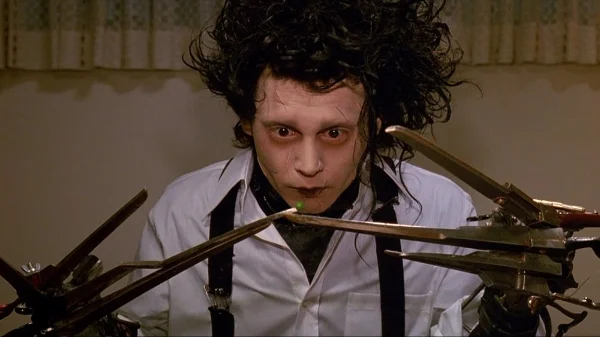
No time to see all that BAM has to offer? Well, for a sense of Mr. Depp's range, try his subtle, sensitive portrayal of the conflicted undercover cop in "Donnie Brasco" (July 15), a character far removed from his usual madcap menagerie. Then there's the hypnotic "Dead Man" (July 30), an extraordinary, slow, slow, slow Western, teetering uneasily between a dream and a joke, with Mr. Depp compelling as he drifts helplessly toward his fate. But if there's only one film you can catch, it has to be "Edward Scissorhands" (July 9), Mr. Burton's masterpiece, and Mr. Depp's, too. A gorgeous fairy tale, this kinder, gentler "Frankenstein" has an almost mute Mr. Depp strapped into a leather bodysuit, those legendary looks lost under stark white makeup and a tangled black wig. Despite these handicaps, Mr. Depp somehow uses minimal dialogue, marvelously expressive eyes, and the tricks of an accomplished mime to convey the very essence of the being he portrays.

It's a performance that he hasn't topped, and there are some signs from his latest work that he may never do so. His Jack Sparrow was a wild, wonderful and inspired comic creation. Sparrow transformed "Pirates of the Caribbean" from dross into gold, but plans for a sequel and the imminent release of "Charlie" may be a harbinger of something altogether less welcome: the return of novelty boy, this time as a licensed, lovable eccentric, good box office certainly but entirely lacking the edge that has made Mr. Depp so great for so long.

Let's hope not.

Chimps, The Cheshire Cat & The Fall of Tony Blair

National Review Online, May 26, 2005

Blair2005GE.jpg

When, after a great victory, a Roman general marched in triumph surrounded by plunder, captives, and, quite probably, hot chicks, he was always accompanied by a slave whose job was to hiss periodically in the great man’s ear the irritating reminder that he was only human, not a god. Something a bit like this (well, I don’t know about the plunder, captives, and hot chicks) happened to Tony Blair in the aftermath of his party’s triumph in the recent British elections. Within hours of victory, numerous Labour politicians lined up to tell Blair to get lost. Former foreign minister Robin Cook took time out from his usual bilious routine to report on the views of the nation’s boulevardiers. “Anyone on the streets knows we were not elected because Tony Blair was popular....” Another former, a former health minister better known for the elections he has lost than those he has won, said it was time for Blair to go. Former actress and current hysteric, the shrilly leftist MP Glenda Jackson chimed in with the claim that the “people have screamed at the top of their lungs. And their message is clear. They want Tony Blair gone.”

Well, Glenda, in case you weren’t paying attention, the people have just made Tony Blair the first Labour prime minister to win three consecutive election victories. While the party’s parliamentary majority was substantially reduced, it remains, well, substantial.

To the novelist and journalist Robert Harris (an old friend of Blair’s Svengali, Peter Mandelson, but a clear-eyed judge of British politics nonetheless), this all looked like madness: “it does not…require a political genius to see…that it is a thoroughly bad idea for a minority party-cabal to bring down an elected prime minister. The Liberals did it to Asquith in 1915 and have never gained power again. The Tories did it to Thatcher… and have since suffered three successive election defeats… Now Labour, like a chimp examining a loaded revolver, shows alarming signs of the same casual attitude to its political extinction.” Harris noted that an opinion poll conducted shortly after the election had shown some 83 percent of those who had voted Labour said that Tony Blair should stay on for at least another twelve months.

The same poll, however, revealed that over 60 percent of Labour voters want Blair out within three years, an indication, perhaps, that all is not rosy for Tony. And it’s not. Take a closer look at the stats: the Labour party’s share of the vote, a dodgy postal ballot or two over 35 percent, was the lowest enjoyed by an incoming government for nearly 200 years, and impressive as Labour’s haul of parliamentary seats undoubtedly was, it came in at well below the total secured in the previous two general elections. The number of votes cast for the party has slumped by a third since the 1997 election that swept Blair into power. For the first time in a decade, many Labour MPs are sweaty, anxious, and paranoid about their parliamentary futures, something that bodes ill for Blair’s.

It seems a long, long while since the bright, confident afternoon that Tony Blair first took possession of 10 Downing Street to the cheers of a supposedly spontaneous jubilant flag-waving crowd (in fact Labour-party workers and their families, but never mind). Years of spin, manipulation, and dishonesty, made all the more grating by relentless prime ministerial preachiness, have made Blair a deeply distrusted figure, part curate, part conman, all charlatan. Of course, there’s nothing new about the British loathing a repeatedly reelected prime minister—there were few politicians so disliked as Mrs. Thatcher at the height of her powers—but Blair has to contend with a threat that never really troubled the Iron Lady: the Labour party.

Once firmly established in Number Ten, Mrs. Thatcher could always rely on the adulation of her party’s rank-and-file and, until the Gadarene meltdown of November 1990, her MPs. Tony Blair cannot. As Labour leader he has filled an abattoir with the slaughtered sacred cows of party orthodoxy. This has won him elections, but lost him the love, affection, and loyalty of his activists. They, poor souls, remain trapped in a mindset that blends traditional working class belligerence with the idiot radicalism of a third-rate provincial university. To them, Tony is the outsider, the toff, Bush’s poodle (pick your insult), a necessary evil to be tolerated only so long as he brought in the votes.

And that means that Blair is now looking very vulnerable indeed. At the election Labour lost most ground in those parts of the U.K. where his emollient appeal had once been greatest. The affluent southeast has largely returned to its Tory roots. In England itself more voters opted for the Conservatives than for Labour. Labour is once again dependent on its traditional heartlands, the industrial north, and those grim socialist satrapies better known as Scotland and Wales, territories where Blair’s message has very limited intellectual, emotional, or electoral appeal.

Compounding his weakness, Blair has already said that he will resign before the next election. Quite why he chose to hobble himself in this way remains unclear. It’s probably best to ask Blair’s chancellor of the exchequer (finance minister) and presumed successor, the sulky, scowling, and increasingly impatient Gordon Brown. In circumstances that have been obscured by controversy, mystery, and mudslinging Blair may (or may not) have promised to step down in favor of Brown at some time during his first term and he may (or may not) have promised to step down in favor of Brown at some time during his second. He may also have sold his chancellor the Brooklyn Bridge, a secondhand Pinto, and a three-dollar bill. Who knows? In any event, it’s 2005 and Blair’s still in office, but the trusting Mr. Brown has finally and painfully come to the same conclusion as the rest of the country. “There's nothing,” he told Blair, “you could ever say to me now that I could ever believe."

Eventually, Blair did what he always does (or may not have done) on the previous occasions that he needed to keep Brown onside: He promised to stand down at some point in his next term, but this time, there was a difference. He made that promise in public. The moment he did, the game was up. Politicians at Westminster, a British journalist told me, know that Blair is mortally wounded, “they can see the trail of blood all across the lobby floor.” Power, sycophants, and the ambitious are all ebbing from the prime minister, as Gordon Brown, whose fondness for some of old Labour’s more numbskull pieties has already made him the party’s darling, painstakingly cements his hold over the constituencies he will need to assure him the premiership, a union leader here, a key MP there, a friendly journalist here, a member of the House of Lords there. According to some estimates there are now three times as many Brownites as Blairites within the ranks of the parliamentary Labour party.

Superficially, Blair’s actions since the election seem to show that the maestro has lost none of his touch. The usual crop of meaningless, destructive, and plain dumb "reforms" have been announced, the House of Lords has been stuffed with another batch of cronies, dubious government appointments have been made and dissidents have been roughed up at a parliamentary-party meeting. But this is all flim-flam, flash, and empty glitter, a show that signifies nothing. A better indication of where power now lies comes from the fact that Blair was unable to push through many of the personnel changes he wanted in his new administration, a deeply humiliating rebuff for any newly reelected prime minister, let alone one who has been in office for the better part of a decade.

And the misery doesn’t end there. Blair has for a long time delegated large amounts of the domestic agenda to his chancellor (that was part of the agreement between them), but now, after Iraq, even his hold over foreign affairs is palsied, feeble, and pointless. Britain’s EU policy is a shambles, and so far as the threat from Islamic extremism is concerned, the idea that Blair could bring his party with him alongside the U.S. in doing anything that lacks the approval of the "international community," Hollywood, the Guardian and the New York Times is absurd. All that is left to Blair now is the peddling of a grandiloquent, if benign, idea—saving Africa—ripped off from a rock star.

The next step in Blair’s decline will be guerrilla warfare> against his government from the Labour Left, but this will not be enough to unseat him, and nor, probably, would Brown want it to. Despite a history of awe-inspiring and entertainingly destructive temper tantrums, Brown, like Harris, clearly understands that a coup could come at a terrible electoral price. He has resisted the temptation to play Brutus in the past, and he will do so again. He wants to inherit a united party. Ideally Brown wants that “smooth and orderly” handover that Blair is always talking about, but sooner, please, please, sooner, please, please, sooner, rather than later. So when might that be? Before the election, conventional wisdom was that Blair would oblige his impatient heir about three years into his final term, now the talk is that he might quit next year.

The problem is that there is still no obvious moment for Blair to go. Given his druthers, the prime minister, who is still only 52, would probably prefer to soldier on up to the last minute or, quite frankly, beyond. If he does have to go, this most theatrical of politicians will want it to be on a high note. The conundrum for Blair—and Brown—is that there aren’t many potential high notes around. It’s long been mooted that Blair should resign after tricking the Brits into voting for the EU’s draft "constitution" in the autumn of 2006, but so far his stubbornly euroskeptic countrymen show few signs of playing along. Of course, a British "no" might also signal the end of Blair’s show, if not quite so gloriously as he would have wished. Needless to say, all this may soon become academic: If the French and the Dutch reject the constitution in the next week any British vote may be shelved indefinitely.

The British economy won’t be much help either. After eight years in office, it looks as if Labour is finally going to have to start paying the price for the way in which it has squandered the golden inheritance of the Thatcher-Major years. Quite how this will reflect on Gordon Brown, as Chancellor the man most responsible for the coming mess, is hard to say, but increasingly unappetizing economic news will mean that Blair’s departure will look more like an exit from the scene of the crime than the glorious finale of which he must dream.

So nothing’s certain other than months, and perhaps, years of intrigue, febrile speculation and plots as Blair’s premiership fades, fades, and fades away until, like a New Labour version of Carroll’s Cheshire Cat, all that will be left is an oddly compelling smile, faint, strained, and insincere.

Potter's Field

Charlie Higson: Silverfin

The New York Sun, May 20, 2015

Silverfin.jpg

With Clint Eastwood reduced to making films about ladies who box, Bond, James Bond, is the last true man's man. He blows smoke in the face of surgeons-general, adds no fruit juice to his martinis, and gives the pieties of feminism a pass. He has survived knives, a wife, bullets, nasty mechanical pincers, beatings, grenades, piranhas, and tortures too beastly to describe in a family newspaper. He's seen off Blofeld, Goldfinger, Scaramanga, No, Drax, and even that impertinent oaf, Austin Powers. He has weathered the challenges of SMERSH, Rosa Klebb's shoes, Roger Moore's safari suits, and the notion that M can be Dame Judi Dench. Now 007 faces his greatest, and potentially most humiliating, threat yet. James Bond - sophisticate, seducer, secret agent - has just been reimagined as a 13-year-old boy.

Charlie Higson's "SilverFin" (Miramax Books, 335 pages, $16.95), the first of five planned "Young James Bond" novels, was published in Britain earlier this year to dark mutterings from the veteran spy's fans, critical approval, and impressively strong sales. Now (don't tell Felix Leiter) it has been released over here. A comic book is also in the works. There is, predictably enough, also talk of a movie, although widespread (and now denied) rumors that the film would star Orlando Bloom as Bond Jr. seemed to ignore the fact that, fresh-faced though he may be, the former elf is well past puberty.

If all this sounds like there is someone somewhere trying to milk an old franchise for all it's worth, that's because it's true. Ian Fleming came from a distinguished, and famously shrewd, Scottish banking family that has never, in all its long history, been known to overlook the chance of making a pound or two. Fleming sold a controlling stake in his literary estate to the publishers, Booker plc, before his death, but the Fleming family bought it back in the late 1990s, and (the London Guardian reports) "a wave of new projects, including Bond merchandising and games, is being prepared."

The early chapters of "SilverFin" show the fine-tuned commercial instincts of those canny Scots at work. Its opening chapters set the scene in a manner that cannot fail to lure in all those potential buyers bored of waiting, waiting, waiting for their next fix of J.K. Rowling. Like Harry Potter, young Bond is an orphan, although mountaineering, not magic, is to blame for his parents' unfortunate demise. Like Potter, Bond is sent off to boarding school. An unconvincingly described Eton stands in for Hogwarts.

Needless to say, poor James has to contend with his very own Draco Malfoy, a villainous fellow pupil with, like Draco, a powerful father behind him. Trapped by the decidedly unsupernatural nature of his hero, Mr. Higson is unable to add the additional excitement of a brutal contact sport played on flying broomsticks: There's no Quidditch at Eton. Bond triumphs, instead, in cross-country running.

Mr. Higson's decision to cast as Bond's best chums two Indian and Chinese boys, rare birds indeed in a "public" school in 1930s England, is probably no less calculated. Pritpal Nandra and Tommy Chong will delight the diversity police always so busy patrolling the world of children's literature, and probably be good boxoffice, too. The same is true of "Red" Kelly, Bond's handily proletarian sidekick, useful in a punch-up and essential for giving young James the street cred that today's market calls for. We are told early on that Kelly thinks the privileged Etonian is "all right" despite being a "toff," and thus a member, we are supposed to understand, of a hated enemy caste.

That such touches are hopelessly anachronistic does not seem to worry the author too much. With the exception of a few pieces of carefully inserted period detail, there is little about this book that gives any real sense of the time in which it is supposedly set. Or, for that matter, the place: The Scotland in which James's adventure comes to its pleasantly savage conclusion is as bogus as "Brigadoon," utterly lacking the beguiling tweedy tartan authenticity that John Buchan brought to his "Thirty-Nine Steps."

Despite these - considerable - flaws, the second half of "SilverFin" gallops splendidly along with a fabulously nutty plot that involves sinister German scientists, carnivorous eels, man-eating pigs, daring escapes, grotesque deaths, a megalomaniac American businessman, and enough steroid abuse to launch a baseball team. Once he gets going, Mr. Higson displays a fine sense of pace, and a genuine ability to write the enjoyably un pleasant descriptions that will delight the small ghouls who will make up so much of his audience:

"James recoiled, but then forced himself to look at what had once been a man. ... The face was wrecked: it looked as if it had been split down the middle and forced apart, so that the nose was flattened and stretched, the teeth had separated and the eyes had curved around almost to the sides of his head. The eyes were the worst part. They were dark and wet, and James saw in them, not murder, but sadness and pain."

That's splendid stuff, but not quite good enough to buy forgiveness for what "SilverFin" (not to mention the annoying anti-smoking infomercials that pop up periodically throughout the book in an attempt, presumably, to dispel the fatal allure of a certain special agent's Balkan- and Turkish-blend cigarettes) could do to the commander's image. Those of his fans brave enough to read it will need to take appropriate steps afterward to banish the idea of 007 as a retro Cody Banks from their heads.

May I suggest a couple of vodka martinis? Shaken, not stirred.

Roaring Back From - and for - the Dead

Michael J. Graetz & Ian Shapiro: Death by a Thousand Cuts - The Fight over Taxing Inherited Wealth

The New York Sun, May 16, 2005

Death Tax.jpg

There are few more ominous signs of a grim read ahead than "advance praise" by the pompous, pedestrian, and stupendously dull Bill Bradley. According to the former New Jersey lawmaker, "Death by a Thousand Cuts" (Princeton University Press, 372 pages, $29.95) is "immensely readable ... an illuminating look at the estate tax and its implications for future American tax policy." The phrases "tax policy" and "immensely readable" are not usually found in the same sentence, but Mr. Bradley is, for once, quite right. Written in a bright, breezy style, "Death by a Thousand Cuts" is as about as accessible as a book about tax could ever hope to be. It is, indeed, "illuminating," but not in the way that the much unmissed senator would like you to think.

While "Death by a Thousand Cuts," a chronicle of the events leading up to the repeal of the death tax, has much that is intriguing to say about that blessed event, its real interest is as evidence of the way many members of the liberal establishment (the book's authors are both professors at Yale) have been left by an electorate set on ignoring their advice. Accepting that they simply lost the argument is out of the question. Instead they prefer to fall back on "forgive them; for they know not what they do" as an excuse for the voters' intolerable behavior - an explanation that is, when coming from anyone other than a messiah, remarkably patronizing.

So, for example, Thomas Frank, the writer of the best-selling "What's the Matter With Kansas?" a sporadically entertaining, if nutty, polemic, concludes that the inhabitants of Toto's home turf (and by implication much of the rest of the country) have been so befuddled by the culture wars that they fail to understand that their self-interest really would be best served by adopting the economic policies of William Jennings Bryan. "Death by a Thousand Cuts" shares that same disdain for the average voter. Michael Graetz and Ian Shapiro throw a highbrow hissy fit at the gullibility, effrontery, and downright stupidity of a nation of rubes unwilling or unable to understand what is in their best interest.

Struck by the fact that only around 2% of corpses will actually pay the death tax (the tax euphemistically referred to as the "estate tax"), the authors conclude that the widespread opposition to this squalid levy among the less affluent can be explained by their ignorance and, more sinisterly, the manipulation of that ignorance by a small coterie of determined ideologues conspiring to end "progressive" taxation, trash the New Deal, wreck the Great Society, and, doubtless, slaughter the firstborn. Okay, perhaps not the last.

For tales of conspiracy to resonate, however, the conspirators need a little heft and a lot of secrecy. The difficulty faced by the authors of this book is that the principal plotters - a think tank or two and, inevitably in a tax scrap, Grover Norquist of Americans for Tax Reform - look a touch puny, and they did much of what they did in public. They were trying to win a debate, and it's difficult to object to that. To beef up the sense of menace, therefore, Messrs. Graetz and Shapiro throw in tales of funding by "big money" and the "ultrarich," including Richard Mellon Scaife, a useful bogeyman since, at least, the dog days of the Lewinsky era.

The handy implication is that the abolition of the death tax owed as much to plutocratic selfishness as it did to genuine political conviction. Better still, if the authors can show that defenders of the tax were outspent by those who wanted to scrap it, then they can argue that it was not ideas that made the difference, but cash. The problem is that, despite a chapter subtly titled "Money, Money, Money," they cannot.

While the abolitionists may ultimately have had more resources specifically dedicated to this issue than their opponents, the death tax had enormous institutional support. Immune from serious challenge for decades, it was seen in Washington, in the academy, and in the press as part of the social consensus, as American as apple pie and April 15. Those who challenged it were underdogs, no-hopers, long shots - Davids, not Goliaths. But, as Davids are sometimes prone to do, on this occasion they won.

To claim, as Messrs. Graetz and Shapiro try so hard to do, that this was principally a triumph of generous funding, canny propaganda, and false consciousness is nonsense. The death tax may have been levied on the few, but it did its unfair share to darken the dreams of the many. As voters came to understand, and as was proved by the repeated reluctance of politicians to increase the level at which it began to bite (in 1993 Dick Gephardt even proposed lowering it to include estates of $200,000), the death tax was an attack on aspiration, a door slammed in the face of those strivers essential to the success of any economy - strivers who unlike the very rich have neither the time nor the money to construct elaborate shelters against the depredations of a greedy government.

Even now the death tax is not dead. It will shrink over the next few years until "final" repeal in 2010, only to come roaring back from - and for - the dead in 2011.This will not only undo all the good that will flow from its demise, but will also make 2010 an exceptionally perilous year for rich folk with greedy relatives. A far better course would be to put a stake through this monster's heart once and for all - and soon. Mr. Norquist? Professor Van Helsing?

The Trouble with Tony

National Review OnlineMay 3, 2005

Blair.jpg

It can be a lonely business being a critic of Tony Blair in this country — outside, at least, the fever swamps of the far Left. Speaking at a crowded debate in downtown Manhattan last week, my myopic eyes could only find one brave individual who agreed that the British prime minister did not deserve reelection As my solitary supporter (thanks Myrna!) writes for NRO, I suspect kindness to a beleaguered colleague played no small part in this welcome gesture of support. Perhaps my feeble, muttered oratory was to blame, or was it the arguments skillfully marshaled by my opponent?

Maybe, but it’s just as likely that this result was mainly a reflection of the American infatuation with Tony, the saint, the hero, the Churchill with hair, but no cigar. Whenever I post any criticism of Blair over on The Corner a few angry e-mails usually come my way. Their gist: Blair is a great, great man, America’s ally; don’t bother us with the internal squabbles of your miserable little islands. This misses the point. In understanding why Tony Blair deserves to lose, remember that he’s the prime minister, not of the world, but only of those unfortunate specks in the sea. He may have been good for America, but he’s been bad for Britain.

And yet, when Britain votes on May 5 Blair will win. The only question will be by how much. But this seemingly inevitable success will owe little or nothing to Blair the international statesman (it will not be a referendum on the war, which, however unfairly, has done little for Blair other than to bolster his reputation for untrustworthiness) and almost everything to an economy that appears, however deceptively, still to be ticking over quite nicely. Critically too, Blair benefits from the weakness of an opposition seen by most voters as unprepared for prime time.

Beyond the usual ragbag of Celtic nationalists, single-issue campaigners, maniacs, madhats, and cranks, there are two opposition parties that count, one worse than Labour, and one better. The one that is worse, the Liberal Democrats, is the successor of a party that has not won an election since it dragged Britain into the First World War (thanks guys!) and it is not going to now. Nowadays it is a pro-tax party of the left that calls itself centrist, defines itself by its opposition to the liberation of Iraq, and has an alarming tendency to appeal to the sort of men who like to wear socks with their sandals.

The Conservatives would, at least, be an improvement on Labour. They aren’t much, but they’ll do (come to think of it, that should be their slogan). After the traumas of recent years, they have been reduced to a rather tatty rump, led by a man sometimes compared to a vampire (well he has been endorsed by Christopher Lee), but, given the obstacles they face, this is inevitable. Nobody entirely normal would agree to take on the task of toppling Labour. That this is such a challenge is a measure of the Conservatives’ failure. Labour rule has been marked by sleaze, spin, economic mismanagement, relentless political correctness and a chaotic immigration policy, a record that, given more effective opposition, should be enough to ensure defeat.

Of all the blots on Labour, it’s the sleaze that is the most ironic. Accusations of "Tory sleaze" played a very large part in helping Blair to his 1997 landslide. These were often unfair, but sometimes deserved. The Conservatives had shown themselves increasingly prone to the petty — and occasionally not so petty — corruption that characterizes political parties in power for a long time. Throw in John Major’s ill-advised, and impertinent, family-values campaign (which opened the door to a relentless procession of revelations about naughty Tory MPs), and Tory sleaze, whether it was payments in brown envelopes, numerous adulteries, dodgy foreign donations or, even, an autoerotic disaster, became the media story of the day, the month and the year.

Labour was going to be different — and so it was if not quite in the way (“purer than pure”) that the electorate had been led to believe. Labour scandals may have actually exceeded anything associated with the Conservatives, and might even include the electoral process itself. In an attempt to boost turnout by its supporters Labour has made it much easier to vote by post. To the judge presiding over an election court (the first to be summoned to investigate corruption for more than a century), the new system is an “open invitation to fraud” — an invitation apparently accepted by a number of Labour politicians in Birmingham. And if it’s happening there, where else?

But the most important thing to understand about Labour sleaze is not that the entire national party is corrupt (it’s not), but what it reveals about a government that became too used too quickly to the exercise — and abuse — of power. In eight years in office it has wrecked civil-service neutrality, taken a chainsaw to the constitution, packed the House of Lords with its cronies, and never seen a freedom anywhere that it did not want to crush. Worried about overreach by the "religious Right" over here? Well, take a look at Blair’s plans to make incitement to "religious hatred," whatever that might be, a crime. Salman Rushdie is horrified and he is right so to be.

And then there’s Britain’s economic performance since 1997, supposedly the definitive proof that "new" Labour has shed the caveman economics of the party’s past. Writing a panegyric to Blair in a recent edition of the New York Times, Tom Friedman managed to conjure up a portrait of Britain so misleading that Baron Munchausen would have been proud to call it one of his own. In between sips of Kool-Aid, Friedman gushed about the strong economy “engineered” by Blair and his “deft” finance minister, Gordon Brown. New Labour had, he argued, embraced the free market with such gusto that the resulting prosperity had enabled the government to deliver much-needed improvements to public services: “And these improvements, which still have a way to go, have all been accomplished so far with few tax increases. The vibrant British economy and welfare-to-work programs have, in turn, resulted in the lowest unemployment in Britain in 30 years. This has led to higher tax receipts and helped the government pay down its national debt.”

Oh really?

Now, it is certainly true that Britain has continued to prosper since Labour took over, but with one exception — the bold decision to give the Bank of England operational independence — this is despite Labour, not because of it. In 1997, Blair and Brown took over an economy that was already in excellent shape. The only surprise has been how long it has taken them to mess it up. Contrary to the fears of many skeptics (including this one), they had learned from the failures of previous Labour governments. The traditional smash and grab has been replaced by something subtler, but the consequences will, in the end, be just as poisonous.

Much of the blame for this lies with that “deft” Gordon Brown, the oddball Scot to whom Blair has delegated control of the British economy. Brown is living, snarling, and sulking proof of P. G. Wodehouse’s observation that it is “never very difficult to distinguish between a Scotsman with a grievance and a ray of sunshine.” To cut a (very) long story short, Brown believes that Blair reneged on a promise to hand over the premiership to him at some point during his second term and, while he bides his time, impatiently waiting to play Brutus to you-know-who’s Caesar, he is taking out his rage and disappointment on the luckless British taxpayer.

Brown is an intense, slightly loopy son of the manse, a weird blend of Karl Marx and Ken Lay, whose term in office has been marked by messianic egalitarianism, exciting accounting and resistance to the real reforms needed to bring Britain’s crumbling public services into the 21st century. Rather than challenge the existing model (which dates back to the 1940s) his only remedy is to throw people and pay rises into what has become a bottomless pit. Overall public spending has increased by over a quarter in real terms since 1999, and there’s much, much more to come. Half the new jobs created since 1997 have been in the public sector, twice the rate of job-creation in the economy as a whole. The state now employs one in four Britons, a handy constituency, doubtless, for future Labour governments, but a powerful brake on future attempts at reform. Needless to say, Brown is beloved by Labour party loyalists and he will almost certainly be Blair’s successor. A vote for Blair now is a vote for Brown in a year or so.

Paying the bill for Brown so far has sent Britain’s tax burden heading for its highest levels in 25 years and government borrowing is accelerating alarmingly. In 2001 Brown forecast he would borrow 12 billion pounds over the following six years, the actual figure will be (touch wood) 112 billion pounds. Include Brown’s, um, off-balance sheet financing, and government debt has increased by 13.4 percent of GDP under Labour, a dismal achievement at a time of consistent economic growth. The tragedy is that all this spending has produced little in the way of results. Education standards have barely budged and productivity in the National Health Service may have actually declined. That’s not a lot to show for all those taxpayer billions.

And the cracks are beginning to show: crippled by one of Brown’s stealth taxes, the occupational pension system is in crisis, private savings have fallen by a half, inflation is rising (the day Brown took over it was 2.6 percent; it is 3.2 percent today) and the trade balance has deteriorated. Allocating all those resources to the public sector has taken its inevitable toll, made even worse by the imposition of a massive regulatory burden (now priced at £75 billion): productivity growth is slowing (2 percent to 1.5 percent), and GDP growth is slightly lower (2.75 percent) than in the Major years (3 percent).

And if, as Blair intends, Britain signs up for the draft EU "constitution," matters will only get worse. The U.K. will be forced to give up what is left of Thatcherite deregulation in favor of micromanagement by Brussels and the adoption of the Franco-German economic model, a sure route to economic stagnation.

Just as damagingly, once enmeshed within the EU’s constitutional system, Britain will rapidly lose the right to an independent foreign policy. It’s this freedom that has enabled Blair to stand so resolutely alongside the U.S. over the last few years, the stance that has won him so many admirers over here. To his credit, the prime minister has been prepared to react to the threat represented by Islamic fundamentalism far more forcefully than most European politicians and to his credit, and at considerable political cost, he also understood what had to be done in Iraq.

But taking such positions will be all but impossible once the UK is subject to the disciplines of the EU constitution. Article 1-16 commits all member states to a "common foreign and security policy." Member states are required to "actively and unreservedly support the Union's common foreign and security policy in a spirit of loyalty and mutual solidarity and shall comply with the Union's actions in this area. They shall refrain from action contrary to the Union's interests or likely to impair its effectiveness." This is quite clearly designed to pave the way for a European defense capability owing little to the Atlantic alliance, and everything to the agenda of Paris, Berlin, and Brussels.

For Brits, that’s another good reason to reject Blair, and it even ought to make his American fans pause for thought.

Yelling Stop

National Review, April 25, 2005

Wilders.jpg

Holland was once known for its freedom, not its fanatics. It was seen as a kindly oasis in an unkind world, famous as a fair, broadminded country, a tolerant land where anyone could speak his mind without fear of retribution or the midnight knock on the door. Not now. Not after the assassination in 2002 of Pim Fortuyn, an outspoken opponent of Holland’s ruling multicultural orthodoxy. That wild, extravagant aristocrat was demonized by the political establishment, denied (some say) proper police protection, and, finally, gunned down in the street. Tolerant? Not after the slaughter in Amsterdam last November of another heretic, Theo van Gogh, filmmaker, gadfly, and controversialist, shot, stabbed, and butchered like a sacrificial animal for daring to attack Muslim fundamentalism. Free? No, not really. Not anymore.

In the days after van Gogh’s murder, the Dutch government at last began to act. To lose one public figure might have been unlucky; to have lost another looked like carelessness. Ayaan Hirsi Ali and Geert Wilders, two members of parliament loathed by Holland’s Islamic extremists, were whisked off to heavily guarded safe houses. In February, the Somalian-born Hirsi Ali emerged to complain that the authorities appeared incapable of making permanent arrangements for Wilders’s and her security. It turned out that she had been camped out in a naval base. As for Wilders, a fortysomething MP from the southeast of the country, well, he had been housed in a location that could only have been picked by someone with no sense of irony or, perhaps, with too much. He’s been living in a prison: to be precise, the jail within a jail where the Lockerbie bombers once awaited their trial. Those who threaten him remain outside, free to do their worst.

Stoic Dutchman that he is, Wilders doesn’t like to grumble. “I have to make the best of it,” he told me in a recent interview. “I have a kind of living room, which is quite okay. On either side, there are the cells where the two Libyans were held. In one cell I have my clothing . . . In the other cell there is my bed.” The prison is, “of course, a terrible place,” but his hosts have done what they can. “They put some lamps in and a TV,” small consolation, I suspect, for a life under siege.

We were chatting, not in the prison, but over coffee in a small, cramped office tucked away at the end of a long corridor somewhere in the depths of the building that houses the Dutch parliament in The Hague. A number of bodyguards sat nearby. Outside, it was a bright, brisk early spring morning, freshened by a North Sea breeze, the slightly surprising quiet punctuated mainly by the cries of the occasional seagull. The Hague looked its best, the understated capital of the timeless, civilized Holland of popular imagination, souvenir shops crammed with its symbols, Delftware, windmills, tulips, clogs, and Sint-Niklaas. Inside, Wilders, symbol of Holland’s new, more uncomfortable reality, describes the way that he is now kept alive.

The death threats, which, needless to say, include that latest cliché of a resurgent barbarism, calls for his beheading, are relentless, increasing, and chilling. “I would be lying if I said I was never afraid.” In an age of freelance jihad, even those rants that consist, probably, of little more than Internet bravado have to be taken seriously as possible incitements for someone somewhere to reach for knife and gun. The result is a life under constant guard, a “crazy, tough” life, a life with little privacy and less spontaneity, a life punctuated by visits to the police “five or six times a week,” a life where Wilders, in short, no longer feels free. It is almost impossible to see friends. Dining out occasionally is “better than eating in prison every evening,” but with a number of guards in tow, it is, inevitably, a “circus,” something, he explains, smiling, that can remove the romance from an evening out with his wife. “You have to whisper, or everyone from security can hear.”

Somehow Wilders has retained his sense of humor. A wry, thoughtful, somewhat intense man, he can still manage a laugh at the absurdities of his predicament. It’s only the occasional nervous gesture or the fleeting traces of tension that sometimes cross his face that betray a hint of the appalling pressure with which he has to cope. At the same time he obviously relishes the remarkable challenge he faces in attempting to build up a new political organization (Wilders broke with his old party, the free-market VVD, in September 2004), a difficult enough task under any circumstances, let alone those under which he now has to operate. No matter: “I have a lot of adrenalin going through my veins.”

Wilders’s new political group has, he believes, “a lot of possibilities.” Like most politicians, he is ambitious, “I’m not there yet . . . but I’m on my way.” It’s clear that he has sensed that the unease now enveloping the Netherlands could be his route to the top. As we chat, he proudly prints out new poll findings showing that the “Wilders Group” could expect to win around 10 percent of seats in the Dutch parliament’s lower house.

It would be a mistake, though, to see Wilders as an opportunist cashing in on thecurrent turmoil: His opposition to Holland’s seemingly perpetual soft-left consensus, stifling corporatism, and multiculturalist muddle can be traced back at least a decade, to his time as a speechwriter for Frits Bolkestein, the then VVD leader, who was one of the first to sound the alarm over the country’s failure to integrate its Muslim minority, a minority that is now about a million strong (out of a total population of a little over 16 million). Wilders himself went on to flourish within the VVD, rising to become its foreign-affairs spokesman. His departure from the party — the catalyst was his opposition to any invitation to Turkey to join the EU — might indeed turn out to be a shrewd move, but equally it could be nothing more than a leap into the wilderness.

His background in mainstream politics means, however, that Wilders is no outsider, and thus, unlike Fortuyn or van Gogh, he is not easy to caricature as a crank, a fascist, a racist, or a joker. He’s a pro, one of the grownups, respected (if not exactly universally loved) in parliament. Yes, it’s true that, despite his extraordinary hairdo, a pompadour in Billy Idol peroxide, Wilders doesn’t have the eccentric charisma of his two murdered predecessors: He has neither the extraordinary camp élan of Fortuyn nor the bad-boy charm of van Gogh (who never stood for elective office), but he more than makes up for this with a résumé that means that he has to be taken seriously.

And that’s exactly what he wants. During the course of the interview, Wilders is at pains to distinguish himself from Jean-Marie Le Pen and others on the darker side of the European “Right.” He is, he says, simply a “Tocquevillian conservative,” but a glance at his recent manifesto (the somewhat bombastically named “Declaration of Independence”) reveals a more complex mix, an eclectic blend of small-government conservatism, Atlanticism, free-market liberalism, Euroskepticism, and populism. But, above all, Wilders will be judged by his response to Holland’s failed and feckless experiment in multiculturalism. Sometimes this is subtle: He likes to connect the dots between the increasingly intrusive federalism of the EU and the dangerous consequences of the enfeebled sense of national identity within its member states. Sometimes it is not. Wilders is unapologetic in proclaiming the superiority of Western values. He is not, as he puts it, a “cultural relativist.” In an era of PC platitudes, Wilders can be bracingly blunt: “I don’t believe in a European Islam, in a moderate Islam . . . Islam and democracy are incompatible.” He is careful, however, to draw “a distinction between the religion and the people . . . Islam and democracy are incompatible, but Muslims and democracy are compatible.” Trying to change Islam is, in his view, a hopeless task; trying to win over its followers in the Netherlands is not.

To achieve this, he is recommending a program that features carrots and, unusually for Holland, sticks. It includes a five-year moratorium on immigration from “non-Western” countries, deportation of dual nationals convicted of criminal offenses, extra public spending to aid in the assimilation process, the closing down of extremist mosques, and preventive detention of some of those in the small hard core (“a few hundred”) reasonably believed to be planning terrorist attacks. Saving lives must, Wilders believes, come ahead of extending the full protection of Dutch law to those who would overthrow it. And no, he concedes, “this is not an easy concept.” Indeed, it isn’t.

Talking to Wilders, I was left with the impression of a work in progress, of a man still trying to think through the full ramifications both of the complex and threatening situation now facing his country and of the remedies he is proposing to resolve it. He does not have all the answers, and some of those he has may well be wrong, perhaps very wrong. But to his credit, Wilders is at least asking the right questions, something that few in Holland have been brave enough to attempt before. And, no, this stubborn, determined, man is not going to give up anytime soon. “That’s what the people who threaten me want me to do.”

There's Nothing About Drew

Fever Pitch

The New york Sun, April 8, 2005

Fever Pitch.jpg

The best thing that can be said about the new American "adaptation" of "Fever Pitch" that opens this week is that its directors - the usually reliable Farrelly brothers - knew that doing justice to Nick Hornby's morosely funny memoir was beyond them. Instead, they borrowed, then watered down, his sports-obsessed persona, added elements of the romance thrown into the English film of the book, and moved the whole thing to Beantown. Dour, dull, relentless Arsenal and its terrifying fans of 20 years ago, a horde out of Peckinpah, are transformed into Capra cornpone: the feisty, loveable Red Sox, and the feisty, loveable salts of the earth that worship them. To describe the script as lame would be to dis the disabled; let's just say that stock footage of Boston's not particularly inspiring skyline (included, doubtless, to make viewers forget the fact that much of the film was shot in Toronto) provides some of "Fever Pitch's more entertaining moments.

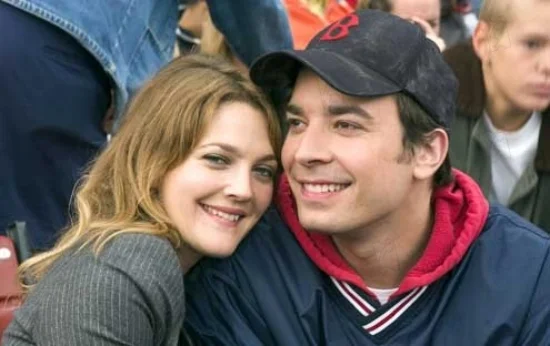
As the Hornby character, Ben, Jimmy Fallon of "Saturday Night Live" does what he can to liven up a movie that is, whatever your view of cryonics, more dead than Ted Williams. He's not helped by Drew Barrymore, still clinging to the sweetheart image she so laboriously built up after falling from disgrace. She portrays Lindsey, Ben's supposedly sophisticated investment banker girlfriend, as Laurie Partridge with a spreadsheet.

In truth, however, Lindsey and Ben only play supporting roles to the real stars of this film, the Boston Red Sox and their regrettable (look, this is The New York Sun you're reading) come-from-behind victory at the end of last season. If you want to savor those moments again, but this time in the context of an utterly unconvincing love story, see this movie.

Nick Hornby: Fever Pitch

Yes, the ball is round, but all the rest is wrong

Charlie George.jpg

In the decade or so since it first appeared, as unexpected as an English World Cup victory, Nick Hornby's peculiar, touching, and obsessive "Fever Pitch" has established itself as part of Britain's pop-cultural canon, a bestselling book that wowed both snooty critics and a legion of fans rarely seen studying a page without pictures. Just as remarkably, it was a memoir centered on football that won over those who knew little, and cared less, about a game of 90 minutes devoted to the kicking of a small round ball.

Round ball? Ah yes, Mr. Hornby was writing about what we Brits call "football" - something never, ever, to be confused with the ponderous spectacle known internationally, and with some disdain, as "American football." Nor, for that matter, should it be muddled up with the effete "soccer" played in the United States. That's a genteel game favored by high school girls and Title IX vigilantes, a pastime of great importance to the moms who are this country's most annoying political demographic, but which has had little to offer the rest of us since the sad moment Brandi Chastain pulled her shirt back on.

A few years ago, Mr. Hornby adapted his book for a British movie version of "Fever Pitch" (1997) transforming his oddball chronicle into a routinely soapy romance with the home team playing the role of the Other Woman (a theme which he dealt with more effectively in "High Fidelity," with old records, his other obsession, standing in for the Gunners). Now it has been again adapted, this time by the Farrelly brothers, into a disappointing film about, of all things, baseball.

Don't waste your time with either of these movies: Read the book.

The sport Mr. Hornby describes so well is not the glossy, celebrity-drenched "beautiful game" of English myth and Latin reality, but something altogether more dreary - something very specific, mercifully, to its awful era and depressing place, the disheartening, despondent England of 20 or 30 years ago. The games were dull, uninspired, and bloody, 11-a-side recreations of the battle of the Somme, marked, only (to borrow Mr. Hornby's phrase) by "dingy competence." If "you want entertainment," snarled one well-known coach, "go and watch clowns."

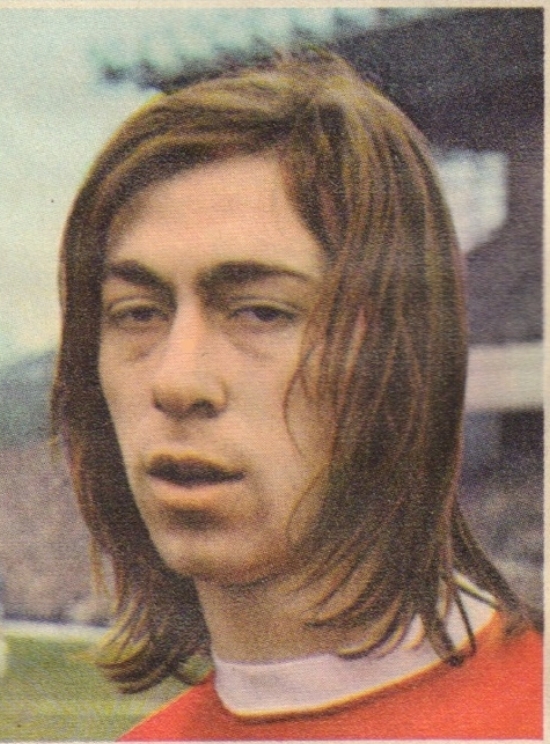
This was a time long, long before David Beckham, gentrification, and all-seater stadiums. It is a time remembered best with the help of driving rain, damp discomfort, and the smell of cigarettes and stale beer, a time when the game was dominated by characters like Arsenal's burly and menacing Charlie George, a creature whose very existence was proof that Neanderthal Man had survived into modern times. Mr. George was legendary, Mr. Hornby explains, for his inarticulacy, lack of savvy in dealing with the press, and, above all, the way in which the player's "long, lank hair remained unfeathered and unlayered right up until the time he unwisely decided upon a bubble perm from hell some time in the mid-seventies." No Posh for you, mate.

Back then, attending the Saturday afternoon footie, a blue-collar staple stretching back for a century, was an old rite rapidly turning rancid, marked by squalid, dangerously cramped stadiums, declining attendance and the constant threat of punch-ups, and worse, between warring fans. In the 1970s the violence was bad enough, but in the decade that followed "it was," Mr. Hornby wrote, "less predictable and much nastier. Police confiscated knives and machetes and other weapons ... things with spikes coming out of them; and there was that famous photograph of a fan with a dart sticking out of his nose."

Under the circumstances, it's a relief to report that, while its distinctly local flavor means that "Fever Pitch" is a book that will always be a minority taste in the United States, there's much more to it than reminiscences of a North London team whose exploits, however beautifully retold, are unlikely to compete with the fall of Troy as a saga with staying power. "Fever Pitch" is as much the self-mocking story of one man's obsession as it is a chronicle of games long gone: "With twenty minutes to go, Exeter went into the lead, and my girlfriend ... promptly did what I had always presumed women were apt to do at moments of crisis: she fainted. Her girlfriend took her off to see the ... ambulance men; I, meanwhile, did nothing, apart from pray for an equalizer."

If you are contemplating those words and thinking Mr. Hornby demonstrated an admirable sense of the right priorities, "Fever Pitch" is the book for you, and even more so for those understanding enough to be your friends. The stats-crazed, emotional roller-coaster, monomaniacal mind of the madder type of sports fan has rarely, if ever, been better described or, for that matter, more seductively. Following its publication, a startled nation suddenly found itself engulfed by copycat football nerds - boring, but essentially benign, and rarely associated with things with spikes.

But it is as autobiography that "Fever Pitch" really excels. Mr. Hornby was introduced to the game by his father, desperate to find something, anything, he could share with a young son hurt and angered by dad's departure from the family home. And it worked: "Saturday afternoons in North London gave us a context in which we could be together. We could talk when we wanted, the football gave us something to talk about ... and the days had a structure, a routine," Mr. Hornby wrote. "The Arsenal pitch was to be our lawn; the Gunners' Fish Bar on Blackstock Road our kitchen; and the West Stand our home." Supporting Arsenal ("the Gunners") became the means by which the boy finds himself and, finally, gradually, rather belatedly, comes of age, a story Hornby tells in a manner that is distinctively his own.

Mr. Hornby's own film adaptation was an agreeable enough effort, but it never won the audience of the original. To understand why, just compare the movie's conventionally happy conclusion with the book's final paragraph:

"Against Aston Villa, one week after Wrexham, my whole life flashed before my eyes. A nil-nil draw, against a nothing team, in a meaningless game, in front of a restive, occasionally angry but for the most part wearily tolerant crowd, in the freezing January cold. ... All that was missing was Ian Ure falling over his feet, and my dad, grumbling away in the seat next to me."

You don't get better than that.

Powder Keg

National Review Online, March 24, 2005

salt.jpg

There's a menace abroad in the land, a lethal white powder that is being consumed by sensation-seekers all across America. And like meth and other fashionable horrors, this scourge is not confined to the mean streets of the big city, but can be found in the small towns, big malls and red states of the heartland. Worse still, there's disturbing evidence that many otherwise responsible people are being tricked into taking this substance; horrifying report after horrifying report of innocent and unsuspecting individuals swallowing food cynically spiked with this silent and seductive killer, a killer which is, some say, responsible for the loss of 150,000 Americans—that's nearly forty times the battlefield death toll at Antietam—each year.

The name of this killer? Salt. That's right. SALT. As in shakers. As on plates. As on fries. Good old, familiar, deceitful sodium chloride, unmasked at last as a Dahmer at dinner and a Bundy at breakfast, a smooth-flowing serial killer found lurking even in our morning cereal. And who has done the unmasking? Somehow I think that you can already know the answer. Yup, once again that bizarre collection of neurotics, nannies, killjoys, hysterics, and scolds better, if misleadingly, known as the Center for Science in the Public Interest, has dreamt up yet another way to poison the pleasure that Americans take in their food.

At the end of February, CSPI published a new report, "Salt: The Forgotten Killer," and announced legal action against the FDA. Its lawsuit is designed to compel the agency to declare salt a "food additive", something that could be the prelude to mandating lower sodium levels in processed and restaurant foods. There is "no way", claimed CSPI executive director Michael Jacobson, that the "FDA can look at the science and say with a straight face that salt is 'generally recognized as safe'".

To be fair, there is slightly more justification for the assault on salt than many earlier campaigns against just about anything that might cheer up a meal (caffeine, frozen desserts, fried mozzarella sticks, garlic bread, General Tso's chicken, alcohol, fettuccine Alfredo, meatloaf, cookie dough, the Cold Stone Creamery's Mud Pie Mojo, and so, so much more). Most medical professionals do indeed believe that too much salt in the diet can lead to high blood pressure (high blood pressure is a major contributory factor in cardiovascular disease), but there are dissenters. To Jacobson, those who disagree with his views are nothing more than noisy "contrarians" basing their conclusions on "flawed, misinterpreted" or "fragmentary" research, harsh words that, coming from CSPI, conjure up thoughts of stones and glass houses.

In fact, the science is somewhat less clear-cut than the Center's researchers would like you to know. Their report has nothing to say about a 2002 study published in The British Medical Journal that showed no decrease in either the death rate or the incidence of cardiovascular disease among the subjects of the study who reduced their salt intake. Jacobson is also silent about the fact that, despite years of research, links between lower sodium intake and improved health in the general population remain awkwardly elusive. As for those noisy "contrarians," their ranks include former presidents of the American Heart Association and the American Society of Hypertension, and, just last year, a number of Canadian medical groups including the Canadian Hypertension Society, the Canadian Coalition for High Blood Pressure Prevention and Control, and the College of Family Physicians of Canada.

Jacobson does, however, find time to bring his readers the good news about the Yanomami, rainforest Indians, who consume only 20 mg of sodium a day (less than one percent of the average American's intake) and "are healthy, do not gain weight as they age, and are totally free of high blood pressure." Curiously, he does not bother to explain that the Yanomami live in miserable Stone Age squalor, eat the powdered bones of their dead (mixed in with a banana soup, since you ask), and on average only just make it past the age of 40. Call me fussy, Dr. Jacobson, but I'll look elsewhere for nutritional inspiration.

Perhaps it's best to sidestep this controversy for now and just take time to savor Jacobson's jeremiad as yet another sample of how the CSPI's chow-time Comstocks manipulate the media, the science and the public in the interest of taking aim, yet again, at their real foe: fun.

As is its usual practice, CSPI begins this latest onslaught with tales of a spectacular death toll (those 150,000 hardy, but unfortunate, Americans who manage to escape the carnage brought by passive smoking, obesity and the Second Amendment only to succumb to a condiment) and then piles on from there. "This innocent-looking white substance" may, says Jacobson, a man clearly unaware of what anchovy can do to pizza, "be the single deadliest ingredient in our food supply."

And as usual, the language of these latter-day puritans resembles nothing so much as the darker, more lurid sermons of their stern black-hat/black-suit predecessors of three centuries before. The report is morbid and overblown; its author appears fixated on the horrible fate that awaits those who have sinned: "[T]he salt in our diets has turned our hearts and arteries into ticking time bombs, time bombs that explode in tens of thousands of Americans every year."

That's not to say that reading this grim, grating report is entirely without its rewards. The CSPI is justly celebrated for its obsessive exploration of the wilder regions of American food rococo, and, in this respect at least, Salt: The Forgotten Killer does not disappoint. While the appearance of that notorious repeat offender, General Tso's chicken (with rice, 3,150 mg of sodium), on CSPI's salty rap sheet won't come as much of a surprise, fans of extreme cuisine will be delighted to learn of the existence of two salt-mountainous treats from Denny's—the robust Lumberjack Slam (two eggs, three hotcakes with margarine and syrup, ham, two strips of bacon, two sausage links and 4,460 mg of Lot's wife), and the disturbingly-named Moons Over My Hammy (ham and egg sandwich with Swiss and American cheese on sourdough and a mere 2,700 mg of the deadliest single ingredient in our food supply).

Jacobson argues that those who feast on such delicacies are unaware quite how much salt they are consuming, an argument that dovetails neatly with CSPI's longstanding campaign to compel chain restaurants to list nutritional data on their menus. Eating out is, writes Jacobson, "basically a nutritional crap shoot", a statement that implies that most people are too dumb to understand that Moons Over My Hammy may not exactly pass muster as health food. But Jacobson's claims should come as no surprise. Without the assumption that Americans are incapable of deciding for themselves what to eat, there would be no room for the big government paternalism so relentlessly advocated by CSPI.

But, ironically, if consumers are unclear as to what they ought to be munching, it is organizations such as CSPI that must take their share of the blame. Jacobson half-acknowledges this when, in the course of bemoaning the fact that Americans seem less worried about sodium than they were some years ago, he notes that "the public's concern about salt's harmfulness has steadily diminished, as controversies over low-carb diets, trans fats, genetically engineered foods, and other topics have dominated the headlines," controversies (which Jacobson might have said, but didn't) in which his own center has played no small part. The constant food scares generated by the health mullahs at a time when average life expectancy in the U.S. has just reached a new high have done nothing other than increase consumers' confusion, cynicism, and the chance that genuinely good advice gets junked as junk science.

The best counsel remains, as it always has been, a balanced diet, moderate exercise and, good news, maybe a drink or two, but then that's the sort of common sense that would leave no room for a CSPI, let alone the overbearing measures that Jacobson would like to see imposed on the rest of us. It's revealing that the center is trying to bully the FDA through litigation rather than by more democratic measures, but its lawsuit against the government agency is doubtless only the beginning. If salt were to be no longer "generally recognized as safe" by the FDA, it would only be a matter of time before the usual cabal of "public interest" lawyers and the tort bar turn their attention to the food companies and restaurant chains and dig up a salt-scarred plaintiff or two.

And that would not be the end of it. Jacobson's report concludes with "an agenda for action" that includes mandatory sodium limits in processed food, and consideration of a "salt tax" (in addition, presumably, to the proposed Twinkie tax we have all read so much about). In short, therefore, the policy recommendations from an organization often misdescribed as a consumer group would, if implemented, mean less choice, not more.

They need to be taken with a pinch of you know what.