Strange Brew

National Review, July 12 1999

Bewitched.jpg

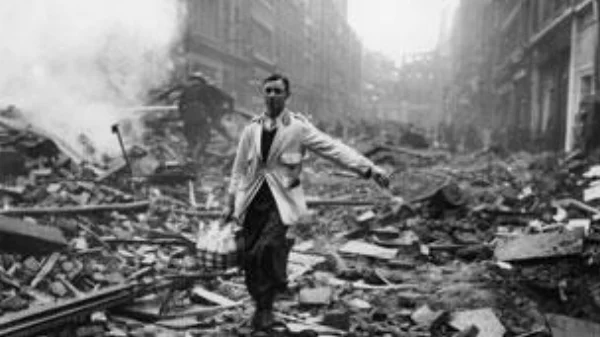
THERE are no atheists, it is said, in a foxhole, but there may, it seems, be witches. Earlier this year, some soldiers at Fort Hood, Texas, the country's largest military base, celebrated the arrival of spring in the way that they, as witches, enjoy. They prayed to the goddess Freya and then leapt over a fire straight into battle with Rep. Bob Barr, the Georgia Republican. In Barr's view, allowing these ceremonies "sets a dangerous precedent that could easily result in all sorts of bizarre practices being supported by the military under the rubric of religion.' What's next? Will armored divisions be forced to travel with sacrificial animals for Satanic rituals?" Democratic congressman Chet Edwards from, riskily, Waco, thinks that's wrong. He is quoted as having "serious differences with the philosophy and practices" of the witches, "but it would be terrible policy to require each installation commander to define what is a religion."

The Army, perhaps remembering the success of earlier pagan militaries (Roman Legions, 300 Spartans, the Mongol Horde), would appear to agree with Edwards. It has worked out an accommodation with the witches, or "Wiccans" as they prefer to be known. Wicca is recognized as a bona fide religion by the Army. Puzzled padres need only turn to the Army chaplain's hand-book. Religious Requirements and Practices of Certain Selected Groups, for guidance on how to deal with recruits who wish to put the war in warlock.

The Army is not alone. Wicca has been recognized as a religion by such authorities as the IRS, Michael Dukakis, and, of course, the courts. In Dettmer v. Landon (1985), the District Court of Virginia noted that Wicca "is clearly a religion for First Amendment purposes," a view that was upheld by the appeals court. That case concerned the right of prisoners to Wiccan ceremonies. More recently, Crystal Seifferly won her legal battle to be allowed to wear her pentacle, a Wiccan symbol, to high school in Michigan. Michael Dukakis? When governor of Massachusetts, he appointed Laurie Cabot the official Witch of Salem.

Which is a safer job than it used to be. In modern America, witchcraft is out of the broom closet and onto the Internet (with over 2,000 websites). The old popular image of Oz's Wicked Witch is melting, melting away, replaced by the sirens of Eastwick, the girls on TV's Charmed, and Nicole Kidman and Sandra Bullock in Practical Magic. ABC has a hit with Sabrina the Teenage Witch. Even Willow, the sensible one in the, er, cult show Buffy the Vampire Slayer, turns out to be a follower of Wicca. Among teenage girls, there's a Generation Hex, with witches becoming something of a role model.

And Wicca is big business. Its books sell well (the Supermarket Sorceress's Enchanted Evenings offers "75 simple spells from supermarket ingredients"). And many cities and towns can boast a supernatural store or two, even Brookland, Ark. (pop: 1,000), where some locals are protesting the opening of Dagda's Cauldron Occult Shop. But don't worry: If Dagda's not around, there's always mail order (Enchantments, Inc., say) for your Hemlock Bark, Twinkle Toes incense, and Squint Oil ("will bring home a straying mate. Secretly sprinkle on clothes").

How many witches are there in America? Accurate calculations are hard to come by (the Canadians, who like to count these sorts of things, recorded 5,500 "pagans" in their last census), but it is generally estimated that there are around 50,000 Wiccans in the United States, a total that is said to be growing fast.

This might surprise poor Bob Barr. Citing an image of George Washington at prayer, the congressman managed to suggest that witchcraft was somehow un-American. He could not be more wrong. For if ever a religion was tailor-made for a contemporary America in full flight from the Enlightenment and the Founding Fathers, it is Wicca.

It is, first of all, bogus. Its origins, we are told, stretch back to the dawn of time, to an age when men worshipped the Goddess. This explains why so many Wiccans communicate in Hobbitspeak, with olde worlde talk of Athanes, Stangs, Runes, Summerland, and scrying-glass. In fact, much of Wicca has a different source; the ancient and fabled culture that was Britain in the 1950s, where numerous Wiccan rites were thought up by one Gerald Gardner, a retired civil servant with a reported interest in nudism and flagellation. (So Wicca is approximately as old as Kwanzaa.)

But there was only so much that Gardner could do. He did put forward a few principles (such as the idea that anything one does, good or bad, will be repaid threefold), a bit of nature worship, and some "magick" (spelled with a k to distinguish it from the David Copperfield variety). In essence, though, he left his religion as something of a blank slate. Transplanted across the Atlantic, it was perfect for a society that attaches a cachet to "spirituality" but where many people don't want the inconvenience of difficult rules or dogma.

So, no coven has a monopoly on Wiccan truth. If you don't like one proposition, just find another, or set out on your own as a "solitary." To be sure, some more general principles are evolving. Lacking much of a structure, Wicca has proved even more susceptible to the fads and fancies of the late 20th century than its more conventional competitors. It tends to be loopily feminist (if you are a man, don't even think about going to the Circle of Aradia's Goddess Campout) and gushingly environmentalist.

And, temptingly, it is a fantasy so much more exciting than humdrum reality. All those Smiths and Browns and Joneses can reinvent themselves as Mountainwaters, Summerwinds, and Willowsongs. Best of all (this is America), new Wiccans become automatic victims, complete with their own personal holocaust. The old European witch manias have been dubbed the "burning times." Of course, most of those killed were not witches in any sense of the word, but no one seems to mind.

What they do care about is the privileged status this supposed victimhood might give them in our grievance society ("warlock," by the way, is held to be a derogatory term, so be careful). The old witch's cackle is being replaced with the litigant's whine. Bill O'Reilly of Fox News ran into complaints from the Military Pagan Network (an actual group, complete with its own website) when, in discussing the Fort Hood controversy, he insensitively referred to a "Bradley Fighting Broomstick."

Aftcr the recent tempest in a cauldron in Massachusetts, he should have known better. There, the unflattering image of a witch contained in a campaign ad run by Gov. Paul Cellucci helped provoke protests (there were, to be fair, more complex issues involved) by the Witches' League for Public Awareness and the attendance of 75 witches at one of the gubernatorial debates. Still, Cellucci won the election.

Contact

Christopher Buckley: Little Green Men

National Review, April 18, 1999

Little_Green_Men.jpg

SPACE aliens are a nasty, bug-eyed lot, always plotting to subjugate the galaxy and firing off death rays. Not much use to us humans, you might think. But you would be wrong. As a plot device, the extraterrestrial can he most useful, a light shone on the peculiarities of this planet. And so, in his latest, and very funny, novel, Christopher Buckley employs a motley and distinctly home-grown bunch of ETs to take a look at a close encounter between two different worlds, both of which happen to be located here on Earth. His hero, John Banion, is a king of the first of these worlds, Beltway Washington: a prince of pundits, a griller of presidents, his Sunday-morning show in D.C.must-see. And the Washington Buckley portrays with his customary collection of one-liners and insightful zingers is a venal, absurd place. He reproduces its portentous language with perfect pitch (an intern program—no, not that one— called "Excellence in Futurity") and its pretentious inhabitants with perfect bitch.

The city described here is salon Washington, the home of power politics at its most trivial, inhabited by a Renaissance Weekend of grotesques, including a widowed hostess who married a fortune and became an ambassador in Europe, and a "suave, immense, baritone-voiced" African-American, the president's "first friend." What of the president himself? He's an "ozone-hugger" who speaks in a "slow, overly patient tone of voice that suggested he wasn't sure English was your first language."

Which may be wise, for as John Banion is soon to discover, it's a different world out beyond the elite enclaves. In The Bonfire of the Vanities, Sherman McCoy arrived there by means of a wrong turn after the Triborough Bridge. For Christopher Buckley's soon-to-fall Master of the Universe, there's no wrong turn—in effect, somebody else grabs the wheel. The luckless pundit is abducted by things, subjected to unpleasant procedures, and then abandoned on a golf course, with a pain down below "that reminded him of how he'd felt after the colonoscopy, a feeling of stretching ..."

It gets worse. A second abduction convinces Banion that the alien threat is real. He has to become the "Paul Revere of the Milky Way" and warn the world. The problem is that his world, the Washington world, doesn't want to know. He quickly becomes an embarrassment, an intergalactic Pierre Salinger. With wicked relish, Buckley shows us how Banion loses wife, contacts, and contracts. Cruel man that he is, the author even makes his Job-like hero go through the ordeal of an AA-style "intervention" by friends.

The inhabitants of another world altogether. Planet Ufology, however, prick up their (wish-they-could-be-pointed) ears when they hear Banion's message. The newsman is just what the saucer crowd has been waiting for. He's famous, possibly even sane, a plausible spokesman far closer to the mainstream than most in the UFO world, a world that Buckley bas obviously researched with care. Its celebrities (with changed names: flying writs are more dangerous than flying saucers) are on parade. And so are its stories, speculations, and just plain hoaxes: Roswell, Area 51, Grays, Nordics, cattle mutilations, even that Richard Nixon/Jackie Gleason business (long story, but, as usual in these matters, it involves alien corpses). And Banion? Well, he's no Sherman McCoy. He refuses to remain fallen but instead picks himself up and becomes a master of this new universe.

Yet even as he is lionized by the crowd at a (marvelously described) UFO conference, our protagonist can't help noting that "there was something lacking in these people's lives." The ultimate insider exchanges his Washington post for plebeian life in the USA today but . . . well, as Egalitarian of the Year he simply does not cut it. Nor does the author, who cheerfully resumes the political incorrectness displayed so enjoyably in his last novel. Thank You for Smoking. Potential offendees include Canada, dwarves, the space program, Eleanor Roosevelt, PBS, electric chairs, Cuban detainees, Indiana housewives, and Sammy Davis Jr.'s missing eye.

As we discover, the UFO nation is not a small one. In fact, you are living in it. Its credulous hordes are large enough to overwhelm John Banion's old Washington kingdom, and the rewards it offers, both financially and in terms of sheer adulation, are far greater. Like one of those Roman generals sent off to deal with the barbarians in the latter days of the empire, Banion is able to return to torment the capital at the head of a vast army of co-opted provincials, in his case a three-million strong "Millennium Man" march.

Then what happens? What can be disclosed without spoiling the plot (the author reveals this detail early on) is the book's underlying premise that the whole UFO business, including Banion's abduction, was a fraud from the very beginning, engineered by Majestic, the most secret of all government departments. Its purpose? Initially, to worry Stalin, but later to keep the U.S. taxpayer sufficiently "alarmed about the possibility of invasion from outer space ... to vote yea for big weapons and space programs."

It's possible (think of the health-care "crisis" or global warming), but X-philes who read this book will find the idea a little far fetched, even for a satire. Conspiratorially, they will talk about the documents that purport to show that Majestic really did exist. Patiently, they will explain that the aim of this real Majestic was not to fabricate UFO evidence, but to conceal it. Darkly, they will tell you that, if these documents are genuine, Buckley's tale can only help to mislead a country that has already been misinformed for far too long.

And why would the author do this? For a clue, check out the career of his hero, the television pundit be puts in the firing line. That's also his father's job. Yes, his father, that same "W. F. Buckley" who was mentioned twice in Jim Marrs's Alien Agenda, last year's expose of the UFO cover-up. Could Buckley the Son be part of the conspiracy?

I don't know, but next time you are in the Buckley neighborhood, watch out for those black helicopters.

Feywatch

The Frick Collection, New York City: Victorian Fairy Painting 

National Review, December 21, 1998

Richard Dadd: The Fairy Feller's Master Stroke (Detail)

Richard Dadd: The Fairy Feller's Master Stroke (Detail)

CONFOUND Victoria, and the slimy inhibitions/She loosed on all us Anglo-Saxon creatures!" That was what the New England poetess Amy Lowell thought back in the 1920s. To judge by a fascinating exhibition (and the response to it) currently on view at New York's Frick Collection, hers is an opinion still with us today. For the Victorian era is the foundation of our town, and, as such, it has now become yet another battleground in the culture wars. Bring the Victorians down to our level, and we can reassure ourselves that our shambles of a society is really not that bad.

The exhibition is called "Victorian Fairy Painting" and it is dedicated to our tiny fluttering friends. The little people hover, frolic, and entice in canvas after canvas, along with a supporting cast of goblins, elves, and imps.

John Anster Fitzgerald: The Captive Robin

John Anster Fitzgerald: The Captive Robin

Strange to us, yes, but in their mid-Victorian heyday, these pictures were popular, in tune with their era. According to reviews of this show, they are also in tune with our own age. Writing in The New Yorker, Peter Schjeldahl notes that "this stuff. . . feels right on time for us." Leslie Camhi at the Village Voice likewise uses the fairies to admit the Victorians to our own idiot carnival. Both periods, apparently, have "seen the revival of druidism, crystal worship, and a host of ancient spiritual practices."

So were the Victorians old-time New Agers? Writing In New York magazine, Mark Stevens claims that the Victorian interest in the occult "honored what could not be explained or ruled." I doubt it. The New Age rejection of the scientific method would have appalled a nineteenth-century culture obsessed with the search for explanations and rules. With their relatively primitive science, the Victorians may have come to some loopy conclusions, but they were at least trying to get at the truth.

Yes, that's right, the truth. Unlike many of us post-moderns, the Victorians believed in an objective truth. But not, for the most part, in fairies. Even in art. To get the supposed pixiemania in proportion, take a glance, for instance, at the leading paintings of the 1846 Royal Academy Exhibition. They're a down-to-earth lot, far from any enchanted glades. Highlights include Mulready's Choosing the Wedding gown, four animal pictures by Landseer, and Redgrave's thrilling Sunday Morning—The Walk from Church.

It is no coincidence that a number of the most striking works on display at the Frick are by painters who were outsiders. The greatest of them all, Richard Dadd, murdered his father. His obsessively detailed masterpiece. The Fairy Feller's Master Stroke, was the product of nine years' work in a lunatic asylum. That's also where Charles Doyle (father of the creator of Sherlock Holmes) ended up. His Self Portrait, A Meditation, shows a man all too aware that the spirits surrounding him are the product of a troubled mind.

Chatles Doyle: Self-Portrait, A Meditation

Chatles Doyle: Self-Portrait, A Meditation

And they were certainly nothing to do with pollution. In a Sierra Club twitch, the Frick tries to explain the fairy paintings as "an escape from the grim elements of an industrial society." Not really. Arcadian fantasy had been around long before the factories of Victorian England. It is a nice irony, however, that the great engineer lsambard Kingdom Brunel was the man responsible for commissioning the only fairy painting by Queen Victoria's favorite artist, Edwin Landseer. Actually, be wanted a Shakespearean theme for his dining room. What he got was A Midsummer Night's Dream, featuring a sultry Titania, and Bottom, of course.

Sir Edwin Landseer: Scene From 'A Midsummer Night's Dream'

Sir Edwin Landseer: Scene From 'A Midsummer Night's Dream'

In fact, quite a number of bottoms. Offbeat nudity was a good part of this genre's appeal—both at the time and to later critics eager to show that the nasty Victorians were both repressed and (bonus!) perverse. To Mr. Schjeldahl these paintings exemplify "Anglo-sexual hysteria." More cautiously, the Frick's own introduction to the show refers to an "indulgence of new attitudes towards sex." "Hysteria," a "new attitude"? Nudie pics were popular long before the appearance of the fey babes now tumbling along the walls of the Frick.

Tumbling, one must admit, in a way not normally associated with Victorian Britain. Yet this was a Britain where John Simmons's Titania, a lissome blonde vaguely draped in the most diaphanous of robes, could be displayed without scandal. For that, thank the butterfly wings sprouting from the fairy queen's shoulders. They took Titania out of the real world and transformed her into something too ethereal for the grubby business of sex. To Michael Kimmelman in the New York Times, all this is "a form of collective sexual denial that is a root of the phrase 'there'll always be in England."

John Simmons: Titania

John Simmons: Titania

Oh, come on (full disclosure: I'm English). Foxy fairies were just an update of an old trick. Earlier artists had used "classical" themes (a "Venus" here, a "Sabine Woman" there) in much the same way. Ultimately, these paintings were just about fun. As Charles Dickens understood, "Fairy tales should he respected. … A nation without fancy, without some romance, never did, never can, never will, hold a great place under the sun." Sentimental and coy they may have been, but to most of their fans, the fairies were just otherworldly entertainment, a very small part of a very rich culture, little more than the science fiction of an era when imagination was lagging behind technology.

If we try to project out own obsessions onto them, it is we, not the Victorians, who are in Never-Never Land.

Joseph Noel Paton: The Quarrel of Oberon and Titania (detail)

Joseph Noel Paton: The Quarrel of Oberon and Titania (detail)

Mug's Game

National Review, December 6, 1998

Starbucks-Logo.jpg

“Ohhh,” Monica e-mailed her boyfriend (no, not that one), "how i long for the time when we can just spend a day together ... starting w/ coffee at Starbucks . . ." Starbucks. It's where an intern bought a mug to give a President, and it's where Nicole Simpson first met Ron Goldman. I go there, and so, probably, do you. By the year 2000, the chain, which started with a single store in Seattle, will have two thousand outlets. We spend $1 billion a year there. When future historians try to conjure up the atmosphere of the Clinton years, they will have to include the faint smell of roasting coffee, preferably a variety— Ethiopia Yergacheffe, perhaps?—from some really Third World part of the Third World.

At first glance this may seem a welcome development in a country once famous for the horror of its coffee. Still, if we are what we eat, then we should also be what we drink. The flight from Folgers must mean that we have changed.

Well, the country is richer. Hardscrabble is so over. So we reject that older Robusta America in favor of a mall-chic coffee where the person behind the counter is a "barista" and the smallest serving is a "tall." Starbucks has become a symbol, a sign of class and a certain refinement. Its coffee is an object of desire at $3 (or more) a shot. Aficionados are "cuppers," bean geeks able to discuss the "tanginess" of a Costa Rica Tres Rios without bursting into laughter.

We shouldn't mock this. Aspiration is the engine that drives America. Yet there is something wrong: consider the music of Starbucks, the CDs lined up for sale by the register.

Not the jazz. That their stores play and sell jazz is no surprise. Starbucks is marketing its coffee as a grown-up pleasure and to many, jazz has always been sophistication’s soundtrack. No, the company's taste in contemporary music hints at the problem. Starbucks urges upon us pop of the most improving, didactic kind. Songs of the Siren, a 1996 "tribute to women's voices," was one finger-tapping choice. Naturally, the feminist rockers of Lilith Fair have not been overlooked. The company is a "proud sponsor" of the tour, in a "perfect blend of coffee, community, and music."

Now take a look at the books on sale amid the Frappuccini. Naturally, an Arabian Mocha Sanani drinker does not Hunt for Red October with Tom Clancy. But Marion Wright Edelman? That's much more like it. One of her offerings is on display at my local Starbucks, near the Van Gogh mugs and that timeless childhood classic. Girls Who Rocked the World: Heroines from Sacagawea to Sheryl Swoopes.

You may also find a recent memoir by Starbucks CEO Howard Schultz, Pour Your Heart Into It. Starbucks is a great American success story and a triumph for Mr. Schultz, a kid from Brooklyn's post-war projects. But the world view revealed in this lugubrious volume (printed, in case you were worried, "on totally chlorine-free paper") sometimes seems more Alger Hiss than Horatio Alger.

Mr. Schultz downplays his formidable business skills, but makes sure to mention his health-care kaffeeklatsch with Bill Clinton. The rest of this drearily "progressive" recital includes some over-excited environmentalism (who could forget the epic struggle over "double cupping," the now-abandoned practice of putting one paper cup into another to protect tender fingers from hot coffee) and cloying reminders that the Starbucks CEO wants "diversity in our management team."

And surely a strong bottom line. As Mr. Schultz is doubtless aware, political correctness sells. In the eyes of pious Boomers, all the NPR-ishness only burnishes the coffee chain's upmarket image.

It's a piety that Starbucks exploits brilliantly, which would be fine, so long as everybody else were not expected to play along.

But they are. And as the success of Starbucks shows, they do. The Boomers may have had the party, but the whole country has to live through the hangover. A generation that never could say no to itself is proving very eager to say it to the younger folk. Like grumpy older neighbors, they want the stereo turned down and the strong drinks put away. As Howard Schultz explains, he is trying to offer a place where students can meet "free from the heavy influence of alcohol."

The only heavy influence around is that of the paternalistic Mr. Schultz. He is the perfect spokesman for an era when "decaf latte" has entered the upper-middle-class lexicon as shorthand for a little self-indulgence.

Indulgence?  Once we knew the true meaning of that word. Indulgences should be decadent, degenerate, altogether de trop. They should not be decaffeinated.

The 1890s swept cheerfully by on a torrent of absinthe, champagne, and opium. Today, smoking is out, sex is "inappropriate," and a few beers will get you branded a "binge drinker" by Harvard's School of Public Health. Which leaves coffee. It's allowed, and pathetically the country is grateful, even excited. Too FDA'd out for real, unvarnished bad-for-you fun, America has defined delight down.

Like the English were once said to do, Starbucks drinkers "take their pleasures sadly." Even the modest pleasure of a little Java has to "mean" something. These days, it's the coffee that has to make us "good to the last drop." So Starbucks steps in with the sip that sanctifies.

Suddenly I want a Maxwell House. Double-cupped.

Ghost Story

Mark Fuhrman: Murder in Greenwich

National Review, September 14, 1998

Fuhrman.jpg

SUMMER reading is supposed to be light. But those who prefer a bit of darkness to give them some shade from the heat of the sun may wish to consider this fascinating book by Mark Fuhrman, whose theme may put them in mind of Shakespeare. Yes, Shakespeare, Yes, that Mark Fuhrman. "Murder," wrote the Bard, "moves like a ghost." For a ghost always leaves trails of ectoplasm behind it, and so in its way does murder. Its victims haunt us, and it has long been believed that their restless spirits wander the earth calling for revenge. And that is the real subject of this book. Murder in Greenwich is about the revenge that the Moxleys of Greenwich, Conn., have yet to enjoy for the savage murder of their daughter, Martha. It is about the continuing revenge of Dominick Dunne (who inspired this book) on the criminal-justice system that freed the killer of his own daughter after the shortest of sentences. And it is about Mark Fuhrman's dreams of revenge for a career destroyed by O. J. Simpson's vicious carnival.

The Moxleys moved to Greenwich in 1974, when Martha was 14. Blonde and vivacious, she settled easily into a life of country-club fun, high-school success, and Ice Storm-style high jinks. Within little more than a year she was dead, her skull shattered by that most Greenwich of weapons, a six-iron.

But an unusual six-iron, a "Toney Penna" in fact. A rare brand, but one favored by Martha's neighbors the Skakels. The Skakels were rich, well connected (Ethel Skakel had married Bobby Kennedy), and wild. And theirs was a wildness which could have, some said, a dangerous edge.

Martha was with two of the Skakels, Tommy, 17, and Michael, 15, the night she died. Tommy is the last person known to have seen her alive. The murder itself took place not far from the Skakel property, a property that was never systematically searched by a police force that was curiously diffident in interrogating its inhabitants. Well, they were royalty, sort of. The boys (who have denied any involvement in the killing) were RFK's nephews, after all. Were the police, perhaps, just a little too deferential?

Dominick Dunne thought so. His 1993 best-seller, A Season in Purgatory, is a fictionalized version of the Moxley case. The golf club is turned into a baseball bat and the murderer becomes young Constant Bradley, scion of a family that is part Skakel, part Kennedy, and all Borgia. The hero bears some resemblance both to Kenneth Littleton, the Skakels' tutor, and to Mr. Dunne himself. He is a writer who "like[s] to cover trials. [He is] specifically interested in people who get away with things. People who go free."

Which is where Mark Fuhrman comes in. Dominick Dunne had grown to admire him in the aftermath of the Simpson fiasco. Meanwhile, Mr. Fuhrman himself was "looking for an unsolved murder to write about." So Mr. Dunne passed the baton, handing his files to Mark Fuhrman. As he explains, "Say what you want, the guy is a great detective."

Or at least a good prosecutor. Murder in Greenwich is just one side of a case that has yet to come to trial. We never hear from the defense. Nevertheless, Mr. Fuhrman runs briskly through the facts. Not quite a literary classic, Murder in Greenwich is still a compelling read, a real-life Agatha Christie novel. Drawing on his years of police experience, the author reviews the evidence, the alibis (he is unconvinced by Michael Skakel’s), and the rival suspects, to come to his conclusion. The only '"N word" he uses is "nephew."

At the same time, however, the reader is left in no doubt that Murder in Greenwich is another chapter in the O.J. wars, "the Simpson case all over again." And, so far as Mark Fuhrman is concerned, that means that, once more, the rich have got away with it. The author reveals enough class hatred in this book to launch a Gephardt presidential campaign, reinforced, doubtless, by the somewhat cool welcome he received in Greenwich.

Which should have come as no surprise. The O.J. trial turned Mr. Fuhrman into a pariah, but, in the phrase of America's prim totalitarians, he still doesn't quite get it. A Valjean who thinks that he is a Javert, he seems to believe that a case like this will give him back his respectability. He is wrong. It may be sweet revenge, but it will never restore him to what he was and what he wants to be again: "'Mark Fuhrman, Detective."

Nor, one suspects, will another trial, another conviction., and another sentence bring peace to Dominick Dunne. He is a crusader now, raging against the cruelty of his daughter's fate and its unjust consequences. He picks at his psychic wounds, unable to let scar tissue form. He prefers to return to the scenes of other crimes to ensure that they, at least, have an appropriate ending. Obsessive, certainly, morbid, perhaps, but who are we to judge a parent's grief?

Martha's mother, Dorthy, can. And she has welcomed the publication of Murder in Greenwich. "That's my life, these days," she has recently been quoted as saying. "The hope that someday we'll know who did this." She may get her wish. A Connecticut judge has now been appointed as a one-man grand jury to investigate the Moxley case. In early August that judge heard testimony from Kenneth Littleton, the Skakels' tutor. Once seen as a possible suspect in the murder, Mr. Littleton testified in exchange for immunity, which suggests that the field of suspects is narrowing still further.

And if, after all these years, there is a trial and a guilty verdict? Maybe, finally, Mrs. Moxley can put Martha's spirit to rest.

For our ancestors were right. The murdered do live on as ghosts, but they are phantoms that haunt our minds, not our homes. For a killing brings grief, but also uncertainty. A "foul, strange, and unnatural" ending, it leaves our world askew. The restless souls belong to the survivors, not the departed. A trial and a verdict can restore the illusion that things are as they should be. If Murder in Greenwich can hasten this process for Mrs. Moxley, Mark Fuhrman will have written a very good book indeed.

Achy Breaky Hearts

National Review, July 20, 1998

Stiff Upper Lip.jpg

Nobody wants to get a report telling him that he has cancer. My father certainly did not. But, as his secretary tells it, his only response as he read the note from his pathologist was a muttered "Well, well, well." One radical prostatectomy later, he should, with a bit of luck, survive for many years. But reactions as calm as his may not. Understatement, not making a fuss, is a vanishing virtue. Our culture, allegedly, respects it; Rose, the heroine of Titanic, picks up her life after the ship goes down. She does not mention Jack, the love she has lost, for the next 86 years. This is portrayed as a good thing. But it is a false tribute, a polite compliment to a god in which people no longer believe. Understatement is passé, perceived as a musty, rather masculine quality that is no longer quite relevant.

Even the Republicans have realized this. Their 1996 Convention was a lugubrious, weeping procession, designed to mask the fact that the GOP had gone to the old school for its candidate. The American people were not fooled. They wanted their mush, and they wanted it convincing. And so they rejected a laconic war veteran in favor of a President capable of choking up over the life and hard times of Ruth Bader Ginsburg. Or at least faking it, secure in the knowledge that there were votes to be won from such an embarrassing display.

The Stoics would have been disgusted. Wise old Greeks, they understood that there was no emotion that cannot usefully be repressed. It was a philosophy that elevated calm rationality and an acceptance of the misfortunes that life may bring. It was a point of view that was to linger. It had to. As successive generations were quick to realize, life could be "poor, nasty, brutish, and short."

And they dealt with it. Stoicism was a habit, not a philosophy. In a world where disease, childbirth, and war conspired to keep life expectancies short, there was no time for therapy. Whining would not work; grim determination just might. To be sure, religious belief provided some support, a mechanism for accepting the savage unpredictability of existence. As a popular nineteenth-century tombstone epitaph for a child explained, "The Lord gave and the Lord hath taken away, blessed be the name of the Lord.'' Especially since, it was widely believed, he offered the righteous the prospect of a sweeter hereafter. Notions of immortality made suffering in this life much easier to bear.

So did the force of example. We liked our heroes tough. The English general Lord Uxbridge was unfortunate enough to lose a leg at Waterloo. He did not, however, lose his sense of humor, noting within a few minutes of the amputation that he had enjoyed "a pretty long run. I have been a beau these 47 years." It was time, he said, to give younger men a chance. The leg received a decent burial. As for Lord Uxbridge, he returned to the scene some wars later and insisted on dining at the table where he had lain as his leg was sawed off.

What he never did was write a book about the problems of the differently abled. To be sure, his stoicism was praised at the time, but it was also, to a degree we find unimaginable today, expected. As an ideal, at least, acceptance of adversity was something to be aimed for, part of a series of interlocking obligations that made an often hard life bearable. People did not want to feel each other's pain. They had quite enough of their own.

And yet they coped—grumbling, certainly, but moving on with their lives. Which, over time, got better, and as they did old attitudes began to fade. Science smoothed out life's rough edges, but what was left, paradoxically, became harder to bear. We defined disaster down, leaving each succeeding generation to mutter that the young do not know how lucky they are.

That may not have been immediately apparent in 1914. The soldiers in the trenches during the First World War persevered under appalling conditions, but when they followed their officers over the top, their stoicism died with them. The soldier's stolid acceptance of adversity came to be seen not as his ally, but rather as an accomplice in his destruction. Stoicism was a mug's game, evidence only of a deadened sensibility. It was a quality enjoyed only by men who had ceased to care for themselves.

This view had been anticipated by Freud. Even before the Great War his bizarre tales of trauma and repression had been finding an audience. For the first time, technology had created a society where a large number of people had time on their hands. And they were using that time to worry. Freud played on this anxiety, and his ideas spread rapidly in a culture that was too shattered by Passchendaele and the Somme to argue back.

Particularly against something so seductive as psychoanalysis. It was so easy. Suffering in silence no longer made any sense. Moaning could be medicine, a ''talking cure" that worked. Dignity died on the psychiatrist's couch and self-control was caricatured and turned into a vice. Look at the couple glaring out of Grant Wood's American Gothic (1930). Thin-tipped and somewhat intimidating, these ordinary Midwesterners (the artist's sister and a local dentist) have been transformed into icons of repression.

Well, they may not have been the Waltons, but they, and others like them, were probably doing their best. And, often, their descendants still do. From time to time we see them on CNN, piling sandbags on the levee as flood waters rise somewhere in the Dakotas, or rebuilding a small town after yet another Texas tornado.

These stories are breaking news, but they have the feel of a rerun, a Capra movie perhaps, shot in black and white, the echo of an older, wiser America. Traditional resilience is a quiet story, ill suited to an age that colorizes its dramas. So we rewrite the script, twisting the language of stoicism to describe something entirely different.

The bedraggled individuals on daytime TV may be encouraged to proclaim themselves "survivors" (normally of some graphically described form of "abuse"), but the tough talk is an illusion. Encouraged by our culture of therapy, these "survivors" have turned their troubles into theater, a ludicrous soap opera with themselves as the stars and us as an all too appreciative audience, our voyeurism justified as part of the "healing process." They have not overcome their trauma. They have embraced it and let it define their existence. And we let it define ours, secure in the knowledge that we too will have our chance, that everyone can become a victim.

Even the real survivors. The night of the World Trade Center bombing, a New York television station showed a group of schoolchildren who had been stuck for an hour or so in one of the building's elevators. Trapped in the dark they may have been, but their teacher had kept their spirits up until rescue came. It was a sweet, brave story. The children seemed fine. They had gone through an adventure, not a trauma. And then the anchorwoman leaned forward, her face twisted into the mask of concern usually reserved for a famine in a faraway country. Would the children be receiving "counseling"? She already knew the answer. And so did I.

Well, well, well. Perhaps it is time for stoics to complain.

Cable Gal

National Review, May 4, 1998

Lifetime.JPG

I'm watching Lifetime." These are words that no man wants to hear, especially from his girlfriend. The evening ahead has just been poisoned. He will be transformed from Top Gun into Tailhook. He will be shunned as a suitor who just does not "get it." He will be accused, indicted, and condemned, found guilty by association with his shabby fellow males and their vile crimes—the crimes that Lifetime, cable's "Must-She TV," loves to detail. As part, no doubt, of its mission. Lifetime is now available in 69.5 million households. The channel's purpose is, it claims, to provide "contemporary, innovative entertainment and information programming of particular interest to women." And so you find cooking shows, reruns of The Golden Girls, and programs about babies. But, above all, you find movies about bad guys. Lots of them. There are men who murder, chaps who cheat, and husbands who hit. Taken individually, these movies (most of which are not actually made by Lifetime) are unexceptional, but show them day after day and they become something else. In effect Lifetime uses its movie selections to create one endless loop of The Perils of Pauline, with a script by Anita Hill and special effects by Lorena Bobbitt.

Within a few recent Lifetime days, viewers could see men batter (The Burning Bed), fool around (When Husbands Cheat, helpfully shown on Valentine's Day), and kill (The Babysitter's Seduction). The villainous spouse in the last of those films almost pulled off a trifecta. He killed his wife, slept with the baby-sitter, and then nearly (you cannot have everything) managed to have the baby-sitter blamed for the murder.

Well, he wore a suit, and that was the giveaway. The Lifetime criminal tends to be urbane and easy on the eye. In his youth he was probably a frat boy, like Billy, perhaps, in Full Circle. Billy, a Banana Republic ad gone bad, with his floppy blond hair and red polo shirt, rapes the daughter of the woman who is being strung along by his father. The assault is covered up, and Billy will doubtless go on to commit further outrages in his middle age, by which time he will probably be played by Robert (Spenser for Hire) Urich, a man frequently present at Lifetime's death scenes.

In Deadly Relations Urich cheats on his wife, lingers perhaps a little too long on that goodnight kiss with his daughter, kills not one but two sons-in-law, and then shoots his own hand off in a botched attempt at insurance fraud. Outwardly, of course, he is eminently respectable, a war veteran, exactly the sort of male authority figure that Lifetime loves to show as the most dangerous threat of all.

Men like this operate under cover of the position given to them by, so the argument runs, our violently patriarchal society. They are camouflaged by their good jobs, smart cars, and conservative suits. Away from the office there will be lots of plaid, Eddie Bauer perhaps. The Lifetime villain will be clean-shaven; his eyes will not stare. His only distinguishing characteristic is deceitfulness. He is no Freddy Krueger, no Leatherface, no Jason. A Lifetime killer would not be seen dead in a hockey mask. He could be you or me.

Which is just the point. It may be MacKinnon Lite (a channel that features Celebrity Weddings in Style cannot be all bad), but don't be under any illusion. Lifetime is Rodham country. The not-so-subtle message of its dim movie-of-the-week feminism is that women must circle their wagons against the enemy with a penis.

After all, those predatory white males aren't isolated cases. They are all over the place. Traditional villains understood that dark deeds had to be confined to the graveyard, the dungeon, or the haunted house. Not this lot. They will do their worst anywhere: in the mall, the executive suite, and, surprisingly often, the kitchen. No one can be trusted, not even Michael Gross, the genially ineffectual father from Family Ties, who reappears in With a Vengeance as a dentist and serial killer.

But not an efficient one. One of his victims, played by a Melissa Gilbert who has strayed a long way from that little house on the prairie, survives. Carelessly, though, she forgets the whole incident, and it is only when her amnesia fades that his problems begin.

In this case the recovery occurs quite quickly. However, in another film on Lifetime, Shattered Trust: The Shari Kamey Story it takes the forgetful Miss Gilbert about a quarter of a century to remember years of sexual abuse at the hands of her father. He, of course, is an educated man, a journalist. And just in case we don't get the message, our heroine warns against disbelieving allegations in regard to another suspected child molester just "because be looks good in a suit."

But why stop at child abuse? Much as it enjoys that subject, Lifetime also offers some gymnast abuse (Little Girls in Pretty Boxes) and even a bit of biathlete abuse (by Montana mountain men in The Abduction of Kari Swenson).

To be fair, not all men are bad, even on this channel. Harry in Full Circle is kind. sensitive, and a wonderful father. A good man. Significantly, perhaps, he ends up in a wheelchair and dies. But if the good man is an exception in a Lifetime movie, the good woman is not. She may be a little weepy, but she can generally survive life's challenges, be they a murderous husband, a bard day's shopping, or a bout with cancer.

She is not perfect, of course, but when she slips Lifetime understands. And shows something of the double standard that we see further revealed in the titles of two recent "Lifetime Originals" (movies specially commissioned by the channel). So far as Lifetime is concerned, When Husbands Cheat they are to be cut no slack, but when the missus plays around, her misbehavior is merely The Indiscretion of an American Wife.

The indiscretion enjoyed by the American wife in question (Anne Archer, avenging the wronged spouse she played in Fatal Attraction) is romantic and forgivable. Her husband, Russell, a WASPy diplomat whose insensitivity is revealed by his lack of interest in modern dance, is dumped in favor of a handsome Italian, Matteo. And who can blame Miss Archer? Matteo owns a vineyard and a villa.

Lifetime's unfaithful husbands, however, generally have to make do with a motel room. Their infidelity is usually portrayed as a tawdry, rather selfish affair. Big hair and little dresses will be on display, and it will all end badly. The man is left begging for forgiveness, humiliated or worse. In House of Secrets the betrayed wife—played by, yes, Melissa Gilbert—dies, but no matter. With the help of some voodoo she comes back from the dead and frames her husband for his girlfriend's murder.

How unusual. One Lifetime is enough to see off most men.

Ghost Town

National Review, March 27, 1998

Stalin, behind Lenin, Moscow, 1997 © Andrew Stuttaford

Stalin, behind Lenin, Moscow, 1997 © Andrew Stuttaford

You wouldn't have wanted to live there, but the Evil Empire was fun to visit. Every empty shop was an ideological vindication, each dismal meal the basis for a grimly amusing anecdote. The tourist could play Dissident (Visit an oppressed church!) or Spy (Lurk outside the Lubyanka in a raincoat!). And what about that air of menace? You could be tailed by the police, harassed by goons, or even, if you were very, very lucky, get caught in a KGB sex trap. Everything was forbidden, and thus enticing. Pointlessly, but excitingly, train stations could not be photographed. Nor could bridges. Take that, Mr. Reagan! And as for bringing in Samizdat? Try explaining freedom of the press to the suitably surly ("You want to make trouble in our country?") border guards as they confiscate The Hunt for Red October. These were people who wanted to bury us. And they were not going to apologize. And they still aren't. Which is why, even now, Moscow remains the place to go for a sinister, Stalinist thrill. To be sure, there have been changes, but many of the old Soviet ways persist. That Russian talent for the gothic and the just plain weird has also survived. And so will most visitors.

Even if, as true nostalgics should, they check into the Hotel Ukraina. Not the usual Intourist concrete block, the Ukraina is one of the six Stalinist wedding-cake skyscrapers that still dominate the Moscow skyline. It is a grimly lit and exuberantly totalitarian hulk, festooned with crumbling concrete stars, hammers, and sickles. Other Cold-War relics can be found inside, including seedily threatening security men, a jolly mural of Soviet Ukraine, and, incredibly, a group of earnest Americans over to talk "people to people" about peace. In a few years, the Ukraina will be a place of luxury and pseudo-sophistication filled with New Russians and old investment bankers. But that moment has not yet arrived. Like Russia itself, this hotel is in transition, and the journey can be a little rough. Which is why it is better to dine elsewhere.

Ukraine Hotel, Moscow, 1991 © Andrew Stuttaford

Ukraine Hotel, Moscow, 1991 © Andrew Stuttaford

Just down the road, in fact, by the cheerfully unrenamed Barrikadnaya (Barricades) Metro station. Le Gastronom is one of the best restaurants in Moscow. Located at the bottom of another Stalinist tower, it promises yet more dictatorship chic. Vast, dominated by overlarge chandeliers, over-officious security men, and clumsy marble pillars, it is a Cecil B. De Mille, nose-pressed-to-the-window idea of how the rich should live, something all too suitable for the Stalinist bureaucracy and the morbid tourist. It's bogus, unfortunately. Gastronom was a food store, not a restaurant. Stalin never ate there.

Nor did he dance his cares away at the nightclub called Titanic. In his day, the evening was for arrests, not discos. Now there is a nighttime scene as shifting and evanescent as anything found in Manhattan. If a bit tougher. That explains the airport-style weapon detectors at the entrance to many of the better spots. In New York they may be the sign of a bad high school. In Moscow they herald a great night out.

And having them may be prudent. At Titanic, notes one English-language paper, "you won't get laid, but you might get shot." But then this is typical of an expatriate press only too pleased to wear its "aren't we tough to be in Moscow" credentials on its sleeve. Amid the stock prices and the guides to eating out, the pages are filled with entertaining summaries of recent scandals, crises, and crimes. Cannibalism seems unusually popular at the moment. Perhaps the restaurants are to blame.

The determined tourist can also visit the sites of earlier, more traditionally Soviet atrocities. NKVD boss Lavrenti Beria's Moscow mansion, for example, still stands. These days it's the Tunisian Embassy. Tunisian diplomatic intrigues take place over the network of cells in which Beria's victims were tortured, raped, and murdered. For the Tunisians have left the basement much as they found it. The cells are dank and sinister, accessible by dark stairs and gloomy passages. "I don't believe in ghosts," explained one diplomat.

That's strange, as Moscow is a city where the dead don't always know their place. Hitler's jaw is on a shelf in the archives of the Russian Counter-intelligence Service and, some say, can be viewed for a fee. Meanwhile, at Moscow's Brain Institute they have Lenin's brain, sliced into 31,000 pieces and carefully preserved on microscope slides. Famously, the rest of the old Bolshevik's remains remain in their mausoleum above ground, as embalmed as the attitudes of his supporters. In the Duma they continue to talk of the proletariat, imperialism, and the Glorious October Revolution. Outside, where the Lenin Museum used to be, unpleasant old people still gather, Stalin banners in their hands, anti-Semitic pamphlets in their pockets. A tape of some of Stalin's better speeches can be bought for $1.

Outside the old Lenin Museum, Moscow, 1997 © Andrew Stuttaford

Outside the old Lenin Museum, Moscow, 1997 © Andrew Stuttaford

An even less reliable record of the past is available down the road, at the Lubyanka. K, G, and B have been replaced by more tactful initials, but the old yellow building still holds secret policemen and a small museum that details some of their achievements. With a few gaps.

Elsewhere, Moscow could do with a few more gaps, particularly where statues are concerned. For all the changes, the hugely increased freedom, and the chance of a greater prosperity, this is still too much the city of the Soviets. Its buildings, its monuments, its manners and morality still deliver that old malevolent charge. Looking at the St. Petersburg of the 1830s, the waspishly reactionary Marquis du Custine snidely noted that it was "barbarism plastered over." Well, at least someone had tried.

It would be more difficult to say the same of the Moscow of the 1990s. Lenin still enjoys his public spaces. Lenin in iron, Lenin in concrete, Lenin as statue, bas-relief, or painting, thoughtful, brave, and wise. His victims? They get a bare rock taken from the site of the first Gulag. It sits across from the Lubyanka, just a few minutes' walk from a monumental statue of Karl Marx.

That comes as no surprise. To be fair, some streets have been renamed, and a Bolshevik statue or two taken down, but for the most part the relics of the ancient regime survive alongside, or under, the shiny construction of the new era.

And so Stalin's Metro, the showpiece that actually worked, continues to function. Its escalators still thunder at alarming speed down past marble torn from a cathedral. And the idols still stand in its halls: Red Army men, workers, and peasants reminding you that the State will prevail and that, yes, the train will arrive soon. And it just might.

The Plot Sickens

Daniel Pipes: Conspiracy

National Review, December 31, 1997

Conspiracy.jpg

Poor, sad Princess Diana. Within hours of the tragedy in Paris, her death was being honored in the way most characteristic of our time: a conspiracy theory relayed over the Internet. She was murdered, you see, by British intelligence. The mother of a future King of England could not be allowed to marry an Egyptian. Ridiculous, of course, although Muammar Qaddafi seemed to think that there was something to it. Which would not surprise Daniel Pipes. His fascinating, though all too brief, new book traces the development of conspiracy theories from the time of the Crusades to the Roswell era. Naturally the Libyan leader makes an appearance. But, to be fair, he is no more deranged than many in the dismal crowd that Mr. Pipes summons for our inspection. For, as he explains cheerily, "this book is the opposite of a study in intellectual history. [It deals] not with the cultural elite but its rearguard, not with the finest mental creation but its dregs . . . So debased is the discourse ahead that even the Russian secret police and Hitler play important intellectual roles." Well, that's encouraging. With depressing effectiveness, the author shows how we have allowed ourselves to be seduced again and again by variants of the same couple of stories. And if there is a conspiracy there must be conspirators. Freemasons, perhaps, or maybe the Trilateral Commission.

And don't forget the Jews. The conspiracy theorists never have, something that Daniel Pipes dates back to the Crusades. Jews became a convenient local proxy for the Muslim enemy.

In a cruel paradox, as the pogroms intensified so did the idea that the Jews were planning a terrible vengeance. That fear in turn provoked further repression, and the cycle that was never really to end had begun. It is a plausible view, but, as the author concedes, it has a problem. Why pick on the Jews when "Muslims constituted a so much more substantial presence and threat"? Mr. Pipes never says, preferring merely to point to a pattern whereby "alleged conspirators are rarely those whom logic might point to."

For this is not a book that dwells on the psychological causes of conspiricism. This is a pity. It is a central question, and the answer is probably not too difficult to find. Take an obsessive personality, pour in a trauma or two, and garnish with a little paranoia. Add war, revolution, economic depression, or plague. When we are confronted with such vast, often incomprehensible cataclysms, a conspiracy theory can be a comfort. It provides an answer to people's questions and an object for their anger. It can also be fun. Winston Smith enjoyed his Hates.

Mr. Pipes touches on this, but he spends far more time describing the symptoms of the disease. He does this well. And it is a disease. At least from the point where an interest in conspiracy theories tips over into "a way of seeing life itself. This is conspiracism. . . It begins with belief in an occasional conspiracy theory . . . and ends with a view of history that dwells largely or exclusively on plots to gain world power or even destroy the human race."

Compulsively autodidactic, conspiracists live in a dark universe illuminated only by a vast and self-referential literature (two thousand books on the Kennedy assassination alone since 1963). Bolstered by obscure factoids and outright forgeries, its authors peddle theories of astonishing complexity. The right answer is never obvious and the obvious is never right. Readers are pushed further and further into irrationality. Which is not surprising. As the core belief of conspiracism is that all appearances are intended to deceive, reality itself becomes an illusion, a dangerous trick rather than a wake-up call.

In the West, at least, Pipes feels that conspiracism is in retreat, discredited by the twin failures of Communist Russia and Nazi Germany. "Hitler and Stalin had established the hideous price of conspiracy theories running rampant."

Let's hope so. But there is something a little Fukuyama-annish about such a view. We live, after all, in an age of rapid and highly unpredictable change. Even in this relatively benign era conspiracy theories continue to flourish. Most are not serious, just couch-potato mythologizing: but they can act, Mr. Pipes concedes, as a pathway to more dangerous fantasies--Timothy McVeigh is, apparently, a believer in UFOs. Above all, they chip away at the shared assumptions of truth that must underpin society.

In the case of American blacks this may have already happened. Mr. Pipes list some of the conspiracies that circulate within this community, but without appearing unduly concerned. He may be too relaxed. From the idea that AIDS was developed as a genocidal tool (as a supplement, doubtless, to the crack distributed in the ghetto by the CIA) to kente-clad anti-Semitism, there is plenty to suggest that a dangerous conspiracism has already taken root in an important part of American society. Its success may suggest that conspiracism remains more of a threat than Mr. Pipes would have us believe.

Perhaps he is trying to trick us.

Into the Vortex

National Review, Dec 22, 1997

Center for the New Age, Sedona, 1997 © Andrew Stuttaford

Center for the New Age, Sedona, 1997 © Andrew Stuttaford

Sedona, Arizona

It was time, explained the man in touch with an angel, to follow the joy and the excitement. I could take the sensible approach and leave by the door or I could choose excitement.

Why not scramble out through the window? Why not choose joy? Because I write for NR, that's why. I used the door.

Besides, he was exaggerating. We were in Sedona. And in Sedona it sometimes seems that there's nothing much that's very sensible. But that's unfair. Roughly halfway between Phoenix and the Grand Canyon, it is a nice little town with plenty of Norman Rockwell trimmings: an Elks lodge, air cadets, even a good diner or two. People come here to retire. At an elevation of 4,500 feet, Sedona enjoys a pleasant climate. It also boasts long meandering canyons, punctuated by massive sandstone outcroppings. Permeated with rust, their colors shift through the day, turning a deep red as the sun sets.

Sedona, 1997 © Andrew Stuttaford

Sedona, 1997 © Andrew Stuttaford

It is the red rocks that draw the tourist crowds. And not only tourists. Back in the early 1980s there was a revelation. The rocks were exposed. They were not just lumps of rusty sandstone. They were vortices! There had been rumors before. But the full details are reportedly given to a Page Bryant, a psychic, by "Albion," a being. A vortex is a "power spot," a point where you can plug into the earth's electro-magnetic field and boost your own psychic energy. Got it? Many did, and they came to live in Sedona. There have been disappointments, of course. Bell Rock was supposed to float off to Andromeda in 1987. It is still here.

Sedona, 1997 © Andrew Stuttaford

Sedona, 1997 © Andrew Stuttaford

And so is the New Age community. In force and, some say, backed up by spaceships. Vortex energy is UFO catnip. This is a place where Contact is old news and Men in Black is a home movie. Naturally, a saucer crashed here (in 1994, apparently) but this is no mere Roswell. That town has two paltry UFO museums and some scrub masquerading as a crash site. No aliens have come calling since 1947. Perhaps they prefer Sedona —and not just for the vortices. The Arizona town can offer better scenery and a metaphysical infrastructure that supports more than ufology.

Red Planet Diner, Sedona, 1997 © Andrew Stuttaford

Red Planet Diner, Sedona, 1997 © Andrew Stuttaford

So, if you want to visit a vortex, there will be someone to help. As an earthling, it is best to go on an inspirational tour. You can circle a medicine wheel, and chant thanks to the Great Spirit. It doesn't matter if you don't know the words. Everyone else seems to. "From Pagan Worship," explained a friendly lady from Indiana, matter-of-fact!y. Souvenirs? Sedona is a spiritual supermarket. There is enough here for the most demanding of metaphysical shoppers. Books, of course, and psychic tchotchkes for every purpose—candles for that meditative moment, crystals for healing, an inner-self manifestation bowl for, er, inner-self manifestation. The approach is ecumenical. You worship it and they will sell it. A statue of Ra? Or a pair of Birkenstocks? No cult is too strange.

Sedona, 1997 © Andrew Stuttaford

Sedona, 1997 © Andrew Stuttaford

Or need too obscure. In Sedona there's a "lightworker" for every purpose, someone to tell your future and find your past (life, that is). And auras can be photographed (mine was red, slept too near a vortex).

In a way, this is just an updating of an old tradition, nothing more sinister than the old gypsy woman telling fortunes. But the New Age is now. It echoes and reinforces our pancredulity. When everything is OK and people believe that nothing can really be proved one way or the other, that's not much of a challenge. Our entrepreneurial mystics know this. They understand their market. They flatter our self-esteem.

While feeling our pain. The gypsy's caravan has become a clinic. This is a New Age for victims. The hocus-pocus has to "heal." Witches must be Welbys, psychic Kildares tending our inner children. And sorting out our cholesterol, while they are at it. There's a lot to do, but angels apparently can help out. Even the dolphins will have a go.

But, if Flipper flops, don't panic. Sedona is on your side.

Center for the New Age, 1997 © Andrew Stuttaford

Center for the New Age, 1997 © Andrew Stuttaford

There's Alpha Body Relaxation Therapy, Aromatherapy, Axiationa! Therapy, Color Therapy, Cranio-Sacral Therapy, Regression Therapy, Reiki Therapy, Trager Therapy, Trigger Point Therapy, Vibration Therapy, and Coning. Coning? Used in Atlantis, apparently. Cotton strips are dipped into an herbal beeswax mix, rolled into a cone, and left to harden. The broad end of the cone is then set on fire. Smoke spirals down the cone and out through its tip, which is in the patient's ear. The idea is to draw physical and emotional debris (which, this patient noted, was black and gooey) out into the cone.

And why not? Atlantean medicine may have had a lot going for it. It is, after all, ancient. And that plays well in the New Age. Science doesn't. The New Age prefers the old ways. Particularly if they can be traced back to cultures where people wore robes or, best of all, were Native Americans. Except for an enlightened few (steps forward, lightworkers!), modern Americans find it difficult to accept this. Or so it is argued. Luddite, elitist, self-importantly self-hating. And where have we heard this tone before? Did anyone say EPA?

Carol Browner would fit in here. As a priestess perhaps, worshiping the Earth (or Gaia, as she is more respectfully known). For the New Age will be feminist. Judging by Sedona, at least, its psychics and its shoppers are mainly female. Women, we learn, are especially caring, intuitive, spiritual; all around better people than another sex I could mention. But then, in an era of soccer matriarchy, this is little more than conventional piety.

To be sure, Sedona can also be guaranteed to see some unconventional piety. But nothing too onerous. At a women's spirituality conference this past fall, there was plenty of ritual and ceremony, but also, as advertisements made clear, a focus on "optional nurturing activities"such as . . . "shopping, napping etc."

Napping? Someone should keep awake in case the Goddess shows up. That's the Goddess to you, figurehead of a supposedly "woman-centered" prehistory. Some say she may be returning to her domain. Far-fetched? Not if you believe that a small town in Arizona is built near the site of a great Lemurian city. Is the Goddess Gaia? Perhaps. But there is another candidate, a woman of great influence. And strange powers. A woman who can communicate with dead First Ladies.

Bill, be very, very careful.

Sedona, 1997 © Andrew Stuttaford

Sedona, 1997 © Andrew Stuttaford