Obsessions
Yukio Mishima - Voices of the Fallen Heroes
Mark Haber - Lesser Ruins
Christopher Bollen - Havoc
Cynthia Weiner - A Gorgeous Excitement
The New Criterion, May 1, 2025
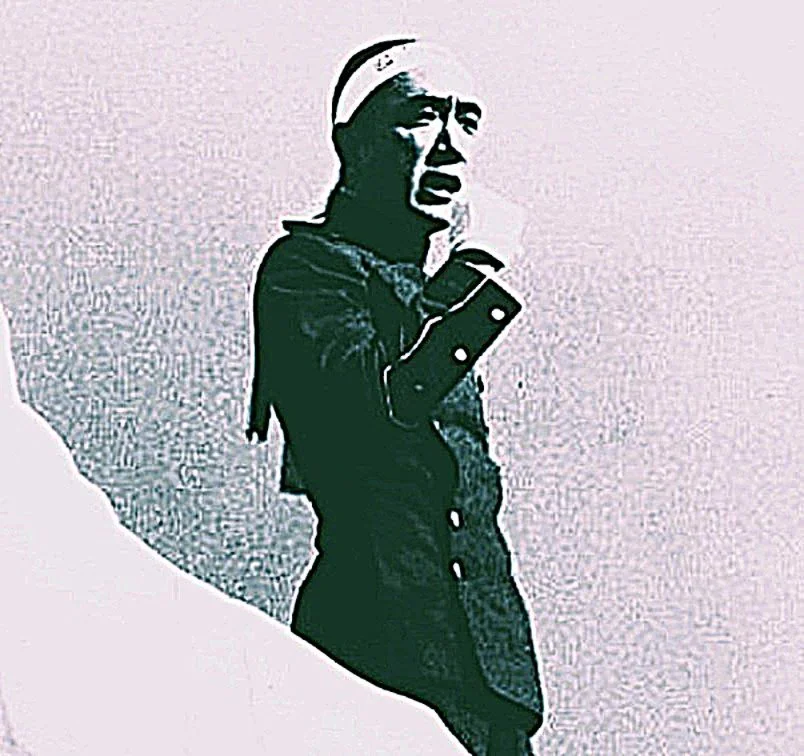
On November 25, 1970, the Japanese writer Yukio Mishima (and four members of his Shield Society, Tatenokai, a private militia manned largely by right-wing university students) seized the general in charge of the Ichigaya military base. After an attempt to free the general was repelled, Mishima was allowed to address the base’s soldiers. But his call, given—in keeping with coup etiquette—from a balcony, to overthrow the constitution and return to an older Japanese order was greeted with jeers, not cheers.
Mishima stepped back inside and committed seppuku, ritual suicide (or, as it was topped off with beheading by a kaishakunin, assisted suicide), which was probably how he had expected the day to end. And that wasn’t so bad. His death wish was satisfied, and, despite the beheading needing some mulligans, he had staged a spectacle so dramatic and freighted with meaning that its memory would endure, he hoped, as an inspiration to future generations.
Seppuku is excruciatingly painful, not the soothing exit I’d be looking for. Knife in the gut, then self-disembowelment, and finally (absent an obliging kaishakunin) knife in the throat. Mishima had earlier acted out such a seppuku in an eroticized and ultimately blood-drenched film rescued retrospectively from kitsch, a regular presence in the Mishima show, by being reinterpreted as a preview. Made in 1966, it was based on “Patriotism,” a story he had written, set in the aftermath of . . . a failed coup.
Challenging the stereotype of post-war Japan as an industrious and conformist hive, Mishima was the first dubbed there as a superstar (sūpāsutā). He was industrious, incredibly so, but no conformist, sexually, socially, politically, aesthetically, or in his disconcerting blend of narcissism and exhibitionism, all part of a Gesamtkunstwerk in which there were few boundaries between life, performance, and art. That, and his talent, provocations, showmanship, and ubiquity, made him a sūpāsutā. He was a five-time nominee for the Nobel Prize in Literature; he starred in a gangster movie.
Good-looking but puny, he took up bodybuilding with characteristic self-discipline, and, after he had bulked up, delighted in being photographed, on occasion wearing little, nothing, or, when he posed as a lightly bound Saint Sebastian, a loincloth and arrows. The saintly cosplay can be connected to a prolonged passage in Mishima’s quasi-autobiographical Confessions of a Mask (1949). In it, his alter ego reveals that, edging out Greek statues, swimming teams, and—an early foreshadowing—“pictures of young samurai cutting open their bellies,” a portrait of the saint by Guido Reni (1575–1642), reproduced in one of his father’s books, inspired his first orgasm. The photograph was also Mishima’s acknowledgment that, notwithstanding the charms of his wife, the mother of his two children, the punctured saint still had it.
But enough. It’s hard to review Mishima’s fiction without looking at his life, but there is so much there (I’ve only scratched at the surface, believe me) that biographical exotica would take up all the available space, poor form in a fiction chronicle.
Some final details: born in 1925, Mishima’s real name was Kimitake Hiraoka. Yukio Mishima was the pseudonym that the precociously talented Kimitake (he was published in a national magazine at the age of sixteen) adopted to conceal his writing from his father, who disapproved of fiction and periodically ransacked Kimitake’s room to destroy any manuscripts he found.
Voices of The Fallen Heroes comprises fourteen short stories written by Mishima between 1962 and 1969 and never previously published in English.1 It includes a helpful introduction by John Nathan, who translated two of the stories in this volume and is also the author of a highly thought-of biography of Mishima, whom he got to know (for a while) after being hired to translate his novel The Sailor Who Fell from Grace with the Sea (1963).
Reading two stories in the collection, “Strawberry” and “Moon,” side by side is instructive. Mishima’s depiction of the traditional festival in a fishing village that is the backdrop to “Strawberry” is celebratory. Not so his portrayal of the trio of hipsters in “Moon,” examples, if extreme, of a more Westernized Japan, devotees of jazz, the Twist, Coca-Cola, and a Quaalude-style drug: “their eyes seemed filled with dreams, but they dreamt of nothing.” One has brought along a transistor radio, a tiny, tinny augury of the new Japan of which Mishima grew increasingly disapproving, while enjoying a lifestyle, from the clothes he wore to the house he built, with strong Western elements. It was, he argued, more authentic than the new Japan’s “ugly” syncretism.
“The Flower Hat” is set in San Francisco. Its focal point is Union Square. The Cold War is running hot. Watching the peaceful scene there, the narrator frets about a world “doomed to destruction . . . . The only question was when it was going to happen”:
Would it slip in at night through a gap in the door like a stealthy cat? Or arrive as a roiling dust cloud from the other side of the highway with the shrill blast of a horn?
Out one day on the square, the narrator has a vision, a premonition, something. Everything stops, the people are caught, as in a freeze frame, a visualization of the abruptness of nuclear annihilation. But we can still turn the pages to discover the narrator’s—oh, Yukio—joy: “I savored a shared mood a hundred miles from loneliness, a harmonization of the human heart through communal death and mutual understanding.”
Here is Tom Lehrer:
And we will all go together when we go.
What a comforting fact that is to know.
Maybe.
As would be expected in any Mishima collection, death is rarely far away. In “The Strange Tale of Shimmering Moon Villa,” a gorgeously told account of perversion, control, and vengeance, a murder is in the past. To say more would give too much away, as would my disclosing the title of a story in which the murder is in the future. It ends like this:
He stretched and stood up. His razor struck the small change in his pocket, ringing like shells at the bottom of the shallows as they chink and rattle in the retreating waves.
Mishima came to dread the prospect of outliving his physical and intellectual peak. Aging and a ruse used to bypass its toll, if only for a night, leads to disaster in “True Love at Dawn,” and age’s corrosion is also a theme in the chilling “The Peacocks,” one of several stories to include the supernatural or paranormal. The others fall short, but not “The Peacocks,” a darkly iridescent jewel.
Tomioka is well-off, has a job, a wife, and daughter, and is from a respected family. He’s also suspected of slaughtering twenty-seven peacocks at an amusement park. He was seen watching them alone for hours a few days beforehand. A detective visiting Tomioka’s house notices three artworks representing peacocks, and a photograph of a youth of “rare beauty”:
Every part of the beautiful face was taut with the fleeting sorrow and pride of youth, worn like a thin layer of early-winter ice. Yet there was something sinister about the face: its great delicacy and seeming fragility were matched by an air of glassy brutality.
Who is it? “Tomioka’s dead eyes gleamed momentarily, like the scales of a fish leaping from the waves.”
It was Tomioka, once. Nothing remains of his “former beauty”: “The absence was complete and extraordinary. Tomioka was like a crude caricature of his former self.” Later, Tomioka, who—how curious—shares his creator’s more decadent thinking, concludes that “only by being killed could a peacock be complete. . . . Peacock killing was not a rupture but the sensual intertwining of beauty and destruction.”
He regrets not having seen the carnage.
And that’s where I’ll leave it.
“An informed Mishima reader,” writes John Nathan, will find it difficult to drag his oeuvre “from the shadow of his final act, with its centripetal pull on the imagination, to assess it on its own merits.” True, true, but the events in Ichigaya are the main reason to read “Voices of the Fallen Heroes,” the fable that gives this collection its name. To Nathan, it is a “tour de force,” but that is a stretch. Widely regarded as Mishima’s first truly political story, its publication was a key step in his becoming a champion, albeit an idiosyncratic one, of a Far Right still tainted by horrors unleashed not so long before.
The setting is a séance at which two generations of “heroes,” now gods, make an angry appearance. The older are the ultra-reactionary rebels of the unsuccessful 1936 coup, the coup that was the prelude to the seppuku of “Patriotism.” The younger are kamikaze. The former are furious that the essence of Japan is being sapped by post-war modernity (peace, capitalism, other nightmares) and by being doubly betrayed by the emperor who had sided against them in 1936 and then renounced his divinity a decade later.
The airmen also disdain the “futile ‘happiness’” of modern Japan and are enraged by their double betrayal. They had obeyed the divine emperor who had sent them to their deaths, only for him to declare a year or so thereafter that he was no god, defiling their “undying deaths.” Outside the confines of a story in which séances could summon up deities, this would be nuts. Inside, it comes close to being so, as, of course, did Mishima. “Only by preserving Japanese irrationality,” he wrote in his diary the day Japan’s surrender was broadcast, “will we be able to contribute to world culture 100 years from now.”
Much of Mishima’s political writing should, as the saying goes, be taken seriously rather than literally, but, stripped of sometimes grotesque provocations, his underlying message was, to oversimplify, that if Japan were to be more than just a place to live, work, and shop, it must reunite with its traditions, reject the universalisms of capitalism (and communism), and rebuild a distinctively Japanese Volksgemeinschaft (to borrow a dangerous phrase) around a more forceful emperor than Hirohito.
There’s a lot more to be said about this, but the clock is ticking. In 1969’s “The Dragon Flute,” the Tatenokai have been on maneuvers:
The commander for that morning’s exercises was a college boy from Kyoto named S.
S. was tall and fit. He had a face that would have matched the world a thousand years ago, when men of standing wore black-lacquered hats and flowing robes.
S. cites a famous Noh play to explain to the narrator, a fictionalized Mishima, how he might “live the final moments of his life.” Death, good! Tradition, good!
The narrator rejoices in his “spartan quarters”: “The life I’d longed for all these years, rustic and plain, was finally mine. . . . My body was as ready for tomorrow as an oiled gun. In a word, I was happy.”
In his introduction to this volume, Nathan relates that, although Mishima died at only forty-five, he wrote “dozens of books of essays and forty plays . . . thirty-five novels . . . and published 170 short stories.”

This is a feat that the narrator of Lesser Ruins, a novel by Mark Haber released last fall, will never match. Like Mishima, he’s an obsessive, and, judged solely by the opening lines of the book’s first sentence, possessed of an obsessive’s sense of purpose: “Anyway, I think, she’s dead, and though I loved her, I now have both the time and freedom to write my essay on Montaigne . . .” Every shroud has a silver lining.
Our expectations soon dissipate. The essay will require “not only extraordinary focus and intellect but also time and freedom, time and freedom being necessary for the composition of my essay on Montaigne . . .” Those are the second and third times he has mentioned “time and freedom” in that sentence, a warning sign that he will not take advantage of their availability. The “essay on Montaigne” has come up again, too, and still the first sentence runs on.
He writes of Michel de Montaigne (1533–92), a pioneering essayist, whose writings were criticized for their meanders, digressions, and introspection, flaws (if they are flaws) shared—what a coincidence—by the narrator. Haber’s previous novel, I note digressively, apparently (I have yet to read it) involves two art critics bickering for years over a painting of none other than our old friend Saint Sebastian.
But back to that same first sentence to find that its narrator vowed “more than twenty years ago to complete” this project. Twenty years! But if he was already making this vow—a word in this context indicative of desperation—two decades ago, how much time had passed beforehand? Trying to head off (self-?) criticism, the narrator repeatedly emphasizes that this will be a book-length essay, an expansion of his master’s thesis, Montaigne and the Lugubrious Cherubs, a work, we guess, and eventually learn, better suited for the shredder. Before they were engaged, his wife read it and was startled by the extent of its defects, even finding it a “trifle deranged,” but still she married him.
Technically, Lesser Ruins is gripping and immensely accomplished, two hundred fifty pages of nearly unbroken monologue in which absurdity, humiliation, anger, resentment, self-deception, and love sink, surface, and jostle for attention. A terrible loneliness is there, too, awaiting its victory. The term tragicomedy doesn’t do this book justice: it is far funnier—and far sadder—than that.
The narrator, an acerbic former professor (“retired . . . or . . . fired, depending on who you ask”), taught students he despised (“dullards delivered like clockwork each semester”) at a community college he loathed. These complainers (“more than a dozen from a single class”) trigger an “emergency review,” and then another, an administrative probation, and finally, after the “colossal” Nuova Simonelli espresso coffee machine he had smuggled under his desk “combusted,” a more permanent parting.
He drinks a lunatic selection of coffees, a single-origin (“I’m not a savage”) Kenyan, perhaps, another obsession and an opportunity for what passes for excess—five espressos—in our fun-drained age. And coffee can be a useful excuse for time-consuming, procrastinating ritual (“as important as the coffee itself”), the dampening of the filter, the choosing of the water (“just as important as the beans, maybe more so”), grinding, boiling, steeping, “the gentle thrust of the plunger on a French press.” His mind wanders and falls down every rabbit hole. Haber has naughtily dotted Lesser Ruins with intriguing-sounding names (and biographies), some false, some purloined, and some, in a sadistic twist, true—dooming any rabbit-holers to numerous detours online: yes, I lost count of how many. The professor embraces distraction (an invaluable aid to procrastination), including picking titles (“The Intrusion of Distraction has teeth”) and then discarding them, each one the one until it isn’t.
Adding, infinitely more forgivably, to the delay are three years of caring for his much-loved, much-relied upon wife, dragged into delusion (the spaceships are here, pull down the blinds) and helplessness by frontotemporal dementia. Her collapse is reflected in the less traumatic decline in the stability of a husband who was not fully compos mentis in the first place.
Nevertheless, he is keen to get to grips again with:
Montaigne, a writer and a philosopher who demands vast swathes of fathomless time, not just intellectual time but the time leading up to intellectual time.
The italicizing is the professor’s, a typographical tic. He has felt trapped, held back by husbandhood, fatherhood, job, by the quotidian, but now he will write the book-length essay that will liberate him from mediocrity and will be a rebuke to the contemporary world, which “aims to annihilate the inner-life . . . [and] refutes any serious intellectual enterprise.”
And then there’s the professor’s son. The father has Montaigne, the son has electronic house music (Norwegian Space Disco for one). The father has an unwritten book-length essay, the son has an unmade dance album, about which he has been going on “for years.” He is, muses his father, “simply a younger version of me.” He feels he should have made more room for the son he so loves despite “his endless sermons about dance music,” a subject that left him cold: “the human mind can only contain so many interests.” Speaking from experience, not always, but the professor is correct, even if he often forgets it, that interests can be overshared, a path to isolation. People can only take so much talk about Montaigne, Four Tet, or (I’ll pick one) Estonia.
Lesser Ruins is so skillfully written that the narrator’s introspection never becomes claustrophobic (for the reader), but his (and our) field of view is opened up by a stay at a “retreat” idyllically located in the Berkshires, a place that houses a neurotically policed, hyperbarically preserved archive of rare documents. Among other opportunities, this offers the chance for the professor to study the brief but overlooked association between Montaigne and a Russian poet and exile, who used his dueling skills (and fiendish traps) to kill those sent by the tsar to kill him. True to form, the professor returns home with pages written about dueling but “hardly a word about Montaigne, in fact nothing at all.”
While there, he made only one friend, a pipe-smoking Austrian sculptress, “sturdy as a statue,” a child of Holocaust survivors. Her current project is work “conceived in her imagination” but, “in essence,” made by those murdered in that genocide. She does not add, but we might, that they never had the time to procrastinate.
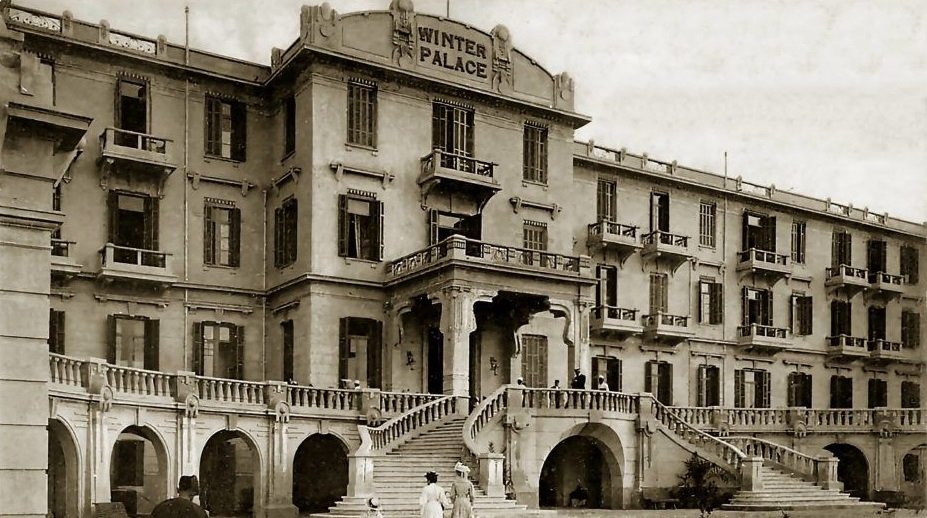
The (fictional) venue in which Havoc, Christopher Bollen’s latest novel, unfolds, Luxor’s Royal Karnak Palace Hotel, is not as labeled. Royal? No; it was founded for Western vacationers in the early twentieth century. A palace? Never, but it was grand and is now grandly moldering, still capable of acting as a refuge from Egyptian reality and pandemic-era restrictions, a suitably decaying, suitably enclosed setting for an unsettling read. It is also a bolt-hole for Maggie Burkhardt, Havoc’s narrator, who has fled an as-yet-unnamed Alpine country for an unnamed reason, behavior hard to square with two of her labels: eighty-one years old, from Wisconsin.
That’s not the only discordant note. Maggie admits to a “compulsion: it scratches at my skull and wakes me up at night, drumming its long fingers on my forehead.” She wants to help people be happy, or at least free by engineering “a fork in the road . . . the rare and precious possibility of a second chance,” if they want to take it. Meddling? Not at all.
Maggie tells her tale with wit (before things darken) and a flair with sometimes ominous flourishes. Dusty mountains jut “on the horizon like the blades of rusted knives.” In the early hours, the hotel’s hallways “are as still as crypts.” She continues to mourn Peter, her husband of more than half a century, dead for six years, and her daughter Julia as well, “who was taken from us too soon.” She swallows a daily “fistful of medications” in classic octogenarian fashion, including “risperidone to calm my nerves”—odd, as that’s not, except euphemistically, what risperidone, an antipsychotic, is typically for. Later she refers to it as “needed for my sanity,” not the only suggestion that for her that pill is more than a tranquilizer.
Spotting a British family at breakfast, “each of them staring into space, lost in their own separate portal of oblivion,” she resolves to resume her “sunset-years mission.” It now seems to involve less choice on the part of those she has set out to help:
I change people’s lives for the better, whether they see it that way or not. Only once did my actions end for the worst. But I don’t like to talk about the murder.
Oh.
And so she prepares to get to work on that British family. The husband, Geoff, “wants out,” but the wife, Shelley, “shoulders slumped as if she’s mentally washing dishes even as she sits in a luxury hotel eating imported granola in the middle of an African desert,” deserves her freedom more.
Maggie makes three abruptly abbreviated phone calls (to the British couple’s hotel room, all picked up by Shelley: good), the first a “breathy” silence, the second a “Geoff?” in a (guessed) Greek-accented voice, the third more breathiness. Then, using a master key, she steals into the room of Carissa, the Greek divorcée who is the unwitting and innocent “other woman” in the frame-up that Maggie is concocting. She takes one of Carissa’s trademark yellow scarves and leaves. Her exit was noticed by Otto, the eight-year-old son of a new arrival, but what does he think he has seen? Nothing, surely. The two exchange a few words and part. A portion of the yellow scarf is sticking out of Maggie’s pocket.
Maggie then hurries to the Bradleys’ room to do what she has to. In due course she sees Geoff sitting on a sofa, holding a yellow scarf that Shelley has discovered in their bed. He has been crying. Shelley has flown off, “away from her cage,” exults Maggie. As she has observed earlier, if there’s something to go on, “unraveling a life doesn’t take as much work as you’d think.” On this occasion, however, Maggie may have started the unraveling of her life as well. Otto is in the lobby too. The two exchange some small talk, but then:
Through his thick glasses his eyes latch on to me. After making eye contact, they flicker over to Geoff with the yellow scarf in his hand and then return to me. Again, more slowly this time, they travel to the scarf and back to me. A thin smile worms across his face.
He knows. He saw the tail of the scarf in my pocket yesterday as I left Carissa’s room. He’s put the puzzle pieces together. Clever boy.
What follows is an escalating and increasingly vicious battle between Maggie and Otto. She’s in her ninth decade, smart if rickety, and he hasn’t yet hit double figures. This ought to make for a highly uneven contest, but grasping the significance of the stolen scarf has given Otto an early advantage, which he plays adroitly. As their duel rages on, he proves to be a formidable combatant.
By making Maggie the narrator, and, after a while, structuring the story so that she has relatively few direct dealings with Otto, Bollen ensures that the boy remains an enigma. But his actions reveal more cunning, cruelty, and knowledge than a child his age should possess. Stories from his past emerge, such as a grandmother who will have nothing to do with him, that add to the unease. There are also a few lines that may hint at . . . something else.
Meanwhile, inconsistences over chronology, for one thing, some stray comments for another, indicate that Maggie’s narration is not so reliable as we think and, maybe, as she thinks. There was that remark about murder, but Bollen has inserted other clues too, some of which I only picked up on rereading Havoc after a denouement that was bemusing as well as horrifying. Throw in a last line that could mean nothing or everything, and the result is a novel that for once deserves the overused adjective Highsmithian. But who is its Ripley? There can only be one.
It is June 1986. Eighteen-year-old Nina Jacobs, the principal protagonist of Cynthia Weiner’s A Gorgeous Excitement, lives in her parents’ elegant apartment on the Upper East Side: her neighborhood, she feels, but not quite. Her father is a tax lawyer from Missouri, there is some money on her mother’s side of the family (construction, Queens), and she’s just graduated from an exclusive girls’ school. But she’s Jewish, and in the circles in which she moves that can matter.
She takes to spending more time at Flanagan’s (a bar based on Dorrian’s Red Hand, then and now a fixture in that part of town):
Most nights, Flanagan’s was a drowsy hangout for divorced lawyers and neighborhood alcoholics, indistinguishable from the scores of other pubs that lined Second Avenue: red-and-white checkered tablecloths, pressed-tin ceiling, potted plants in the windows. But on weekends it transformed itself into a preppy spectacle, with throngs of kids who’d known each other forever from boarding school or the Maidstone Club or Fishers Island. . . . Everyone glowed with crazy good fortune and yellow brick road futures. It was thrilling to walk among them, but intimidating, too, if you lacked the bona fides.
And a new caste within a caste has made itself known, flush with bonuses: the long stock-market boom was well underway:
A group of guys in ties and suspenders were crowded around the jukebox. Nina would bet they were investment bankers at one of the fancy uptown firms. They had jutting chins and tortoiseshell glasses.
And probably those colored shirts with white collar attached too.
Weiner grew up on the Upper East Side, and, despite some soapy passages, A Gorgeous Experiment is an evocative, well-written, mildly raunchy bildungsroman, drawing heavily on its author’s teenage years in Manhattan’s 1980s. The novel’s title, taken from Sigmund Freud’s description of cocaine’s effect, signals that a series of substances, legal, illegal, or perhaps prescribed legally but used illegally, will play their part, an accurate reflection of a more hedonistic era.
A Gorgeous Experiment has various subplots, including the deteriorating mental condition of Nina’s mother, which might have been more suited to a different book. Its central narrative is fiction, but some of what transpires is tied to and inspired by the fatal strangulation in August 1986 of Jennifer Levin by Robert Chambers, later better known as the “Preppy Killer.” Weiner clearly views the killing as further confirmation of her view of that era’s misogyny. Strange as it may seem, the initial blame-the-victim response offers more support for that thesis than the deed itself, the product of a disturbed mind.
Nina has two main obsessions. The first is to lose her virginity before starting at Vanderbilt in the fall. The second, whom she first meets in Flanagan’s, is Gardner Reed:
Tall and lanky, with thick eyebrows, a jutting chin, and a deep indentation above his lip. Eyes a cobalt blue she didn’t know eyes could be. For years she’d observed him from a distance. . . . This close, he was dizzying.
Nina will become very, very interested in Gardner, a second obsession that could resolve the first. The catch is that he’s no catch, but Weiner’s reimagining of the soon-to-be Preppy Killer for A Gorgeous Excitement. Weiner knew Chambers “and spent many nights drinking with him and his friends at Dorrian’s.”
Earlier, Nina’s longing for Gardner has grown, despite finding out that his mother is not, as she had imagined, a Babe Paley type, but an ambitious nurse from Ireland (as was Chambers’s). Part of the persistent fascination with the Preppy Killer revolves around class. With his handsomeness and height, Chambers looked like old money, and he was named like it too. But his education was mainly funded by scholarships and his mother’s labor, a less satisfying (so less repeated) story.
Gardner, like Chambers, has been kicked out of Boston University, and his decline is undeniably accelerating: there has been credit-card theft, too, and worse. Nina is told that “people are kind of concerned,” but she moves closer, much closer, to the point where her twin obsessions are driving her. Meanwhile, other women—one in particular—continue to hover.
Before the Preppy Killer was held to account, there was talk of an accident, “rough sex” gone wrong: “‘One of us,’ Clayton Chase said that night at Flanagan’s. Reminiscences about Gardner filled every corner of the bar, bordering on eulogies.”