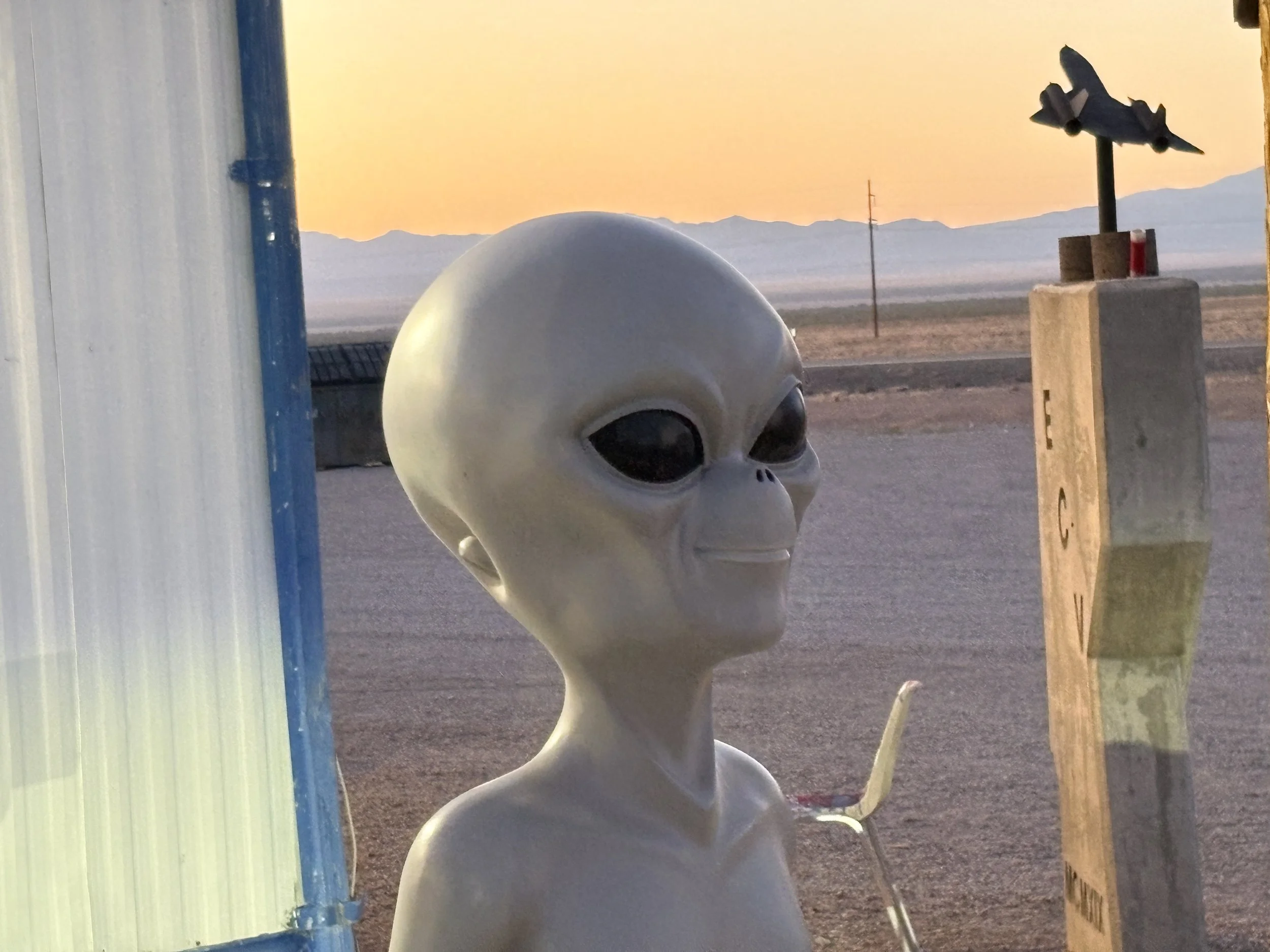
Close Encounters with Clowns and Aliens
National Review, June 12, 2025
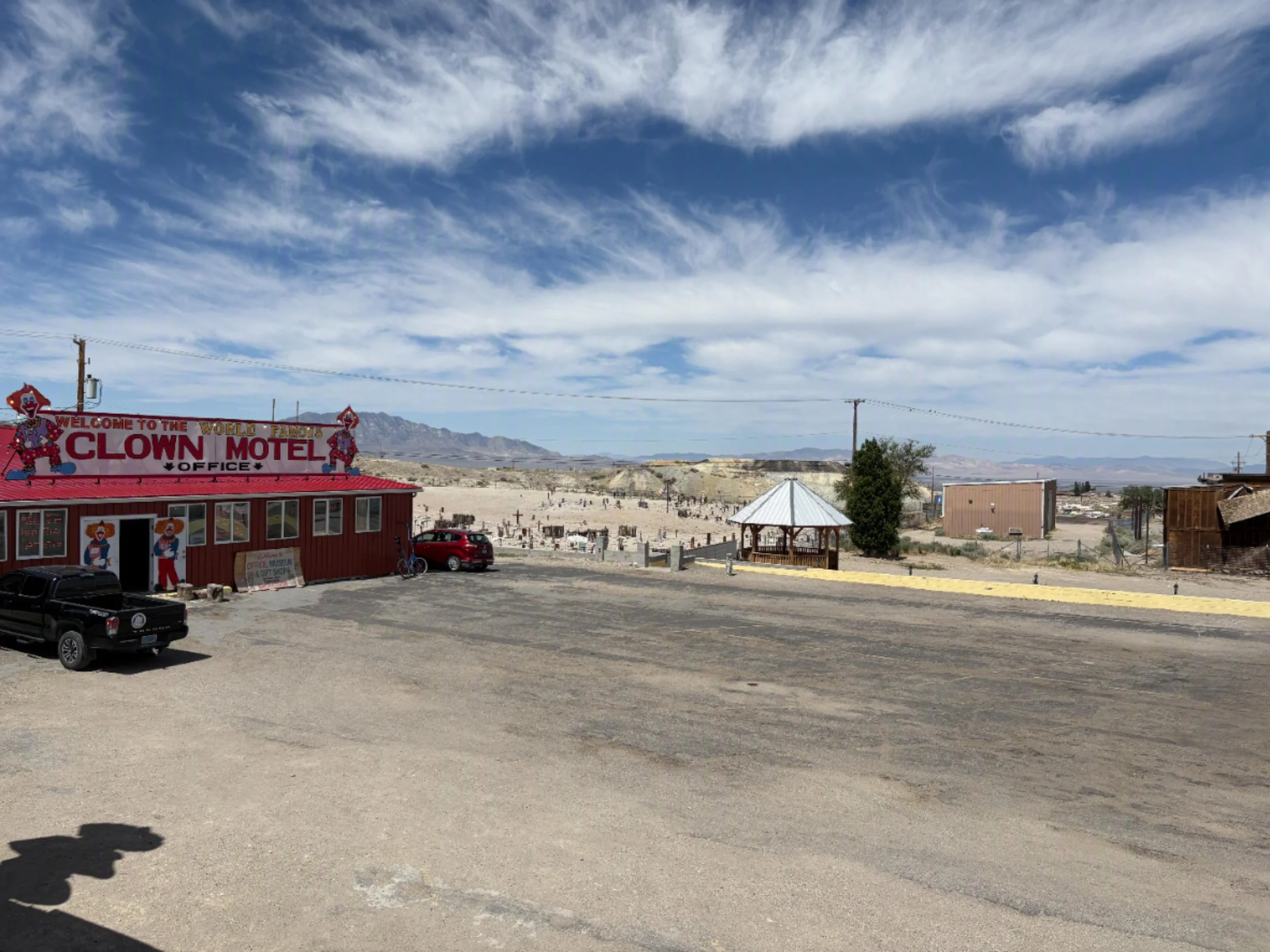
Tonopah, Nev. — Just beyond the reception area where thrill-seekers or merely the clown-curious can check in at the Clown Motel in Tonopah, Nev., a (mainly) former mining town of about 2,000 in the middle of nowhere, there is a room infested with clowns. They are not for sale, but they line the shelves, sit on the floor, and hang from the ceiling. Please do not touch. What madman would?
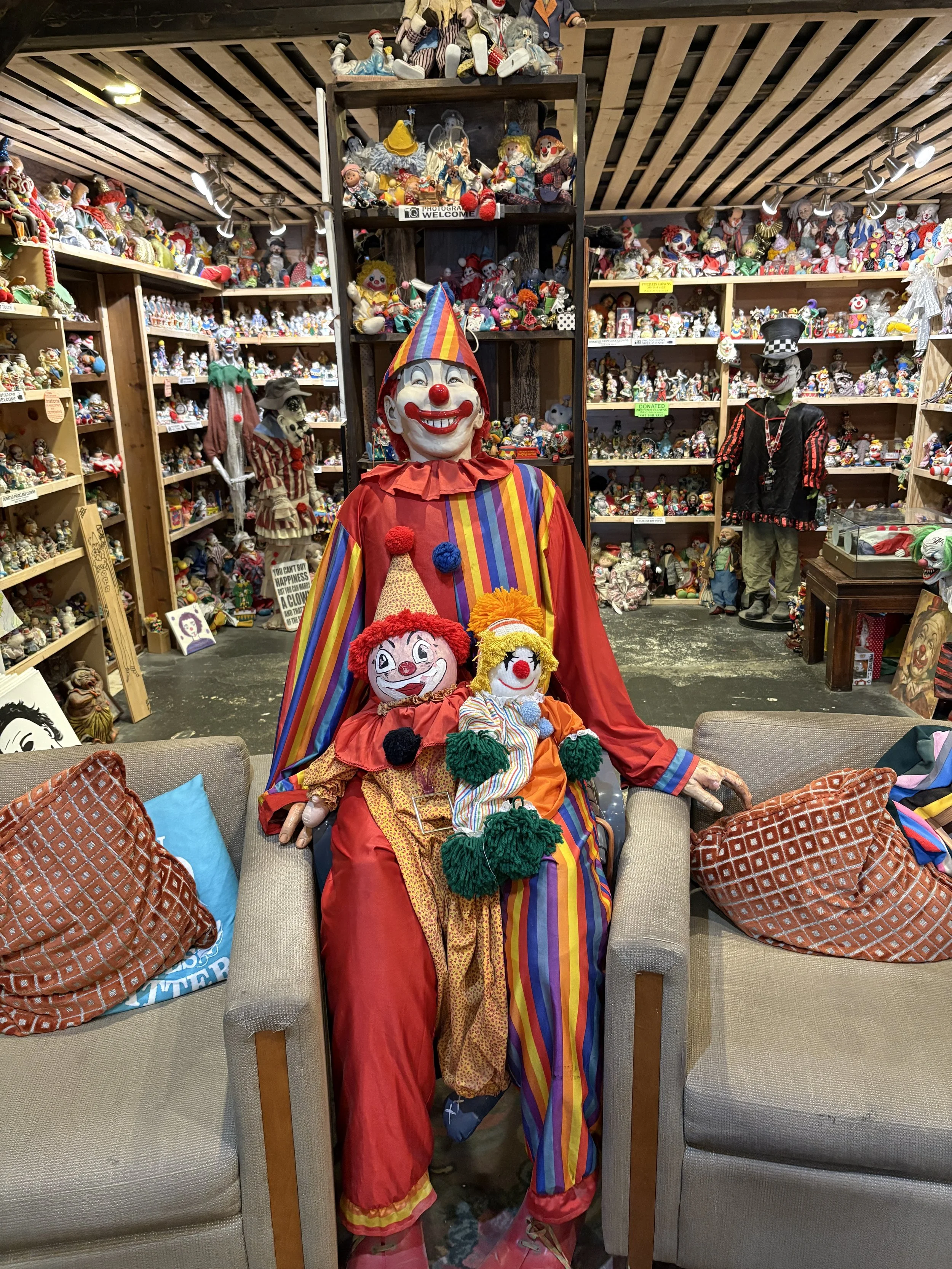
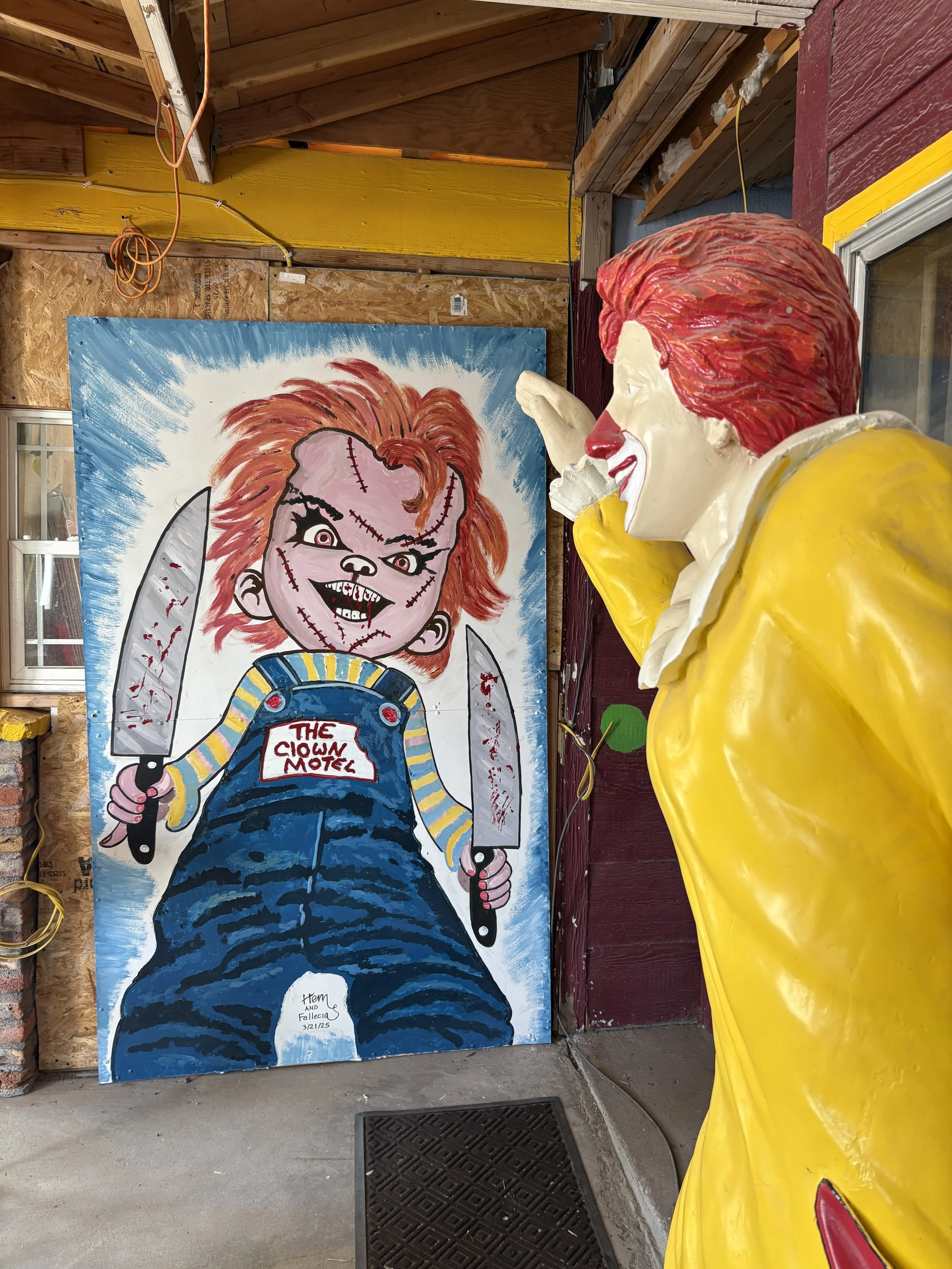
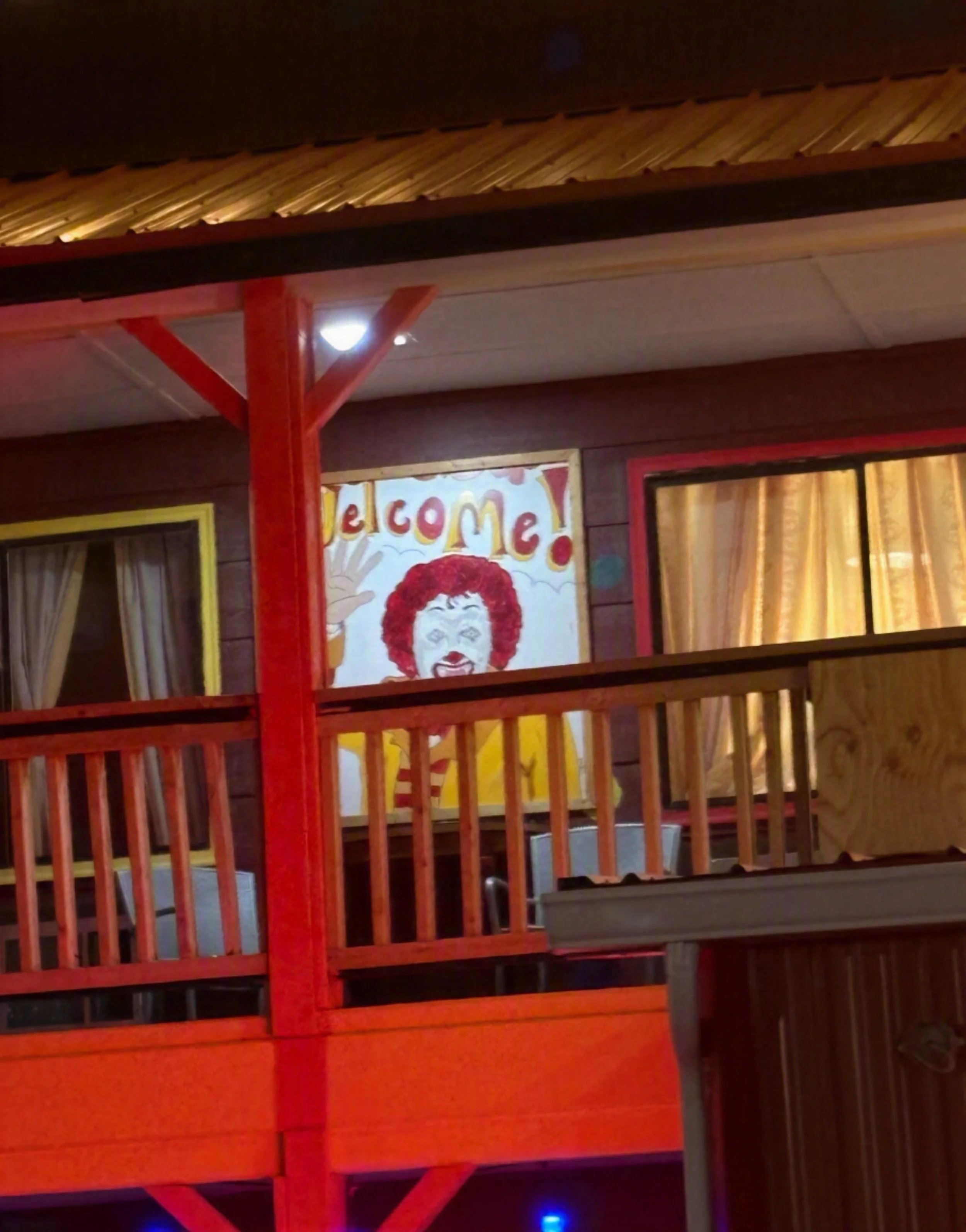
Many look bland enough in a simpering, smiling, “tears of a . . .” sort of way; others are sharp of tooth and mean of eye, not bothering to conceal the darkness that coulrophobes will suspect must lie within. Had Chucky (not a clown, to be a doorman about it) crashed the party? Certainly, his portrait was just outside (the motel has a Chucky room, too). And there is another sinister figure, Ronald McDonald, still waving, still confident that RFK Jr. will leave him untouched. Clown.
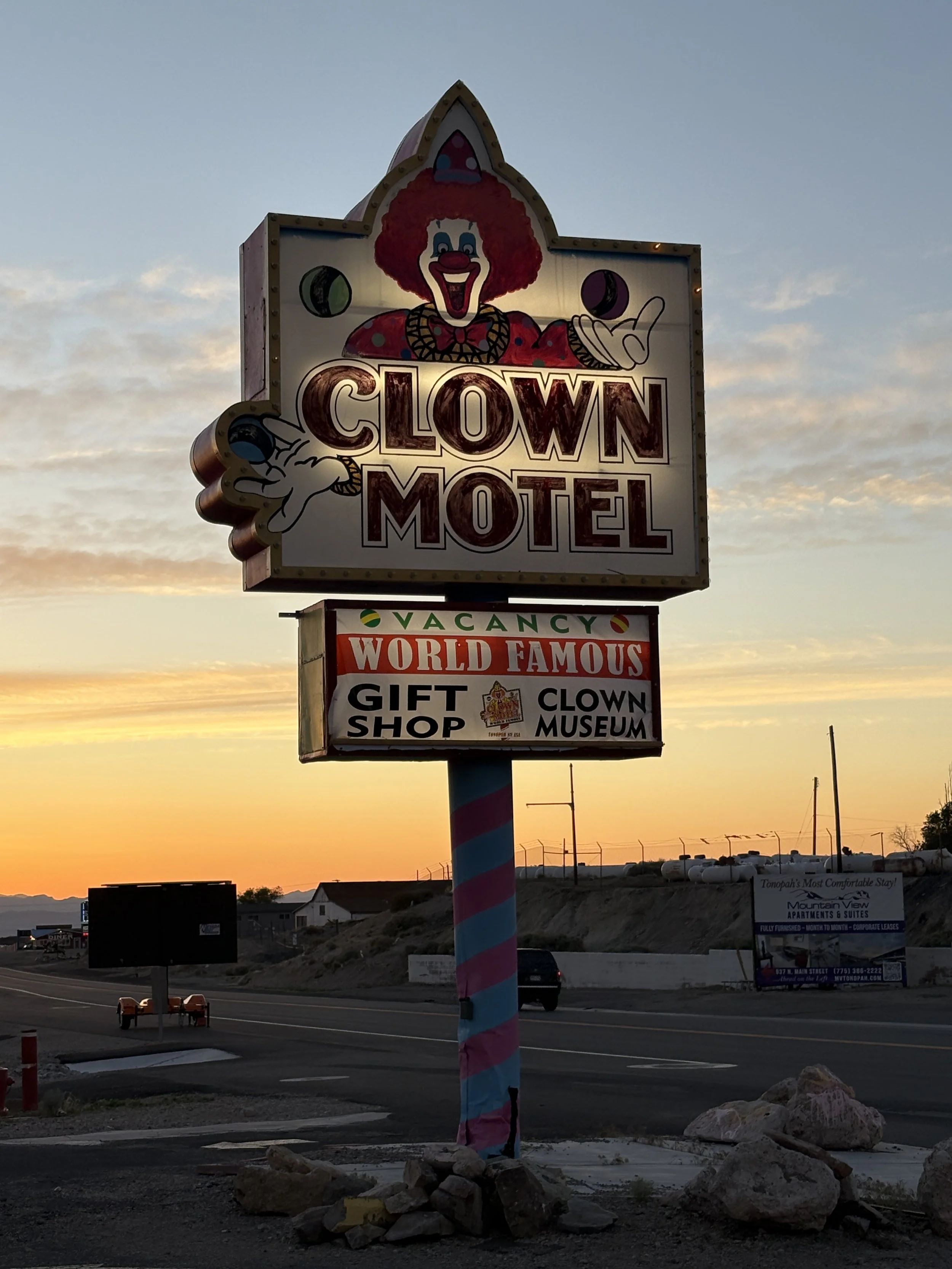
A T-shirt for sale was stamped with a roundel celebrating two Nevada territories: Clown Territory and Alien Territory. Clown Territory was marked by an image of something — only its inhuman hands can be seen — clutching the giant sign outside the “world famous” motel, “America’s scariest.” Alien Territory was symbolized by a “grey” making a peace sign, a flying saucer, and “Warning. Area 51.”
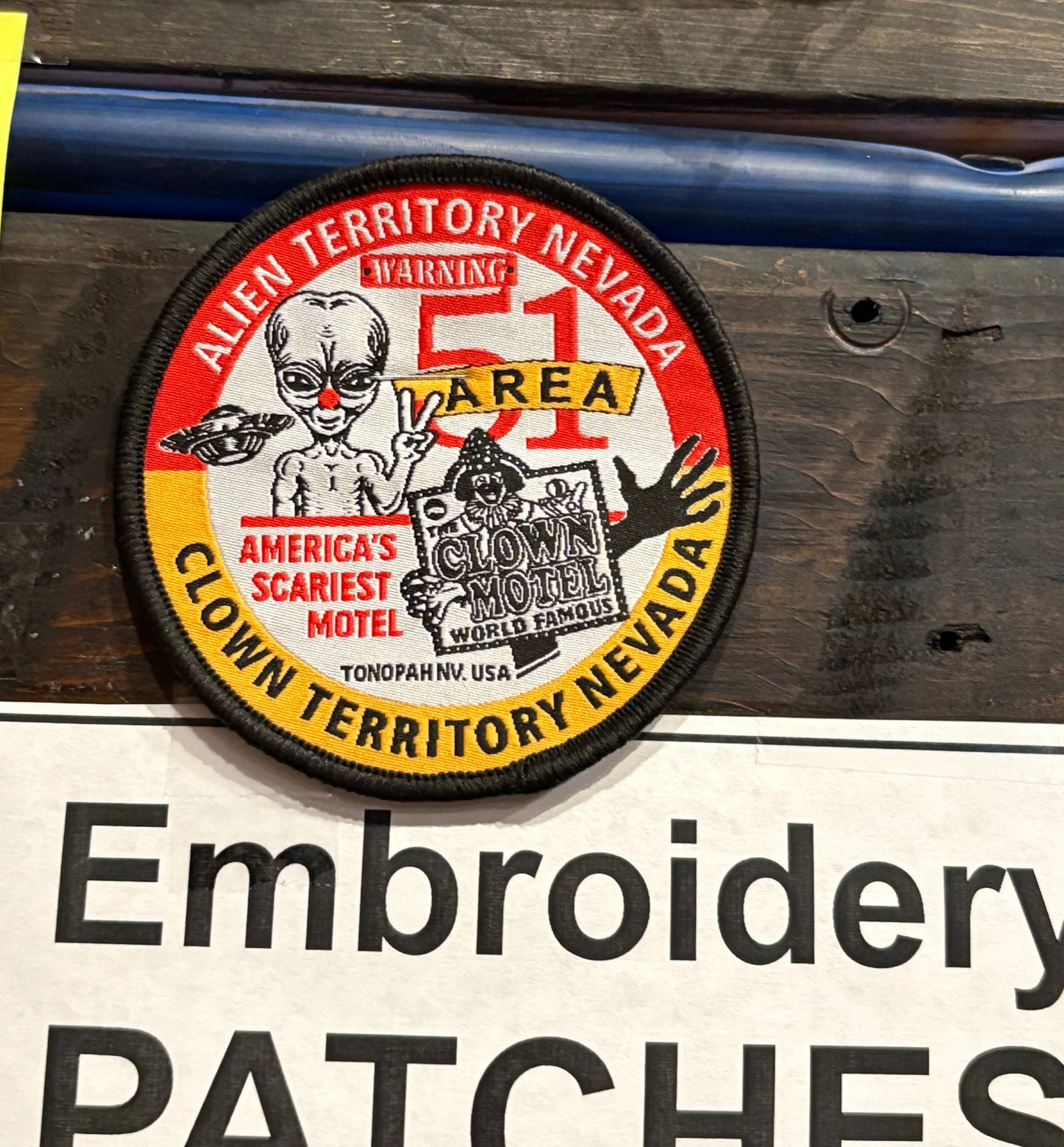
Equating these territories is a folie de grandeur, circus maximus. In what passes for reality in these parts, the clowns’ domain extends as far as the motel’s forecourt, and, possibly, the old cemetery adjacent to it, although some say the cemetery’s more restless residents have other ideas. By contrast, the alien realm covers a decent portion of the ground between Tonopah and Las Vegas, 200 miles to the southeast. Nevada, with its keen eye on the tourist trade, has honored the aliens with an Extraterrestrial Highway. Tonopah’s clowns don’t even merit a street in Tonopah.
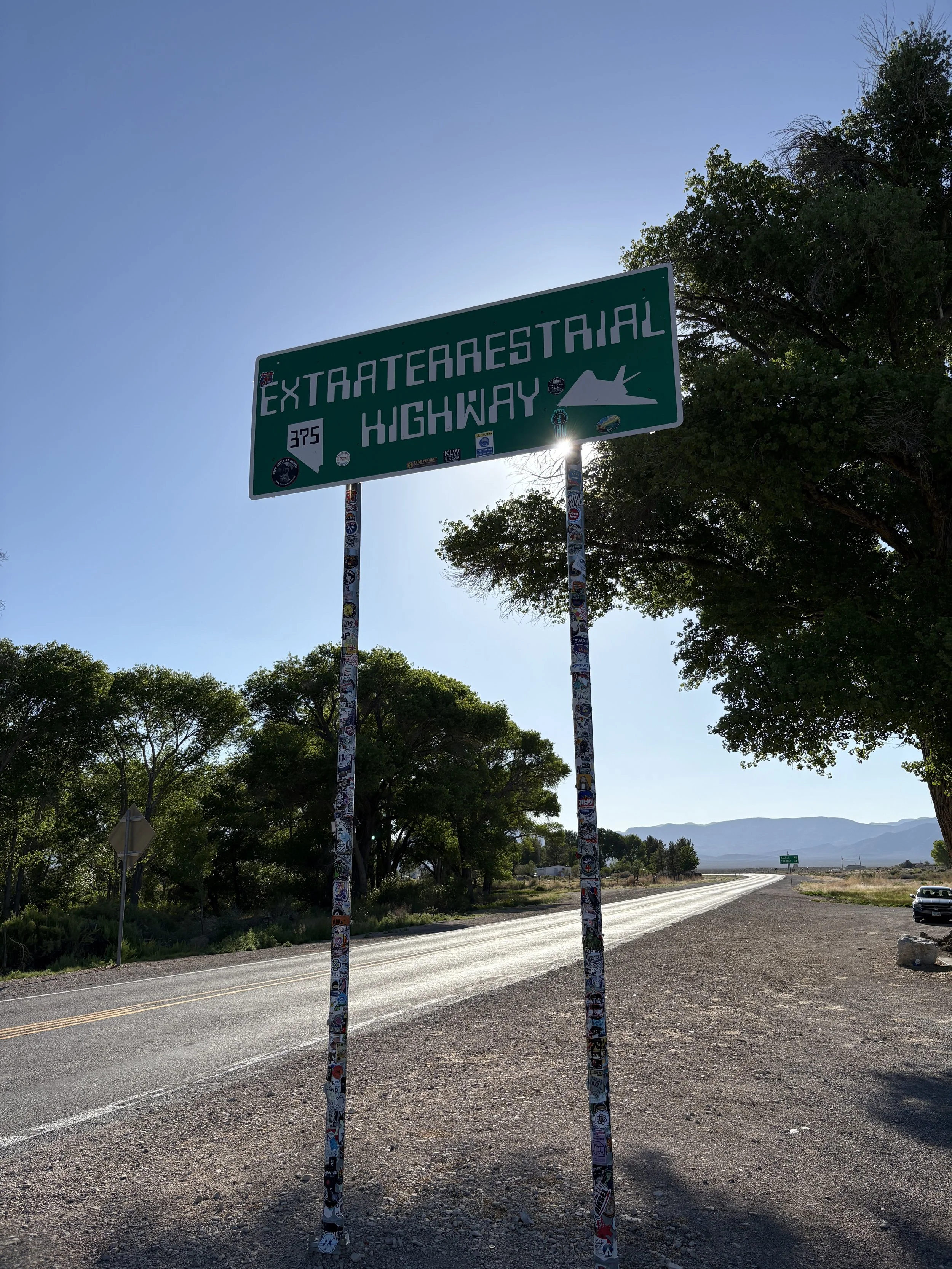
The Extraterrestrial Highway (more prosaically State Route 375) was given its name in 1996 after growing speculation about alien-related activity in or near “Area 51.” A tantalizingly secret facility within the U.S. Air Force’s Nevada Test and Training Range, it had attracted interest and, more important, visitors to a region not known for having had many. Most were taking SR 375 to get there. Giving this tall tale “official” recognition — Roswell, N.M., has pulled off a similar stunt — can’t have hurt: Southern Nevada is now an established destination on the UFO trail, a role that has fostered and is in turn fostered by a good number of alien-themed businesses, including (Nevada!) a brothel. What happens in Amargosa Valley stays in Amargosa Valley.
The notion that “Area 51” (a.k.a. Paradise Ranch, Homey Airport, Groom Lake, Dreamland) had an extraterrestrial connection was likely set in motion by a TV interview in 1989 with Bob Lazar (Wikipedia: “American conspiracy theorist”), although there are suggestions that U.S. disinformation played its part, too. Previously, it was known, if at all, as a place where the Air Force developed and tested (man-made) experimental aircraft — U-2s, A-12s, that sort of thing. Lazar claimed to have worked on a project connected to Area 51 that involved reverse-engineering extraterrestrial technology. Strange lights in the sky had been seen around there for a long while — in all likelihood sightings of novel, sometimes exotically shaped American aircraft — but now that there was (supposedly) evidence that something alien had been going on, those lights seemed to shine in a different way.
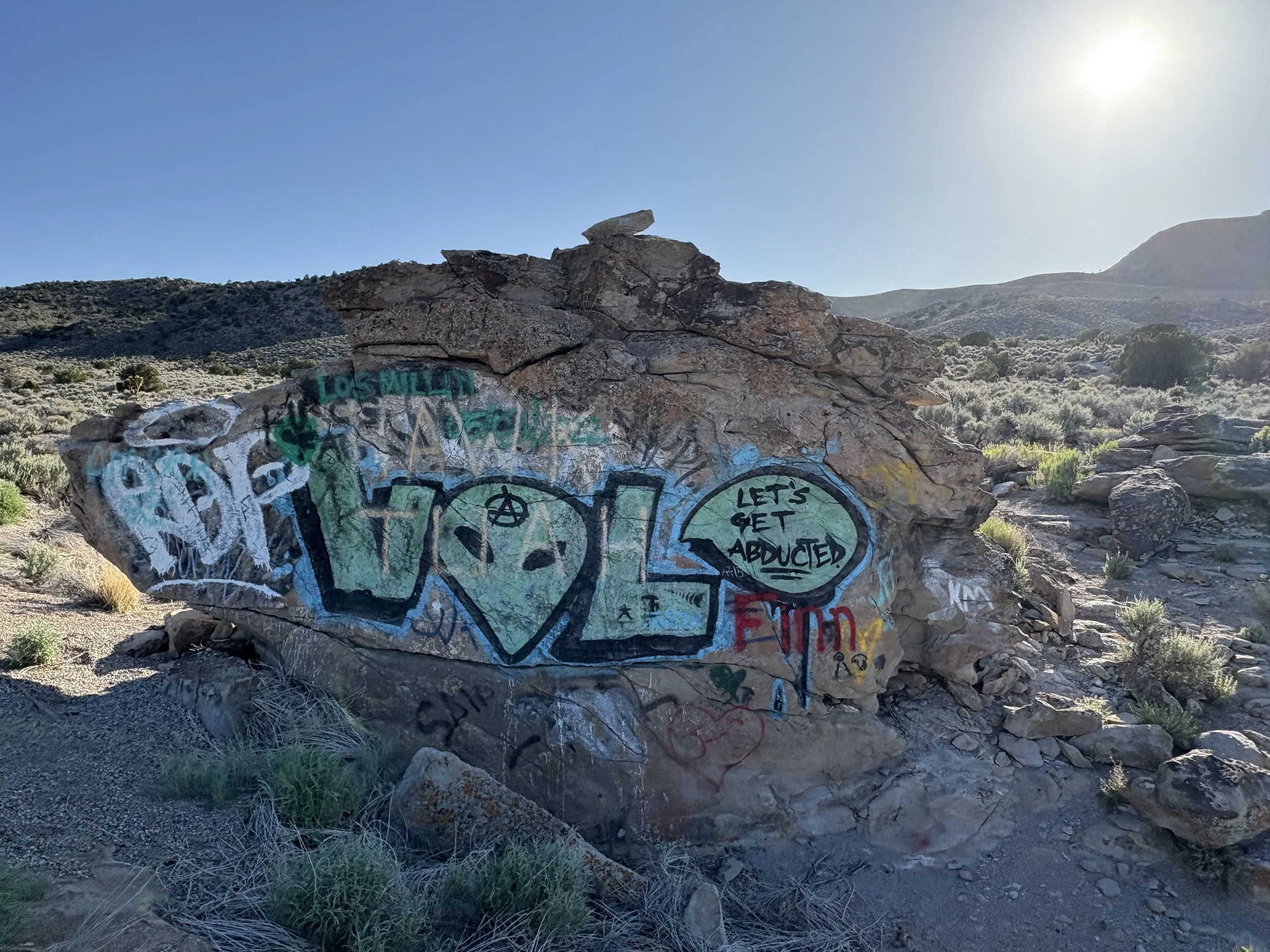
As a myth in the making and remaking, Area 51 was perfect for its time, a secret government base deep in the desert, conspiracies deep in the government (to be fair, the stuff of American mistrust in any era), aliens, weird science — ours and theirs — and an ever-evolving legend promoted by the delusional and the entrepreneurial that was reflected and amplified in old media of all types, and, critically, new. After the launch of easy-to-use web browsers in 1993, anyone could chip in, and did, accelerating the feedback loop to eleven.
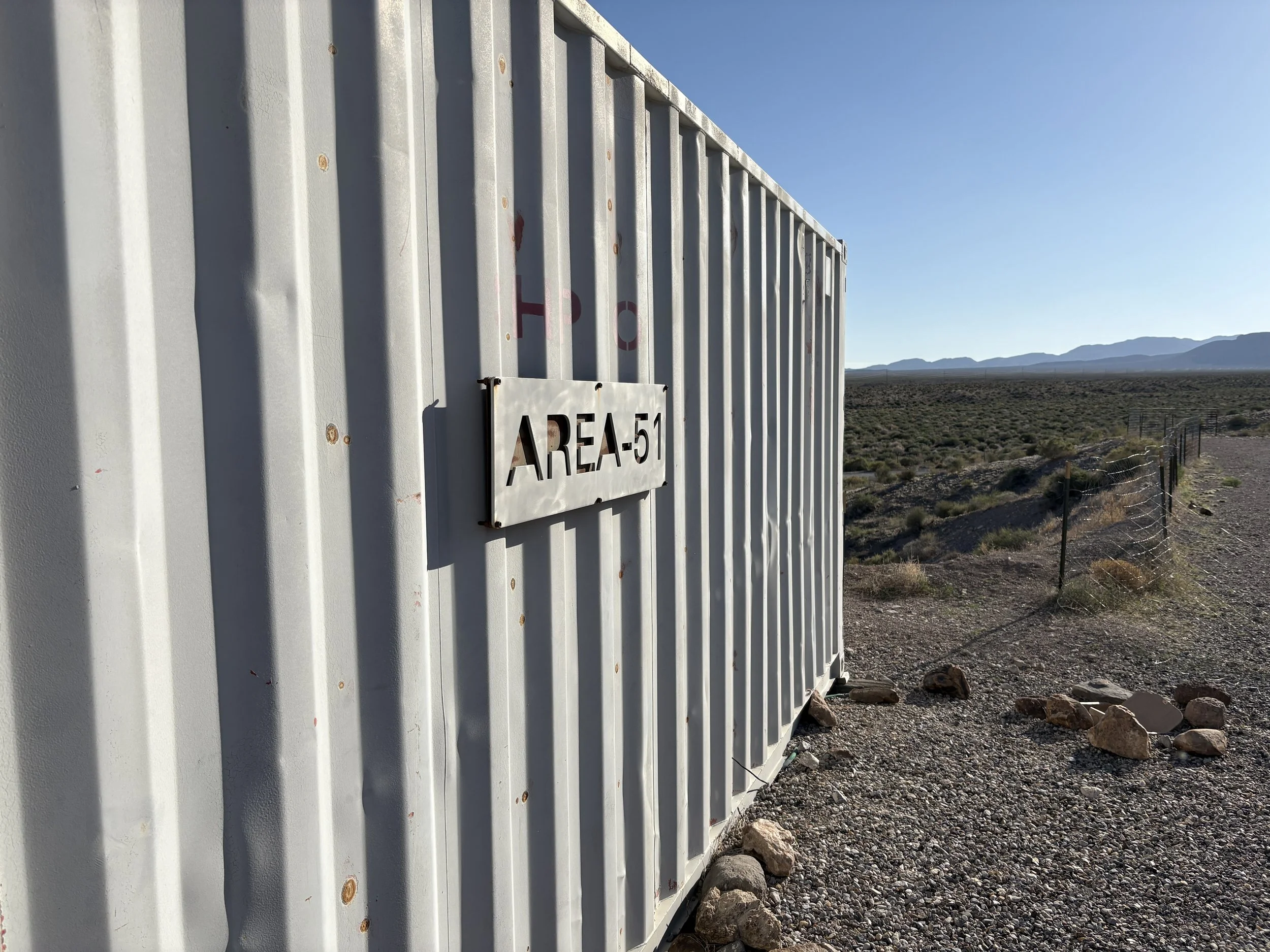
Later that year, The X-Files debuted. Its second episode featured a secret base (in Idaho, for variety), one of several in which, Agent Mulder tells Agent Scully, the Air Force has reverse-engineered technology from the UFO that had (ed.: not) crashed near Roswell in 1947. This added to the talk of a link with ufology’s ground zero that was already spreading Area 51’s fame yet further. One of the items on sale at a gas station near the Crystal Springs junction with the Extraterrestrial Highway is a baseball cap with another peace-signing alien (do they think we will fall for this?) and the slogan “51 since 47” (work at Area 51 didn’t begin until 1955).
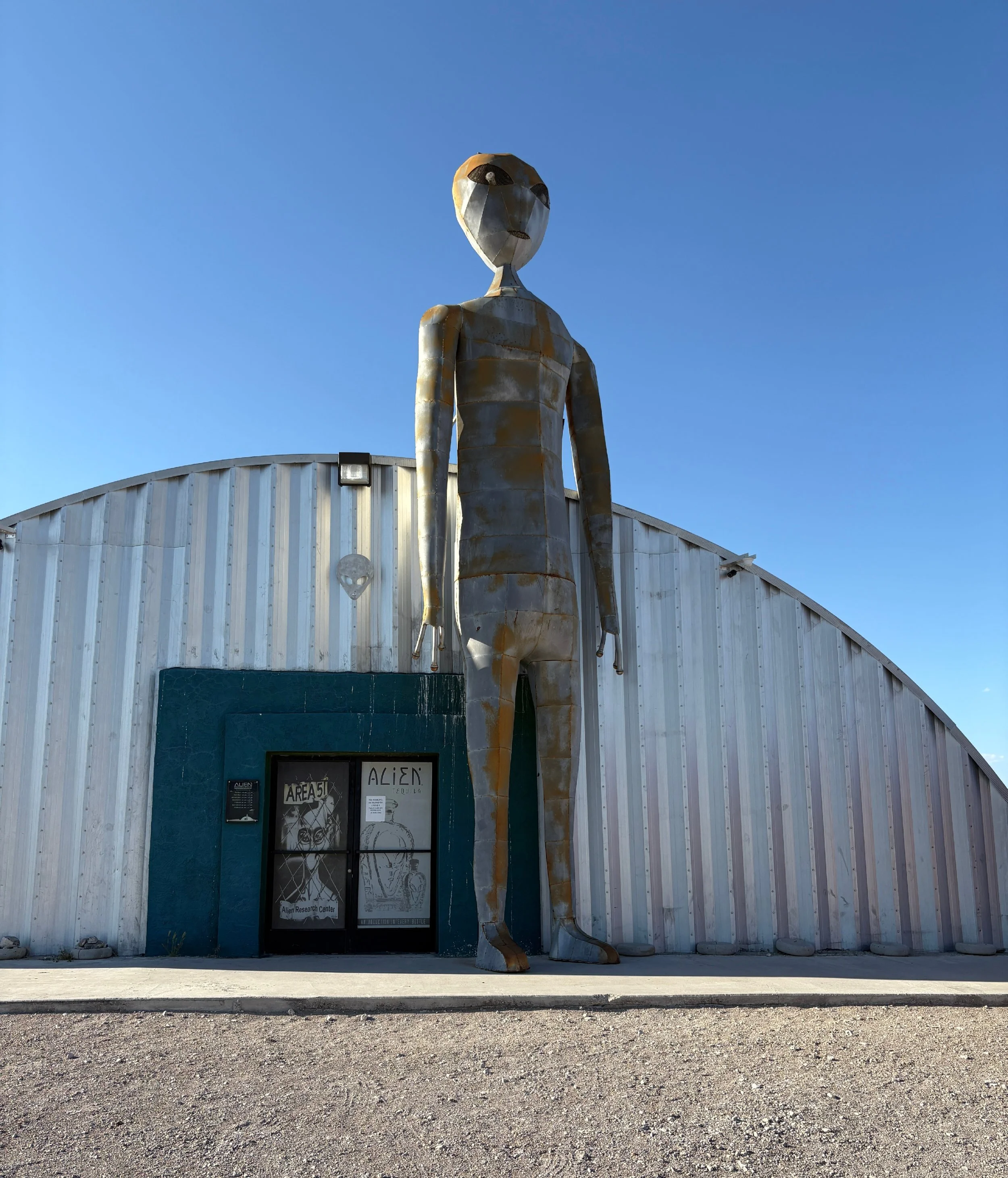
Not far from the gas station is the latest iteration of the sign denoting the Extraterrestrial Highway’s starting point. It’s closer to the sky than when I was last here, in August 2002, when I wrote about it for National Review Online. Earlier versions had been abducted, or otherwise mistreated. One of them, heavily stickered, can be seen at the Alien Research Center, the “gateway to Area 51,” a minute or two on (it’s the building behind the towering alien effigy). There are no obvious indications of research activity, but an impressive selection of space-related items is for sale. Its range, extending beyond souvenirs of Area 51 and the usual alien paraphernalia to Star Trek and The X-Files to NASA, neatly demonstrates UFOs’ curious niche in the popular imagination, somewhere between fact and fiction, and, to some, the supernatural, a belief, a half belief, a puzzle, a what-if, a game, a threat, a laugh.
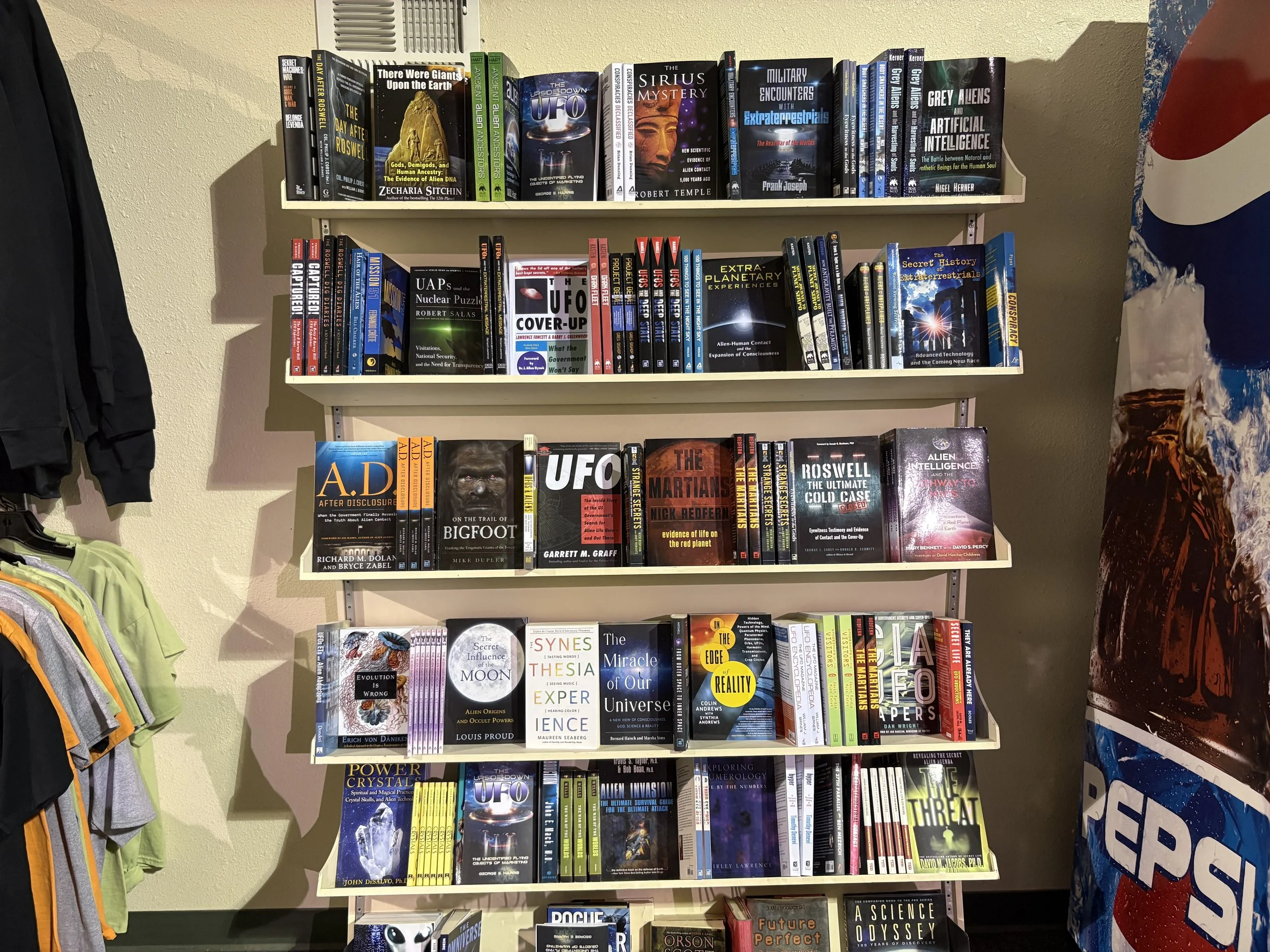
Disappointingly, there’s no desiccated extraterrestrial flesh to chew on at the nearby E.T. Fresh Jerky, a boxy outlet elongated by the attachment of a Western-themed alien mural. But other than its “universally admired” jerky, there are snacks and soft drinks for sale along with the inevitable alien memorabilia. An alien Donald Trump in a glass box is meant to opine for a dollar. The machine was broken, but the Trump within would sporadically speak out nonetheless.
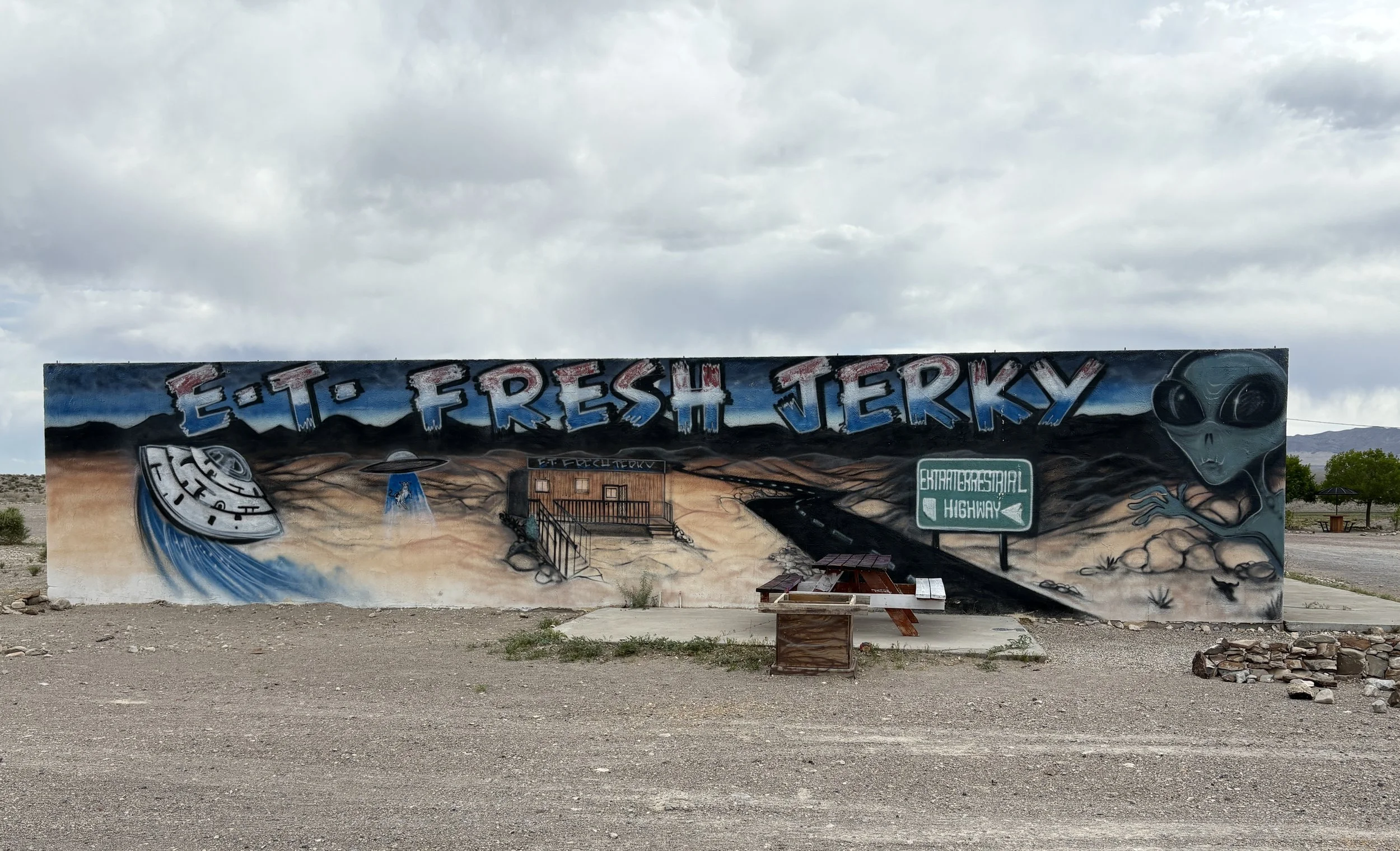
The hub for Area 51 intrigue is Rachel, Nev. It is the least inconvenient jumping-off point for those wanting to get as close as they can — which is not very close — to a facility where security and surveillance begin well before its perimeter. The last remaining (legal) way to catch a real-life glimpse — albeit at a distance — of a small portion of the base concludes with a bit of a hike. No thanks.
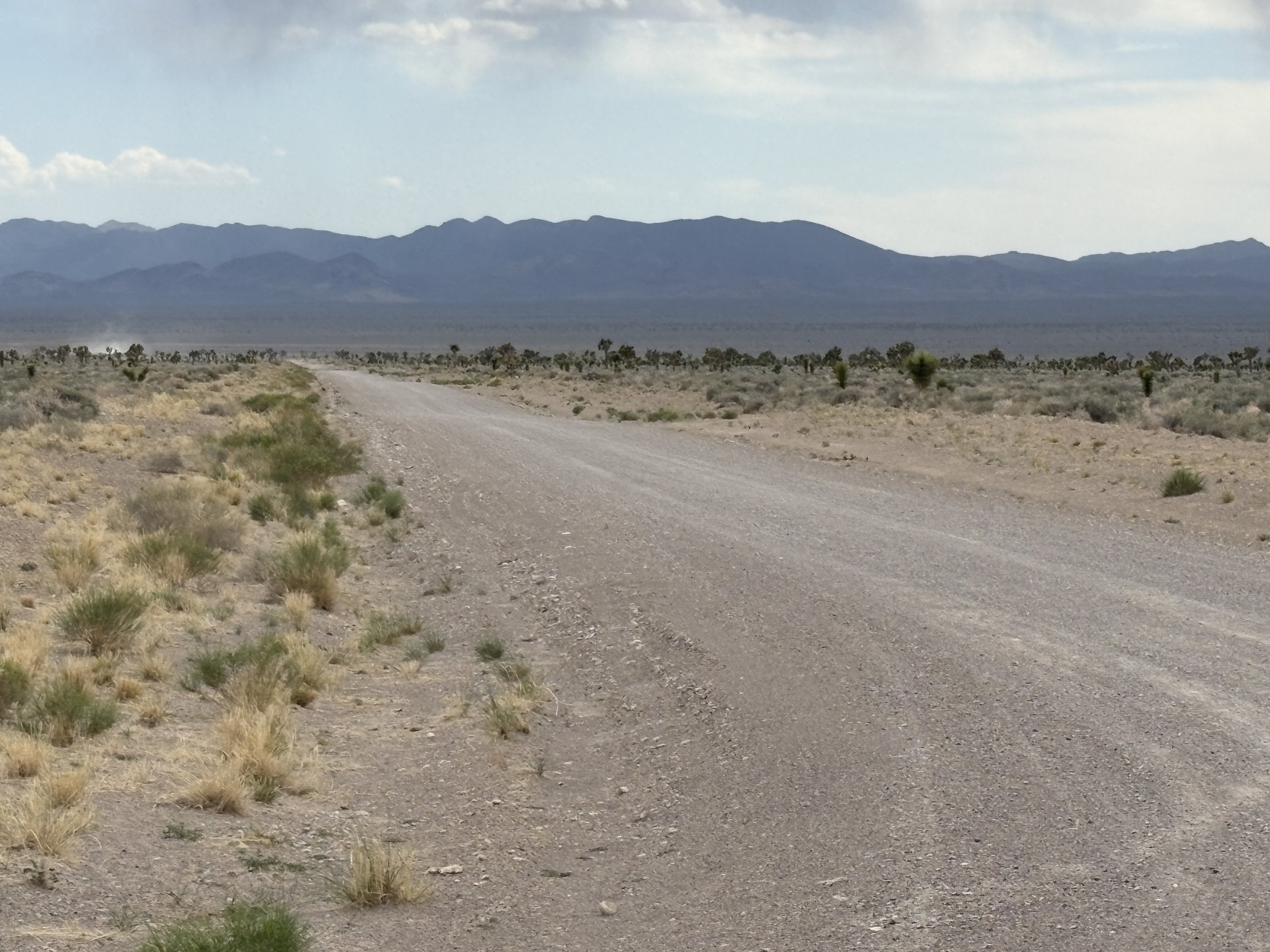
Over the years, I have driven thousands of miles through Southwestern emptiness, with the window down, no company, no AC, no radio, just silence: it’s the way to go. But the Extraterrestrial Highway to Rachel stands out. There’s little traffic, less cellphone cover, and the landscape hints at Elon’s Martian Eden. On the bright side, the latest black mailbox to act as an Area 51 landmark has not yet been stolen.
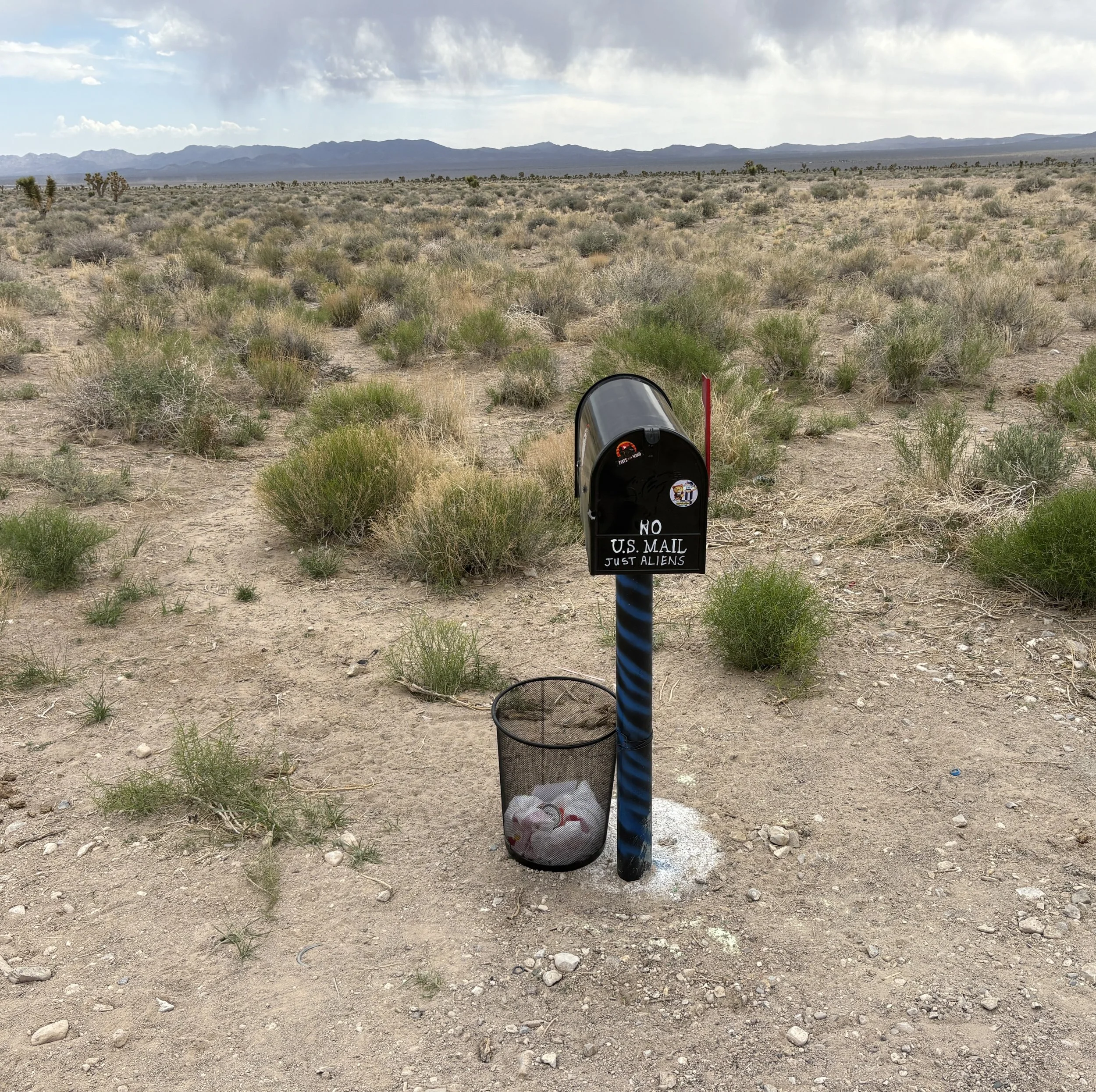
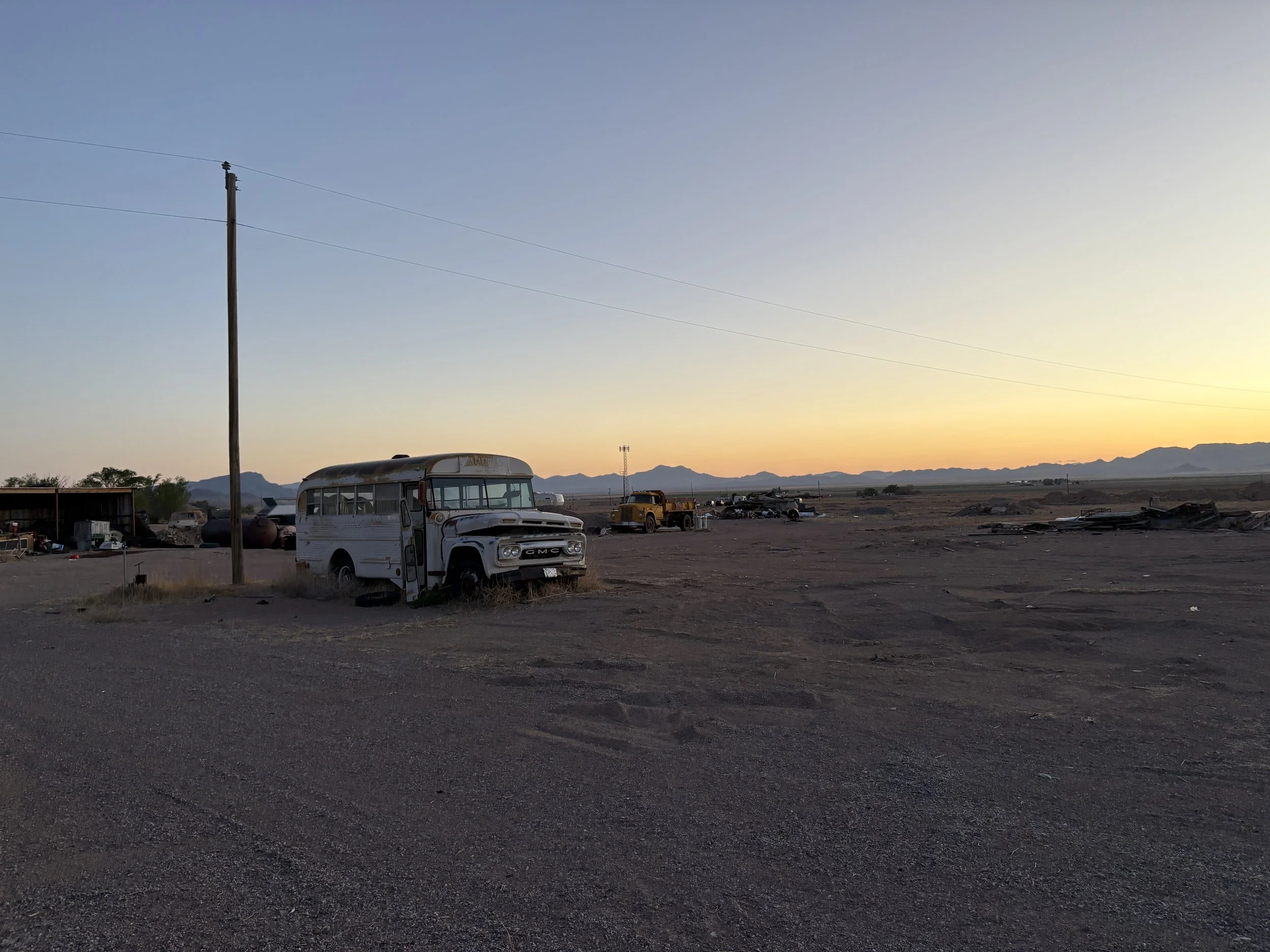
Rachel itself is a dusty, untidy high-desert settlement — “town” would be a wild exaggeration — with a touch of Mad Max about it. It was founded in the early 1970s, and its population, which peaked at around 500 when a local tungsten mine was still in operation, is now about 50. Despite the odd excitement, such as 2019’s Alienstock, one of two farcical events (the other was held at the Alien Research Center) tied to viral chatter of a mass “storming” of Area 51, not much seems to have changed since 2002. The Quik Pik convenience store has been replaced by the Alien Cowpoke, which sells snacks and alien memorabilia and features some alien décor, too.
The automatic station that monitors the weather and radiation levels (they’re fine), a reminder of past nuclear tests hereabouts, is still doing what it does. And the hub’s hub, the Little A’Le’Inn (formerly the Rachel Bar and Grill), renamed and repurposed when, very early on in this saga, the owners shrewdly saw the way things were going, is still serving Alien Burgers. And it is still selling alien tchotchkes. I don’t remember seeing the Alien Autopsy (peach schnapps, Irish cream, grenadine) on the menu before but gave it a go this time. It hit the spot. Here and there the décor has changed. A different alien is peering out of the window, a couple of new ones are out in front, and the anti-Clinton materials have disappeared. The saucer still hangs from the tow truck. I ask one of the inn’s staff whether she has seen any UFOs. Just “lights,” she replies.
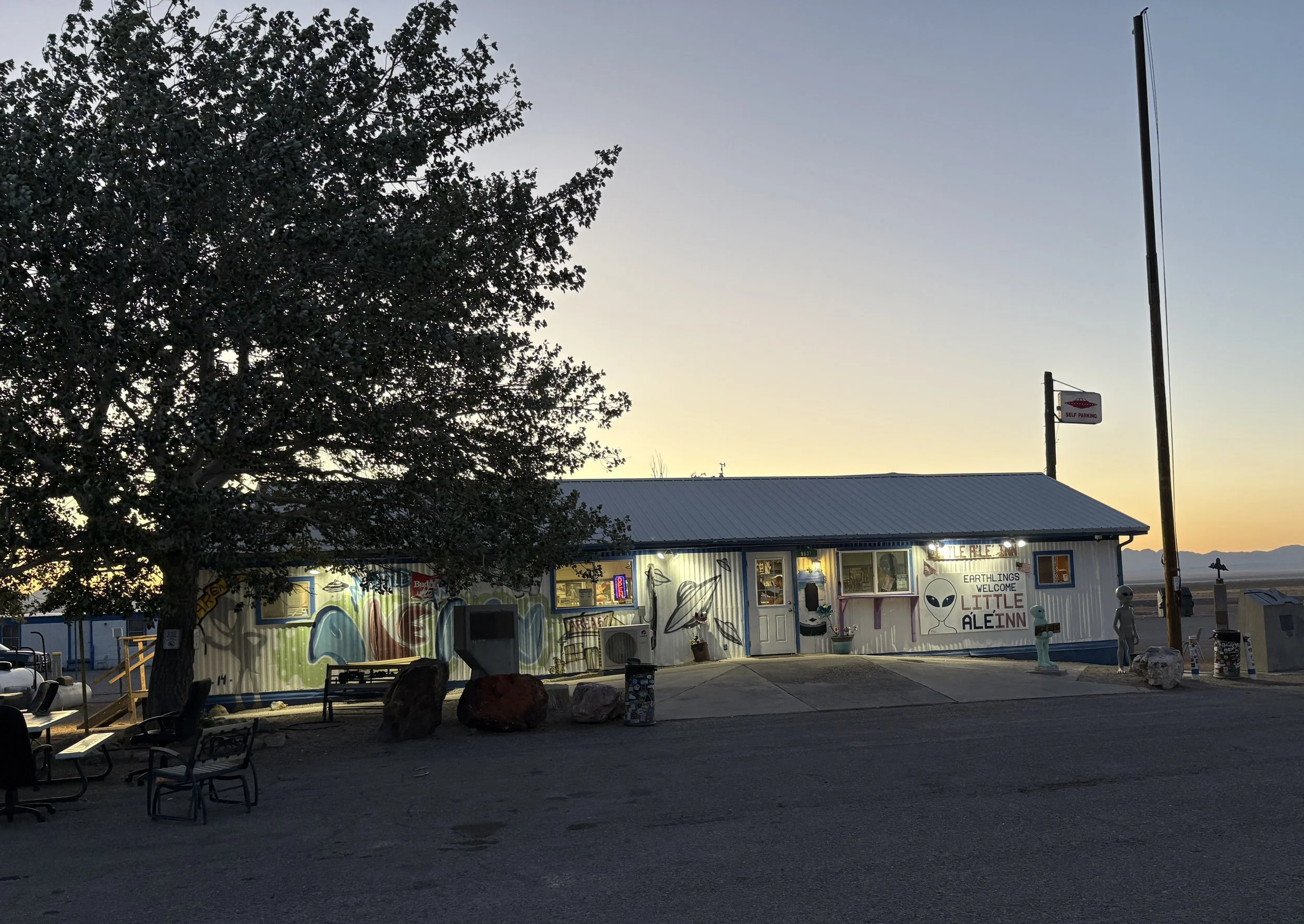
I stay overnight, my room in a mobile home that’s set up for three. Only one other guest is there. He drives from site to site and enjoys the conventions — McMinnville, Ore., that’s the one, he says, but concedes he has yet to go to Roswell’s. Madness! Night falls. I go for a wander, running into two Californians, in from L.A. on a lark. The heavens are open for revelation, a gorgeous sprinkling of stars. One of them is moving erratically (no, no, I had only one Alien Autopsy). Still a staunch skeptic, I decide it’s Starlink. There’s the sound of a jet at high speed. “Low-flying aircraft,” warn signs by the highway.
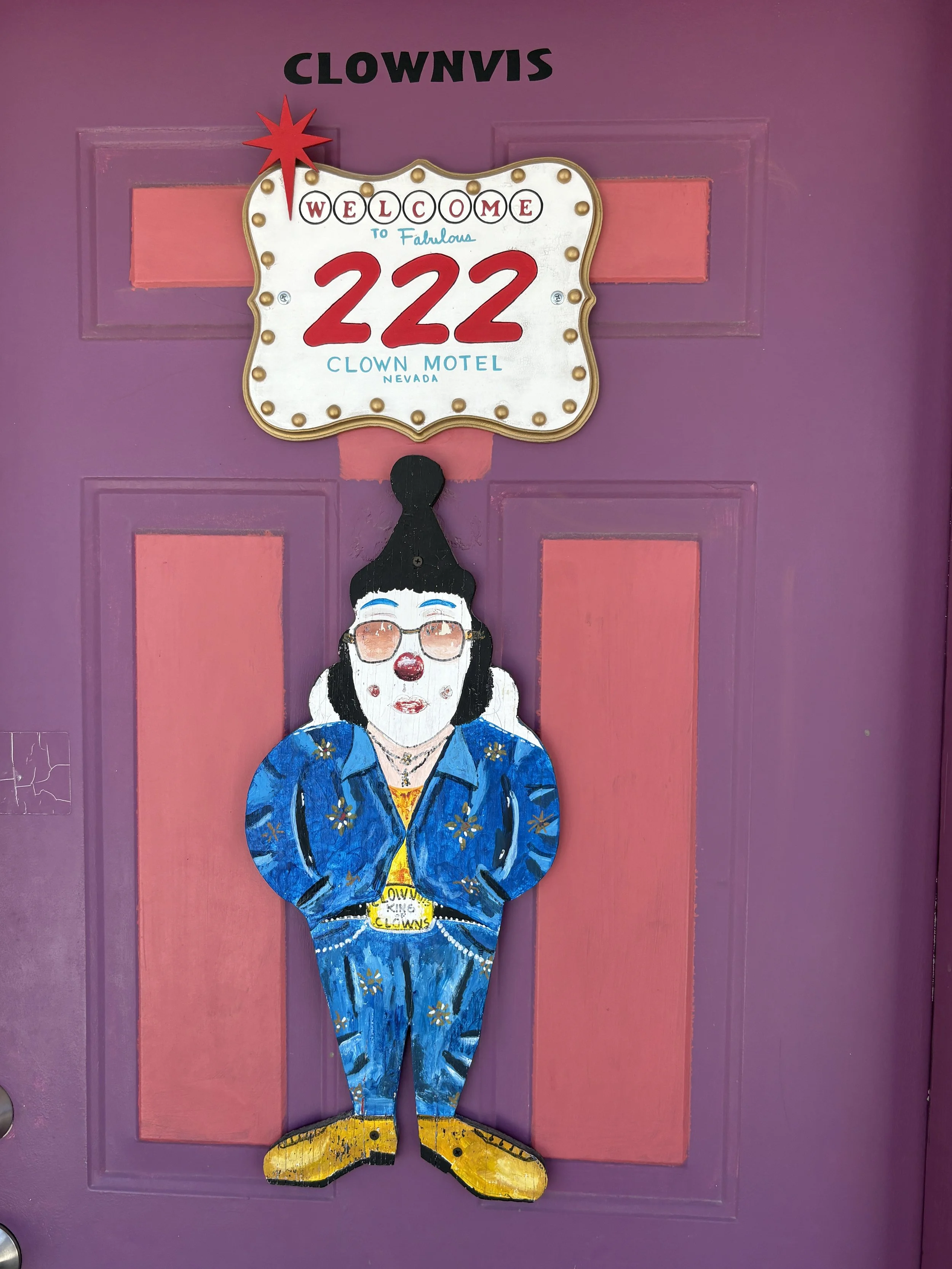
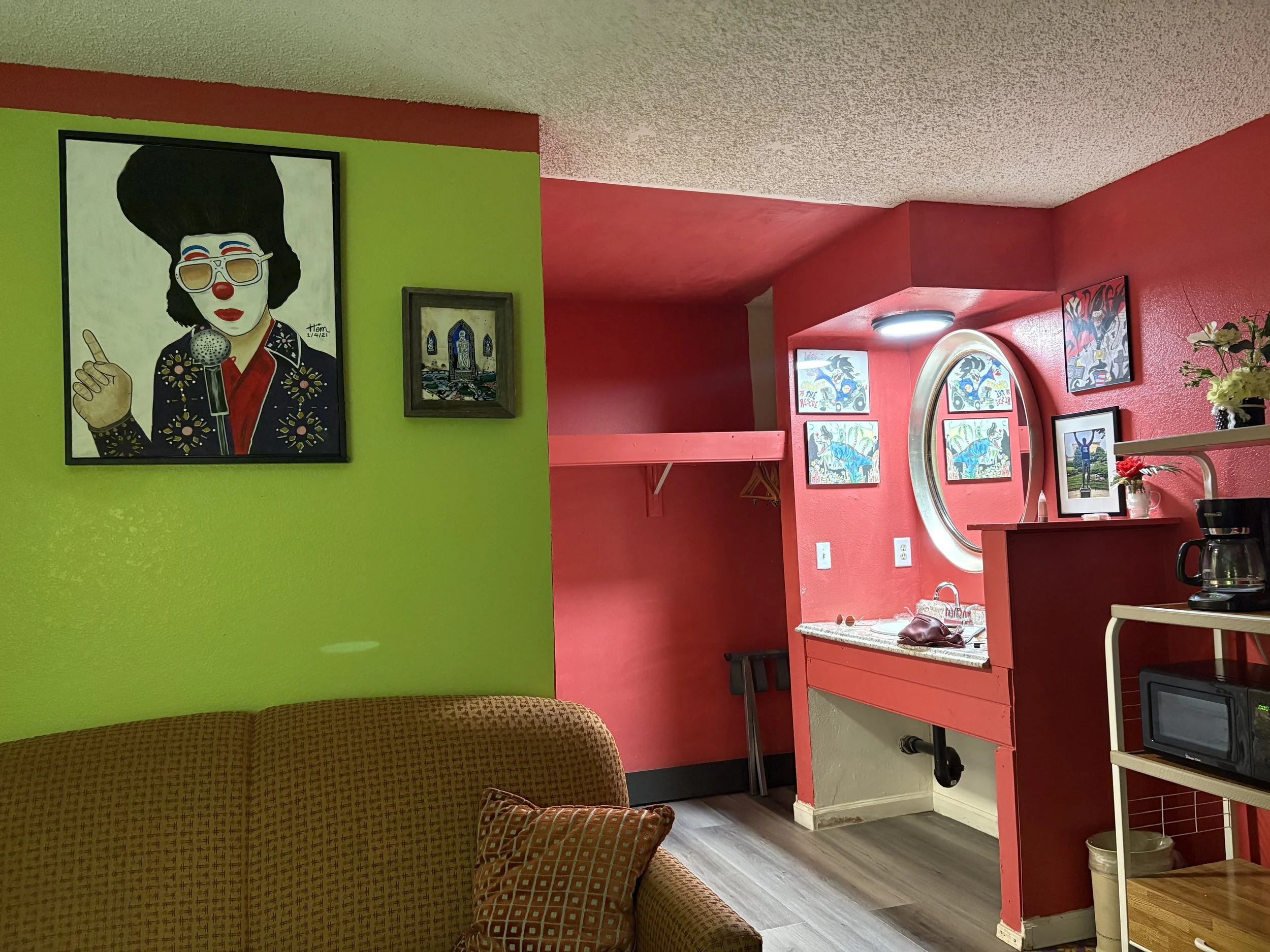
The next day I cross into clown territory, checking into a room renowned for its pictures of the clown-Elvis, Clownvis to those in the know, writer and singer of “Clown Motel”:
Well, I know where I’ll go baby when I die,
I know where I’m gonna spend my afterlife when I die,
I’m gonna haunt the Clown Motel . . .
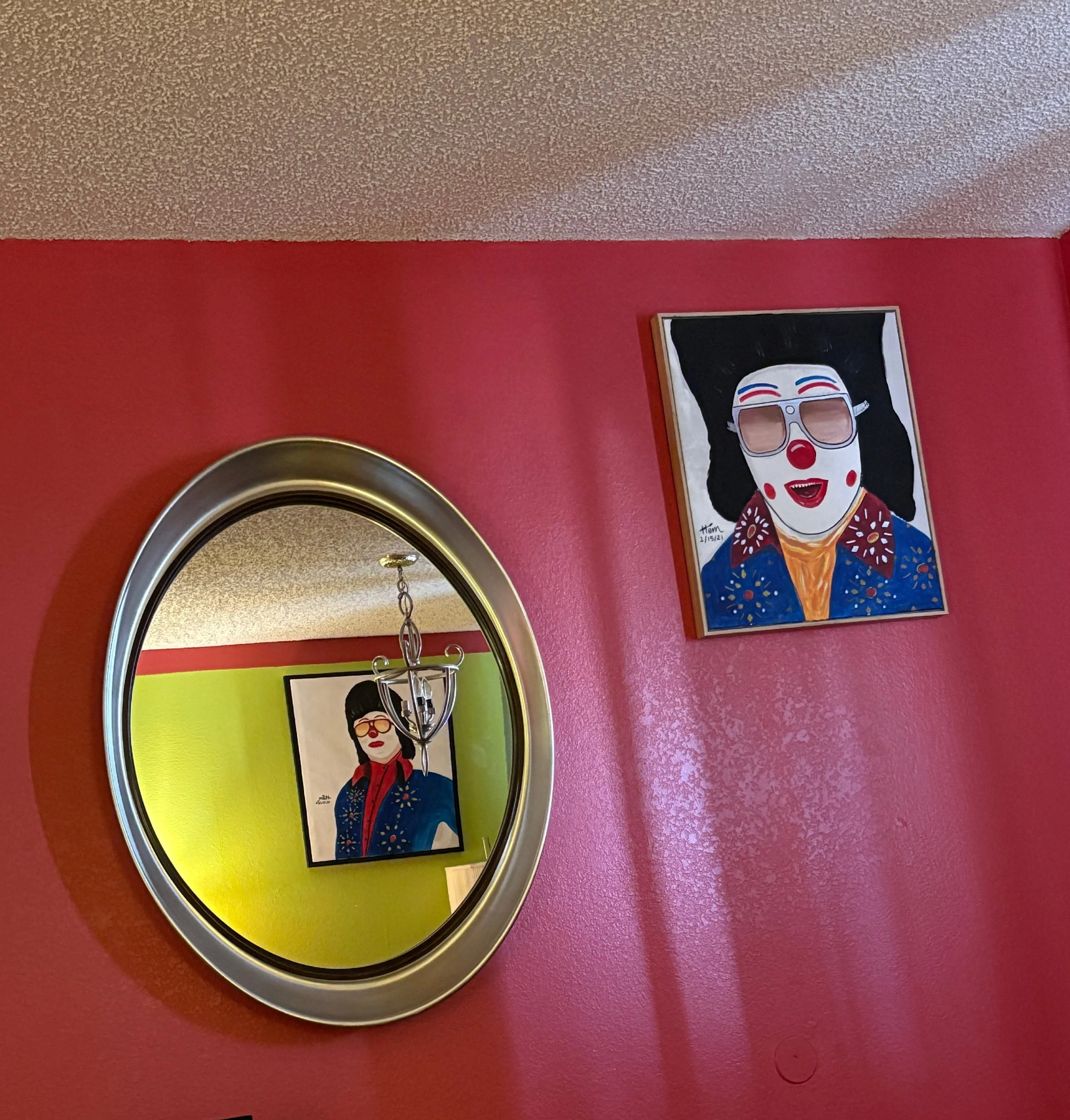
Clownvis happily lives on, but the motel (supposedly haunted, after all) cautions that the room “has also been known to attract a malevolent entity who has a tendency of waking our guests in the early hours of the morning.”
Splendid!
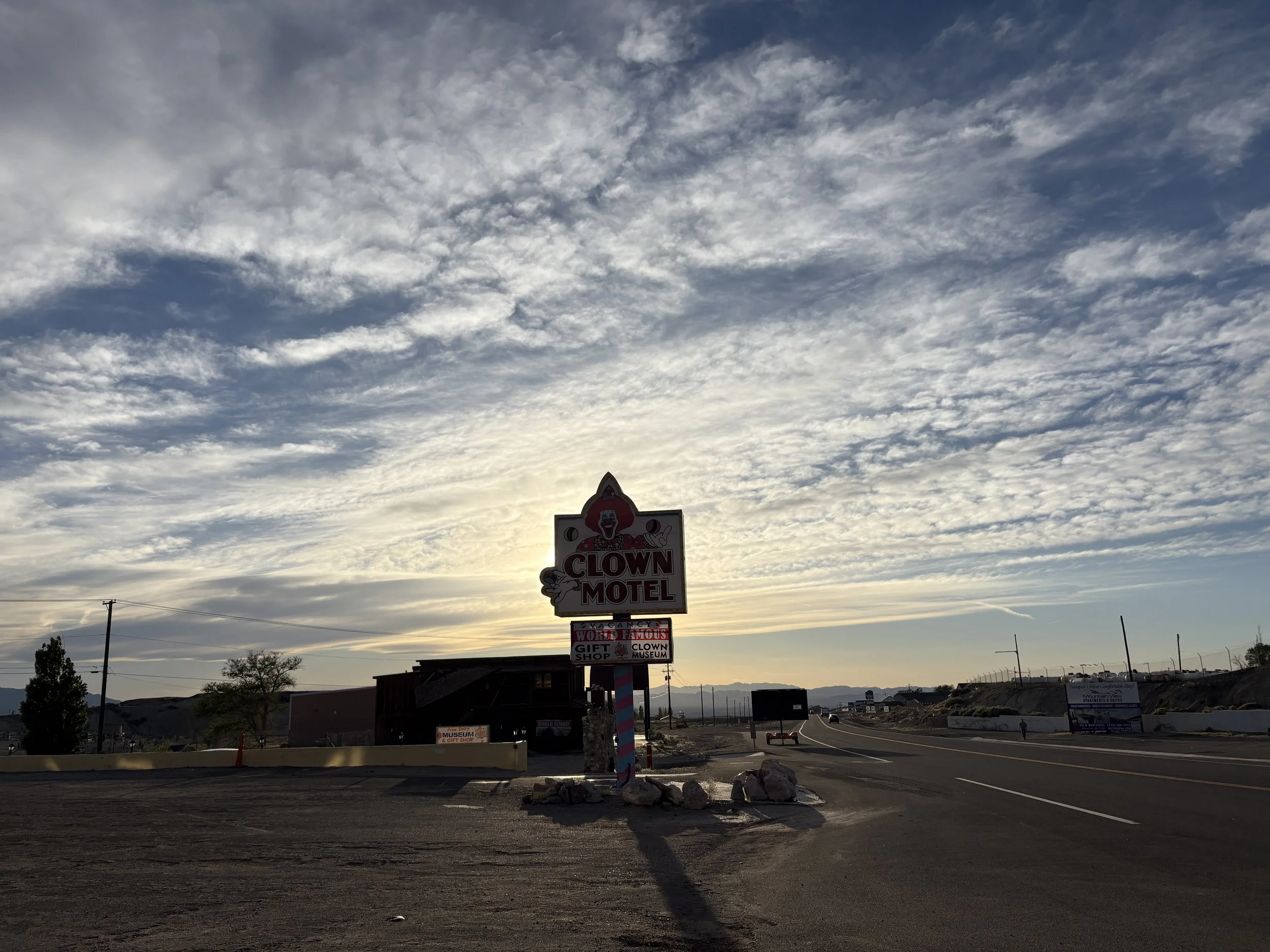
The night darkens, and so, in another sense, do the clown murals and the tall clown cutouts attached to the building. A few of us are gathered in the evocative old cemetery, the one by the motel. It’s where the father of the founders (two siblings) is buried. The motel was established as a tribute to him. His clown collection is said to be the nucleus of the current horde. When the haunting began is unclear, but, channeling the verve of the Area 51 state, the next owner appreciated that spookiness could sell, as do his successors, who are planning to expand the place and its supernatural themes.
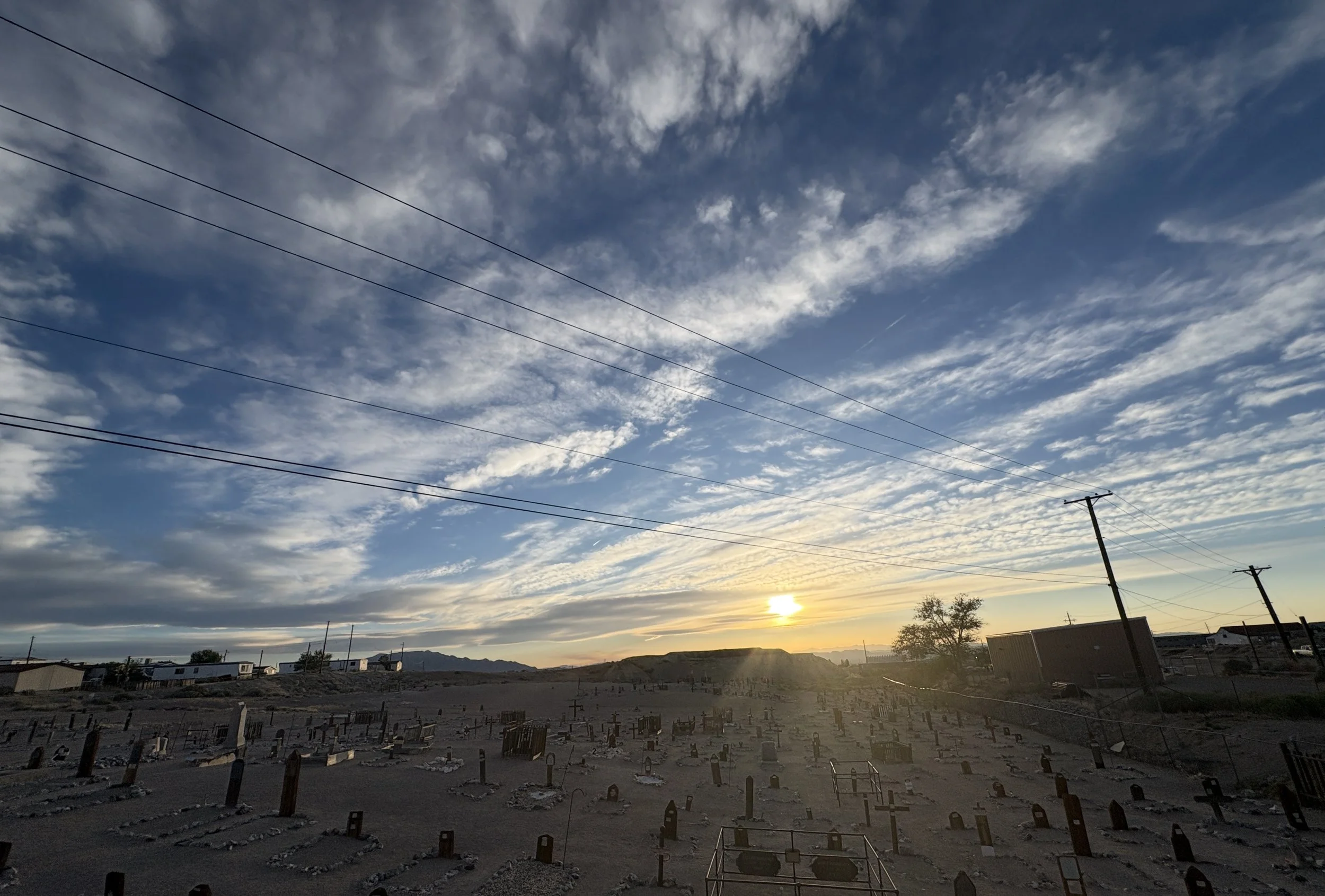
We’re on the ghost tour. Some have rented the electromagnetic field meters that reputedly help reveal the presence of various types of . . . entity. Nothing much happens, but afterward I encounter one of our group sitting by his RV, working on a computer hooked up to some device. This, he explains, gives more precise readings. Had I noticed the biggest clown, the one near the registration area? I had. Nasty. He gestures toward a black blob on the screen. Nasty.
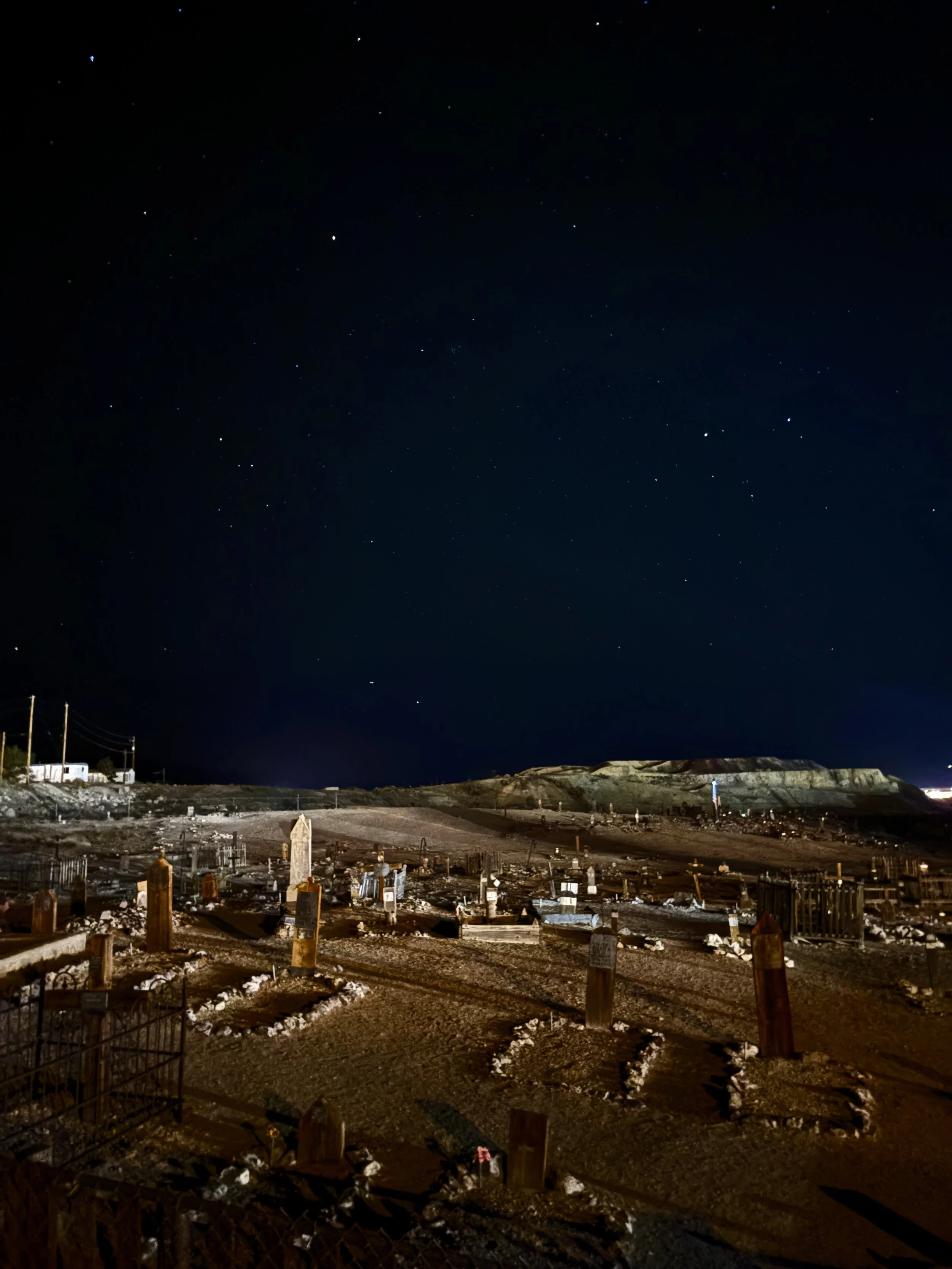
I walk along the side of the road toward the desert, searching for darker skies. A large truck approaches, giving off an eerie sound. A cargo of cattle, heading nowhere good. After a while, I return to the motel. The man from the RV is back with the dead, taking more readings. I sleep soundly, undisturbed by any entity, as the Clownvises look on.
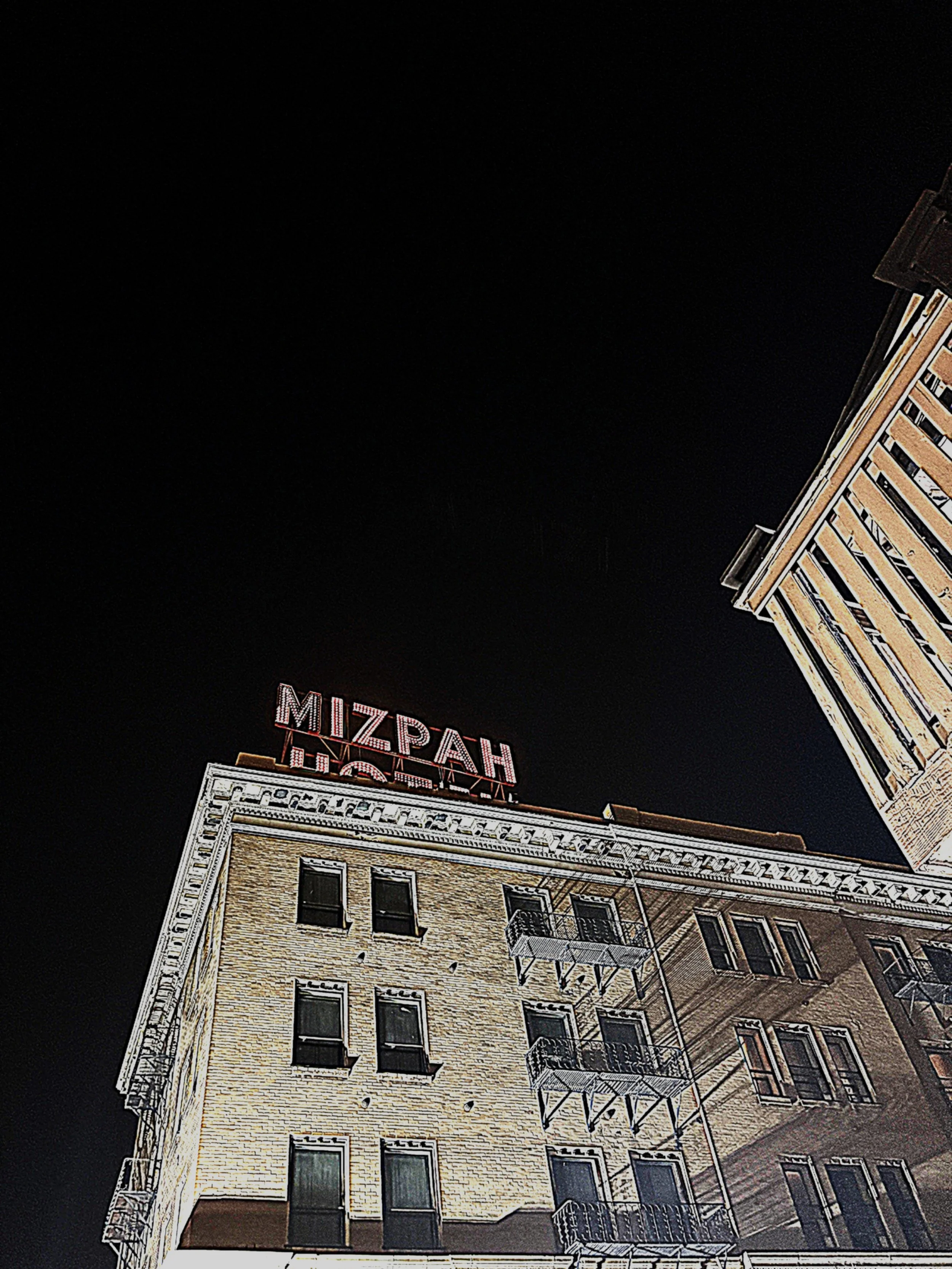
Our ghost-hunting guide had told us that the motel was not haunted. The spirits from the cemetery just liked to visit. I mentioned that my next stop was the Mizpah Hotel. Now that, she informed me, was haunted, not least by a grim presence in the basement. Less than 24 hours later, I’m in that warren, the site of some vintage unpleasantness (two miners moonlighting as bank robbers, murdered by a third), with, at points, the look of a serial killer’s lair. We’ve all been issued EMF meters, our guide has dowsing rods, and one of our party sports a large cross. He’s too young to have seen enough horror movies to have learned that this rarely does the trick. Lights are flickering on many meters, not mine.
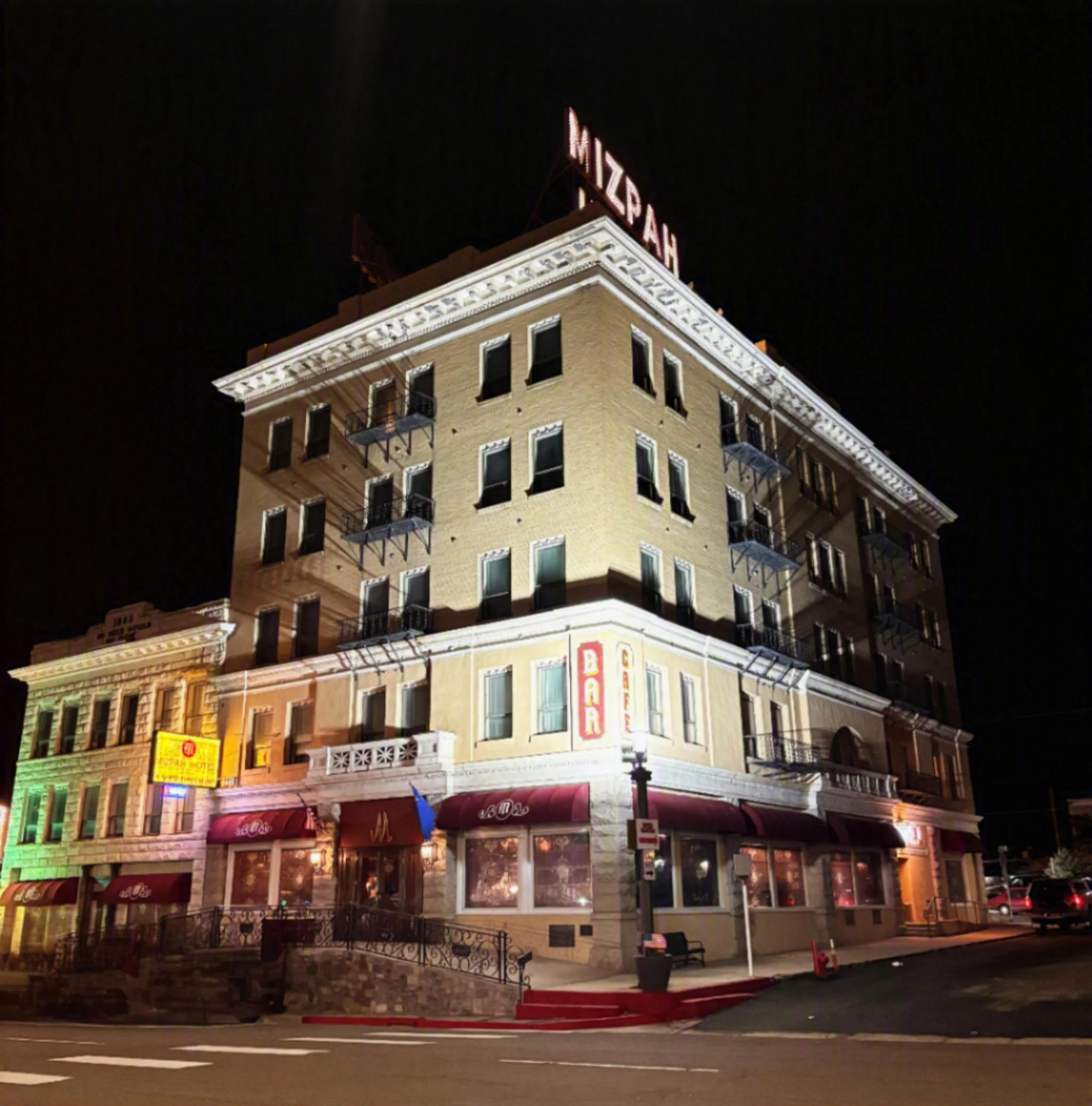
The Mizpah was built in 1907 (its name is a Hebrew word borrowed from a Bible verse and Tonopah’s most productive mine) as a luxury hotel befitting a town that had suddenly become the biggest producer of silver in the U.S. Its five stories made it, jointly with the building opposite, the tallest in Nevada. Contrary to legend, Wyatt Earp never kept bar in the Mizpah and Howard Hughes never got married there (he opted for the other motel built by the siblings who would subsequently send in the clowns). Jack Dempsey was (probably) never one of the hotel’s bouncers. But surely there was a “Lady in Red,” a prostitute (or maybe someone’s mistress) who went by the name of Rose, murdered in her boudoir on the fifth floor, in either 1914 or during the 1920s? Let’s just say there’s little evidence that she ever lived.
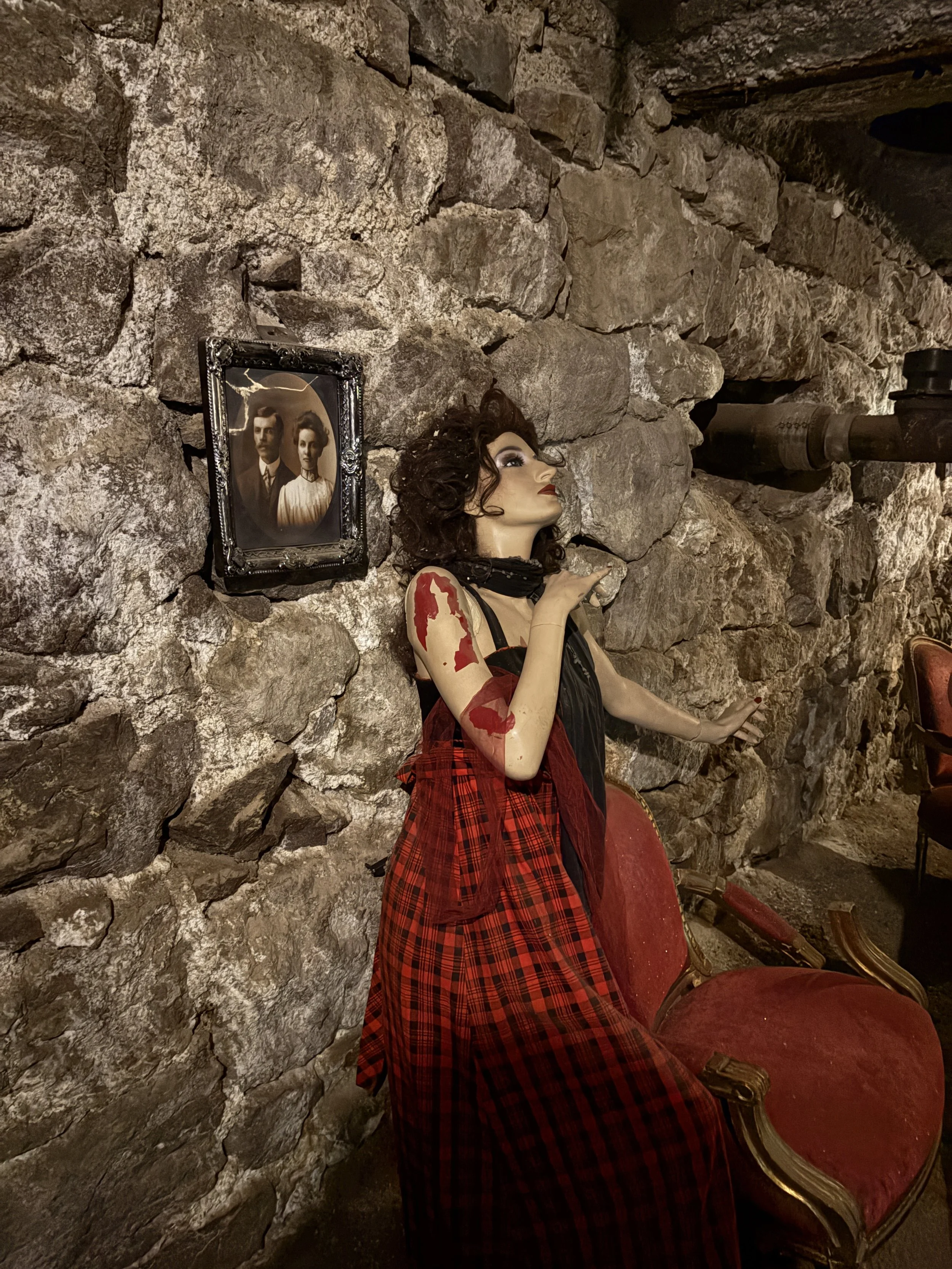
That has not, allegedly, stopped her from enjoying a busy afterlife, roaming around the hotel, leaving the occasional single pearl on pillows, riding the elevator, and, along with a team of resident specters only a few archetypes short of the Village People, generally doing her bit to persuade USA Today’s readers to vote the Mizpah America’s top haunted hotel in 2018. “This acknowledgment means so much to me,” said the Mizpah’s co-owner, half of the husband-and-wife team that acquired and renovated the then-closed hotel in 2011. There’s a lavish, very red Lady in Red Suite on the fifth floor: “You’ll be haunted by the comfort and grandeur of its appointments.” The hotel sells a Lady in Red Zinfandel. A note to the suspicious: Reports that the Mizpah is haunted long predate 2011.
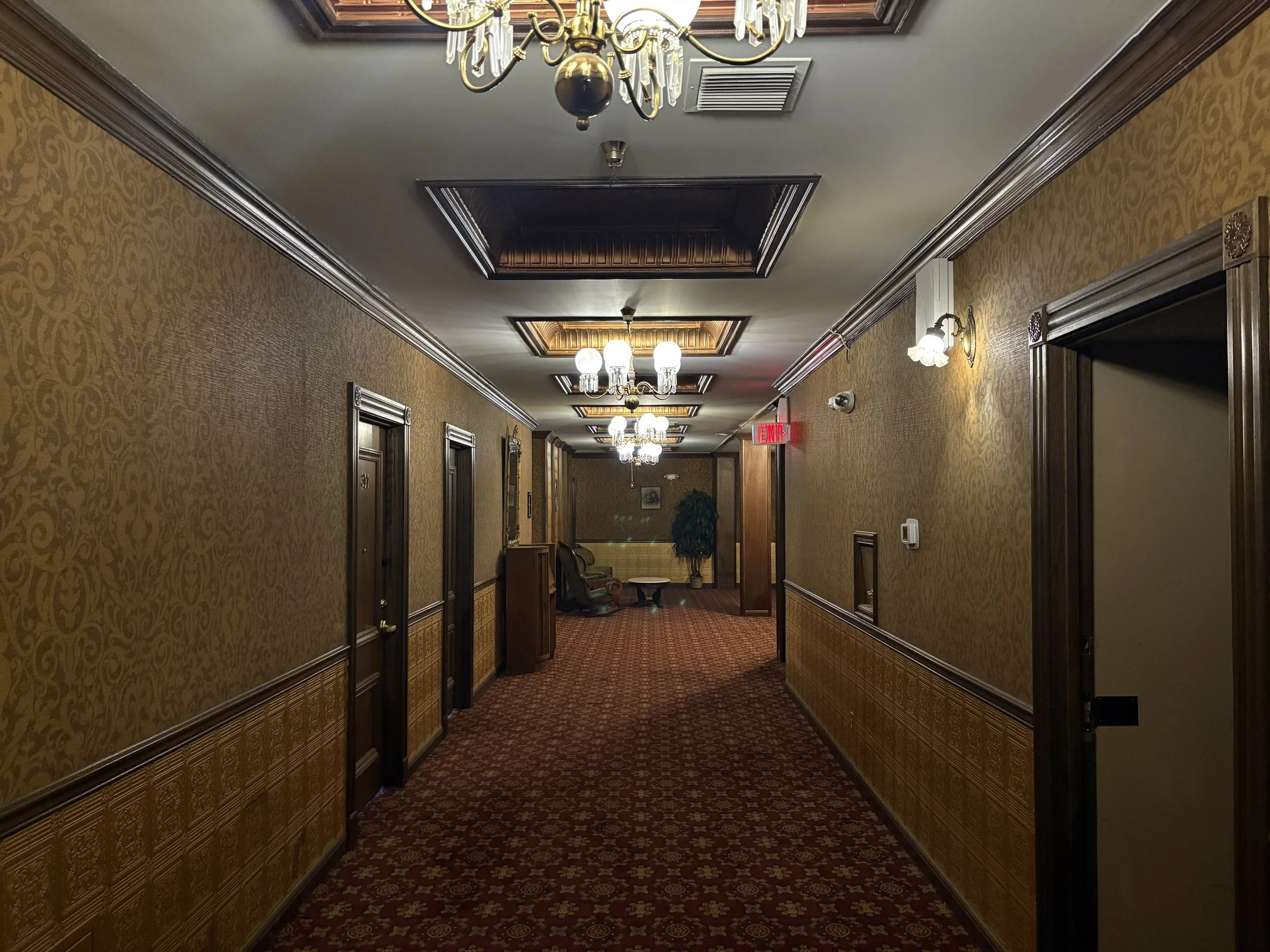
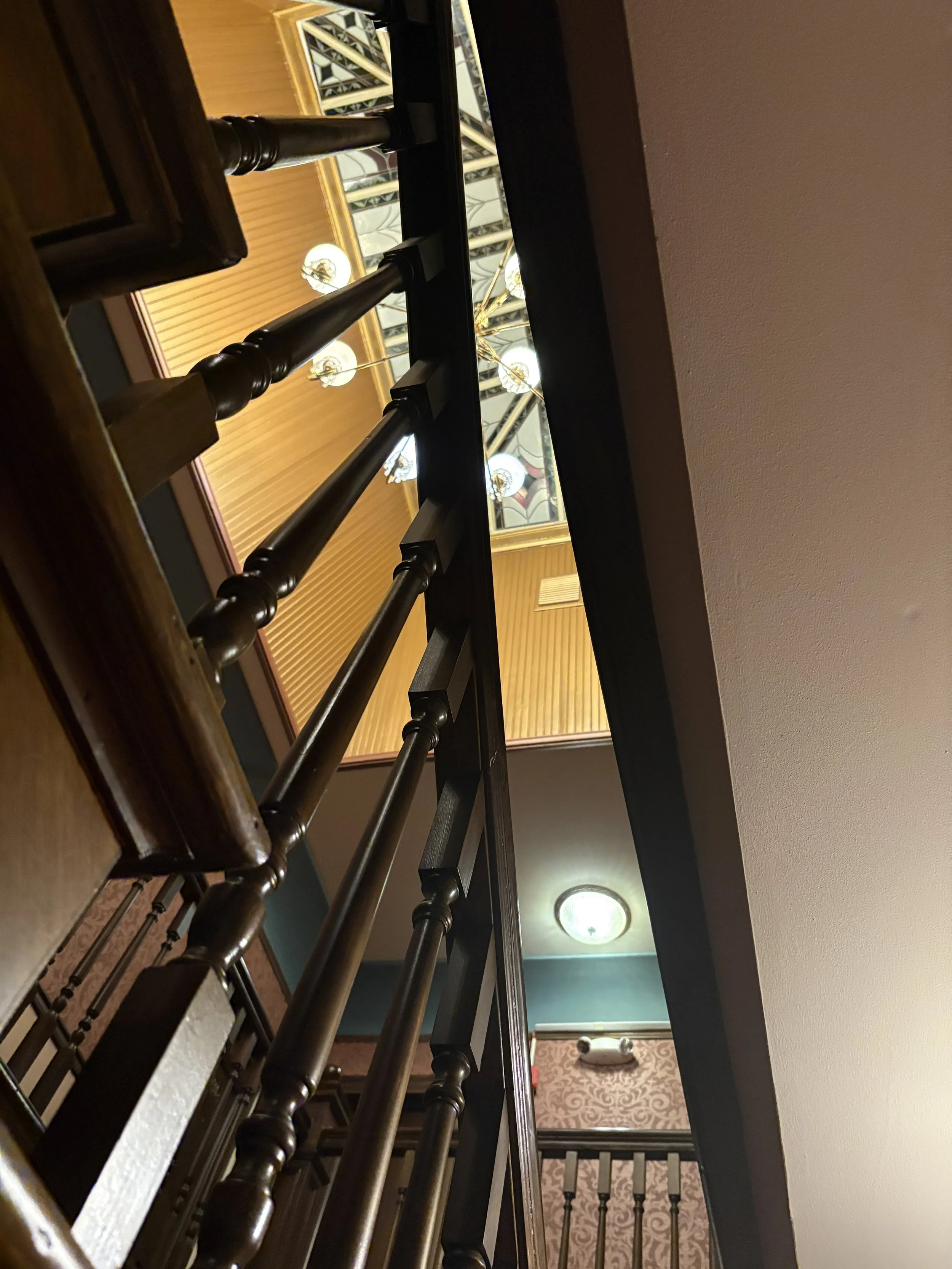
Our ghost hunt reaches the fifth floor. No show from the lady. The guide tells us the third floor — my floor — is next. To the amazement of my parents, who over the years had somewhat carelessly bought no fewer than three purportedly haunted houses, I don’t believe in ghosts, despite some hard-to-explain moments. Nevertheless, I was keen, very keen, to hear who or what was meant to be on the third floor. I asked the guide. Two young children, apparently. Footsteps, some laughter, some childish chatter, that’s all. Ah.
Souvenirs are for sale by the registration desk. Hoodies proclaim their wearers to have been “an official ghost hunter of the Mizpah Hotel” or to have been “ghosted at the Mizpah.” I went on the basic ghost tour, but others, more elaborate, are on offer. Ghosts, like UFOs, are good business, and the challenge they pose to the nature of belief is not entirely dissimilar, even if the stakes are more personal, and therefore higher. Establishing that extraterrestrial beings have come calling would be quite something (between one-third and two-thirds of Americans claim to believe that they have) but ghostly proof of an afterlife would hit, quite literally, closer to home. Oh look, my late parents are laughing at me. According to a 2021 YouGov poll, approximately 40 percent of Americans believe in ghosts. On the other hand, according to a Pew survey the same year, around twice as many believe in life beyond the grave. This ought to make it easier to accept the existence of ghosts, and yet they remain objects of unease as well as fascination, possibly benign, possibly not — an unresolved question. Most of the participants in the Clown Motel’s ghost hunt admitted they would never stay there. In movies and on TV, evil ghosts appear to have the upper, grasping hand.
I retrace my journey to Las Vegas from Tonopah (“no gas station for 163 miles”: this is not electric vehicle country). Over lunch at the Little A’Le’Inn, I notice a bottle of Lady in Red guarded by a tiny Captain Kirk.