The Descent

The New York Sun, August 4, 2006

Descent.jpg

If you're taking a horror buff, psychopath, or someone who is too sedated to care, "The Descent" is an ideal date movie. The work of Neil Marshall, a British director best known for 2002's "Dog Soldiers," "The Descent" (a UK hit last year) is a cut, slash, and a gouge above Mr. Marshall's earlier effort — a dank, dreadful, and weirdly popular werewolf movie that, tellingly, seems to have a found a regular berth on the Sci-Fi channel. A savage drama of spelunking gone awry, Mr. Marshall's new film covers some of the same underground as 2005's "The Cave," but with far more style, chills, thrills, panache, and gore. Admittedly that's no great challenge, but there are times, notably in its tense and claustrophobic first half, when "The Descent" ascends to the level of classic horror.

There's nothing particularly unusual about the story line. Six yuppie women — spunky but too headstrong to learn very much from "Deliverance," "Wrong Turn," "Pumpkinhead," or any number of other cautionary tales set in Appalachia — decide to bond with a caving trip to that peculiarly dangerous part of the world. Making matters worse, the not-so divine Juno (nicely played by Natalie Mendoza), the rather problematic leader of the group, secretly decides to change the destination to a remote cave complex that has never been explored before. Or so she thinks.

The descent itself, deep into the caves and deeper into trouble, is brilliantly and grippingly filmed. You'll feel that you're there. You'll wish you didn't. Then it gets even worse for our six luckless ladies as they discover that uncooperative geology and one really nastily broken leg are the least of their problems. They have company down there, bad company, a tribe of feral Golems, descendants of cavemen too idle to leave the cave, who have evolved in a thoroughly violent direction.

Eventually so does the movie, as it swaps suspense for splatter, slaughter, cannibal snacking, and some of the most satisfying images of human-on-monster combat since that bus ride in the remake of "Dawn of the Dead." Adding to the merriment, Mr. Marshall throws in a few film geek moments with references to "Aliens," "Pitch Black," and, less predictably, "Carrie." For my part, I couldn't help thinking of the cave-dwelling Morlocks preying on the Eloi in George Pal's version of "The Time Machine." On this occasion, however, the Eloi are smart, in great shape, and have clearly studied "Buffy the Vampire Slayer." They know how to fight back.

Dark Comedy

National Review Online, July 31, 2006

WhiteSea.jpg

Sometimes there can be nothing more telling than contrast. The boat sailing in the sunshine of a July 4th weekend was filled with anticipation, exhilaration, tourists, New Yorkers, the yellow t-shirts of the Jones family reunion, and the pointing and squinting of countless digital Kodak moments. Ahead lay Ellis Island, its museum of immigration, and, tucked away in a corner of that museum’s third floor, an exhibition (Gulag: Soviet Forced Labor Camps and the Struggle for Freedom) dedicated to a monstrosity that had its origins on some very different islands, islands scattered in the White Sea, islands that became (in Alexander Solzhenitsyn’s words) the “mother tumor” of a cancer that eventually metastasized into an archipelago of terror, slavery and murder all across the Soviets’ gargoyle “union.”

It stretched so far, in fact, that to reach some of its most dismal, desolate, and destructive outposts, the camps at Kolyma, took a boat trip too. There was no exhilaration on these ferries to an underworld darker than Hades, just death, hunger, squalor, rape and disease. The only anticipation was of worse to come.

Evfrosiniia Kersnovskaia .

Evfrosiniia Kersnovskaia .

Annotated illustrations by one former prisoner, Evfrosiniia Kersnovskaia, displayed in this exhibition showed what awaited the guests of her particular corner of the Gulag. They were glimpses of a drained, pitiless world, populated by predators and their hopeless, helpless victims, illuminated only by the surviving shreds of Kersnovskaia’s humanity and the bleak poetry of her furious prose. Here she recalls her own arrival at a “corrective labor camp”:

“First we were made to strip naked and were shoved into some roofless enclosures made out of planks. Above our heads the stars twinkled; below our bare feet lay frozen excrement. An enclosure measured 3 square feet. Each held three to four naked, shivering, and frightened men and women. Then these ‘kennel cages’ were opened one after the other and the naked people were led across a courtyard …into a special building where our documents were ‘formulated’ and our things were ‘searched.’ The goal of the search was to leave us with rags, and to take the good things, sweaters, mittens, socks, scarves, vests, and good shoes, for themselves. Ten thieves shamelessly fleeced these destitute and barely alive people. ‘Corrective’ is something that should make you better, and ‘labor’ ennobles you. But ‘camp’? A camp wasn’t a jail. So then what on earth was going on? ”

This exhibition never quite told us. What it did do was give a sense of what life, death, and the condition somewhere in between (they even had a word for that) in the Gulag was like. Sometimes this was achieved by the display of a few simple objects, such as a crude handmade spoon; a luxury in the camps (prisoners were expected to eat with their hands). Sometimes it was just the stories of the victims themselves.

Take Maria Tchebotareva, for example. The regime did. Her photograph was on display. She was sad-eyed, broad-faced, head-scarfed, an icon of the Slavic heartlands. In happier times she might have been imagined as backdrop to some Tolstoyan pastoral idyll, but she found herself trapped instead inside a real, far darker script. Her ‘crime’ was to steal three pounds of rye from the field the state had stolen from her. She had four hungry children to feed, and in the famine years of 1932-33 (oddly no mention was made of the fact that that famine, known to Ukrainians as the holodomor, was man-made, and left millions of deaths in its wake) and nothing to feed them with. She served twelve years in the Gulag for those three pounds, followed by another eleven in Arctic exile. She never saw her children again. For the Tchebotarevs there was to be no family reunion.

maria_detail.jpg

In 1949 they took Ivan Burylov too, a middle-aged beekeeper stung beyond endurance by the hypocrisy of it all. His offense? To write the word “comedy” on his supposedly secret ballot paper (there was, naturally, only one candidate). They tracked him down. Of course they did. They gave him eight years. Of course they did. We’re never told whether he survived, but his ballot endured (it was included in the display), and in its acerbic, laconic way, it was as effective a monument to the USSR as any I’ve seen.

ivan_detail.jpg

Another such monument, but this time specifically to the cruelty and futility of Soviet rule is the “Belomor” canal. Carved through the roughly 140 miles of granite that divide the White and Baltic seas, it was a typically pharaonic scheme of the early Stalin era involving well over 100,000 prisoners with primitive tools (pickaxes, shovels and makeshift wheelbarrows) and a lack of precision that would have shocked the ancient Egyptians: it proved too shallow and too narrow to ever be of much use.

As a killing machine, however, the Belomor project worked very well. In her history of the Gulag, Anne Applebaum cites an estimate of 25,000 dead (there are others, far higher), but no number was given in this exhibition, just the bland adjective “many.” That was fairly typical of an exhibition that too often shied away from specifics. That was a mistake: the statistics and the details count, if only as a warning for the future, a warning that, judging by one statistic that was included, has yet to be properly heeded. Polls in Russia show that “approval” (whatever that might mean) of Stalin’s leadership has risen from 7 percent to 53 percent over the last ten years.

That’s not to say an attempt was made to minimize the horror that was the Belomor. Far from it. Most striking was a continuous loop of old propaganda newsreel purporting to show the enthusiasm of the prisoners, drones of the anthill state, as they clawed, dug, and hacked their way to reform, rehabilitation, and socialist reconstruction through the rock, swamp, and snow; and, yes, just like in Hitler’s camps, there was an orchestra.

A few feet further down the corridor (somehow the immigration museum’s still visibly institutional character added to the force of an exhibit dedicated to a state run amok) was yet more footage: those familiar parades of the weapons of Armageddon, syncopated gymnasts and marching ranks of regimented enthusiasm, but also, more revealingly, film of a young factory worker shouting her praises of great Comrade Stalin, the edge to her voice betraying the collective hysteria that always lurks somewhere within the order, discipline and control of a totalitarian system.

Much of the rest of the exhibition was dedicated to Perm 36, a logging camp set up in the wake of World War Two, that, after the end of Khrushchev’s brief “thaw,” was used to imprison, torment and sometimes kill the Kremlin’s most determined opponents, the bravest of the brave, who persisted in their political work even after serving earlier sentences, men like the Lithuanian Balis Gayauskas. Undaunted by two years in Nazi custody, 35 years in the Gulag, and a further three years in exile, this extraordinary individual had the last laugh — he was elected to the parliament of a Lithuania that had itself won back its freedom.

That happy ending is a satisfying reminder of the USSR’s ignominious collapse, but before reaching the inevitable pictures of a tumbling Berlin Wall, the exhibit took time to pay tribute to the tiny band of dissidents, who for long, lonely years did what they could to preserve the idea of freedom in lands that had known too little of liberty. Naturally, the giants were featured, Solzhenitsyn, the great chronicler, Old Testament in his wrath and grandeur, the gentle-souled, iron-willed Sakharov and, of course, Sakharov’s wife, the spiky, indomitable Bonner, but so were others too, lesser-known, but no less courageous: Sergei Kovalev, Ivan Kovalev (father and son), Tatiana Khodorovich, Tatiana Veilikanova, Grigorii Pod’iapolskii, Anatolii Krasnov-Levitin, Valerij Senderov, Tatiana Osipova (Ivan Kovalev’s wife), Levko Lukjanenko, Leonid Borodin, and Vasyl Stus. Remember their names. Remember their sacrifices.

It would have been unreasonable to think that this relatively small exhibition could ever have illustrated the full scope of decades of Soviet tyranny, but it was disappointing that it never really managed to answer Evfrosiniia Kersnovskaia’s haunting question: “What on earth was going on?” It wasn’t just a question of the exhibition’s missing statistics. The bigger problem was the failure to put the Gulag into its wider context. The impression was somehow left that the camps were primarily a means (albeit brutal) of providing the manpower for “Stalin’s campaign to turn the Soviet Union into a modern industrial power,” something that sounds if not exactly benign then at least more reasonable than the description that this murderous system actually deserved. Certainly, forced industrialization was part of the story, but it’s an explanation that obscures the camps’ significance within a far more ambitious plan.

Why Soviet Communism, a poisonous blend of millennial fantasy, imperial dream, paranoia, and psychosis, to name but a few of its sources and symptoms, evolved in the way it did is the subject of potentially endless debate, but in understanding the way that the dictatorship managed to maintain its grip for so long, it’s necessary to realize that the Gulag was just one part of a network of terror, mass murder, and oppression intended, by eliminating all inconvenient traces of the past, to remake man into a cog in the new, perfect and all-encompassing Soviet machine. That is what was going on, something that this exhibition never truly managed to convey.

Despite this, its joint organizers, Perm’s Gulag Museum and the National Park Service, should be congratulated for doing something to bring the often overlooked horrors (and lessons) of the Gulag to wider attention over here (after closing at Ellis Island on July 4th, the exhibition travels to Boston, Atlanta, Washington, D.C., and Independence, California). The fact, controversial to some, that space was found to note that many other countries (including the United States) have, like today’s Russia, found it difficult to come to terms with brutal systems that have defaced their histories, should be seen as a statement of the obvious, not some underhand attempt to play down the extraordinary evils of the Soviet past.

But if you want to consider how much more remains to be done in this respect in Russia itself, remember the disturbing poll I mentioned earlier, and, while you are at it, reflect on the fact that according to Memorial (an organization dedicated to keeping alive the history of Soviet repression) between 2002 and 2005 30 monuments to Stalin were erected in the territories of the former USSR, There are, reportedly, plans for another 20 more.

Now ask yourself what the reaction would be if Germans began putting up new statues to Adolf Hitler.

Mann Overboard

Miami Vice

The New York Sun, July 28, 2006

Miami Vice.jpg

It would be nice to believe that someone, somewhere, someday is going to do a good job translating a much-missed, much-loved television series of my youth onto the big screen, but it's proving a long, long wait. "Bewitched" failed to enchant, "Charlie's Angels" was the work of the devil, "Lost in Space" was adrift in self-importance, "Starsky and Hutch" turned a decent drama into a bad farce, and "The Dukes of Hazzard" transformed a likable hayseed comedy into, well, words fail me.

Despite this dispiriting track record of mediocrity, junk, and exhausted imaginations, it was impossible not be intrigued by the news that Michael Mann, the executive producer of the original "Miami Vice" and the man most responsible for that show's extraordinary panache, was teaming up again with Anthony Yerkovich, the series' creator, to bring Ricardo Tubbs and Sonny Crockett to the movies.With its groundbreaking visual imagery, use of music, and sheer sense of style, "Miami Vice" was television as it had never been seen before: It transformed the notions of what the medium could achieve, and, while it was at it, triggered a fashion revolution and helped define an era's idea of itself.

As if that wasn't enough, Mr. Mann has repeatedly demonstrated that there is more than one clip to his Uzi. "Miami Vice" was followed by the underappreciated "Crime Story,"and, with his effective and unsettling "Manhunter," he gave moviegoers their first taste, so to speak, of Hannibal Lecter.While not all the films he has directed have worked (the last of "The Last of the Mohicans" couldn't come too quickly for me), "Heat," "Collateral," and (despite its preachiness) "The Insider"all confirmed that Mr. Mann's distinctive aesthetic vision and narrative flair have made him one of the most interesting presences in contemporary American cinema.

Maybe it's yet another sign of Mr. Mann's willingness to innovate that this new "Miami Vice" bears so little resemblance to the original show. On the other hand, he may simply have felt that he had no choice: A retro movie set in the 1980s would have been pointless (what more was there to say?), while too literal an updating would have run the risk of turning Sonny Crockett into an Austin Powers in linen, pastel, and stubble. But why stick with the "Miami Vice" name at all? Sadly, that, at least, must have been an easy decision: It remains, deservedly, a powerful brand, and the entertainment industry is nothing if not a greedy business. Mr. Mann's new movie is thus being marketed as the "contemporization" of an old favorite, an ugly word for a worse idea, and something that will give audiences an utterly misleading impression of what they are about to see. It may, of course, make commercial sense, but reviving the old name distracts from what Mr. Mann has done (and detracts from what he could have done) with this film and is, artistically at least, a mistake.

Even more damagingly, Mr. Mann seems to have used the brand's revival as an excuse to revert to the original series' emphasis of style over content.Within the time constraints of an under-an-hour television show, that didn't matter: Style alone could be content enough. But during the course of more than two hours of movie, the absence of a compelling story line might be enough to drive some of the film's audience to the drugs that its heroes are trying so hard to impound.To be sure, when it comes to images of startling loveliness, this movie (helped by the inspired and, that word again — groundbreaking — use of high-definition cameras), does, typically for Mr. Mann, not disappoint, even if his highly romanticized paean to Havana (actually filmed in Uruguay) will probably jar with anyone familiar with the realities of life under Castro. But images, however gorgeous, are not enough, even when punctuated by the spectacularly choreographed gunplay that has long been another Mann trademark, to sustain a full-length film. And in "Miami Vice," they don't.

As for what plot there is, Mr. Mann doesn't go into details and nor will I, but suffice to say it involves drug smuggling, the Aryan Brotherhood, undercover sleuthing, corrupt governments, international criminals, portentous dialogue, speedboats, and a doomed affair. It's also painted on a far broader canvas than the Miami 'n Medellin of the old series, a gesture apparently intended to show that crime, like so much else, is globalizing rapidly, something that should be a revelation to only the slowest among us.

But the key theme of this movie, supposedly, is what going undercover can mean to the cops who choose to do so."You can go too deep," Mr. Mann has explained,"and you have to rely on your partner to pull you back from the edge. As Tubbs says to Crockett,‘There's undercover, and then there's which way is up?"' This could be an interesting enough, if not exactly novel, topic (it featured, incidentally, in the original TV series), but Mr. Mann never gives it the attention it deserves. Compared with the subtle examination of the personalities of the principal characters in "Heat" and "Collateral," Crockett's supposedly existential angst is treated cursorily and comes across as little more than a moment or two of indecision, irritation, and sadness.

Much of the fault for this lies with Colin Farrell's leaden Crockett (an impression reinforced both by his somewhat Neanderthal appearance and a most unfortunate moustache) and his amazing lack of chemistry with his love interest, the strikingly attractive Gong Li (the Chinese actress so remarkable in "Red Sorghum" and "Raise the Red Lantern"), who herself appears forlorn and confused throughout this film. For that matter, there's not much of a bond either between Crockett and Tubbs (Jamie Foxx), that much-vaunted partner of his, who is, remember, meant to care enough about his pal to be "pulling him back from the edge," despite the fact that a more natural response to some of Crockett's behavior would be to shove him over the nearest convenient precipice.

Equally — and it's an example of the way that memories of the old show detract from the new movie — Jamie Foxx, so good as the cabbie in "Collateral," essentially reprises much of that role in a fine performance as a straight-arrow detective that will still leave the nostalgic pining for Philip Michael Thomas and his quirky, more oddball Ricardo. Fans of the TV series will have to make do instead with another "Collateral" graduate, Barry Shabaka Henley, whose impressive (if underused) Lieutenant Castillo hints at the memorably daunting Edward James Olmos of two decades ago.

But if they are to make the most of this movie, those fans would do better to leave nostalgia to re-runs and DVD collections and just try to accept Mr. Mann's movie on its own merits — as a lesser, flawed, but reasonably entertaining and occasionally intriguing police procedural by a director who has shown that he can do far, far better than this.

And next time he probably will.

Blinded by the Light

A Scanner Darkly

The New York Sun, July 7, 2006

Scanner.jpg

Philip K. Dick (1928-82), the reliably legendary, always eccentric, and occasionally brilliant science fiction writer whose "A Scanner Darkly" is the basis of Richard Linklater's dreadful new movie,is often described as a philosopher, a shaman, and a seer. But that's being kind, the man was bonkers, a nutcase, a lunatic, crazier than a street-corner shouter or attic-roosting aunt. Unfair? Maybe,but then unlike Dick I have never been fortunate enough to be "seized" by a light beam that lifted me "from the limitations of the space-time matrix"and released me "from every thrall, inner and outer."

And if that doesn't sound deranged to you, try popping the meds your doctor keeps talking about. Please. Just do it now.

But Dick's madness (no small part of which was drug-fueled) defined his genius.The best of his novels play with reality, perception, time, and identity in a fun house, madhouse, crack house jumble that can inspire, infuriate, bore, and enchant. And so it's no surprise that, after never really making the major leagues during a lifetime dominated by Asimov, Clarke, and other bards of the rocket men, Philip K. Dick has come into vogue in our own epoch of junkyard mysticism and gimcrack thought, an era where the idea of objective truth finds itself dismissed as mirage at best, deliberate deception at worst. A madman ahead of his time, Daffy Dick too was convinced that he had been "lied to." His light beam had "denied the reality, and power, and authenticity of the world, saying, ‘This cannot exist; it cannot exist'" — asylum jabber that sounds a lot like today's conventional, if idiotic, wisdom (and even more like a screenplay).

In the nearly quarter century since his death, eight movies (including this one) have been made from Dick's work, generating hundreds of millions of dollars and, it sometimes seems, a similar number of bad reviews. I'll admit to not having seen either 1995's "Screamers" (remorseless killer machines on a distant planet) or the unpromising-sounding "Confessions of A Crap Artist" (1992), but, with the glistening, rain-streaked exception of Ridley Scott's eerily prescient and remarkably influential "Blade Runner" (loosely based on Dick's "Do Androids Dream of Electric Sheep?"), films such as "Impostor," "Minority Report," and "Paycheck" have plundered the author's reputation but enriched his estate. As for "Total Recall," even the presence of Arnold Schwarzenegger, a young Sharon Stone, and the most excitingly irradiated mutants this side of "Beneath the Planet of the Apes" could not stop Paul Verhoeven's account of Dick's "We Can Remember It For You Wholesale" from degenerating into kitsch, ham, and fiasco.

Frankly, I doubt if even the lissome Ms. Stone, the mighty Arnold, and the mutated human flotsam could have done much to salvage the wreck that is "A Scanner Darkly." Talky, talky, talky, and with a plot "twist" so telegraphed that it could have been a Capitol Hill secret, this dreary stoner sci-fi police procedural sort-of-comedy cautionary tale (oh, call it what you want: I give up) has little future other than as an alternative for insomniacs too timid to deal with Ambien's regrettably feeble high.

But if "A Scanner Darkly" has a redeeming feature, it is the remarkable use that Mr. Linklater has made of "rotoscoping," something he first tried in 2001's "Waking Life" (a beautiful movie, but more or less unwatchable, life is just a dream, whatever). Put very crudely, this is a technique by which "real action" film is overlaid with animation. Basically, the animators use the live footage as the foundation (in a sense, they trace their designs on top of it) of their own work. In "A Scanner Darkly," the result is images that are both reassuringly realistic, yet disconcertingly skewed, a perfect way of conveying the drug-saturated milieu in which this movie's addled protagonists stumble about their confusing, confused business (a central theme is that of a cop, Keanu Reeves, knowingly and unknowingly spying on himself). It also allows the director to portray the shifting, bewildering "scramble suits" with which the film's undercover policemen disguise themselves, camouflage of such startling, hallucinatory loveliness that it will linger in the mind long after the rest of this wretched, interminable hundred minutes has vanished into merciful forgetfulness.

Ironically, the problem is not that Mr. Linklater has made a mess of Dick's novel, but that he has remained too true to it. The director had already shown himself to be familiar with Dick's thinking in "Waking Life" (which contains a number of references to the writer's ideas), but in this movie he reveals himself to be too much a fan to tamper with a text that, if it was to make an entertaining film, needed a great deal of tampering. It may have the narrative (of sorts) and structure (of sorts) of more traditional science fiction, but Dick primarily intended "A Scanner Darkly" as a demonstration of where narcotic frolics could lead:

... this has been a novel about some people who were punished entirely too much for what they did. … we really all were very happy for a while … but it was for such a terrible brief time, and then the punishment was beyond belief: even when we could see it, we could not believe it.

With its sense of dissolving identities (reinforced by the way the rotoscoping is used to turn the film's performers into illusions, visions, and caricatures of themselves), rambling stoner monologues, paranoia, overacting (Woody Harrelson, Robert Downey Jr., I'm talking about you two), insect visions, and insanity, this movie judders, crumbles, and ultimately tips over into being little more than a hip "Reefer Madness" hopped up with a sinister conspiracy. This is a shame, because somewhere beneath the murkily obsessive doper remorse, "A Scanner Darkly" has something important to say about the way the "war on drugs," technological advance, and the needs of the surveillance state feed upon each other.

But that too-neglected topic will, clearly, have to wait for another movie, and the long-suffering, patient, and faithful fans of Philip K. Dick will have to return once again to "Blade Runner," nearly 25 years old now, but possibly the greatest sci-fi movie of all time, and an extraordinary demonstration of how to translate this quirkiest of writers onto the big screen.

A Superhero To Cheer About

Superman Returns

The New York Sun, June 26, 2006

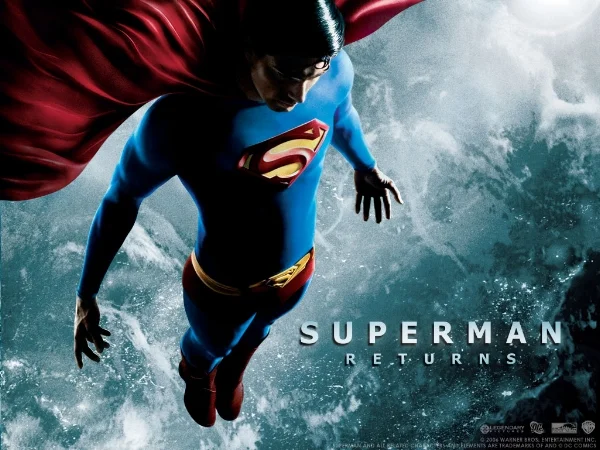
Superman Returns.jpg

To explain the ultimate source, and the lasting popularity, of Superman would take Carl Jung, "The Golden Bough," and, quite possibly, Zane Grey. What we do know is that, since the Man of Steel's initial appearance in June 1938's "Action Comics," he, like all the gods, devils, and myths of mankind's collective unconsciousness, has changed along with the times in which he finds himself imagined. With "Superman Returns," directed by Bryan Singer, he is still evolving.

If we start, as we should, at the very beginning, 1938's man from Krypton was a "champion of the oppressed," the New Deal in a red cape, tearing down slums, taking out irresponsible mine owners, and, for all I know, campaigning for higher tax rates. By the time of Max Fleischer's glorious animations of the early 1940s, at their best still the finest representations of the Superman who fell to Earth, the plot-lines looked more like conventional science fiction, with our hero fending off the machines, monsters, and cackling villains we have all come to expect. There was a clear subtext too. Memories of the 1939 World Fair's re assuring "world of tomorrow" had been displaced by wartime's Frankenstein technology, and Superman became our ally against science gone mad, bad, or otherwise abused, a role he still plays.

In the 1950s, George Reeves was a Superman for the Eisenhower years, an extraterrestrial Ward Cleaver, invincible even beyond the confines of a fortress of domesticity. His mysterious death (suicide, with added murder rumors) at the end of that decade was, somehow, a suitable way to usher in a more disenchanted era, a time when the Man of Steel ran the risk of being seen as the Man of Corn, as square as the last boy scout, Clark Kent himself.

This must explain why when Superman returned to the big screen in 1978, the director, Richard Donner, felt that this was no longer a story that could be told with a straight face. Fortunately the leaden camp, heavy irony, and witless buffoonery that weighed down both that movie and its immediate successor were thoroughly subverted by the decency, kindness, and strength conveyed by Christopher Reeve in a remarkable performance that, despite a good try by Brandon Routh in "Superman Returns," remains definitive.

Even Reeve could do little to save the slapstick-scarred "Superman III" and the motheaten "Superman IV," the latter a movie that appeared to see Superman return to his lefty roots with an attack on nuclear weapons, not just the bad ones belonging to those pesky communists. Those films have, mercifully, been written out of history. Instead, "Superman Returns" is a sequel of sorts, a "spiritual descendant," to "Superman: The Movie" (to which Mr. Singer's plot owes a great debt) and "Superman II."

But while the final decade or so of the last century saw enough twists and turns in the comic-book version of the saga to drive a continuity nerd to drool, it took the feelings of melancholy and danger that enveloped this nation in the wake of September 11, 2001, to create an audience for a sweet, straightforward, and oddly moving account of the young Clark's life in television's "Smallville." At least in its early seasons, this series played on that nostalgic American heartland ideal that has always had so important a part in the appeal of the Superman story (and was one of the few redeeming features of "Superman III"). In a way, the sense of an imperiled Arcadia conveyed by "Smallville" was as emblematic of those troubled, troubling times as the flags then on sad, proud display on homes all across the country, including, naturally, that of Jonathan and Martha Kent.

With the exception of Eva Marie Saint's touching performance as Ma Kent in "Superman Returns," Mr. Singer makes little effort to play to this aspect of the saga, but the tone of "Smallville" must have had some influence on the director's decision to take his subject matter more seriously than his predecessors. While Kevin Spacey's Luthor is partly (and regrettably) played for laughs, his typically sly performance is an immense improvement on the imbecile clowning that defined Gene Hackman's Lex. For the rest, with the disastrous exception of Parker Posey's almost unwatchable Kitty Kowalski, the comedy is, thankfully, played down.

And then there's Lois Lane. In the five years that Superman has been away searching for what's left of his home planet (not a lot), Lois has acquired a fiance, a Pulitzer for her article on, oh dear, "Why the World Doesn't Need Superman," and, hmmm, a 5-year-old son. Adding to her difficulties, she's played by Kate Bosworth, who is both too young and, despite a brunette hairdo, too blonde to be believable as spiky, dark Lois: Her inner Sandra Dee just keeps shining through. For a far more convincing Lane, try Teri Hatcher (Lois before Wisteria) in the counterfeit "Moonlighting" better known as "Lois & Clark" (1993-97), a wisp of a show for a frivolous time, where Dean Cain's Superman was notable mainly as the Man of Snark.

Needless to say, when Superman returns so does his complicated relationship with Lois: there's nothing new about that. What is different about Mr. Singer's movie is the way in which it is a spiritual descendant of the earlier movies, in more ways than one. When, in "Superman III," Clark dances with Lana Lang to the dulcet doo-wop of "Earth Angel," it's a clever joke. It's an indication of the way in which "Superman Returns" reflects today's more religious age that, in this latest chapter of the epic, the title of that old tune could be an almost literal description of who or what Mr. Singer's version of Superman is meant to be.

As Superman's real father (played by recycled footage of Marlon Brando from the first movie) explains, humans "only lack the light to show the way. ... I have sent them you ... my only son," a clear reference to You Know Who, a recurrent theme of Mr. Singer's film that is underpinned, in one instance, by a lovely sequence of Superman ascending into the heavens (the special effects in "Superman Returns" are first-rate) and looking protectively, and a little sadly, down upon our discordant planet, a gorgeous guardian angel carved not out of cathedral stone, but the filmmaker's skill and the power of our own dreams. In her disloyal Pulitzer essay, Lois wrote that mankind has no need for a savior. By the end of "Superman Returns," she has, needless to say, discovered how wrong she was.

But even if this movie sometimes seems to have the length of a sermon (it goes on a little too long), its borrowings from myth and religion are never preachy - they merely throw additional allegory into what is already a potent, much loved legend. And when, at the end of the screening, the audience began to cheer, they were not just cheering Mr. Singer's fine film, but the legend itself, made up of their memories, their nostalgia, the stories they grew up with, the well-thumbed comic books, the courage of Reeve, that heartland ideal, and so, so much more, not least the fact that, at the conclusion of this movie, Superman promises that he'll "always" be around.

And, as Clark Kent would say, that's just swell.

Bottoms Up on the Poseidon

Poseidon

The New York Sun, May 12, 2006

Poseidon.jpg

I can't imagine it's much fun being a passenger stuck on a cruise liner that has just flipped upside down, but, according to Wolfgang Petersen, the director of "Poseidon," the sense of confinement makes it even worse. "This is not something a person can run away from. Trapped within a closed environment where there is no escape, no help, and very little time, they are forced to deal with it by themselves." Trust me, Wolfgang, any audience unfortunate or unwise enough to be trapped in a cinema watching this movie will know exactly how those passengers might feel. Well, perhaps not exactly. One of the problems with this film is not that there is too little time, but that there is too much: the last journey of the Poseidon is the most excruciatingly interminable sea voyage since that embarrassing garbage barge left New York all those years ago.

Perhaps we shouldn't be surprised. In "Troy" (2004), Mr. Petersen took an ancient and much loved story, stripped it of its presiding deities, and left moviegoers with dross, disappointment, and a vague sense of sacrilege. In "Poseidon," he's done it again. In filming his riff on legendary producer Irwin Allen's ("Lost in Space," "Voyage to the Bottom of the Sea," "The Towering Inferno," you name it) ancient and much loved "The Poseidon Adventure" (1972), he's stripped the story of Mike Rogo, Linda Rogo, Fallon from "Dynasty," Manny, fat Mrs. Rosen, the Reverend Scott, Nonnie, the annoying boy, and anyone else we might remember and replaced them with a cast of characters so insipid that I found myself rooting for the ocean so busily engulfing their vessel.

To be fair, an earlier, and more literal, remake of "The Poseidon Adventure," a made-for-TV shipwreck from 2005, did no better. Memorable only for the appearance of a startlingly hangdog Steve Guttenberg (evidently still traumatized by "Police Academy 4") and the remarkable restraint of scriptwriters who, despite their obvious desperation, contented themselves with only adding terrorism, adultery, and the Department of Homeland Security to the volatile mix aboard the Poseidon, the film was a fiasco, both in its own right and when compared with the first "Poseidon," which was still seaworthy, if sunk, after more than three decades.

Taking on Allen's old rust bucket was never going to be easy, as even Allen discovered when he tried in 1979's the lesss-aid-about-it-the-better "Beyond the Poseidon Adventure." His original movie may have been schlock, but it was schlock made with a verve and madcap enthusiasm that hasn't been easy to match. It wasn't the first of the disaster movies - essential escapism in an unsettling age - that helped define American cinema in that era (that honor should be reserved for "Airport") but it was the greatest, and it is the one that resonates most today. There's even (God help us) a fan club, complete with reunions, a Web site, and in the venerable figure of the nonagenarian Ronald Neame, the film's director, its own private Roddenberry.

Of course, some of its appeal is purely nostalgic, and the passing of the years has also helped transform the film's fashion tragedies, rococo death scenes, and soap opera melodramatics into a wickedly camp treat, but there's something more to it than that. With the exception of its capsized concept, Paul Gallico's "The Poseidon Adventure," the novel on which Neame's movie was based, was a feeble, sour creation: the only thing worse than the writing was the unwieldy religious allegory that came with it. The film benefited by being a good deal cheerier, taking itself far less seriously, and confining the scripture lesson to the Reverend Scott's uncomplicatedly noble, useful, and entertaining death: a Passion, in fact, with a touch of "MacGyver" about it.

For a film set on a cruise liner, it was also an oddly egalitarian movie, something that still plays well in the country that once belonged to Frank Capra. The Poseidon, like its passengers, had known better days; its glitz was all paste. The stiffs that littered the shattered Grand Ballroom had been regular working stiffs, and so were a good number of the people clambering and scrambling up to the top of the ship's bottom to survive: the cop, the retired hardware store owner, the haberdasher, all of them showing the wear and tear of a more hardscrabble past. The ship's hierarchy proves largely useless in the crisis: it's left to Scott's team of grumbling schlubs to do the right thing. And so they do. In short, the movie is a display of Americana at its most madly, endearingly self-confident, even down to the malign, greedy presence of Linarcos: rich man, jerk, foreigner.

The arrival of Mr. Petersen at the helm of "Poseidon" signals a different approach and, so to speak, a clean deck. The old girl has been transformed into a luxury liner, with passengers to match. Even the plucky band of survivors appears to be culled on snobbish lines (I don't want to spoil what plot there is, but this is not a movie in which you want to play a waiter). At least, the wave (banished from the Gutenberg edition) is back and it's suitably spectacular, as are the repeated images of water, snaking, bubbling, and surging its way through the ship in what appears to be an almost conscious pursuit of its prey. If nothing else, Mr. Petersen (the director of "Das Boot" and "The Perfect Storm") can do H2O.

But his screenwriters can't do dialogue. The game old stagers of the original movie would have compensated for this with an extra portion of ham, but, with the exceptions of stolid Kurt Russell - former fireman, ex-mayor, protective dad of the pretty Jennifer (Emmy Rossum) - and a wonderfully anarchic Kevin Dillon - pencil moustache, drunk - most of the cast is left, like their vessel, hopelessly, helplessly adrift. The only remaining excitement involves the front of Jennifer's dress, which, for a few glorious moments, manages to evoke fond memories of the nail-biting suspense provided by Stella Stevens's plunging decolletage in the first "Poseidon." As for Jennifer herself, she's a pre-Raphaelite delight of pale beauty and dark curls, doomed, I suspect, to die of TB in countless period dramas.

After this film, however, that will seem like a merciful release.

Euro Scare?

Claire Berlinski: Menace in Europe: Why the Continent’s Crisis Is America’s, Too

National Review, May 8, 2006

Empire.jpg

There’s a bright, shining, merciful moment, right towards the end of this infuriating, odd, but occasionally perceptive polemic, when its author, Claire Berlinski, says what needs saying about the rancid and rabid anti-Americanism now disgracing Europe’s public discourse:

“[It] is a cultist system of faith, rather than a set of rational beliefs, and as such is impervious to revision upon confrontation with facts, logic, evidence, gestures of good will, public relations campaigns, or attempts on the part of the American secretary of state to be a better, more sensitive listener.”


Accurate enough, but her observation that there is nothing Americans can do to change this, “short of dying politely en masse,” suggests that Ms. Berlinski, a lively writer always happy to hype up the snark and the spark of her prose, is taking her readers not to France, or Germany, but to Planet Coulter. When, in another all-too-typical passage, Europe’s past is described as “one of nearly uninterrupted war and savagery,” it’s impossible to avoid thinking that while American anti-Europeanism is comparatively rare, given reason to flower — I note without further comment that Ms. Berlinski studied French literature at the Sorbonne — it can be just as irrational as the hatred for America stewing in the cafés of the Left Bank.

Oh, and while we’re on the topic, it may be quite true that Europe’s history is scarred by slaughter, but it’s quite false to suggest that this is something specific to that part of the world. Mass murder, butchery, invasion, and conquest are what humans do. All races. All cultures. Always have done. Always will do. Europe stands out only because of the extraordinary achievement that is the best of its civilization. It is not the corpses that surprise, but the contrasts: the juxtaposition of the charnel house and the cathedral, the victims trudging to the ovens to the sounds of an orchestra.

But this is not the sort of analysis you’ll find in Menace in Europe (lurid title, lurid book), a work dedicated to the wider, wilder, and highly marketable thesis of a possibly doomed, probably desperate, and certainly dangerous continent drifting into a gathering storm of economic failure, demographic crisis, and ethno-religious strife. Now, while Europe is undoubtedly facing (or, more accurately, failing to face) some very profound problems, it’s way too soon to be writing its obituaries. Claire Berlinski is careful to hedge her hints of apocalypse with caveats (“I do not prophesy the imminent demise of European democratic institutions, nor do I predict imminent catastrophe on European soil”), but there’s a clear sense that she, for one, is preparing for the funeral (“I don’t rule out these possibilities. . . . It is possible and reasonable to imagine a very ugly outcome”).

And, as has been the case with a number of other recent books on the Old World’s predicament (George Weigel’s The Cube and the Cathedral is a striking example), the logic of Berlinski’s thesis leads her to exaggeration. It has to, because the facts alone will not do the trick. So, for instance, it’s not enough for her to insinuate (with appropriate disclaimers) that the nastier ghosts of Europe’s past may be slouching towards rebirth, she also has to throw in the claim that “Europeans . . . sense in their lives a cultural, spiritual, and ideological void.” Good heavens (or not).

Certainly Europeans generally, and for excellent reasons, tend to be less optimistic than their counterparts across the Atlantic, but there’s no particular reason to think that (at least outside the more neurasthenic sections of the intelligentsia) they are wandering around their cities enveloped in black mists of angst, ennui, and existential despair. Quite how you measure a continent’s contentment, I do not know, but for what it’s worth, one recent (2004) Eurobarometer poll revealed that 85 percent of EU citizens were either fairly (54 percent) or very (31 percent) satisfied with their lives. Existence in a cultural, spiritual, and ideological void is not, it seems, quite as dreadful as some commentators appear to believe.

Far too often, Berlinski’s need to stick to her Chicken Little line forces her narrative in a direction that it should not take. A brutally effective demolition of French “peasant” leader José Bové (the clown who trashed a McDonald’s) dissipates into a discussion of the holy fools, cranks, fanatics, and zealots who have been bothering the continent for generations. It makes for some interesting history, but it’s irrelevant, and, if it is designed to demonstrate that susceptibility to psychopaths, charlatans, and madmen is (like war, genocide, and the rest of the rap sheet) a particularly European vice, it’s thoroughly misleading.

Similarly, the author passes over the opportunity to look at the (admittedly slim) prospects of a much-needed patriotic revival within Europe’s nations in favor of a lengthy and rather overwrought examination of the meaning of Rammstein, a popular German heavy-metal band that combines the style of Spinal Tap with the aesthetics of Albert Speer. Yes, this makes for good, alarming copy, and it’s a convenient device to bring up yet again the subject of that miserable Reich, but, in the end, Claire Berlinski’s horrified descriptions of leather, sleaze, bombast, and kitsch do little more than remind us that German rock is, like German cuisine, usually best avoided.

There are times too when she appears to have drunk too deeply of her own Kool-Aid. Suitably enough, given the doom and gloom that permeates this book, some of its strongest, and most convincing, sections relate to an area where some panic is indeed called for: Europe’s failure to integrate its growing Muslim minorities. It’s a problem that will only be made worse by additional inflows from the Islamic world, yet Berlinski’s overblown fears about the viability of an aging society mean that that mass immigration is, apparently, an “economic necessity.” (It’s anything but.) Equally, while she understands that the EU is no more than “a marriage of convenience” (a gross oversimplification, actually, but it will do), her nightmare vision of a feeble and feral continent leads her to describe this ill-starred union as “politically and economically imperative.” It is neither: It is, rather, both a symptom and a cause of Europe’s current impasse.

What makes Menace in Europe all the more frustrating is that, amidst the shouts of alarm, cries of disaster, and howls of invective, there are some very valuable insights, and, particularly in a sharp analysis of how Marseilles manages its multicultural population, some excellent reporting. In the end, however, they only compound the impression that this book is an opportunity missed.

How very European.

The Myth But Not The Pathos

The Notorious Bettie Page

The New York Sun: April 14, 2006

Gretchen Mol.jpg

Whoever said moral decadence, perversion, and cultural decline couldn't be fun? There was a time - a serious, earnest time - when the women of Hollywood's biopics were history's greats: They were queens, empresses, Marie Curie. And now? Well, let's just say England's Bess has been joined by Tennessee's Bettie. She's a queen, yes, but of the pinups, a bondage icon and retro cheesecake, and now she's the subject of Mary Harron's delightful, witty, and touching new movie, "The Notorious Bettie Page."

Bettie Page? Oh yes, you know her. You've seen her face, and maybe much more.

Half a century ago, you might have caught her picture in one of those mags that your dad used to hide from your mom. Blue eyes, black bangs, hokey scowl, sweet smile, succulent figure: She was the most photographed girl next door in the world, some said. You could gaze at her in Gaze and get an eyeful in Eyeful and many, many, other naughty places, even Playboy (January 1955, Santa's cap, nothing else).

There were movies too, three burlesque films, "Striporama," "Varietease," and "Teaserama": The dancing is bad, the comedy acts worse. And then, under the counter, plain brown envelope please, there were those specialty flicks, "Domineering Roz Strikes Again," "Captured Jungle Girl," "In Chains," "Hobbled in a Kid Leather Harness," you get the picture. If you don't, some of the most amusing, if slightly alarming, sequences in "The Notorious Bettie Page" will give you some guidance. Gently, of course. There's no need to be afraid. Trust me.

In the end, the ropes, harnesses, jungle girls, and ball gags were too much of a temptation for Estes Kefauver, an ambitious senator and fashion disaster (coonskin hats, I'm afraid) from Bettie's home state, who'd already trashed comic books in an earlier bout of national hysteria. Hearings were held in 1955. They were the usual grandstanding farce, but were enough to ensure that, not so long afterward, Bettie Page disappeared into obscurity. Her image lingered on without her, and decades later, burnished by nostalgia, and safely lodged at the intersection of camp and carnal, her whips, her smile, and her curves began to resurface. Her visage appeared in comic books (sorry, Senator), fashion shoots, archive collections, posters, T-shirts, photos, souvenirs, any number of tchotchkes (a "tigress" air freshener will cost you $2.95), and, of course, the Internet. As I said, you've seen her.

This film will only add fuel to the fire and sweat to the brow. Its director, Ms. Harron, was previously best known for the perceptive and clever "I Shot Andy Warhol" (1996), the story of Valerie Solanas, the lady who did just that. In "The Notorious Bettie Page," Ms. Harron takes on the story of another woman who was both of, and ahead of, her era. Her Bettie (beautifully played by Gretchen Mol) is a classic American heroine, intelligent, spunky, driven, and good-hearted. No virgin queen (sorry, Bess), she bares with a grin, and maintains her decency, and more remarkably, her dignity, even amid the manacles, catfights, and hog-tied poses ("just silliness," she says) of her more bizarre photographic adventures. "God gave me the talent to pose for pictures ... and it seems to make people happy." She doesn't drink, she doesn't smoke, she gives the casting couch a miss, and when she eventually returns to Jesus, she doesn't have far to go.

This is an America (shot mainly in evocative black-and-white, with bursts of lush, overripe color) that is, like Bettie, both innocent and not. The gawking shutterbugs for whom Bettie poses in session after session after session don't touch, but they do stare. How they stare. Irving and Paula Klaw (sinister name, nice people), the brother-and-sister team that produced many of her pinups and all her bondage work, are pictured as lovable entrepreneurs, hard-working, honest, and careful to avoid falling afoul of the law (no nudity, two sets of underwear in case anything, you know, shows).They are examples of good business practice at its disgraceful, amoral best. Irving (Chris Bauer) is a busy, endearing schlub in shirtsleeves, and Paula (a lovely performance by Lili Taylor, who also played Solanas for Ms. Harron) the shrewd den-of-vice mother that Bettie still remembers with affection: "She never tied any ropes too tight."

Ms. Harron shows this America to be, as indeed it was, a rough, tough place - its noir-and-neon sophistication no more than surface sheen, delusion, opportunity, and trap. Bettie was a survivor (her ordeals included abuse as a child and, later, an appalling sexual assault), but she remained a true child of the Great Depression, unable to escape the hardscrabble life, even when things were going well. Her brush with glamour was only at the edges of fame, her gimcrack stardom (if that's the word) cheap, tawdry, and ill-paid.

Ms. Harron is too smart to avoid the flaws in Bettie's 15 minutes, but her desire to package the Tennessee Tease as a prophet of tolerance and female empowerment glosses over Bettie's darker pages. In particular, we are never shown the miserable later years, the bleak truth of the legendary "disappearance" that in reality was a descent into schizophrenia and a decade in a California asylum, a fate that inevitably raises disturbing questions about her true state of mind throughout that lost pinup heyday.

The director's silence is probably just fine with Ms. Page, out and about now, an old woman so wrapped up in her myth that she almost never agrees to be photographed. "I want to be remembered," she has recently said, "as I was when I was young and in my golden times."

Golden? There wasn't even much glitter. But I'm not sure that Ms. Harron wants us to know that.

A Film Sabotaged By Itself

V for Vendetta

The New York Sun, March 16, 2006

v-for-vendetta-FEAT.jpg

With the dangerous and complex struggle against Islamic extremism stretching relentlessly, terrifyingly, and, seemingly, endlessly ahead, there's plenty of room for an intelligent movie that shows how fear, disaster, and fury could lead us all into totalitarian temptation. "V for Vendetta" is not that movie.

To be sure, as should be expected of a film produced by the maestros behind "The Matrix" and based on the ideas and imagery of a pioneering graphic novel, "V for Vendetta" is visually stunning. Even better, instead of some handsome, hapless Keanu stumbling and mumbling through his role, there's the rumpled, brilliant Stephen Rea as a sad-eyed cop and the soothing and sinister voice of Hugo Weaving. These two terrific performances are enough to take this movie a good way beyond comic-book flash or the empty look-at-that of the Wachowskis' CGI conjuring.What's more, after the exhaustingly talky tedium of the latter two Matrix movies, it's a relief, and something of a surprise, to discover that "V for Vendetta" (which is directed by James McTeigue, yet another "Matrix" alumnus) does what thrillers often promise, but rarely deliver: It thrills.

The problem is that this movie is meant to do more than that. It is, we are being told - drum roll, Oscar buzz, Natalie Portman buzz cut - a film with a big, important message, but that, I'm afraid, is where it fails. And it doesn't just fail. It collapses, crumbles, implodes, and melts down, its credibility thoroughly sabotaged by nitwit politics, numbskull preaching, and an understanding of history so feeble it would embarrass a high school student, so peculiar it would delight Oliver Stone.

To no small extent, these flaws flow from the beginnings of "V is for Vendetta" as an overwrought and overrated 1980s British comic strip by two men, Alan Moore and David Lloyd, who were upset, very upset, with that nasty Magaret Thatcher. Their confused, dystopian tale eventually developed into a full-fledged graphic novel, but it never outgrew the paranoia, alienation, and hysteria so often found among Britain's leftists during the long, bleak, Thatcher terror. As that savage tyranny ground to the end of its first decade, a gloomy Mr. Moore warned readers of the initial (1988) American edition of his work that the United Kingdom's "new riot police wear black visors, as do their horses ... The government has expressed a desire to eradicate homosexuality, even as an abstract concept, and one can only speculate as to which minority will be the next legislated against." Blimey.

Mr. Moore wrote that he was thinking of quitting his "cold" and "mean-spirited" country very soon. He "didn't like it anymore." I suppose it's meanspirited of me to mention that, nearly 20 years later, he's, well, still there.

Poor Mr. Moore may not have moved far in all that time, but his hero, the terrorist (freedom-fighter, insurgent, take your pick), V, the enigmatic and deadly prankster in a Guy Fawkes mask (we never see his face), has enjoyed something of a change in image. Played by Hugo Weaving, former elf (from "Lord of The Rings") and current Australian, with the most silkily seductive English accent since the late James Mason, V is now being touted as a libertarian of sorts, an antic and unpredictable Thomas Jefferson playfully throwing blood all over the liberty tree. That's quite some makeover, comparable, perhaps, to suggesting that the historical Guy Fawkes (in reality, a religious zealot and former Spanish mercenary) only plotted to blow up England's Parliament in the interests of liberty. But then, of course, that, absurdly, is another thing this film tries to do.

The V of Messrs. Moore and Lloyd (Mr. Moore was the writer, Mr. Lloyd the illustrator) was more malign, less marketable, and more interesting than the one-dimensional and relatively favorably drawn character shown in the film. Beneath the polished, erudite, and occasionally compassionate exterior, their V was certainly psychotic, undeniably murderous, and very possibly insane. He was also an anarchist,an obvious fanatic (even if his views were portrayed fairly sympathetically) to whom blowing up symbols of the democratic dream came naturally: Like that dream itself, they had never meant much, dictatorship or no dictatorship. Stuck within the crudely drawn and conventional liberal pieties of Mr. McTeigue's self-satisfied morality play, however,such acts of destruction make little intellectual sense. They add nothing to the debate over terrorism (and the response to terrorism) that this movie was supposedly designed to provoke, but who cares? Their real function is as gratuitous pyrotechnic spectacle, an opportunity for Western audiences to cheer on a parable of their own annihilation. If, in the wake of September 11 and so much more, I find that a little strange, I guess that's just me.

The background against which the movie's plot unfolds is just as much of a mess. Worse, by keeping the bad guys as, quite literally, comic book villains, they are left with no meaningful role to play in any discussion about the justifications for terrorist violence. The last time I checked, fighting Nazis wasn't exactly controversial. Nazis? Yup, they're back yet again. The starting point for "V for Vendetta" is the generic fascist regime (black shirts, ranting dictator, ethnic nationalism, "internment" camps, persecuted minorities, bone-headed propaganda, the usual) described in the original graphic novel. Back in the 1980s, such dark, forbidding imagery was routine grist for the anti-Thatcher mill, but even then it came across as loopy, over the top, and more than a touch retro. There was an obvious danger that by 2006, 60 years after Adolf, Benito, and the rest of the gang, it would just look absurd. Thanks to the filmmakers' insistence on pushing the story even further into the future (mainly so they could insert numerous ham-fisted references to the war on terror), it does.

It didn't have to be that way. While I hesitate to mention Orwell's bleak masterpiece in this company, his "1984" was also very much a product of its times. But when Michael Radford filmed it in, well, you can guess which year, he clearly understood that retaining the book's period flavor could actually underpin the power, and the timelessness, of Orwell's terrible warning. And he was right. Watching that movie (it's excellent, by the way, and available on DVD) will do more to make you think about the way that perpetual conflict, whether it's with militant Islam or the hordes of Eurasia, can be used to control public opinion, than anything you'll see in "V for Vendetta."

To be fair, Mr. McTeigue had much less to work with than Mr. Radford, but his screenplay (written by the Wachowskis, and denounced by the reliably ornery Mr. Moore as "rubbish") strips the original storyline of what little subtlety it once had. For that, turn to Mr. Rea's haunting portrayal of Chief Inspector Finch. Finch is a man with a sense of justice working for a regime that he knows to have none.Throughout the film, Mr. Rea dominates the screen in a way that eludes Ms. Portman, even with her shaven skull.

She's in the key role of Evey, the girl rescued by V who becomes pupil, victim, and accomplice, but her missing locks are the most dramatic aspect of a performance only marginally more persuasive than her English accent, an odd confection teetering uncertainly between Posh Spice and the queen. As an imperiled waif, Ms. Portman is believable (just look at her, the poor mite) but, as the film progresses, Evey's evolution into something more forceful simply fails to convince.

Much like this movie, in fact.