Angela’s Ashes?

National Review OnlineJune 16, 2008

LisbonNO1
LisbonNO1

If there were any last, few, pitiful remaining scraps of doubt about the depth of the disdain felt by the European Union’s leaders for the people of their wretched union, they ought, surely, to have been dispelled by the miserable saga of the Treaty of Lisbon, the sly, squalid, and cynical pact that has just been rejected by Irish voters, the only mass electorate given the chance to do so.

From its very beginnings, the Treaty of Lisbon was an exercise in deception, deliberately designed to deny the EU’s voters any more chances to slow down the construction of a European superstate that relatively few, outside an elite chasing power, privilege, and the chance to say “boo” to America, actually appear to want. Its origins can be found in the 2005 decision by some of those voters, the ones in France and Holland, to take the opportunity presented by two referenda to say non and nee respectively to the draft EU constitution that had been prepared so meticulously, so proudly, and so expensively on their behalf. Lesson learned: The voters were never again to be trusted. In future they would have to be bypassed.

Nevertheless, in a pantomime of responsiveness to that non and that nee, the constitution’s ratification process was suspended in the late spring of 2005. What ensued was officially described as a “period of reflection,” but was, for the most part, a period of frantic scheming. Its aim: To investigate how the draft constitution could be revived and, this time, be ratified. Sure enough, just about a year later German chancellor Angela Merkel announced that one of the objectives of her country’s upcoming EU presidency (the presidency currently rotates between different member states every six months) would be to “review” the constitution’s status. The message was clear: The people had spoken, and they were to be ignored. Chancellor Merkel was brought up in East Germany — and sometimes it shows.

Within two weeks of Germany assuming the presidency on January 1, 2007, Merkel declared the period of reflection to be over. She wanted, she said, a “road map” for the adoption of the constitution to be completed by the conclusion of the German presidency. And so it was, but with a clever twist. By the end of June, the EU’s governments had agreed to hold a conference to amend the union’s existing treaties in ways that mimicked much of the rejected constitution but without the bother of reintroducing the constitution itself, a bother that might run the risk of an extra referendum or two.

In essence, a number of largely cosmetic alterations were made (thus the proposed EU foreign minister was now re-dubbed a “High Representative”), and the new document generally avoided repeating those provisions of the old draft constitution already enshrined within EU law (why remind voters of what they had already given up?). Most of the changes were meaningless, flimflam designed to minimize the risk that ratification might be subject to the whims of a popular vote. Meanwhile, the “substance” of the rejected constitution had, boasted Merkel, been “preserved.” Indeed it had. The constitution was dead, long live the “Reform Treaty.” Six months and a few concessions later, the treaty was signed in Lisbon at a ceremony notable mainly for the absence of British prime minister Gordon Brown. He signed the paperwork a discreet few hours later.

For a while it looked as if Merkel’s coup would proceed without too much democratic interruption. This time around the French and Dutch governments were able to avoid consulting the electorates they supposedly represented. Holland’s Council of State, its government’s highest advisory body, helpfully decided that a referendum was not legally required. The Reform Treaty did not, apparently, contain sufficient “constitutional” elements, a ruling that undoubtedly pleased a large majority of Holland’s establishment politicians on both left and right: Off the hook! The lower house of parliament approved the Treaty of Lisbon earlier this month. The senate was expected to follow suit later in the year. In France, President Sarkozy made it quite clear that, whatever French voters might want (opinion polls suggested that a majority favored a referendum), he had no intention of consulting them. Last November he warned that a referendum “would bring Europe into danger. There [would] be no treaty if we had a referendum in France.” There was no referendum. Both national assembly and senate approved the treaty in February.

As for Britain, that perennial member of the EU’s awkward squad, departing Prime Minister Tony Blair was unable to resist giving one more kick to the country he had already done so much to trash. He announced that there would be no referendum, and so did his successor, Gordon Brown. Sure, a referendum had been promised in Labour’s 2005 manifesto, but only in the event of a revived constitution. The new treaty didn’t count. The argument was, typically for both men, absurd, dishonest, and insulting, something later highlighted by two parliamentary committees, not that it made any real difference.

In October 2007, the (cross-party) European Scrutiny Committee concluded that the Reform Treaty was “substantially equivalent” to the original constitution, a statement of the obvious – but one, under the circumstances, well worth making. Additionally, the committee had a few tart observations about the way that Merkel’s team had handled the crucial June negotiations. It highlighted their secrecy and timing: “texts [were] produced at the last moment before pressing for an agreement.” Meanwhile the compressed timetable then being arranged for the discussions in Portugal “could not have been better designed to marginalize” national parliaments. In January 2008, the Labour-dominated foreign-affairs committee concluded “that there is no material difference between the provisions on foreign affairs in the Constitutional Treaty, which the government made subject to approval in a referendum, and those in the Lisbon Treaty, on which a referendum is being denied.” Not to worry, soothed Britain’s glib young foreign minister, the Reform Treaty would “giv[e] Britain a bigger voice in Europe and enshrin[e] children’s rights for the first time.”

Ireland’s leading politicians behaved better. Under Irish law, significant changes to EU treaties require an amendment to the Irish constitution and all amendments to the Irish constitution have to be approved by referendum. No serious attempts were made to argue that the changes encompassed within the Treaty of Lisbon were too trivial to warrant a referendum. The “substance” of the rejected EU constitution had, admitted Prime Minister Bertie Ahern, survived. He added later that it was “a bit upsetting . . . to see so many countries running away from giving their people an opportunity [to vote]. . . . If you believe in something . . . why not let your people have a say in it?” That’s easy to answer. Those who now direct the EU project believe in it too much to accept placing the union’s future in the hands of its voters.

Mind you, when Ahern made those comments, he was probably confident that his electorate would approve the treaty. Despite a bout of recalcitrance a few years back (Irish voters had rejected an earlier EU treaty in 2001 before being bullied into changing their minds the following year), his countrymen were, and are, reasonably enthusiastic supporters of the EU. The EU has been good for – and to – Ireland, and the Irish know it. But gratitude is not a blank check and that, increasingly, is what the electorate came to believe that it was being asked to sign. In many respects, such as its notorious passerelle clauses (it’s a long story), that’s what the treaty is, but growing suspicions that the whole thing was nothing more than an elaborate con were also sharpened (sometimes unfairly) by the complexity of the treaty’s language.

Ironically, the treaty’s supporters had once regarded that complexity as an asset. As one of them, former Irish Prime Minister Garret FitzGerald, put it in June 2007:

The most striking change [between the failed EU constitution and the Reform Treaty] is perhaps that in order to enable some governments to reassure their electorates that the changes will have no constitutional implications, the idea of a new and simpler treaty containing all the provisions governing the Union has now been dropped in favor of a huge series of individual amendments to two existing treaties. Virtual incomprehensibility has . . . replaced simplicity as the key approach to EU reform.

At a meeting in, tactlessly, London the following month, another former premier, Italy’s Giuliano Amato reiterated the advantages of incomprehensibility: “If it is unreadable, it is not constitutional, that was the sort of perception. Where they got this perception from is a mystery to me. . . .  But, there is some truth [in it]. . . . the U.K. prime minister can go to the Commons and say “Look, you see, it’s absolutely unreadable, it’s the typical Brussels treaty, nothing new, no need for a referendum.” Amato may have been speaking fairly light-heartedly, but he was also quite right. Legislators everywhere are accustomed to approving laws they don’t understand. The man in the street is not. The opaque language of Merkel’s deceptively crafted treaty was a brilliant device to help those politicians looking to dodge a referendum, but a disaster for those who had no choice but to win one.

But last Thursday’s Irish “no” was a rejection of more than elaborately misleading drafting. As the EU’s bureaucracy has extended its reach deeper and deeper into territory once reserved to the nation state, it is bound to provoke opposition, even among many of those who broadly support European integration. Much of that opposition is reasonable, but much of it is not, and who is to blame for that? The EU’s political class has made a mockery of truth for so long that we should not be surprised that some Irish “no” voters preferred to believe (as, reportedly, some did) that the Treaty of Lisbon would pave the way for a pan-European draft.

The “no” coalition was wide, messy, crazy, sane, pragmatic, romantic, all-embracing, and self-contradictory, sometimes well-informed, sometimes not, sometimes paranoid, sometimes prescient, sometimes socialist, sometimes free market, sometimes high tax, sometimes low tax, sometimes honest, sometimes not, sometimes more than a little alarming (Sinn Fein was the only official party of any size to lend their support) and sometimes more than a little inspiring. Marvelously, miraculously, they won, and they won well, 53.4 percent to 46.6 percent (on a respectable turnout of 53.1 percent). If you think that sounds like democracy, you’d be right. And if you think that sounds like a nation, you’d be right too.

But if you think that it’s too soon to declare victory, you’d also be right. Early indications are that the ratification process will continue. As Jose Barroso, the EU’s chief bureaucrat, announced within minutes of the Irish result, “the treaty is not dead.”

And that tells you much of what you need to know about the EU.

The Man Who Would Be Khan

Mongol

The New York Sun, June 6, 2008

On vacation some years ago in a post-communist Mongolia now free to venerate its most famous son, I asked one of the locals if he thought Genghis Khan, the founder and posthumously declared emperor of what became the largest contiguous empire in history, had been, well, just a touch brutal. "Oh, yes," came the reply, "but he was provoked."

That's pretty much the spirit in which the Russian director Sergei Bodrov has made "Mongol," a lavish, highly praised (it was nominated for a Best Foreign Language Film Oscar this year) movie that opens in the city today and depicts the rise of Genghis as a well-deserved triumph over adversity. To be fair, this is also the way this tale is told in "The Secret History of the Mongols," a 13th-century Mongolian text that, despite its misty mix of myth, history, and propaganda, is probably the most accurate account of the khan's early years.

It's from there that Mr. Bodrov has taken the core of his story about the young man, known as Temudjin, who will be khan. The film begins in his childhood, and as childhoods go, it's rough, a blend of the bleaker elements of "Oliver Twist," "Harry Potter," and the princes in the tower, transported to Central Asia and reimagined by the creators of "A Man Called Horse." The 9-year-old Temudjin (Odnyam Odsuren) witnesses the murder of his father, is robbed of his right to succeed to the chieftaincy of his clan, and, finally, is forced to escape into the wilderness. As the years pass, ordeals pile on. Even Temudjin's much-delayed honeymoon is transformed into a nightmare when marauding members of an enemy tribe kidnap his gorgeous, free-spirited bride, Börte (Khulan Chuluun).

That ought to be quite enough misery for anyone, but Mr. Bodrov, a true Slav, adds more. In sequences that owe nothing to "The Secret History of the Mongols" and everything to the need to provide a vaguely respectable rationalization for one of Genghis's later massacres, Temudjin is handed over to the rulers of the neighboring Tangut kingdom. They treat him very nastily indeed. At this point, astute cinemagoers will know that the Tanguts are toast. And so they turned out to be, although in "Mongol" this barely merits a footnote. The Tanguts were, in fact, annihilated. Their once-advanced civilization was reduced to desolation, archeological fragments, and something less than a memory. Their only crime was to have been in the way.

Not that that appears to worry Mr. Bodrov much. Once best-known for the lyrical, haunting "Prisoner of the Mountains," an adaptation of a Tolstoy novella updated to reflect today's Chechen conflict, the director has abandoned his earlier, subtle take on the cost of war in favor of something cruder. His last film, "Nomad," was a cack-handed Kazakh "Braveheart," a laughably acted, lamentably written slab of nationalist kitsch redeemed only by its deft use of a landscape so lovely, so strange, and so huge that John Ford should have been there to film it.

That same terrain, or somewhere very much like it, adds an equally hallucinatory grandeur to "Mongol." What's more, like "Nomad," the new film shows clear traces of "Eurasianism," a distinctively Russian, distinctly shaky interpretation of history sometimes deployed to explain why Western-style democracy could never work in Russia. Whatever the similarities between the two movies, however, "Mongol" is a significantly better film. This time around, the screenplay is refreshingly adequate (despite sporadic slips into portentousness, narrative muddle, and shamanistic hocus-pocus).

The acting is much more than that. Casting a Japanese actor to play the 20-something Temudjin may irritate some purists, but at least Tadanobu Asano is considerably more "authentic" than his most notorious predecessor, John Wayne, who played the role in "The Conqueror," Howard Hughes's bizarre, irradiated (it's a long story), and very approximate take on the same tale. Mr. Asano is also far more convincing: His compelling, carefully calibrated performance should quiet most doubts. His Temudjin is watchful, stoic, and self-contained, his terrifying, patient stillness that of the predator waiting his turn, even under the most horrific duress.

Mr. Asano is beautifully counterbalanced by the Chinese actor Honglei Sun (most of the rest of the cast here is, tactfully, Mongolian) as the ebullient Jamukha, Temudjin's rescuer, blood brother, ally, and, ultimately, adversary. Mr. Sun delivers an unexpectedly touching performance as a man driven by custom, power politics, and fate into a savage conflict that he would have given almost anything to avoid.

This sense of destiny galloping onward and ominously at an ever-increasing pace lends the film much of its force, which is only amplified by our knowledge of where the saga will lead. Those first skirmishes on the vast grasslands, wild lightning horseback clashes conducted at a speed that would shame the Comanche, are precursors of a razzia that will, eventually, rage across two continents with a brutality that is breathtaking even by the demanding standards of the 13th century. But as those quick clashes evolve into brilliantly filmed, dizzyingly choreographed massed battles, it's impossible not to wonder if the spectacle is not a dazzling, distracting camouflage deliberately designed by Mr. Bodrov to mask the horrors he purports to show — horrors that foreshadow the hecatombs to come.

"Mongol" concludes with Temudjin imposing a bloody unity on his perpetually feuding nation — an objective, justification, and excuse typical of strongmen throughout the ages that have, in Mr. Bodrov, clearly found both a willing listener and a talented apologist. The director is now proposing to turn his attention to Temudjin/Genghis's subsequent wars of conquest. If "Mongol," the first of a planned trilogy, is anything to go by, the remaining two films will be wonderful to watch and troubling to ponder: Atrocities are still atrocities, however much time has passed.

With Her People

Rebecca Schull: On Naked Soil - Imagining Anna Akhmatova

National Review Online, May 23, 2008

When, in 2005, Vladimir Putin labeled the collapse of the Soviet Union “the greatest geopolitical catastrophe of the last century,” he was only confirming the fact that Russia’s understanding of its Communist past is once more in flux. History is again being rewritten, distorted, and manipulated — this time in the interest of creating a national narrative in which all Russians can, supposedly, take pride. The crimes of the fallen dictatorship are being shrouded in comforting patriotic myth, or, increasingly, just denied.

In the West, by contrast, there are signs that Joseph Stalin, the most monstrous of all the Soviet despots, may finally be penetrating public consciousness as an embodiment of an evil that has rarely, if ever, been equaled. Within this context, it’s interesting to note that New Yorkers could have seen not one, but two, evocations of Stalinism on stage this April. The remarkable Rupert Goold/Patrick Stewart Macbeth-as-Stalin attracted more attention, and deservedly so. Nevertheless it would be wrong to overlook a quietly effective production at the Theater for the New City where the focus rested mainly on just one of the “wonderful Georgian’s” victims. On Naked Soil: Imagining Anna Akhmatova is a new play by Rebecca Schull (yes, Fay from Wings,but also the author of an earlier drama about the Gulag memoirist Eugenia Ginzburg) revolving around Anna Akhmatova, the poetess who was among the most eloquent of all the witnesses to the atrocities of the regime that tormented, stifled, but never quite destroyed her:

In the fearful years of the . . . terror I spent seventeen months in prison queues in Leningrad. One day somebody “identified” me. Beside me, in the queue, there was a woman with blue lips. She had, of course, never heard of me; but she suddenly came out of that trance so common to us all and whispered in my ear (everybody spoke in whispers there): “Can you describe this?” And I said: “Yes I can.” And then something like the shadow of a smile crossed what had once been her face.

And describe it she did, in lines of hideous beauty and terrible sadness:

In those years only the dead smiled,

Glad to be at rest: And Leningrad city swayed like

A needless appendix to its prisons.

It was then that the railway-yards

Were asylums of the mad;

Short were the locomotives’

Farewell songs.

Stars of death stood

Above us,

and innocent Russia

Writhed under bloodstained boots, and

Under the tires of Black Marias.

On Naked Soil shuttles back and forth between two eras, the late 1930s and the early 1960s, but it is the former, deep in those “fearful years,” that define it. The play opened with Akhmatova (Ms. Schull) alone in her room in Leningrad. The décor hinted at what had been lost: the once elegant furniture had known better days, a nude by Modigliani still teased, but behind broken glass. An ancient wind-up gramophone conjured up memories of St. Petersburg’s long-silenced bohemia. What we saw was a wreck of a room, a wreck of a life, a wreck of a nation. That Ms. Schull is some three decades older than the Akhmatova of 1938 didn’t really matter: It only emphasized the exhaustion of a woman old before her time and the immense distance between the weary, crumbling figure on stage and the siren she once was.

In 1914, Akhmatova had been a leading figure in the chaotic, fabulous, and wildly innovative avant-garde that was the perverse and paradoxical glory of late imperial Russia. Tall and striking, with a love life to match, she was a scandal, a sensation, and a star. Then war came, and revolution. Her verse darkened, and so did her life. Somehow she hung on through the early years of Soviet rule, almost, but not quite, a “former person,” reduced to near-poverty, writing, writing, writing, brilliant, unacceptable, her poems sometimes too dangerous to be committed to paper for long, dependent for their survival on the memories of a few devoted friends.

And in the room of the banished poet

Fear and the Muse take turns at watch,

And the night comes

When there will be no sunrise.

In one of the play’s most compelling scenes, the audience watched what could never be witnessed, the spectacle of Akhmatova repeating an old anecdote (for the benefit of hidden microphones) to her friend, the loyal Lydia Chukovskaya (Sue Cremin), while Chukovskaya frantically memorized lines of poetry written on a manuscript that would soon have to be burned.

For the most part, Schull’s portrayal (as playwright and actress) of Akhmatova is, understandably enough, admiring. While her Akhmatova is no saint (Schull successfully conveyed a sense of the neediness, neurosis, and self-absorption that were essential aspects of Akhmatova’s personality), it’s difficult not to suspect that she chose to smooth over some of her heroine’s rougher edges. Thus the play has relatively little space for the most enduring of Akhmatova’s affairs, the decade and a half she spent with the art critic Nikolai Punin.

That’s a mistake. A clear grasp of the trajectory of this painful, complicated, and essentially polygamous liaison is crucial to understanding how Akhmatova actually spent most of the 1920s and 1930s, but is likely to have eluded any playgoers not already familiar with the story. The pair finally split up in 1938, not long probably, before the opening scenes of On Naked Soil, although, as too often in this play, the chronology is frustratingly vague. Punin was arrested, for the third time, in 1949. He died in the camps four years later. His Gulag mugshot was just one of many images projected onto the set to flesh out the play’s dialogue, but it’s one that lingers in memory, a lined, sunken face, furious, finished.

No less discreetly, the full nature of Akhmatova’s difficult relationship with her son, Lev, is largely glossed over in favor of the more conventional saga of a determined, grieving mother doing what she could to help her imperiled offspring. In 1938, he had just been re-arrested. It was for Lev that Akhmatova had been standing in those prison queues for those 17 appalling months, desperate for a word, a glimpse, a chance to deliver a parcel of supplies, anything:

Son in irons and husband clay.

Pray. Pray.

But the horror was undoubtedly made worse for Akhmatova by guilt. She knew that Lev had neither forgiven her for sending him away to live with his grandmother for most of his boyhood, nor for what the circumstances of her private life had done to him. This element in his agony, and hers, is underplayed in On Naked Soil. As a result, Lev is reduced to little more than a proxy, an Ivan Denisovitch rather than a character in his own right, an irony that the real-life Lev would have recognized but would have been unlikely to appreciate. That said, his ordeal, even if reduced to something more generic than it deserves, is one of the worst of the nightmares that force their way so savagely into this play and its faded, solitary room. This was underpinned by the way the set design incorporated elements of a prison wall. It was there for use in just one scene but its presence onstage throughout the whole performance served as a pointed illustration of the fact that in the Soviet Union it wasn’t necessary to be in jail to be imprisoned.

After Stalin died, the jailers eased up a touch. Akhmatova was even allowed to travel abroad. Those parts of On Naked Soil set in 1965, about a year before Akhmatova’s death, show her in conversation with Nadezhda Mandelstam (Lenore Loveman), the widow of her old friend, Osip, another poet who perished at the hands of the regime. As in the sections set in 1938, Schull uses the dialogue between two women to recount Akhmatova’s story. These passages, like most of this play, come freighted with memory, and have a certain wistful resonance, but they lacked the intensity of the scenes from 1938. In those, Akhmatova’s interlocutor, Lydia Chukovskaya, a gifted writer who became the poetess’s Boswell, was nervous, tense, and visibly aware that she was herself in danger. Her own husband had been arrested earlier that year and, unknown to her, had already been shot.

Reviewing the play in theNew York Times, Caryn James worried that it became “a virtual recitation of events in [Ahkmatova’s] life, and extraordinary though those events were, simply recalling them isn’t enough to make a drama.” There’s something to that, but not much. The simple retelling of events like these ought to be enough to hold the attention of any audience. Besides, there was very little that was simple about this retelling, not least the fact that many of the words used were Akhmatova’s own, either delivered (often beautifully, if with few traces of Akhmatova’s distinctive incantatory style) as poetry, or embedded into the dialogue, jewels waiting to catch the light.

Buttressed by strong performances from its three actresses, On Naked Soil worked well enough as drama, but it has to be seen for what it is, a chamber piece, not an epic — a reflection, the tiniest piece of a hecatomb. If the play was occasionally overly didactic (with its slide projections and moments of densely packed biographical detail, it had a hint of the college lecture about it), that’s a trivial offense: this is a tale that needs to be kept alive as a memorial — and a warning. Quite what Akhmatova herself would have made of this play, however, I don’t know. One of the subtleties of Schull’s script is the way it makes clear that Akhmatova wanted to be remembered for her lines, not for a life she never truly considered to be her own:

I, like a river,

Have been turned aside by this harsh age.

I am a substitute. My life has flowed Into another channel

And I do not recognize my shores.

She began, and probably would have preferred to remain, as a poetess of the personal, if one captivated also by legend, landscape, and the past. But history had other plans. Akhmatova never fled the country that had abandoned her. Instead she took it upon herself to become a symbol, an inspiration, and a reproach, a reminder of the Russia that might have been, a chronicler of the Russia that was:

I was with my people in those hours,

There where, unhappily, my people were.

There’s a sense of nationhood in those words that Vladimir Putin could never reproduce or, for that matter, even understand.

A Cabinet of Soviet Curiosities

Paul R. Gregory: Lenin's Brain 

The New York Sun, May 21, 2008

Moscow, February 1991 © Andrew Stuttaford

Moscow, February 1991 © Andrew Stuttaford

Sometimes the smallest of things can illuminate the largest. A fossil tells the story of massive planetary change, a line or two of poetry does more to explain trench warfare than a dozen history books, and the miniatures of Nicholas Hilliard bring Gloriana's long vanished England back to iridescent, dangerous life. In writing "Lenin's Brain" (Hoover Institution Press, 163 pages, $15), Houston University professor Paul R. Gregory has mined the Hoover Institution's extraordinary collection of Soviet archival material to come up with 14 brief, deftly chosen tales that brilliantly illuminate the cruelties, the absurdities, and the failures of the USSR's malignant, broken-backed utopia, with a precision and a concision that have rarely been equaled.

Professor Gregory's book is as grim as it is fascinating; the nearest it comes to offering any sort of relief is with its account of the fate of its eponymous red-gray matter. The Soviet leader's brain was not the source of much laughter in the course of Lenin's lifetime, but the absurd, darkly funny story of its subsequent fate is a farce that would have delighted Mikhail Bulgakov and must surely, one day, tempt Tom Stoppard.

The saga begins with the removal of the brain in the immediate aftermath of its owner's death, to be poked and prodded, examined and venerated. From there it went on a long, strange trip from skull to jar to slide, ending up divided into 30,953 carefully selected slices. (I am unclear whether this total includes the portion that was dispatched to Berlin's Kaiser Wilhelm Institute.) A German brain specialist was put in charge of the project for a while, but he proved unacceptably foreign and irritatingly independent. In the end, however, Stalin's Politburo got the result it wanted from a team of more biddable experts, "proof" that Lenin was smarter than just about anybody else — a mixture of pseudoscience and elitism that was all too typical of the Bolshevik project. As the episode reminds us, the Soviet leadership believed that the masses were inherently unreliable: Without an "enlightened elite to manage [them], there would never be a peasant-worker paradise. By this logic, the creators of this dictatorship must themselves be head and shoulders above the rest."

The rest of "Lenin's Brain" shows the society these geniuses created. It was a civilization where mass murder was commonplace ("the Leningrad troika sentenced 658 defendants to death in a single day"), where history (such as the truth behind the massacre of Polish officers at Katyn) was almost infinitely malleable, and where, in 1944, 180,014 Crimean Tatars were exiled from their ancestral homeland "without incident," a comment from the secret police chief that, in just two words, shows how brutal and brutalized this paradise had become.

And so it goes on. Mr. Gregory introduces his readers to the notion of "former people" (byvshie liudi), individuals whose background, behavior, or associations (such as who they were related to) meant that "they were no longer [to] be regarded as human beings." We read how debate was suppressed (even at the Party's highest levels), and are given details of a paranoia that ran so deep that the notion of "anti-Soviet agronomists" could be taken seriously. In the end, ironically, the result was that the Kremlin's bosses no longer had access to the information they needed to run their empire efficiently: The chapter describing how the decision was taken to invade Afghanistan is a devastating portrait of a secretive and fumbling gerontocracy seduced by conspiracy theory and ancient ideological assumptions into a disastrous international adventure.

But of all Professor Gregory's stories, the most haunting is that of Vladimir Moroz. After the arrest of his parents and older brother in 1937, Vladimir and his younger sibling were transferred to (separate) secret police-run orphanages. There he made the mistake, records show, of expressing "dissatisfaction with the arrests" of his family. He was then arrested himself, tortured, and sent to a corrective-labor camp. He died there six months later.

He was 17 years old.

Round Two?

Edward Lucas: The New Cold War

National Review, May 5, 2008

Putin
Putin

It’s not just the fact that Edward Lucas is a quietly proud, quietly amused holder of Lithuania’s Order of Gediminas (Fifth Class) that distinguishes him from many other non-native (he’s English) commentators on Eastern Europe; it’s also the depth of his interest in, and sympathy for, this long-contested stretch of territory’s cultures and peoples, an interest and a sympathy that resonate throughout this fine, timely, and thought-provoking new book.

It’s an interest he has pursued at first hand. Lucas (whom — full disclosure — I’ve known for more than 20 years) spent time in Poland as a student, and has been covering the region as a journalist since the late 1980s in a career that has included stints in Berlin, Vienna, Prague, Tallinn, Vilnius, and Moscow. He is now the Central and East European correspondent for The Economist. It’s his sympathy for the nations once trapped behind the Iron Curtain, and his grasp of their struggles — past, present, and, quite possibly, future — that now lead him to warn of the danger that a revived Russia might represent not only to their independence but also, for that matter, to the West.

To be sure, The New Cold War is, as its title reveals, a polemic. Obviously sensitive to accusations of hyperbole, Lucas takes care to stress that today’s threat is subtler than in the days of a divided continent and Mutually Assured Destruction. Nevertheless he’s out to alarm. He describes a Russia now run by, and for, its security services, a power once again on the prowl beyond its borders. Domestically it has, he shows, reverted to a form of authoritarianism, albeit one that, Lucas readily concedes, allows far more leeway than in the grim, gray, grinding Soviet past: “Never in Russian history have so many Russians lived so well and so freely.”

This is not an unfamiliar tale (news coverage of Putin’s rule has been more critical than Lucas sometimes appears to think), but here it’s recounted with fluency, authority, and an eye for detail that, even in this book’s lighter moments (of which there are a respectable number; he is a dryly amusing writer), betray its author’s long experience of the ramshackle, turbulent, and bewildering space that is all that remains of the utopia that never was:

I went to visit a new [Georgian] finance minister . . . who was being energetically promoted by the ever-optimistic American embassy. His office was bright, modern, and computerized. We had an enjoyable chat about e-government and zero-based budgeting. . . . As I left, I used an old journalist’s trick and asked to use the restroom, saying that I would find my way out. Not only was the toilet worse than a midden, but my detour to some of the other offices produced a much more convincing picture: a warren of ill-lit and dingy offices, each filled with rickety wooden furniture. Dumpy little men in ill-fitting brown suits were engaged in chain-smoking conversation with thickset men in leather jackets. Not a computer was in sight.

Clearly Lucas retains an unromantic, often skeptical view of the states that stumbled, lurched, and strode into the murky post-Soviet dawn. He’s often their cheerleader, but he’ll heckle too. Equally, his view of Russia is more balanced than his book’s title might suggest. After witnessing the chaos, violent criminality, and, for many, penury of the Yeltsin era, he can appreciate the attraction of the (partially) restored order and increasing prosperity associated with Putin, if not their political consequences. It’s telling that mounting suspicions (in Lucas’s view, “the weight of evidence so far supports the grimmest interpretation”) that the security services were behind the “terrorist” apartment bombings that helped pave the way for Putin’s election in 2000 have done little to dent his popularity: Russians have been prepared to pay dearly for the hope that the trains might someday run on time.

This is yet another reminder that the benign “universal” values (liberty, democracy, and so on) so cherished by Lucas are far from being universal priorities. Freedom may be important to Russians but it has demonstrably mattered less than the restoration of stability, and, probably, the desire that their country be, once again, a force to be reckoned with. But if nationalism can function as a valuable social glue, it can also gum things up. Adopting an increasingly rancid notion of the national interest may play well at home, but it has proved to be better theater than policy, and it’s leading Russia in a direction that is not just destructive, but self-destructive.

Bullying small neighbors is one thing (it’s an example of derzhavnichestvo, something that great powers just tend to do — and get away with), but Putin’s diplomacy has often appeared to put petulance before realpolitik. Aiding the Iranian theocracy may be an enjoyable way to taunt the West, but it makes little strategic sense for a country with mounting Islamist problems of its own. As for Putin’s embrace of China, Lucas approvingly quotes a Russian observer who despairingly, and reasonably, depicts such a partnership (presumably designed to act as a counterweight to those wicked Americans) as “an alliance between [Russian] rabbit and [Chinese] boa constrictor.”

Similarly, there is clear evidence, repeated by Lucas, that increasing meddling (to use a mild term) by the Kremlin has held back economic development. Times have been good but they could have been better. Investment has been deterred, delayed, or distorted. The high price Russia now receives for its oil and gas has been a godsend, but the resulting bonanza has both encouraged and financed the damage that an ever more assertive state is inflicting upon a still fledgling free market. Despite this, the prospects of rich pickings from Russia’s petro-economy not only have, as Lucas demonstrates in some of the most unsettling sections of his book, dampened Western criticism of Putin’s rule, but also look likely to set in motion a process that will leave Europe unhealthily dependent on Russian energy resources. To Lucas, “the growing [Western] business lobby tied to Russia represents a powerful fifth column of a kind unseen during the last Cold War. Once it was Communist trade unions that undermined the West at the Kremlin’s behest. Now it is pro-Kremlin bankers and politicians who betray their countries for 30 silver rubles.”

That’s a tirade too far, but it inevitably brings to mind Lenin’s best, if apocryphal, jibe: the one about rope, revolutionaries, capitalists, and selling. It’s a comparison that would gain added resonance were Lucas able to prove his contention that there is, once again, an ideological element to Moscow’s rivalry with the West. I’m not convinced that he is. To be sure, some of Putin’s more intellectually enterprising acolytes have managed to cobble together a doctrine of sorts, a haphazard jumble of grandiloquent, nostalgic nonsense that goes by the name of “sovereign democracy,” but nobody appears to take it terribly seriously. Nor should they. Russia has some traditions of government that are, mercifully, all its own, but these days they are, mercifully, no longer for export. There is no ideology behind Russia’s current maneuverings abroad, merely an old-fashioned pursuit of power, influence, and wealth — legitimate aims for any nation, great or small, flawed in this case by a profound misunderstanding of where its people’s best interests really lie.

But if the Kremlin is to play these games, so must we. Lucas concludes his book with some recommendations as to how to shove back. Some are sensible (focus on energy security), some naive (would Russia really care, or even notice, if it were suspended from the Council of Europe’s parliamentary assembly?), and some unnecessarily antagonistic (Georgia in NATO?). The first stage in any effective response, however, is a realistic understanding of what Russia is up to. This bracing, dismaying book doesn’t tell the full story (in particular, there’s not enough discussion of the extent to which Russia’s ambitions are both hobbled and inspired by its weakness), but it’s an excellent place to start.

Making the Modern Iron Man

The New York Sun, April 25, 2008

iron man crimson dynamo

With its dusty Humvees, violent Afghan battlefields, and worries about the munitions business, the upcoming "Iron Man" is a film set firmly in 2008. That'll do, I suppose, but what was wrong with 1963? If there's any tale that deserves the chance to return to the sheen, swank, and soul of its Rat Pack, space-age, pay-any-price-bear-any-burden origins, it's Iron Man's. Conceived by comic maestro Stan Lee and launched by Marvel Comics in the final year of the Kennedy administration, "Iron Man" was Bond-in-a-can, a doughty cold warrior manufactured in the jungles of a Vietnam that still could be won. Fearless, noble, and smart, he was a mighty, mechanized embodiment of the belief that there were no limits to what the combination of American spirit and know-how could achieve.

But that sentiment, however admirable, has since found somewhat mixed consequences abroad.

You won't find any trace of such reservations in "Tales of Suspense," no. 39. That's the issue in which Marvel's readers were first introduced to Tony Stark, the man who became Iron. He's a millionaire industrialist and scientific genius, a member of the military-industrial complex so patriotic that even President Eisenhower would have approved, an inventor and supplier of the high-tech armaments needed to defend America from the communist menace: Within a few frames of the book, Stark is in South Vietnam testing some miniature mortars.

They work ("the reds never knew what hit them!"), but the mission collapses into chaos when Stark steps into a booby trap. He regains consciousness to find himself desperately wounded (fragments of shrapnel are edging ever nearer his heart) and a captive of "red guerilla tyrant" Wong-Chu. Drafted by this "grinning, smirking, red terrorist" to design armaments for communism, Stark secretly builds an armored suit instead. Crucially, it includes a gizmo to fire up his faltering ticker. Lethally, it includes weapons to fire on the enemy. Stark dons the armor. Iron Man is born. Wong-Chu dies.

Once back in America, Iron Man does what superheroes once did: rough up a series of monsters, creatures, mutants, and villains with a wild, grand, uncomplicated élan. And it's striking that there are more Marxists than Martians in their midst. This was a time when Americans knew who the real bad guys were:

"A telegram for you, Mr. Stark...from behind the Iron Curtain!"

"From Commieland? Sounds like trouble, Pepper!"

Spy rings are dismantled, and the gap-toothed, near-Neanderthal Red Barbarian ("A top red general ... noted for his brutality!") is thwarted. "Pudgy, scowling" Nikita Khrushchev sends the Crimson Dynamo ("vast electrical powers") to destroy Iron Man, but the Dynamo fizzles. The Unicorn ("Back, you capitalist fool!") is blunted, and the beautiful Madame Natasha ("I only serve the cause of international peace!") turns out to be insufficiently seductive. Slab-faced Boris ("Boris does not walk around obstacles ... it is easier to hurl them aside ... so!!") fails, too, gunned down by the former Crimson Dynamo — who had earlier been won over to the American Way. But the American Way is not only stronger; it's also kinder. When, after a three-issue-long struggle in "the tiny, neutral nation of Alberia," Iron Man defeats Bullski The Merciless (Titanium Man), he is, naturally, merciful: "Lucky for you, I'm not a red! I can't continue to attack a helpless enemy!"

No, he couldn't. A sense of America's essential decency runs through Marvel's depiction of the country that Iron Man risks so much to defend. It has its rough edges, sure, but at its core, Iron Man's America is a socially cohesive, hardworking, and fundamentally good-hearted place. It's neither sappy nor nostalgic enough to be Bedford Falls, but it's still a notion of nation that Frank Capra would have appreciated, one made all the more compelling by its distance from, and closeness to, the truth. It's a we-the-people fantasy that helps explain why Stark agrees to appear before a congressional committee that could compel him to disclose that he and Iron Man are one and the same: "No one has the right to defy the wishes of his government ... not even Iron Man!"

Howard Roark, he's not. Howard Hughes, on the other hand, well, the saturnine, pencil-mustached Stark, a regular at El Morocco and the Stork Club, "is rich, handsome ... constantly in the company of beautiful, adoring women ... linked with every actress and society beauty from Hollywood to Rome ... the dreamiest thing this side of Rock Hudson." When Mr. Lee subsequently acknowledged the similarities between the 20th century's two greatest playboy-industrialist-scientists, he wasn't giving too much away.

But, in a twist that would delight Cotton Mather, if not Howard Hughes, Stark's need to conceal his life-sustaining iron chest plate means that there's a limit to how far he can go with the ladies. His relentless partying only emphasizes what was taken from him in Vietnam. It's a sort-of-disguise, and it's a sort-of-distraction. It's also an effective device to keep pretty Pepper, his loyal, adoring secretary, at arm's length: A truly tragic hero, Stark has lost what remains of his heart to her, but he cannot risk a relationship: "Marriage is for other men, not for a fella who lives in the shadow of death!"

Back in the real world, however, an infinitely greater tragedy was unfolding. America, too, was being horribly wounded in, and by, Vietnam, wounds that changed it in ways so profound and pervasive that comic book red-white-and-blue no longer found so many takers. Stark's thinking, as the smug saying goes, "evolved": The old Iron Man is — like El Morocco, the Stork Club, and South Vietnam — no more.

But he, like they, and their world, should be remembered and, sometimes, mourned.

Cops Gone Wild

Street Kings

The New York Sun, April, 11, 2008 

"People sleep peaceably in their beds at night," George Orwell once wrote, "only because rough men stand ready to do violence on their behalf."

That society sanctions the use of force to protect itself is neither surprising nor controversial. What we debate instead is how rough those men can be and how, exactly, they can be controlled. We live, so the story goes, in a nation of laws, but we also seem to accept, if quietly, that some laws will occasionally have to be broken if others — the laws we really care about — are to be enforced. When that rough Dirty Harry went a little too far, nobody, other than unlucky punks, persnickety lawyers, and senior policemen, seemed to mind too much. Nor, over the course of five movies, did his audience.

Sometimes, of course, a rogue cop is just a rogue cop. The difficulty of distinguishing between good policemen and bad is, I suppose, the theme trying to survive the splattering gore, rampaging clichés, and flying bullets that otherwise define the noisy, nasty, but sporadically watchable "Street Kings," by the sophomore director David Ayer (who made his debut in 2005 with the oppressive and pretentious "Harsh Times").

Mr. Ayer has explored the world of the police before, but he did so as a screenwriter on the excellent "Training Day," the appalling "Dark Blue," and the idiotic "S.W.A.T." On this occasion, the screenwriting credits are divided among, encouragingly, the author James Ellroy (who also wrote the original story), ominously, Kurt Wimmer (a writer-director best known for two pieces of dreary sci-fi sludge, "Ultraviolet" and "Equilibrium"), and, mysteriously, Jamie Moss (who is, apparently, now slated to work on an upcoming manga epic).

Whatever the hopes and fears stirred by the thought of Messrs. Ellroy, Wimmer, and Moss, "Street Kings" remains a distinctive Ayer production, starting with its location. As he seemingly rarely misses an opportunity to mention, Mr. Ayer spent part of his teens in South Central Los Angeles, and it is becoming to him what the Upper East Side has been to Woody Allen — trademark, canvas, and, if he's not careful, dead end. "Street Kings" features the usual menacing streetscapes of a gang-ruled Los Angeles, the usual elite unit-turned-rancid, the usual stash of concealed dollars, the usual banality masquerading as profundity, and the usual pantomime machismo. The film is too one-dimensional to be noir: Any ambiguities are illusory, all conundrums easy to decipher, and the view taken of the police is too predictably jaundiced to be of any real interest.

That said, "Street Kings" is partly redeemed by the performances of those few members of the cast allowed to develop their roles beyond stereotype, notably Forest Whitaker as the manipulative, clever captain in charge of Ad Vice, this particular film's rogue unit. His Captain Wander is an officer who appears to barely remember why he joined the force in the first place. He may still cling to some notions of frontier justice or, at least, frontier rationalizations ("At the end of the day it's order that counts. Why sweat the details? Gotta break some eggs to make an omelet"), but for the most part, Wander's preoccupations are power and control; even the money he has accumulated is just a means to those ends.

Cool, self-possessed, and restrained, his lazy eye only serving to emphasize his vigilant, calculating authority, Mr. Whitaker is all too believable as a leader able to forge a fierce loyalty among his men — a loyalty that has transformed them into something between a cult and a tribe, a brotherhood that sets its own rules.

As weary viewers of Mr. Ayer's early films will know, male bonding is part of the shtick, along with sporadic suggestions that the police themselves are, in a sense, just another gang (something in this case also implied by the title). In this movie, though, these ideas are handled more subtly than usual, and from time to time, they even persuade. Thus we note that there's nothing distinctively LAPD about Ad Vice's style. Neatly groomed and smartly dressed, they look like the ambitious middle management (check out Jay Mohr's performance) of a successful corporation, albeit one that's gone feral. The winning's the thing. The group's the thing.

But it's a group that's under suspicion. Internal Affairs, in the form of Hugh Laurie's insinuating, tricky, and nicely observed Captain Biggs, is circling. Biggs realizes that a shooting witnessed by Ad Vice's Tom Ludlow (Keanu Reeves) may present an opportunity to break the unit open. The embattled Ludlow may be the roughest of the rough ("the tip of the f---ing spear"), but he is crumbling. His wife is dead, he's drinking too much, he may be the target of a frame-up, and, most discouraging of all, he's played by Mr. Reeves, the king of coma. Referred to at one point as a "guided missile," Mr. Reeves's Ludlow is better described as a piece of wood. The movie is meant to revolve around Ludlow's struggle to do the right thing (he's basically one of the good guys), but with a near-catatonic Keanu in the role, it's difficult either to care or, indeed, to notice.

Yes, "Street Kings" has its moments, but on the whole, it's better to move along: There's nothing (much) to see here.

Children of the Revolution

Catriona Kelly: Children's World

National Review, March 5, 2008

It is fair to assume that any volume with space for a discussion of the "crisis" in mid-20th-century Soviet children's theater is aimed at a specialist audience. That said, if the subject of "Children's World" (Yale University Press, 736 pages, $45), Oxford professor Catriona Kelly's immense, imaginative, and thoroughly researched new book — a history of child-rearing in Russia between the twilight of the tsars and the fall of Gorbachev — is somewhat academic, her prose style is not.

She writes clearly, keeps her use of pedagogic jargon to a minimum, and even leaves room for occasional flashes of dry, donnish humor. Describing the shabbily manufactured playthings of the inter-war years, she recounts how "smudgy and ungainly wooden figures passed for dolls, shaggy and savage-looking hairy lumps for toy animals." Meanwhile, locating a kindergarten on the top floor of an elevator-less Moscow building was evidence of the way that "the eccentricities of centralized planning made themselves felt."

High Table witticisms aside, this book's real value for the lay reader comes from the unusual perspective it offers on the wider Soviet experience, a perspective sharpened by its author's eye for the telling detail. Lenin's wife, Nadezhda Krupskaya, educationalist, scold, and harridan, was, Ms. Kelly records, opposed to birthday parties (they served no educational purpose and, horrors, emphasized a child's individuality). Opposed to birthday parties! That tells you almost everything you need to know about the elaborate fanaticism of the dreary Mrs. Lenin. It also says quite a bit about the cause she served: The Bolshevik revolution was designed not only to remake Russia, but to transform human nature itself.

Not all aspects of the approach taken by the fledgling Soviet bureaucracy to the treatment, education, and upbringing of children were, as Ms. Kelly shows, negative. That's not to claim (and she wouldn't) that the early period of communist rule was a time of educational liberalism — at least in any meaningful sense. Youngsters may have been given more opportunity to express themselves than in either the typical tsarist or Stalinist school, but only within strict ideological limits. What's more, many of the reforms of that era, and even some of the freedoms, must primarily be understood as devices to promote the state's assault on the family, an institution the Bolsheviks regarded with deep suspicion. Under the circumstances, it's easy to imagine that the return to social conservatism (and, with it, more regimented schools and a more conventionally organized curriculum) that accompanied Stalin's rise to supreme power in the 1930s was welcomed by many parents: One of this book's rare weaknesses is that we are never really told if that was indeed the case.

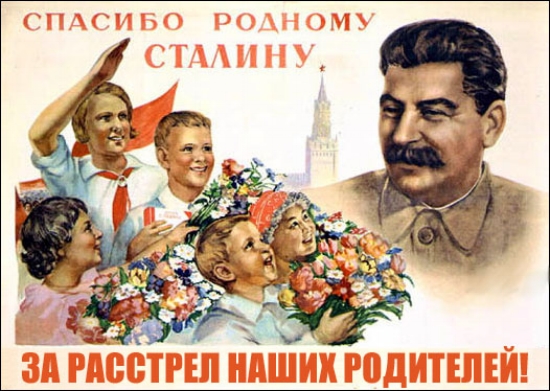
The inspiration for the change in direction under Stalin was, of course, neither philanthropic nor democratic. It merely reflected his willingness to use the appeal of both restored order and, for that matter, revived Russian nationalism (something that would have been taboo in Lenin's Kremlin) to shore up support for his dictatorship. In schools, as elsewhere, the revolution's egalitarianism — or, more accurately, collectivism — was overlaid with the cult of state and leader. The collective had been transformed into a congregation. Egalitarianism evolved into patriotic obligation as much as moral duty. The primary function of the educational system became the production of docile, loyal and subservient citizens. In some of the most interesting passages in her book, Ms. Kelly explains how this effort was orchestrated — and, often, how subtly. Its traces could be detected even in the way that children were portrayed in fiction, reportage, and textbooks. They were demoted from being the spunky, assertive heroes of revolutionary lore into altogether more passive creatures, forerunners of the dutiful and deferential Homo Sovieticus they were being molded to become.

Now, it could be argued, quite reasonably, that most schools in most countries try to churn out good citizens, however they define the term. Furthermore (as Ms. Kelly also acknowledges) what may seem like extreme regimentation to us would have appeared far less startling to the Western observer of, say, half a century ago — an epoch when schools on either side of the former Iron Curtain would have generally been much more disciplined than they are today.

Nevertheless, this book leaves no doubt that Soviet regimentation was indeed extreme. While Professor Kelly doesn't dwell on the cruelties of communist despotism, she never succumbs to the usual bien-pensant temptation of trying to find a supposed moral equivalence between East and West. This is demonstrated most strikingly, perhaps, by her decision to include (among a consistently well-chosen range of illustrations) a page of mug shots taken from the archives of a secret police home for "Family Members of Traitors to the Motherland." These particular family members cannot have been more than 9 or 10 years old. Their faces stare out, bewildered, haunted, trying to please, victims of a tyranny that could not, would not, forgive their genes.

In the end, ironically, the successes of Soviet education — standards rose, facilities were upgraded, some degree of independent thinking came to be acceptable — helped foment the widespread disillusion that contributed so much to the regime's eventual implosion. "In a pattern that comes up again and again in Soviet history," Ms. Kelly writes, "rising standards brought rising expectations." She might have noted the additional irony that those rising standards also taught the Soviet population that its expectations would never be met by the system in which they had been trained for so long, so hard, and so cynically to believe.

The rest is history.

Fixin' Nixon

Conrad Black: Richard M. Nixon - A Life in Full

The New Criterion, March 1, 2008

Nixon.jpg

Judging by the tone and the content, if not the length, of his epic, sprawling, and (on several levels) fascinating new biography of Richard Nixon, Conrad Black is not inclined to attempt much analysis of what, ultimately, made Tricky Dick tick.. There have, he snorts, “been many amateur psychoanalyses of Nixon, [but] none of any apparent validity or value.” None? When Black refers to the “psycho-media speculation” contained within press coverage of the various medical disasters that befell the former president in the immediate aftermath of his resignation, he doesn’t mean it as a term of approbation.

Now it is true that Nixon did have to put up with more than his fair share of long-distance psychoanalysis (so much so, in fact, that when David Greenberg wrote Nixon’s Shadow [2003], a valuable study of shifting perceptions of the thirty-seventh president, he devoted an entire chapter to “the psychobiographers”), and more than a fair share of that was nonsense, make-a-buck flimflam, or propaganda masquerading as science. At the same time, there can have been few presidents whose behavior did more to attract this sort of attention. Nobody should expect the occupants of the Oval Office to be regular folks, and few of them have been. Nevertheless, even when compared with other members of this often eccentric fraternity, there’s something about Nixon’s psyche that makes it stand out in its strangeness, its melancholy, its noir, and its mystery.

In part, of course, this reflects Nixon’s misfortune (for a man who achieved so much, Nixon was, as Black demonstrates, remarkably unlucky) to be living at a time when increasing (and frequently hostile) media scrutiny combined with the mid-century infatuation with psychiatry to ensure that almost no aspect of his career or character was not picked apart. If his predecessors had received similar treatment, Nixon would not have seemed quite so peculiar.

Nixon himself understood that he was something of a puzzle, and rather relished it. In President Nixon—Alone in the White House (2001), his intriguing account of the Nixon presidency, Richard Reeves recounts how Bob Dole once told Nixon “that he was destined to be misunderstood because he was too complicated a man to be totally understood.” Nixon had responded to that with enthusiasm, saying, “Aha! Now you’re getting somewhere.” Reeves then goes on to argue that Nixon “did not want to be understood. If other men thought he was unreadable, then they must think there was a great deal more inside him than just a powerful mind voyaging alone in anger and self-doubt.”

You can debate the second part of that diagnosis, but not the first: Nixon clearly did not want to be understood. That doesn’t mean, however, that a biographer should avoid trying to do so. Black doesn’t, but his efforts too often come across as more a matter of (deftly chosen) adjectives than anything more substantial. Even if one makes allowance for Black’s distaste for such analysis, his failure to deliver more of it diminishes the roundedness of his book, and is, in such a perceptive author, a disappointment. What his readers are offered instead is a biography where, with the notable exception of the canny, and feline, depiction of Kissinger, politics tend to be handled more convincingly than personality, a chronicle where the emphasis is on the event rather than the individual. Black, the author of a notable biography of FDR, is evidently a writer who prefers to focus his attention on the external, on great men, on momentous events and the grandest of themes. The rest, I’d guess, he sees as trivia, little more than gossip. Nixon would approve.

To read Black’s book is to be treated like the guest at a lavish dinner party presided over by an opinionated, brilliant, mordantly amusing, powerful, and loquacious host. As the port is passed round and the cigars light up, the host holds forth—for hours and hours (this work is easily over a thousand pages long) and hours. Glasses are drained and doubts drowned. Stories tumble out, anecdotes cascade. Portentous verdicts are cast: the opening to Communist China“was an imaginative diplomatic initiative of great geopolitical consequences … but to the extent it was sold, then and subsequently, as a combination of Columbian exploration, Bismarckian diplomacy, and Jesuitical missionary work, it was a confidence trick to reelect the president, pad the CVs of the two ex- plorer/diplomat/pilgrims, and garnish the post-governmental wallet of Kissinger.” Lapidary pronouncements are made: “Nixon’s trousers were slightly too short (often the case with Americans).” Widespread rumors are discounted: Nixon tells the author that “Edgar [Hoover] had a lot of files, but I had a lot of files too, and there was nothing in them about Edgar in a red dress.” Erudite digressions are explored: “Disraeli was rivaled only by Churchill as the greatest wit of all British prime ministers.” And insidery recollections are shared:

His office was another Nixonian classic. It was reached by walking through a large travel agency on the ground floor of a building on a suburban boulevard, then taking an elevator up two floors, opening a box with a bronze eagle on it, and announcing oneself on the telephone receiver within.

All this is filtered through, and often illuminated by, our host’s distinctive, distinctly orotund, use of language. He deploys a startling, imposing, and baroque phraseology. Black’s language is never dull, but it does teeter between the enlightening (the Democratic-led “assault on Nixon” had become “the rape of the executive”), the arch (“the influx of newcomers to California … tended to be conventional southerners well to the right politically of the egalitarian EPIC group, which had believed in collective economics and the absence of complexional distinctions”), the absurd (“malignant Nibelungen within the IRS”), the Agnew (“It was another herniating levitation of pandemic hypocrisy”), the sly (“Kissinger tried a fully gymnastic range of explanations”), and occasionally the bizarre (Jesse Jackson as “rutting panther”).

And, no, as enjoyable as the occasion may be, the magnate’s guests at this splendid feast will never entirely be able to shake off the sense that they are receiving a message de haut en bas. Black, Conrad Black, Lord Black of Crossharbour, was a newspaper mogul in the old style, a mover, a shaker, a macher, and it shows. Nixon gives “the annual Atlantic Richfield Dinner address in London in the autumn of 1992, and dazzle[s] the most eminent dinner audience that city could produce,” a dinner audience that included Lord Black, but not me, or in all probability, dear reader, you.

None of this is to detract from Black’s ability to spin a “rocking, socking” (to borrow a term Nixon used to describe his more vigorous campaigns) yarn. A thousand pages, maybe, but they don’t pall, and they are dauntingly thoroughly researched. The narrative is comprehensive, detailed, generally judicious and, in its careful assessment of Watergate, is closer to a plea in mitigation than an outright case for the defense. Overall, it’s almost impossible and largely pointless to highlight any particular topic covered in those thousand pages, but if I have to choose one, it would be the subtle and sympathetic way in which Black handles Nixon’s tortured and complex dealings with a truly masterful trickster, the enigmatic, cunning, and ruthless Eisenhower.

Where the book fails is in “The Transfiguration,” the book’s ambitiously titled final chapter. The picture Black paints is of the painstaking, carefully crafted step-by-step creation of the last “new Nixon”—a largely rehabilitated figure, a much consulted, highly respected foreign policy sage, the grandfatherly “most successful ex-president in the country’s history,” a figure whose fate was apparently beginning to prick what Black refers to with characteristic melodrama as the “Great American Puritanical Conscience.” This overstates matters. With the passing of the years, we have indeed witnessed the emergence of a fairer, more balanced assessment of Nixon (and this biography will help in that process). Some of the wilder accusations of the Watergate era have now been shown up for the ludicrous overreaction they always were, and as they have faded, so some of the luster has, at last, been restored to Nixon’s reputation.

At the same time, it remains unclear just how seriously people really took Nixon’s advice in those final years. Not so much, I reckon. As for the circles in which he was allegedly regarded as either martyred or, well, transfigured, they are, in their very different way, unlikely to have been much more representative than those of Pauline Kael; the New Yorker critic was supposedly unable to work out how Nixon could have won his 1972 landslide when “no one she knew” had voted for him (as it happens, she didn’t actually say that, but the story’s too good not to repeat). What works for Atlantic Richfield will not work so well in Atlantic City or, for that matter, anywhere else in America outside, perhaps, the Beltway and, certainly, Yorba Linda. The restoration of Nixon’s image is far less complete than Black would have us believe.

It may not be the most scientific of tests, but the fact that, as David Greenberg records, masks of Nixon were the top-selling Halloween costumes in October 2000, over a quarter of a century after his resignation, must mean something. In the American popular imagination Nixon will always be seen primarily as a villain, albeit one who can sometimes be played for laughs, or pathos, or both. There were traces of that in Frank Langella’s enthralling performance as the fallen president in the play Frost/Nixon, but Nixon fans may not find it entirely reassuring that Langella was previously best known as a notably effective Dracula.

It’s difficult not to think that, in writing the final chapter in the way he did, Black may have allowed himself to be swayed by his hopes for his own future. In a still-disputed verdict, Black was found guilty last year of defrauding Hollinger International, the company he used to lead, as well as of obstruction of justice. He is currently appealing. Under the circumstances, the idea that Nixon (who was a friend of Black’s) was able to pull off a comeback may well be a source of comfort, inspiration, and, Black might hope, precedent. The author himself has preferred to downplay the extent to which he identifies, or should be identified, with his subject, but choosing, while under indictment, to write a supportive (if still critical) life of a public figure whose most well-known line was that he was “not a crook” may be revealing and is indisputably provocative.

What Black cannot surely deny is that his understanding of what happened to Nixon has been colored by his own problems, whether it’s on the reluctance of Henry Kissinger (once an appointee of Black’s to the Hollinger International board, but now, it seems, somewhat estranged) to stand by the beleaguered Nixon or on the way that the use by prosecutors of plea bargains and whistleblowers has“encouraged a system of suborned or intimidated perjury, or at least spontaneous clarity of recollection, to move upwards in the inculpation of officials in any organization where wrongdoing is alleged.” As so often, Black makes a good, if over-elaborately expressed, point.

It’s worth adding that whatever else this volume reveals about Black’s state of mind, its completion under what in the introduction are referred to as “very distracting circumstances” is also a phenomenal demonstration of discipline, willpower, and self-control. Yet again, Nixon would approve.