Fight For The Finnish

The Weekly Standard, December 24, 2012

Soini.jpg

He won more votes than any other candidate in Finland’s 2011 parliamentary election, and the maverick party he leads is a profound embarrassment to the current eurozone regime, but there’s something refreshingly down-to-earth about Timo Soini, the leader of the euroskeptic Perussuomalaiset (PS), or, perhaps more easily for you and me, the Finns party. (The former translation of their name​—​the True Finns​—​was felt, a party official told me, to have an “ominous echo” in some corners of Europe of a sort that the PS did not wish to convey.)

Soini, 50, an eloquent, likable, and often amusing former “concrete boy” from Espoo, a city on the edge of Helsinki, was sitting across from me a few weeks ago in a restaurant in Midtown Manhattan. He’s a big man, with big opinions, haphazardly shaven, with rough-hewn features, thick glasses, a shirt with a touch of the lumberjack about it, and an air of genial dismay at my choice of Diet Coke to go with lunch. He has a beer (just one, I note, in case any of the more puritanical members of his party are reading). In his soft-spoken, pleasantly old-fashioned and very Finnish way, he’s outraged by what is now unfolding in Europe.

“A deal is a deal,” he says. The technocrats who once promised that under a shared European currency no country would ever have to bail out another now see things differently. As for the mendicants of the eurozone periphery, let’s just say that Soini is a man with a sharp sense of right, wrong, and history.

Unlike many European countries, Finland, Soini recalls, honored its debts throughout the Depression. And then it paid off the penalties imposed upon it by a vengeful Soviet Union after the Second World War. Later still, it worked its way out from underneath the wreckage of a savage banking crisis in the early 1990s. Left unsaid is the contrast with the Greeks, the Spanish .  .  .

Then it’s not left unsaid. They can be blunt, Finns. The mayhem that the single currency has brought in its wake has upset the European political order in ways that must shock even the utopian gamblers who originally calculated that a “beneficial crisis” was just what was needed to herd the EU’s recalcitrant nation-states into ever closer union. Governments have tumbled across the continent. The far left and neo-Nazis are on the march in Greece. The Catalans are eyeing an exit from Spain. Italy’s democracy has taken a timeout in favor of a technocracy that may soon be replaced by who knows what. Britain could, one way or another, be stumbling towards some sort of end to its unhappy European marriage. And there are plenty more melodramas to choose from.

Where there is Europe, there are euroskeptics. They are a motley crew, ranging from Britain’s neo-Thatcherite UKIP, to the Dutch Koran-bashers of Geert Wilders’s Freedom party, to the postmodern leftists of Beppe Grillo’s 5-Star Movement in Italy, to some groups to the east about whom​—​Soini rolls his eyes​—​the less said the better, and the list doesn’t end there.

Soini’s party, in time-honored populist style, draws on elements of left and right. In a nod to my Englishness, Soini describes his supporters as “working-class Tories.” Yes and no, I’d say. The PS, he explains, is for the workers (“but without socialism”) and for small businesses (“they create the jobs”). Like its counterparts elsewhere in Europe, it draws on the support of older folk and, in return, supports their right to a decent pension. The PS may not, strictly speaking, be socialist, but its 2011 program checked most of the boxes of the traditional Nordic welfare state, including high taxation as a moral good. The Tea Party it is not.

Soini himself is a Roman Catholic convert, exotic for Lutheran Finland. His opposition to abortion is, he admits, a minority view within his own party, but the PS is socially conservative, sometimes abrasively so. Like many euroskeptic parties, it is immigration-skeptic too, occasionally harshly so. When I ask him about this insult or that slur, he replies that a party should not be blamed for everything that one of its members might have said or done. That’s a stock response. What was not was his honest admission that not all his elected representatives are ready for prime time. Some, he sighs, are “stupid” or, he adds more kindly, “semi-stupid.” In a party that has risen so far so fast, that’s not surprising, but, that said, there is undoubtedly a harder edge to Soini’s lot than you’ll find with UKIP’s merry pranksters.

That the success of the PS and its kin elsewhere is due to the overreach of a project​—​an ever more deeply integrated Europe run by a small transnational elite​—​designed to head off such unruly expressions of populism is an irony to appreciate, if not always to savor. That it has happened in Finland only adds to its piquancy. Since joining the EU in 1995, Finland had always been a model pupil, diligent and thoroughly communautaire. Unlike Denmark, and despite initial considerable skepticism on the part of its population (in 1996 fewer than 30 percent of voters supported the idea of a single currency), Finland never negotiated an opt-out from its obligation to sign up for the euro, nor, like Sweden, did it simply grab one. The Swedes and the Danes then rejected the single currency in referenda, an opportunity never offered to the Finns. Eager to please the membership committee of a club they were desperately keen to join, Finland’s politicians were never going to risk allowing their electorate to second-guess the goal of monetary union.

For there was something else at work in Helsinki: the thought of a large and still troubling neighbor. Every step Finland took deeper into its new “European” identity, even the adoption of the EU’s funny money, was a step away from Muscovy. And it is not only the Finns who feel that way. Anxiety over the bully next door does much to explain the increasingly egregious Europhile posturing​—​plus royaliste que le roi​—​by some members of Poland’s political class, and, more poignantly, the reason given by the Estonian prime minister for signing his frugal, well-run country up for the madhouse math of the European Stability Mechanism: “Our objective,” he said, “is to never again be left alone.”

These are sentiments that Soini evidently understands. He shows me a photograph of his daughter standing on the apparently unguarded Finnish side of a stretch of the Russo-Finnish border that runs through the forests to the east. He reminds me​—​with a smile​—​that the U.K. did not exactly rush to Finland’s assistance when the Soviets invaded in 1939. I suspect he is not convinced that, if it ever really came down to it, Brussels’s umbrella would amount to much either. Finland must look after itself.

The still widespread idea that Finland needs Brussels to anchor it in the West is not one that the Finns party shares. It is opposed not only to Finland’s participation in the bailouts, but also to the euro itself (if a tad cagey about what to do about it). Most iconoclastically, the PS would prefer to see today’s EU replaced by a free trade area somewhat akin to the “common market” that gullible Britons believed they were joining in 1973. Within that looser association, Soini mentions there could be room for closer regional cooperation where it made sense, with the other Nordic nations, of course, and the Balts, say, and the Poles and maybe the Brits, too. And the Germans? “No, they would want to bring France with them.”

For now this is just talk. A large majority of Finns want to remain in the EU, and most still prefer to hang on to the euro. The bailouts of the eurozone’s weak sisters are a different matter. They are opposed by well over half of all voters.

It was voter anger over the bailouts that propelled the PS into the big leagues, but the party will struggle to take the championship. In the 2011 general election, it came in third with 19.1 percent of the vote, nearly five times the tally of four years before, but it was a triumph it failed to repeat in the presidential elections in early 2012: Soini (with 9.4 percent) was eliminated in the first round. In October’s municipal elections, the party won 12.3 percent of the vote, a result that may understate its real level of support but was nevertheless a disappointment when measured against the glory days of 2011.

The Finns party may have done its work too well. The two established parties most vulnerable to Soini’s appeal to rural and working-class voters have taken a markedly euroskeptic turn, not least the Social Democrats, from whose ranks the country’s finance minister is drawn. As a result, Finland has become an increasingly awkward member of the eurozone’s glum rescue party. The country insisted that its contribution to the second Greek bailout finalized in early 2012 be backed by collateral. And so (partially) it was, somewhat secretively and somewhat complicatedly, but good enough to allow the Finnish government to offer some reassurance to its restless electorate, a feat it essentially repeated for July’s Spanish bank bailout. Soini clearly remains skeptical about how valuable some of this collateral might eventually prove to be, joking that it really consisted of “stuffed penguins.” But whatever the role that Antarctic wildfowl may play in the efforts to protect the country’s finances, there is no doubt that, where it can, Finland is acting as a brake of sorts on the pace of largesse.

Yet still the ratchet turns. The aggressive actions of the European Central Bank have relieved some of the pressure on the eurozone for now, and Greece has just weathered its latest storm, but the crisis​—​not over by far​—​will continue to fuel demands for the cash and closer integration that the euro’s survival may require. That’ll be bad news for Finland’s finances and a disaster for its democracy, but when it comes down to the wire, the track record of its government​—​which includes just about everybody other than the PS​—​would suggest that it will be unlikely to say no.

The reasons for that might be respectable​—​unwillingness to risk the cost and the chaos that a euro collapse might involve​—​and they might be based on a genuinely idealistic, if misguided, belief in the virtues of deeper European integration, or perhaps even on humility: Is it really for little Finland to put an end to such a grand dream? Then again, less attractive reasoning could come into play. The groupthink of Brussels has a curiously powerful allure, as does the siren whistle of its generous gravy train, and the pleasures, as Soini, puts it, of the (ministerial) Audi.

Soini, who spent time in the belly of the beast as a member of the European parliament and didn’t like what he saw (he tells me a few tales of expense accounts), is not optimistic that Finland will bring this long farce to a close. On the other hand, this is the same Soini who, channeling Churchill, delighted the crowd at UKIP’s 2012 conference with his declaration that “we will never surrender.” Somehow I don’t think that he will.
The Silence That Speaks Volumes

François Bizot: Facing the Torturer

The Wall Street Journal, November 20, 2012

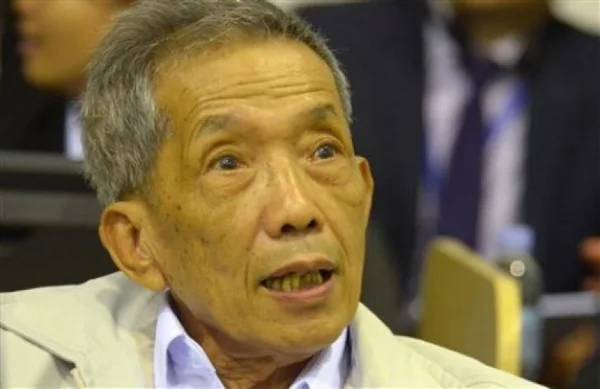
Comrade Duch.jpg

In 1971, François Bizot, a French ethnologist living in Cambodia, was seized by Khmer Rouge insurgents. Held in a prison camp for 77 days and then freed, he is the only Westerner to have survived anything but the briefest brush with Khmer Rouge captivity. His interrogation sessions evolved into a twisted facsimile of friendship with the camp’s commander, Comrade Duch. Convinced that his prisoner wasn’t after all working for the CIA, Duch persuaded the Khmer Rouge leadership to let the Frenchman go.

Phnom Penh fell to the Communists in 1975. Not so long after, Duch was appointed director of the new regime’s Tuol Seng prison. There some 17,000 people—men, women and children—would perish over the next four years, frequently after torture designed to “prove” a guilt that no longer had to be anchored in any reality. When Mr. Bizot later discovered what his tormentor-savior had become, he agonized over Duch’s “monstrous transformation.” Partly in response, in 2000, he published “The Gate,” a powerful, if lushly overwritten, memoir of his capture, release and eventual evacuation with other foreigners from Phnom Penh after that city’s surrender to the Khmer Rouge. He reached the perversely empathetic conclusion that Duch had merely managed to “tame” the terror that must have enveloped him in the nightmare world of the Khmer Rouge, just as Mr. Bizot had come to control his fear while chained up in that camp. In the book’s epilogue, Mr. Bizot described a return to Cambodia prompted by Duch’s arrest in 1999.

“Facing the Torturer” (at least notionally) picks up where “The Gate” left off and culminates in the author’s appearance as a prosecution witness at Duch’s 2009 U.N.-supervised trial. But this short book—and for a short book it can be very long-winded—is rooted in Mr. Bizot’s prolonged reinterpretations of his experiences in the Cambodia of four decades ago. It is a reappraisal colored by incidents that stretch even further back, and the book’s first chapter features a meditation on a possibly necessary evil from his youth—the killing of a beloved pet—and on an incident when, as a small boy in occupied France, he was punished by his panicked mother for sticking his tongue out at a German officer. “I understood that fear could push anyone beyond the normal limits of their behavior.” There is also a recollection of the unease he felt walking past a slaughterhouse as a child and memories of his time in the French army fighting in Algeria.

Such moments are assembled as evidence for a broader case, not so much against Duch, whose individual responsibility Mr. Bizot readily accepts, but against humanity as a whole. We are all capable of horror, he wants us to know: a discovery about as startling as the realization that, as a species, we walk on two legs. In 2010, Duch was convicted of torture, murder and “crimes against humanity” and is now serving a life sentence. Mr. Bizot sees the verdict almost as collective alibi: “We never look under the mask of the monster to make out the familiar face of a human being.” Oh, please.

Mr. Bizot corresponded with his former captor and went to see him in prison. But what lies behind that mask remains, in the end, elusive. Duch’s sparse and dutifully contrite written response to “The Gate” is included in “Facing the Torturer” but gives little away: “Life forces us to do things we do not like doing.” Given the grotesque cruelty of Tuol Seng, there must have been something more than mere opportunity, or the chaos of midcentury Indochina, that turned Kaing Guek Eav, a former math teacher, into another of the 20th century’s lethal everymen.

Duch was a merciless jailer, killer and torturer. But he is neither insane, nor, it seems, a sadist. Nor was he just obeying the orders of a leadership too dangerous to defy. The best clues in the pages of either book (and “The Gate” and “Facing the Torturer” should be read together) as to why—and how—Eav became Duch are tantalizingly incomplete. We glimpse a “demanding and moral being” (he has now, make of it what you will, converted to Christianity) who becomes “possessed” by a cult that offers him the austere pleasures of purification and an intoxicating immersion in a quest for a liberation that was anything but.

Mr. Bizot explains how torturing was for Duch “part of a whole. It was nothing more than putting the ardor of his commitment into practice, the action being in proportion to the greatness of the revolutionary ends . . . a task that he could only carry out by making himself literally ‘out of breath.’ ” Doubtless, it became easier over time.

But of the cult that consumed this “man of faith,” there isn’t much analysis in either of Mr. Bizot’s volumes—just sightings of shadows and fragments of a greater malignancy. The “dreadful smothering” of Cambodia lurks, for the most part, either offstage or in echo or reflection. But the evil comes into clear view in Mr. Bizot’s terrible, telling details. In “Facing the Torturer,” he recounts the chaos of the refugee camps set up in Thailand for Cambodians as their country collapsed into darkness. The camp that the Khmer Rouge had—astoundingly—been permitted to run on Thai territory stood out for “its cleanliness, silence, discipline.”

It was there that some of the evacuees from the French embassy—”journalists and humanitarians”—came across a “half-naked boy tied to a post: He had fainted under the scorching sun.” They complained to the authorities, only to be told that the child was a thief. He had been caught stealing from “one of the bags of rice allocated to the collective.” Well, the camp was so much more orderly than anything else the visitors had seen that they found themselves “unable to utter any protest.” They muttered a few words of lukewarm praise and left. “I was,” recalls Mr. Bizot, “familiar with this kind of silence.”

Happy Warriors

The Weekly Standard, October 15, 2012 

Nigel Farage, UKIP Conference, Birmingham, September 2012   ©  Andrew Stuttaford

Nigel Farage, UKIP Conference, Birmingham, September 2012   ©  Andrew Stuttaford

For people once described by David Cameron as “fruitcakes and loonies and closet racists, mostly” (I’ve always savored that sly “mostly”), the members of UKIP—the euroskeptic United Kingdom Independence Party—gathered in Birmingham last month for their annual conference were a bright, friendly, and refreshingly normal bunch.

They were also surprisingly upbeat. The euro—that Freddy Krueger of currencies—remains as indestructible as it is destructive, and José Manuel Barroso, the president of the European Commission, is openly using the once-taboo F-word, pressing for transformation of the EU into a “federation of nation-states.” But never mind all that, the cheerfully determined folk at the conference reckoned that events were moving their way. UKIP, said its leader, the indispensable, charismatic, and hugely entertaining Nigel Farage, is “a party in a very good mood.”

Indeed it is, and why not? Nearly two decades after its founding in 1993, UKIP has come a very long way, despite bouts of internecine strife, a series of scandals, serial eccentricity, and a collection of electoral disasters that would have made even Harold Stassen pause. As Farage explained to the conference, things had been a “bit shambolic” in the past, a confession that was no revelation.

Thanks to the EU, and in more ways than one, this dismal state of affairs has been changing. The relentless intrusions of Brussels into everyday British life have sustained a market for UKIP’s ideas in a nation that was never europhile to start with. And one shocking continental innovatio—proportional representation—has given UKIP a position unimaginable under Britain’s first-past-the-post voting system.

The mathematics of first-past-the-post are brutal for upstart political parties, except in areas where they can find concentrated support such as that enjoyed by nationalists in Scotland and Wales. The Liberal Democrats took 23 percent of the vote in the 2010 election, but only 57 seats in the 650-member House of Commons. UKIP fared even worse, winning 3 percent of the popular vote and taking no seats at all.

Such results feed upon themselves. The electorate shies away from casting votes that will be wasted—or worse. Much of UKIP’s support comes from formerly die-hard Tories, and many more of that growing tribe would follow their lead were it not for their (justifiable) fear of splitting the right-wing vote and letting the left slip in through the middle. As it is, defections to UKIP probably cost the Conservatives some 20 seats—and an absolute majority—in the 2010 election. The Tories thus ended up in a coalition government with the euromaniacal Liberal Democrats, an irony lost on few and a strong disincentive for many potential UKIP voters to slip the Tory leash. And UKIP hasn’t done much better in local elections. It has just a handful of councilors and supreme power only in the Cambridgeshire town of Ramsey (population 6,000).

Thanks to proportional representation, worries about wasted or counter-productive votes have not been such an issue in elections to the EU’s Potemkin parliament. The few concerns have been further diluted by the suspicion—not quite as justified as in the past—that the world’s only commuting legislature (as a result of some ancient compromise, it sits in both Brussels and Strasbourg) counts for very little. UKIP celebrated the election of its first three members of the European parliament in 1999. Five years later, UKIP came third with 16.1 percent of the vote and 12 MEPs. In 2009 it overtook the governing Labour party, grabbing 16.5 percent of the poll and a haul of 13 seats out of a British total of 72. UKIP’s leadership is convinced the party has a good chance of coming out on top in the 2014 EU elections.

The very nature of a European election makes it an obvious vehicle for a protest against the Brussels oligarchy. That fact, combined with a typically low turnout (in 2009 an unimpressive 34 percent of the British electorate), means that those percentages overstate UKIP’s real backing. Nevertheless the prospect of UKIP topping the euro-poll in 2014—and the momentum that would come with it—must worry David Cameron, facing a national election the following year.

UKIP already stands at some 7-10 percent in national opinion polls, something that cannot just be put down to midterm disillusion with the Tories. There is a wide and growing disconnect between the pedantically centrist, tiresomely PC prime minister and a good number of his party’s natural supporters. Many of these are euroskeptic, and so this breach is only worsened by Cameron’s refusal to respond with anything other than curiously arrogant disdain to mounting British disgust with an EU that displays an ambition only exceeded—hanks to the flailing euro—by its troubles. One recent poll showed almost half of all Britons wanted out of the EU, while only under a third preferred to stay in. Making matters worse still for Cameron, however unfairly, is the U.K.’s failure to emerge from the economic mess his government inherited. Put all these circumstances together and UKIP’s allure is not hard to understand. Nor is the fact that the party’s appeal is reinforced by its plague-on-all-your-houses outsider status.

And that’s no act: The Birmingham conference was a long way in thinking and in feel from Britain’s political establishment. From the endearingly self-deprecatory remarks that accompanied so many speeches, to the occasional organizational glitches, to the misfiring microphone at the conference’s Friday night “gala dinner” (tickets cost all of $55), this was a gathering that featured little of the bombast and none the slickness of the larger parties’ shindigs. The auction that accompanied the gala included some cheaper items—tea bags in a fancy box, a woven silk portrait of the queen, and a painting that would have been unforgivable even had the artist been blind—that only underlined the distance between UKIP’s grassroots essence and the political establishment some UKIP members refer to as the Lib-Lab-Con.

At a desk near the entrance to the conference, some volunteers—including Mrs. Farage (a German, as it happens)—could be spotted selling Ukitsch: umbrellas, pens, mugs (“The EU is NOT my cup of tea”), tote bags (“The EU is NOT my bag”). Then there was the moment when Mr. Farage—no velvet ropes here—started hawking “Belgian damp rags” to a delighted crowd at five pounds each. (Full disclosure: I bought two.)

Autographed by Farage, these, uh, striking kitchen towels are decorated with the dispiriting features of Herman Van Rompuy, the president of the EU’s European Council. They are an allusion to the one event, more than any other, that made Farage the YouTube star that he is today, a status he cemented with a series of speeches that did much to ensure his recognition by Der Spiegel as the “seventh most dangerous politician” in Europe, no small honor. In 2010 Farage, an MEP since 1999, greeted Van Rompuy—world famous in Belgium, if nowhere else—to the European parliament shortly after the former Belgian prime minister had been appointed the quasi-head of the EU’s quasi-state. After asking who Van Rompuy was, and how he had been picked for this job, Farage compared the new potentate’s charisma to that of a “damp rag” and his appearance to that of “a low-grade bank clerk” (Farage apologized later to bank clerks). It was a virtuoso, deftly theatrical performance, but, as so often with Farage, there was a knife concealed within the knockabout. After the laughs there was this, delivered more quietly:

I sense though that you are competent and capable and dangerous and I have no doubt that it is your intention to be the quiet assassin of European democracy and of the European nation-states.

This display of unruly parliamentary vigor was too much for the EU’s mausoleum of democracy. Farage was fined $4,400 for his lèse-Rompuy, not a bad price for the publicity it brought.

Farage, 48, a smoker (despite a bout of cancer in his 20s) who enjoys a drink or two, is well aware of his naughty, none-of-the-above appeal. The Belgian damp rags were also decorated with a small, impish photograph of UKIP’s leader roaring with bad-boy laughter. UKIP’s anti-establishment message was a familiar refrain from the conference floor. The term “political class” was a frequent punch line, repeated with more resignation than anger, the exasperated lament of passengers who have found themselves on a peculiarly poorly run vessel but are still debating how violent the mutiny should be.

One thing that does seem certain, however, is that the Conservative party is in danger of being shoved over the side. It’s not just the EU, or the economy, or the drift to a witless center, although it is all those things. There’s something else. UKIP’s activists are a smart lot, and they understand but do not appreciate the contempt in which they have for too long been held by Cameron’s metropolitan clique. There’s recently been talk of some sort of UKIP-Conservative nonaggression pact for the 2015 general election. In his keynote speech, Farage appeared to leave a door slightly ajar “to consider it,” but only in exchange for a promise “written in blood” of an in/out referendum on the EU. A later speaker wanted something else: an apology. The applause that followed ought to be a reminder to Cameron to be careful in the future about whom he chooses to demonize.

As always in Britain, resentment comes wrapped in the country’s class sensitivities. The accents at the conference were provincial. Toffs were scarce on the ground. As I listened to the talk, time went into reverse, to Conservative constituency meetings of 30 years ago. These were Thatcher’s people; many of them had come of age under the Iron Lady’s reign. They were no-nonsense, often self-employed, and not the sort invited to the dinner parties that had dreamt up the rainbow coalition of politically correct gestures that, in the end, failed to carry Cameron to clear victory in 2010 against one of the most incompetent governments in British history.

To date the border between UKIP and the Conservative party has been ill-defined and rarely policed. That may be changing. If UKIP is to anchor itself at home as well as in the European parliament—essential if it is to increase its clout—it cannot just be about Brussels (the conference’s slogan was “Beyond the EU”). That will mean staking out a position more clearly distinct from the Tories than hitherto. Farage (who quit the Conservative party in 1992 over the EU’s Maastricht Treaty) has been successful in excluding racists and the jackbooted from his party, and describes himself as libertarian. But it is easy to see that the search for vote—particularly from what Farage terms “patriotic old Labour”—may be easing the party in the direction of the harder-edged, bigger-spending populism of euroskeptic parties on the continent, such as the Finns party (also known as the True Finns) and the Danish People’s party.

That could cause trouble in time, but for now Brussels remains the bogeyman around which UKIP can rally, a piñata for all, bashed in Birmingham by Farage in top form, clever, incisive, and witty. Later, “with greetings from the eurozone,” came Timo Soini (Der Spiegel’s “fifth most dangerous”), the leader of the Finns party and the politician responsible for forcing the previously supine Helsinki establishment to do something to protect its taxpayers from the ravages of a dysfunctional monetary union. Soini was hammer to Farage’s saber, but he was amusing and touching, too—proud of his country but also of de Gaulle’s grand vision of a Europe des Patries. If this conference was a celebration of xenophobia it was taking a very strange form. The single currency itself was, of course, singled out for rough treatment and rougher prophecies, not least from the distinguished City of London economist (and former Treasury adviser), UKIP co-belligerent Roger Bootle: “When did things go wrong with the euro? Right at the beginning.”

That was the fun stuff. It’s when discussing the next stage in this saga that the usually ebullient Farage began to look a little anxious. He has long been skeptical, for good reason, about the terms of any referendum that Cameron might offer the British electorate. His new concern is that Barroso’s attempt to push for federation will provide an extremely convenient escape hatch for Cameron, by providing him the opportunity to offer the British to vote on joining a closer union or remaining “as is.” The problem with that choice is that, unless the position of those EU member states who choose to remain outside the deeper union is fundamentally renegotiated, “as is” is not good enough. It might seem attractive to a country easily bored by the technical complexity of the EU debate, but Britain would remain subject, in practice, to the heavy burden of EU regulation, not to mention the exorbitant costs, direct and indirect, of membership. In short, it would be a very limited victory. The electorate’s fear of the unknown will make an in/out referendum a risky proposition for UKIP and its sympathizers, whatever the current opinion polls may predict, but for now it remains the last best hope.

Making matters worse is the gradual approach of 2015 and the likely election of a europhile Labour government and, with it, the closing of the exit door, quite possibly, forever.

And writing those words makes me think of a scene in the final Lord of the Rings film. As Gimli, the martial dwarf, contemplates the perils ahead, he turns to his companions, and remarks, “Certain death. Small chance of success. What are we waiting for?” Gimli, I feel, would have been a member of UKIP.

Estonian Economics

National Review, September 27, 2012 (October 15, 2012 issue) 

Raekoja Plats, Tallinn, August 2012 © Andrew Stuttaford

Raekoja Plats, Tallinn, August 2012 © Andrew Stuttaford

Tallinn, Estonia – Sitting shirt-sleeved and without, sadly, his trademark bow tie, in his official residence here in the Estonian capital, this Baltic nation’s Swedish-born, New Jersey–raised president, Toomas Hendrik Ilves, looks pained. He’s chewing antacid pills (I’d guess), but it’s the name that I just mentioned that is the problem, not indigestion: “Krugman.”

He sighs.

“I know this has been done to death,” I admit.

Ilves does not disagree.

Estonia has a tragic history of being a battleground for other people’s wars. Thankfully, the latest conflict into which the country has found itself unwillingly drawn — the debate over how the West can emerge from its post-Lehman malaise — has involved nothing more than a “snide” (to borrow Ilves’s adjective) bit of blogging by Paul Krugman for theNew York Times. And even that, the president concedes, ultimately turned out to be “good publicity” for a tale of economic recovery.

In 2008, Estonia’s boom, fueled to overheating by (primarily Scandinavian) banks attracted by the country’s post-Soviet revival, turned, like so many others, into bust. GDP fell by 3.7 percent in 2008 and by 14.3 percent in 2009, taking tax revenues with it: The budget went into a deficit of 2.7 percent in 2008, shocking in a country that aims to run a structural surplus. Unemployment soared to 16.9 percent in 2010, from 4.7 percent in 2007. Housing prices crashed 40 to 50 percent from their peak.

In response, the country’s governing coalition of conservatives and classical liberals cut spending and raised taxes (Estonia’s flat-rate income tax was, however, left untouched at 21 percent) in a squeeze equivalent to over 9 percent of GDP. But it was what happened next that must have really bothered Krugman: After pain came gain. GDP jumped 7.6 percent in 2011, and should grow by 2 to 3 percent this year and next. Unemployment has dropped to 10.2 percent and seems set to fall farther.

That did not fit comfortably with the sometimes-cartoonish Keynesianism that the professor has been pushing since the era of hope, change, and stimulus. So he took to his blog, cropped a graph, and took aim at “the poster child for austerity defenders” — not a role that the Estonians had sought for themselves. There had, wrote Krugman, been a “depression-level slump” (true enough) “followed by a significant but still incomplete recovery. . . . This is what passes for economic triumph?”

Well, no, but that is not what the Estonians, a modest bunch, are claiming. No one I talked to described times as easy, but progress is progress. What’s more, if you push the graph back a touch earlier than 2007, which Krugman used as his starting date, the broader picture is revealed to be rather prettier than the Nobel laureate let on. Yes, it was true that GDP had yet to return to 2007 levels, but it still stood slightly higher than in 2006, no plague year. President of one of Europe’s tech-savviest countries, an irritated Ilves turned to Twitter to rough up the “smug, overbearing & patronizing” Krugman.

Let’s take a step back: Estonia is not Greece. Government is transparent and thrifty. Taxes are paid. Private borrowing ballooned during the bubble years, but that of the public sector did not. At the end of 2008, the state’s debt stood at a sober 4.5 percent of GDP, a figure that might have tempted some governments to try to splurge their way out of recession. In rejecting that route, Estonia did the right thing. It depends on its external trade: Exports amounted to 79 percent of GDP in 2010 (compared, for example, with Greece’s 22 percent). With the European economy in savage, sudden free fall, efforts to pump up domestic demand would have achieved little.

Instead the government concentrated on maintaining the fiscal discipline that is one of the country’s most valuable assets and waited for better times, helped in the meantime by the fact that its banking system (dominated by the subsidiaries of large, well-capitalized Swedish banks) kept liquidity flowing. The wait was not too prolonged. Benefiting from policies often very different from those pursued by the tightwads of Tallinn, many of Estonia’s trading partners pulled out of their post-Lehman dive rather more rapidly than might otherwise have been expected, dragging the Estonian economy up in their wake as exports picked up again. The budget is (broadly) back in balance, and the ratio of central-government debt to GDP stood at 6 percent at the end of 2011, a time, ahem, when the U.S. number was over 100 percent. Estonia’s finances remained intact.

And so, largely, did the population. Demography is a sensitive topic in the three Baltic states, small nations with (in the case of Latvia and Estonia) ethnic balances severely distorted by the influx of Russians who arrived in the Soviet years. The slump has triggered a large wave of emigration. Estonia has been spared the worst of this, not least because of the presence of Finland (Finnish and Estonian are closely related languages) just across the Baltic Sea. Why emigrate if you can commute? There’s probably something else at play, too. All three countries have come a long way since their escape from Moscow in 1991, but Estonia has gone the farthest: Perhaps its citizens were more willing to believe that hanging on would be worth their while.

Estonia’s is an impressive story, but it is a distinctive one, with specifics — including a history of budgetary prudence, the presence of those Swedish banks, a heavy export orientation, assistance from the EU’s structural funds, and a windfall from the sale of emissions quotas — that mean that advocates of an Estonian solution to the euro-zone crisis should proceed with care. Crushing the economic activity on which tax revenues depend is increasing the burden of government debt in many of the PIIGS. In that sense, Krugman was right. Estonia is not a poster child for “austerity defenders.”

But it is a poster child for Estonia: Its frugal, free-market, low-tax, and transparent democracy is indeed something to emulate. An Estonian-style tightening could never have ended Greece’s slump, but if the Hellenic Republic had earlier taken a path that was more Baltic than Balkan, it would not be in the mess that it now is. Coulda, shoulda, drachma.

The sting in this tale is that the euro’s distress may mean that Estonia will not be allowed to follow its own example much longer. This will not be the first time that the trickster currency has caused trouble in Tallinn. It was the prospect of Estonia’s adoption of the euro that triggered that last, fatal surge in Scandinavian lending. On the other hand, it has also represented an additional incentive (and some political cover) for the maintenance of that budgetary discipline without which — ironically, in the light of the shambles elsewhere — the country would not have been eligible for membership in the currency union.

Switching to the euro was seen by most of the Estonian elite as final confirmation that the country had left its Soviet past behind. Even though the Estonian kroon had been pegged to the Deutsche mark, and then to the euro, since its rebirth, many ordinary Estonians were not so convinced that it should be swapped for the single currency, but the terms of the country’s accession into the EU in 2004 rendered their discontent moot. Calls for a referendum were ignored, and Estonia moved over to Brussels’s funny money on January 1, 2011.

If the alternative approach, retention and then devaluation of its own currency (frequently a useful tool in an economic crunch), was considered, it was not considered for long. Exports are vital to Estonia, but it adds comparatively little value to them. Devaluation would therefore have had little impact on their cost to international customers. What it would have done, however, is risk importing yet more inflation into Estonia’s small, open economy. Above all, devaluation would have, as Ilves explains, “wiped out” the middle class. Typically, the mortgages — often on properties that had since collapsed in value — that Estonians had taken out from those generous Scandinavians were denominated in euros. To repay them in depreciated krooni would have been a Sisyphean nightmare. Another alternative, redenominating those loans in local currency, was never a serious option: The liquidity that the Swedes provided throughout the crisis would have dried up overnight.

That was then. The problem now is that Estonia arrived in the euro zone at a very bad time. The safe haven has turned out to be anything but. And it could prove an expensive place to stay. Estonia dutifully helped underwrite the European Financial Stability Facility, the currency union’s temporary bailout fund, and just a few weeks ago ratified its commitment to the fund’s permanent successor, the European Stability Mechanism. If things go badly, that could leave this small country on an unnervingly large hook.

This has not played very well with the electorate. To date, the country’s voters, many of whom remember the infinitely harder Soviet period, have supported the hair shirt. The government was reelected with an increased majority last year. But bailing out feckless, richer folk in Europe’s south (for example, Estonian average earnings are only about one-third higher than the Greek minimum wage) has been a tougher sell. Most Estonians opposed participation in the EFSF and ESM. By contrast, the political class remains willing to trudge through euro-Calvary, although there are some signs that this resolve may begin to crumble if the bailouts grow bigger (and thus potentially more costly to Estonia) and more widespread. And it would be the insult, not just the cost. Should still-poor Estonia really be asked to stump up for Spain? Or Italy?

Ilves points out that, “to put it crassly,” Estonia has profited nicely from its membership in the EU (not least from the financial support that Brussels channels to the union’s less prosperous members), and it has — so far. But there’s an obvious danger that Santa could turn Fagin.

And the euro’s woes menace more than Estonia’s coffers. It now seems clear that attempts to fix the single currency will revolve around trying to integrate the euro zone into a deeper political and budgetary union. Such a union, were it to be formed, would be launched with promises of financial discipline, transparency, and democratic accountability, none of which, given such a construction’s artificial, ill-fitting, and unnatural character (not to speak of the EU’s own lamentable track record in these respects), are even remotely credible. And what then would happen to Estonia, trapped within a Frankenstein union that could be held together only by methods — budgetary and otherwise — that would be the antithesis of everything that independent Estonia has come to stand for?

Neither Ilves nor any other of the political figures to whom I have spoken in Tallinn appear to believe that this is what lies ahead, but, even amid the confidence that is the product of past success and satisfaction at Estonia’s hard-won arrival in “Europe,” it is impossible to miss some hints of uncertainty over what comes next.

That uncertainty needs to be replaced by alarm.

Europe, Bloody Europe

The Weekly Standard, August 13, 2012

david-cameron.jpg

It’s always bloody Europe. It was Europe (specifically, Tory splits over Britain’s relationship with the EU) that finally did in Mrs. Thatcher, and it did in poor John Major too. Now it is beginning to look like David Cameron might eventually go the same way, felled by the issue he has tried to dodge since becoming party leader in 2005. To borrow his phrase from the following year, “banging on” about Brussels was over. Saving the planet was in.

But the elephant was still in the room, increasingly intrusive, increasingly destructive, and increasingly unwanted. Britons have never truly warmed to the EU, but a 2009 poll showing that more than half of them wanted out was just one more sign that resigned exasperation was at last giving way to something more determined. With the economic crisis drawing attention away from the Conservatives’ divisive past and onto the ruling Labour party’s dismal present, some carefully calibrated Brussels bashing would have been a smart way for Cameron both to score points against a notoriously europhile government and, no less important, to calm a restive (and euroskeptic) Conservative base dismayed by their leader’s often clumsy attempts to reboot the party’s image. It was an opportunity Cameron largely ignored, preferring to stay in his comfort zone and sing the old tunes that had worked so well. Carbon menace!

Many voters weren’t impressed. In the 2009 European Parliament elections, the euroskeptic—and distinctly maverick—UKIP (the United Kingdom Independence party) beat Labour into second place behind the Tories, grabbing 16.5 percent of the vote, up a sliver from the already remarkable 16.1 percent scooped up in 2004. It was a humiliation for Labour but a warning for the Conservatives. Less than 12 months before a crucial general election, the Tories who had flocked to UKIP’s side had not come home. A commitment from Cameron to hold a referendum on the EU’s pending Lisbon Treaty—if he was elected before it was in force—reassured few. Rightly so: The treaty came into effect ahead of the election. The Conservatives dropped their referendum.

It may be a coincidence that it was from roughly this point that the Tories struggled to retain a clear lead at the polls. What cannot be denied is that UKIP won enough votes in enough constituencies to deprive the Conservatives of an absolute majority in the 2010 general election. Rather than shoot for a minority government (the bolder, better course), Cameron opted for a coalition with the Liberal Democrats, the most europhile of all Britain’s major parties. The irony was obvious. The self-inflicted wound has taken a little longer to become visible.

With the keys to 10 Downing Street so close, Cameron’s choice can perhaps be forgiven. The same cannot be said of his reluctance to take a more aggressively euroskeptic tack in the years that have followed. The constraints of coalition have something to do with it, naturally, as do memories of earlier Tory disaster. Nevertheless, with the woes of the euro—a dangerous experiment lauded by many in the Labour party and by the Liberal Democrats—both unnerving the electorate and vindicating those squabbling Conservatives, it ought to be a time to make hay. But that’s not what Cameron has done.

And the chances thrown away may not just be domestic. As things stand, the currency union’s nervous breakdown offers the only remotely realistic prospect of a successful renegotiation of the U.K.’s position in the EU along lines that most Britons, including (he claims) Cameron, really want—to remain in the club, but less so. That’s because any credible long-term fix for the eurozone is likely to involve amendments to the EU’s governing treaty. That would need the approval of all member states including the U.K. That in turn might give Cameron the leverage he would need to secure all the other member states’ agreement to the treaty changes that would be required to accommodate the U.K.’s EU lite.

It’s not going to happen. Holding the global financial system ransom (and that’s how it would be portrayed) is a gamble too far, particularly for the prime minister of the country that hosts that hub of international finance, the City of London, and even more so when that same prime minister is unwilling to risk a breach with his Liberal Democrat partners.

It’s possible—just—to see the current approach as one of accidentally masterful inactivity. If the 17 eurozone countries are permitted to merge into a politically united core within a broader “multi-speed” EU, that could leave Britain to its own devices in a more congenial outer-EU. But you’d have to be very naïve to believe in such an outcome. All 27 EU countries would still be trapped within a European project that is explicitly set up to grind relentlessly forward (“ever closer union”). The speeds might differ, the direction would not.

If that’s to change, there will have to be treaty changes of the type that Cameron, pleading crisis and coalition, has not begun to attempt to renegotiate or, for that matter, even design. To be fair, his government has passed legislation designed to subject any future significant transfer of powers to Brussels to a referendum, a step almost unthinkable a few years ago. It was a start (and one day it may trigger a necessary confrontation), but the suspicion with which the new law was greeted by euroskeptics (because of the loopholes lurking within it) was yet another sign of how estranged Cameron has become from those who should be his party’s natural supporters.

That estrangement has been sharpened by a series of recent blunders. One of the biggest was an effort last October to browbeat Tory MPs into voting against a largely symbolic motion calling for a referendum on Britain’s membership in the EU. The motion had no hope of passing, but Cameron’s rather telling overreaction helped provoke a massive revolt within his parliamentary party, a revolt that goes some way to explaining the prime minister’s decision to keep the U.K. out of the fiscal pact cooked up by Merkel and Sarkozy in December.

The goodwill generated by that faint flicker of the bulldog spirit has since been squandered with characteristic carelessness of euroskeptic sensibilities. Cameron may have respectable, even euroskeptic, reasons for rejecting a referendum just now, but to argue (as his spokesman did in June) that there was “no popular support” for an immediate referendum at a time when half the voters were telling the pollsters they wanted just that (another third wanted one “in the next few years”) was not only inaccurate but, politically speaking, nuts: Cameron is lucky that Labour remains unenthusiastic about such a vote.

Even nuttier, and much more damaging, was his subsequent observation that he would “never” campaign for the U.K. to quit the EU. Again, there can be good reasons for a “practical euroskeptic” (as Cameron styles himself) to oppose an in/out referendum, not least the danger that, faced with a stark decision (made, doubtless, to seem even starker by big business), the electorate might well “keep ahold of nurse / For fear of finding something worse.” Read that way, opposition to such a vote is a question of tactics, not principle.

But by going further—and in such categorical terms—Cameron shredded the shreds of his euroskeptic credibility for no evident reward other than, perhaps, a smattering of the bien-pensant applause he treasures for reasons, sadly, other than cynical political calculation. How now was he supposed to be able to renegotiate a better deal with the EU? With the threat of a British withdrawal removed (quite a few EU countries still want the U.K. to stick around) and the idea of vetoing closer eurozone integration long off the table, it’s unclear what cards the prime minister would have left to play. “Practical” euroskepticism looks to be not so very practical after all.

The inescapable logic, for euroskeptics, points to an in/out referendum, followed, in the event of an “out” vote, by a total recasting of Britain’s relationship with Brussels, as the country begins the withdrawal process provided for under the EU treaty. That’s not what they will get. The best guess, amongst a bewildering range of scenarios, is that at the next general election (due in 2015) the Conservatives will guarantee a referendum on whatever feeble deal Cameron, reelected and freed from the chains of coalition, might (fingers crossed) manage to extract from the EU. Will that lure enough UKIP Tories back to the fold?

It’s unlikely, not least because there will probably be more of them than in 2010 (the 2014 elections to the European Parliament should add to UKIP’s momentum). The chances of a Conservative majority in 2015 thus appear (in the absence of an intervening economic miracle) slight. Instead the odds must be that Labour will be back in power, in which case there will be no renegotiations with Brussels, and that will be that.

What was that slogan about a roach motel?

Quidditch, It’s Not

Suzanne Collins: The Hunger Games, Catching Fire, Mockingjay

National Review, July 12, 2012 (July 30, 2012 issue)

Dystopias — dark, funhouse mirrors of our fears — will always be with us. Nineteen Eighty-Four was the product of a time when Big Brother Stalin was on the march, and the Eloi and the Morlocks of The Time Machine reflected H. G. Wells’s anxiety about where the onrush of 19th-century capitalism could lead. So what to make of the success of a “young adult” trilogy set in a North America that has — here a shout-out to a fashionably green vision of global catastrophe — emerged after “the droughts, the storms, the fires, the encroaching seas that swallowed up so much,” including, it appears, all of the spirit of 1776? This land is now Panem, run by a despotism that proclaims and reinforces its control with the Hunger Games, a brilliantly, sadistically choreographed contest that is broadcast across the nation. This annual ritual turns slaughter into both spectacle and terrifying statement of who is in charge.

The Hunger Games, the first of the trilogy by Suzanne Collins, spent nearly two years on the New York Times bestseller list after its release in 2008. By May 2012, Scholastic reported that some 36 million copies of the three books were in print in the U.S. The movie version (not bad, incidentally) has been a smash, grossing over $150 million in its opening weekend alone.

Earlier this year Collins became the best-selling author in Kindle’s history. That’s quite something for a writer of works aimed at (to repeat that cloying phrase) young adults, even in the age of Harry Potter and Twilight. What she has produced is no great work of art (the trilogy’s numerous grown-up devotees need to move on to more challenging fare), but Collins fully deserves her legions of teenaged fans. Her characters can find themselves burdened with names that hint at vintage sci-fi or sepia bucolic idyll (Katniss, Peeta, Haymitch, Cartwright), but the writing is taut and spare. Chapters frequently finish with cliffhangers that beg for a turned page.

Collins’s heroine, 16-year-old Katniss Everdeen, is tough and ornery, an accomplished huntress and, when she has to be, a deft killer. If less glamorously so, she is a model of adolescent female empowerment in the venerable Buffy tradition, with her harsher traits both diluted and emphasized by nods to girliness that won’t have hurt Collins’s sales in Sweet Valley High: Despite the dangers that lie in the Hunger Games ahead, and despite herself, Katniss exults in the outfit created for her presentation to the crowds in Panem’s capital. Nor is this the trilogy’s only fashionista interlude: Throughout the books there are detailed descriptions of what is being worn by whom, and a “stylist” is one of the heroes.

There is also a love triangle that could have matched that between Twilight’s Edward, Bella, and Jacob in its angst, but, revealingly, does not. Perhaps Collins felt that male readers could take only so much. They, and other savages, are thrown plenty of bones, limbs, mutilations, sinister mutant creatures, and well-told grotesque, disgusting deaths.

The brutality is inclusive. Sympathetic characters don’t escape Collins’s chopping block. Then again, dystopias are not meant to be happy places. And Panem is not. It exists purely to serve the needs of a predatory capital — the Capitol — that feeds off twelve ruthlessly exploited districts. Its coal is mined in Katniss’s Appalachian home, the desperately hardscrabble District 12; its fish comes from District 4; and so on. The Capitol regime is a caricature of vicious imperial misrule, and the Hunger Games are the acme of a cruelty as depraved as it is carefully targeted, a reminder of the consequences of a failed revolt by the districts three-quarters of a century before. Each district has to furnish two “tributes,” a boy and a girl between the ages of twelve and 18, for a gladiatorial competition in which they and the other 22 will be consigned to an arena from which only one is allowed to emerge alive.

Unkind critics have commented on similarities between The Hunger Games and Battle Royale, a Japanese saga of high schoolers forced to fight to the death by a totalitarian state, a connection that Collins denies. She cites instead, as an influence, the legend of the, uh, young adults handed over to the Minotaur. Spartacus, she says, is another: “Katniss follows the same arc from slave to gladiator to rebel to face of a war.” Lest the classical analogies pass anyone by, there are other clues, from the occasional Latinate coinage (a slave with his or her tongue cut out is an Avox) to the fact that many of the Capitol’s inhabitants, not to speak of the city itself, are named with a distinctly Roman flourish: Coriolanus Snow, Seneca Crane, Caesar Flickerman — you get the point. Then there is this from a member of the Capitol’s elite who switches sides: “In the Capitol, all they’ve known is Panem et Circenses. . . . [It] translates into ‘Bread and Circuses.’ The [Roman] writer was saying that in return for full bellies and entertainment, his people had given up their political responsibilities and therefore their power.”

Ah, Panem.

Katniss connects the remaining dots. The districts are compelled to provide the Capitol’s frivolous and decadent citizenry with abundance and, through the tributes, the “ultimate” distraction of the Hunger Games. Duly sated, the frivolous and decadent citizenry then leaves the business of power to those who wield it. By now even the slowest of Collins’s readers may suspect whose reflection they have been glimpsing in this particular funhouse mirror.

That seems to have been her intent. She has said that the idea for The Hunger Games first struck her while channel-surfing between reality TV and coverage of the Iraq War, something that troubled her NPRish fastidiousness more than it should: It’s a long way from Survivor to Katniss. There are certainly viewers who have been desensitized by the tube’s manufactured conflicts, but only psychopaths or the extremely stupid could have confused the images from Iraq with entertainment, make-believe, or both.

Collins’s explanation that war is hell (a theme of her Underland Chronicles too) is unoriginal, but commendable enough, at least until the moment — sometime in the course of Mockingjay — when sermon overwhelms story. The tale of the Capitol’s fall offered an ideal opportunity for a deeper exploration of the principle of morally legitimate violence that, from Katniss’s arrival in the arena, forms one of a number of this trilogy’s more interesting subtexts. That opportunity is at first grasped but then thrown away in favor of a dull plague-on-both-your-houses world-weariness that is more evasion or tantrum than an attempt at an answer.

There are always true believers of one sort or another who see a popular phenomenon and claim it for their own. Some Christians have detected a Christian message in these books. Meanwhile, writing in The Atlantic, Nicole Allan saw Katniss as “the populist hero the Occupy movement wasn’t able to deliver.” To be fair, that’s a proposition more credible than the notion of one of Katniss’s two suitors (an admirable lad, but still) as a Christ figure. At a time when the left side of the elite is using inequality to bludgeon the right, it’s easy to see how this trilogy could be cast as a manifesto for the 99 percent. Maybe that has been some of its appeal. Perfectly, The Hunger Games came out as Lehman went down.

And there are historical resonances far closer to home than ancient Rome is. Collins has given Zola’s Germinal, no mash note to the 1 percent, as a reason for picking coal-mining as District 12’s industry, but that district’s pinched iconography also has more than a trace (underlined in the movie) of Depression-era photographer Dorothea Lange about it. District 11 suggests the Jim Crow South. There are class and, possibly, ethnic tensions within the districts — the closest that District 12 comes to a bourgeoisie is WASPy, light-haired, and blue-eyed; the miners are olive-skinned, black-haired, and gray-eyed — and also between them. Pampered District 2, the source of Panem’s thuggish Peacekeepers, is filled with Capitol loyalists, but its stoutly proletarian stonecutters swiftly rally to the revolution.

But before draping Collins in a flag of the deepest red, look more carefully. The revolution’s base — the never-vanquished District 13 — is a repressive, sternly egalitarian place somewhere between Sparta and Mao, and it’s not sympathetically portrayed. Libertarians may appreciate the Sic semper tyrannis twist towards the trilogy’s end, and tea-party types will note that the Capitol is overthrown by a union of 13 districts.

Rebels of both Left and Right will identify with the contrast between the homespun virtues that can be found in the “real” Panem and the excess, affectations, and vice of its capital. And so they should: This is a time-honored narrative, sometimes accurate, sometimes not, but, in its combination of resentment and self-congratulation, one of eternal appeal to those on the outside. You would have heard it in Imperial Russia, you would have heard it in Imperial Rome, and, if there’s any truth to an old, old story, you would have heard it in Sherwood Forest too. Katniss, of course, is deadly with a bow.

Europe’s Political Contagion

The Weekly Standard, June 11, 2012

That the eurozone has been reduced to a financial and economic shambles was predictable. How little that has changed the continent’s politics was not. To be sure, there have been massive protests in Greece and elsewhere, but the widespread disorder feared by many (including me) in the wake of the 2008/09 financial collapse—arguably the iceberg to the euro’s Titanic—hasn’t materialized, yet. If there is a revolt in the making, it is burning with a slow fuse.

Yes, government after government has fallen, but to what effect? Spain has witnessed the rise of the Indignados, a Mass Occupyish movement, but when the Socialists lost last year’s election, they were replaced by a conservative administration even more determined to trudge to Merkozy than its predecessor. Why so many Europeans have accepted so much misery so quietly so far is a mystery. Welfare narcosis? The calming effect of what’s left of boom-time wealth? It is no coincidence that the most dramatic political upheaval in Europe has been in Greece, the country where the social security net has frayed the most and living standards have collapsed the furthest. The continent’s increasingly post-democratic political structures have also operated as a brake on radical change. The defeat of one party by another has generally made little difference. The eurozone’s dominant political class, center-left, center-right, Tweedledum, Tweedledee, has signed up for muddy approximations of the social market economy and a concrete version of the “ever closer” European integration for which austerity has been the agreed-upon price.

Shortly before the December meeting that launched the fiscal pact designed to enforce better budgetary discipline within most of the EU (the Czechs and Brits kept their distance), a German journalist reminded me that a large majority in his country’s parliament favored plunging even deeper into the European swamp (not his word). When I replied that many German voters did not, his response was a shrug of the shoulders. Yet this mismatch—visible across the eurozone—between the opinions of those who sit in Europe’s parliaments and those that they purport to represent could prove dangerous in times as fraught as these. Elite consensus is forcing voters searching for alternatives to today’s destructive euro-federalism into some very strange places. They may not resort to riot, but their choices at the ballot box could amount to much the same, or, indeed, to something even worse.

Greece’s May elections saw the arrival in parliament of the neo-Nazi Golden Dawn and the dramatic rise of Syriza, a far-left anti-austerity coalition led by Alexis Tsipras, a wannabe Aegean Hugo Chávez. Come the next elections (June 17), Golden Dawn may run into a spot of dusk, but Syriza is likely to end up either in the catbird seat, or close to it. That may mean a hot summer, even by Athenian standards.

Fiercer political discontent is not confined to Greece. In Ireland, another eurozone casualty, voters approved the fiscal pact in a referendum on May 31, but Syriza’s surge has been echoed in gains by the leftist, nationalist Sinn Fein (traditionally the political wing of the IRA) on the back of a platform with distinctly Tsipras touches: opposition to austerity and rejection of a discredited political elite. Such sentiments are not confined to the currency union’s mendicant fringe. In the Netherlands, Geert Wilders’s populist-right PVV maintains that too much austerity is being asked too soon of the tolerably prudent Dutch (and can we have our guilder back?), while the ascendant leftists of the Socialist party just don’t like the idea of austerity, dank u wel.

In April, the first round of their presidential elections saw over 11 percent of the French opt for a leftist hardliner calling for a “citizens’ insurrection” against a sadly imaginary “ultra [classical] liberal” Europe. The far-right National Front grabbed third place and nearly a fifth of the votes. Its promise to junk austerity, and with it the euro, did it no harm.

Italy being Italy, there have been troubling terrorist stirrings, but its mutineer-in-chief is a comedian. Beppe Grillo’s Five Star movement emerged from hugely popular “V-Day” protests in September 2007 opposed to Italy’s rancid status quo (the V stood for vaffanculo, a phrase untranslatable in a respectable magazine but useful enough as an expression of inchoate rage). These demonstrations predated the eurozone’s meltdown (if not the euro’s steadily corrosive effect on the Italian economy), but have since been reinforced by it. After impressive local election victories in May, Grillo’s movement stands at almost 20 percent in the polls on a program that includes greenery, anticorruption, disdain for austerity, and hostility to the euro.

François Hollande’s ultimately successful campaign for the French presidency played skillfully into some of these themes. He harnessed the social resentment that has been sharpened across large swaths of Europe by economic slowdown, prolonged financial crisis, and the drive, however meandering, for austerity, and he rode it all the way into the Élysée Palace. The eurozone’s straitjacket could, he promised, be loosened to accommodate “growth.” Doubtless Mrs. Merkel will offer some cosmetic alterations, but that will then be that, and there will be little that Hollande can do about it. Instead he will have to face the bleak reality foretold by the flawed, darkly brilliant British politician Enoch Powell in a debate on European monetary union more than three decades ago:

Surrender the right to control the exchange rate .  .  . and one has, directly or indirectly, surrendered the controls of all the economic levers of government.

As the eurozone economy twists in the wind, that’s something that President Hollande will find tricky to explain to his voters. Even if Angela Merkel, the person closest to those levers (with solvency comes power), wanted to help him out (and in some respects she might)—the chancellor appears torn between German frugality and loyalty to European “solidarity”—her ability to do so may be constrained by the way that the euro’s woes are continuing to rile up a domestic electorate already deeply skeptical of the eurozone’s bailouts, particularly when headed in Athens’s direction. It’s not easy to work out exactly what the upstart Internet freebooters of Germany’s Pirate party (in another sign of Europe’s increasingly febrile politics, they have now swept into four state legislatures) stand for. But it seems not to include bailouts.

As for the once again fashionable miracle cure, “eurobonds” issued by the eurozone as a whole, that’s finding few fans in the country that would effectively be underwriting this paper. According to a ZDF poll in late May, 79 percent of Germans rejected the idea, and even its proponents in Merkel’s principal opposition, the left of center, more-euro-than-thou Social Democrats, were showing some signs of backing away.

Merkel finds herself stuck. Her support has, until recently, held up well at the national level, but that’s been bolstered by the hard line she has been taking on the eurozone. Austerity may be enraging many beyond Germany’s borders, and it may be the wrong medicine for what ails the single currency in which Merkel evidently still believes. Too bad it’s the only approach that her voters (who are, after all, paying the bill) seem prepared to accept. If she backs down now.  .  .

So many rocks. So many hard places.

Darkness at dawn

Keith Lowe: Savage Continent - Europe in the Aftermath of World War Two

The New Criterion, May 1, 2012

The starving, shattered Europe that Hitler left behind is a topic so vast, so terrible and so chaotic that it is hard to see how it could be confined to a single volume. The British historian Keith Lowe has not attempted to do so. In Savage Continent he uses just some of the fragments of history to assemble a vivid, if occasionally unevenly written, portrait of a broken, vagrant place oscillating between ancient barbarism and a post-apocalyptic future. With the Marshall Plan as yet undreamed, and Marshal Stalin on the prowl, no safe haven lay in sight.

Such a vision goes too far. More of old Europe endured than this volume—and its title—let on, but to worry about that, or the fact that Lowe has little to say about economics, the arts, or the broader culture of the time is to miss the point of what he is trying to do. This is primarily a book about the horrors of the first years of a questionable peace. That’s a story that’s well worth telling, and in Lowe’s hands, well worth reading. That it challenges the reassuring narrative of the Good War is another reason that it deserves an audience in America. And not just for historical accuracy’s sake: Old ghosts are stirring in Europe. We would do well to grasp where they come from, and why.

There is little in this book about Britain. There is less than might be expected on that slice of the Reich that rapidly and hungrily became West Germany, and—chocolates and Trümmerfrauen and black market and GIs and war brides and all that—never slipped far from the Anglo-American gaze. Instead, Lowe’s focus rests mainly on those nations that had emerged from under German occupation, nations in which (in the West) memories of the immediate postwar had either been muddled by (as he shows) kindly legend and convenient amnesia or (in the East) were suppressed under totalitarian rule.

Mr. Lowe describes a fragile, combustible, and lawless European wasteland so physically and morally degraded that it takes on the quality of nightmare, or a canvas by Hieronymus Bosch. Where to begin? With the rape of millions by a brutalized and brutalizing Red Army in a frenzy so revolting that to read about it is to despair (again) of mankind? There are so many abominations to choose from. Quieter, lesser known atrocities shine a new light on the extent of the abyss. Take, say, the fate of the ten thousand or so children fathered by German soldiers in occupied Norway. After the liberation that was not for them, many were labeled retarded by the Norwegian authorities on, Lowe maintains, “no evidence whatsoever.” A number were permanently institutionalized, and “right up until the start of the 1960s” all “had to undergo the annual humiliation of applying to the local police . . . for permission to remain in the country” of their birth.

They were a constant and peculiarly emasculating reminder of the powerlessness of life under a tyranny imposed from the outside. And it was not just in Norway that such feelings darkened the new dawn. The disgusting—and clearly related—spectacle of women stripped and shorn for sleeping with the enemy was, throughout Western Europe, a frequent accompaniment to the giddy celebration of liberation, shame repaid with shaming, the old sexual order reasserted. It would have been of no consolation to the wretched victims that these violent, but by the grotesque standards of this period, “relatively safe” (to use Lowe’s words) acts of retribution may have brought some sort of closure to communities that might have otherwise wanted much, much more.

Vengeance dominates this book. It “permeated everything” writes Lowe. It was “a fundamental part of the bedrock upon which postwar Europe was rebuilt.” After six years of Nazi savagery, 1945 was a time for a settling of scores. The Red Army was not alone in its ferocity. Without ever drawing facile analogies between the deeds of Germans and their collaborators and what was now being done to them, Lowe tracks the grim trajectory of revenge back and forth across the continent from the early explosions of long repressed rage—the first shootings, lynchings, and beatings—to the more systematic cruelties that followed.

Lowe explains that mob law waned once incoming governments took strong enough action to persuade their citizens that the state would punish those that merited it. In the West, this did the trick more often than not, and more quickly than not. This was helped along by the presence of liberating armies infinitely more benign than the Soviets and by the fact that the fabric of civilization had survived far better there than in the East. There was also something else at play. The ambiguities of occupations much gentler in the West than in the lands of the Lebensraum, and which even had some appeal to certain strands of local opinion, were impossible to reconcile with the sagas of unified resistance that were to play so prominent a role in the task of national reconstruction. To pursue the guilty too aggressively would be to uncover truths too incendiary for these battered societies to take. After an initial, demonstrative wave of harsh sentences, there were many who were left untouched.

In Western Europe, wild justice persisted in those parts of France and Italy where it could be transformed into vicious “revolutions in miniature” by a hard left that was on the ascendant all throughout Europe, a phenomenon about which Lowe is oddly insouciant: “Communism in Western Europe was a hugely popular, and largely democratic movement.” Maybe: Had it prevailed, it would not have been either for long.

But it was in the East that vengeance was the bloodiest, the most prolonged, and the most politically useful. These were the territories where Nazi criminality had descended to its dreadful nadir. What it hadn’t destroyed, it had warped and polluted. As the Wehrmacht retreated, these portions of the Bloodlands (to borrow the title of Timothy Snyder’s indispensable book) became Hobbes’ kingdom, and Stalin’s opportunity. Already emptied of its slaughtered Jews, the venerable overlap of peoples that had once given this region much of its character was too complex, too awkward, and, after decades in which touchy ethnic sensitivities had been groomed by rising nationalist ideologies, too dangerous to survive—but all too easy to manipulate.

Communities that had flourished for centuries were smashed up. In the greatest purge of all, some twelve million Germans were expelled from a wide swath of Eastern Europe including territories that had, until 1945, formed part of the old Reich. Half a million or, quite possibly, many more, died, a toll that seems heavier than the “many, many thousands” mentioned by Lowe. Germany itself shrank as Stalin shifted his puppet Poland miles to the West, a move sweetened for Poles by the fact that this land was to be theirs alone. Jews who returned to what they had still thought was home risked a roughing-up and, sometimes, much worse. But this at least did not have the official sanction of the state. Ukrainians were not so fortunate. Another unhappy minority of the old Poland, they were either driven from, or made to assimilate into, the new. Meanwhile, a feral civil war between Poles and Ukrainians in Western Ukraine concluded with the resumption of Soviet control and the region’s depolonization. Ukrainian nationalist insurgents were next on Moscow’s list.

They held out into the following decade, as did their counterparts in the re-enslaved Baltic States, three countries for whom 1945 was just another in a series of very bad years. Lowe focuses rare, overdue, but perversely grudging attention on the heroic and hopeless battle by Baltic “forest brothers” against Soviet despotism. Barely known, even now, in the West, it was a struggle that did much to keep alive the ideas of nationhood that were to prove so powerful in the Gorbachev era. Those who fought did not die in vain.

Even for a book that makes no claim to be comprehensive, there are puzzling omissions, however. Lowe makes room for the Communist takeovers in Hungary and Romania, but includes little on the one in Poland. Stranger still, in a work so attuned to the twisted politics of this twisted time, there is nothing on the forcible repatriation by the Western allies (and certain neutrals too) of huge numbers of individuals to the USSR and, all too often, their doom. By contrast, too much effort is devoted to finding a degree of equivalence between the actions of the Soviets and of those doing their best to keep them out of the half of Europe they had not already devoured.

Savage Continent combines hand-wringing with Kumbaya in its conclusion. There is happy talk of reconciliation, but there is also some fretting that older and darker sentiments may still be around. That the latter are increasingly stoked by the stresses and strains induced by an EU that portrays itself as the guarantor of European peace is an irony apparently lost on Lowe. Then again, his book went to press before neo-Nazis rode the Eurozone crisis into the Greek parliament with 7 percent of the vote.