Red Dawn

Robert Service: Spies and Commissars - The Early Years of the Russian Revolution

The Weekly Standard, February 4, 2013

Russian Civil War Monument, Archangel, Russia, August 1996 © Andrew Stuttaford

Russian Civil War Monument, Archangel, Russia, August 1996 © Andrew Stuttaford

When everything changes, what should be done?

Over 30 years after Ayatollah Khomeini lit the Islamic fire, the West is still fumbling its way to a proper response. Imagine, then, the challenge posed by the Bolshevik Revolution in 1917. A key partner in the Allied war against Germany had just been hijacked by a fanatical cult intent on remaking the world, and the world had no clue what to do in reply.

That’s the background to this fine new work by Robert Service, a distinguished historian of Soviet communism perhaps best known for his biographies of Lenin and Trotsky, two monsters brought to unusually vivid life in these pages. Here’s Trotsky, flirting with Clare Sheridan (Winston Churchill’s embarrassing first cousin, as it happens) as she sculpts his bust in the Kremlin, and there’s Lenin, “shortish, pedantic and impatient. With his thumbs tucked into his waistcoat, he seemed at times like an angry Sunday preacher.”

This is a deftly drawn book, illuminated by the author’s eye for detail, ear for a good quote, and nose for a ripping yarn.

And what a yarn it is. The ancien régime is no more. We are given a quick look at the deposed and imprisoned Czar Nicholas, the most prominent, if far from the most important, of all the “former people” (to borrow the chilling Bolshevik phrase), reading “Turgenev .  .  . [and] anti-Semitic tracts.” Meanwhile, the armies of his kinsman, the Kaiser, are tearing chunks off what once was the Russian Empire, before dissolving into confusion after defeat on the Western Front.

All is flux. The territory controlled by the Bolsheviks shrinks and grows in a mirror image of the tides of a vast, bloody, and chaotic civil war, and the Kremlin’s efforts to export its revolution to Warsaw and beyond. National independence movements rise and fall. Estonia, Latvia, and Lithuania get clean away (for now), Ukraine and Georgia are not so lucky. Hovering uncertainly on the fringes are troops dispatched to Russia by its erstwhile allies in the hope that they might somehow reverse the worst of the revolution. They were never able to do so.

Service gives an excellent overview of this bewildering series of conflicts, and of the dawn of revolution as a whole, but this is just the frame for his picture of a country where nothing was as it had been and everything was up for grabs. Older, more genteel techniques of influencing events no longer worked. Traditional diplomacy was dead.

But both Russia and its revolution were too big to ignore. Although foreign governments may have dithered, some of their citizens did not. It is around their stories that Service shapes his narrative. The Bolsheviks might have thought that they were steering immense, impersonal, and unstoppable historical forces, but the new world that they created was so fluid and so fragile that the individual could, and did, make a difference.

There were the true believers—early fellow travelers not just along for the ride but eager to speed it on its way—such as the American journalists John Reed and Louise Bryant, and, more equivocally, the Briton Arthur Ransome. Reed, the author of Ten Days that Shook the World, ended up an honored corpse beneath the Kremlin walls; Bryant, his widow, was subsequently married (for a while) to the man later appointed the first American ambassador to the Soviet Union. Ransome became a much-loved children’s writer (Swallows and Amazons and similarly wholesome fare) and a less-loved husband of one of Trotsky’s former secretaries.

Not so idealistic, but in some ways no less credulous, were the prospectors among the rubble, the entrepreneurs and con men who saw the collapse of Russian capitalism as a business opportunity. And then there are the real heroes of this book, the remarkable band of (mainly) British or British-sponsored adventurers who did what they could to overturn Bolshevik rule.

While a small British expeditionary force gathered in the far north, His Majesty’s irregulars set to work in Moscow. At least three of them—Sidney Reilly, Paul Dukes, and George Hill—could, notes Service, “have supplied inspiration for James Bond.” No martinis, but in just one paragraph we read about Reilly’s involvement with Yelizaveta. And Dagmara. And Olga. We also read about that clever and unconventional thrill-seeker, Robert Bruce Lockhart, designated “Head of the British Mission” and the ideal agent-diplomat for a place where the rules of diplomacy had broken down. Between romances, Bruce Lockhart plotted coups. And the Britons were not alone: Uncle Sam was represented by the more staid, but not ineffective, “Information” Service, run by the marvelously named Xenophon Dmitrievich de Blumenthal Kalamatiano, a one-man tribute both to American’s melting pot and its enterprise.

If all this sounds like the stuff of John Buchan, only more so, that’s because it is. This is a story with room for Latvian riflemen, Czech Legionnaires, and a Polish Women’s Death Battalion; for failed revolutions across Europe, for conspiracies and spies, and for the daredevil aviator Merian Cooper, one of the American volunteers in an air squadron that helped Poland beat off Bolshevik invasion. (“Coop” was shot down but escaped after 10 months of Soviet captivity. A decade-and-a-half later, he coproduced, cowrote, and codirected King Kong.)

For all the tales of derring-do, however, it’s impossible to read this book without sadness and frustration. This was a tragedy that could have been cut short. Winston Churchill, a minister in the British government during this period, argued for more to be done against the Reds. He understood what his cousin Clare Sheridan did not: that this terrible infant revolution needed to be “strangled in its cradle.” Not for the last time in his career, too few listened until it was too late.

To some Western leaders, Bolshevism was a spasm that would pass. Russia’s counterrevolutionary armies—the Whites—would prevail with just a little support from the West; or maybe Bolshevism, an onslaught on human nature itself, would simply collapse, or be overthrown in its own heartlands. Others, not unreasonably, feared that their own, already war-weary peoples would be driven to revolt by the prospect of participating in what many were bound to see as a bosses’ crusade against a bright, brave experiment. So, denied the outside assistance that might have made a difference, the Whites were overwhelmed, beaten by an enemy that, in the end, proved more cohesive and determined than they were. The undersized and ultimately irrelevant Allied detachments—primarily French, Japanese, American, and British—slunk home from their beachheads, but the Western statesmen told themselves not to worry: Trade would blunt Leninist rigor, and a cordon sanitaire of new East-Central European states would keep Bolshevism confined to its birthplace.

Less than a quarter of a century later, the Red Army was in Berlin. As for His Majesty’s irregulars, most resumed lives of quieter distinction, but the (probably) Ukrainian-born Sidney Reilly (né Rosenblum) continued to fight. Lured back to the Soviet Union in an elaborate sting operation, he fell into the hands of the secret police, and, like millions to come, was killed.


Czy Warto Wrócić Do Dyskusji O Wprowadzeniu W Polsce Euro?

Forbes Polska, February 1, 2013

Zloty.jpg

Polska powinna trzymać się z dala od strefy euro. Europejski Bank Centralny nie znalazł bowiem recepty na politykę monetarną, która respektowałaby interesy wszystkich jej członków. Polska, pozostając poza unią walutową, pozwala swojemu bankowi centralnemu prowadzić politykę monetarną i kursową, która odpowiada na jej specyficzne potrzeby. Nawet jeśli nie zawsze okazuje się skuteczna, to przynajmniej w ogóle istnieje.

Euro było i jest polityczną próbą zignorowania ekonomicznej, kulturowej i demokratycznej rzeczywistości, aktem pychy, który może wydawać się znajomy tym, którzy żyli w komunistycznym ustroju. Jeśli unia monetarna siedemnastu (lub więcej) państw ma mieć jakiekolwiek szanse na prawdziwy sukces, to musi się wiązać z zacieśnianiem budżetowym o wiele głębszym, niż członkowie Eurolandu byliby obecnie gotowi poprzeć. Przy bezlitosnej logice wspólnej waluty nie pozostaje im obecnie nic innego, jak trwać w niej w jej obecnym kształcie. Zresztą prawdopodobnie zanim Polska spełni warunki przystąpienia do strefy euro, będzie ona już istnieć w nowym kształcie. Wierzyć, że ieodpowiadające przed nikim elity technokratyczne, lojalne tylko wobec siebie i swoich własnych wizji, zapewnią Polsce dobrobyt, byłoby szaleństwem.


This piece was written as part of a debate on whether Poland should join the euro. And no, I don’t speak (let alone write) Polish.  Please see below the original English text that I submitted to Forbes Polska. I am told that the two versions are very much alike….


One size does not fit all. In a currency union encompassing very different economies, the ECB has long found it impossible to manage a monetary policy that is “right” for everyone. It could never accommodate Poland, developing at a pace that reflects both the rhythms of the European economy and profound structural change. With Poland outside the currency union, the Polish Central Bank can run a monetary and exchange rate policy designed for Poland’s distinctive needs. It may not always succeed, but the ECB would not even try.

If signing up for the single currency would be bad for Poland’s economy, it would be worse for its democracy.  The euro was—and is—a political attempt to override economic, cultural and democratic reality, an act of hubris that may sound a little familiar to those who once lived under communism. If a monetary union of 17 members (or more) is to have any prospect of genuine success it will have to involve far closer budgetary integration than the Eurozone’s voters are now willing to endorse, but the relentless logic of a shared currency may leave them (as they see it) no choice other than to go along. ‘Forced’ unions are generally unhappy, unstable and unproductive, but the chances are that, by the time that Poland is eligible to join, this tighter Eurozone will be in place.

It would preserve the rituals of democracy, but they would be without meaning. As Václav Klaus has observed, there can be no European democracy without a European demos. Instead the old nation-states will become provinces in a realm managed by an unaccountable technocratic elite that owes loyalty only to itself and its dreams. To believe that this would ensure the continent’s (or Poland’s) prosperity or, for that matter, security is madness.

Poland should stay out.

Medium, Not Rare

Mark Edward: Psychic Blues - Confessions of a Conflicted Medium

National Review, January 23, 2013 (February 11, 2013 issue)

Nightmare Alley.jpg

The tale of the whistleblower generally follows a predictable arc. There is the dreadful misbehavior, and the whistleblower’s shamefaced confession of his part in it. The whistle blows. The wrongdoing ends. The penitent whistleblower moves on to a better life, book contract in hand. That’s not quite how it seems to have worked out in the case of Mark Edward. But there has been a book contract, and the result is Psychic Blues.

Its author, Mr. Edward, is a mentalist (yes, that’s the word) who has set the traps of junkyard superstition for decades, and the gullible, the lonely, the hopeful, and the dim have fallen right in. Amongst other roles, he’s been a dial-a-psychic (with the old Psychic Friends Network, an entity that does not emerge well from this book), a rent-a-psychic, a TV psychic, a party psychic (“somewhere between the popcorn vendor and the mimes”), a Psychic Revivalist (don’t ask), a palmist, an ESP-tester, a runestone cowboy, a banana-reader (oh yes), a nightclub act, a fortuneteller, a graphologist, and the organizer of a hoax involving the possibility of a three-way interspecies dialogue to be arranged by whales between them, us, and the extraterrestrials that are, as you know, now living in our ocean depths. He has held “quick but dramatic psychic readings for attractive single women” and he has read the paw-print of a dog (“Whitney has a lonely side to her personality”). But there’s a problem. As the subtitle of Psychic Blues signals, Edward is a “conflicted medium.” Those paranormal abilities he’s been touting? He believes that he hasn’t any, and nor, for that matter, has anyone else. As for the supernatural, well, “there’s nothing there in the dark.”

Indeed. But these apparently long-held beliefs did nothing to stop Mr. Edward from pursuing a charlatan career, something that is a touch difficult to square with the way he likes “to look in a mirror and see integrity staring back.” Clearly he is not only in the business of deceiving other people.

But he’s a trickster, not a monster. Many of his clients will have treated his readings as a game. Even those who didn’t won’t have got into much trouble with pronouncements that, as Edward describes them, relied on common sense and his own sharp intuitive gifts, or were of a generality so wide, bland, or broadly benign as to be helpful at best and safely opaque at worst. And sometimes people just like to talk. “A sideshow tent,” writes Edward, “is never far from a psychiatrist’s couch; there’s just more sawdust on the floor”; an exaggeration, to be sure, but not by too much.

Edward goes on to claim that he has “consistently opted to tell people what I feel in my gut is what they need to hear.” This is not the most clinically rigorous of approaches, and Edward’s early background (according to the Wikipedian oracle, it included stints in various absurdly named bands and time as a fire-eater) involves nothing in the way of scientific training. Then again, would the study of old Freud’s woo-woo have added much more? Cleverness and empathy can frequently be enough.

Thus he notes that, “as P. T. Barnum once said, there’s a sucker born every minute. And in the 900 business, every minute counts.” But he then throws in tales of occasions where he was a genuine friend, if not a genuine psychic. As Edward fielded call after call from the “lost souls” out there, he had, he maintains, a “long list of 800 help-line referral numbers” covering everything from alcoholism to alien abductions. He tries to direct the savagely abused Trish to a women’s shelter. His session on the line with Ginger Triggs (“another drunk badly slurring her speech”) turns out to be a life-saver. He discovers later that their conversation has been enough to persuade her to put down the loaded gun that (as, naturally, he had failed to divine at the time) she was aiming at her head while they talked. Ginger leaves her abusive husband, tackles her alcoholism, and starts training to be a nurse: “I had saved someone’s life.” Who could have foreseen that?

Enlightenment sorts, as well as the more conventionally devout, will be dismayed by Edward’s neatly drawn description of the mumbo-jumbo America in which he works, a credulous place where a psychomanteum (look it up if you care; trust me, it’s ludicrous) is technology, tarot is wisdom, and a pendulum is a lie-detector. But Homo sapiens is who he is. Edward wonders whether the New Age abracadabra represents a “terminus of rationality” or a return to our roots, a distinction that implies, rather optimistically, that we have left them. However bizarre, beliefs like those he was pushing — and their antecedents and, inevitably, successors — offer the meaning that many folk feel that they need, but cannot find elsewhere. Such beliefs will forever be with us. What matters is whether they are put to good(ish) use or bad.

The odds of the latter markedly increase when there’s a buck involved. In Edward’s trade there is plenty of room for “callous exploitation” of vulnerable prey. He quotes Ambrose Bierce: “Magic is a way of ‘converting superstition into coin.’” And this coin can travel in unexpected directions. Edward argues that it’s the phone company, not the psychic, that does best out of all those late-night sessions on the 900 line, followed by the network’s owner, not the psychic. Edward depicts a tough world in which most of his cohort, a carny crowd really — all “greasepaint and bulls**t” — eke their way through. In a reflection of the hardscrabble existences of those on whom they so often feed, they too can struggle to survive. He describes the skills, tricks, flimflam, and cheating that they deploy to make a living, something made easier by humanity’s willingness to believe just about anything, or, for that matter, to pay for a spooky thrill: “Sweat it out, miss a few details, and the audience is left with no other explanation than that you are the real deal.”

At times, this makes for a fascinating read — and Psychic Blues would make a useful gift for a friend susceptible to circling light-workers — even if it falls far short of the bleak, brilliant brutality of Nightmare Alley, the Truman-era novel (and movie) with which Edward would dearly like his book to be compared. Perhaps it takes fiction to do true justice to fables of the psychic con. And some literary talent: Despite some good lines and better insights, Edward is not much more of a writer than he is a clairvoyant.

He’s also pretty cagey. Like so many of his peers, he has peddled what he knows to be nonsense. Nevertheless he claims that he would never “outright lie” (note that careful “outright”). He never, he declares, claimed “to see spirits,” which makes one think that the séances he has organized (briefly referred to elsewhere in the book) must have been a little dull. Nor has he, he says, tried to cheat his clients by telling them only what he “sensed they wanted to hear.” Given the shenanigans to which he does admit, not least his confession that “hope” is what he sells, more cynical readers may not be entirely convinced.

They may also puzzle over the question of why he really reached for that whistle. The way Edward puts it, he was tired of his double life as both skeptic and seer, and became “committed to letting the psychic cat out of the bag.” This book, complete with a foreword by the Great Debunker, James “The Amazing” Randi himself, is part of that process, but some of those pesky cynics may still be suspicious. Could this conversion be just another routine for a conjurer still — notwithstanding an appearance at Buddy Hackett’s 70th-birthday party — looking to hit the big time?

That said, Edward has paid his skeptic dues. He has been on TV with Penn and Teller, he’s shown up at Skepticamps, he posts at Skepticblog, and he practices guerrilla skepticism, swilling what ought to be lethal quantities of homeopathic remedies and punking the infamous Sylvia Browne, “world-renowned” spiritual teacher, psychic, and author.

But Edward’s road to Damascus may have space for some U-turns. In a recent interview with the New York Times, he confirmed that he was “still involved” in some of his old psychic games. It’s impossible not to think that this particular whistleblower may be playing a decidedly ambiguous tune.

Meanwhile, just last year the septuagenarian Browne published her new book, Afterlives of the Rich and Famous, an update on how things are going for the glitterati on the Other Side — Princess Diana, Elvis, and Heath Ledger the newbie, to name but a few.

The gypsy caravan trundles on. Always has. Always will.

A Soviet Brigadoon

National Review Online, January 8, 2013

Sillamäe Town Hall, Estonia, August 2012 © Andrew Stuttaford

Sillamäe Town Hall, Estonia, August 2012 © Andrew Stuttaford

It’s not easy to surprise Toomas Hendrik Ilves, Estonia’s sharp and savvy president, but I reckon I succeeded. In September, I was in Tallinn, the Estonian capital, to interview him for National Review. In the small talk before we turned to the euro, economic recovery, Russia, the usual, he asked me where else I had been on this visit to his country. “Sillamäe,” I replied. The presidential eyebrows rose, just a bit. Maybe there was a word thrown in too, an “interesting,” something like that.

The author of the Lonely Planet’s 1994 guide to the Baltic States and Kaliningrad would have been blunter. After explaining that Sillamäe had been “built after WW II to support a military nuclear-chemicals plant,” an over-simplification that will do for now, he went on to tempt the tougher end of the tourist trade with this: “according to press reports, the plant’s waste dump contains several tons of radioactive and highly toxic wastes, surrounded only by an earth wall 10 meters wide and is already contaminating ground water and the Baltic Sea.”

It was worse than that. The waste dump, euphemistically a waste depository, was a large lagoon, a Leninist lake, toxic and vile, described by the man responsible for cleaning it up as a “uranium pond” hosting some twelve million tons of a sludge containing “uranium, heavy metals, acids and other chemicals.” A testament to Soviet environmental sensitivity, it was open to the air, set on far-from-ideal clay, encircled by a poorly constructed wall, and located just a few yards from the sea. It leaked, and the overspill after heavy rainfall added to the mess. In 1993 the International Atomic Energy Agency labeled the site a serious radioactive risk. Four years earlier the New Scientist had reported that many of Sillamäe’s children were losing their hair. The clean-up was finally completed in 2008. I was told that what’s left of the waste is buried (with other safeguards) under a man-made hill that juts out onto the Baltic shore.

“Will that do the trick?”

“Hope so.”

Where the waste is (somewhere), Sillamäe, August 2012, © Andrew Stuttaford

Where the waste is (somewhere), Sillamäe, August 2012, © Andrew Stuttaford

Other traces of Sillamäe’s strange history remain well above ground.

A three-hour trip to Tallinn’s east on a bus that will end up in St. Petersburg, this sleepy, gently-shrinking, largely Russian-speaking town of some 14,000 people is located at a point just a few miles from the Russian border — and at a moment poised somewhere between Estonia’s painful history and its infinitely more promising present. Before the war, there had been just a few houses here, and a Swedish-owned shale oil processing plant. When Estonia’s Soviet “liberators” returned in 1944, the local variety of oil shale (dictyonema argillite, in case you were wondering) interested them very much indeed. Among the minerals that lurked within it was uranium, something which Stalin had — up to then — found rather hard to obtain, but wanted very badly.

The old Swedish works had been destroyed during the war, but a new production unit — Kombinat no. 7, and a new town that was intended to support it — was built, much of it by the forced labor of convicts and POWs. The latter included many Balts caught up in the conflict between their homelands’ Nazi and Soviet invaders. More than half a century later, the facility’s new Estonian owners stripped away sheetrock in its administration building to reveal well-crafted brickwork. A section has been kept exposed as a memorial of sorts to those that worked — and died — here, often in appalling conditions. Just outside is a small Soviet-era monument to the Great Patriotic War, a war that Estonia was doomed to lose regardless of which of its totalitarian occupiers might prevail. History is a via dolorosa in this part of the world.

After the prisoners came yet more wreckage of war, those still remembered in Sillamäe as “the orphans.” As the plant — the USSR’s first fully operational uranium-processing facility — was completed, teenaged survivors of the siege of Leningrad were shipped in to be trained as additions to its workforce. Production started up, beginning with local material, but then switched to higher-grade ore shipped from all over Moscow’s empire. Some 100,000 tons of uranium were produced between 1946 and 1990 for both civilian and military use, a total exceeded in only two other sites in the whole Soviet bloc.

The town grew, but behind a cordon of secrecy, denial, and security. It slipped off and on the map. Sometimes it had a name, sometimes a code. It was a closed town. Access was strictly restricted. It was years before Estonians were allowed to work there (and only a handful did thereafter). For a while, the town was administered, not as a part of Soviet Estonia, but as an exclave of Soviet Russia itself.

There was something else that set Sillamäe apart. Narva, a larger city nearby, and once a jewel of the Northern Baroque, was brutally and slovenly rebuilt after the war as a generic Soviet settlement with a population to match. To be sure, there’s some of that in Sillamäe, but this was a town with a very special purpose. Those who controlled it understood that it would work better if its inhabitants — who included some highly qualified technical staff — were treated better than the Soviet norm. Sillamäe’s center is, I’ll say it, nice, a beautifully preserved showpiece for a Stalinist architecture that is, for once, neither botched, nor slum, nor Mordor. But in feel and former function, if not in appearance, it is also faintly reminiscent of the unsettling picturesque of the Village that housed The Prisoner’s Number Six.

Sillamäe , Estonia, August 2012, © Andrew Stuttaford

Sillamäe , Estonia, August 2012, © Andrew Stuttaford

This creates a vague sense of unease only underlined by the extent to which the past still lingers on here. This must be one of the few places in Estonia where the symbols of the old regime, the hammers, the sickles, the stars, can still be seen in public, discreetly incorporated into the pale, pastel facades of the buildings of downtown. That they are still in place speaks volumes about the attitude of the locals, and, rather more reassuringly, about the self-confidence of the re-born Estonian Republic, and the relative sensitivity with which it handles the ethnic Russian minority (reduced now to perhaps 25 percent of the country’s population) that remains the most troubling relic of Moscow’s colonial rule.

2 Mere Puiestee, Sillamäe Estonia, August 2012, © Andrew Stuttaford

2 Mere Puiestee, Sillamäe Estonia, August 2012, © Andrew Stuttaford

 
The predominant architectural style at the town’s heart is what came to be known as “retrospectivist” (yes, really), backward-looking, fortified by the reassurance of a past that predated the storms of the 20th century. Many of the buildings play with neoclassical themes. Beyond that there are stately white staircases with a touch of old Odessa about them, a neatly laid-out park, a curious statue of a man lifting, I think, a symbolic atom, a lovely tree-lined avenue, a dignified cultural center, and a fine cinema by the name of Rodina. That’s Russian for “motherland,” but whether that referred to the shared Soviet home or Mother Russia herself was never quite clear. Neither interpretation was likely to appeal to Estonians, but Estonia is a tolerant sort of place and the cinema, along with the cultural center, has enjoyed protected status for over a decade. Across the street stands the town hall, inspired by the design of a traditional Estonian Lutheran church, something that the Soviets must have thought was innocuous enough to be the subject of pastiche. The same, presumably, could be said of the nods to traditional Estonian manor houses that can be seen elsewhere in town.

Mere Puiestee,Sillamäe, Estonia, August 2012, © Andrew Stuttaford

Mere Puiestee,Sillamäe, Estonia, August 2012, © Andrew Stuttaford

Uranium production in Sillamäe was abandoned in 1990. Soviet rule in Estonia collapsed the next year, and Sillamäe rejoined the world. The facility, renamed Silmet, was privatized, sold, resold, and sold again. Since 2011, by which time Silmet had become one of only two centers in Europe for the processing of rare earths (elements that are crucial for a wide range of electronics), it has been owned by the U.S. mining group, Molycorp.

Atom monument, Sillamäe, Estonia, August 2012, © Andrew Stuttaford

Atom monument, Sillamäe, Estonia, August 2012, © Andrew Stuttaford

But Sillamäe itself, adrift from time and place, a Soviet Brigadoon but forever in full view, endures. There’s a tucked-away town museum (judging by the friendly, but astonished, welcome I received from the three or four ladies who preside there, I was the first visitor for weeks). Apart from some atrocious local art and a collection of dolls that looks as if it has been curated by a serial killer, it boasts a couple of rooms that give a bric-a-brac impression of everyday life during Sillamäe’s Soviet past.

Town Museum, Sillamäe, Estonia, August 2012 © Andrew Stuttaford

Town Museum, Sillamäe, Estonia, August 2012 © Andrew Stuttaford

Then again, wandering around town will do pretty much the same thing (if you ignore the well-stocked shops). Ethnic Russians continue to make up the overwhelming majority of the town’s population. Dreaming, perhaps, of the lost certainties of Brezhnev’s day, babushkas still wander down Mere Avenue as it sweeps grandly down to the Baltic. Lenin Avenue has gone, but there are streets named after Russian literary figures and the first cosmonaut too. Up by the bus station, there’s an imposing Soviet war memorial with flowers at its base.

Soviet war memorial, Sillamäe, Estonia, August 2012, © Andrew Stuttaford

Soviet war memorial, Sillamäe, Estonia, August 2012, © Andrew Stuttaford

But, despite pot-stirring by the Kremlin, and the occasional eruption (most notoriously over the removal to a less prominent place of another Soviet memorial — this time in Tallinn), time, the passing of the older generation, Estonia’s remarkable economic performance, and access to the rest of the EU have all brought a measure of live-and-let-live to relations between the country’s two principal ethnic groups. Unlike in Latvia, where the demographics are even more delicately balanced, there is no specifically “Russian” party represented in the Estonian Parliament, and once-noisy calls for the autonomy of the still hardscrabble Russian-speaking Northeast have died down. Both in Sillamäe and in Tallinn I was assured that younger Russians are at last learning Estonian (even if, understandably enough, their Estonian peers are reluctant to learn Russian, the language of their country’s former oppressor), something that may even give them something of an employment edge in a country that is in practice, if not in law, bilingual.

When it comes to this topic, David O’Brock, the engaging Ohio native (and long-time resident of Estonia) who runs Molycorp Silmet, is cautiously upbeat about what lies ahead. Almost all the workers at his factory are ethnic Russians and many, even the middle-aged and older, are studying Estonian, or other languages that could be of use in a world that now extends far beyond Moscow’s reach.

A once-closed town is opening up. And in more ways than one.

The Iciest Apparatchik

John Bew: Castlereagh - A Life

The New Criterion, January 1, 2013

Lord_Castlereagh_Marquess_of_Londonderry.jpg

There is a statue of Lord Castlereagh (1769–1822) in Westminster Abbey, but the inscription on his grave nearby has, with perfect melancholy symbolism, worn away. With the exception of the Irish, who forget nothing, Castlereagh is usually remembered, if at all, only for fighting a duel with a cabinet colleague and for committing suicide with a penknife, the sole British foreign secretary to have done so, by that or any other method.

Mainstream historians who prefer to run no risks might add that Castlereagh was a wicked reactionary, author of the policies that generated the insults that have kept his name alive in literature, if nowhere else. Byron labeled him an “intellectual eunuch”—a sneer made all the more cutting by his target’s childlessness—and rejoiced at his suicide: “Here lie the bones of Castlereagh/ Stop, traveler, and piss.”

Shelley, not to be out-Michael Moored, had this to say in the aftermath of the bloody suppression of calls for parliamentary reform:

I met Murder on the way – He had a mask like Castlereagh –
Very smooth he looked, yet grim;
Seven blood-hounds followed him:
All were fat; and well they might
Be in admirable plight,
For one by one, and two by two,
He tossed them human hearts to chew
Which from his wide cloak he drew.

Henry Kissinger, however, is something of a fan.

Castlereagh, with Metternich, was the subject of Kissinger’s first book, A World Restored: Metternich, Castlereagh, and the Problems of Peace 1812–1822. It is long out of print, but at least it gave him the billing he deserved. That’s unusual: Looking through the extensive bibliography at the end of John Bew’s fine new life of Castlereagh, it’s striking to see how few books published in the last century include his subject’s name in their titles. The title of one of those that do—C. J. Bartlett’s Lord Castlereagh: The Rediscovery of a Statesman (1969)is itself an indication of fame that has passed into shadow.

Castlereagh was one of the architects of Britain’s victory over Napoleon and, at the Congress of Vienna and thereafter, a creator of the system that helped shape that continent for a century—the Concert of Europe. He was simultaneously the Foreign Secretary and the Leader of the House of Commons for a decade. Dublin-born, he played a prominent role in the suppression of the Irish rebellion of 1798. Two years after that, he was instrumental in forging a formal union between Great Britain and his homeland. Sic transit gloria and all that, but his current obscurity seems overdone. Shelley, the author of “Ozymandias,” might have approved, but Mr. Bew evidently does not.

His book is designed “to challenge [the] image of Castlereagh as an unthinking reactionary,” and also, I suspect, to restore this forgotten giant to the prominence that he deserves—for good or bad—in Britons’ understanding of their own past. Bew succeeds on the first count and, aided by his formidable storytelling skills, deserves to do no less on the second. Intricate descriptions of Castlereagh’s political and diplomatic maneuverings are inevitable, and they come with their longueurs. But these are more than offset by a sensitive, sympathetic and lively depiction of the man as well as the politician, and of a family that included the Bizarro Castlereagh: his half-brother, “Fighting Charlie,” a proto-Flashman in the George MacDonald Fraser style, whose louche exploits act as a jangling, ribald refrain to his older sibling’s infinitely more stately waltz.

Bew has an eye for the entertaining detail, and he depicts a time and a place impossibly remote and startlingly close. Popular resentment over “tales of ostentation and obscene wealth” that emerged from the seemingly endless series of international conclaves reminds us that the distance from Vienna and Aix-La-Chapelle to Turtle Bay, Davos, and Brussels is not so great after all.

And then there are this book’s more profound contemporary resonances. Europe is now again in disarray, a global revolutionary movement—this time Islamic (how the philosophes would have despaired)—is on the march. New powers are asserting themselves with little respect for the rules of the post-1945 game. Castlereagh would have recognized the picture, and, with his Hobbesian view of humanity, would not have been terribly surprised. As he would have understood, the United States, Britain’s successor as top dog in the pound, has to work out a response, a process that must first involve deciding what foreign policy is for.

About that, Castlereagh had few doubts by 1814. After the expense, danger, and disruption of the Napoleonic wars, the national interest defined (as it always should be—coldly, clinically, and with practical amorality) lay in the maintenance of a peaceful Europe that left Britain free from danger and its trade from disruption. Sharper than the treaty makers at Versailles a century later and too coolly rational to be interested in revenge, he blocked plans to impose a harsh, inherently destabilizing settlement on the defeated France. What he wanted—and what he got—was the creation of a continental balance in which no one power predominated. If that meant going along with a despot or two, so be it. Stability was its own reward. Extreme reaction was potentially as unsettling as “political experiment and popular delirium,” and no less to be discouraged. Attempts by Russia’s increasingly bizarre Czar to recruit Britain into a monarchical Holy Alliance intended to impose a cross-and-scepter anticipation of the Brezhnev doctrine on Europe was rejected. “Mysticism and nonsense” said Castlereagh, as, indeed, it was.

Those are not the words of an unreconstructed reactionary. On the contrary, Castlereagh was, Bew proves, a man of the Enlightenment, but without illusion. He had little time for the stupidities of the ancien régime, but he also witnessed revolutionary France (“that pile of ruins”) first hand. Chaos, he saw, was rarely a friend of liberty, progress, or prosperity. He would have cast a cold eye over the Arab Spring. Change, he accepted, could be for the good, but the best chance of it to work out that way would be for it to be incremental, gradual, and cautious—sometimes, as in the case of his careful support for the abolition of slavery, excruciatingly so. With Castlereagh, calculation and principle walked hand-in-hand.

Thus, the formal absorption of Ireland into a greater (comfortably Protestant) United Kingdom would, he thought, smooth the way to the Catholic emancipation that Castlereagh (to use American terminology, a Scotch-Irish Presbyterian) regarded both as a worthy objective and an essential element in the anchoring of John Bull’s other island. George III disagreed. Perhaps losing America was not enough. Catholic emancipation was delayed for another three decades, further poisoning a well that Castlereagh had already done his bit to pollute.

For when Ireland rose in rebellion in early 1798, Castlereagh went along with, and then presided over, a ferocious response which was shocking even then, and for which he bears more responsibility than Bew appears willing to admit. Cornwallis (yes, that Cornwallis) arrived in June that year to take charge, and quickly grasped that the extreme brutality was self-defeating and adopted a more moderate course. Castlereagh again went along, impressing Cornwallis with his loyalty to the new line. As Bew demonstrates, Castlereagh could be the chilliest of apparatchiks, but he was no sadist. The excesses had been distasteful. Worse, they were counterproductive, an unforgivable flaw to this supremely pragmatic man.

He himself was never to be forgiven for them, either in Ireland or by a growing army of liberal critics outraged first by Castlereagh’s behavior in Ireland, and then by his support for a Europe in which Habsburg, Hohenzollern, Bourbon, and Romanov were free to dash both the hopes of the Enlightenment and the dreams of smaller nations. The abuse thrown at him would have been all too recognizable to George H. W. Bush (not to speak of his son), a lesser master of Realpolitik, but a skilled player of the diplomatic game nonetheless, whose resemblances to Castlereagh include an inarticulacy that was a gift to his opponents, mercilessly used. Castlereagh’s heavy-handed opposition to political reform at home (with its echo of earlier Irish horrors) and acid reluctance to lend even verbal assistance to liberal crusades abroad, such as Greece’s struggle against Ottoman rule, only sharpened his critics’ sense that their bogeyman was on the wrong side of history. Similar sentiments put him on the wrong side of historians too. And they wrote him out of the script.

To mention George H. W. Bush is to remember that pragmatism taken too far can be the opposite. Stasis is not always stability, sticking to the rules is not always the best policy, and precedent is not always a good substitute for imagination. It’s easy to imagine that Castlereagh, iciest of statesmen, would have abandoned the Shia of Southern Iran, and, for that matter, turned up in Kiev to advise Ukrainians to stay within their crumbling Soviet home. But to argue, as the caricature would have it, that, had not overwork and stress—there are other, more exotic explanations—driven him to suicide, Castlereagh would undoubtedly have encouraged the Concert of Europe to keep playing an unchanged tune in rapidly changing times is to underestimate the subtlety and cleverness of a man, who for all his failings, has been sold short for too long.

After this book, there’s no excuse for that.

Fight For The Finnish

The Weekly Standard, December 24, 2012

Soini.jpg

He won more votes than any other candidate in Finland’s 2011 parliamentary election, and the maverick party he leads is a profound embarrassment to the current eurozone regime, but there’s something refreshingly down-to-earth about Timo Soini, the leader of the euroskeptic Perussuomalaiset (PS), or, perhaps more easily for you and me, the Finns party. (The former translation of their name​—​the True Finns​—​was felt, a party official told me, to have an “ominous echo” in some corners of Europe of a sort that the PS did not wish to convey.)

Soini, 50, an eloquent, likable, and often amusing former “concrete boy” from Espoo, a city on the edge of Helsinki, was sitting across from me a few weeks ago in a restaurant in Midtown Manhattan. He’s a big man, with big opinions, haphazardly shaven, with rough-hewn features, thick glasses, a shirt with a touch of the lumberjack about it, and an air of genial dismay at my choice of Diet Coke to go with lunch. He has a beer (just one, I note, in case any of the more puritanical members of his party are reading). In his soft-spoken, pleasantly old-fashioned and very Finnish way, he’s outraged by what is now unfolding in Europe.

“A deal is a deal,” he says. The technocrats who once promised that under a shared European currency no country would ever have to bail out another now see things differently. As for the mendicants of the eurozone periphery, let’s just say that Soini is a man with a sharp sense of right, wrong, and history.

Unlike many European countries, Finland, Soini recalls, honored its debts throughout the Depression. And then it paid off the penalties imposed upon it by a vengeful Soviet Union after the Second World War. Later still, it worked its way out from underneath the wreckage of a savage banking crisis in the early 1990s. Left unsaid is the contrast with the Greeks, the Spanish .  .  .

Then it’s not left unsaid. They can be blunt, Finns. The mayhem that the single currency has brought in its wake has upset the European political order in ways that must shock even the utopian gamblers who originally calculated that a “beneficial crisis” was just what was needed to herd the EU’s recalcitrant nation-states into ever closer union. Governments have tumbled across the continent. The far left and neo-Nazis are on the march in Greece. The Catalans are eyeing an exit from Spain. Italy’s democracy has taken a timeout in favor of a technocracy that may soon be replaced by who knows what. Britain could, one way or another, be stumbling towards some sort of end to its unhappy European marriage. And there are plenty more melodramas to choose from.

Where there is Europe, there are euroskeptics. They are a motley crew, ranging from Britain’s neo-Thatcherite UKIP, to the Dutch Koran-bashers of Geert Wilders’s Freedom party, to the postmodern leftists of Beppe Grillo’s 5-Star Movement in Italy, to some groups to the east about whom​—​Soini rolls his eyes​—​the less said the better, and the list doesn’t end there.

Soini’s party, in time-honored populist style, draws on elements of left and right. In a nod to my Englishness, Soini describes his supporters as “working-class Tories.” Yes and no, I’d say. The PS, he explains, is for the workers (“but without socialism”) and for small businesses (“they create the jobs”). Like its counterparts elsewhere in Europe, it draws on the support of older folk and, in return, supports their right to a decent pension. The PS may not, strictly speaking, be socialist, but its 2011 program checked most of the boxes of the traditional Nordic welfare state, including high taxation as a moral good. The Tea Party it is not.

Soini himself is a Roman Catholic convert, exotic for Lutheran Finland. His opposition to abortion is, he admits, a minority view within his own party, but the PS is socially conservative, sometimes abrasively so. Like many euroskeptic parties, it is immigration-skeptic too, occasionally harshly so. When I ask him about this insult or that slur, he replies that a party should not be blamed for everything that one of its members might have said or done. That’s a stock response. What was not was his honest admission that not all his elected representatives are ready for prime time. Some, he sighs, are “stupid” or, he adds more kindly, “semi-stupid.” In a party that has risen so far so fast, that’s not surprising, but, that said, there is undoubtedly a harder edge to Soini’s lot than you’ll find with UKIP’s merry pranksters.

That the success of the PS and its kin elsewhere is due to the overreach of a project​—​an ever more deeply integrated Europe run by a small transnational elite​—​designed to head off such unruly expressions of populism is an irony to appreciate, if not always to savor. That it has happened in Finland only adds to its piquancy. Since joining the EU in 1995, Finland had always been a model pupil, diligent and thoroughly communautaire. Unlike Denmark, and despite initial considerable skepticism on the part of its population (in 1996 fewer than 30 percent of voters supported the idea of a single currency), Finland never negotiated an opt-out from its obligation to sign up for the euro, nor, like Sweden, did it simply grab one. The Swedes and the Danes then rejected the single currency in referenda, an opportunity never offered to the Finns. Eager to please the membership committee of a club they were desperately keen to join, Finland’s politicians were never going to risk allowing their electorate to second-guess the goal of monetary union.

For there was something else at work in Helsinki: the thought of a large and still troubling neighbor. Every step Finland took deeper into its new “European” identity, even the adoption of the EU’s funny money, was a step away from Muscovy. And it is not only the Finns who feel that way. Anxiety over the bully next door does much to explain the increasingly egregious Europhile posturing​—​plus royaliste que le roi​—​by some members of Poland’s political class, and, more poignantly, the reason given by the Estonian prime minister for signing his frugal, well-run country up for the madhouse math of the European Stability Mechanism: “Our objective,” he said, “is to never again be left alone.”

These are sentiments that Soini evidently understands. He shows me a photograph of his daughter standing on the apparently unguarded Finnish side of a stretch of the Russo-Finnish border that runs through the forests to the east. He reminds me​—​with a smile​—​that the U.K. did not exactly rush to Finland’s assistance when the Soviets invaded in 1939. I suspect he is not convinced that, if it ever really came down to it, Brussels’s umbrella would amount to much either. Finland must look after itself.

The still widespread idea that Finland needs Brussels to anchor it in the West is not one that the Finns party shares. It is opposed not only to Finland’s participation in the bailouts, but also to the euro itself (if a tad cagey about what to do about it). Most iconoclastically, the PS would prefer to see today’s EU replaced by a free trade area somewhat akin to the “common market” that gullible Britons believed they were joining in 1973. Within that looser association, Soini mentions there could be room for closer regional cooperation where it made sense, with the other Nordic nations, of course, and the Balts, say, and the Poles and maybe the Brits, too. And the Germans? “No, they would want to bring France with them.”

For now this is just talk. A large majority of Finns want to remain in the EU, and most still prefer to hang on to the euro. The bailouts of the eurozone’s weak sisters are a different matter. They are opposed by well over half of all voters.

It was voter anger over the bailouts that propelled the PS into the big leagues, but the party will struggle to take the championship. In the 2011 general election, it came in third with 19.1 percent of the vote, nearly five times the tally of four years before, but it was a triumph it failed to repeat in the presidential elections in early 2012: Soini (with 9.4 percent) was eliminated in the first round. In October’s municipal elections, the party won 12.3 percent of the vote, a result that may understate its real level of support but was nevertheless a disappointment when measured against the glory days of 2011.

The Finns party may have done its work too well. The two established parties most vulnerable to Soini’s appeal to rural and working-class voters have taken a markedly euroskeptic turn, not least the Social Democrats, from whose ranks the country’s finance minister is drawn. As a result, Finland has become an increasingly awkward member of the eurozone’s glum rescue party. The country insisted that its contribution to the second Greek bailout finalized in early 2012 be backed by collateral. And so (partially) it was, somewhat secretively and somewhat complicatedly, but good enough to allow the Finnish government to offer some reassurance to its restless electorate, a feat it essentially repeated for July’s Spanish bank bailout. Soini clearly remains skeptical about how valuable some of this collateral might eventually prove to be, joking that it really consisted of “stuffed penguins.” But whatever the role that Antarctic wildfowl may play in the efforts to protect the country’s finances, there is no doubt that, where it can, Finland is acting as a brake of sorts on the pace of largesse.

Yet still the ratchet turns. The aggressive actions of the European Central Bank have relieved some of the pressure on the eurozone for now, and Greece has just weathered its latest storm, but the crisis​—​not over by far​—​will continue to fuel demands for the cash and closer integration that the euro’s survival may require. That’ll be bad news for Finland’s finances and a disaster for its democracy, but when it comes down to the wire, the track record of its government​—​which includes just about everybody other than the PS​—​would suggest that it will be unlikely to say no.

The reasons for that might be respectable​—​unwillingness to risk the cost and the chaos that a euro collapse might involve​—​and they might be based on a genuinely idealistic, if misguided, belief in the virtues of deeper European integration, or perhaps even on humility: Is it really for little Finland to put an end to such a grand dream? Then again, less attractive reasoning could come into play. The groupthink of Brussels has a curiously powerful allure, as does the siren whistle of its generous gravy train, and the pleasures, as Soini, puts it, of the (ministerial) Audi.

Soini, who spent time in the belly of the beast as a member of the European parliament and didn’t like what he saw (he tells me a few tales of expense accounts), is not optimistic that Finland will bring this long farce to a close. On the other hand, this is the same Soini who, channeling Churchill, delighted the crowd at UKIP’s 2012 conference with his declaration that “we will never surrender.” Somehow I don’t think that he will.

The Silence That Speaks Volumes

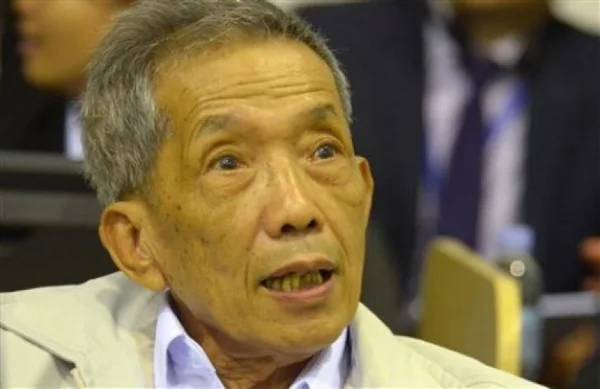
François Bizot: Facing the Torturer

The Wall Street Journal, November 20, 2012

Comrade Duch.jpg

In 1971, François Bizot, a French ethnologist living in Cambodia, was seized by Khmer Rouge insurgents. Held in a prison camp for 77 days and then freed, he is the only Westerner to have survived anything but the briefest brush with Khmer Rouge captivity. His interrogation sessions evolved into a twisted facsimile of friendship with the camp’s commander, Comrade Duch. Convinced that his prisoner wasn’t after all working for the CIA, Duch persuaded the Khmer Rouge leadership to let the Frenchman go.

Phnom Penh fell to the Communists in 1975. Not so long after, Duch was appointed director of the new regime’s Tuol Seng prison. There some 17,000 people—men, women and children—would perish over the next four years, frequently after torture designed to “prove” a guilt that no longer had to be anchored in any reality. When Mr. Bizot later discovered what his tormentor-savior had become, he agonized over Duch’s “monstrous transformation.” Partly in response, in 2000, he published “The Gate,” a powerful, if lushly overwritten, memoir of his capture, release and eventual evacuation with other foreigners from Phnom Penh after that city’s surrender to the Khmer Rouge. He reached the perversely empathetic conclusion that Duch had merely managed to “tame” the terror that must have enveloped him in the nightmare world of the Khmer Rouge, just as Mr. Bizot had come to control his fear while chained up in that camp. In the book’s epilogue, Mr. Bizot described a return to Cambodia prompted by Duch’s arrest in 1999.

“Facing the Torturer” (at least notionally) picks up where “The Gate” left off and culminates in the author’s appearance as a prosecution witness at Duch’s 2009 U.N.-supervised trial. But this short book—and for a short book it can be very long-winded—is rooted in Mr. Bizot’s prolonged reinterpretations of his experiences in the Cambodia of four decades ago. It is a reappraisal colored by incidents that stretch even further back, and the book’s first chapter features a meditation on a possibly necessary evil from his youth—the killing of a beloved pet—and on an incident when, as a small boy in occupied France, he was punished by his panicked mother for sticking his tongue out at a German officer. “I understood that fear could push anyone beyond the normal limits of their behavior.” There is also a recollection of the unease he felt walking past a slaughterhouse as a child and memories of his time in the French army fighting in Algeria.

Such moments are assembled as evidence for a broader case, not so much against Duch, whose individual responsibility Mr. Bizot readily accepts, but against humanity as a whole. We are all capable of horror, he wants us to know: a discovery about as startling as the realization that, as a species, we walk on two legs. In 2010, Duch was convicted of torture, murder and “crimes against humanity” and is now serving a life sentence. Mr. Bizot sees the verdict almost as collective alibi: “We never look under the mask of the monster to make out the familiar face of a human being.” Oh, please.

Mr. Bizot corresponded with his former captor and went to see him in prison. But what lies behind that mask remains, in the end, elusive. Duch’s sparse and dutifully contrite written response to “The Gate” is included in “Facing the Torturer” but gives little away: “Life forces us to do things we do not like doing.” Given the grotesque cruelty of Tuol Seng, there must have been something more than mere opportunity, or the chaos of midcentury Indochina, that turned Kaing Guek Eav, a former math teacher, into another of the 20th century’s lethal everymen.

Duch was a merciless jailer, killer and torturer. But he is neither insane, nor, it seems, a sadist. Nor was he just obeying the orders of a leadership too dangerous to defy. The best clues in the pages of either book (and “The Gate” and “Facing the Torturer” should be read together) as to why—and how—Eav became Duch are tantalizingly incomplete. We glimpse a “demanding and moral being” (he has now, make of it what you will, converted to Christianity) who becomes “possessed” by a cult that offers him the austere pleasures of purification and an intoxicating immersion in a quest for a liberation that was anything but.

Mr. Bizot explains how torturing was for Duch “part of a whole. It was nothing more than putting the ardor of his commitment into practice, the action being in proportion to the greatness of the revolutionary ends . . . a task that he could only carry out by making himself literally ‘out of breath.’ ” Doubtless, it became easier over time.

But of the cult that consumed this “man of faith,” there isn’t much analysis in either of Mr. Bizot’s volumes—just sightings of shadows and fragments of a greater malignancy. The “dreadful smothering” of Cambodia lurks, for the most part, either offstage or in echo or reflection. But the evil comes into clear view in Mr. Bizot’s terrible, telling details. In “Facing the Torturer,” he recounts the chaos of the refugee camps set up in Thailand for Cambodians as their country collapsed into darkness. The camp that the Khmer Rouge had—astoundingly—been permitted to run on Thai territory stood out for “its cleanliness, silence, discipline.”

It was there that some of the evacuees from the French embassy—”journalists and humanitarians”—came across a “half-naked boy tied to a post: He had fainted under the scorching sun.” They complained to the authorities, only to be told that the child was a thief. He had been caught stealing from “one of the bags of rice allocated to the collective.” Well, the camp was so much more orderly than anything else the visitors had seen that they found themselves “unable to utter any protest.” They muttered a few words of lukewarm praise and left. “I was,” recalls Mr. Bizot, “familiar with this kind of silence.”

Happy Warriors

The Weekly Standard, October 15, 2012 

Nigel Farage, UKIP Conference, Birmingham, September 2012   ©  Andrew Stuttaford

Nigel Farage, UKIP Conference, Birmingham, September 2012   ©  Andrew Stuttaford

For people once described by David Cameron as “fruitcakes and loonies and closet racists, mostly” (I’ve always savored that sly “mostly”), the members of UKIP—the euroskeptic United Kingdom Independence Party—gathered in Birmingham last month for their annual conference were a bright, friendly, and refreshingly normal bunch.

They were also surprisingly upbeat. The euro—that Freddy Krueger of currencies—remains as indestructible as it is destructive, and José Manuel Barroso, the president of the European Commission, is openly using the once-taboo F-word, pressing for transformation of the EU into a “federation of nation-states.” But never mind all that, the cheerfully determined folk at the conference reckoned that events were moving their way. UKIP, said its leader, the indispensable, charismatic, and hugely entertaining Nigel Farage, is “a party in a very good mood.”

Indeed it is, and why not? Nearly two decades after its founding in 1993, UKIP has come a very long way, despite bouts of internecine strife, a series of scandals, serial eccentricity, and a collection of electoral disasters that would have made even Harold Stassen pause. As Farage explained to the conference, things had been a “bit shambolic” in the past, a confession that was no revelation.

Thanks to the EU, and in more ways than one, this dismal state of affairs has been changing. The relentless intrusions of Brussels into everyday British life have sustained a market for UKIP’s ideas in a nation that was never europhile to start with. And one shocking continental innovatio—proportional representation—has given UKIP a position unimaginable under Britain’s first-past-the-post voting system.

The mathematics of first-past-the-post are brutal for upstart political parties, except in areas where they can find concentrated support such as that enjoyed by nationalists in Scotland and Wales. The Liberal Democrats took 23 percent of the vote in the 2010 election, but only 57 seats in the 650-member House of Commons. UKIP fared even worse, winning 3 percent of the popular vote and taking no seats at all.

Such results feed upon themselves. The electorate shies away from casting votes that will be wasted—or worse. Much of UKIP’s support comes from formerly die-hard Tories, and many more of that growing tribe would follow their lead were it not for their (justifiable) fear of splitting the right-wing vote and letting the left slip in through the middle. As it is, defections to UKIP probably cost the Conservatives some 20 seats—and an absolute majority—in the 2010 election. The Tories thus ended up in a coalition government with the euromaniacal Liberal Democrats, an irony lost on few and a strong disincentive for many potential UKIP voters to slip the Tory leash. And UKIP hasn’t done much better in local elections. It has just a handful of councilors and supreme power only in the Cambridgeshire town of Ramsey (population 6,000).

Thanks to proportional representation, worries about wasted or counter-productive votes have not been such an issue in elections to the EU’s Potemkin parliament. The few concerns have been further diluted by the suspicion—not quite as justified as in the past—that the world’s only commuting legislature (as a result of some ancient compromise, it sits in both Brussels and Strasbourg) counts for very little. UKIP celebrated the election of its first three members of the European parliament in 1999. Five years later, UKIP came third with 16.1 percent of the vote and 12 MEPs. In 2009 it overtook the governing Labour party, grabbing 16.5 percent of the poll and a haul of 13 seats out of a British total of 72. UKIP’s leadership is convinced the party has a good chance of coming out on top in the 2014 EU elections.

The very nature of a European election makes it an obvious vehicle for a protest against the Brussels oligarchy. That fact, combined with a typically low turnout (in 2009 an unimpressive 34 percent of the British electorate), means that those percentages overstate UKIP’s real backing. Nevertheless the prospect of UKIP topping the euro-poll in 2014—and the momentum that would come with it—must worry David Cameron, facing a national election the following year.

UKIP already stands at some 7-10 percent in national opinion polls, something that cannot just be put down to midterm disillusion with the Tories. There is a wide and growing disconnect between the pedantically centrist, tiresomely PC prime minister and a good number of his party’s natural supporters. Many of these are euroskeptic, and so this breach is only worsened by Cameron’s refusal to respond with anything other than curiously arrogant disdain to mounting British disgust with an EU that displays an ambition only exceeded—hanks to the flailing euro—by its troubles. One recent poll showed almost half of all Britons wanted out of the EU, while only under a third preferred to stay in. Making matters worse still for Cameron, however unfairly, is the U.K.’s failure to emerge from the economic mess his government inherited. Put all these circumstances together and UKIP’s allure is not hard to understand. Nor is the fact that the party’s appeal is reinforced by its plague-on-all-your-houses outsider status.

And that’s no act: The Birmingham conference was a long way in thinking and in feel from Britain’s political establishment. From the endearingly self-deprecatory remarks that accompanied so many speeches, to the occasional organizational glitches, to the misfiring microphone at the conference’s Friday night “gala dinner” (tickets cost all of $55), this was a gathering that featured little of the bombast and none the slickness of the larger parties’ shindigs. The auction that accompanied the gala included some cheaper items—tea bags in a fancy box, a woven silk portrait of the queen, and a painting that would have been unforgivable even had the artist been blind—that only underlined the distance between UKIP’s grassroots essence and the political establishment some UKIP members refer to as the Lib-Lab-Con.

At a desk near the entrance to the conference, some volunteers—including Mrs. Farage (a German, as it happens)—could be spotted selling Ukitsch: umbrellas, pens, mugs (“The EU is NOT my cup of tea”), tote bags (“The EU is NOT my bag”). Then there was the moment when Mr. Farage—no velvet ropes here—started hawking “Belgian damp rags” to a delighted crowd at five pounds each. (Full disclosure: I bought two.)

Autographed by Farage, these, uh, striking kitchen towels are decorated with the dispiriting features of Herman Van Rompuy, the president of the EU’s European Council. They are an allusion to the one event, more than any other, that made Farage the YouTube star that he is today, a status he cemented with a series of speeches that did much to ensure his recognition by Der Spiegel as the “seventh most dangerous politician” in Europe, no small honor. In 2010 Farage, an MEP since 1999, greeted Van Rompuy—world famous in Belgium, if nowhere else—to the European parliament shortly after the former Belgian prime minister had been appointed the quasi-head of the EU’s quasi-state. After asking who Van Rompuy was, and how he had been picked for this job, Farage compared the new potentate’s charisma to that of a “damp rag” and his appearance to that of “a low-grade bank clerk” (Farage apologized later to bank clerks). It was a virtuoso, deftly theatrical performance, but, as so often with Farage, there was a knife concealed within the knockabout. After the laughs there was this, delivered more quietly:

I sense though that you are competent and capable and dangerous and I have no doubt that it is your intention to be the quiet assassin of European democracy and of the European nation-states.

This display of unruly parliamentary vigor was too much for the EU’s mausoleum of democracy. Farage was fined $4,400 for his lèse-Rompuy, not a bad price for the publicity it brought.

Farage, 48, a smoker (despite a bout of cancer in his 20s) who enjoys a drink or two, is well aware of his naughty, none-of-the-above appeal. The Belgian damp rags were also decorated with a small, impish photograph of UKIP’s leader roaring with bad-boy laughter. UKIP’s anti-establishment message was a familiar refrain from the conference floor. The term “political class” was a frequent punch line, repeated with more resignation than anger, the exasperated lament of passengers who have found themselves on a peculiarly poorly run vessel but are still debating how violent the mutiny should be.

One thing that does seem certain, however, is that the Conservative party is in danger of being shoved over the side. It’s not just the EU, or the economy, or the drift to a witless center, although it is all those things. There’s something else. UKIP’s activists are a smart lot, and they understand but do not appreciate the contempt in which they have for too long been held by Cameron’s metropolitan clique. There’s recently been talk of some sort of UKIP-Conservative nonaggression pact for the 2015 general election. In his keynote speech, Farage appeared to leave a door slightly ajar “to consider it,” but only in exchange for a promise “written in blood” of an in/out referendum on the EU. A later speaker wanted something else: an apology. The applause that followed ought to be a reminder to Cameron to be careful in the future about whom he chooses to demonize.

As always in Britain, resentment comes wrapped in the country’s class sensitivities. The accents at the conference were provincial. Toffs were scarce on the ground. As I listened to the talk, time went into reverse, to Conservative constituency meetings of 30 years ago. These were Thatcher’s people; many of them had come of age under the Iron Lady’s reign. They were no-nonsense, often self-employed, and not the sort invited to the dinner parties that had dreamt up the rainbow coalition of politically correct gestures that, in the end, failed to carry Cameron to clear victory in 2010 against one of the most incompetent governments in British history.

To date the border between UKIP and the Conservative party has been ill-defined and rarely policed. That may be changing. If UKIP is to anchor itself at home as well as in the European parliament—essential if it is to increase its clout—it cannot just be about Brussels (the conference’s slogan was “Beyond the EU”). That will mean staking out a position more clearly distinct from the Tories than hitherto. Farage (who quit the Conservative party in 1992 over the EU’s Maastricht Treaty) has been successful in excluding racists and the jackbooted from his party, and describes himself as libertarian. But it is easy to see that the search for vote—particularly from what Farage terms “patriotic old Labour”—may be easing the party in the direction of the harder-edged, bigger-spending populism of euroskeptic parties on the continent, such as the Finns party (also known as the True Finns) and the Danish People’s party.

That could cause trouble in time, but for now Brussels remains the bogeyman around which UKIP can rally, a piñata for all, bashed in Birmingham by Farage in top form, clever, incisive, and witty. Later, “with greetings from the eurozone,” came Timo Soini (Der Spiegel’s “fifth most dangerous”), the leader of the Finns party and the politician responsible for forcing the previously supine Helsinki establishment to do something to protect its taxpayers from the ravages of a dysfunctional monetary union. Soini was hammer to Farage’s saber, but he was amusing and touching, too—proud of his country but also of de Gaulle’s grand vision of a Europe des Patries. If this conference was a celebration of xenophobia it was taking a very strange form. The single currency itself was, of course, singled out for rough treatment and rougher prophecies, not least from the distinguished City of London economist (and former Treasury adviser), UKIP co-belligerent Roger Bootle: “When did things go wrong with the euro? Right at the beginning.”

That was the fun stuff. It’s when discussing the next stage in this saga that the usually ebullient Farage began to look a little anxious. He has long been skeptical, for good reason, about the terms of any referendum that Cameron might offer the British electorate. His new concern is that Barroso’s attempt to push for federation will provide an extremely convenient escape hatch for Cameron, by providing him the opportunity to offer the British to vote on joining a closer union or remaining “as is.” The problem with that choice is that, unless the position of those EU member states who choose to remain outside the deeper union is fundamentally renegotiated, “as is” is not good enough. It might seem attractive to a country easily bored by the technical complexity of the EU debate, but Britain would remain subject, in practice, to the heavy burden of EU regulation, not to mention the exorbitant costs, direct and indirect, of membership. In short, it would be a very limited victory. The electorate’s fear of the unknown will make an in/out referendum a risky proposition for UKIP and its sympathizers, whatever the current opinion polls may predict, but for now it remains the last best hope.

Making matters worse is the gradual approach of 2015 and the likely election of a europhile Labour government and, with it, the closing of the exit door, quite possibly, forever.

And writing those words makes me think of a scene in the final Lord of the Rings film. As Gimli, the martial dwarf, contemplates the perils ahead, he turns to his companions, and remarks, “Certain death. Small chance of success. What are we waiting for?” Gimli, I feel, would have been a member of UKIP.

Estonian Economics

National Review, September 27, 2012 (October 15, 2012 issue) 

Raekoja Plats, Tallinn, August 2012 © Andrew Stuttaford

Raekoja Plats, Tallinn, August 2012 © Andrew Stuttaford

Tallinn, Estonia – Sitting shirt-sleeved and without, sadly, his trademark bow tie, in his official residence here in the Estonian capital, this Baltic nation’s Swedish-born, New Jersey–raised president, Toomas Hendrik Ilves, looks pained. He’s chewing antacid pills (I’d guess), but it’s the name that I just mentioned that is the problem, not indigestion: “Krugman.”

He sighs.

“I know this has been done to death,” I admit.

Ilves does not disagree.

Estonia has a tragic history of being a battleground for other people’s wars. Thankfully, the latest conflict into which the country has found itself unwillingly drawn — the debate over how the West can emerge from its post-Lehman malaise — has involved nothing more than a “snide” (to borrow Ilves’s adjective) bit of blogging by Paul Krugman for theNew York Times. And even that, the president concedes, ultimately turned out to be “good publicity” for a tale of economic recovery.

In 2008, Estonia’s boom, fueled to overheating by (primarily Scandinavian) banks attracted by the country’s post-Soviet revival, turned, like so many others, into bust. GDP fell by 3.7 percent in 2008 and by 14.3 percent in 2009, taking tax revenues with it: The budget went into a deficit of 2.7 percent in 2008, shocking in a country that aims to run a structural surplus. Unemployment soared to 16.9 percent in 2010, from 4.7 percent in 2007. Housing prices crashed 40 to 50 percent from their peak.

In response, the country’s governing coalition of conservatives and classical liberals cut spending and raised taxes (Estonia’s flat-rate income tax was, however, left untouched at 21 percent) in a squeeze equivalent to over 9 percent of GDP. But it was what happened next that must have really bothered Krugman: After pain came gain. GDP jumped 7.6 percent in 2011, and should grow by 2 to 3 percent this year and next. Unemployment has dropped to 10.2 percent and seems set to fall farther.

That did not fit comfortably with the sometimes-cartoonish Keynesianism that the professor has been pushing since the era of hope, change, and stimulus. So he took to his blog, cropped a graph, and took aim at “the poster child for austerity defenders” — not a role that the Estonians had sought for themselves. There had, wrote Krugman, been a “depression-level slump” (true enough) “followed by a significant but still incomplete recovery. . . . This is what passes for economic triumph?”

Well, no, but that is not what the Estonians, a modest bunch, are claiming. No one I talked to described times as easy, but progress is progress. What’s more, if you push the graph back a touch earlier than 2007, which Krugman used as his starting date, the broader picture is revealed to be rather prettier than the Nobel laureate let on. Yes, it was true that GDP had yet to return to 2007 levels, but it still stood slightly higher than in 2006, no plague year. President of one of Europe’s tech-savviest countries, an irritated Ilves turned to Twitter to rough up the “smug, overbearing & patronizing” Krugman.

Let’s take a step back: Estonia is not Greece. Government is transparent and thrifty. Taxes are paid. Private borrowing ballooned during the bubble years, but that of the public sector did not. At the end of 2008, the state’s debt stood at a sober 4.5 percent of GDP, a figure that might have tempted some governments to try to splurge their way out of recession. In rejecting that route, Estonia did the right thing. It depends on its external trade: Exports amounted to 79 percent of GDP in 2010 (compared, for example, with Greece’s 22 percent). With the European economy in savage, sudden free fall, efforts to pump up domestic demand would have achieved little.

Instead the government concentrated on maintaining the fiscal discipline that is one of the country’s most valuable assets and waited for better times, helped in the meantime by the fact that its banking system (dominated by the subsidiaries of large, well-capitalized Swedish banks) kept liquidity flowing. The wait was not too prolonged. Benefiting from policies often very different from those pursued by the tightwads of Tallinn, many of Estonia’s trading partners pulled out of their post-Lehman dive rather more rapidly than might otherwise have been expected, dragging the Estonian economy up in their wake as exports picked up again. The budget is (broadly) back in balance, and the ratio of central-government debt to GDP stood at 6 percent at the end of 2011, a time, ahem, when the U.S. number was over 100 percent. Estonia’s finances remained intact.

And so, largely, did the population. Demography is a sensitive topic in the three Baltic states, small nations with (in the case of Latvia and Estonia) ethnic balances severely distorted by the influx of Russians who arrived in the Soviet years. The slump has triggered a large wave of emigration. Estonia has been spared the worst of this, not least because of the presence of Finland (Finnish and Estonian are closely related languages) just across the Baltic Sea. Why emigrate if you can commute? There’s probably something else at play, too. All three countries have come a long way since their escape from Moscow in 1991, but Estonia has gone the farthest: Perhaps its citizens were more willing to believe that hanging on would be worth their while.

Estonia’s is an impressive story, but it is a distinctive one, with specifics — including a history of budgetary prudence, the presence of those Swedish banks, a heavy export orientation, assistance from the EU’s structural funds, and a windfall from the sale of emissions quotas — that mean that advocates of an Estonian solution to the euro-zone crisis should proceed with care. Crushing the economic activity on which tax revenues depend is increasing the burden of government debt in many of the PIIGS. In that sense, Krugman was right. Estonia is not a poster child for “austerity defenders.”

But it is a poster child for Estonia: Its frugal, free-market, low-tax, and transparent democracy is indeed something to emulate. An Estonian-style tightening could never have ended Greece’s slump, but if the Hellenic Republic had earlier taken a path that was more Baltic than Balkan, it would not be in the mess that it now is. Coulda, shoulda, drachma.

The sting in this tale is that the euro’s distress may mean that Estonia will not be allowed to follow its own example much longer. This will not be the first time that the trickster currency has caused trouble in Tallinn. It was the prospect of Estonia’s adoption of the euro that triggered that last, fatal surge in Scandinavian lending. On the other hand, it has also represented an additional incentive (and some political cover) for the maintenance of that budgetary discipline without which — ironically, in the light of the shambles elsewhere — the country would not have been eligible for membership in the currency union.

Switching to the euro was seen by most of the Estonian elite as final confirmation that the country had left its Soviet past behind. Even though the Estonian kroon had been pegged to the Deutsche mark, and then to the euro, since its rebirth, many ordinary Estonians were not so convinced that it should be swapped for the single currency, but the terms of the country’s accession into the EU in 2004 rendered their discontent moot. Calls for a referendum were ignored, and Estonia moved over to Brussels’s funny money on January 1, 2011.

If the alternative approach, retention and then devaluation of its own currency (frequently a useful tool in an economic crunch), was considered, it was not considered for long. Exports are vital to Estonia, but it adds comparatively little value to them. Devaluation would therefore have had little impact on their cost to international customers. What it would have done, however, is risk importing yet more inflation into Estonia’s small, open economy. Above all, devaluation would have, as Ilves explains, “wiped out” the middle class. Typically, the mortgages — often on properties that had since collapsed in value — that Estonians had taken out from those generous Scandinavians were denominated in euros. To repay them in depreciated krooni would have been a Sisyphean nightmare. Another alternative, redenominating those loans in local currency, was never a serious option: The liquidity that the Swedes provided throughout the crisis would have dried up overnight.

That was then. The problem now is that Estonia arrived in the euro zone at a very bad time. The safe haven has turned out to be anything but. And it could prove an expensive place to stay. Estonia dutifully helped underwrite the European Financial Stability Facility, the currency union’s temporary bailout fund, and just a few weeks ago ratified its commitment to the fund’s permanent successor, the European Stability Mechanism. If things go badly, that could leave this small country on an unnervingly large hook.

This has not played very well with the electorate. To date, the country’s voters, many of whom remember the infinitely harder Soviet period, have supported the hair shirt. The government was reelected with an increased majority last year. But bailing out feckless, richer folk in Europe’s south (for example, Estonian average earnings are only about one-third higher than the Greek minimum wage) has been a tougher sell. Most Estonians opposed participation in the EFSF and ESM. By contrast, the political class remains willing to trudge through euro-Calvary, although there are some signs that this resolve may begin to crumble if the bailouts grow bigger (and thus potentially more costly to Estonia) and more widespread. And it would be the insult, not just the cost. Should still-poor Estonia really be asked to stump up for Spain? Or Italy?

Ilves points out that, “to put it crassly,” Estonia has profited nicely from its membership in the EU (not least from the financial support that Brussels channels to the union’s less prosperous members), and it has — so far. But there’s an obvious danger that Santa could turn Fagin.

And the euro’s woes menace more than Estonia’s coffers. It now seems clear that attempts to fix the single currency will revolve around trying to integrate the euro zone into a deeper political and budgetary union. Such a union, were it to be formed, would be launched with promises of financial discipline, transparency, and democratic accountability, none of which, given such a construction’s artificial, ill-fitting, and unnatural character (not to speak of the EU’s own lamentable track record in these respects), are even remotely credible. And what then would happen to Estonia, trapped within a Frankenstein union that could be held together only by methods — budgetary and otherwise — that would be the antithesis of everything that independent Estonia has come to stand for?

Neither Ilves nor any other of the political figures to whom I have spoken in Tallinn appear to believe that this is what lies ahead, but, even amid the confidence that is the product of past success and satisfaction at Estonia’s hard-won arrival in “Europe,” it is impossible to miss some hints of uncertainty over what comes next.

That uncertainty needs to be replaced by alarm.