A Huckster at the Mic

Mark Jacobson - Pale Horse Rider: William Cooper, the Rise of Conspiracy, and the fall of Trust in America

The Wall Street Journal, September 19, 2018

Bill Cooper.jpg

‘Nonsense,” said the Talmudic scholar Saul Lieberman, referring to the Kabbalah long before its celebrity moment, “is nonsense, but the history of nonsense is scholarship.” In the intriguing if uneven “Pale Horse Rider,” writer and journalist Mark Jacobson takes a primarily biographical approach to the strange, sad tale of the turn-of-the-millennium conspiracy theorist Milton William “Bill” Cooper (1943-2001). In doing so, he has missed an opportunity to take a deeper look at how, what and why we believe.

Cooper’s best-known work, “Behold a Pale Horse” (1991), is a dense, meandering and bewildering compendium of conspiracy theories. These include the allegation that JFK was murdered by his driver, the discovery of a plan to blow up Jupiter and the revelation of a treaty between Ike and space aliens. Yet there is also the suggestion that “the whole alien scenario is the greatest hoax in history,” a trick to frighten the “sheeple” (a favorite Cooper term) into submission to a “one-world government” controlled by . . . the Illuminati. Choose your own truth. After all, Cooper himself concedes that “one or more conclusions may be wrong.” This Bedlam medley has sold almost 300,000 copies. Why?

Readers wanting to find out are mainly left to navigate their own way through the fever swamps: Mr. Jacobson describes more than he explains, a flaw mitigated by his sharp eye and keen ear. Scattered through his account are stepping-stones to a partial understanding of Cooper’s appeal. A rapper from the Wu-Tang Clan tells Mr. Jacobson that “everybody gets f— [but] William Cooper tells you who’s f— you,” a near-perfect, if NSFW, summary of conspiracism’s attraction to the powerless or paranoid. It offers a structure for rage, an excuse for failure, a flattering fantasy of being in the know.

Mr. Jacobson dubs Cooper a “P.T. Barnum of dread.” (“The Hour of the Time,” his long-running shortwave-radio show, opened with wailing sirens, a sinister distorted voice, barking dogs, shrieking people and the sound of “tramping . . . feet, growing louder, closing in.”) But Cooper was a huckster who took more than a swig of his own Kool-Aid. The origins of his dreamscape—born at the intersection of creativity and psychiatric disorder, and reinforced by post-Vietnam, post-Watergate disillusionment and the need to make a buck—are easier to understand than its evolution. A saga in perpetual flux (Knights Templar! Freemasons! The aliens really were a hoax!), its backstory stretched across millennia.

Cooper was obsessed with the New World Order and the actions of jackbooted government enforcers against the Branch Davidians in Waco, Texas, and white separatist Randy Weaver at Ruby Ridge, Idaho. He became a part of the “patriot” fringe (Timothy McVeigh was an admirer). But, while his views often inspired theirs (the Clinton administration labeled him America’s “most dangerous” radio host), they did not always coincide. Cooper’s following among some African-Americans, a community targeted in conspiracies he claimed to have uncovered, does not fit the militia mold. On the other hand, Cooper reproduced the notorious anti-Semitic forgery “The Protocols of the Elders of Zion” within “Behold a Pale Horse.” The deception, he maintained, was not that the “Protocols” were a fake, but something else: The plotters were not Jews, but Illuminati. Oh.

Conspiracism seeps through many cultures, nations and eras. It isn’t uniquely American, but it can take distinctively American forms. For example, Americans’ traditional distrust of government can mutate from a sign of rude civic health into a pathology. Cooper, as Mr. Jacobson relates it, tapped into a feeling of alienation fueled (often) by mourning for a vanished, if frequently imagined, past—white picket fences and all that—which he turned into a very American narrative about the betrayal of the promise of liberty contained in the Constitution, a sacred text now disdained.

Mr. Jacobson is not entirely unsympathetic to his subject’s point of view, commenting that there’s “no arguing [Cooper’s] basic insight: that something wasn’t right, that there was something you couldn’t quite put your finger on except . . . that you were a little less free than . . . yesterday.” That’s an extremely generous interpretation of Cooper’s “insight.” In any case, it’s no secret that we live in an ever more controlled, ever more controlling society.

Mr. Jacobson accepts that Cooper said “some of the nuttiest things” yet asserts that what counted was “the journey, the relentless search for truths.” But that was not what Cooper sought. He replaced truths he didn’t like with stories that he did. In June 2001 Cooper discussed threats made against the U.S. by Osama bin Laden. There would indeed, predicted Cooper, be a “major attack.” Bin Laden would be blamed, but “don’t you even believe it.” Within hours of the 9/11 attacks, Cooper was telling listeners that the two jets could not have felled the Twin Towers any more than a truck filled with fertilizer could have brought down Oklahoma City’s Alfred P. Murrah building. He was the first Truther.

Mr. Jacobson attributes the spread of the Truther virus to the need for “explanation . . . [and] something that made sense”—as if, according to its brutal logic, the 9/11 massacre did not. Yet those words work well as a general description of conspiracism’s allure: Unwilling to face life’s arbitrariness, we make connections where none exist.

Cooper ended his days “a madman,” writes Mr. Jacobson, “holed up in his [Arizona] hilltop home.” There was a federal warrant out for his arrest (for tax evasion and bank fraud) but after an altercation with a neighbor, local police took action. An attempted arrest in November 2001 ended with a scramble in the dark. Cooper shot first, leaving a cop paralyzed. A deputy returned fire, handing Cooper a death he had forecast on air—gunned down on his doorstep in the middle of the night, a Truther martyr, some argued.

The most in-depth coverage of Cooper’s death, notes Mr. Jacobson, may have come from “a then relatively unknown twenty-seven-year-old shortwave broadcaster from Austin, Texas: Alex Jones.”

Don’t believe the EU – Greece’s crisis is nowhere near over

EuroGreece.PNG

With Nemesis dodged, however ruinously, it has not taken too long for Hubris to reemerge from under the rubble.

“The Greek crisis ends here tonight,” declared the EU commissioner for Economic and Financial Affairs within minutes of the conclusion of the June meeting at which it was agreed that Greece would receive the final slice (€15 billion) of its third Eurozone bailout this August.

Even though Greece’s graduation from rehab had been sweetened by its Eurozone creditors extending the repayment date of almost €100 billion of debt (about a third of the total) by ten years, this claim of victory was both tasteless (youth unemployment currently stands at nearly 40 per cent) and premature. Greece will be left with a cash cushion of €24 billion, which should enable it to avoid having to approach the financial markets for around two years — a handy breathing space, to be sure, but one that is more likely to be a respite than the preamble to a cure.

The country’s GDP expanded by 1.35 per cent in 2017, after almost a decade of annual declines interrupted only by the annus mirabilis of 2014, the one year when it eked out a positive return, a miserly 0.74 per cent. The IMF reckons that the pace will pick up to 2 per cent in 2018 and 2.4 per cent in 2019, which is at least something, if less than hoped earlier.

Perhaps that might happen — if the global economy keeps ticking over (and the neighbourhood remains calm: let’s not talk about Turkey and Italy) — but it’s impossible to miss the subtext lurking within the IMF’s recent report on Greece. Has a slump as deep as America’s Great Depression, but more prolonged, left behind enough of a country to make its own way? And will, as the IMF clearly worries, the continued policing of Greece’s finances by its reluctant rescuers be so severe that it shrinks the scale of a desperately needed recovery?

Formal exit from the bailout regime will mean an end to the harshest of the austerity measures that went with it, but Athens will still be required to maintain an annual “primary” (i.e. before debt servicing) budgetary surplus of 3.5 per cent until 2022. The straitjacket will then be loosened — somewhat. The government will be expected to achieve an average annual primary surplus of 2.2 per cent until, well, 2060.

Adding a culturally appropriate touch of Sisyphus to this already implausible undertaking (the IMF diplomatically talks of “very optimistic assumptions”), any new funding from the markets will be priced on far less generous terms than Greece’s rescuers have been charging.

And there’s no reason to be sanguine about that existing debt. It may be cheap and the timetable for its repayment leisurely, but its sheer size (some 180 per cent of GDP) means trouble ahead. After all, this is not a drachma-denominated liability that Greece once might have printed away. And it wouldn’t be a drachma-denominated liability even if Greece readopted the currency it should never have abandoned. A reborn drachma would plummet so far that the dream of repayment would quickly be replaced with the reality of default.

Brussels’ convenient conceit is that the EU’s new and improved Greece will grow out from under this burden, an unlikely prospect made more unlikely still by overly onerous budgetary constraints and the structural problems that should have made the country ineligible for the euro in the first place.

To start with, there is the matter of ensuring the economy can keep up with the rest of the Eurozone, not easy given the country’s persistently low productivity. Back in the days of the drachma, Greece could at least devalue its way into some approximation of competitiveness. With that option off the table, the conventional alternative, a domestic squeeze — an “internal devaluation”, to use the jargon — has been tried since the early stages of Greece’s long Calvary, and it is still being tried. But whatever its merits as a device to eliminate some of the worst aspects of the Augean state, there is scant evidence that it has done very much to sharpen the country’s competitiveness.

Indeed, in some respects it may have made things worse. Destruction can be creative, but sometimes it is just destructive. GDP stands at 2003 levels and at less than 60 per cent of its 2008 peak. Disposable income has fallen by about a third since 2010 and the private sector has been devastated. The banking sector is under-capitalised (credit is still contracting).

In short, so much has been smashed up that it is difficult to see where the type of turnaround Greece needs can come from. Three hundred thousand Greeks, including many of the nation’s best and the brightest, have emigrated in the last eight years, a move made easier by their right to settle anywhere within the EU. How many will come home?

A similar question can be asked about capital, which also moves freely throughout the EU and, as between the different countries of the Eurozone, with (the danger of eurogeddon apart) no currency risk: A French euro is a Finnish euro is a Greek euro. If a euro invested in Greece cannot offer the returns available from a euro invested elsewhere in the Eurozone, the country will struggle to attract investment, whether domestically or from abroad.

Rather than promote the economic convergence of its constituent parts, a currency union could well have the opposite effect. Capital will tend to flow to its winners and away from its laggards, a process that could doom Greece to ever more peripheral status. This slide will be accelerated by the unwillingness of the Eurozone’s member-states to agree to supplement their monetary union with a fiscal union that would, as in the US, establish the automatic transfer of resources from richer to poorer states that operates as a brake on a currency union’s natural centripetal pull.    

The task of modernising the Greek economy is, to put it mildly, incomplete, and there must be some doubt as to how much further its government is prepared to go down that route. The authors of the IMF report refer politely to “reform fatigue”. “Political pressures,” it warns, “to roll back reforms may intensify ahead of the 2019 elections”. Indeed they may, not only because of the agony associated with these reforms (made even more painful by outcomes with a tendency to disappoint), but also because of the largely accurate perception that they have been imposed from outside.

A good number of the real culprits — most notably those who took Greece into a currency union for which it was not ready and then squandered the opportunity it might have represented— are home-grown, but that’s not how it appears to many voters. Under the circumstances, it will not be surprising if some politicians are tempted to suggest to them that Sisyphus should shrug.

But even if Greeks do vote to stay the course — and the best guess is that they will, if only, in many cases, because they fear the alternatives —  and even if Italy’s new government does not trigger a broader Eurozone fracas, economics will eventually reignite the Greek crisis and, probably, sooner rather than later.

One of the rare, if partial, concessions to reality in the arrangements negotiated in June was that the Eurozone’s leadership will take another look at Greece’s situation in 2032 (2032!) to see if further debt relief is required. Well, it will be — and quite some time before then, because, in the end, nothing has really changed. Greece will continue to pay a terrible price for membership in a currency union for which it was, is and will be completely unsuited, but is understandably terrified to leave.

Its creditors, meanwhile, particularly in the Eurozone’s richer north, are terrified about the damage a Grexit could do to a Eurozone built on unstable foundations that they don’t want to complete, demolish or remodel. And so, after a re-run of a drama that will be stale before it has begun, there will be a fourth Greek bailout – and that won’t change much either.

A March of Folly

Ashoka Mody - EuroTragedy: A Drama in Nine Acts

National Review, July 26, 2018 (August 13, 2018 issue)

euroburn.jpg

Near the beginning of his convincing, readable, and satisfactorily acid account of the rise and who-knows-what-now of the euro, Ashoka Mody cites basic monetary theory and grumbles that the European Union’s leaders “should have been aware that a single currency could not [by itself] deliver . . . prosperity.”

The EU owes its existence to the notion that Europe should avoid repeating the catastrophes of its 20th-century past. Yet by imposing a single currency on a large number of very different countries, it was blending elements of two lesser disasters — fixed exchange rates and central planning — into a combination that history (and some distinguished Cassandras) suggested would end very badly indeed.

No matter. Political ambition trumped economic risk on grounds that fail to persuade Mody. After all, the economic tensions built into a shared currency of such scope were more likely to divide than unite. But Mody overlooks the centrality of the three words “ever closer union” in the preamble to the 1957 treaty that paved the way to the EU. They set the course of the European project in only one direction — forward. To Brussels and its allies, the key attribute of monetary union was that it threw away the key: There was no easy way to check out. Under the circumstances, the governments signing up for the new currency should have paid more attention to flaws in its design that added to its already considerable risks. Perhaps most dangerously, in the absence of political support for a fiscal union to act as a safety net, the euro was launched without one. Once again, no matter: If a crisis developed, it would, enough of the right people evidently believed, overwhelm opposition to that fiscal union. The ratchet of integration would turn again.

This was not a novel idea. When the single currency was first formally proposed back in 1970, “falling forward” was to be “its guiding philosophy,” Mody writes. “Crises would make Europeans more determined to move forward. . . . Europe would emerge stronger and more vibrant.” This cynical strategy has worked well for Brussels in other areas, but, with the single currency, it was pushed too far. The EU emerged neither stronger nor more vibrant, but hobbled, embittered, and lopsided.

Mody, an economist and a visiting professor at Princeton, has worked at the World Bank and the International Monetary Fund. At the latter, his role included acting as a deputy director of its European Department, and he was responsible for the Fund’s relationship with Ireland during its euro-zone nadir. He is thus well equipped to describe the euro’s curious political and intellectually indefensible origins, as well as the new currency’s grubby gestation, the bubble the euro facilitated, and the bust that came close enough to breaking the euro zone apart. Mody recounts how the currency union was held together, before turning his attention to a recovery that may be no more than the calm between storms. Overall, he tells a tale of warnings ignored, of groupthink, of deception and denial, of both recklessness and an excess of caution, of myth, magical thinking, and technocratic illusion — and of reality’s relentless revenge.

For all Mody’s meticulous chronicling of events, he has room for broader themes too. These include a sustained attack — not without cause — on the German-led fixation on budgetary targets and, in particular, an overly emphatic insistence on “austerity” as the cure for the euro zone’s troubles. It is not an endorsement of fiscal profligacy to argue that, in certain cases, the screw was turned too tightly too soon. Compelling Greece, in essence, to try to deflate its way back to better days was already to ask a great deal. To be sure, the Baltic states (by then de facto members of the currency union) managed to do just that. But there were specific reasons that they could, just as there were specific reasons that Greece could not. And these were distinctions that could not be given the recognition they deserved, thanks to a one-size-fits-all financial regime that was taken far further in the euro zone — and, after the crisis erupted, applied more harshly — than sharing a currency would already necessarily imply. 

To understand why Berlin wanted the purse strings kept drawn so tight it is necessary to examine what lay behind what at first seems like purely habitual stinginess. Of course, it is unsurprising that German politicians thought that their successful homegrown model — a degree of frugality — was the right one to follow, but there was more to it than that. Berlin simply had no confidence that its partners (notably those in the south of the euro zone) had the willingness or ability to run their finances appropriately, a concern that Mody might have stressed more. This lack of trust may or may not have been merited, but it was a symptom of a monetary union flung together without enough regard for the psychological or political readiness of its member states for such a step. Even the requirement (reflected in the Maastricht Treaty) that they should converge economically turned out to be a joke, at best largely meaningless, at worst a sham.

Germany’s leadership was also nervous about the consequences of their voters’ having to pick up the tab for a currency union they had never wanted, a bill their politicians had assured them they would never have to pay. Mody is clearly conscious of these issues and, pointing to America’s experience during the Great Depression, highlights the fact that the U.S. government had both the “legitimate political authority and the concurrence of sufficient numbers of the country’s citizens” it needed to help struggling states. It still has. Its counterparts in Germany (and the euro zone’s other “creditor” nations) had scant justification for claiming that they had either. There was one other vital distinction: Americans were being asked to help their compatriots. Notwithstanding grand proclamations of a shared EU “citizenship,” the tie between Michigan and Missouri is infinitely more binding than that between Germany and Greece.

Meanwhile, the stakes for countries beyond Germany — especially in the euro zone’s hardest-hit nations — were raised by the legacy of Berlin’s stipulation that the European Central Bank (ECB), like the Bundesbank before it, should (at least nominally) be free of political interference and, unlike the Federal Reserve (which also has to foster employment), focus solely on price stability. That can work, as it did in Germany (where memories of Weimar’s inflation linger), with sufficient popular consent, but, in countries where that consent does not exist, it can be an invitation to radicalization when tough times come calling — and they did come calling. That invitation was made even easier to accept by the way that the unaccountability of the ECB is reinforced — as Mody demonstrates in some of the most disturbing passages in a frequently disturbing book — by the EU’s high-handedly technocratic ethos. It is an essentially post-democratic approach, and as Mody (without resorting to that adjective) shows, it bears no small part of the blame for the euro-zone fiasco.

The effects of this ruinous monetary experiment have not been confined to political radicalization (a phenomenon not reserved to the euro zone’s weaklings) or the stirring up of antagonism between the nations it was designed to bring closer together. The currency union’s laggards have suffered immense economic harm, and the damage, warns Mody, to their potential for growth may endure long after the current trauma has receded. This implies that the chance of genuine economic convergence within the euro zone — never much of a likelihood despite all the promises — will slip even further out of reach. The natural tendency of a currency union to draw economic activity away from its periphery (a topic discussed by Joseph Stiglitz in his 2016 book on the euro) could make matters worse still — not a pretty prospect when that periphery includes entire nations.

The euro-zone drama still has a long way to run. Some months after Mody’s manuscript went to press, a coalition government of populist Right and (sort of; it’s hard to explain) populist Left, with a suspicion of the euro and a distaste for Teutonic austerity in common, took office in Italy. Much larger than Greece, Italy is, Mody contends, the “eurozone’s fault line.” He may well be correct, but don’t expect a cataclysm quite yet. The most impressive thing about this misbegotten currency union is the political will to keep it in one piece.

Mody himself peers into the future towards the end of the book. One supposedly brighter vision features debt forgiveness, a loosening of the euro zone’s fiscal fetters, improved sovereign-bond issuance, and standard panaceas from education to technology. Much more intriguing is a suggestion tucked away in Mody’s description of a (more plausible) downbeat scenario in which, broadly, those steering the currency union do little to change course.

Amid dark talk of sluggish growth and vulnerability to new shocks — not to mention the cascading defaults that could follow an Italian exit from the euro zone — Mody floats the happier alternative that Germany might either readopt the deutschmark or form a new currency bloc with other like-minded “northern” countries. Meanwhile, those states remaining in the old euro zone would still be able to repay their debts in euros, thereby dodging default while benefiting from the increased competitiveness created by a currency that would undoubtedly devalue sharply once the virtuous had left the picture.

Put another way, the best way out of the euro-zone mess remains, as it has been for years, partition. Such a move, however, would represent more than a few steps backwards in what is meant to be a perpetually forward march.

And that would never do. 

Better Dead Than Read

Gregory Claeys - Marx and Marxism

Sven-Eric Liedman - A World To Win: The Life and Works of Karl Marx

The Wall Street  Journal, July 5, 2018

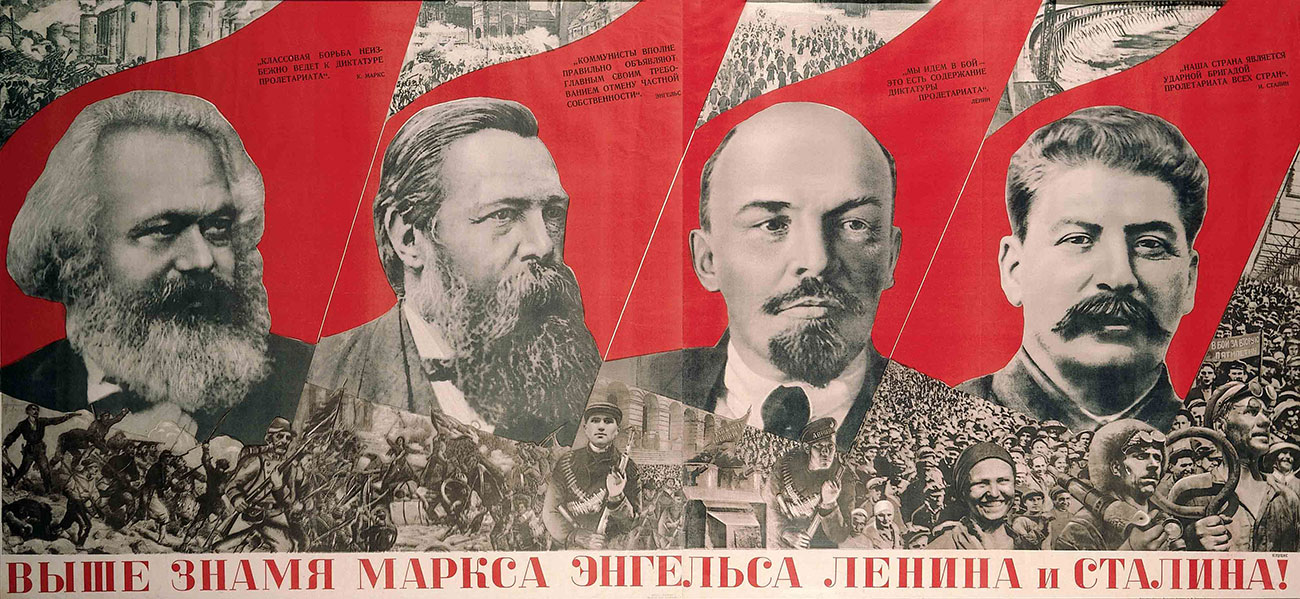
Gustav-Klutsis-Under-the-Baner-of-Marx-Engels-Lenin-and-Stalin-1933.jpg

Two centuries after he was born in the otherwise blameless German city of Trier, on May 5, 1818, Karl Marx is enjoying a moment. He and his writings have had such moments before—many other moments, with all too few intervals, since the 1840s. Most recently, the 2008 financial crisis boosted sales of the old revolutionary’s works, if not necessarily the numbers of those who have read them—not the first time that this has been a problem. In “Marx and Marxism,” London-based historian Gregory Claeys reports that “on first encountering” Marx’s “Das Kapital,” Ho Chi Minh used it as a pillow. Fidel Castro, a dictator made of sterner stuff, boasted of having reached page 370, a milestone that Mr. Claeys reckons was “about halfway”—a fair assessment if we ignore volumes two and three of an epic that often reads better with its pages unopened.

Mr. Claeys presumably timed his book to coincide with Marx’s bicentennial. In China President Xi Jinping, an erstwhile Davos guest star, hailed the anniversary by describing Marx as “the greatest thinker of modern times.” Trier marked the birthday of its most notorious citizen with a conference as well as the unveiling of a heroically styled statue, presented by the Beijing government. Luxembourg’s unmistakably bourgeois Jean-Claude Juncker, the president of the European Commission, turned up in, somewhat ironically, a Trier church to praise Marx’s “creative aspirations” and to absolve him of responsibility “for all the atrocity his alleged heirs have to answer for.” So that’s all right then.

Mr. Claeys, although writing from a position quite some way to the left, does not shy away from the horrors committed in Marx’s name. But he never provides a definitive answer—perhaps no one can—to the extent of culpability a 19th-century philosopher can have for tens of millions of 20th-century dead. In the course of the second part of this book—a brisk survey of Marxism after Marx—Mr. Claeys doubts whether Marx would have supported the Bolsheviks beyond the “securing of the revolution.” But he admits that such a claim “remains contentious.” As for there being any continuity between Marx and “the official ideology of the Stalinist epoch”—well, that’s “debatable” for Mr. Claeys, but his acknowledgment that there could even be a debate will be sacrilege to many of today’s Marxists. Stalin? Nothing to do with us, comrade.

“Marx and Marxism” is concerned more with Marx the thinker—a topic Mr. Claeys handles well, given the constraints of a shortish book—than Marx the man. (Those looking for a more conventionally biographical approach could do worse than opt for Francis Wheen’s “Karl Marx: A Life,” a shrewd, sympathetic and entertainingly Dickensian retelling from nearly 20 years ago.) Nevertheless, Mr. Claeys provides enough information to give a good summary of the story.

Marx was descended from a long line of rabbis on both sides; his father, Heinrich (né Hirschel) Marx, had converted to Lutheranism to avoid anti-Semitic restrictions limiting his ability to practice law. His son was, as Mr. Claeys relates it, a so-so student (other accounts are more complimentary). Not long after commencing his university studies, Marx switched from law to philosophy, a regrettable decision both for the world and for his finances.

Despite a happy marriage to an attractive and clever aristocrat—we’ll overlook the child he fathered with their long-serving housekeeper—Marx lived not so much hand to mouth, as hand to will, and hand to other people’s pockets, in particular those belonging to his wealthy cohort and collaborator, Friedrich Engels. An often desperately hardscrabble existence was made trickier still by Marx’s tendency to spend too much of the money he did obtain on less than proletarian niceties—or, more appropriately disreputably, on handouts to fellow revolutionaries, including on one occasion a substantial sum to fund the purchase of arms for discontented German workers in Brussels.

Mr. Claeys tracks both the development of Marx’s thought—a perennially dizzying work in progress—and the evolution of his career: early success as a radical journalist in Germany and France, involvement with new parties of the left, intermittent periods of exile or expulsion from this country or that. The Prussian authorities, increasingly alarmed by the revolutionary activity that had begun spreading across Europe in 1848, banished this troublemaker the following year. He settled in Britain, and London was to be his home for the rest of his life, a safe space from which he could plot, feud, politick and, despite being beset by procrastination and perfectionism, write and write and write, including “Das Kapital,” a pillow for Uncle Ho, perhaps, but a book that changed history.

Reading Mr. Claeys’s description of Marx the man—someone he evidently, if far from unconditionally, admires—it is both easy and reasonable to conclude that Marx’s personality set the tone for some of the most lethal strains in the regimes he inspired: “He was . . . almost totally unwilling to see anyone else’s viewpoint. The essence of democracy—compromise and the acceptance of opposition—was often beyond his capacity.” From his earliest years, Marx would tolerate very little dissent, and the sometimes lengthy, frequently inventive and sporadically repulsive abuse to which he subjected those with whom he disagreed (especially on the left) contain more than a hint of the prosecutors’ diatribes at show trials to come.

Marx died in 1883. Eleven people attended his funeral, but, as Mr. Claeys notes, “a year later . . . some 6,000 marched to the gravesite.” The cult was on the move. Something more than the cult of personality already emerging while he still lived, it came with echoes of earlier eruptions of millenarianism—a term that has long since expanded beyond its original theological definition to include, among other varieties of judgment day, the complete overthrow of society and its replacement with, in essence, heaven on earth. These similarities have been identified by scholars since at least the mid-20th century, but too often ignored.

Mr. Claeys, who is also a historian of Utopianism, is well equipped to avoid that omission. He acknowledges that millenarianism seeped into aspects of Marx’s philosophy, including both his view of history and his conveniently hazy vision of the communist paradise to come. This line of inquiry would have been worth pursuing further: Millenarianism is an ancient, proven formula that will find an audience as long as the credulous, the discontented, the jealous and the unfairly treated are among us—in other words, forever.

As monuments to cults go, another book, written from a perspective seemingly even further to the left than Mr. Claeys’s, the massive “A World to Win: The Life and Works of Karl Marx” would be hard to beat. The University of Gothenburg’s Sven-Eric Liedman “has been reading and writing about Karl Marx for over fifty years” and published this book in Swedish in 2015; it was released in America this year in a translation by Jeffrey N. Skinner.

Those searching for a truly detailed discussion of Marx (nearly three pages are dedicated to a letter young Karl wrote to his father in 1837) should turn here. Mr. Liedman has criticisms of Marx, but his overall opinion is—how to put this—enthusiastic: “No social theory is more dynamic than his.” Yet the fact that Mr. Liedman’s book is something of a shrine (“we need him for the present, and for the future”) isn’t all bad, from this reader’s point of view. A lucid, scholarly guide to an overelaborated, frequently opaque, often misguided but historically important set of ideas is of obvious value. And so is an erudite, closely reasoned defense of those ideas: An apostle can help explain a messiah.

Mr. Liedman’s reverence can, however, cloy: Marx’s “unwillingness to compromise of course had another side: the magnificence of the project.” While Marx undeniably possessed both an astonishing mind and—when he wanted—a brilliant prose style, Mr. Liedman overdoes the hosannas: “a festive pyrotechnic display of words,” “one of his very finest aphorisms,” “a remarkable brightness around these few lines,” to take but a few.

A characteristic of millenarian movements is that when their prophecy proves false, the failure tends to matter far less than it should. Marxism has proved no exception, but maybe with a touch more reason than most. For all his failed predictions, crackpot theories and rococo blind alleys, Marx was also very early to understand the ever-accelerating productivity unleashed by “bourgeois” capitalism as a truly relentless, unprecedentedly revolutionary force. But the consequences of this revolution would, he believed, eventually bring down its own creators. That cataclysm has been a long time coming, and, if it ever arrives, there will be a distinct twist to the script.

In their hunt for (Marxist) promise today, Messrs. Liedman and Claeys emphasize mainly contemporary income inequality. They should pay more attention to technology. As automation grinds through jobs, wages and up the social ladder, a landscape with some disturbing resemblances to that foretold by Marx is coming inexorably into view.


The Propagandist and the Censor

National Review, June 21, 2018

Censorship.JPG


In 1936, Oswald Mosley, Britain’s Mussolini-in-waiting, released a question-and-answer book that explained what a Fascist Blighty might look like. Freedom of the press? Fleet Street would “not be free to tell lies.”

Some 80 years on, German chancellor Angela Merkel, infuriated by criticism of her immigration policy (and, rather less so, by Russian disinformation), endorsed a new law, the catchily named Netzwerkdurchsetzungsgesetz, under which social-media companies must take down posts that constitute “manifestly unlawful . . . hate speech” and “fake news” from their sites within 24 hours of a complaint. Failure to do so can result in a fine of up to 50 million euros. Fake news is criminally fake if it amounts, say, to an insult, malicious gossip, or defamation — including defamation of a religion or ideology — sufficiently serious to contravene German law.  

Combine the potential size of the fine with offenses that lend themselves to flexible interpretation (much like that “manifestly”) and it’s easy to see that Berlin intended to scare social-media companies into an approach to censorship that goes far further than the letter of the law, a ploy that appears to be working. The government wanted to shut down talk that was not necessarily illegal but — after Merkel flung open her country’s doors in the summer of 2015 — uncomfortably unorthodox. The mainstream media had enthusiastically echoed the chancellor’s Willkommenskultur narrative of kindly Germans cheerfully greeting the migrants, but establishment unanimity was not enough for the instinctively authoritarian Merkel. Her less “welcoming” compatriots had found an audience on social media. That would not do.

Others have taken note. Singapore, no haven of free speech, is taking aim at “deliberate online falsehoods.” Malaysia has criminalized “news, information, data and reports which is or are wholly or partly false.” (Intent seems to be irrelevant.) Russian lawmakers, immune as usual to irony, have proposed their own laws against fake news.

Brussels is on the case — of course it is — urging social-media companies to sign up for a voluntary code of conduct to combat what the European Commission refers to as “verifiably false or misleading information . . . [that is] created, presented and disseminated for economic gain or to intentionally deceive the public, and [that] may cause public harm.” That word “verifiably” has to do a great deal of heavy lifting, and, as for “misleading,” well . . .

Some of Brussels’s proposals, such as more transparency about sponsored commentary, are sensible. Others could conceivably reflect an even more cynical view of the European public’s credulousness than that displayed by the Kremlin. It takes only an elementary understanding of how politics works to grasp that the call for EU member-states “to scale up their support of quality journalism” will be used to justify lucrative handouts for journalism that toes the party line.

Another recommendation, “enhancing media literacy,” isn’t an invitation to corruption, but if the enhancement is to be anything more than a lesson or two in applied skepticism (no bad thing), instruction on how to “read” media will just as likely — thank you, Michel Foucault — enable fake news as do the opposite. Equally, turning to “an independent European network of fact-checkers” is a less-than-reassuring idea: Fact-checkers have all too frequently shown themselves prone to bias. Quis custodiet ipsos custodes? was a good question 2,000 years ago, and it’s a good question now, but it’s not one that worries many of those leading the charge against fake news.

Meanwhile, France’s president, Emmanuel Macron, is pushing a law to battle fake news that includes allowing politicians to complain to a judge about the spreading of supposedly false information online during or shortly before an election. The judge has 48 hours to respond and can, under certain circumstances, block the offending item, a power that — call me a cynic — could, just possibly, be abused. Fake news, Macron told the U.S. Congress in April, is a “virus,” an attack on the spirit of democracy: “Without reason, without truth, there is no real democracy, because democracy is about true choices and rational decisions.” That prettily complimentary, pretty delusional description (take your pick) leaves open the question as to who is to decide what is true — Quis custodiet? again — and where reason is to be found. The madness of crowds is a perennial risk, but a ruling caste convinced that it has all the answers can be more harmful still.

Macron’s words contained the seed of the suggestion that if the electorate votes on a basis its betters find to be flawed, the result is not “really” democratic. To follow that logic through, should such a result be allowed to stand? Macron, it should be remembered, is one of those now steering the EU, an institution with a tradition of either condemning or ignoring electorates that have voted the “wrong” way, or, for that matter, nudging them back to the polling booth for a do-over.  

There is no reason for any complacency here in America. The First Amendment’s protections have never been absolute. While they have been extended a long way, that process can go into reverse. When intellectual fashions change, judicial precedent can be more elastic than is often assumed. And intellectual fashions have changed. The assault on free speech has long since burst out of the academy and, somewhat paradoxically, has been given extra heft by the ubiquity and indispensability of social media, private terrain where the First Amendment has very little application.

On Facebook, on Twitter, and elsewhere, the apparatchiks of Silicon Valley’s new class rule on the limits of free expression, a power they may well eventually have to share — not necessarily unhappily — with politicians who are no fonder of the wrong sort of talk than they are. Fake news could well give Washington a pretext to join in the effort to tame social-media speech. Always on the lookout for another excuse for 2016, Hillary Clinton has described fake news as a “danger that must be addressed,” and Senator Dianne Feinstein (D., Calif.) told social-media companies last fall that if they didn’t sort out the problem, “we will.”

That’s not a threat to take lightly. Social media are now an essential part of the public square. To the extent that social-media comments are policed, the approach taken — arbitrary, opaque, and (at least to a degree) biased — is, given the market power of the social-media giants, disturbing. But the alternatives are worse. What the market gives, the market can take away. What the state takes, it generally keeps. Giving the government the power directly (or indirectly, via proxies) to determine what social-media content is true — and, in some cases, to suppress that which it has decided is false — would be a menace to free speech too obvious to need explaining.

“Regular” media meanwhile would be untouched, protected, as they should be, by the First Amendment. They would also be left to promote their takes (far from monolithic, but still) on events with fewer challenges than they now face, a windfall that would be as unhealthy as it is undeserved. The First Amendment is not a guarantor of objectivity. In an age when the boundaries between reporting and opinion in newspapers, television, and radio have faded, disinformation is, to put it mildly, not confined to games played within the social-media feeds of the unwary.

When Donald Trump describes this more respectably sourced disinformation — and anything else he considers (or pretends to consider) to be disinformation — as “fake news,” he is sending a message that works on several levels. Hijacking a term that was already resonating with the public is not only a clever way of rebottling an old whine — politicians are forever grumbling about the press — but a way of making it stronger. It is not just an attack on the story, but on its source — and on what’s left of its authority. CNN? No better than Facebook.

Broadening the definition of fake news is also a subtle undermining of the argument that Trump owes his presidency to media manipulation. If anything, it carries with it the hint that he was elected despite fake news, not because of it. It may also, one day, provide a way for either Left or Right to begin the erosion of the First Amendment protections the press now enjoys. According to a Harvard-Harris poll from May of last year, two-thirds of voters believe that the mainstream media publish fake news, and that survey was by no means an outlier.

Treating the partisan dishonesty of the news media and the real (so to speak) “fake news” as, basically, the same also risks overlooking the genuine hazard that the latter may represent. For now (but only for now) its most potentially dangerous manifestation comes from the dezinformatsiya orchestrated by a Kremlin once again appreciative of how destabilizing disinformation can be — and clearly aware of how neatly such disinformation can be slipped into social media. How much influence Russian fake news (a handy scapegoat for disconcerting electoral outcomes) has really had so far can be debated, but there is no doubt that the sophistication of its targeting and the quality of its material is going to improve rapidly. The day that a computer-generated Trump makes a fake but (to the right audience) truly incendiary speech mocking, perhaps, the prophet Mohammed is not far away.

The prospect is terrifying. But so is one element in the likely response: the unleashing of censors to block this, ban that, and, presumably, fight a long Pac-Man struggle with bots as the prey. But this cyberwar would probably do more damage to what’s left of the West’s free speech than to the lies of our opponents. Fake news can be suppressed or, infinitely better, rebutted, but, as it speeds through the Web, it can travel many times around the world before the truth has time to boot up.

The Gutenberg galaxy is expanding exponentially, generating unprecedented amounts of information — true, false, and everything in between. To the extent we can trust it — Quis custodiet? — technology may help identify what is reliable and what is not (I met the other day with the CEO of a start-up using artificial intelligence to rate the reliability of those posting on social media), but technology will have to contend with psychology. Our quest for objectivity is less diligent than we like to think. We are all too ready to collaborate in our own deception. Some stories are too good not to believe, some stories are too satisfying to unpack (how many birthers were there again?), some gossip is too good not to pass on, and confirmation bias remains as seductive and reassuring as it ever was.

Skepticism will help, but too much of it — easy enough in an era when old media are regarded with suspicion and new media are difficult to process, let alone trust — can lead to a perverse gullibility. In a 1974 interview, Hannah Arendt observed that “a people that no longer can believe anything . . . is deprived not only of its capacity to act but also of its capacity to think and to judge. And with such a people you can then do what you please.”

Fake news is a challenge that the West must get right. So far, there’s little reason to expect that it will.

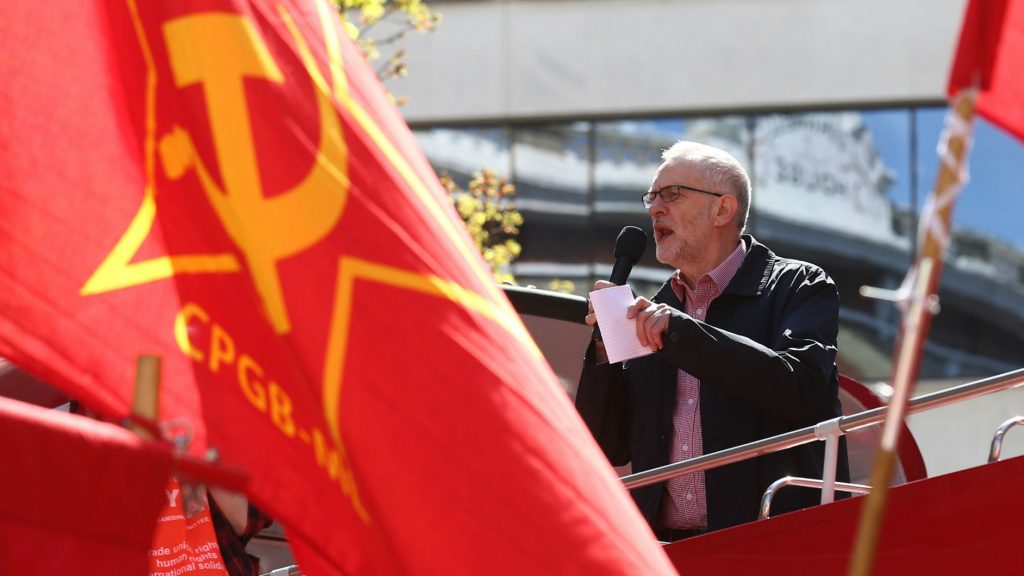
Incorrigble Corbyn

The National Interest, June 19, 2018

Corbyn.jpg

If Britain is now on a track that may see its democracy endangered, an outbreak of carelessness, complacency and quite astounding stupidity in the summer of 2015 will bear much of the blame. In the general election held in May that year, David Cameron, a Conservative who had led a coalition government for five years, won the Tories a surprising absolute majority. It was not large, but it meant he could not use the excuse of coalition to renege on his promise of a referendum on the UK’s membership of the EU.

That was a drama for later. What mattered that summer was that Labour leader Ed Miliband had stood down. His successor was a bolt from the red: Jeremy Corbyn, an extreme (in all senses of the word) representative of what Orwell called that “dreary tribe of…sandal-wearers and bearded fruit-juice drinkers who come flocking towards the smell of ‘progress’ like bluebottles to a dead cat.” Naturally, the bearded Corbyn has been spotted in sandals, and drinks very little or, possibly, no alcohol (“my secret is apple juice or coconut water”).

But back to Miliband: the most interesting thing about him is that he was ruthless enough to beat his brother David, a former foreign minister and the favorite for the job, in the previous contest for the Labour leadership. Nevertheless, he was a consequential leader in two key respects. The first was the mere fact of his election. ‘Red Ed’s’ Caining of his more Blairite brother accelerated Labour’s move away from the legacy of its electorally most successful prime minister.

The second was yet another change (there have been many) in the rules for choosing Labour’s leader. The story is too ornate to go into here, but it would be a shame not to mention that a brawl in a House of Commons bar serves as its prologue. Its conclusion was the replacement of Labour’s electoral college with a “one member, one vote” electorate. This was made up of party members, members of affiliated trade unions who registered as supporters and a new category of ‘supporting members’ who could effectively buy a vote in exchange for a payment of three pounds—the price, one Labour mp noted, of the ‘meal deal’ at one British supermarket chain. The sole recognition that the UK is a parliamentary democracy was the requirement that this ‘selectorate’ could only choose a candidate nominated by at least 15 percent of Labour’s parliamentary party—a hurdle supposed to weed out the wild men, a category into which Corbyn most certainly fell.

He was a thirty-two-year parliamentary veteran who few Labour parliamentarians seemed to like—and even fewer agreed with. Over the years, he had defied his party whips more than four hundred times. He had been the most rebellious Labour MP throughout the three Blair governments. His views may have been poisonous, but he stood by them.

When Corbyn announced he was going to run for the leadership, Britain’s bookies rated him a 100-to-1 outsider. Between them, Blairites, post-Blairites and the soft left accounted for the vast majority of the parliamentary Labour Party. Corbyn should not have been able to find that 15 percent. He had demonstrated the lack of regard he felt for parliament for decades, perhaps most notoriously by inviting two convicted Irish Republican Army (IRA) terrorists for a meeting there shortly after the murderous IRA bombing of the Grand Hotel in Brighton in 1984, an attempted assassination of Prime Minister Margaret Thatcher and much of her cabinet. Over three decades later, he used the Palace of Westminster to host “our friends from Hezbollah.” “Unfortunately,” the Israelis—dark stars of Corbyn’s demonology—had stopped “friends from Hamas” from making the trek to London.

As his fellow MPs knew, Corbyn, an apologist for Castro, Chavez and other tyrants, has never had much affection for parliamentary democracy. However good a constituency MP he was (very), however grandfatherly he might now look, however (usually) mild his demeanor, Corbyn’s politics were still characterized by an adolescent’s anger, an adolescent’s certainty of his own rectitude and convictions disturbingly unchanged since his brief stint at the equivalent of a community college in the early 1970s.

Sure enough, the early indications were that Corbyn would fall some way short of securing the necessary nominations, despite the arrival of a number of new Hard-Left Labour MPs into parliament (more evidence that the Blairite tide had receded). However, partly thanks to social media pressure—a vital element in Corbyn’s rise and subsequent ascendancy—some MPs ‘lent’ Corbyn their nominations. Others did likewise in the hope of earning credibility with the Left, others because they wanted to drag the debate leftwards, and still others out of misplaced charity.

Some of those lenders might have been lulled both by the passing of time—the Hard Left’s last serious attempt to take over Labour had been over thirty years ago—and a sentimental attachment to the purs et durs. The comrades might be misguided relics from (it was believed with a confidence born during the Blair years) another age, but their hearts were supposedly in the right place.

Besides, even if he made it to the finals, there was no way that Corbyn could become leader. Really? The social media activity and unmistakable signs of enthusiasm for him at the grassroots level foreshadowed what was coming—and some in the party were already beginning to fret about the unpredictability of the new electoral system. Despite that—and despite Corbyn’s record—enough Labour MPs lent Corbyn their nominations to secure him a place (just) on the ballot paper.

Margaret Beckett, a former foreign minister (and more), subsequently described those MPs who, like herself, had lent their nominations to Corbyn as “morons.” A year later, she was one of those Labour MPs who cast a vote of no confidence in Corbyn’s leadership. Too late.

When the nominations closed, there were four candidates; a keeper of Blair’s extinguished flame, someone somewhat to the left of her, someone quite a bit further left still, and, then, in the depths of left field, Corbyn. Within days, it became evident that those early stirrings on social media and within the constituencies had meant something. The delirious reception Corbyn was receiving on the stump—something that was never to fade, something his opponents could never match—was amplified on social media and echoed in the polls. Increasing numbers of people were joining the party or paying their three pounds. They were not doing so to throw their support behind the hapless Blairite (she ended up with a paltry 4.5 percent of the poll)..

Traditionally the trade unions, a force for hard-nosed restraint—it’s complicated—might have been expected to pump the brakes. Not this time. Instead, many, including Unite, the largest, (and, not only that, the largest Labour donor) stepped on the gas. Its boss, Len McCluskey, endorsed Corbyn. Back in the 1980s, McCluskey had been a supporter of Militant, a Trotskyite group looking to infiltrate the Labour Party, but he never joined them. As he told the Liverpool Echo in 2009:

I decided that Militant was too sectarian from a political standpoint to be effective. But I believe that on the chief issues they were right.

He was playing a longer, smarter game. In 2010, McCluskey was a crucial figure in Miliband’s leadership victory, but soon ‘Red Len’ was attacking ‘Red Ed’ from the left: the game had much further to go, and, so in 2015, realized McCluskey, did Jeremy Corbyn.

By the time the polls closed, there was no doubt over the result. Corbyn won with 59.5 percent of the vote. Many Labour Party staffers, Blairite or something close to it, attending the announcement wore black, in mourning, they thought, for Labour. However, it was their Labour in the coffin—not the same thing at all.

And for all the talk that it was the hundred thousand or so “three pounders” that had handed Labour to Corbyn (84 percent voted for him), Corbyn also won a clear majority of trade union votes and a comfortable plurality (49.6 percent) of party members.

Many Conservatives were delighted: Labour was finished, a suicide. They ought to have smirked less and understood more. The excitement generated by the Corbyn campaign (excitement that translated into action: over a quarter of a million people voted for him) had not only pulled in over 100,000 three pounders (perhaps twenty times what had been originally expected), but also some 180,000 people had joined the party itself, roughly doubling its size. The Conservatives had around 130,000 members at that time. That gap continued to grow. By January 2018, Labour’s membership had grown to 552,000, while by March this year the Tories had shrunk to 118,000.

To be sure, Corbyn’s surge fed on itself in a way that transformed his rallies into a phenomenon that was cultural as well as political, lit celebrations not only of the would-be Labour leader, but also of those who would vote for him. This may have been one of those spasms of collective hysteria to which allegedly reserved Britons occasionally succumb, but ominously for the Conservatives, those include not only the keening for Diana but also the remarkable wave of public feeling that preceded and then accompanied Tony Blair’s first electoral landslide.

Corbyn’s behavior in the aftermath of his triumph only reinforced Tory confidence—and the gloom emanating from Labour’s ancien régime. Rather than attempt some sort of reconciliation with the parliamentary party, he appointed one of its most left-wing and least clubbable members: his old friend and comrade John McDonnell, the man who headed his campaign, as shadow chancellor of the exchequer (finance minister), the second most important job on the Labour front bench.

McDonnell is far cleverer, but less diplomatic than his leader. Despite Corbyn’s undisguised appreciation (let’s leave it at that) of those who use force for the right cause, and despite the way that those who oppose him have long found themselves at the wrong end of unpleasant treatment (not least, these days, online), he has, by eschewing overtly violent language, preserved a convenient distance from his rougher supporters. McDonnell is not so fastidious. He has in the past called for the lynching of a Conservative minister (he was angry, he said), and joked about the assassination of Thatcher. He often seems more enthused by “direct action” (“what we used to call insurrection”) than navigating the pathways of parliamentary democracy. As for his intriguing relationship with Irish Republicanism, well, “it’s about time we started honoring those people involved in the armed struggle. It was the bombs and bullets and sacrifice made by the likes of [hunger striker] Bobby Sands that brought Britain to the negotiating table.” McDonnell’s democratic credentials were not enhanced by a 2006 listing of his “most significant” intellectual influences: Marx (whom Corbyn has dubbed a “great economist”), Lenin and Trotsky.

Seumas Milne, the journalist Corbyn appointed as his communications director, and, in many respects ideological enforcer, is an apologist of sorts for the old Soviet empire and something of a Stalin man: he has argued that the Father of Nations’ misdeeds have been overstated, or at least misrepresented. Meanwhile it emerged that Andrew Fisher, Corbyn’s newly-minted head of policy, had (ahead of the 2015 election) urged voters in one constituency to opt for the (anarchist) Class War Party rather than Labour. Fisher was suspended, but with Corbyn giving him his full support, swiftly returned to work.

Margaret Beckett has reproached Corbyn’s inner circle for operating “as if they are not part of the Labour Party.” Winning a general election, she fretted, just didn’t seem to matter to them.

Once again, the ‘moron’ missed the point. Corbyn and his clique are playing that long game. The first step is taking over the Labour Party, half of the duopoly (nationalist complications in the Celtic fringe aside) that has largely driven British politics since 1945. The UK’s combination of “first past the post” voting with a purely parliamentary system (there’s no room for a Macron) hugely favors the existing party structure. There’s been a trickle of moderate Labour MPs leaving parliament since Corbyn’s victory. Some appear to have abandoned electoral politics altogether. Understandably so: The lessons of history are clear—the likelihood of a new party making a breakthrough is close to zero.

Corbyn’s team must know that Labour, as the only ‘real’ alternative to the Conservatives, will someday surely win a general election. If by then the Corbynistas dominate the party, the country will be theirs to rule as they see fit. They have thus concentrated on gaining control of Labour’s institutional structure. Sometimes this is just a matter of placing the right apparatchik in the right job, but sometimes it takes votes. Underlining the extent to which Labour belongs to Corbyn, his candidate (a former Unite official) has been elected as the new general secretary, and Team Corbyn has won majorities on the National Executive Committee (the party’s governing body), as well—God is in the details—as on the more obscure Conference Arrangements Committee (which helps shape the annual party conference).

And Labour’s MPs? Finally stung into action by what they saw as Corbyn’s failure to fight hard enough for the UK’s continued membership of the EU during the June 2016 referendum, they passed an overwhelming, if nonbinding, motion of no confidence in their leader. Corbyn ignored it, maintaining that his mandate derived from his party, not his MPs. A little later, he saw off a formal challenge to his leadership with a larger share of the vote than in 2015, proof—as if any were needed—that his party is not going to unseat him any time soon. Since then, some Corbynskeptic MPs have decided that they love Big Brother after all—a turnaround made easier by fear of unemployment, hope of advancement and Labour’s unexpectedly strong showing in the election the Tories called (and then nearly threw away last year).

But, to the left, many MPs remain—not unreasonably—suspect. In September 2017, there was a reduction in the percentage of the parliamentary party required to nominate a leadership candidate from that awkward 15 percent to 10 percent. Pressure on Corbynskeptic MPs has revved up at the constituency level, not least due to Momentum, a far-left group that emerged from Corbyn’s 2015 campaign with the aim of bolstering his leadership—Red Guards with a whiff of the Praetorian and a hint of the Alinsky about them. Now some 40,000 strong, Momentum has developed into a significant force in a party (its founder, Jon Lansman, was elected onto the National Executive Committee in January) it seems intent on radicalizing still further. Its members include skilled social media warriors but also those prepared to devote the time and, maybe, the venom it takes (there are persistent accusations of intimidation and bullying, online and, occasionally, off), to steer constituency parties—many of which are already more left-leaning than their MP—closer to the new orthodoxy, in some cases by picking Momentum-approved candidates for local elections and, of course, parliament.

More moderate Labour MPs must worry that ‘deselection‘ (as their party’s candidate for the next election) looms, leaving them facing the prospect of unemployment. Deselection is a powerful threat—that’s why Unite’s McCluskey, irritated by Labour MPs objecting to the undeniable strain of anti-Semitism (oh yes, there’s that too) running through some of the Corbynista left—recently wrote that he understood the “growing demand for mandatory reselection,” not the first time that he has mentioned this cudgel. Making every Labour MP go through this process would be an effective way of either purging rebels or bringing them to heel. For now, Corbyn’s political secretary is studying the party’s rulebook with a view to investigating how ‘party democracy’ can be improved. Mandatory selection might easily turn out to be one of her recommendations: MPs, said Corbyn in January this year, “should all be accountable all the time,” an innocuous statement except when it is not.

For their part, Conservatives went into 2017 feeling optimistic about their chances against a party that had so firmly turned its back on what was reckoned to be the center ground. The shock vote for Brexit had unquestionably thrown the Tory Party into disarray in June 2016 (Prime Minister Cameron had announced that he was stepping down), but Labour’s predicament appeared to be even worse. Within days of the referendum much of the shadow cabinet (and a slew of more junior shadow ministers) resigned, and then came that vote of no confidence.

Home Secretary (interior minister) Theresa May, wrongly seen as competent—but rightly regarded as the only realistic candidate after Boris Johnson sank without trace—speedily succeeded David Cameron as Tory leader and prime minister. When, in April 2017, she called a snap general election, the Conservatives were very comfortably ahead in the polls. The only question appeared to be by how much May could build on Cameron’s modest majority.

In the event, she wiped it out. May fought a campaign that was not only tin-eared and technically incompetent (there is this thing called social media, Theresa) but also actively self-destructive. For a party to issue a manifesto proposing a policy—quickly, accurately and lethally labeled a dementia tax—that targeted the savings of some of its most loyal supporters was… unwise. May managed to hang on in office thanks to an arrangement with Ulster’s Democratic Unionist Party, but she surrendered the political initiative to Labour, an initiative that, despite falling short of expectations in this year’s local elections, it essentially still enjoys.

There were scraps of comfort for the Tories: their slice of the vote was the highest since the election held in the afterglow of the Falklands War. However, the increase (over 9 percent) in Labour’s share was the party’s best since the 1945 landslide that tossed Winston Churchill out of office—suggesting that there was more to their success than May’s blunders. With hindsight, the way Corbyn had swept to the Labour leadership was a warning that was ignored. At the time his victory was widely regarded as a temporary aberration rather than understood for what it was: an indication of a wider, deeper discontent.

That misreading led the Tories (and many in Labour too) to assume that Corbyn’s party was unelectable, a calculation that rested firstly on presumptions about the electorate that proved to be false. Corbyn’s terrorist associations were ancient history to many voters, even if they knew about them in the first place. His fondness for foreign despots also mattered less than it should. To borrow from Neville Chamberlain’s infamous formulation, Brits showed little interest in the politics of “far away” countries involving “people of whom [they] know nothing.” Cuba? Nice beaches. In the early stages of the 2017 election, Unite (who else?) lent Andrew Murray, its chief of staff, to help toughen up Labour’s faltering campaign (which he duly did). A former journalist for the communist Morning Star (where Corbyn has been a frequent contributor), Murray had only just switched from the Communist Party to Labour. As if that was not enough, and adding some variety to by now routine attitudes to the Soviet past among some of Corbyn’s closest associates, Murray had expressed “solidarity” with “Peoples’ Korea.” Despite a brief media furor, none of this seemed to bother the voters either. This February Corbyn recruited Murray, who remains with Unite, as a part-time consultant.

Closer to home, the Conservatives (and, to be fair, Labour moderates) had failed to grasp that the political center was defined in one way in Westminster and in quite another in the country at large. The Conservatives were correct, on policy grounds, to attack Labour’s plans for the reversal of some of the privatizations of the past decades, but they were wrong to think that those plans would be viewed as extreme. According to a YouGov poll taken in the middle of the campaign, some two-thirds of respondents wanted to see the renationalization of the Royal Mail (post office), while 60 percent (including 44 percent of Tory supporters) favored the renationalization of the railway companies. Labour’s proposed tax increases on the top 5 percent played well too.

Where the real center of British politics now lies is hard to say, but, very broadly speaking, it has been moving to the left for a long time, not least under Blair (more radical than often realized)—a direction the Tories have been unable to reverse. Quite why this should be is complicated, but the growing diversity of the electorate is a part of it (the Conservatives have struggled to win over ethnic minorities, securing only an estimated 17 percent of their vote in 2017, and, a scandal this year over immigration is likely to make that task even more arduous). To go all Gramsci, the cultural hegemony of (various varieties of) the Left has also weighed heavily. That is true of the entertainment sector, broadcast media (the fundamentally center-left BBC remains the dominant news provider), the law, the National Health Service (and the perennial debate that surrounds it), education (approximately 8 percent of school teachers voted Conservative, and, as for the universities, well…) and in plenty of other areas besides.

The Tories had to contend with more immediate vulnerabilities too. Voters were weary of austerity (Labour promised much more spending, but tax increases would be focused on, of course, other people—the ‘rich’ and corporations, principally). Years of wage stagnation had also soured the mood. But the Conservatives’ most alarming weakness was generational. According to YouGov, they trounced Labour among the over fifties (with the size of their majority increasing with the age of the voter), but fell far short with everyone else. The younger the voter the worse the Tories did, partly because that’s almost always the case, partly because Britain’s cultural and demographic change is more pronounced in younger age cohorts, and partly because of the unlikely aura of cool surrounding Labour’s eccentric and seemingly benign grandpa, a performer so good, when it suits him, at concealing his inner steel—he divorced his second wife largely over her insistence on an ideologically inappropriate school for their son—that a swordstick would be impressed.

More substantively, high house prices, rising rents and stagnant wages are preventing many younger Britons from buying their own home (the added indebtedness caused by still bitterly resented university tuition fees, introduced at the end of the century and substantially hiked since, doesn’t help either: in its manifesto Labour undertook to scrap them). Home ownership rates are at their lowest level (around 63 percent) for thirty years, and it is the younger generation who have borne the brunt of that decline. According to the Institute of Fiscal Studies, home ownership rates for those between the age of 25–34 fell from 55 percent in 1996 to 34 percent in 2016.

“I want,” said Mrs. Thatcher in 1983, “a capital-owning democracy. Housing is the start. If you’re a man or woman of property, you’ve got something.” Her political logic was impeccable, and, for a long time, it worked. It could do so again, but there is no easy fix to the current mess. Instead, Generation Rent is left with its nose pressed against realtors’ windows—windows it must be tempted to smash. Without capital, the young won’t rally behind capitalism. Labour meanwhile promised a major boost to homebuilding and, regardless of how counterproductive they have historically been, tougher controls on landlords.

Then there’s Brexit. The majority of Cameron’s cabinet (including May) campaigned, with varying degrees of enthusiasm against it. But it was Cameron who called the referendum and most Conservatives voted for the break with Brussels. In the eyes of the electorate, Brexit is the Tories’ baby, and, after the referendum, the party hierarchy adopted it. “Brexit means Brexit,” proclaimed May. This brought the Conservatives some gains outside their traditional comfort zone, but protest votes by embittered Tory Remainers almost certainly cost them a greater number of seats within their affluent heartland, territory where people did not feel ‘left behind’ and were anxious about what Brexit could mean for business. Identification of the Conservatives as the Brexit party also widened the generation chasm, reinforcing the perception among younger voters, who generally supported Remain, that the Tories were the party of the past, Little Englanders and worse.

None of this accounts for the sudden collapse in Conservative support in the final weeks before the 2017 vote—that was due to the Tories’ self-inflicted wounds and an increasingly impressive Labour campaign—but it helps explain why it fell as far and as fast as it did.

The problem for the Conservatives in 2018 is that not much has changed. Their apparent reprieve in this year’s local elections will probably only be a temporary embarrassment for Corbyn. If May is lucky, it could transform a war of movement into one of attrition (at the time of writing, Corbyn’s personal approval ratings—never high—have slipped below May’s uninspiring tally), but the two sides remain dangerously closely matched: a Labour victory could be just one recession away (the next election is due in 2022). The current recovery, however lackluster, has already lasted a reasonably long time, something that ought to mean that a downturn is on the way—a downturn that would be accelerated, deepened and prolonged by a botched Brexit.

Anything written today about the form that Brexit eventually takes will be rapidly overtaken by events. Nevertheless, as matters now stand, the most straightforward solution, the more or less off-the-shelf ‘Norway option’ (leaving the EU, but remaining within the ‘Single Market’), a solution seemingly acceptable to Brussels, has been rejected by the British government, and, tellingly, not solely because of Brexit hardliners. May is still hunting a dream, a middle way that she likes (and can sell both to her parliamentary colleagues and the EU) between two election-losing alternatives, a highly disruptive ‘hard’ Brexit or one so ‘soft’ that trying to force it through splits her party, alienates former Labour Leavers—or both. Raising the stakes still further, if the EU rejects May’s final proposal, the UK will crash out of the union, resulting in a chaotic, hardest-of-all Brexits, a finale more electorally poisonous than all the rest.

Corbyn will try to sit tight, doing his best—it’s getting trickier—to maintain the artful ambiguity that has served him so well on Brexit. Whatever Remainer platitudes Labour’s ‘absolute boy’ may have muttered during the referendum, he has been a Brexiteer for decades, principally—whatever he may say about the matter—because he sees it as an obstacle to building a properly socialist state. But he is also well aware that some 70 percent of Labour voters wanted to stay in the EU, and that his party has, on balance, benefited from being viewed as the party of Remain.

In February, Corbyn recommended that the UK should enter into a customs union with the EU—something the Conservatives have, for what may be a very temporary now, rejected—but quit the Single Market. Politically that could achieve what Corbyn wants. It sends a useful signal to Remainers, leaves the Tories stuck in their Brexit mare’s nest and, should such a deal actually be struck, it would not block his designs on the economy. Corbyn is also under some pressure to help efforts to stay in the Single Market. In the implausible event he agreed, it would in all probability only be as a device to harass the Tories and only if there was no chance that his assistance would make a material difference. The (more or less) economically liberal discipline underpinning the Single Market cannot ultimately be reconciled with his longer-term vision for Britain.

Masterly inactivity comes with another advantage for Corbyn. It is presently envisaged that the UK’s formal departure from the EU in March 2019 will be followed by a transition period until December 2020. That date ensures that Brexit will still be fresh in the memories of many Remainers when they vote in the next general election, currently scheduled for May 2022. They will be angrier still if there is a recession between now and then. Rightly or wrongly, a downturn is, even if only partly, bound to be blamed on Brexit. Another risk for the Conservatives is that with Brexit a definitively done deal by the end of the transition period (even, if as is now being suggested, transitional customs arrangements are kept going past 2020) some Leavers who left Labour over Brexit may well feel that it is safe to return to the fold—especially if a recession has rekindled old class loyalties.

Away from the Brexit morass, the Conservatives still lack an adequate response to the challenges posed or exploited by Corbyn in 2017. A new leader might help, if only cosmetically, if someone suitable can be found. So far May has held on to her job for the same reason that she won it—the lack of a viable alternative. If she’s still heading the Tory ticket in 2022, it’s hard to see how the Conservatives can prevail even if they can organize (low bar) a somewhat less dreadful campaign than last time. They will have been in power for twelve years—an eon in an age of restless electorates. Keeping May at the top will be brutal confirmation that they are out of people as well as ideas.

The ideas they do have, criticized in one instance (but it applies more widely) as trying to beat Corbyn with Miliband, are likely to be expensive and hard to pay for. And that is without taking account, say, of the sharply rising cost of caring for a growing population of the old and the very old (the dementia tax was a bad answer to a good question). The electorate may have had enough of austerity, but the nation’s debt burden remains high (at around 87 percent of gdp), and increasing spending, even if interest rates stay low, is not a solution without political problems of its own.

Meanwhile, the Conservatives show few signs of knowing how to reverse the decline in the numbers of their ageing, shrinking party (one recent plan, a discount card for younger Tories with a chain of chicken restaurants, came to nothing). In 2017, the far larger—and energized—Labour Party was able to combine social media with boots on the ground to good effect. The Tories may be able to up their online game next time round, but, to quote Momentum’s Lansman, “elections are not won by air wars alone.” He’s right, but the way things are going, the main evidence of the Conservative Party’s presence on the sidewalks will be the whir of a walker’s wheels. Quite a few of those who voted for the party in 2017 won’t even survive long enough to manage that. Theoretically, the middle-aged of today—the old codgers of tomorrow—will replace them, growing more Conservative as they age. Theoretically.

It could be that the more people see of Corbyn, the more relaxed they will become about him. The Tories’ best hope may be that the opposite occurs. The longer that Corbyn (a potential prime minister now, not a no hoper) stays in close focus, the greater the chance that voters will come to understand that the extremist of yesteryear is the extremist of today and the extremist of tomorrow. They may not care that Corbyn palled around with Irish Republicans decades ago, but they didn’t like it when he equivocated over the Russian poison attack in March, in a manner hard, incidentally, to square with the exaggerated reputation for integrity that he enjoys. More generally, Corbyn’s underlying beliefs are quite some way to the left of many Labour voters (let alone voters merely looking in Labour’s direction), if not of his party. That will become ever clearer as time goes by. And the nervous will not be reassured by the high visibility of Corbyn’s more aggressive supporters. If his advisors are smart, Corbyn will campaign in 2022 on, by his standards, a moderate program. After all, if his MPs are either onside or under control—and, increasingly, they will be—he can do what he wants after he gets into power.

Britain has often been described as an elective dictatorship. It is a democracy with dismayingly few guardrails. The constitution is unwritten, legal protections are not as good as they might be, and departure from the EU will, for good and ill, remove another set of constraints on British governments’ freedom of maneuver. Prime Minister Corbyn will exploit this to the full. The red flag will not be flying over Buckingham Palace, but a Corbyn government will do everything it can to push through an agenda far more radical than anything contained in its election manifesto, with, perhaps, the run on the pound that will accompany its election as the excuse: capital controls would not be a surprise. ‘Emergency’ tax increases would not be a surprise. That will just be the beginning.

Such a government will use the institutions of the state to entrench its own position. What the Corbynistas have done to Labour, Labour will do to Britain. The return of state control over more and more of the economy—all duly approved by parliament—will give them many of the levers it will need to do just that (and, another instrument of power, the jobs to dole out to the faithful).

Over time, Labour’s opponents will be marginalized and targeted in ways that will begin, but not end, with the petty. Dissent will become more difficult. The UK is already too keen on criminalizing speech or an ‘inappropriate’ tweet. There will be worse, much worse, to come under a government led by a man who is visibly irritated by much of the press and has shown every sign of wanting to do something to rein it in. Momentum and other activist groups will also be on the beat to cow troublemakers into line.

If Labour wins, British democracy will not be what it was, the British economy will not be what it was and Britain’s alliances will not be what they were. It is ideologically consistent, although not forgivable, that Corbyn had a soft spot for the Soviet bloc, for Castro and for Chavez. But how to explain, say, the approach, sometimes sympathetic, sometimes merely helpful, taken by Corbyn (once an rt regular) to Vladimir Putin, no leftist? Then there were the friendly gestures towards the Iranian theocracy and, even, attempts to draw a form of moral equivalence between ISIS and the United States. It is not, it seems, just capitalism that Corbyn objects to, but the West in general, the United States in particular, and, of course, always, always Israel. Under the circumstances, the durability of Labour’s 2017 manifesto commitment to NATO, an organization Corbyn has always regarded with disdain, cannot be taken for granted. That is even more the case with the commitment to the renewal of Trident, Britain’s nuclear deterrent, a commitment passed without Corbyn’s support. Trident would not survive for long if Corbyn, a lifelong unilateral disarmer, ever made it to Number 10. NATO, an even touchier topic, might be a different matter. Rather than taking the highly perilous political risk of quitting outright, Labour would probably just allow Britain’s participation in the alliance to wither on the vine.

If I had to guess, helped by the miseries that are likely to dog the Conservatives over the next few years, Corbyn’s Labour will win the next election and either form (or, if it lacks an absolute majority) dominate the next government. If it does not, it will try again the next time round.

It only has to win once.
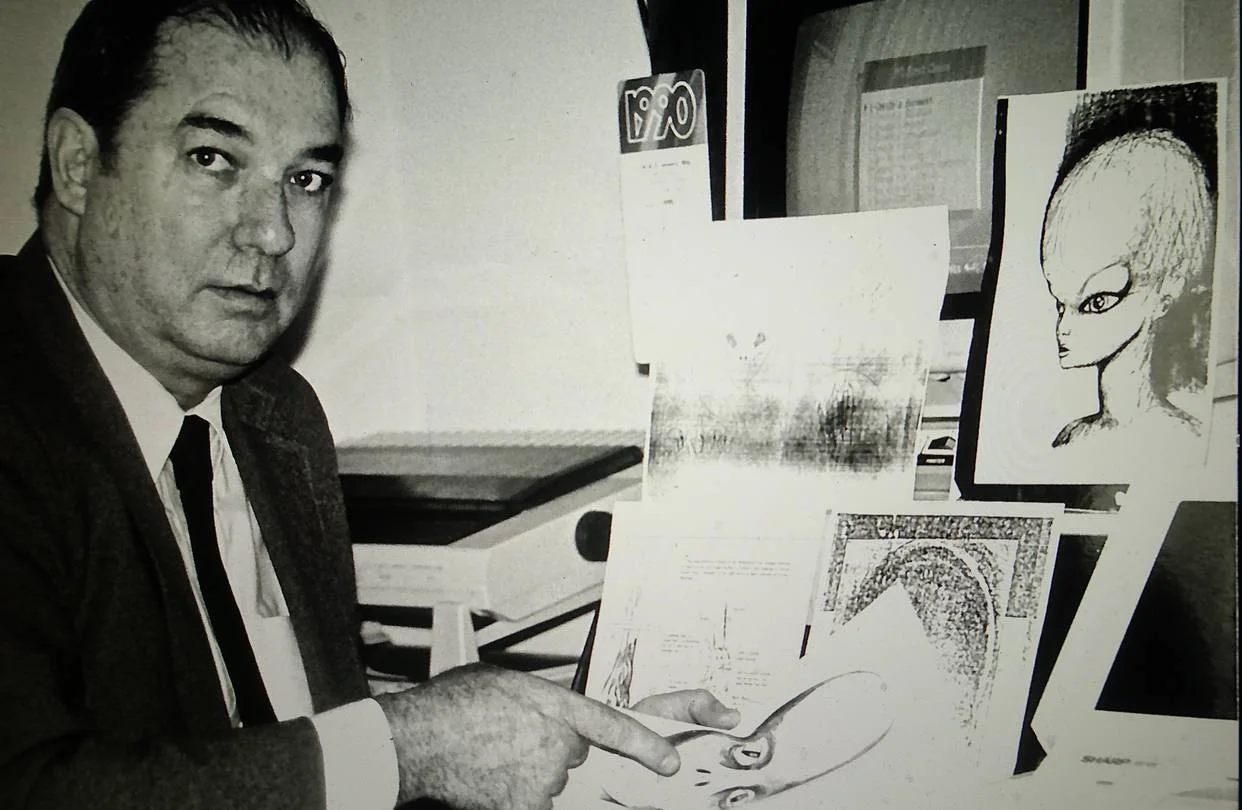


Not just remembrance

On Nightmare in Berlin by Hans Fallada, Theory of Shadows by Paolo Maurensig, A Legacy of Spies by John le Carré & The Accusation: Forbidden Stories from Inside North Korea by Bandi.

The New Criterion, May 1, 2018.

Berlin1945.jpg

The past, wrote William Faulkner, lending a hand to generations of scribblers struggling for a first line, “is never dead. It’s not even past.” That was seldom more true than in Germany immediately after the Second World War, the setting for Nightmare in Berlin, the penultimate— and posthumously published—novel by Rudolf Ditzen (1893–1947), the German writer better known as Hans Fallada, a pen name cobbled together from two of Grimm’s tales. This uneven but compelling book initially appeared in 1947 as Der Alpdruck (The Nightmare), but it was first translated into English (by Allan Blunden) in 2016 and released in the United States last year. Presumably adding Berlin—a city with a dark grip on the Western imagination—to the title was to boost the book’s sales, and to connect it to its successor, the better-known Jeder stirbt für sich allein (Every Man Dies Alone). This became an English-language bestseller after its first translation (in 2009) and the award of a new title—Alone in Berlin—featuring that bookstore-bait burg along the Spree.

Even by the questionable standards of the creative class, Fallada had a rocky start. Highlights included two failed suicide attempts, the first of many sanatorium stints, murdering his opposite number in what may or may not have been a suicide pact, speedy discharge from the army in 1914 (in retrospect, a spot of luck), alcoholism, and drug addiction (both were problems for much of his life), and two terms of imprisonment for embezzlement. His first novel came out in 1920, after another go at suicide, but before he took up theft. By the beginning of the 1930s, however, Fallada was enjoying some success, notably with Little Man, What Now? (1932), in which he used the plight of one couple to illustrate the effects of the economic crisis that plunged the Weimar Republic into a night it could not survive.

Fallada’s decision to keep on in Germany after the Nazi takeover—and the sporadically squalid compromises that choice involved—contributed to the postwar eclipse of his reputation abroad. He expressed some support for the Nazis early in their rule (“this is the party which will save Germany from chaos”) but never joined them and soon lost whatever sympathy he’d had for their regime. Despite that, he largely avoided trouble by mainly confining himself to non-political fare, although Wolf Among Wolves (1937), focused yet again on Weimar woes, had the dubious distinction of being both praised by Goebbels (“a super book . . . . That fellow has real talent”) and being filmed for East German television.

Nightmare in Berlin draws heavily on Fallada’s existence amid the ruins of the Third Reich. Like Fallada, its hero (if that is the word), Dr. Doll, is a writer haunted by the sporadically squalid compromises he has made. Like Fallada, he shared a weakness for morphine with a much younger second wife. Like Fallada, he spends time in rehab, including —yes, like Fallada—a stay in a clinic where he is the only man: many of the other patients were prostitutes under treatment for sexually transmitted diseases. Like Fallada, Doll is appointed the interim mayor of a small town by the Soviet military authorities. Like Fallada, Doll is overwhelmed by the task and retreats to Berlin, “a city reduced to rubble, burnt out and bled to death,” a city of scant rations, hardscrabble squabbles, “trickling debris,” and “rats, looking for something unspeakable in the basement.” And, like Fallada, Doll finds a literary patron, the head of a new arts association. Nightmare in Berlin’s Granzow owes a lot to Johannes Becher, a future East German culture minister, back in Berlin after years in the USSR as a guest of Stalin’s more congenial tyranny.

When Doll greets the incoming Red Army as liberators and hails them as “comrades,” the response is a “withering gaze,” a reminder that as a German he “belonged to the most hated and despised nation on earth.” This realization may account for the most striking omission in a book Fallada described as “a faithful and true account . . . of what ordinary Germans felt, suffered and did between April 1945 and the summer of that year.” Maybe, but when it came to mass rape by the Soviet occupation forces, the dominant issue—beyond simple survival—for many “ordinary Germans” at that time (the victims included Fallada’s first wife, to whom he had remained close), Fallada opted for silence. Perhaps he had found he could live with a fresh set of jackboots. Nightmare in Berlin was first published by Aufbau, a company set up with Soviet approval. Becher was one of its founders.

Nightmare’s prose, typically for Fallada, is unvarnished. The book is intrinsically episodic: “the great collapse,” Doll’s mayoralty, the return to Berlin, a battle over an apartment, the time in clinics, and ultimately a resumption of his career. The plot was never the point. Fallada explained that Nightmare was “essentially a medical report, telling the story of the apathy that descended upon a large part, and more especially the better part, of the German population in April 1945.” Writing it, he confessed, had not “been an enjoyable experience,” partly, I suspect, because of the guilt he himself felt, guilt that he expresses through Doll, a man complicit simply by his passivity in the face of a tyranny that had tyrannized him: Doll had been interrogated, arrested, and spied upon. The Nazis had “banned his books some of the time, allowed them at other times,” but although he was “appalled” by them, he “never did anything about it.” Fallada once wrote that he did not like “grand gestures, . . . being slaughtered before the tyrant’s throne, senselessly . . . is not my way.”

Fallada had few illusions about himself or his compatriots. Asked by the Soviets to address the locals on the day of the Reich’s capitulation, Doll notes the rote cheers and raised arms—“the right arm still, in many cases, raised in the salute that had been drilled into them over many years.” His “nation . . . bore its defeat without dignity of any kind, without a trace of greatness.”

For all that, this sour, subdued, exhausted novel staggers to an unconvincingly uplifting conclusion:

And maybe people will learn something, after all . . . . Doll, at any rate, was determined to be part of this learning process. He saw his path laid out before him, the next steps he had to take, and they meant work, work and more work.

It reads better if “The Internationale” is playing in the background.

By this point Fallada was, in the words of one biographer, “a physical and psychological wreck.” He died in the Soviet sector of Berlin almost exactly six months later, in February 1947.

alekhine18 (2).jpg

At around the time that Doll and Fallada were trying to come to terms with their pasts, Alexander Alekhine was avoiding a reckoning with his. In the early stages of Paolo Maurensig’s Theory of Shadows, Alekhine, with only one brief interruption the real-life world chess champion since 1927, is the solitary guest in a hotel in Estoril, Portugal. It is March 1946. A heavy drinker for decades, Alekhine is hard-up, in poor health, deep into his own endgame. He is also waiting to hear which Soviet master will challenge him for the world championship in a contest that also will be a proxy for a broader ideological struggle. A traitor to the radiant future, Alekhine had quit revolutionary Russia in 1921, never to return, never forgiven.

Framed as a book within a book (playing games with narration is something of a Maurensig trademark) and as fiction inserted into fact, the complex and atmospheric Theory of Shadows falls somewhere between historical reconstruction and a seductive reimagining of Alekhine’s last days. Its Italian author is probably best known for The Lüneburg Variation, an extraordinary debut published, encouragingly, after his fiftieth birthday. As they do in Theory of Shadows, chess and the Holocaust intertwine in the earlier (somewhat superior, more tightly constructed) book, which also contains references to Alekhine, most significantly this:

[A]nti-Semitic articles appeared with increasing frequency under the byline of the world champion, who . . . noted that after having been so long polluted by Jewish blood, the world of chess would finally recover its purity.

That alludes to a number of articles in the Pariser Zeitung, a newspaper published by the Germans during their occupation of France. Unabashed by inconsistency, Alekhine maintained—take your pick—that these pieces were not his work, or that they had been written under duress, or that his text had been doctored: a clash of excuses undermined both by their contradictions, and, some years after his death, by the discovery of interviews he had given to two Madrid newspapers in 1941. Among the self-incrimination: huzzahs for Capablanca, that rival of rivals, for “depriving the Jew Lasker of the world chess scepter.”

In Theory of Shadows (which was translated by Anne Milano Appel), Maurensig revisits the Paris articles, but adds more to the charge sheet, including Alekhine’s participation in tournaments in Nazi-dominated Europe and his relationship with Hans Frank, Hitler’s proconsul in Poland, a lover of chess and of genocide. Alekhine recalls playing chess in Frank’s residence. Was it “possible to dance the polka in the middle of hell”? Yes, Alekhine had concluded, it was.

And so:

At the end of the war, he was left with few friends: to the French [Alekhine had become a French citizen] he was a collaborator, to the Soviets a traitor; even the White Russians who had settled in Europe would not forgive him for having worked, during the Revolution, for the ministry tasked with expropriating the assets of emigrants.

The past parades through his afternoon dreams, but benignly: his mother, the czar, long-dead acquaintances, an agreeable contrast to “bizarre” or “terrifying” nightmares after dark.

A violinist, David Neumann, comes to stay at the hotel. “Alekhine found himself thinking that the man was quite likable. Despite his surname, which clearly disclosed his race.”

Ah.

Someone slides newspaper articles beneath Alekhine’s door. All “without exception” concern the Nuremberg trials then underway. A man and his wife—two more new guests—dine with Alekhine for the first time; the husband’s remarks grow progressively more probing. The wife, ominously silent, stares at Alekhine and then “abruptly [runs] her index finger across her throat.” It is an unusually melodramatic moment. Maurensig writes in a sotto style that reinforces the impression of a trap slowly but relentlessly closing around the grandmaster: appropriate enough in a book where chess, that most implacable of games, is, as in The Lüneburg Variation, a deity—or demon—demanding attention and much, much more.

The hotel gradually fills, the Portuguese secret police show up, a Russian is overheard discussing Alekhine on the phone. Another clipping, a photo, another dinner conversation: French hit squads are hunting Germany’s collaborators all over Europe. One night Alekhine hears someone fumbling with the lock to his door. The ratchet continues to turn, sometimes, maybe, only in his imagination, sometimes not. Alekhine dies alone in his room. Choked on a piece of meat. That was the official story, difficult to reconcile with the widely circulated photograph of the dead man, seemingly asleep in his chair, wearing an overcoat that would have been unnecessary inside. But that was the official story.

Theory of Shadows opens in 2012 with a novelist (with just a touch of Maurensig about him) explaining that he is in Portugal to research what he is convinced was Alekhine’s murder. Despite an Orient Express–load of potential culprits—including the Soviets and those French hitmen—he has been unable to decide who was responsible: “And I know that you cannot write a story centered on a crime without unmasking the killer at the end.” The pages that follow, written by Maurensig, a trickster-writer layering a narrative where reality has a way of slipping out of sight, disprove that. And Maurensig’s crumbling Alekhine—cold and narcissistic under the camouflage of a brilliant naif consumed only by chess—and the circumstances in which he finds himself, would be book enough without a death, let alone a solution.

In an epilogue, the novelist (whom Maurensig never names) meets the individual who discovered (“or so they wanted people to believe”) Alekhine’s body. But what he really saw, or so he says, was the aftermath of a murder. He then reveals who he thinks arranged the killing and their motive for doing so. It is right, this witness-of-something suggests, that the novelist is telling this story as fiction: “Perhaps only the imagination allows us to arrive at certain hidden truths.” That is what Maurensig has done. Perhaps.

Berlin, August 1978 © Andrew Stuttaford

Berlin, August 1978 © Andrew Stuttaford

In A Legacy of Spies, David Cornwell, the author better known as John le Carré, returns entertainingly, and with some relish, to his past—to The Spy Who Came in from the Cold, the novel that made his name. And the past catches up, unpleasantly, with Peter Guillam, a former agent first encountered in Call for the Dead (1961): the elastic lifespans and variable biographies of some of the Le Carré regulars who crop up in this book will niggle the pedantic.

Guillam is now retired in Brittany, “resolutely” fighting off the “accusing voices” that occasionally—the night is kinder to him than to Alekhine—“attempted to disrupt my sleep.” Then his former employers write, asking him back to London: “A matter in which you appear to have played a significant role some years back has unexpectedly raised its head.”

Appear to. Le Carré has not lost his ear for cautious bureaucratic prose.

When Guillam arrives at the Service’s “shockingly ostentatious new headquarters” (and so it is from the outside: disappointingly, I have never been in a position to assess the interior) across the Thames, it’s evident that time has moved on, and so has Leviathan. Different accents—Le Carré’s prickly sensitivity to the nuances of English class is as acute as ever—different, careful jargon (“assets” now, not “joes”), impersonal electronic security, more women, tracksuits, quietness, cleanliness, no windows, sealed windows, locked doors: “Somewhere . . . between Cambridge Circus and The Embankment, something has died.”

But the performance lives on—“Bunny . . . managed a half-squeeze of the eyes for friendly”—and so, for all that regrettable ostentation, does the parsimony. A flat is found for Guillam—in, of course, Pimlico’s Dolphin Square, a massive 1930s apartment complex famous for politicians, spies, and scandal, some of it true—at “a concessionary rental of £50 per night . . . set against [his] pension.” Ashe, the low-level operative who was the first to contact Alec Leamas on East Germany’s behalf in The Spy Who Came in from the Cold, had lived there, too. Le Carré likes an old tune.

Le Carré’s writing before the Wall fell was marked by a world-weariness that periodically edged close—but not as close as is sometimes claimed—to calling down a plague on the houses of all the Cold War’s antagonists. Nevertheless, it is difficult to read A Legacy of Spies without detecting some sympathy for the hard edges of those who operated London’s vanished Circus. The stakes, after all, were higher back then. Regret, or, more rarely, guilt, was—generally—for later. Their successors are tough enough, but they have a sickening primness about them. They mouth, and some may even believe, the platitudes of a legalistic, self-righteous society with little awareness of, let alone understanding for, the cruel dilemmas of the past. Rather than risk too much embarrassment over that past, they are—times have changed, you see—willing to throw one (or two) of yesterday’s men under the bus. The embarrassment? The lives knowingly and unknowingly put in danger—and then tragically lost—in the interest of a cause rather more worthwhile than the avoidance of a scandal that in saner times would not be a scandal. A cause, writes Le Carré, acidly, if oddly oblivious of still strong sentiments east of the old curtain, that “the world barely remembers.”

And so, arriving in front of the block of flats that has concealed a safe house for decades, one of those investigating Guillam asks which bell she can press “without catching gangrene,” a phrase mixing contempt with an undeserved presumption of moral superiority. Guillam suggests that she press the one marked “ethics,” “Ethics being Smiley’s own choice for the least alluring doorbell he could think of.”

Smiley. He may have been transformed into a brand like Fallada’s bolted-on Berlin (“George Smiley novels” are now a thing), but it’s good to see him back, if only in flashback up until almost the end, conjuring up memories —to me, anyway—of Alec Guinness on the telly nearly forty years ago.

In one chair sits George Smiley, looking the way only George looks when he’s conducting an interrogation: a bit put out, a bit pained, as if life is one long discomfort for him and no one can make it tolerable except just possibly you.

If you have watched the BBC’s adaptations of Tinker Tailor Soldier Spy and Smiley’s People, try to read that passage and not think of Sir Alec. Gary Oldman can have Churchill: that ought to be enough for anyone.

This time Smiley is in the shadows. A Legacy of Spies chronicles a long-delayed aftershock of the events described in The Spy Who Came in from the Cold. Smiley, who planned that grand deception, is frequently discussed, but appears principally in those flashbacks, his presence only emphasized by absence, an absence that will be a challenge to preserve if the children of three of those killed as a result of that (in Leamas’s phrase) “filthy, lousy operation” —and what preceded it—get their way. They want revenge. It is perhaps indicative of where, perhaps despite himself, Le Carré’s underlying feelings lie, that, of these vengeful offspring, one is an unrepentant believer in the old East Germany, another is a thug, and we never meet the third at all.

“We were not pitiless,” argues Smiley. “We were never pitiless. We had the larger pity.”

Prospero has forgotten neither the magic of espionage noir (“there is a flicker to his smile like a faulty light bulb that doesn’t know whether it’s on or off”) nor the appeal of knowledge, real or imagined, passed on to us bumpkins by someone who was a real spy for a while: “The tortured are a class apart. You can imagine—just—where they’ve been, but never what they’ve brought back.”

A Legacy of Spies delivers, if only near its finale, an unmistakable political message, particularly for Brits. Le Carré’s stories typically come with a subtext. There were those nods to moral equivalence between the Cold War’s two sides and, often, a revealing combination of class resentment (a souvenir of an upbringing on something of a tightrope) and center-left mandarin condescension. In the introduction to the fiftieth-anniversary edition of The Spy Who Came in from the Cold, he brags that he was “writing for a public hooked on Bond and desperate for the antidote.” It was?

Le Carré’s politics have taken a harder, angrier turn in recent years, both inside and outside his books. Much of the grumbling is standard fare: wicked America, wicked corporations, wicked neocons, wicked climate change, wicked Thatcher, although an attack on Salman Rushdie added surprising variety. Rushdie should have, Le Carré advised, withdrawn The Satanic Verses until things calmed down: “I don’t think it is given to any of us to be impertinent to great religions with impunity.”

Impertinent. So judges the mandarin, so rules the former Eton beak.

Naturally, Le Carré disapproves of—the impertinence of it—“that jingoistic England that is trying to march us out of the EU,” and his lofty disapproval permeates Smiley’s grand farewell in A Legacy of Spies, degrading it to a mandarin whine. No, Smiley says, his work has not been for capitalism (the appalled italics are Le Carré’s), or Christendom, or even, after a while, for England. It was for Europe (the appalled italics are mine). If he had an “unattainable ideal,” it was an ideal he still holds, that “of leading Europe out of her darkness towards a new age of reason,” now managed, we must assume, by Brussels.

Can a fictional character be embarrassed by his creator?

Kim.jpg

When the Soviet empire collapsed, some worried that Le Carré would have nothing more to say. When North Korea failed to follow suit, the pseudonymous writer known only as “Bandi” (the name comes from the Korean for “firefly”), supposedly a member of North Korea’s state-controlled writer’s association, must have wondered whether he would ever see what he really wanted to say in print in his own land. Between 1989 and 1995, he had secretly turned to writing fiction that told the truth about a country where fact is drowned out by mandatory fantasy.

Nearly two decades later, or so the story goes, Bandi told a relative who was planning to defect about what he had done. Taking the manuscript—handwritten, bulky, and lethally incriminating—with her was too risky, but she agreed to try to send for it if she got out. And that is what she managed to do. The manuscript was smuggled out, and the stories it contained were published in South Korea in 2014 and translated into English (by Deborah Smith) last year. A collection of poems included in the same bundle of papers was published in South Korea a few months ago.

The Accusation’s American publishers, Grove Atlantic, concede that they cannot be sure that its author is not an emigré already beyond Pyongyang’s grasp. We do not even know for certain that it is the work of just one person. That said, there is enough circumstantial evidence, including the involvement of a respected human rights activist, and analysis of both the paper on which the manuscript was written and of Bandi’s language—like East and West German before reunification, North and South Korean have drifted marginally apart—to accept, for now, these stories for what they are said to be.

Bandi has been compared to Aleksandr Solzhenitsyn, but the collection of seven short stories that make up The Accusation has neither the sweep of The Gulag Archipelago nor the heft of Solzhenitsyn’s best-known novels. A more fitting comparison might be Varlam Shalamov, the author of Kolyma Tales, terse, precisely crafted glimpses of horror, some just a few pages long, that, taken as a whole, provide a vivid depiction of life—and death—in Stalin’s concentration camps, a guidebook to one kind of hell.

Bandi’s more discursive stories are accounts of what, in North Korea, passes for ordinary life. The camps, the prisons, and the mass graves cast a deep shadow but are largely offstage—until they are not. Schoolchildren suspected of “counter-revolutionary tendencies” are forced to watch the execution of a victim, bound, gagged, and allegedly guilty of an absurd charge: smearing “feces on supplies that were to be exported to the Soviet Union.” It works: “Myeong-chol . . . began to feel ever more cowed and docile, rushing to obey whatever task his teachers . . . might set him.”

Bandi’s characters are cogs in a machine that straitjackets, exploits, and never ceases to watch them. They fear it, worship it, or both. North Korea has been run by leaders saluted by portents (the birth of Kim Jong-il was reputedly heralded by a double rainbow), and associated with superhuman feats and the miraculous. It is a country where the uncertain boundary between communist rule and theocracy has been blurred more brazenly than usual. In one story, “Pandemonium,” the elderly Mrs. Oh, struggling through the countryside to see her daughter, is suddenly summoned to meet one of the passengers who emerges from one of a convoy of passing cars.

[His] pale golden clothes seemed to shed a soft veil of mist . . . a man who was unmistakably “the Great Leader, Father of Us All, Kim Il-sung . . .”

. . . Mrs. Oh dropped to her knees about five paces in front of Kim Il-sung. As she did, words slid as smoothly from her mouth as a coiled spring being released.

“I respectfully pray for the long life of our Great Leader, Father of Us All.”

No matter who you were, if you lived in this land, beneath these skies, you would have memorized these words time and time again ever since you learned to speak; hence they flowed without a hitch from Mrs. Oh’s mouth.

“Oh, thank you.” This cheerful voice came from somewhere above Mrs. Oh’s head.

North Koreans know that the apparatus that contains them can turn on them for infractions that the paranoid logic—in one story curtains drawn in the daytime not only disrupt the obligatory unity of a streetscape, but could be a signal to spies—of totalitarianism can make into the gravest of sins. And as Bandi reminds us, such sins can endure across the generations, reducing the children and grandchildren of the guilty to pariahs, to “hostile elements,” to “crows.” The past is never dead. There is a timelessness about this collection and the state it describes. Most of these stories could have been written twenty years before or, for that matter, twenty years after Bandi put pencil to paper. Even the calendar has been torn out of history and rebased to the glorious year—1912—in which the Great Leader, Kim Il-sung, was born on the very day that the imperialists’ Titanic disappeared beneath the waves. Just a coincidence, comrade?

Kim follows Kim follows Kim, and, even after his death, the first of them, Kim Il-sung, selflessly carried on as its head of state, “the Eternal President of the Republic,” a position slightly renamed now that he shares it with his son, the equally deceased Kim Jong-il. “If you want a picture of the future,” wrote George Orwell in Nineteen Eighty-Four, “imagine a boot stamping on a human face—forever.” It is a forever that North Korea has made its own:

One by one, columns began to form in the square, neatly divided like blocks of tofu. Each column accumulated new blocks in rapid succession, as though the phrase “without exception” were a long steel spit, skewering people in bunches and delivering them promptly to the square. Eventually, with only five minutes to go, the entire square was a sea of color, with columns stretching out on both sides of Department Store 1 . . . .

Senior state functionaries began to make their way out onto the VIP platform. A hushed silence descended on the square, which quivered with palpitations like the sea after a storm has just subsided.

Many of Bandi’s tales end with the protagonists turned against the regime, and, as far as we know anything about North Korea, the level of dissent has increased in the decades since Bandi wrote them, not least due to the famines of the 1990s. Nevertheless, that hushed silence still, for the most part, prevails.

Nothing has been heard of Bandi for over a year. Neither good news, nor bad news, nothing.


Do Not Speak, Memory

Masha Gessen - Never Remember: Searching for Stalin's Gulags in Putin's Russia

The Wall Street Journal, March 16, 2018

Vagankovskoye Cemetery, Moscow, Russia,  March 1993 © Andrew Stuttaford

Vagankovskoye Cemetery, Moscow, Russia, March 1993 © Andrew Stuttaford

Imagine a Germany where the Third Reich’s monuments abound but memorials to the Holocaust are scarce. Hitler is venerated by millions and his dictatorship given a positive spin by an authoritarian state that never definitively broke with the Nazi past. Replace Germany with Russia, Hitler with Stalin, and the Third Reich with the Soviet Union and that is pretty much the situation that prevails in Russia today.

The unbroken connection to the Soviet era is key to understanding “Never Remember,” a short, haunting and beautifully written book by Masha Gessen, the Russian-American journalist who is one of Vladimir Putin’s most trenchant critics. About halfway through, Ms. Gessen tells how Irina Flige, an activist who spent decades trying to restore to public view memories of what occurred under communism, has concluded it is wrong to see the problem as forgetfulness because, as Ms. Gessen summarizes it, “forgetting presupposes remembering—and remembering had not happened . . .” In Ms. Flige’s words, “historical memory can exist only when there is a clear line separating the present from the past. . . . But we don’t have that break—there is no past, only a continuous present.” In contrast to Germany, there was no reckoning. There was no Soviet Nuremberg.

Ms. Gessen offers up various explanations for this, including the long duration of Communist rule and the ways in which the categories of victim and perpetrator overlapped. The trauma was something that Russians inflicted on one another. In a sense they still do. Ms. Gessen is evidently saddened and frustrated by the spectacle of a people—her people—wandering through a manufactured reality unbothered by, or oblivious to, the obscenities or incongruities that surround them. Some of the old regime’s statues were, in the false democratic dawn of the 1990s, defaced and toppled or—in the case of one statue of Stalin—dug up and exiled to a sculpture park of shame in central Moscow. Now, however, the statues stand in the same place proudly, cleaned up but unexplained, sharing space with a rare commemoration of the Soviet regime’s victims as well as statues of poets, writers, and—why not?—Adam and Eve.

The melancholy that saturates Ms. Gessen’s prose is reinforced by pages filled with Misha Friedman’s bleakly evocative photographs, images that convey unease, absence and loss. The huts and barracks of the Gulag, ramshackle to start with, and often designed to be temporary, have often just rotted away—“only the barbed wire remained,” Ms. Gessen writes. Other, sturdier structures survive, either ignored—one of Mr. Friedman’s photographs is of a ruined prison on the edge of a housing complex—or inaccessible, swallowed up in the vastness of Siberia. One camp—just one—not far from the Urals has been restored, a project begun, tellingly, on the private initiative of two local historians but now taken over by the state. While, as Ms. Gessen notes, it has not been turned into some defense of the Gulag, its message has been muffled, shrouded in a deceptive neutrality. Ms. Gessen herself is no neutral (she describes the “distinguishing characteristic of the Putin-era historiography of Soviet terror as . . . [saying] in effect, that it just happened, whatever”).

This is an angry book. Ms. Gessen makes her case with a series of vignettes ranging from the discovery of a mass grave in northwestern Russia to a trip to the region of Kolyma in the country’s far east. (“If the Gulag was anywhere, it was in Kolyma.”) The years of glasnost and Boris Yeltsin finally provided pitifully small scraps of comfort to the descendants of the disappeared—a photograph, a death certificate, something—yet the Gulag’s poison continues to seep through the generations. When Ms. Gessen visits Kolyma’s “capital” in 2017, all the people with whom she has contact are later visited by the FSB, the successor to the KGB.

Among the ufologists

The New Criterion, March 1, 2018

International UFO Museum and Research Center, Roswell, NM, July 1, 2017 © Andrew Stuttaford

International UFO Museum and Research Center, Roswell, NM, July 1, 2017 © Andrew Stuttaford

After losing my way last summer in a tiny town best known as the deathplace of Billy the Kid, I eventually located the right desert highway. Outperforming the alleged aliens who, seventy years before, had allegedly crashed their alleged spacecraft nearby, I swept past a welcome sign decorated with—in honor of a cow town’s real and imagined pasts—cattle and a flying saucer, and reached Roswell, New Mexico, in one piece:

The City of Roswell invites UFO enthusiasts and skeptics alike to join in the celebration of one of the most debated incidents in history.

History is not what it was.

Baymont Hotel, Roswell, NM, June 30, 2017 © Andrew Stuttaford

Baymont Hotel, Roswell, NM, June 30, 2017 © Andrew Stuttaford

Alien kitsch at my hotel’s front desk, an alien face on the elevator floor and each elevator button too.

Baymont Hotel, Roswell, NM, June 30, 2017 © Andrew Stuttaford

Baymont Hotel, Roswell, NM, June 30, 2017 © Andrew Stuttaford

Applebee’s held itself aloof, but Arby’s was ready to “welcome” unsuspecting aliens. A little green matador graced the walls of a Mexican restaurant, and the striking architecture of one local McDonald’s paid tribute to a saucer that never was. Downtown, an immense metallic construction with a pointed rocket nose turned out to be an old grain silo, a disappointment dispelled by a $2 “black light spacewalk” in a nearby souvenir store, the not-exactly-NASA  Roswell Space Center.

Roswell, NM, July 1, 2017 © Andrew Stuttaford

Roswell, NM, July 1, 2017 © Andrew Stuttaford

The Roswell story—or, appropriately, its fragments—can be found scattered across American culture. It starts in mid-June 1947 when ranch hand William “Mac” Brazel, a link to a legend of the Old West (his uncle may have killed Billy the Kid’s killer), stumbled upon the debris that propelled him into a legend of a space age that had yet to arrive.

Brazel wasn’t impressed by the “bright wreckage made up of rubber strips, tinfoil, a rather tough paper, and sticks” strewn out there in the desert, but a week or so later he heard that a sighting in Washington State had triggered America’s first proper UFO “flap” and, critically, a $3,000 reward for physical evidence of one of these contraptions. Even then it was a few days before Brazel (who had no phone) “whispered kinda confidential” to the sheriff during a routine visit to Roswell, some seventy-five miles away. The sheriff contacted the authorities at the Roswell airfield, home, perhaps fittingly, to the only unit on the planet then equipped to drop an atomic bomb: there are those who speculate that it was New Mexico’s role—from Los Alamos to White Sands—in so much of the development of America’s nascent nuclear arsenal that (supposedly) drew extraterrestrial observers to the Southwest. It was two humans, however, the intelligence officer Jesse Marcel and a colleague, who retrieved the wreckage from Brazel. On July 8, the base’s commander ordered his public information officer to put out a press release, and that’s what Lieutenant Walter Haut did:

The many rumors regarding the flying disc became a reality yesterday when the intelligence office of the 509th Bomb Group . . . was fortunate enough to gain possession of a disc.

The wreckage had become a disc, the disc became a headline: “RAAF [Roswell Army Air Field] Captures Flying Saucer on Ranch in Roswell Region,” was the Roswell Daily Record’s headline on a front page, still available for sale across town in formats ranging from T-shirt to magnet.

In the release, Haut also explained that the disc had been inspected, “then loaned by Major Marcel to higher headquarters.” It was there that Brigadier General Roger Ramey let the air out of the balloon by telling the press that the wreckage was a balloon, or, more precisely, what was left of a weather balloon and the radar reflectors it had been transporting. The Roswell Daily Record ’sheadline was bleak: “General Ramey Empties Roswell Saucer.” A “harassed” Mac Brazel, it related, was sorry he had “told” but added that “he had previously found two weather observation balloons on the ranch, but . . . what he found this time did not in any way resemble either of these”—intriguing, but not intriguing enough to be talked about for the next three decades.

Roswell, NM, June 30, 2017 © Andrew Stuttaford

Roswell, NM, June 30, 2017 © Andrew Stuttaford

But people continued to watch the skies. The suspicion that there might be something up there bubbled away, ginned up by an eager press and spinners—mad, Munchausen, mercenary, or misguided—of tall tales that won a huge following. An obsession fed by an entertainment industry that in turn echoed and amplified the stories that its own creations provoked among the credulous, flying saucers were made all the more believable by Sputnik, Vostok, and Gemini. If we could do it, why couldn’t they? Even Uncle Sam was curious and, with unknown Soviet weaponry also in mind, carried out studies—most famously Project Blue Book—into UFOs, only to conclude by the end of the 1960s that aliens were not involved. Many Americans (and not just Americans) disagreed, and it was revealed last December that between 2007 and 2012 the Pentagon ran a secret project (with an afterlife that apparently still continues) to take another look at what might be up there. Its investigations turned up some thought-provoking reports as well as startling video and audio recordings, but the fact that its funding has—so we’re told—been eliminated is pretty good evidence that there is no evidence that anybody green has come calling.

The postwar fascination with UFOs attracted the attention of Carl Jung, a man with a weakness for the strange. In a letter to the editor of the New Republic in 1957, Jung essentially conceded that—whatever UFOs were—they were real, but the title of his Flying Saucers: A Modern Myth of Things Seen in the Skies (1958) gives the game away, and its text is high Jung: Platonic months, “spring point enter[ing] Aquarius,” mandalas, manifestations of anxiety about atomic war. But the dodgy old sage was not wrong to spot traces of the spiritual in this phenomenon. The wave of interest in UFOs has occasionally curdled into flying-saucer cults, and some of their descendants, despite Heaven’s Gate’s opening to oblivion, still flourish today.

Roswell, NM, July 2, 2017 © Andrew Stuttaford

Roswell, NM, July 2, 2017 © Andrew Stuttaford

Both the Bible and concerns about the dangers of UFO cults helped inspire “Challenges to E.T.,” a conference held that seventieth- anniversary weekend in the Roswell Mall, a complex most notable for the crashed saucer lodged in the roof of its movie theater, and some way from the goings-on downtown. Perhaps that was just as well. Whatever the underlying reason for this gathering, its focus seemed to be on rejecting “the extraterrestrial hypothesis” in favor of just about anything else outré enough to draw a crowd, from human experimentation to, well, I’ll just quote from the best introductory slide I have ever seen: “Demons and the Pentagon: What the Hell?”

Roswell, NM, July 2, 2017 © Andrew Stuttaford

Roswell, NM, July 2, 2017 © Andrew Stuttaford

More benignly, belief in powerful, otherworldly aliens has a niche in the catch-all spirituality of our own time, a belief inspired by a notion, however weird, of technology, while satisfying an all-too-human craving for enchantment. The “God gene” is not easy to escape: those who would not normally consider themselves religious appear to be more likely to believe in ufos than their churchgoing contemporaries. Then again, why choose? In one store downtown, aliens shared shelf space with Jesus, Mary, and, if I’m not mistaken, a Hindu deity.

Roswell, NM, July 1, 2017 © Andrew Stuttaford

Roswell, NM, July 1, 2017 © Andrew Stuttaford

A British speaker at “Challenges to E.T.” did more than most to decode the enduring interest in the Roswell Incident, comparing it with his country’s long-standing fixation with Jack the Ripper: people like a puzzle. I watched the audience at a session elsewhere in town, gripped by a grainy computerized reconstruction of otherwise illegible wording on the piece of paper—the “Ramey Memo”— photographed in the general’s hand as he studied what was either the wreckage from Roswell or, some maintain, a tawdry substitution for the real thing: “Now we come to a really intriguing group of words, which are clearly visible as on the ‘disk’ with discernible quotation marks around ‘disk’ . . . ”

Roswell, NM, July 1, 2017 © Andrew Stuttaford

Roswell, NM, July 1, 2017 © Andrew Stuttaford

But Roswell’s puzzle was meant to have been solved by Ramey. For decades it seemed that it had, remaining largely forgotten until the late 1970s. As recounted in the invaluable UFO Crash at Roswell: The Genesis of a Modern Myth (1997), a work in part anthropological study and in part persuasive forensic debunking, one of the preconditions for its resurrection was a growth in distrust of the U.S. Government (who else would have concealed the wreckage?), a precondition that the U.S. Government did its best to foster. It’s telling that a leading “ufologist,” Stanton Friedman, a retired nuclear physicist no less—has described Roswell as a “cosmic Watergate.”

Roswell, NM, July 1, 2017 © Andrew Stuttaford

Roswell, NM, July 1, 2017 © Andrew Stuttaford

Suspicion of dark doings by the government is as American as dark doings by the government. The sight of conspiracy theorists being welcomed into a red, white, and blue town is not so very contradictory. Banks and fast food joints advertised their support for the police and the military while street lights were topped with alien head globes but wrapped in Old Glory (July 4th was approaching). And there is something splendidly American about the way that a remote city of fifty thousand not known for very much milks the cash cow that didn’t fall to earth.

Roswell, NM, June 30, 2017 © Andrew Stuttaford

Roswell, NM, June 30, 2017 © Andrew Stuttaford

A section of downtown had been blocked off. Businesses vied for the best alien (“or patriotic”) window display. Supplementing a distinctive collection of storesAlien InvasionAlien Headz, Alien Stop, Alien Zone—were booths offering alien this, alien that, and alien tat. Vendors sold snacks of any description and snacks beyond description. There were pony rides, a water slide (the temperature was in the nineties), an alien costume contest for pets, and an alien costume contest for humans. A man under a canopy invited passers-by to “receive prayer,” while a rival peddled an enlightenment all his own: “The hierarchy of the cosmos and the connection between God, aliens, and man.” Attractions in front of the fine early-twentieth-century courthouse included a welcome tent, the Ten Commandments carved in stone, and a signpost to the planets. Bands played soft rock and Tejano, a borderlands mingling.

Alien Costume (pet) contest, Roswell, NM, July 1, 2017 © Andrew Stuttaford

Alien Costume (pet) contest, Roswell, NM, July 1, 2017 © Andrew Stuttaford

A block or two away, at the International UFO Museum and Research Center, much expanded since, oh yes, my last visit in 1995, there was work to be done. Travis Walton discussed his abduction by aliens in 1975, a distressing if dubious story subsequently turned into the unexpectedly entertaining Fire in the Sky, a movie released during the early ’90s abduction boom. Other stars in the Roswell Galaxy spoke on the government cover-up, physical evidence of the crash, and additional matters that, if proven, would change our understanding of everything. Yet a touch of carnival had crept in. A flier (“the alien bodies! wow!”) promoted a workshop hosted by the “alien hunter” Derrel Sims (admission $10).

Roswell, NM, June 30, 2017 © Andrew Stuttaford

Roswell, NM, June 30, 2017 © Andrew Stuttaford

More than a touch: to be sure, there was a well-stocked library crammed with ufological scholarship, but the gift shop struck a more frivolous note: alien T-shirts, alien sweatshirts, alien sippy cups, alien key-rings, alien pens, alien onesies, alien ashtrays, alien beanies, alien magnets, plush aliens, plastic aliens, blow-up aliens, everything alien except the real, elusive thing. Educational materials lined the walls of the main hall—those photographs that can’t always be so quickly explained away, pictures of “ancient astronauts,” the usual—but a replica of the robot from The Day the Earth Stood Still stood still nearby, not far from a recreation of that infamous alien autopsy and an engaging display in which a flying saucer whirled behind four forbidding animatronic aliens. The UFO  museum, “a 501(c)(3) non-profit educational organization,” may maintain a claim to represent the “serious side” of UFO research, but it subverts that seriousness with a wink and a nod.

International UFO Museum and Research Center, Roswell, NM, June 30, 2017 © Andrew Stuttaford

International UFO Museum and Research Center, Roswell, NM, June 30, 2017 © Andrew Stuttaford

Many of those thronging its premises understood that very well. Yes, true believers parted respectfully when Stanton Friedman made his way through his flock and gathered earnestly around Travis Walton. But others seemed less convinced, sci-fi curious perhaps, intrigued maybe, believers even, but without the conviction to take their belief very seriously. They were playing a game they half-hoped was real. Others were just there for the fun, their pilgrimage more Mardi Gras than the Camino de Santiago, four girls in shiny skirts and headphone hairstyles, three middle-aged ladies in “alien” eyeglasses vamping in front of those forbidding aliens as the dry ice billowed. Uncle Sam sauntered around the main exhibition hall on stilts, his presence a salute to the doomed spacecraft’s touchdown into American folklore.

International UFO Museum and Research Center, Roswell, NM, July 1, 2017 © Andrew Stuttaford

International UFO Museum and Research Center, Roswell, NM, July 1, 2017 © Andrew Stuttaford

The deliberations weren’t confined to the museum and the mall. The Roswell Daily Record hosted a series of lectures in a conference room behind K-Bob’s Steakhouse. At the city’s convention center, topics included abductees’ civil rights and, the horror, “the origins of the UFO ridicule factor.”

Roswell, NM, June 30, 2017 © Andrew Stuttaford

Roswell, NM, June 30, 2017 © Andrew Stuttaford

Bryce Zabel, one of the creators of Dark Skies, a UFO-conspiracy TVshow from the mid-nineties, once observed that “true or untrue . . . Roswell is seminal.” True or untrue.

It took more than Vietnam and Watergate to bring a long-lost moment in New Mexico’s history back to life. Possibly it was only a coincidence that, as is noted in UFO Crash at Roswell, tales of crashed saucers were beginning to come back into vogue in the late 1970s, but it was then that the not-always-reliable Jesse Marcel (by now, he said, a believer in UFOs, certain that the wreckage “was nothing that came from earth”) gave an interview to National Enquirer, a magazine known for publishing items that could be believed, half-believed, or believed not at all.

Other stories too were recalled: the same issue of the Roswell Daily Record that had featured Walter Haut’s press release had also contained a report of how the “hardware man” Dan Wilmot, “one of the most respected and reliable citizens in town,” and his wife had witnessed “a large glowing” object “zooming” over Roswell on July 2, 1947 (awkwardly a week or so after Brazel had discovered that mysterious wreckage, an inconvenient truth that failed to deter some of the faithful or the fraudulent from treating the two stories as one).

The Wilmots’ account was at least published contemporarily. Vern and Jean Maltais were not so timely. Two prominent members of the long cavalcade of hoaxers, grifters, pseudo-sleuths, opportunists, attention-seekers, and fantasists who have contributed to the ever-shifting Roswell narrative, they emerged in 1978 to claim that they had been told by a friend that he (and, naturally, given the rich cast of characters who wander in and out of this saga, some archeologists) had discovered alien wreckage (and small alien corpses) in the Plains of San Agustin, New Mexico, or maybe somewhere else. This was enough for Charles Berlitz, a linguist (one of those Berlitzes) and the author of books on Atlantis, the Bermuda Triangle, and other concocted mysteries, and the ufologist William Moore. With the help of research by Stanton Friedman, they published The Roswell Incidentin 1980, a farrago of speculation that arguably did more than anything else to turn a spurious crash into a genuine sensation. The most interesting thing about it was how well (very) it sold.

Roswell, NM, July 1, 2017 © Andrew Stuttaford

Roswell, NM, July 1, 2017 © Andrew Stuttaford

As the Roswell industry grew, clarity shrank, dates blurred, locations went walkabout, saucers changed shape, there was one crash, there were two, the aliens all died, one survived, a local undertaker was asked about the availability of undersized coffins, a “missing” nurse saw more than she should, the military (a mean-eyed, red-headed colonel or captain, a black sergeant) bullied witnesses into silence, evidence was stolen. Documents showing that Eisenhower was briefed were later shown to be forgeries and set off a schism, but were the forgeries created to discredit those who were coming too close to the truth?

Roswell, NM, June 30, 2017 © Andrew Stuttaford

Roswell, NM, June 30, 2017 © Andrew Stuttaford

As it happens, there probably was a cover-up, of sorts. The U.S.Air Force published two reports in the mid-1990s, just after TheX-Files, a television show that played off (and further popularized) the Roswell myth while weaving it into a dense conspiratorial mix that spread far beyond the small screen, had begun its long run. The first, the exhaustively researched and at times drily amusing The Roswell Report: Fact vs. Fiction, brings a touch of much-missed Mission Control rigor as it cuts through the miasma, both pre-modern and post-, which envelops so much of the Roswell debate. If you’ll forgive the spoiler, its writers found “no evidence of any extraterrestrial craft or alien flight crew.” What they did find “[was] . . . a shadowy, formerly Top Secret project, code-named mogul,” involving the launch of “balloon trains” some six-hundred feet long and laden with sensors designed to detect whether the Soviets had successfully tested a nuclear device (America’s nuclear weapons monopoly only ended in 1949). Given the secrecy that surrounded mogul, Ramey either didn’t recognize the Roswell wreckage or was unwilling to identify it: either way, he left enough of a gap for the conspiracy theories to seep through.

The Roswell Report: Case Closed was a sequel designed to address the question of alien corpses. Rather charitably, it suggests that recollections of these extraterrestrial unfortunates were the result of memories—muddled over the decades—of Air Force anthropomorphic test dummies parachuted from high altitudes over the desert and, separately, two accidents in which Air Force personnel were killed or injured in the late 1950s.

To some, these reports were merely a new twist on an old cover-up. Facts rarely get in the way of a good story or a satisfying cult. The Roswell show rolls on, sporadically spiced up by the rise and fall of ever-more-innovative embellishments and now graced by a hereditary nobility of sorts: at one meeting we were invited to applaud descendants of the principal witnesses, proud to carry a torch that sheds no light. No matter: according to a 2013 survey, roughly a fifth of Americans believe that a saucer crashed near Roswell and the government covered it up. The UFO museum received some two hundred thousand visitors in 2016 and fifteen thousand people reportedly showed up for the seventieth anniversary celebrations.

Roswell, NM, July 1, 2017 © Andrew Stuttaford

Roswell, NM, July 1, 2017 © Andrew Stuttaford

No pilgrimage is complete without a procession, no Mardi Gras without a parade. On the Saturday night of my visit, we lined Main Street as hot dusk cooled into warm darkness, some in costume, some prudently sporting tinfoil hats, one (your correspondent) clad in a white linen jacket that had already attracted some comments from more casually dressed attendees earlier in the day. At around 9 P.M., the Electric Light Parade began; illuminated floats and illuminated cars coasted by, escorted by a retinue of illuminated aliens and a zig-zagging skater encased in a glowing green saucer. The High Desert Pipes and Drums of Albuquerque brought up the rear, its marchers illuminated and kilted, drums beating and pipes skirling their way through—of course—Scotland the Brave into the New Mexico night.

Roswell, NM, July 1, 2017 © Andrew Stuttaford

Roswell, NM, July 1, 2017 © Andrew Stuttaford

Time has let Corbyn off the hook

Corbyn Adams.jpg

Talk of contacts with Czech Intelligence has generated some entertaining headlines but it hasn’t done Jeremy Corbyn much harm. According to a YouGov poll, only eight per cent of voters think less of him. Nearly two-thirds (some of whom, I suppose, may have already thought that he was a Commie spy) are apparently left unchanged in their opinion and six per cent seemed somewhat impressed. We shouldn’t be surprised. The unelectable, unthinkable Corbyn swept to the leadership of the Labour Party and then led his unelectable party to an almost unthinkable result in the general election. Nearly nine months later, this unelectable party is ahead at the polls: a lead that has grown since Jan Sarkocy started to reminisce.

We do not know what, if any, Cold War skeletons may yet emerge from Corbyn’s cupboard, though it should be stressed that there is, so far, no convincing evidence that he was recruited as an agent or did anything other than have meetings with a representative of a foreign government. But even if there were to be any revelations, it’s difficult to see what difference they would make. After all, there are horrors enough out there as it is: they range from Corbyn’s involvement with (let’s be polite) Irish republicanism to a politically and psychologically disturbing series of fanboy infatuations with thugs, goons and hard men overseas. That some of them are on the hard Left is unsurprising, given Corbyn’s always adventurous interpretation of “democratic” socialism, but it says something – and nothing good – that others appear to be united by little more than their distaste for the liberal West, a liberal West that includes the country that Corbyn would like to lead.

Corbyn, secular and socialist, has praised the revolution that led to Iran’s klepto-theocracy. He once called for “political compromise” with ISIS, and has marched rather too closely in step with a Kremlin that in reality, if not always in imagery, has long since left the red flag behind.

Large numbers of Labour voters are aware of at least some of this, and quite a few are aware too that there is plenty more – hatred of Nato, say, or a degree of sympathy for Serbia’s Slobodan Milosevic – bubbling in the sewer from which Corbyn’s enthusiasms emerge. Yet they still vote for him and his party. They would thus be unlikely to be too concerned by accusations of Cold War skullduggery from over 30 years ago, even, I suspect, if it turned out that “Agent Cob” had handed the Czechs some gossip he felt might speed up the march to Utopia.

Such insouciance is a worry, but not much of a mystery. To no small extent, Corbyn has been let off the hook by nothing more complicated than time. It’s been more than three decades since his alleged Czech encounter, and, for that matter, since he invited two convicted IRA terrorists to a meeting in parliament shortly after the Brighton bombing. The Troubles were ended by the Good Friday agreement and the Cold War by the collapse of the Soviet empire. Memories of both conflicts have faded and so have the passions they once aroused. Time can be too good, and too forgiving, a healer. It is also an accomplished gravedigger. Many of those able to understand the significance of Corbyn’s past behaviour are no longer around to explain.

Later generations have been taught a version of the past that has also been helpful to Corbyn. The Left won the history wars: Corbyn’s Irish entanglements are often excused, with more success than his contemporaries might have expected – or the IRA’s victims deserved – as freelance peacemaking. His embrace of socialism’s rougher variants and with it, a certain fondness for the other side of the Iron Curtain, is regarded as evidence of a heart in the right place. The Soviet experiment was built on a noble ideal, you see. Or so the lie goes.

The broader history of Britain’s 1970s and early-1980s has been rewritten in a way that emphasises the twilight of the pit village rather than the winter of discontent. The focus is on the harshness of Thatcher’s economic medicine, not the deadliness of the disease it was attempting to cure. The remarkable recovery that followed is reduced to a caricature – big hair, big phones, and sharp elbows.

Under the circumstances, Corbyn can be portrayed not as the revolutionary turned relic that he was, but as a former dissident, a prophet, a fighter for fairness, an eccentric, kindly, truth-teller, an image that owes a great deal to his grizzled grandad appearance and almost nothing to the truth.

There are those who are excited by dark tales from Corbyn’s time in the wilderness, seeing it as a promise of what the future might bring. They are not wrong. But those who tell themselves that the old boy has mellowed are fooling themselves. And those who tell themselves that what Corbyn might have muttered to a man from Czechoslovakia (the original “faraway country” filled with people of whom the British were said to “know nothing”) is an irrelevance, of no more importance today than some of the other unsavoury company he has more provably kept in the past, reveal only what they don’t know or, maybe, don’t care to know. They are either ignorant of, or have decided to ignore, Corbyn’s extensive track record of support for causes and regimes hard to reconcile with parliamentary democracy, a record that – as demonstrated by his cynically delicate waltz around the anti-Semitism running through a segment of the Labour party, or his threats against the press after the Czech story broke – is by no means played out.

Perhaps this blindness, willing or otherwise, is just the complacency of those who live in a country where, whatever they may claim to the contrary, most believe that things cannot go that wrong – “Venezuela, here? Impossible”. Comforted by that illusion, an illusion made credible by not having no clear memory of the 1970s, many on the centre-Left, and even the centre, will be prepared to take a risk on a Corbyn-led Labour.

Buying a place to live is beyond the reach of many of the young, wages have stagnated, and the government is busy blundering its way to a Brexit which will be loathed by far more than the 48 per cent. What’s to lose? Quite a bit, as it happens, as Britain may one day discover.