Decline and Fool
National Review Online, November 11, 2024
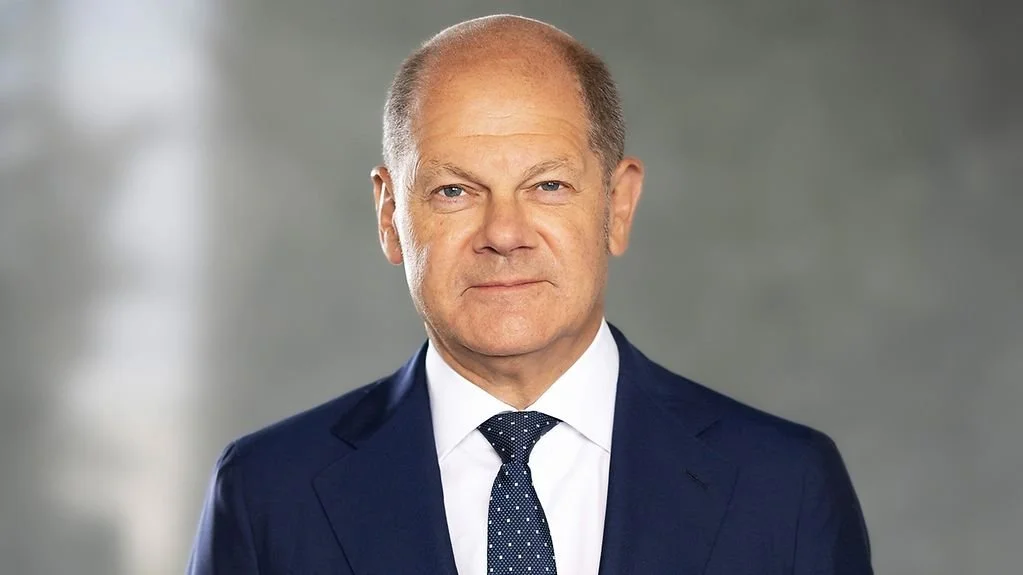
Germany has slipped deeper into crisis with the collapse of its governing coalition. An unlikely union between the center-left SPD, the Greens, and the free-market(ish) FDP never made much intellectual sense, but the parliamentary arithmetic worked, so that was that.
And that was then. The chancellor, Olaf Scholz (SPD), fired his finance minister Christian Lindner (FDP) before he could quit. A German chancellor cannot call an election, so Scholz then set the stage for a confidence vote in January, which he would be highly likely to lose, meaning elections in March. However, due to pressure from the opposition, the vote may well be held earlier. Commenting on the coalition’s demise, Elon Musk helpfully described Scholz as a “fool.”
Lurking beneath the breakup of the coalition of convenience is the growing deterioration of the German economy. The grinding deindustrialization of recent years has been gathering pace. Recent signs that Germany’s auto sector may be running into severe trouble are setting off concerns that a chronic condition may be becoming acute. There was a 2.5 percent fall in German industrial output in September, worse than expectations of a 1 percent decline. Car production fell by almost three times as much, partly due to the decline in demand that followed the removal of electric vehicle (EV) subsidies, but only partly: The industry’s problems, a good number of which can be traced back to the disruption brought about the coerced EV transition, go far deeper than that.
Overall industrial production is back to where it was 18 years ago. According to some estimates, it may fall by another 20 percent by 2030, no small matter when the industrial sector accounts for about a fifth of the German economy and is its greatest strength. GDP declined by 0.3 percent in 2023 (underperforming all other G7 economies), and, despite earlier predictions of (extremely) modest growth, is now expected to shrink by 0.1 percent this year. It might recover a little (less than 1 percent) in 2025. Large corporate insolvencies surged by 37 percent in the first half of the year, a nine-year high. It is hardly surprising that Germans, a traditionally cautious bunch, continue to save at a high rate. The household-savings rate is 11.4 percent (compared with under 5 percent in the U.S.), another drag on domestic demand.
Lindner had advocated for reforms designed to get the German economy going again, including corporate-tax cuts and a postponement of the EU ban on the sales of new “traditional” cars after 2035, two shibboleths too many for Scholz. The chancellor’s preference is to suspend Germany’s constitutionally enshrined debt limit (a separate debate) to enable higher spending, some of which would be for the benefit of the auto sector. Lindner disagrees with Scholz over the debt limit and regards handing cash to carmakers (or EV buyers) as tinkering at the edges of the problem, thus his call for a change of the “framework conditions” — or, to put it more bluntly, the change in the deadline. Scholz subscribes to the Brussels argument that the EU’s carmakers need the “certainty” that sticking with 2035 will bring, an approach that would, tariffs or no tariffs, hand much of Europe’s car market to the Chinese.
There could be no meeting of minds, and so that was that.
The origins of Germany’s economic woes, as with so many other of its difficulties, lie with Angela Merkel, who squandered the benefits of two legacies, choosing to coast rather than build upon them. The first was the effect of labor-market reforms introduced by her predecessor, Gerhardt Schroeder. The second was the concealed devaluation that arose out of exchanging the Deutschmark, an intrinsically strong currency, for the weaker euro. Together, they meant good times for the country’s exporters, which also benefited from strong demand from China, then on its remarkable ascent. A close trading relationship with China, argued Merkel, echoing the naive thinking of the end-of-history era, would be a “win-win,” good for business, and good for bringing China into the fold. This may have been the conventional wisdom of the time, but it has led to dangerous dependency. Worse, China is rapidly transforming itself from a customer to a competitor in area after area, from autos to capital goods. In 2020, it accounted for 8 percent of Germany’s exports, a number that will probably decline to 5 percent this year, a structural decline exacerbated by the current weakness in China’s economy.
But while Germany enjoyed a lengthy period of good growth (exports amount to around 50 percent of its GDP) few raised questions, and the country sailed along, heavily taxed (something that Merkel, always looking to her left, did nothing about) and complacent. These were years of chronic underinvestment in infrastructure, including in the digital revolution, the latter neatly illustrated by the afterlife of the fax machine in Germany. According to a relatively recent survey, about one-third of German companies use one regularly and eighty percent still have them around. They were also the years in which Germany continued to “invest” billions in renewables, a binge further reinforced by legislation backing Merkel’s reckless “energiewende” (energy turnaround) in 2010. This was a bid to wean the country off of fossil fuels and (after Fukushima rekindled old, irrational fears) nuclear power. Despite Russia’s more aggressive turn, a change signaled in word by Putin’s notorious Munich speech (2007) and indeed by Russia’s invasion of Georgia (2008), Russian gas was to be the bridge fuel to a decarbonized future. What could go wrong?
In 2018, Germany’s Court of Auditors estimated that cost of the switch to renewables in the previous five years had been at least 160 billion euros. The spending, it said, was in “extreme disproportion to the results,” a conclusion that would hold for longer periods too. And this was at a time of underinvestment elsewhere. The opportunity cost of climate spending is too often forgotten. The actual cost (on top of those billions) was to leave Germany with extraordinarily high electricity bills, the last thing its heavily energy-intensive industrial sector needed, and a result hard to reconcile with frequently repeated claims of renewables’ cheapness. And all this was before Germany lost access to “cheap” Russian gas, its second dangerous dependency. Efforts to blame Germany’s economic woes on the loss of that gas and China won’t wash. Both have contributed to the current mess, but the rot was spreading before then. Much of it was green.
German companies have been voting with their wallets.
William Wilkes and Alexander Weber, writing for Bloomberg (my emphasis added):
Companies including chemicals giant BASF SE, auto supplier ZF Friedrichshafen AG and home-appliance maker Miele & Cie. KG have shifted resources outside their homeland, leading to a net outflow of capital of more than €650 billion ($700 billion) since 2010, according to figures from the Bundesbank. Almost 40% of that has taken place since 2021, when Chancellor Olaf Scholz’s fractious coalition was voted into power…
Wilkes and Weber quote Siemens’ global head of tax, who said recently that there was “actually nothing that speaks in favor of investing in Germany.”
“Actually nothing.”
Low growth and high taxes explained why Siemens, one of Germany’s industrial giants, had been making most of its investments outside of the country. Reinforcing that message, it recently agreed a $10 billion deal to buy Altair, a software company based in Michigan, its largest ever acquisition. The runner-up was from 2015, a $7.5 billion purchase of an oil-and-gas equipment maker based in, yes, the U.S.
In 2023, Scholz declared that Germany’s huge investments in green technology would return it to the glory days of post-war economic miracle. That’s not how it’s working out. Energy-intensive companies are moving operations to the U.S., another reminder of the competitive advantages that flow from America’s (relatively) low energy costs. For the U.S. to walk away from them would be nuts. And now, the return of Donald Trump — the tariff man himself — poses a further threat to Germany’s export model. It could also encourage more German companies to relocate more manufacturing to the U.S., behind any Trump (tariff) wall.
Germany is uncompetitive even compared with some parts of the EU, meaning that companies are continuing to move production to cheaper countries such as Hungary and Spain. And when Germany’s car companies do this, so do the companies that serve them.
Wilkes and Weber:
Germany’s vast network of parts suppliers are following suit. A recent survey by the VDA auto lobby showed that 80% are delaying, relocating or canceling domestic investments. Over a third intend to shift resources to other EU countries, Asia and North America.
What’s more:
EVs need far fewer parts than vehicles with combustion engines, with obvious knock-on effects for specialist engineering firms. “[Germany’s] traditional strengths in transmission and combustion technologies are being replaced,” says Holger Klein, chief executive of its second-largest automotive supplier, ZF Friedrichshafen.
ZF Friedrichshafen has made a major acquisition, tellingly in the U.S., to help adjust to a changed market. But it still sees a rough road ahead, and the loss of a quarter of its domestic workforce by 2028.
And then there’s regulation:
Regulations impacting German businesses encompass some 50,000 pages, compared with 34,000 a decade ago, despite multiple rounds of legislation aimed at reducing the burden. A recent survey of more than 1,700 companies by the Ifo economic institute revealed that almost half had postponed projects at home in the last two years because of such issues.
Even (admittedly under Milei) Argentina has a minister of deregulation. It is inconceivable that Germany would go the same way.
Recent polling suggests that the next government will be a more right-leaning version of the current one. The center-right CDU/CSU partnership, now led by Friedrich Merz (no Merkel) is comfortably ahead of the pack on around 32 percent, far short of a majority or even a credible minority. Its most natural partners, the FDP (on 4 percent) may not even make it back into parliament (which requires a 5 percent share of the vote). The CDU/CSU are followed by the right-populist AfD on 17 percent — but, disturbed by some of the party’s more unsavory elements, the CDU/CSU won’t go into coalition (or enter into any other arrangement) with them. The SPD score 16 percent. Then come the Greens at 10 percent, and the BSW (a party of the hard left that takes a conservative view on some issues, including, critically, immigration and net zero) at 8 percent. Both the AfD and BSW look far too fondly at the Kremlin.
If this recent polling is anything like the final election result, it’s probable that the government will be a so-called grand coalition between the CDU/CSU and the SPD with a distinctly un-grand majority (Merz is highly unlikely to work with the Greens) and little to unify it philosophically. It is a stretch to imagine that it would be able to agree to take the steps that might put Germany’s economy back on course. If that turns out to be the case, the continuing downturn — and worsening turmoil in the auto sector — will only strengthen Germany’s outsider parties further. The consequences would not be pretty.
Extracted from the Capital Letter for the week beginning November 4, 2024